Reviewed · LONDON TOURS
London: Churchill’s Life & WW2 with Tour of War Rooms
Churchill’s London is best understood from the streets where wartime decisions were made. This three-hour walk links the RAF Memorial, Big Ben, Parliament Square, Downing Street, Whitehall, and the underground Churchill War Rooms, giving you the setting before you enter the bunker itself.
I like the small group limit of 15, which makes it easier to hear stories and ask questions. I also like the balance between a live guide outside and an audio guide inside the War Rooms. The main drawback is the walking pace and the lack of a fully live tour in the museum, so this is not the right pick if you need frequent rests or prefer a guide beside you at every stop.
Key points to know before booking
- The War Rooms are the main event: Spend about 90 minutes in the bunker complex, including Churchill’s office, the Map Room, and other wartime rooms.
- The walk sets the scene: Big Ben, Parliament, Downing Street, Whitehall, and the Guards Memorial add context before the museum visit.
- Guides make a real difference: Kate, Peter, and Salvadore have been singled out for clear storytelling, humor, and strong knowledge of Churchill.
- Expect a moderate walking pace: The tour covers several central London landmarks before the museum, with no hotel pickup.
- The museum section is audio guided: You explore at your own pace, rather than staying with the walking guide.
- Crowds can affect the visit: Weekends and school holidays may be busy, especially inside the War Rooms.
Why this Churchill tour works well
At $106.41 per person, this is not a cheap way to spend three hours in London. Still, the price includes a pre-reserved ticket to the Churchill War Rooms, a live English-speaking guide, and a small-group walking tour through some of Westminster’s most important wartime sites.
That combination matters. You could visit the War Rooms alone, but the streets outside would be easier to pass through without understanding why each place matters. The guide connects the memorials and government buildings to Churchill’s wartime role, then hands you over to the museum’s audio system for a longer, self-paced visit.
The experience has a reported rating of 4.2 from 52 ratings. Individual guides appear to shape the day in a noticeable way. Kate is praised for covering Churchill’s private life as well as his public career. Peter is described as funny, attentive, and good at answering questions. Salvadore receives strong marks for making the walk entertaining and for pairing it with quick access to the War Rooms.
You should still keep your expectations in check. This is a brisk sightseeing walk, not a slow history seminar. The outdoor stops are short, often between five and 15 minutes, so you will hear the main story rather than every detail. The museum then gives you more time to examine the subject on your own.
A few more London days worth weighing up
- From London: Harry Potter Warner Bros Studio Tour
★ 4.7 · 26,588 reviews - London: Westminster to Greenwich River Thames Cruise
★ 4.5 · 22,836 reviews - Magical London: Harry Potter Guided Walking Tour
★ 4.7 · 22,044 reviews
Starting at the RAF Memorial
Meet at the Royal Air Force Memorial and arrive 15 minutes before departure. Your guide will be holding a green Walks sign, which is useful in a busy central London area.
The memorial is a fitting starting point because the Battle of Britain forms one of the key chapters in Churchill’s public image. Here, your guide explains how his speeches helped steady Britain during the early years of the war. The focus is not simply on famous words. You also get a sense of how speeches, public morale, and military pressure worked together.
The scheduled explanation here lasts about 10 minutes. That is enough time to establish the theme, but not enough for a full account of the RAF campaign. If you already know the broad outline of the Battle of Britain, you will likely appreciate the memorial more than someone expecting a detailed military lecture.
Boudica, resilience, and the Churchill story
The next short stop is the Boudica statue. The connection may not be obvious at first, and that is part of the interest. The statue represents resistance and strength, ideas Churchill often drew on when calling Britain to endure hardship.
This is a five-minute stop, so think of it as a link between ancient and modern stories rather than a full lesson about Boudica. It gives your guide a chance to explain how national symbols can be used during a crisis.
I like this kind of stop because it keeps the walk from becoming a simple parade of famous buildings. You are looking at how London tells stories about courage, invasion, and survival across different periods.
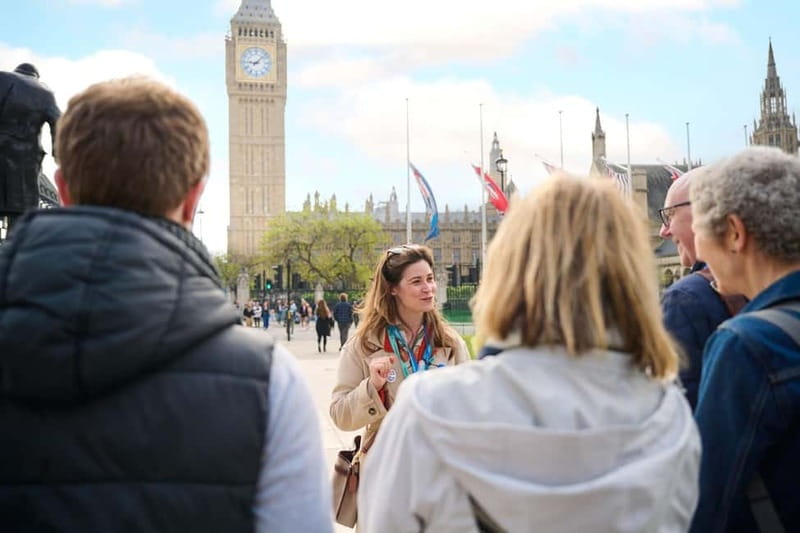
Big Ben and Parliament Square
Big Ben is one of the tour’s most familiar sights, but the guide gives it a wartime angle. You hear how the clock tower survived bomb damage and became a public symbol of hope during the Blitz.
The scheduled stop lasts about 10 minutes. You will have time to look up at the tower, take photographs, and hear the essential story. Do not expect to enter Big Ben or the Houses of Parliament. This portion is exterior sightseeing.
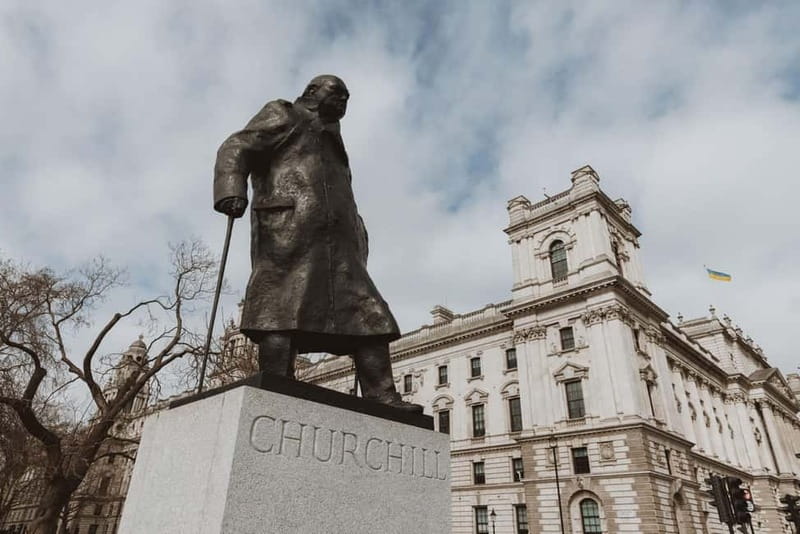
Across Parliament Square, the tour pauses at the Churchill statue. Here the focus shifts from public morale to political leadership. Churchill’s wartime work involved military decisions, speeches, alliances, and the effort to keep democratic government functioning under attack.
Parliament Square can be crowded and noisy, so staying close to the guide matters. A group of 15 or fewer helps, but you should still expect the normal distractions of central London. The guide’s job here is to make the setting readable, not to provide a silent memorial visit.
Same city, a completely different sort of afternoon:
- London: Madame Tussauds London
★ 4.6 · 20,915 reviews - London: Warner Bros. Studio Tour with Transfers
★ 4.7 · 17,586 reviews - London: Tower Bridge Entry Ticket
★ 4.7 · 15,560 reviews - London: St Paul’s Cathedral Entry Ticket
★ 4.7 · 9,813 reviews
Westminster Abbey from the outside
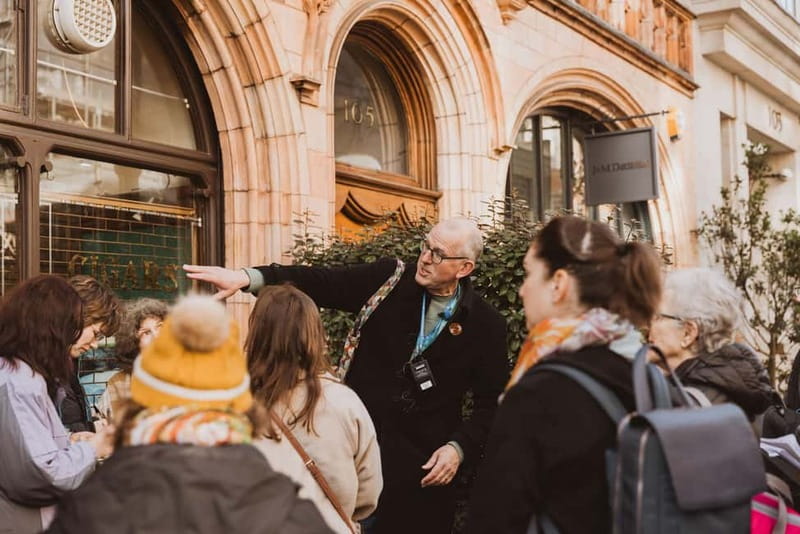
The stop at Westminster Abbey lasts about 15 minutes and is exterior only. That distinction is important if you are hoping to see the interior, royal tombs, or famous ceremonial spaces. Admission to the abbey is not part of this experience.
From outside, the guide places the abbey within the wider story of British public life. It is another reminder that the walk is about Churchill’s London, not only about the bunker below Whitehall.
This stop also gives you a natural pause after Parliament Square. You can admire the building and listen to the guide without dealing with the extra time and ticket arrangements required for an interior visit.
Downing Street and wartime government
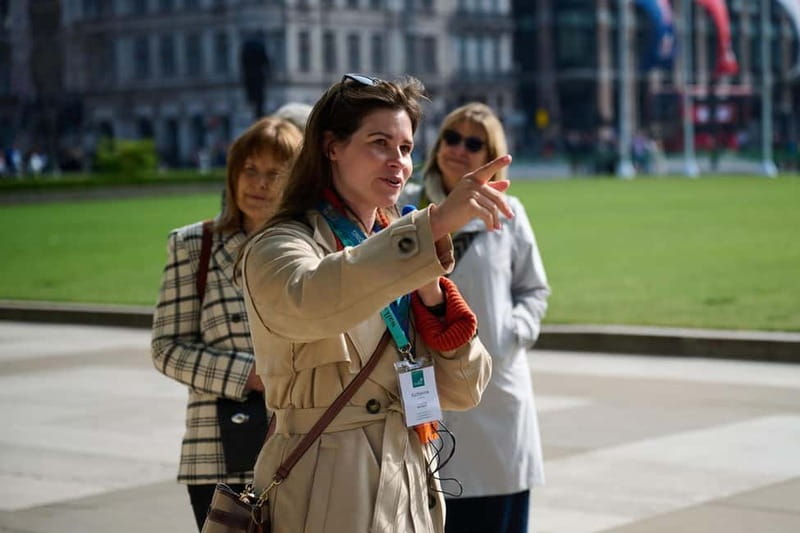
At 10 Downing Street, the guide explains how Churchill used the prime minister’s residence and offices while directing Britain’s war effort. The tour does not take you inside, and security barriers mean you view the street from outside.
The stop is planned for about 10 minutes. That is enough for the central political story, including the pressure of making decisions while Britain faced sustained danger. If you are interested in Churchill as a political operator, this may be one of the more useful outdoor stops.
Downing Street can feel less visually dramatic than Big Ben or the abbey. Its importance comes from what happened there, not from what you can enter. The guide’s explanation is therefore especially important.
Whitehall, Horse Guards Parade, and the Guards Memorial
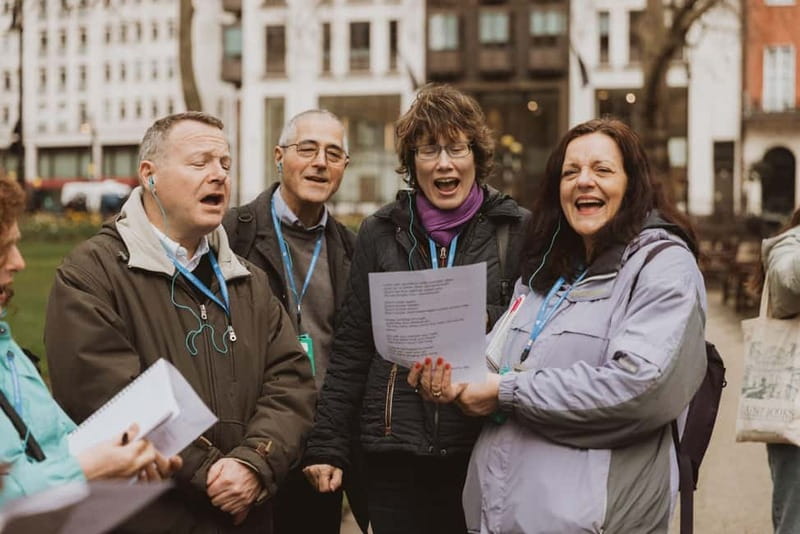
The walk continues along Whitehall, where government offices and military landmarks place Churchill’s leadership in a working setting. Rather than treating the street as a path from one attraction to another, the guide uses it to discuss wartime administration and the people who carried out military and political orders.
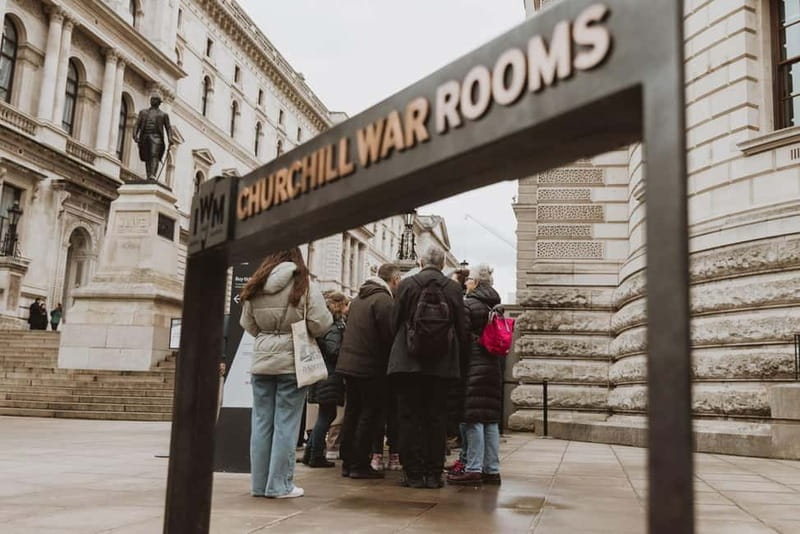
At Horse Guards Parade, you learn about Churchill’s connection to this historic site. The stop lasts about 10 minutes. It is another exterior visit, so allow time to look around, but do not expect a private ceremony or an extended military presentation.
The Guards Memorial follows, with about five minutes devoted to those who served during the Second World War. This is a brief stop, but it adds needed balance. A Churchill tour can easily become a portrait of one famous man. The memorial turns attention toward the people who served and died.
I appreciate that the walk includes memorials as well as government buildings. You get a more grounded view of the war, though the short timings mean you may want to return later if a particular memorial catches your interest.
Entering Churchill’s underground War Rooms
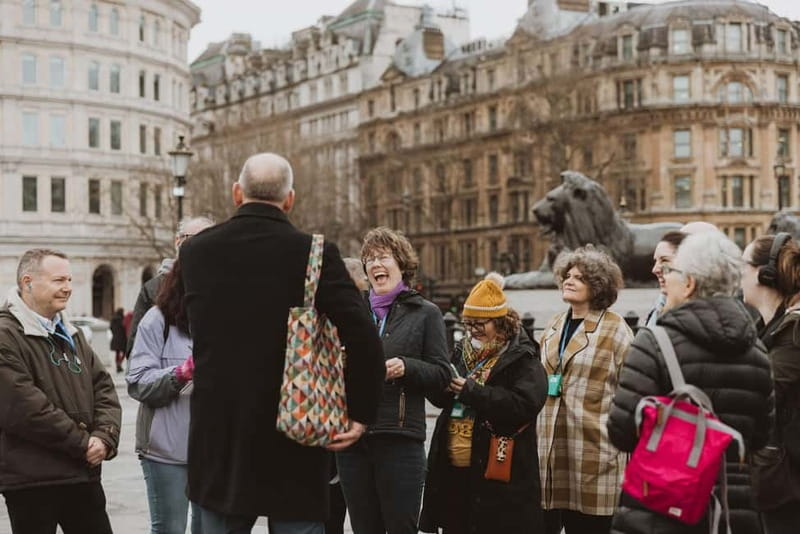
The final major part of the experience takes place in the Churchill War Rooms. Pre-reserved admission is included, which can save time at the entrance and makes the transition from street tour to museum simpler.
Inside, you explore the underground bunker network with an audio guide. The museum portion lasts about an hour and a half, making it much longer than any individual outdoor stop. The audio guide lets you move at your own pace, pause when something interests you, and spend less time on displays that do not hold your attention.
The War Rooms are presented as they were left in 1945. You can see Churchill’s private office, the Map Room, and other spaces used for wartime planning and communication. These rooms help explain the practical side of leadership: maps, messages, schedules, meetings, and decisions made under pressure.
The Map Room is likely to be one of the most meaningful areas because it shows how the war was monitored and managed from underground. Churchill’s office offers a more personal connection, although the museum remains focused on the working environment rather than turning the visit into a personal biography.
The audio format has benefits and limits. You can take your time and avoid being tied to the walking group, but you lose the chance to ask the museum guide a question as it occurs to you. The live guide outside handles interpretation and conversation. The audio guide inside handles the museum at your own pace.
Security checks are required before entry. Weapons and sharp objects are not allowed. Baby strollers are also not allowed, so families should plan around that restriction.
How much walking should you expect?
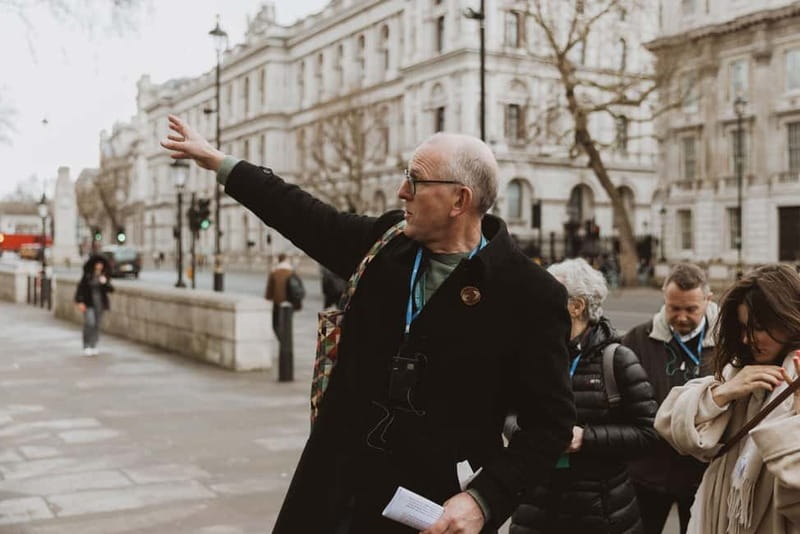
The tour lasts three hours, with the outdoor section covering several stops in central Westminster before the War Rooms. You should be able to walk at a moderate pace without difficulty.
The published information contains a general accessibility note and a more specific warning that the tour is not suitable for wheelchair users, people with mobility impairments, or strollers. The specific warning is the one to follow when deciding if this tour is practical for you.
There is no hotel pickup or drop-off. You meet at the RAF Memorial and finish at Clive Steps on King Charles Street, near the Churchill War Rooms. Wear comfortable shoes and expect normal city conditions, including crowds, traffic noise, and possible delays while moving between stops.
Crowds, timing, and group size
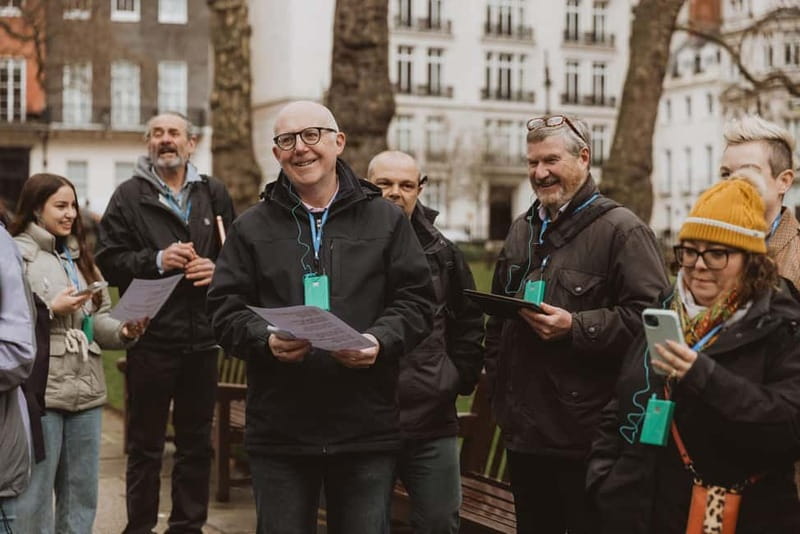
The small-group maximum of 15 is a genuine advantage. A guide can usually keep a group this size together more easily, and you have a better chance of asking a question than on a large coach tour.
The actual group may be smaller. Peter, for example, led a group of only six, which created a more personal outing. A smaller group can also make the outdoor stops easier, since you are less likely to spread across a pavement or lose the guide near a crossing.
The War Rooms can be busy at weekends and during school holidays. Crowds may slow your movement through the displays and make some rooms feel tight. If you dislike crowded museums, book a quieter available time if possible. The outdoor walk may be more comfortable than the indoor portion during peak periods.
Allow a little flexibility after the scheduled finish. The outdoor itinerary is timed, but London traffic, security, and museum crowd levels can affect the pace. The stated duration is three hours, with about 90 minutes assigned to the War Rooms.
Is $106.41 good value?
The value depends on how you would otherwise visit the War Rooms. If you already plan to buy museum admission and want a guided walk through Westminster, the package combines two useful parts of a day. You do not need to arrange the museum ticket separately, and the guide gives you a clear introduction to the surrounding landmarks.
If you only want to enter the War Rooms, you may find a separate museum visit more flexible. The outdoor section adds time and cost, but it also supplies the context that many independent visitors miss.
The strongest value comes from the guide. Names such as Kate, Peter, and Salvadore have been associated with personal storytelling, humor, and the ability to answer questions. Guides can vary, of course, but the structure gives the outdoor portion a clear purpose rather than leaving you to wander between unrelated sights.
Free cancellation up to 24 hours before the tour and reserve-now, pay-later booking add flexibility. Those policies are useful if your London plans are still shifting, but they do not change the main question: do you want a guided Churchill walk as well as the museum?
Who should book this experience?
I would choose this tour if you are interested in Churchill, the Second World War, political history, or the story of London during the Blitz. It also suits a first visit to Westminster because you see several major landmarks in one compact route.
It works particularly well for people who like a mixture of outdoor sightseeing and museum time. You get photographs and orientation outside, then a quieter period of listening and reading underground.
I would be more cautious if you want a slow walking day, a fully live guide inside the museum, or an interior visit to Westminster Abbey and Parliament. Families with strollers and anyone with mobility limitations should also avoid it based on the stated restrictions.
Should you book the Churchill War Rooms tour?
Book it if you want the War Rooms placed in the wider setting of Churchill’s London. The RAF Memorial, Big Ben, Parliament Square, Downing Street, Whitehall, Horse Guards Parade, and the Guards Memorial make the museum visit feel connected to the city above it.
Skip it if the museum is your only priority and you prefer to set your own schedule from the start. For everyone else, the $106.41 price is reasonable when you value a small group, a live English-speaking guide, reserved museum entry, and a focused route through Westminster.
The best practical choice is to reserve a weekday or quieter available time, arrive early at the RAF Memorial, and treat the outdoor walk as the introduction. The War Rooms are where you spend the most time, but the streets above explain why those rooms mattered.
FAQ
How long does the Churchill tour last?
The full activity lasts three hours. About one and a half hours are assigned to the Churchill War Rooms, with the remaining time used for the guided walking tour.
Where does the tour start?
The tour starts at the Royal Air Force Memorial in London. Arrive 15 minutes early and look for a guide holding a green Walks sign.
Where does the tour finish?
The stated finish point is Clive Steps on King Charles Street, London SW1A 2AH, near the Churchill War Rooms.
Is the tour conducted in English?
Yes. The live tour guide speaks English, and the Churchill War Rooms portion uses an audio guide.
Is admission to the Churchill War Rooms included?
Yes. The activity includes a pre-reserved ticket to the Churchill War Rooms and an audio guide.
Is Westminster Abbey included inside?
No. The tour stops at Westminster Abbey from the outside only.
Is the tour suitable for wheelchair users or strollers?
No. The practical information says the tour is not suitable for wheelchair users, people with mobility impairments, or baby strollers. It also requires walking at a moderate pace and includes security checks.
Can I cancel the tour?
You can cancel up to 24 hours in advance for a full refund. Reserve-now, pay-later booking is also available.
Just added around London
- London: Wimbledon Tennis Club and Westminster Walking Tour★ 4.5 · 86 reviews
- London: Westminster to Richmond River Thames Cruise★ 4.8 · 23 reviews
- Westminster Abbey Skip-the-Line Entry and Private Tour★ 4.6 · 4 reviews
- Best of London by LE GRAND – London’s Luxury Bus Tour★ 4.2 · 23 reviews
- London: Westminster Walking Tour & St Paul’s Cathedral Entry★ 4.7 · 7 reviews
- From London: Oxford, Stratford-upon-Avon & Cotswolds Trip★ 4.5 · 64 reviews
- From London: Warwick, Oxford, Stratford & Cotswolds Day Tour★ 4.0 · 270 reviews
- Warner Bros. Studios and 1-Day London Hop-on Hop-off tour★ 4.7 · 9 reviews
London Tours, compared.

Westminster to Greenwich River Thames Cruise
Read our review →
Magical London: Harry Potter Guided Walking Tour
Read our review →