
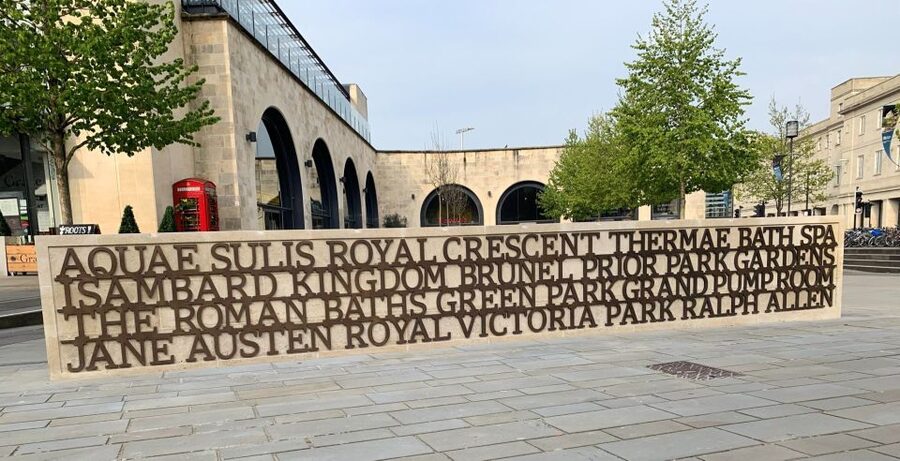
Reviewed · WALKING TOURS
Bath: Walking Tour of Bath and Guided Tour of Bath Abbey
Bath’s best sights make more sense when you connect them on foot, and this tour does that well. You’ll see Pulteney Bridge, The Circus, and the Royal Crescent, then finish inside Bath Abbey with a guide who explains the building rather than simply pointing at it. I like the clear split between a 90-minute city walk and a 30-minute Abbey visit, and I like that guides such as Andy, Fred, Nick, and Jim bring humor as well as solid local knowledge.
The main drawback is pace. You’ll cover about 4 kilometers in two hours, with plenty to hear along the way, so this is not a slow photo stop at every corner. Bath Abbey is also a working church and can close at short notice, though a partial refund is offered if the Abbey visit cannot take place.
Key points at a glance
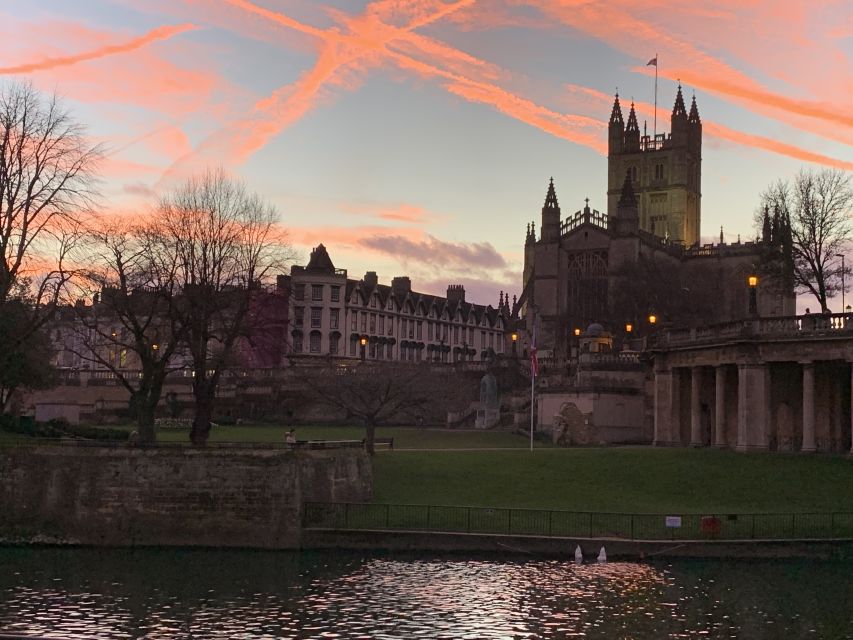
- See Bath’s grand Georgian core: Walk past the Royal Crescent, The Circus, Queen Square, the Pump Room, and the hot springs.
- Finish with Bath Abbey: The final 30-minute visit puts the church’s architecture and royal connections into context.
- Expect a lively guide: Andy, Fred, Nick, and Jim are among the guides praised for humor, patience, and clear storytelling.
- Cover about 4 kilometers: Wear sensible shoes and expect a fairly brisk walk through the city center.
- Roman Baths entry is not included: You’ll hear about the site and meet outside it, but this ticket does not take you inside.
- Good value for first-time visitors: At $53.88 per person, you get a city orientation and an Abbey tour in one booking.
Why this Bath tour works as a first look at the city
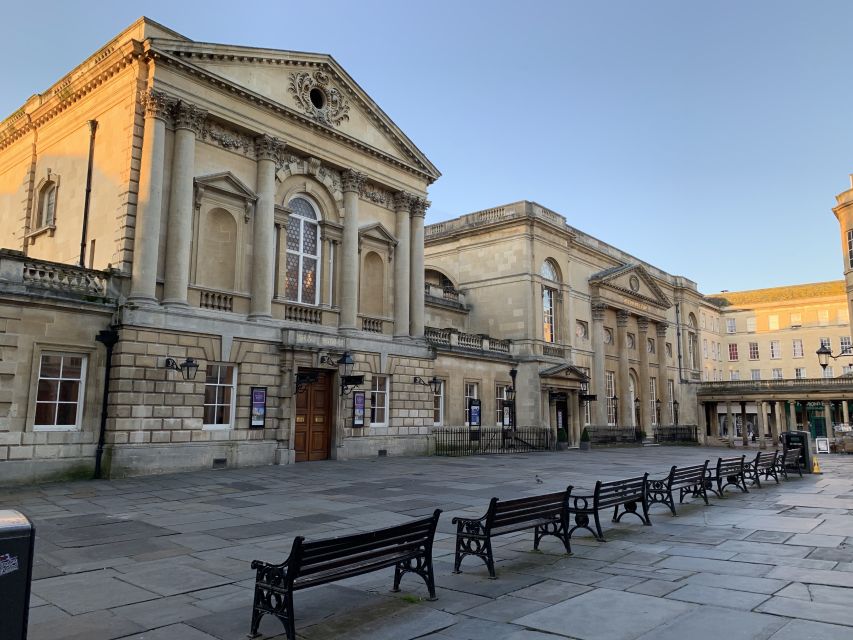
Bath can feel confusing at first because its major sights are spread through a compact but layered center. Roman remains sit beside Georgian squares, grand terraces curve around green lawns, and the Abbey anchors the middle of it all.
This walk gives you a useful framework. Instead of visiting each sight as a separate stop, you’ll hear how Bath grew as a spa town, how its buildings shaped polite Georgian society, and which people helped make the city famous. That context matters. The Royal Crescent is impressive on its own, but it becomes more interesting when you understand how its design, position, and social purpose fit into Bath’s wider story.
Your guide leads in English and uses a light-hearted style. That should suit you if you want facts without a dry lecture. The tour is also built around questions, so you can ask about buildings, local stories, Jane Austen, filming locations, or practical matters such as the best time to return to a particular sight.
The format is especially useful if you have only one day in Bath. You’ll get your bearings early, then you can choose which interiors or museums deserve more of your time afterward.
More Walking Tours in Bath
- Bath: City Walking Tour with Optional Roman Baths Entry
★ 4.7 · 1,401 reviews - Bath: Guided Walking Tour
★ 4.9 · 1,198 reviews - Bath: Bridgerton Filming Locations Walking Tour with Music
★ 4.7 · 416 reviews
Meeting in Abbey Churchyard
The tour starts in Abbey Churchyard, in front of Bath Abbey and the entrance to the Roman Baths. This is a practical meeting point because it puts two of Bath’s major sights directly in front of you, though the area can be busy with people arriving for different attractions.
Arrive ready to walk. The route covers approximately 4 kilometers, and the tour lasts 2.5 hours in total. You return to the same meeting point at the end, so you are not left trying to find your way back to your hotel or train station.
The separate entrance arrangement is useful, but do not confuse it with entry to the Roman Baths. This experience does not include a Roman Baths visit or admission ticket. You will hear about the hot springs and see the area around the Roman Baths, but you need a separate ticket if you want to explore the archaeological site inside.
The hot springs, Pump Room, and Roman Bath setting
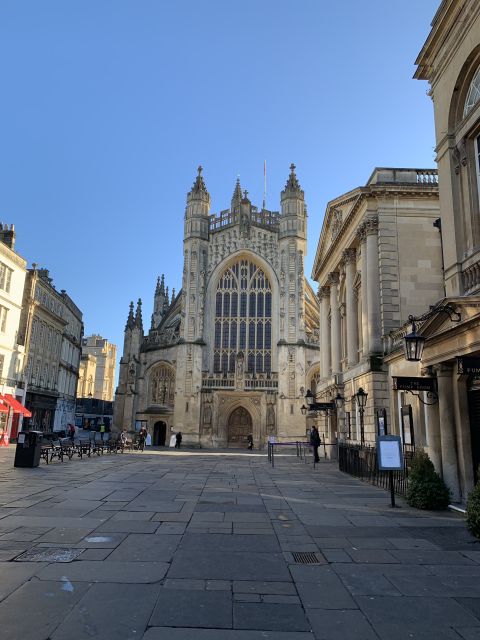
Bath’s identity begins with its hot water. The city became famous because warm mineral springs rise from the ground here, and the Roman Baths were built around that natural feature.
On the walk, your guide explains the importance of the springs and the buildings around them. The Pump Room, beside the Roman Baths, reflects Bath’s later life as a fashionable spa. It is one of those places where the architecture and social history belong together. You are not just looking at an ornate building. You are seeing the setting where Bath’s visitors came to drink the water, meet one another, and take part in the city’s formal social life.
This portion of the walk is also a good reason to book the tour even if you plan to visit the Roman Baths separately. A museum visit can show you objects and ruins, but a guide can help you understand how the baths relate to the Abbey, the Pump Room, and the wider city center.
Keep your expectations clear: this is an introduction, not a full Roman Baths tour. If Roman Britain is your main interest, plan extra time and budget for that separate attraction.
Queen Square and Bath’s Georgian order
Queen Square introduces you to the more measured side of Georgian Bath. The city’s grand architecture was not placed randomly. Squares, terraces, and broad streets created a sense of order, status, and arrival.
Your guide uses the buildings to explain the people and events behind Bath’s rise. This is where a walking tour earns its fee. Plaques and guidebooks can tell you dates, but they do not always explain why one space leads naturally to another or how the city’s layout shaped daily life.
You’ll also hear about Jane Austen’s connection with Bath. Austen lived in the city for periods of her life, and Bath appears in her novels as a place of social rules, matchmaking, money, and manners. The tour does not present her as a decorative name added to the route. Her connection helps you see Bath as a real social setting, not just a collection of handsome façades.
If you enjoy literary history, this part of the tour gives you a useful foundation before you visit any Austen-related sites on your own.
A few more Bath days worth weighing up
- Bath: Guided Ghost Tour
★ 4.8 · 1,036 reviews - From Bath: Stonehenge & the Cotswolds Day Tour with Entry
★ 4.8 · 543 reviews - Bath: Tootbus Bath Discovery Hop-On Hop-Off Tour
★ 4.5 · 430 reviews - Bath: Roman Baths Entry Ticket with Audio Guide
★ 4.7 · 425 reviews
The Circus and Royal Crescent
The Circus and Royal Crescent are the architectural highlights of the route. Both show Bath at its most theatrical, but they make different impressions.
The Circus is a circular composition of elegant Georgian buildings. Its design rewards a slow look upward, especially at the repeated columns and decorative details. A guide can point out features you might otherwise miss while trying to photograph the whole circle.
The Royal Crescent is larger and more open. Its long sweep of stone buildings faces a broad lawn, creating one of Bath’s most recognizable views. You’ll hear about the people and planning behind the development, along with the social world that made these addresses desirable.
These stops are excellent for first-time visitors because they show why Bath earned UNESCO World Heritage status. The city’s importance is not based on one monument alone. It comes from the relationship between its Roman past, spa culture, Georgian architecture, and literary associations.
The trade-off is that popular views can slow the group down. You may want more time for photographs than the schedule allows, especially at the Royal Crescent. Treat the tour as your orientation visit, then return later if you want quiet pictures or a closer look at the façades.
Pulteney Bridge and the river view
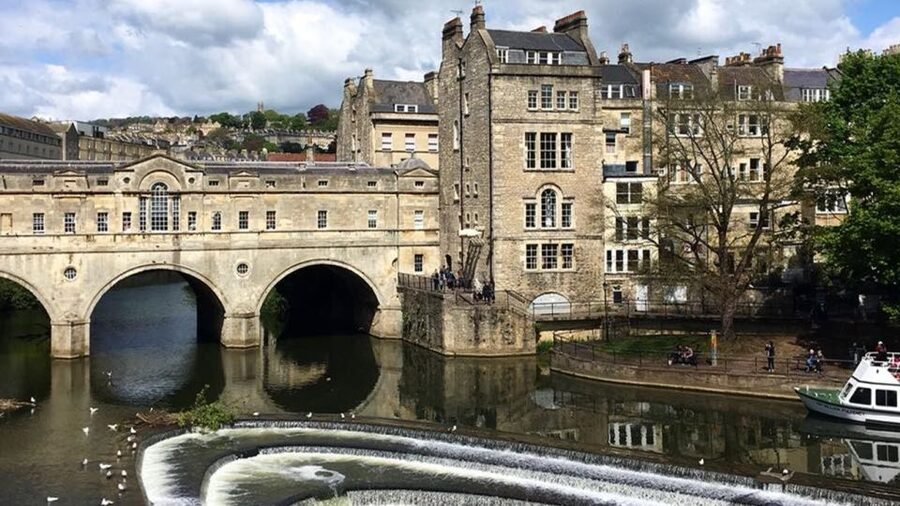
Pulteney Bridge gives the walk a change of mood. Its shops and position over the River Avon make it one of Bath’s most memorable structures.
The bridge is not simply a crossing. It is part of the city’s urban design, and its unusual appearance makes more sense when you hear how it was intended to function. From here, you get a different view of Bath than you do from the crescents and squares. The river opens up the scene, while the bridge shows how commerce and architecture were combined.
This is also a useful point for questions. Ask your guide which sights are best revisited at a different time of day, or where you should go next if you have free time. The tour specifically encourages this kind of local advice, and it can save you from spending the rest of your day moving between attractions without a plan.
Bath Abbey, inside and out
The final 30 minutes are devoted to Bath Abbey. This is the part that gives the tour extra value over a standard city walk.
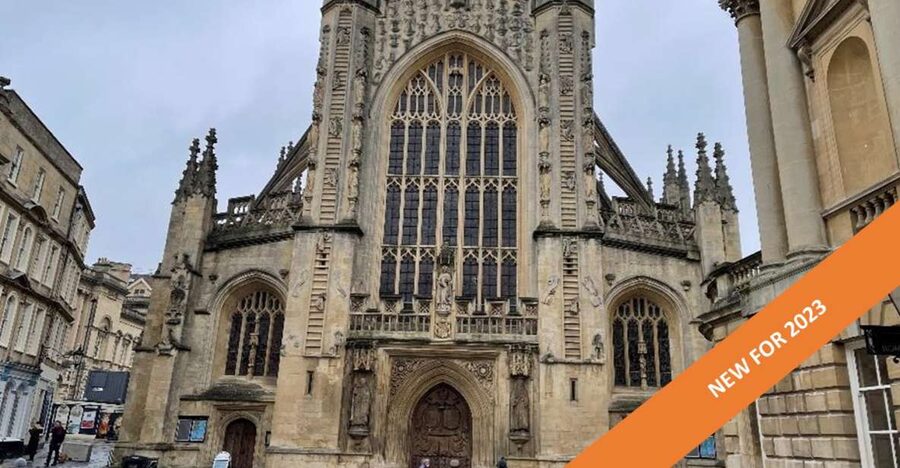
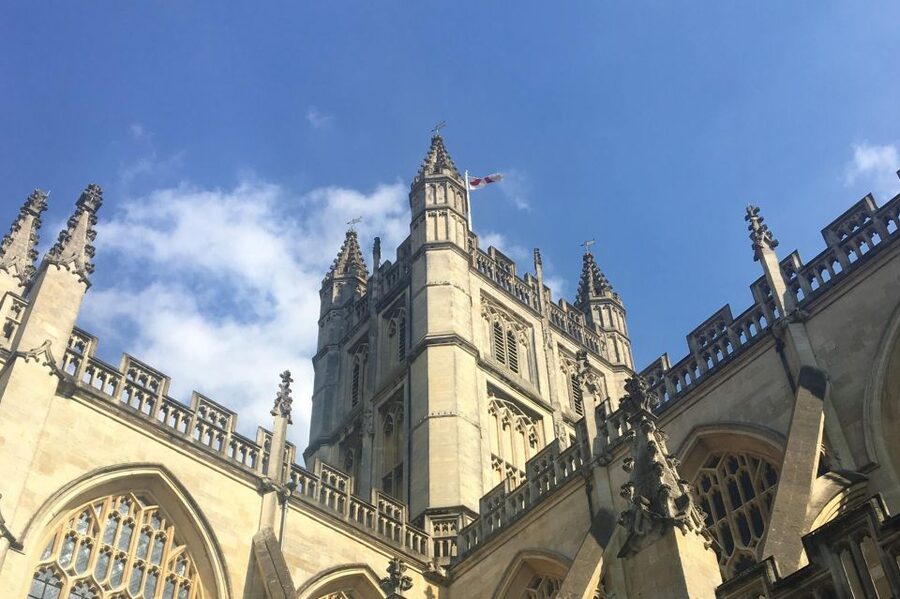
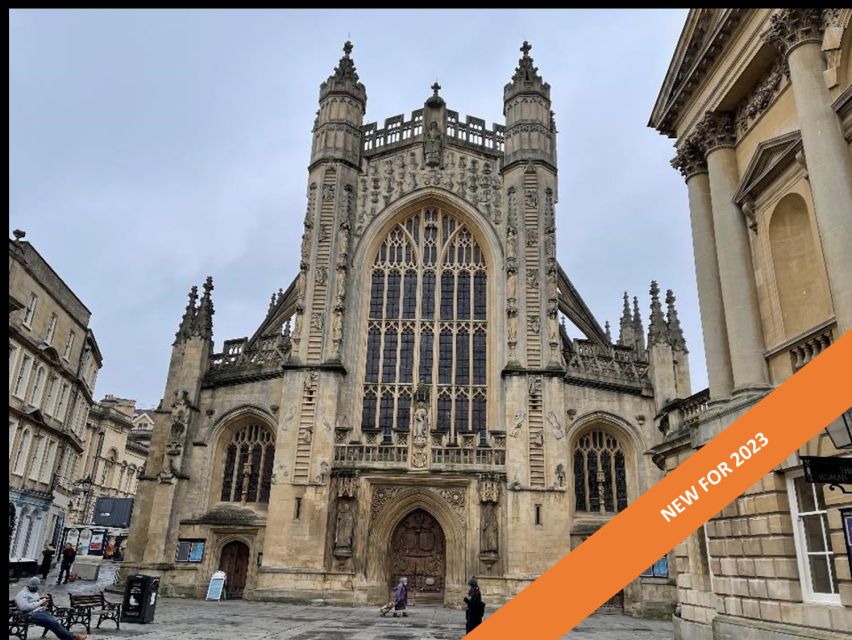
From the outside, the Abbey dominates the area around the Roman Baths. Inside, the building offers a different experience from Bath’s Georgian terraces. Your guide introduces the main features and explains the church’s place in the city’s story, including its importance in the history of England’s monarchy.
That royal connection adds useful context. Bath Abbey is not merely an old church to admire for its stonework. It has played a role in the life of the city and in major national events. A guided introduction helps you read the building as a place of worship and public history.
The Abbey tour is short, but that can be an advantage. You get a focused introduction without committing your whole afternoon to a church visit. If you want to study details at length, you can return later when you have more time.
Remember that Bath Abbey is a working parish church. Services and other events can close it at very short notice. If the guide cannot take you inside, the operator refunds the difference between the walking tour price and the full combined ticket. That policy does not replace the visit, but it does make the risk easier to accept.
The guides make the difference
The guide is central to this experience. The route itself is easy to follow, but the quality of the storytelling determines whether the walk feels like a history lesson or a worthwhile introduction to Bath.
Andy is praised for answering questions and mixing humor with a strong command of the city’s story. Fred is noted for his clear narration and calm handling of a group with children who asked plenty of questions. Jim brings enthusiasm for both Bath and the Abbey. Nick is described as friendly and well informed.
Guide assignments can change, so you cannot book a specific person from the information provided. Still, the repeated pattern is useful: expect a professional Blue Badge guide who can handle questions and adjust to different ages and interests.
The comments about children are worth noting. Fred’s ability to stay patient while young visitors asked frequent questions suggests the tour can work for families, provided children are comfortable walking for two hours. The pace may be tiring for anyone who needs frequent rests.
Pace, access, and comfort
This is a walking tour, not a hop-on, hop-off outing. You will cover about 4 kilometers, so wear comfortable shoes and dress for changing British weather. The exact route includes major city sights, but the experience does not promise long breaks at every stop.
The activity is wheelchair accessible. Assistance dogs are allowed, but other dogs are not. Since the Abbey is a working church, access inside depends on its schedule on the day.
The 2.5-hour length is a sensible middle ground. It is long enough to cover Bath’s main historic areas and include the Abbey, but short enough to leave part of the day free. I would schedule it early in your Bath visit. That way, you can use the guide’s advice to plan your later stops.
The tour ends where it starts, in Abbey Churchyard. That makes it easy to continue to the Roman Baths, return to a hotel, find lunch, or explore the central streets on your own.
Is $53.88 a fair price?
At $53.88 per person, the tour is not the cheapest way to see Bath’s streets. Its value comes from combining two services: a 90-minute guided walk and a 30-minute guided Abbey visit.
You are paying for a qualified Blue Badge guide, a structured route, and the chance to ask questions as you go. That is useful if Bath is new to you or if you want more than attractive buildings without context.
The price is less compelling if you prefer to wander alone, already know Bath well, or plan to spend most of your time inside the Roman Baths. Roman Baths entry is not included, so budget separately for that attraction.
The reserve-now-and-pay-later option also helps if your plans are still changing. You can cancel up to 24 hours in advance for a full refund, which is a practical safeguard for a weather-sensitive walking activity.
Who should book this experience?
I would recommend it to first-time visitors who want a strong overview without spending a full day on a large group excursion. It also suits fans of Jane Austen, Georgian architecture, English church history, and filming locations connected with Bridgerton.
Families can benefit from the guide’s ability to handle questions, but you should judge your children’s walking stamina honestly. The route is accessible, yet 4 kilometers at a fairly brisk pace is still a serious outing for small children or anyone who tires easily.
This tour is less suitable if you want a detailed Roman Baths visit, extended time for photographs, or a slow architectural sketching walk. It gives you a well-organized introduction, not unlimited time at each sight.
Should you book the Bath walking tour and Abbey visit?
Book it if you want Bath’s famous buildings to connect into one story. The Royal Crescent, The Circus, Pulteney Bridge, the Pump Room, the hot springs, and Bath Abbey are much easier to appreciate when a guide explains how they fit together.
The strongest reason to choose this experience is the combination of a city walk and Abbey tour. Andy, Fred, Jim, and Nick are all praised for humor, patience, and clear explanations, though the exact guide is not guaranteed.
Skip it if you already have a detailed plan and prefer to explore at your own speed. Otherwise, the $53.88 price is reasonable for a 2.5-hour orientation, especially when you use the rest of your day to return to the places that caught your attention.
FAQ
How long does the Bath walking tour and Abbey visit last?
The full experience lasts 2.5 hours. It includes a 90-minute guided walking tour and a 30-minute guided tour of Bath Abbey.
Where does the tour start?
Meet in Abbey Churchyard, in front of Bath Abbey and the entrance to the Roman Baths.
Where does the tour finish?
The activity ends back at the starting point in Abbey Churchyard.
How far will I walk?
You will walk approximately 4 kilometers during the tour.
Is entry to the Roman Baths included?
No. The tour visits the area around the Roman Baths and discusses the hot springs, but Roman Baths admission is not included.
Is Bath Abbey always open for the guided visit?
No. Bath Abbey is a working church and can close at short notice. If the visit cannot take place, a proportion of the ticket fee is refunded.
Is the tour wheelchair accessible?
Yes, the activity is wheelchair accessible. Only assistance dogs are allowed.
Can I cancel the booking?
Yes. You can cancel up to 24 hours in advance for a full refund. You can also reserve now and pay later.
Just added around Bath
- Southampton Port to London via Stonehenge,Lacock & Bath★ 5.0 · 5 reviews
- Half-Day tour to Stonehenge from Bath for 2-8 adventurers★ 5.0 · 3 reviews
- Bath: Local Pubs & Historic Sights Walking Tour (3h)★ 4.9 · 29 reviews
- Full-Day Stonehenge and Bath Tour★ 4.4 · 39 reviews
- From London: Stonehenge Summer Solstice Sunset Tour (Jun 20)★ 5.0 · 7 reviews
- From Bath: Salisbury and the Jurassic Coast Small Group Tour★ 5.0 · 4 reviews
- From Bath: Private Stonehenge and Salisbury Tour with Pickup★ 5.0 · 3 reviews
- From Bath: Cotswolds and Oxford Full-Day Tour★ 4.7 · 172 reviews
Walking Tours, compared.

Magical London: Harry Potter Guided Walking Tour
Read our review →

University and City Walking Tour with Alumni Guide
Read our review →
Harry Potter Movies Walking Tour (Kids Go Free)
Read our review →
The Great British Rock and Roll Music Walking Tour
Read our review →
Jack the Ripper Walking Tour – Ripper Vision Tours
Read our review →

Browse the lists this tour appears in