Reviewed · LONDON TOURS
Booze, Brothels & the Bard: London’s Bawdy Borough
Southwark’s past is not polite, and that is exactly the point. For centuries, the area outside the City of London’s control attracted brothels, prisons, theaters, drinking houses, and other business best kept out of sight. This two-hour walk brings that rough-edged story to life while linking it to Shakespeare, Dickens, and medieval London.
I like the tight route and the guide’s lively approach. You see real surviving fragments, not just grand buildings, and the walk connects them into one clear story. I also like the small group limit of 15, which gives you room to ask questions. The drawback is that two hours is brisk, and the short stops may leave you wanting more time at the Globe, Southwark Cathedral, or the Old Operating Theatre.
Key points to know before you book
- Southwark’s seedy past: Learn why this district became London’s center for brothels, prisons, theaters, and drinking houses.
- Two miles on foot: The route takes about two hours from Borough Station to Shakespeare’s Globe.
- A guide-led history walk: Tom Currie has been praised for clear explanations, good humor, and thoughtful answers.
- Real remains, not just stories: See parts of Marshalsea Prison, the Clink, Winchester Palace, and the original Globe site.
- Borough Market in the middle: Pass through London’s largest and oldest market, though Sunday crowds can slow the walk.
- Ages 13 and up: The subject matter is bawdy and sometimes grim, so this is not designed for younger children.
Why Southwark became London’s bawdy borough
Start outside Borough Station on Borough High Street, where the guide waits with a Historic London Tours sign. This is a useful meeting point because it is easy to reach, and the route then heads south and west through Borough and Bankside.
The central idea is simple. Southwark sat outside the authority of the City of London, so activities that city officials wanted to control could operate here with fewer restrictions. Prostitution had been part of the area’s story since Roman times, and later centuries added prisons, bear-baiting, theaters, alehouses, and other entertainments.
The tour does not treat this past as a list of dirty jokes. It shows how law, money, religion, and geography shaped the district. The area’s reputation came from real social conditions, not just colorful nicknames.
You will hear about the medieval Winchester Geese, the prostitutes associated with the Bishop of Winchester’s authority. You will also meet Shakespeare, Charles Dickens, a nineteenth-century pub landlady said to haunt the area, and Doorkins Magnificat, a cat with one of London’s most memorable names. These characters give the walk a human scale.
A few more London days worth weighing up
- From London: Harry Potter Warner Bros Studio Tour
★ 4.7 · 26,588 reviews - London: Westminster to Greenwich River Thames Cruise
★ 4.5 · 22,836 reviews - Magical London: Harry Potter Guided Walking Tour
★ 4.7 · 22,044 reviews
Marshalsea Prison and the lives behind its walls
The first major stop is the former Marshalsea Prison. Only parts of the old prison remain, but those fragments matter because the site helps explain how debt and imprisonment shaped everyday life in London.
Charles Dickens had a personal connection to Marshalsea. His father was imprisoned there for debt, and Dickens’s childhood experiences influenced his writing. That link gives the Dickens section real weight. You are not simply hearing that a famous writer once walked through Southwark. You are seeing a place tied to his family’s hardship and to the social world that later appeared in his books.
The stop is brief, about five minutes, so you should expect an explanation and a view of the surviving remains rather than a long prison visit. I find that useful for orientation, but anyone hoping to explore prison interiors should adjust expectations.
Crossbones Garden and the Winchester Geese
Close by is Crossbones Garden, a memorial space associated with women who were buried outside the rules of the established church. The site is especially linked with the outcast women of Southwark, including the Winchester Geese.
This is where the tour’s title becomes more than a catchy phrase. The brothels were part of a regulated medieval economy, and the women who worked in them lived with poor status even when authorities tolerated or profited from the trade.
The garden is a place for a quieter pause. After the jokes and rough stories of Southwark’s drinking and prison culture, it adds a reminder that these subjects involved real poverty, illness, exclusion, and death.
The Hop Exchange and the smell of old trade
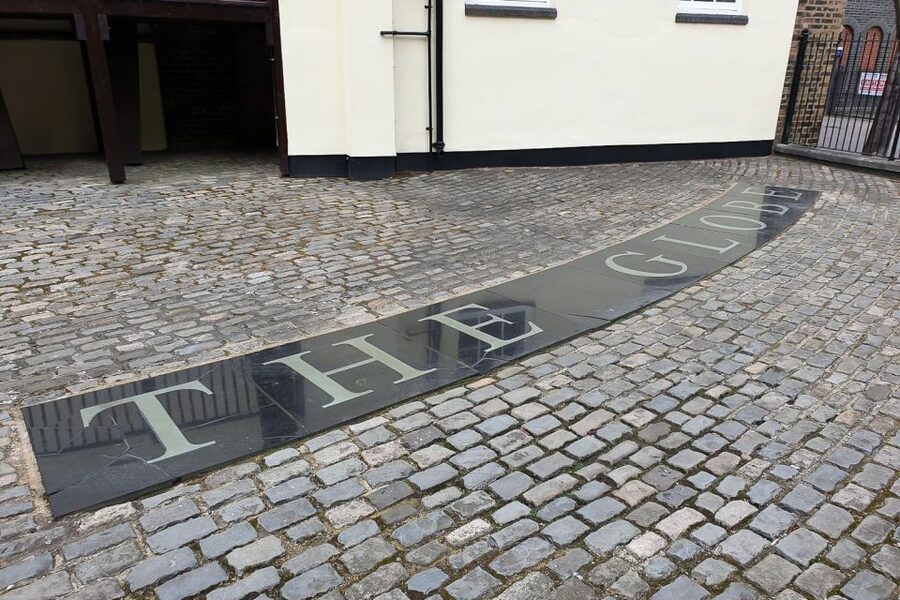
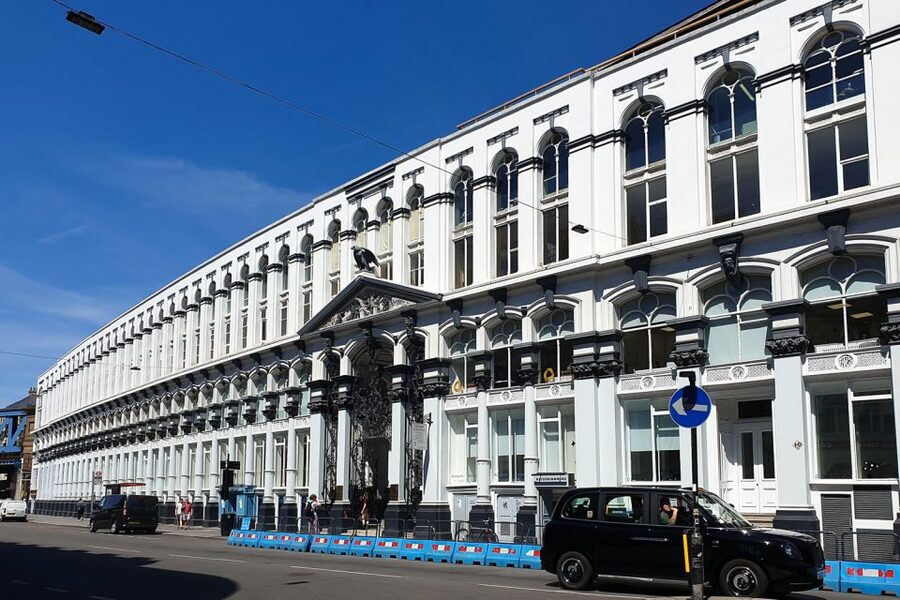
The Hop Exchange brings in a different side of the borough: commerce. Its name points to the hop trade, which fed London’s appetite for beer.
This stop helps you see that Southwark was not only a district of vice. It was also a working market area where goods arrived, changed hands, and moved onward. Beer connects naturally with the booze part of the tour, but the larger lesson is about trade and urban growth.
At each point, the walk uses the present-day street to explain an older London. You do not need prior knowledge of the city to follow the story. The route is compact, and the stops are close enough to keep the narrative moving.
Same city, a completely different sort of afternoon:
- London: Madame Tussauds London
★ 4.6 · 20,915 reviews - London: Warner Bros. Studio Tour with Transfers
★ 4.7 · 17,586 reviews - London: Tower Bridge Entry Ticket
★ 4.7 · 15,560 reviews - London: St Paul’s Cathedral Entry Ticket
★ 4.7 · 9,813 reviews
The George Inn and old London drinking culture
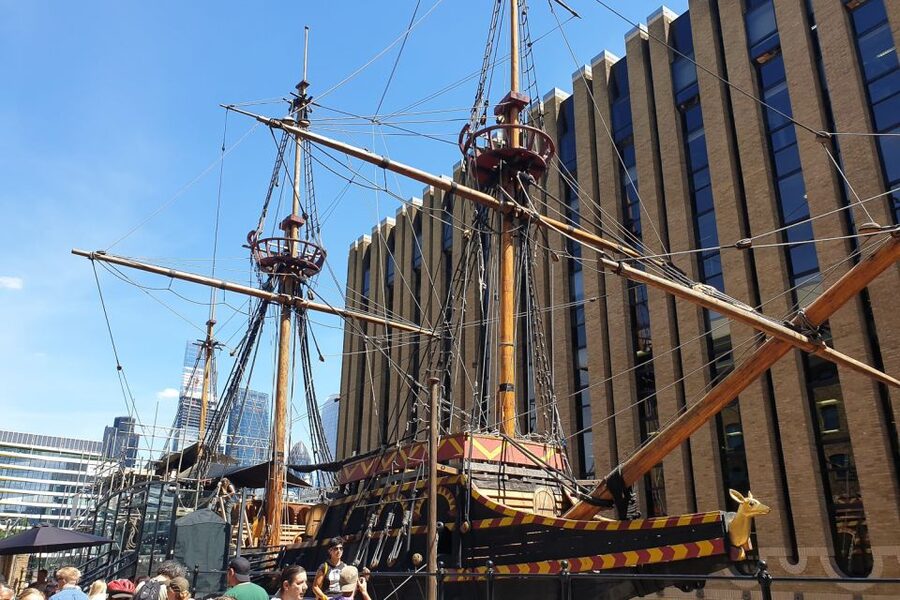
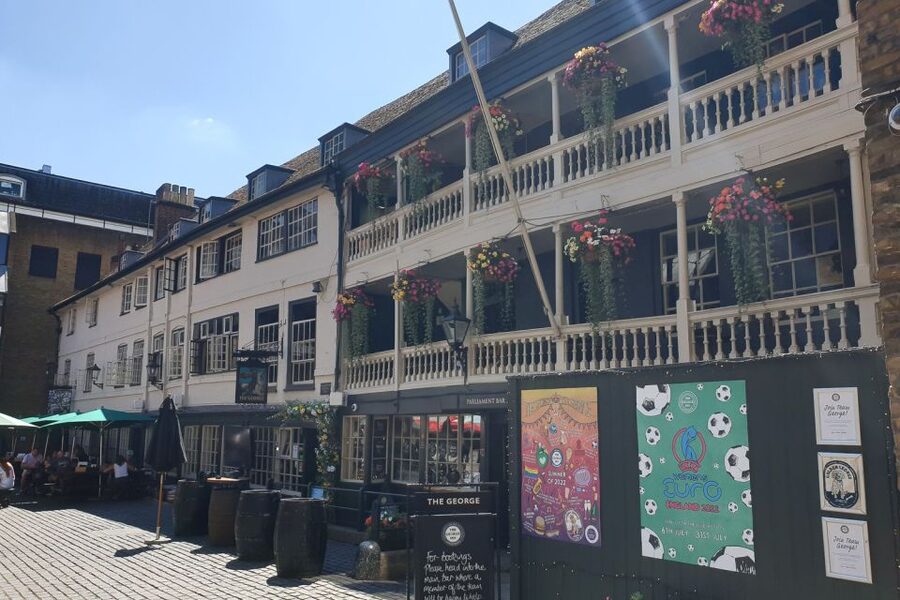
The George Inn is one of the route’s most atmospheric stops. It is tied to the coaching and drinking culture that once made Southwark a busy approach to London.
The inn also suits the tour’s tone. You are looking at a place connected with travelers, ale, performance, and the everyday social life of the borough. It gives a more physical sense of old London than a plaque or a date alone.
You should not expect a full pub visit as part of the two-hour walk. The guide’s talk is the main event. If you want to return for a drink or a closer look, the guide can help you identify places worth revisiting later.
Borough Market, London’s edible crossroads
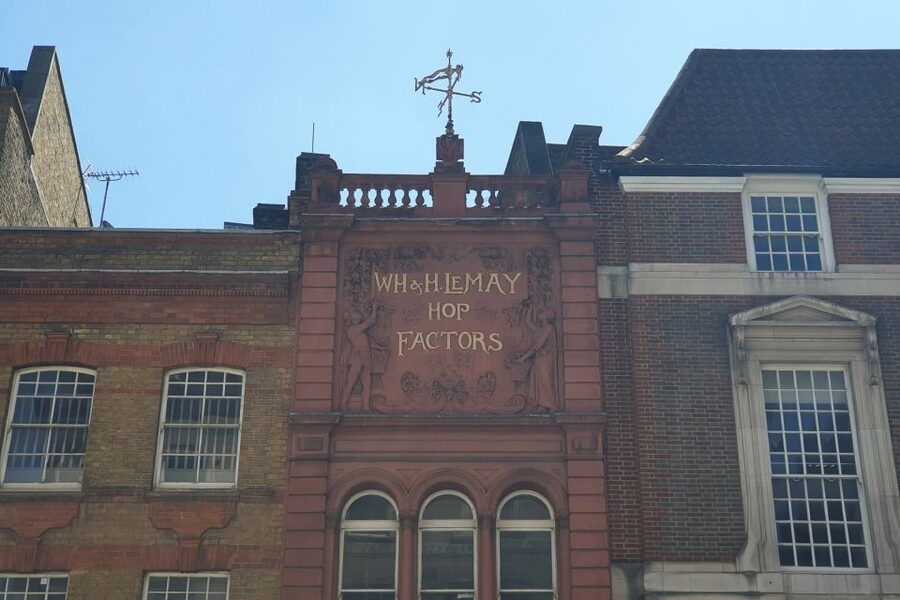
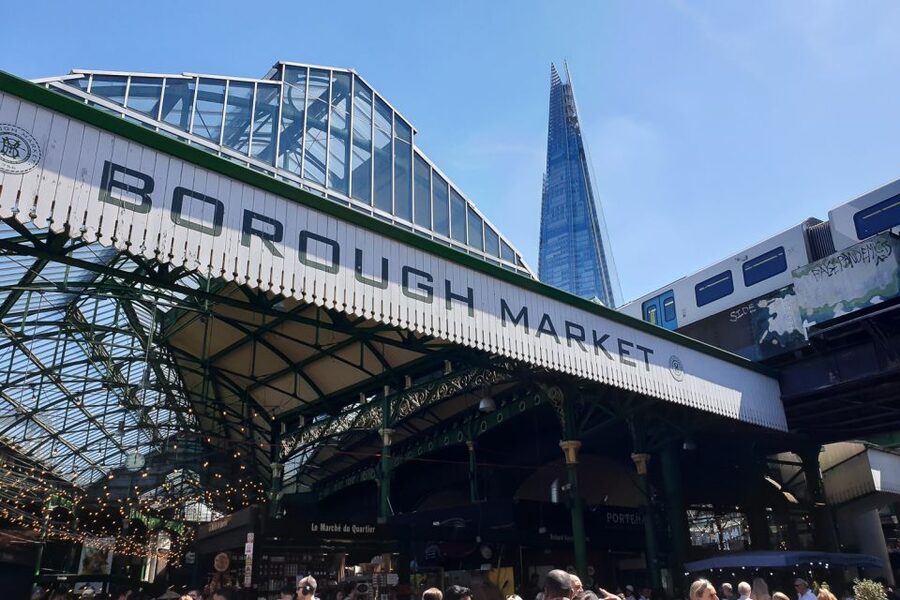
The route then passes through Borough Market, described as London’s largest and oldest market. This is one of the most useful stops for getting your bearings in modern Southwark.
The market shows how the district’s old role as a place of trade still survives. Food, crowds, smells, and movement replace the medieval stalls, but the basic function remains familiar: goods come in, people gather, and commerce shapes the neighborhood.
There is a practical catch. Borough Market can be extremely crowded, especially on a Sunday. One participant found the crowds surprising and returned later to visit Southwark Cathedral. That is good advice. If the market is packed, focus on staying with the group rather than trying to browse as you walk.
This is not a food tour, and there is no stated tasting stop. Treat Borough Market as part of the historical route, then return after the walk if you want time to eat or shop.
The Old Operating Theatre and Southwark Cathedral
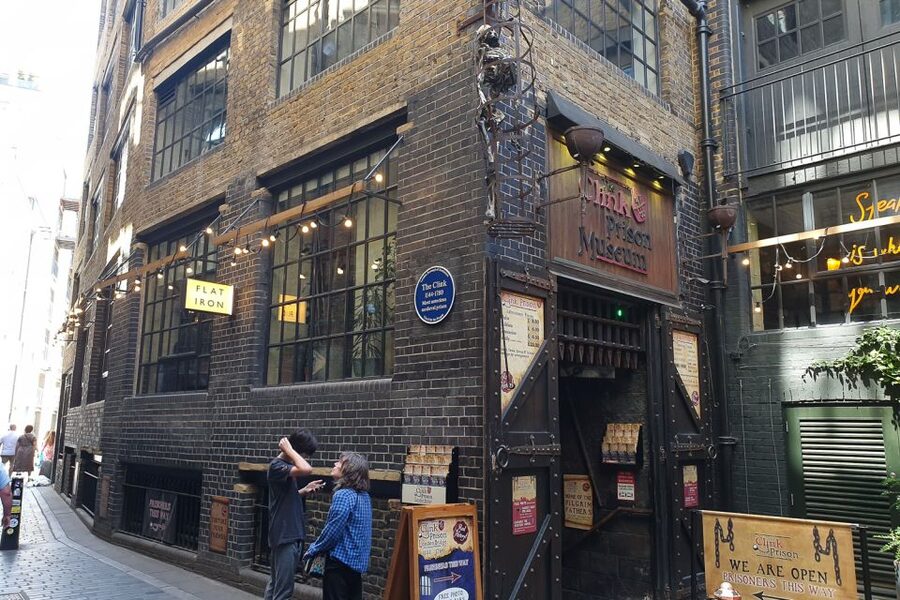
The Old Operating Theatre Museum and Herb Garret adds medicine to the story. The name alone hints at a very different side of nineteenth-century London, when surgery was public, painful, and far removed from modern hospital care.
The stop is short, so the guide gives you context rather than a full museum visit. If medical history interests you, note the location and come back when you have more time.
Southwark Cathedral provides another change of pace. Its long religious history contrasts with the brothels and drinking houses nearby. The cathedral helps explain how sacred and disreputable parts of London could exist within a short walk of each other.
I like this contrast. Southwark is not one story. It is a collision of church, commerce, entertainment, poverty, law, and celebrity. A participant later returned to see the cathedral’s interior after the guide’s comments sparked further interest. You can do the same if your schedule allows.
London Bridge and the crossing into Bankside
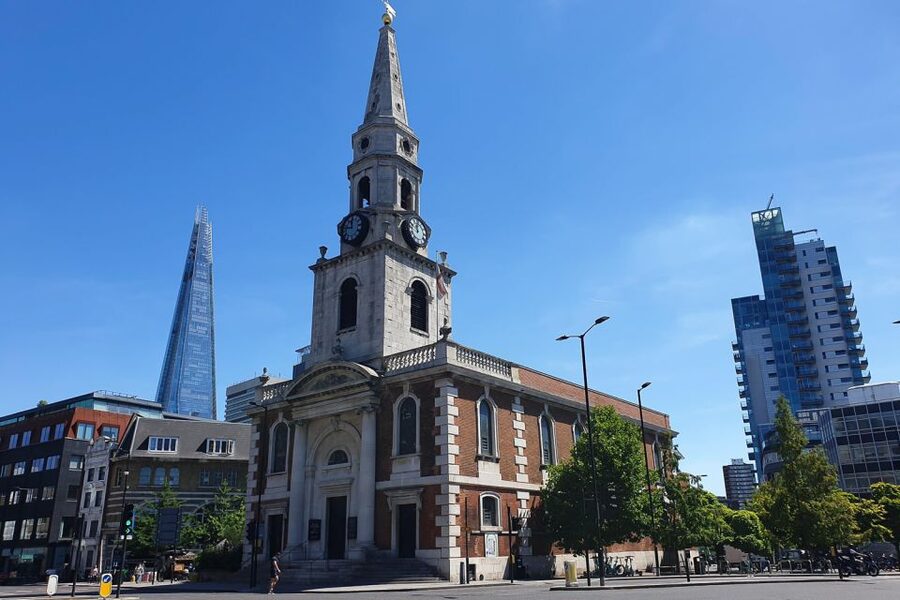
At London Bridge, the tour reaches one of the area’s key physical links. The bridge connected Southwark with the City and helped funnel people, goods, performers, criminals, workers, and customers through the district.
The stop also clarifies why Southwark mattered so much. Its position just across the river made it close enough to attract London’s crowds, yet separate enough to host activities that were restricted inside the City.
You will spend only a few minutes here, but the location is important. Look around and imagine the bridge not as a modern crossing beside sleek offices, but as a choke point in the life of medieval and early modern London.
Winchester Palace and the power behind the brothels
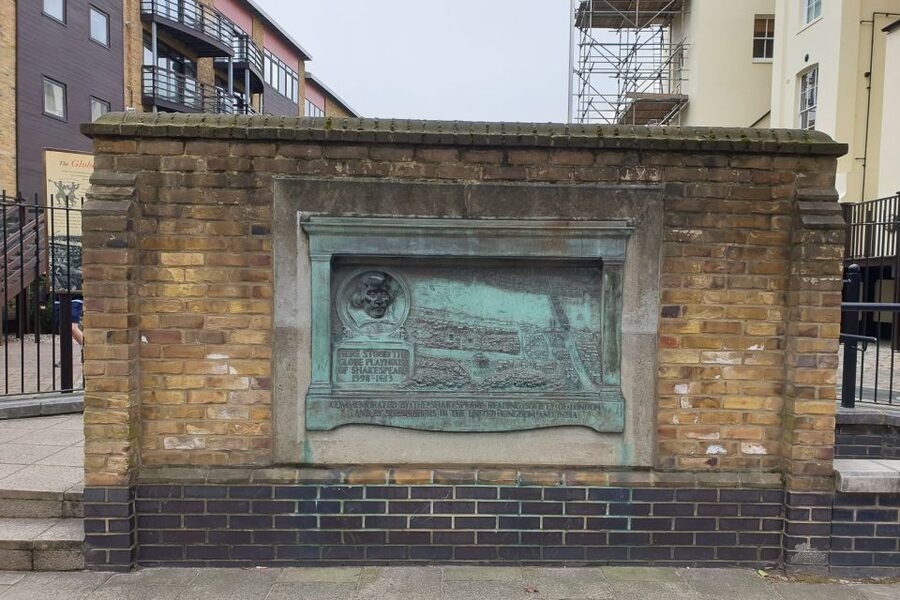
The remains of Winchester Palace are among the tour’s most revealing fragments. The palace belonged to the Bishop of Winchester, whose authority in Southwark was connected with the licensing and regulation of prostitution.
That fact complicates the usual story of a strict church opposed to vice. Religious power and commercial profit could sit side by side. The palace remains make that contradiction visible.
You will not see a complete medieval residence. What remains is partial, and the guide’s explanation does much of the work. This is a good example of why a local history walk helps. Without context, the stones are easy to pass. With context, they become evidence of who controlled Southwark and who made money there.
The Clink Prison and the darker side of justice
The Clink is the second notorious prison on the route. Parts of the site can still be seen, and the name has passed into the English language as a general term for prison.
The stop adds another layer to the district’s reputation. Southwark’s entertainments and brothels drew people in, while its prisons held those caught in the city’s legal machinery. The tour links the two without pretending they were the same thing.
The Clink Prison Museum is nearby, but admission to that museum is not included in the walking tour. You can see the location and hear its story during the walk, then decide if you want a separate visit. With only two hours, the guide keeps the group moving.
Shakespeare’s original Globe site and the modern theatre
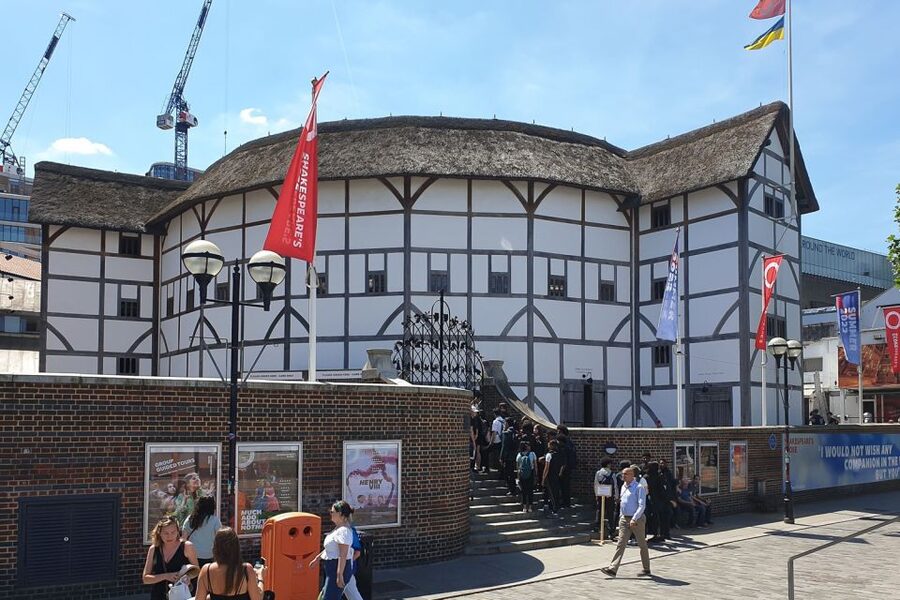
The walk finishes with Shakespeare. First, you see the original site of the Globe Theatre, then the modern Shakespeare’s Globe nearby.
This is one of the strongest parts of the route because the Bard’s presence fits Southwark’s old character. The theaters were outside the City’s jurisdiction, alongside drinking houses and other popular amusements. Shakespeare’s work belongs to high culture today, but the original theatrical world was noisy, commercial, public, and closely tied to the borough’s rougher side.
The modern Globe gives you a clear visual ending. It is one of London’s best-known reconstructions, but this tour is not a full Globe performance or guided theater visit. The walk ends near the theatre, and a separate ticket is needed for a more detailed Globe experience.
That distinction matters. One participant enjoyed the tour but wished for more time at the Globe, then realized that a proper theatre visit required another ticket. If Shakespeare is your main reason for booking, plan a separate visit and allow extra time.
The guide and the value of a small group
Tom Currie receives especially strong praise for this walk. When he leads it, you can expect a relaxed and friendly manner, clear explanations, a good sense of humor, and an open invitation to ask questions.
That combination matters more than theatrical storytelling. Southwark contains many small sites that need explanation, and Tom’s approach is to give you the key facts without drowning you in dates. He has also been described as willing to check an answer while walking to the next stop rather than bluffing.
The group limit of 15 is another plus. A small group makes it easier to hear on busy streets and easier for the guide to keep people together around Borough Market and London Bridge. It also leaves more room for questions than a large city walk.
The tour is offered in English with a live guide. A link to read the information later has also been provided to participants, which is handy if you want to remember names and places after returning to your hotel.
Price, pace, and who will enjoy it
At $26 per person, I consider this a good-value introduction to Southwark. You are paying for two hours of local interpretation, a carefully connected route, and access to a guide who can make overlooked remains meaningful. The price is particularly fair if you are new to London and want a strong orientation before exploring the district on your own.
The value is lower if you want long interior visits. The Old Operating Theatre Museum, Southwark Cathedral, the Clink Prison Museum, and Shakespeare’s Globe all deserve more time than a five-minute guided stop can provide. The walk points you toward them, but it does not replace separate admission.
The route covers about two miles, or 3.2 kilometers. That is manageable for most people who are comfortable walking through city streets, but the pace is steady and the route includes busy public areas. Wear comfortable shoes and keep your attention on the guide near the market and bridge.
Because of the subject matter, the tour is not suitable for children under 13. Older teenagers may enjoy the mix of scandal, prisons, and Shakespeare, while adults who prefer quiet museum visits may find the bawdy stories too prominent.
Should you book Booze, Brothels & the Bard?
Book this walk if you want the London that polite guidebooks often skip. It is best for curious first-time visitors, repeat visitors who want a different side of the city, Dickens readers, Shakespeare fans, and anyone who enjoys history told through streets and surviving fragments.
Do not book it expecting entry to every museum or a long Globe Theatre tour. Think of it as a smart, entertaining framework for Southwark. At $26, the short route and strong guiding make it a worthwhile start, especially if you save time afterward to return to Borough Market, Southwark Cathedral, the Clink, or the Globe.
FAQ
Where does the tour begin?
The tour begins just outside Borough Station on Borough High Street. The guide will be holding a Historic London Tours sign.
Where does the tour end?
The walk ends near Shakespeare’s Globe Theatre, close to London Bridge Station.
How long is the walking tour?
The tour lasts about two hours.
How far does the route cover?
The total walking distance is about two miles, or 3.2 kilometers.
What language is the tour in?
The live tour guide speaks English.
Is a guide included?
Yes. A live English-speaking guide is included.
Is the Globe Theatre admission included?
The tour visits the original Globe site and the modern Shakespeare’s Globe from the outside or nearby, but a separate ticket is needed for a more detailed Globe Theatre visit.
Does the tour enter the Clink Prison Museum?
The route visits the location of the Clink and explains its history. Admission to the Clink Prison Museum is not stated as included.
Is the tour suitable for children?
No. Children under 13 are not permitted.
How many people can join the tour?
Ticket sales are limited to 15 attendees to keep the group small and make the walk easier to follow.
Just added around London
- London: Wimbledon Tennis Club and Westminster Walking Tour★ 4.5 · 86 reviews
- London: Westminster to Richmond River Thames Cruise★ 4.8 · 23 reviews
- Westminster Abbey Skip-the-Line Entry and Private Tour★ 4.6 · 4 reviews
- Best of London by LE GRAND – London’s Luxury Bus Tour★ 4.2 · 23 reviews
- London: Westminster Walking Tour & St Paul’s Cathedral Entry★ 4.7 · 7 reviews
- From London: Oxford, Stratford-upon-Avon & Cotswolds Trip★ 4.5 · 64 reviews
- From London: Warwick, Oxford, Stratford & Cotswolds Day Tour★ 4.0 · 270 reviews
- Warner Bros. Studios and 1-Day London Hop-on Hop-off tour★ 4.7 · 9 reviews
London Tours, compared.
Westminster to Greenwich River Thames Cruise
Read our review →
Magical London: Harry Potter Guided Walking Tour
Read our review →