
Reviewed · WALKING TOURS
London: Kensington and Chelsea Guided Walking Tour
South Kensington is more than a tube stop. It is the front door to Albertopolis, the Victorian district created around art, science and public learning after the Great Exhibition of 1851. This two-hour walk then shifts from grand museums and royal monuments to Knightsbridge mansions and Chelsea’s quiet mews streets.
I like the clear route from South Kensington to Sloane Square, which lets you see several different sides of London without retracing your steps. I also like the guide’s effort to include families: the pace is relaxed, there are photo stops, and guide Simona has been praised for involving two young children. The main caution is historical depth. One guest found the commentary too focused on local experience and not detailed enough on the people and buildings.
Key points to know before booking
- Albertopolis in one walk: Follow Exhibition Road and learn how the Great Exhibition helped shape South Kensington’s museum district.
- A rare mix of grand and intimate London: See the Royal Albert Hall and Albert Memorial, then turn into Chelsea’s mews and Georgian streets.
- A practical end point: Finish at Sloane Square, close to King’s Road shops, cafés and galleries.
- Good for families and solo photography: The route is step-free, moves at an easy pace and includes time for pictures.
- A guide-led overview, not a museum visit: Entrance fees are not included, so treat the museums and palace as exterior sights unless your guide says otherwise.
- Strong value at $26: You pay about $13 per hour for a private-feeling introduction to three of London’s most expensive and attractive districts, though the depth of the storytelling may vary.
Starting beneath South Kensington’s museum district
Meet outside South Kensington Station on Thurloe Street, in front of Viandas. Look for the guide holding a sign with the tour name. This is a sensible meeting point because the station places you right beside Exhibition Road, the main spine of the museum quarter.
The tour begins in an area that once lay beyond the built-up center of London. The Great Exhibition of 1851 changed its future. Prince Albert helped turn the exhibition’s success into a permanent project built around education, design and science. That idea gave South Kensington a purpose that still shapes it today.
As you walk along Exhibition Road, you can expect to pass the Victoria and Albert Museum, the Natural History Museum and the Science Museum. The point is not simply to tick off three famous buildings. Your guide explains why they were placed together and how the Victorian belief in public education shaped the district.
I like this opening because it gives you a useful framework for the rest of the walk. The ornate buildings are easier to appreciate when you understand that they were meant to inspire civic pride, not just serve as storage rooms for collections.
Do keep your expectations clear. This is a walking tour, and entrance fees are not included. You should not book it expecting time inside the V&A or the other museums. Instead, use the tour to understand the district, then return to the museum that interests you most on your own.
More Walking Tours in London
- Magical London: Harry Potter Guided Walking Tour
★ 4.7 · 22,044 reviews - London: The Original Jack the Ripper Walking Tour
★ 4.7 · 7,833 reviews - London: Harry Potter Movies Walking Tour (Kids Go Free)
★ 4.7 · 3,071 reviews
The V&A and the Great Exhibition connection
The Victoria and Albert Museum is one of the key sights on the route. Even from outside, it helps explain South Kensington’s mix of art, design and education. The Great Exhibition connection is the important thread here: a temporary event led to a lasting group of institutions.
That is a useful bit of London history because it explains why this part of the city feels so carefully planned. The museum district was not an accidental cluster of attractions. It grew from a Victorian project designed to make learning available to the public.
Your guide may add stories about design, architecture, customs and local life. The strongest parts of the tour appear to come when those broad ideas are tied to what you are looking at in front of you. I would listen for concrete details about the buildings and how the area changed, since one person who wanted more information about local people and architecture found the commentary lighter than expected.
This is also where your own interests matter. If you are fascinated by decorative arts, the V&A is a natural stop for a later independent visit. If you care more about city planning or royal Victorian ambition, the guide’s explanation of the whole district may be the more useful part.
Royal Albert Hall, Albert Memorial and Kensington Gardens
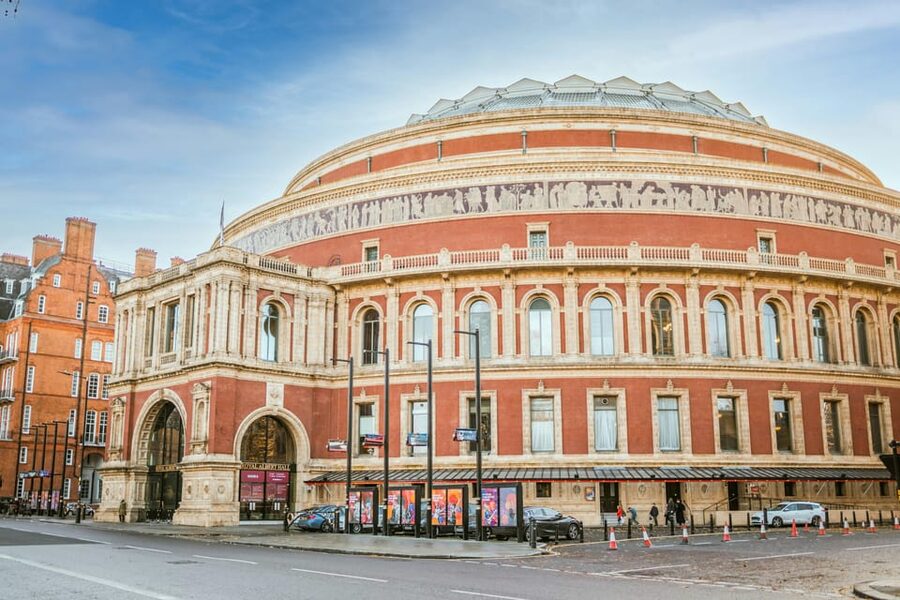
From the museum quarter, the route heads toward the Royal Albert Hall and the Albert Memorial before continuing through Kensington Gardens. These sights give the walk a change of scale. You move from institutional buildings to a concert hall, a monumental memorial and open parkland.
The Albert Memorial is especially tied to Prince Albert and the Victorian story introduced at the start. It gives the tour a visual focal point for the ideas of public education, industry and cultural ambition. The Royal Albert Hall adds another layer, linking the district to performance and public events.
Kensington Gardens provides a calmer stretch. You can expect time to walk at an easy pace, stop for photographs and hear how royal plans, garden design and nineteenth-century building projects shaped the area around it.
The exterior of Kensington Palace is also part of this section. The palace is associated with Princess Diana, a detail that gives the stop a more recent emotional connection for many visitors. You should think of this as a guided look at the setting and its story, not a palace admission visit.
I like this middle section because it keeps the tour from becoming a march between façades. After the dense museum district, the gardens offer room to breathe. Families may find this portion easier than a tightly packed city-center walk, and the step-free route helps keep the pace comfortable.
Knightsbridge, Harrods and London’s polished side
The walk then enters Knightsbridge, where the mood shifts again. Here, red-brick mansions, embassies and luxury shops show London at its most polished and expensive.
Harrods is the obvious landmark, but the surrounding architecture is just as useful for understanding the district. The contrast between grand residences and world-famous retail tells you how Knightsbridge developed into a place where heritage, wealth and international commerce sit side by side.
You will not receive shopping included in the tour, and this is not a retail-focused outing. Still, a walk past Harrods gives you context that is hard to get from a department store visit alone. You see the store as part of a wider neighborhood, not simply as a famous name on a shopping list.
This portion will suit you if you enjoy comparing London districts. South Kensington presents public institutions. Kensington Gardens brings royal connections. Knightsbridge turns toward private wealth and luxury. The walk makes those changes visible in a short distance.
The drawback is that a two-hour route can only offer an introduction. You will see the area and hear its broad story, but you will not have time to explore Harrods, visit a museum and linger in every square. If your main goal is shopping, save extra time after the tour.
A few more London days worth weighing up
- From London: Harry Potter Warner Bros Studio Tour
★ 4.7 · 26,588 reviews - London: Westminster to Greenwich River Thames Cruise
★ 4.5 · 22,836 reviews - London: Madame Tussauds London
★ 4.6 · 20,915 reviews - London: Warner Bros. Studio Tour with Transfers
★ 4.7 · 17,586 reviews
Chelsea’s mews and private garden squares
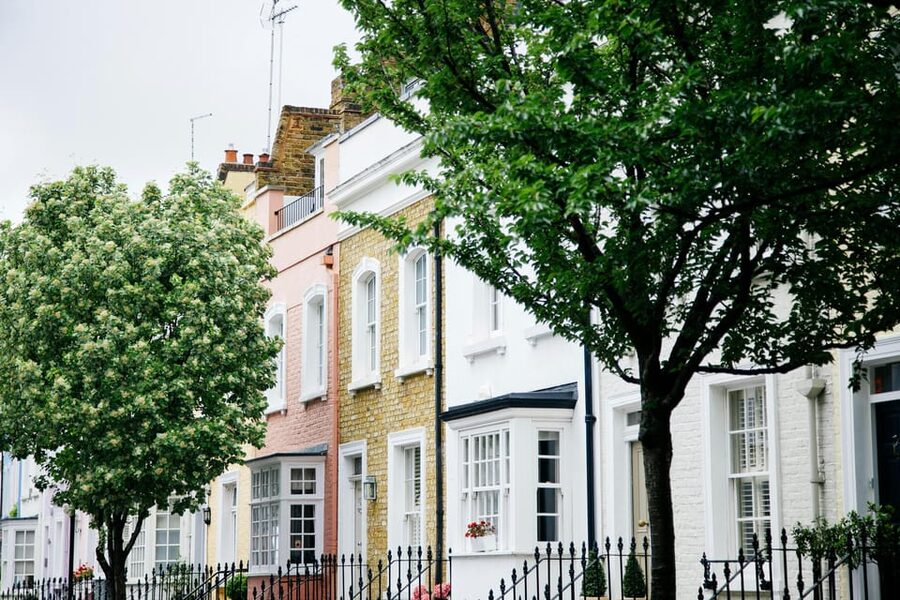
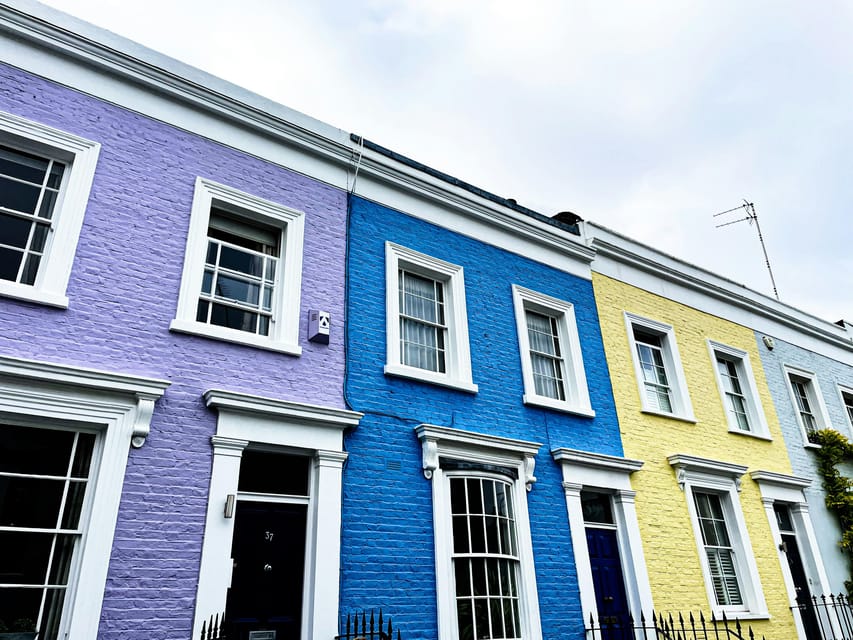
Chelsea brings the most intimate part of the route. The streets become quieter, with rows of Georgian and Victorian townhouses, old mews and private garden squares.
The mews were originally built to support larger homes, with stables and service buildings tucked behind the main streets. Today, many have become sought-after residences. Their smaller scale makes them a pleasant contrast to the formal museums and large monuments earlier in the walk.
Private garden squares are another Chelsea feature. You can pause outside them and admire the way the houses are arranged around shared green space. Since these gardens are private, the tour lets you appreciate their design without treating them like public parks.
This is where the guide’s local perspective can add real value. Chelsea has long attracted artists, writers, designers and people who challenged convention. The neighborhood’s creative identity is tied not only to major landmarks but also to the quiet streets where residents lived and worked.
Blue plaques may help connect buildings with past residents, but the amount of detail you receive depends on the guide and the pace of the group. Simona has been singled out for a warm, prepared approach, and one family found she kept two young children involved. Another guest wanted more specific stories about buildings and people. I would book this tour for a pleasant, well-shaped introduction, not as a specialist architectural lecture.
Finishing at Sloane Square and King’s Road
The tour ends at Sloane Square, a useful place to finish because you can continue exploring without needing to return to the start. Sloane Square is the gateway to King’s Road, known for independent boutiques, cafés and galleries.
This final stop also adds a modern cultural note. King’s Road became a center of fashion and rebellion in the 1960s, and its identity still rests partly on style and independent shops. After the royal and Victorian focus of the earlier route, Chelsea shows you how the area remained connected to design and social change.
I like this ending for practical reasons. You can stop for food, browse shops or continue on foot after the guide says goodbye. The route therefore works well as a morning orientation or an afternoon introduction before you choose a museum or neighborhood for a longer visit.
The tour does not include food or drinks, so plan your own break. Since the final point is Sloane Square rather than the starting station, check your next destination before you set off. The one-way design is efficient, but it means you should not leave anything at the meeting point.
How much value do you get for $26?
At $26 per person, this is a reasonably priced way to see several high-cost London districts with a guide. A two-hour walk works out to about $13 per hour, before considering the time you save finding the route and connecting the historical pieces yourself.
The value is strongest if you are new to South Kensington, Knightsbridge and Chelsea. You receive a compact introduction to museum planning, Victorian ambition, royal connections, luxury shopping and Chelsea’s residential streets. Those are several different subjects in one walk.
The value is less certain if you already know the neighborhoods well or want detailed research on every building. No museum entry is included, and the tour’s success depends heavily on the guide’s storytelling. The supplied feedback is mixed on this point: Simona received praise for her preparation and kindness, while another participant wanted more historical facts and named stories.
That difference is worth taking seriously. Before booking, decide what you want from the walk. If you want orientation, pleasant company and a sensible route through attractive districts, $26 is fair. If you want dates, biographies and detailed architectural analysis at every stop, you may prefer a more specialized tour.
Pace, access and what to bring
The route is described as step-free and suitable for people of all ages, including children. It moves at a relaxed pace, with regular chances to stop for photographs. The guide can also take pictures with your phone, which is useful if you are traveling alone or want a group shot.
Wear comfortable shoes. Even an easy two-hour city walk can feel long in poor footwear, and the route includes several neighborhoods rather than one compact site. Bring water and a camera if you like taking pictures.
The tour is wheelchair accessible according to the activity details. Since street conditions and group needs can differ, it is sensible to discuss any specific requirements when booking, but the stated route is step-free.
English, German and Italian are available. Guide Simona is named in the feedback, but the guide assigned to your date may differ. The minimum for a booking is generally two participants, so solo visitors should contact the provider if the booking system does not show a place.
Free cancellation is available up to 24 hours before the start, and you can reserve now and pay later. Those terms are useful if you are arranging a London schedule around museum hours or uncertain weather.
Who should choose this London walk?
I would choose this tour if you want a compact first look at west London’s most polished neighborhoods. It is especially suited to families, first-time visitors, solo visitors who want help with photographs and anyone who prefers a calm walk to a packed sightseeing schedule.
It also suits you if you enjoy contrasts. In two hours, you move from public museums to royal parkland, from Harrods to old stables, and from grand Victorian planning to quiet Chelsea homes.
I would be more cautious if your priority is detailed history. Ask about the guide’s approach before you book, especially if you want extensive stories about blue plaque figures, architects or individual houses. The walk promises history, architecture and local stories, but the balance may lean more toward general neighborhood interpretation than formal scholarship.
Should you book the Kensington and Chelsea walk?
Book it if you want an efficient, step-free route through South Kensington, Kensington Gardens, Knightsbridge and Chelsea, with a clear finish at Sloane Square. The price is fair, the route covers a lot without rushing, and the mix of museums, royal sights, luxury streets and mews makes it more varied than a single-area walk.
Skip it if you already know these neighborhoods or need a highly detailed account of London’s buildings and former residents. For most visitors, though, this is a useful orientation tour. Use it to decide where you want to return, then spend the rest of your day inside the museum, palace or Chelsea street that caught your attention.
FAQ
Where does the tour start?
Meet outside South Kensington Station on Thurloe Street, in front of Viandas. The guide will hold a sign with the tour name.
Where does the tour finish?
The walk ends at Sloane Square, near King’s Road.
How long is the tour?
The guided walk lasts two hours.
What is included in the price?
The price includes the walking tour and guide. Hotel pickup and drop-off, food, drinks and entrance fees are not included.
Can I enter the Victoria and Albert Museum or Kensington Palace during the tour?
Entrance fees are not included. The route visits the museum district and the exterior of Kensington Palace, so you should not assume that indoor admission is part of the walk.
Is the route suitable for wheelchairs and children?
The route is step-free and wheelchair accessible. It is also suitable for people of all ages, including children, and follows a relaxed pace.
What languages are available, and can solo visitors book?
The tour is offered in English, German and Italian. It generally requires at least two participants, so solo visitors should contact the provider if they cannot book their preferred time.
Just added around London
- London: Wimbledon Tennis Club and Westminster Walking Tour★ 4.5 · 86 reviews
- London: Westminster to Richmond River Thames Cruise★ 4.8 · 23 reviews
- Best of London by LE GRAND – London’s Luxury Bus Tour★ 4.2 · 23 reviews
- Westminster Abbey Skip-the-Line Entry and Private Tour★ 4.6 · 4 reviews
- London: Westminster Walking Tour & St Paul’s Cathedral Entry★ 4.7 · 7 reviews
- From London: Oxford, Stratford-upon-Avon & Cotswolds Trip★ 4.5 · 64 reviews
- From London: Warwick, Oxford, Stratford & Cotswolds Day Tour★ 4.0 · 270 reviews
- Warner Bros. Studios and 1-Day London Hop-on Hop-off tour★ 4.7 · 9 reviews
Walking Tours, compared.

Magical London: Harry Potter Guided Walking Tour
Read our review →

University and City Walking Tour with Alumni Guide
Read our review →
Harry Potter Movies Walking Tour (Kids Go Free)
Read our review →
The Great British Rock and Roll Music Walking Tour
Read our review →
Jack the Ripper Walking Tour – Ripper Vision Tours
Read our review →

Browse the lists this tour appears in