
Reviewed · HISTORICAL TOURS
Roman Ruins to Blitz Bombings: London’s Fiery History
London’s oldest quarter is a history book with traffic lights. On this two-hour walk through the City of London, you move from Roman Londinium to the Great Fire, the Tower’s grim royal drama, the Blitz, and modern finance. The route is packed with small clues that are easy to miss when you walk these streets alone.
I like the limited group size of 15, which gives you a fair chance to hear the guide and ask questions. I also like the mix of serious history and odd facts, including Boudica’s surprising link to Harry Potter. The main drawback is that this is an outdoor orientation walk, not a museum tour, so you will not enter the Tower, Bank of England, or other major buildings.
Key points
- Roman London in plain sight: See surviving sections of the Roman wall and learn where Londinium began.
- A compact historic route: Cover about 2.5 miles from Tower Hill to Blackfriars in roughly two hours.
- Stories beyond the usual landmarks: Hear about the Lord Mayor, London Stone, Boudica, Anne Boleyn, and the Blitz.
- A small English-speaking group: The tour limits attendance to 15 people.
- A useful first-day walk: Get your bearings in the City and collect ideas for places to revisit.
- A good price for a live guide: At $26 per person, the value rests in the guide’s storytelling and local context rather than admission tickets.
From Roman Londinium to the Blitz in 2.5 miles
This tour crosses the City of London, the ancient core of the capital. It is not a broad survey of every period in London’s past. Instead, it follows a clear thread: how one small Roman settlement became a medieval power center, survived fire and war, and turned into today’s financial district.
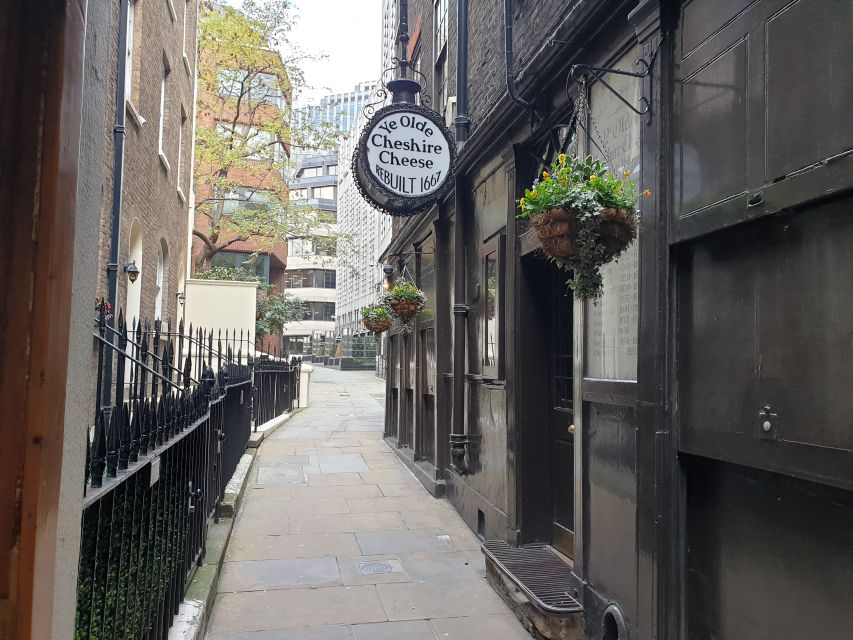
You begin at Tower Hill Station and finish near Blackfriars Station, with Ye Olde Cheshire Cheese as the final stop. That start and finish are useful. You do not need to retrace your steps, and the route fits neatly into a morning or afternoon of sightseeing.
The distance is about 2.5 miles. That is manageable for most people who are comfortable walking for two hours, but you should still wear comfortable shoes. The City has busy streets, hard paving, and frequent stops. This is not a slow garden stroll, but the guide does pause at each location to explain what you are seeing.
More History Tours in London
- London: Historic Pubs of Central London Walking Tour
★ 4.9 · 1,065 reviews - London: Soho Music and Historic Pubs Walking Tour
★ 4.9 · 836 reviews - London: Rock ‘n’ Roll History Tour
★ 4.6 · 645 reviews
Tower Hill puts Roman London under your feet
Meet your guide outside the exit of Tower Hill Station, at the base of the steps leading toward the sundial. Look for the Historic London Tours sign. The meeting point is close to the Tower of London, so allow enough time to find the correct station exit rather than arriving at the last second.
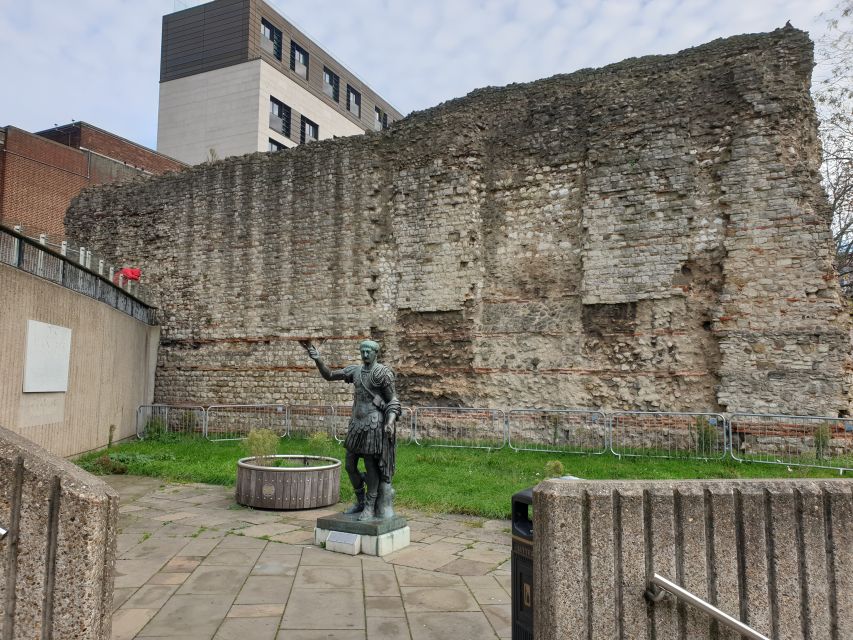
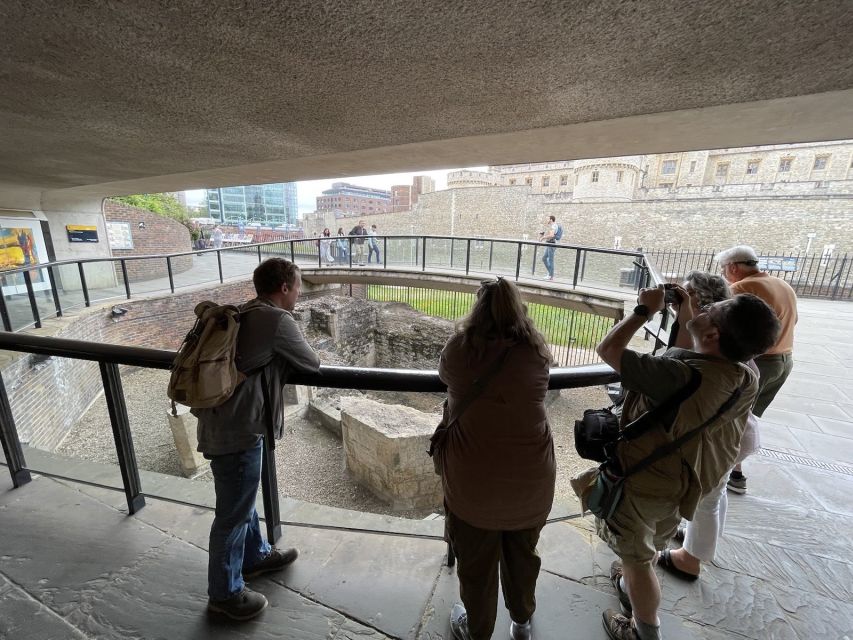
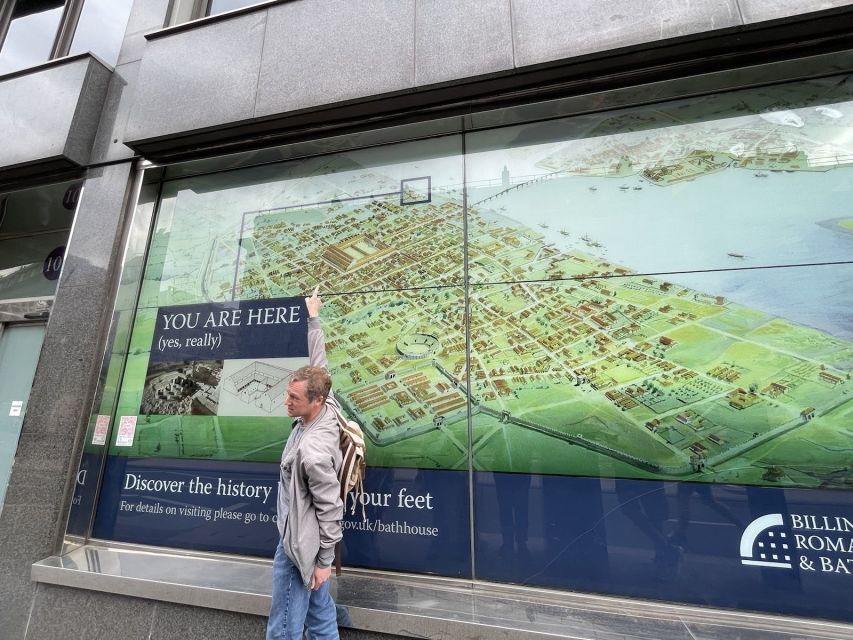
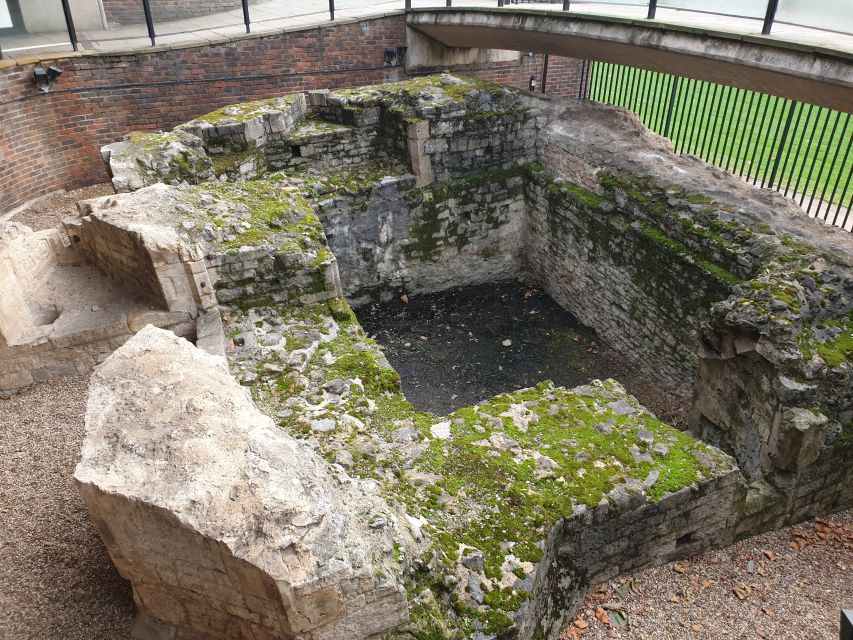
The first major stop is a section of the Roman Wall of Londinium. This is an excellent opening because it gives you a physical sense of London’s age. You are not simply hearing that the city began nearly two thousand years ago. You are looking at part of the defensive system that marked the Roman settlement.
The stop itself is brief, around five minutes, but the wider point is important. Modern London often hides its oldest layers behind offices, roads, and rail lines. A guide helps connect the visible fragment to the much larger Roman city that once occupied this area.
The Tower of London, power with a bloody edge
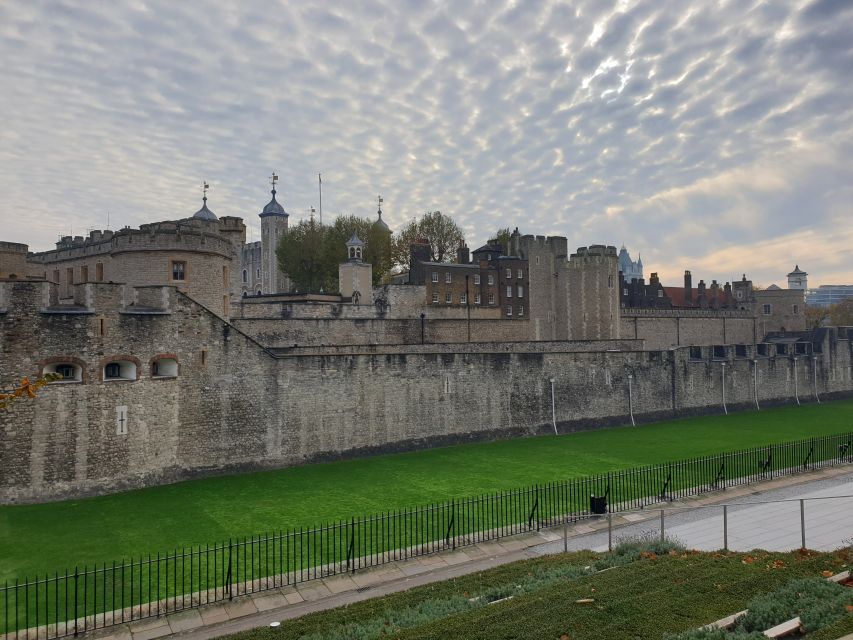
From the Roman wall, the walk continues to the Tower of London. The tour does not include entry, so you will see and discuss the fortress from outside rather than visit its chapels, towers, or Crown Jewels.
That limitation is worth understanding before you book. The Tower can easily take half a day on its own, and this walk gives you only a short introduction. The advantage is that you receive the Tower as part of a wider story, alongside Roman London, royal power, the Great Fire, and the financial district.
Expect the guide to focus on the Tower’s sinister past, including the people and events that made it one of London’s most feared sites. Anne Boleyn’s ghost also enters the story. This is one of the tour’s more theatrical touches, but it works because the Tower has always mixed ceremony, imprisonment, execution, and legend.
If you plan to visit inside later, use this stop to decide how much time you want to return for. The walk will not replace an interior visit, but it can give you useful context before you go.
Saint Dunstan in the East offers a pause from the city
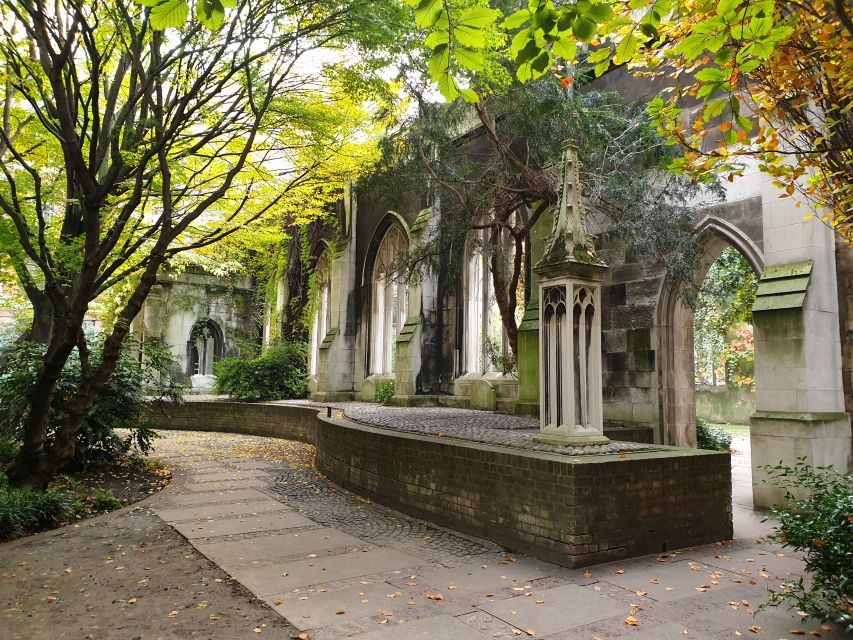
Saint Dunstan in the East Church Garden is one of the route’s quieter stops. The ruined church provides a sharp contrast with the glass, stone, and traffic of the financial district around it.
The tour uses the site to show how London’s buildings have been damaged, rebuilt, and adapted over time. Its story connects naturally with the walk’s larger themes of fire and war. You see how a place of worship can survive in altered form rather than vanish completely.
This is also a practical breathing space. Much of the City is crowded with movement, but the garden gives you a moment to look closely at the remains. The guide’s five-minute explanation should help you notice the structure instead of treating it as a quick photo stop.
A few more London days worth weighing up
- From London: Harry Potter Warner Bros Studio Tour
★ 4.7 · 26,588 reviews - London: Westminster to Greenwich River Thames Cruise
★ 4.5 · 22,836 reviews - Magical London: Harry Potter Guided Walking Tour
★ 4.7 · 22,044 reviews - London: Madame Tussauds London
★ 4.6 · 20,915 reviews
The Monument explains the Great Fire
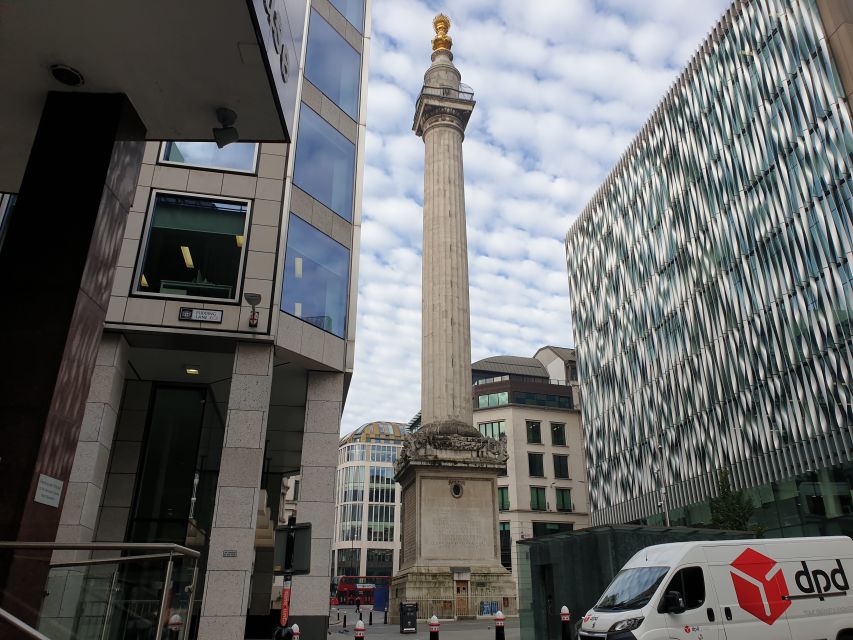
The Monument to the Great Fire of London marks one of the best-known disasters in the city’s past. The column commemorates the fire of 1666, which destroyed a large part of medieval London.
Christopher Wren is part of the story here, as he is at several major London landmarks. The point is not only the fire itself, but also what followed. London had to rebuild, and the rebuilt city changed the shape of the capital.
You will not climb the Monument as part of this tour. That keeps the walk moving, but it also means you should treat this as an outside explanation rather than a full visit. If you want views from the top, you will need a separate ticket and more time.
The stop works especially well for anyone trying to understand why London can feel both medieval and modern within a few streets. Its old churches, lanes, and financial buildings are the result of repeated rebuilding, not one single planned city.
London Stone and the question of what survives
The remaining part of London Stone is a small stop with a large historical role. It is easy to pass without knowing why it matters, which is exactly why it belongs on a guided walk.
The guide places the stone within the story of London’s early identity and long civic life. You also hear about the eight-century-old office of the Lord Mayor, a reminder that the City has its own traditions and institutions alongside the wider capital.
This is the kind of stop you are unlikely to seek out on your own. It is not a grand monument, and there is no long visit involved. Its value comes from the explanation around it. The walk repeatedly shows that London’s past is not limited to famous palaces and churches. Sometimes it survives as a remnant tucked into an ordinary street.
The Bank of England brings history into the present
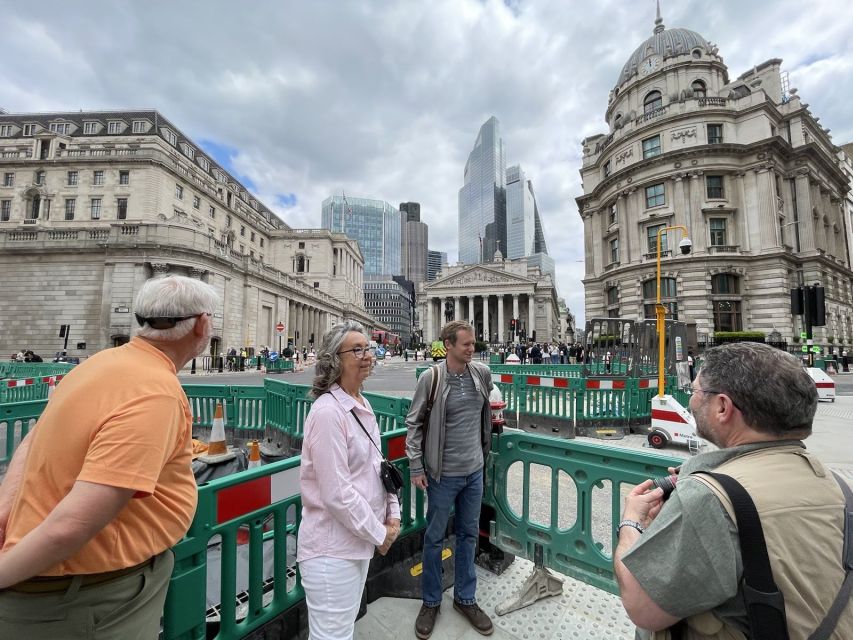
At the Bank of England, the route shifts from royal power and religious buildings to money and finance. The City is still one of the world’s major financial centers, and the Bank gives you a way to understand that modern role.
One of the tour’s more unusual promises is the easiest way to tunnel into the Bank of England’s vaults. Treat this as a story or piece of local lore, not as a chance to enter the vaults. The walk does not include museum or building admission.
That outside-only format is sensible for a two-hour route. You can see the institution in its setting and hear how the City’s financial identity developed without spending a large part of the tour indoors.
I particularly like the contrast here. Earlier stops deal with walls, kings, churches, and fire. At the Bank, the guide shows you a city that did not become less important after its medieval years. It changed jobs.
Guildhall reveals the City’s civic character
Guildhall is the civic heart of the City and one of the stops that helps explain why this district has a separate identity. The tour connects it with London’s long municipal traditions and the office of the Lord Mayor.
The Lord Mayor is not the same as the Mayor of London, and that distinction can confuse first-time visitors. The role discussed on this walk reaches back eight centuries and reflects the City’s own government, ceremonies, and business interests.
You will receive an outside explanation rather than an extended building visit. That is enough to make the surrounding streets easier to read. Instead of seeing only offices and financial institutions, you begin to notice the older civic structure beneath them.
The guide’s style matters most at a stop like this. Dates and titles can become dry very quickly. Tom, one of the guides associated with this experience, has been praised for clear speech, a pleasant manner, and an ability to answer detailed questions without flooding the group with facts.
St Paul’s Cathedral connects Wren to modern London
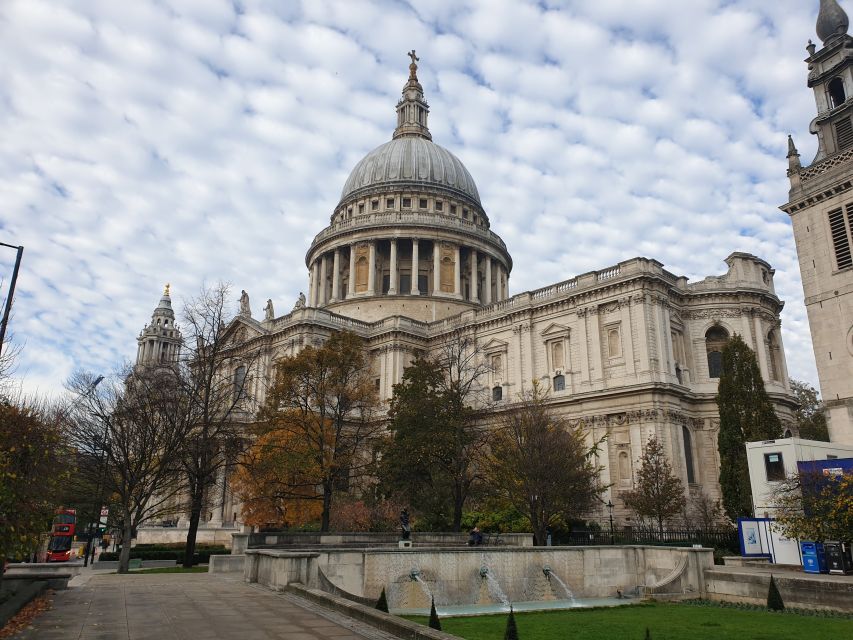
St Paul’s Cathedral is the route’s most immediately recognizable landmark. It also brings Christopher Wren back into the story after the Great Fire.
The tour does not include entry to the cathedral. You should think of this stop as a well-placed outside introduction, with time to take in the dome and understand its place in the rebuilt City.
For a first visit to London, this is useful orientation. St Paul’s is not an isolated church surrounded by empty space. It sits within a district shaped by Roman settlement, medieval government, fire, war, commerce, and modern redevelopment.
The tour title also points toward the Blitz, and the cathedral is a natural place to discuss London’s survival through wartime bombing. The walk does not turn into a full military history lecture. Instead, the guide adds the Blitz to the longer pattern of destruction and recovery that runs through the entire route.
Ye Olde Cheshire Cheese ends the walk in a pub
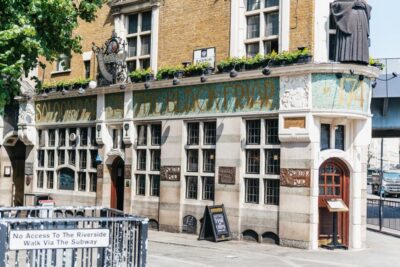
The final stop is Ye Olde Cheshire Cheese, where the tour ends near Blackfriars Station. The historic pub gives the route a fitting finish. After Roman walls, royal imprisonment, fire, civic government, banking, and wartime damage, you end in a place tied to London’s everyday social life.
The tour does not include food, drinks, or an indoor pub visit. Still, the location is practical. You can finish with a meal or drink if you choose, or continue on foot toward Blackfriars and other central sights.
A pub ending also suits the guide’s blend of hard history and trivia. The strongest moments on this walk are likely to be the details that make you stop and look twice at familiar streets.
The guide’s storytelling is the main reason to book
The route includes many stops, but the physical sights alone do not justify the ticket. Most explanations last about five minutes, and you will not enter museums or major buildings. The real product is the guide’s ability to link scattered remains into one understandable story.
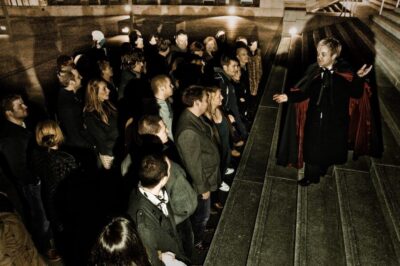
Tom has received especially strong praise for keeping the material interesting without overloading the group. His clear diction matters on a city street. A guide who shouts can be tiring, while a guide who speaks too softly can lose half the group. The available feedback points to a calm delivery and a willingness to handle both ordinary and obscure questions.
The tone also includes humor. Expect trivia alongside serious events, with jokes that may not suit every listener. The overall approach sounds light enough to keep the pace moving, but serious enough to explain why each place matters.
The group cap of 15 is another plus. A smaller group makes it easier to hear, ask questions, and stay together at crossings and crowded corners. It does not make the walk private, but it should feel more personal than a large city tour.
What $26 buys you, and what it does not
At $26 per person, this is a fair price if you want context rather than admission tickets. You are paying for a live English-speaking guide, a carefully arranged route, and two hours of stories across a central part of London.
The value is strongest for:
- A first visit to London
- Anyone interested in Roman, Tudor, Georgian, Victorian, and wartime history
- People who enjoy unusual details as much as major landmarks
- Anyone who wants to see lesser-known remnants such as London Stone and Roman wall sections
- Visitors planning to return to the Tower or St Paul’s after receiving an introduction
The value is weaker if you want to enter the Tower, climb the Monument, visit St Paul’s, or tour the Bank of England. Those admissions are not included, and the walking tour cannot provide the depth of an interior visit.
You can cancel up to 24 hours before the start for a full refund, and the reserve-now, pay-later option keeps your schedule flexible. Starting times vary, so check availability before planning the rest of your day.
Who will enjoy this City of London walk
I would choose this tour for someone who likes history in small portions. You receive many short explanations rather than one long lecture, and the route keeps changing every few minutes.
It also suits you if you have already seen London’s headline sights and want to understand the streets between them. The City can feel anonymous at first, but the Roman wall, Guildhall, London Stone, Bank of England, and old churches give it a strong sense of place.
Families with older children may enjoy the mix of castles, ghosts, fire, war, and Boudica. The Harry Potter connection adds a pop-culture hook, though the tour remains an adult walking history experience rather than a dedicated film tour.
You should think twice if you have difficulty walking 2.5 miles or dislike stopping outdoors in a busy central district. Comfortable shoes are essential, and the tour operates as a walking route rather than a seated presentation.
Should you book Roman Ruins to Blitz Bombings?
Book it if you want a compact, story-led introduction to London’s oldest district. The route covers an impressive range of time, from Roman defenses to the Blitz, while adding less obvious stops that you might miss alone.
The best reason to go is the guide. Tom’s clear delivery, broad knowledge, humor, and patience with questions fit this format well. The small group limit adds to the experience.
Skip it if you want extensive time inside the Tower, St Paul’s, or the Bank of England. For everyone else, $26 is a sensible price for two hours of useful context, especially near the start of a London stay.
FAQ
Where does the walking tour begin?
The tour begins outside the exit of Tower Hill Station. Meet your guide at the base of the steps leading up to the sundial and look for the Historic London Tours sign.
Where does the tour finish?
The walk finishes at Ye Olde Cheshire Cheese, near Blackfriars Station.
How long is the tour?
The tour lasts about two hours and covers roughly 2.5 miles.
Is the Tower of London included inside the tour?
No. The tour includes a guided stop at the Tower of London, but entrance to museums and major attractions is not included.
What language is the tour conducted in?
The live tour guide speaks English.
What should I bring?
Wear comfortable shoes because the route covers about 2.5 miles on foot.
More History Walks around London
- London: Royal Historic Pubs Walking Tour
★ 5.0 · 536 reviews - London: Medieval History Walking Tour from The Tower
★ 4.9 · 318 reviews - London: Witches and History Bankside Walking Tour
★ 4.8 · 223 reviews - London: Natural History Museum Entry Ticket and Guided Tour
★ 3.8 · 212 reviews
Just added around London
- London: Wimbledon Tennis Club and Westminster Walking Tour★ 4.5 · 86 reviews
- London: Westminster to Richmond River Thames Cruise★ 4.8 · 23 reviews
- Westminster Abbey Skip-the-Line Entry and Private Tour★ 4.6 · 4 reviews
- Best of London by LE GRAND – London’s Luxury Bus Tour★ 4.2 · 23 reviews
- London: Westminster Walking Tour & St Paul’s Cathedral Entry★ 4.7 · 7 reviews
- From London: Oxford, Stratford-upon-Avon & Cotswolds Trip★ 4.5 · 64 reviews
- From London: Warwick, Oxford, Stratford & Cotswolds Day Tour★ 4.0 · 270 reviews
- Warner Bros. Studios and 1-Day London Hop-on Hop-off tour★ 4.7 · 9 reviews
Historical Tours, compared.






J&M’s City Sightseeing and History Walking Tour
Read our review →Browse the lists this tour appears in