
Reviewed · THE BEATLES TOURS
London: The Beatles Walking Tour of Soho and Mayfair
The rooftop where the Beatles played together for the last time is the hook here. From there, this two-hour walk through Soho and Mayfair connects the band to theaters, clubs, photo locations, recording spaces, and the business that kept the Beatles name earning money for six decades.
I like the mix of famous landmarks and less obvious music-industry stories, especially the stop connected with John and Yoko’s first meeting. I also like that guides such as Michael and Spencer bring humor and enthusiasm to the route. The main drawback is simple: you walk the whole way, and Abbey Road Studios is not included.
Key points before you book
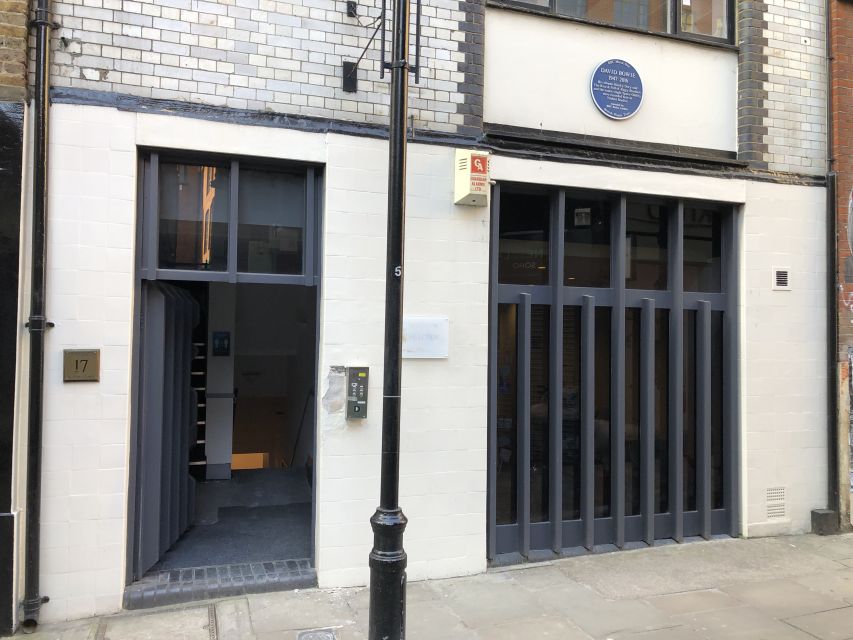
- See the rooftop of the Beatles’ final performance together, a powerful photo stop even from street level.
- Visit sites tied to John and Yoko, including the art exhibition where they first met.
- Walk Carnaby Street, the former center of 1960s Soho fashion and youth culture.
- Pass Ronnie Scott’s jazz club, one of the Beatles’ London hangouts.
- Hear about royalties and Beatles companies, not just songs and celebrity stories.
- Meet outside Hard Rock Cafe on Piccadilly, then finish near Green Park Station after two hours.
Starting at Hard Rock Cafe on Piccadilly
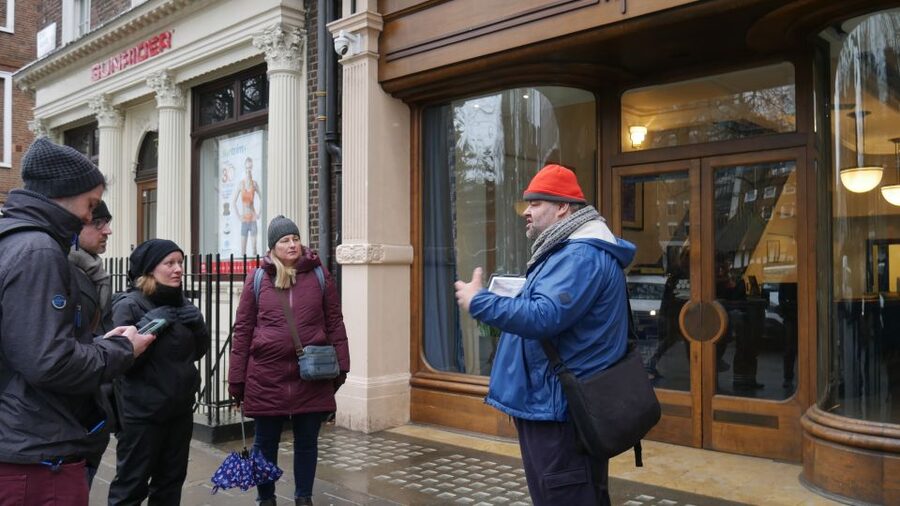
The tour begins outside Hard Rock Cafe at 225 to 229 Piccadilly, in the Criterion Building. The nearest Underground station is Piccadilly Circus, served by the Bakerloo and Piccadilly lines. Use the exit for the statue of Eros, then make your way to the meeting point.
This is a useful starting place for a Beatles walk. You are already close to the theaters, clubs, shops, and grand streets that shaped London’s music scene in the 1960s. The contrast is part of the fun. Piccadilly can feel formal and polished, while Soho nearby has always carried a rougher, more creative edge.
You will be walking in central London for about two hours. Wear comfortable shoes, and keep your attention on the guide rather than expecting a sit-down presentation. This is a street-level tour, so the value comes from seeing locations in context and hearing how they connect.
The tour is conducted in English. The small number of published ratings gives the experience a 4.9 score, with specific praise for Michael’s humor and for Spencer’s clear, enthusiastic way of explaining the Beatles’ work through the locations along the route.
More Walking Tours in London
- Magical London: Harry Potter Guided Walking Tour
★ 4.7 · 22,044 reviews - London: The Original Jack the Ripper Walking Tour
★ 4.7 · 7,833 reviews - London: Harry Potter Movies Walking Tour (Kids Go Free)
★ 4.7 · 3,071 reviews
The rooftop where the Beatles played together for the last time
One of the strongest moments comes when you look up at the roof where the Beatles performed together for the final time. The tour does not take you onto the roof, but seeing the building gives the story a physical anchor.
That matters because the Beatles’ final joint performance was not staged in a conventional concert hall. It happened above the city, with the band playing in public view and London carrying on below. From street level, you can picture the odd mix of excitement, confusion, and curiosity that surrounded the event.
Your guide will place the performance within the wider Beatles story. You are not just stopping for a quick photograph. You are hearing how the band used an unexpected setting to make a public statement, and why the location remains such a lasting part of their story.
This stop is also a good example of the tour’s limits. You should expect exterior views and storytelling, not access to every interior space. If your main aim is to enter famous recording buildings, this walk may feel lighter than a studio-focused experience.
John and Yoko’s first meeting at an art exhibition
Another stop explores John Lennon and Yoko Ono’s first meeting at Yoko’s art exhibition. The point is not simply that two famous people crossed paths. The guide uses the location to explain how art, music, and London’s creative circles overlapped.
This gives the tour a more personal angle. Beatles stories often focus on sold-out concerts and record sales, but this episode brings the band back to a smaller, more private setting. You get a glimpse of the cultural world around the group, where galleries, clubs, fashion, and music shared the same streets.
I find this kind of stop more useful than another generic celebrity address. The location helps explain a relationship that later became central to Lennon’s life and work. It also gives the walk some variety, moving beyond concert venues and recording studios.
Your guide’s storytelling makes a difference here. Spencer has been praised for explaining the Beatles’ London story with enthusiasm and clarity, while Michael has been singled out for his humor. Those qualities matter on a walking tour, where a dry list of addresses would quickly become tiring.
The Royal Variety Performance and the Beatles’ public breakthrough
The route also covers the Royal Variety Performance, where the Beatles made pop history. This stop connects the group with one of Britain’s most traditional public stages.
That contrast is the key. The Beatles were not simply another young band playing small clubs. Their appearance at a formal national event showed how quickly popular music had moved from the margins to the center of British public life.
You will hear about the performance and why it mattered, rather than simply passing a theater with no explanation. The tour uses the setting to show how the Beatles handled a changing audience, growing fame, and the expectations that came with appearing before a much wider public.
The theaters along the route also help you read central London differently. These are working cultural spaces, not isolated Beatles monuments. The band’s career grew through a city full of stage shows, music halls, clubs, shops, and media attention. Seeing those places close together makes the rise of Beatlemania feel less like a distant story.
More Beatles days in Liverpool:
- London: Beatles and Abbey Road Tour with Richard Porter
★ 4.6 · 543 reviews - A Ticket to Ride: Beatles in London Tour
★ 4.6 · 272 reviews - London: Beatles In My Life Walking Tour with Richard Porter
★ 4.7 · 215 reviews - Liverpool and The Beatles Day Tour from London
★ 4.4 · 157 reviews
Carnaby Street and 1960s Soho
Carnaby Street brings the fashion side of the Beatles story into view. In the 1960s, it was Soho’s fashion center, associated with the bold clothes and youthful style that helped define the period.
You will walk down the street as part of the wider route, with the guide explaining its place in London’s music and fashion scene. The Beatles were part of a much larger change in how young people looked, spent money, and expressed themselves.
This is a pleasant break from the band’s more serious business and relationship stories. It also shows why Soho worked so well as a setting for photoshoots and music videos. The area offered concentrated energy, strong visual character, and easy access to clubs, theaters, and shops.
Do not expect a shopping tour or a long stop inside individual stores. Carnaby Street is used as a historic street scene, not as the main attraction. Its value comes from the way it links music to clothing, image, and the public identity the Beatles helped create.
Ronnie Scott’s and Soho’s music industry
The Beatles’ connection with Ronnie Scott’s jazz club gives the tour another useful angle. Ronnie Scott’s was one of their Soho hangouts, and its presence points to the city’s wider music culture.
The club was not part of a Beatles-only world. Jazz, rock, pop, and other forms of live music shared the same central London area. By including Ronnie Scott’s, the guide can show you how the Beatles were part of a working music scene rather than an isolated phenomenon.
Soho was the beating heart of the music industry in the 1960s, and this portion of the walk focuses on that network. You pass legendary music venues and locations linked to photographs and videos, while the guide explains how the streets supported performers, managers, record companies, and audiences.
This is where a good guide adds real value. A building may look ordinary until you know what happened there. Michael’s humor and Spencer’s enthusiasm are useful because the walk involves many facts packed into a short period. You will get more from the route if you ask questions when a place catches your interest.
The recording studio and the Beatles’ wider music circle
The tour includes a view of a recording studio connected with the Beatles and used by other major rock acts. The exact appeal is clear even without an interior visit: you are seeing a working part of the environment that helped shape British rock music.
The guide uses this stop to explain recording, musicians, and the wider circle around the Beatles. That keeps the focus from becoming too narrow. The band influenced other performers, and London’s studios served as meeting points for a much broader music world.
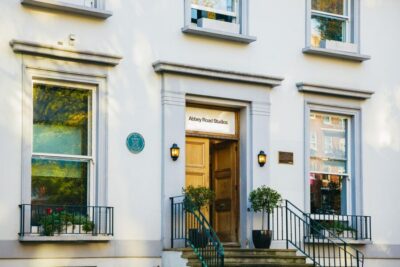
You should check your expectations here. The tour does not include a visit to Abbey Road Studios, and the supplied details do not promise entry into the recording studio seen on the route. Think of it as an exterior location with guided context, not a studio tour.
For many people, that will be enough. The walk is priced at $22 per person, so it offers a relatively low-cost way to connect several central London sites in one outing. If you want studio access, recording equipment, or a longer technical look at Beatles sessions, you will need a different experience.
The business behind the Beatles
The most unusual part of the tour may be its look at the business built around the Beatles. You hear about music royalties and the spin-off companies created over the last 60 years, with much of the revenue driven by millions of loyal fans around the world.
This subject adds useful balance. Beatles history is usually told through songs, hairstyles, films, and famous friendships. The financial side explains how the band’s work continued to generate value long after the original group stopped performing together.
You will learn that the Beatles are not only a musical legacy. They are also a long-running business involving recordings, rights, companies, products, and a global audience. That information may appeal most to listeners who want to understand the machinery behind the fame.
It also helps you see why Beatles locations remain in demand. The sites are not only memorials to the 1960s. They are part of an active commercial and cultural story that continues to bring money and attention into the Beatles brand.
The guide cannot cover every financial detail in two hours, so expect a useful overview rather than an accounting lesson. Still, this topic makes the tour more distinctive than a walk built only around famous photographs.
Finishing near Green Park Station
The walk ends near Green Park Station. That makes the final location practical for continuing your day, with Underground connections and central London sights nearby.
The end point also gives the route a clear shape. You begin around Piccadilly, move through the theater and music districts of Soho and Mayfair, and finish close to Green Park. The route is designed for viewing places from the pavement, not for spending long periods at a single attraction.
At two hours, the timing is manageable for most sightseeing days. You can fit it between other central London plans without giving up half a day. The tradeoff is that the guide must keep moving, so stops may feel brief if you want to linger at every location.
The tour is not suitable for people with mobility impairments. No group size is specified, so you should not book expecting a private walk or a guaranteed small group. The experience is led live in English by a guide from Brit Music Tours.
Is $22 a fair price?
At $22, I consider this good value if you already plan to spend time in Soho and want a clear Beatles thread tying the area together. A self-guided walk would cost less, but you would need to research the locations, work out the route, and connect the music history yourself.
The price covers the guided walk only. It does not include admission to Abbey Road Studios or other attractions, and the details do not list food, transport, or interior access as part of the experience.
The real question is how much you value interpretation. If you know the Beatles well and only want photographs, you may find some stops familiar. If you want the links between music, fashion, theater, clubs, relationships, and business explained as you walk, $22 is a modest cost for two hours in central London.
Free cancellation up to 24 hours before the start gives you some flexibility, and you can reserve now while paying later. Check the available starting times before you plan the rest of your day.
Who should book this Beatles walk?
I would recommend it to Beatles fans who want more than a single famous address. It suits first-time visitors to Soho, music lovers interested in 1960s London, and anyone who prefers stories attached to real streets rather than a museum display.
It is also a good choice for a short London visit. You see several Beatles-linked areas in one compact outing, then finish near Green Park Station for easy onward sightseeing.
I would be more cautious if you have difficulty walking or need frequent rests. I would also choose another activity if your priority is Abbey Road Studios, indoor access, or a detailed technical study of Beatles recording sessions.
Should you book the Beatles Walking Tour?
Book it if you want an affordable, English-language introduction to the Beatles in London, with a guide who can bring humor and enthusiasm to the facts. The strongest elements are the final rooftop performance site, John and Yoko’s meeting place, Carnaby Street, Ronnie Scott’s, and the explanation of how the Beatles became a lasting business as well as a band.
Skip it if you want a full Abbey Road experience or cannot manage a two-hour walk. For everyone else, this is a sensible way to connect Soho and Mayfair with the Beatles story without spending a full day or a large amount of money.
FAQ
Where does the Beatles walking tour meet?
The meeting point is outside Hard Rock Cafe at 225 to 229 Piccadilly, Criterion Building, London W1J 9HR. The nearest Underground station is Piccadilly Circus, served by the Bakerloo and Piccadilly lines. Use the exit for the statue of Eros.
How long does the Beatles walking tour last?
The tour lasts two hours. Starting times vary, so check availability when booking.
What language is the tour conducted in?
The tour is conducted in English with a live English-speaking guide.
Does the tour visit Abbey Road Studios?
No. A visit to Abbey Road Studios is not included.
Where does the walking tour finish?
The tour ends near Green Park Station.
Can I cancel the tour for a refund?
Yes. You can cancel up to 24 hours in advance for a full refund. You can also reserve now and pay later.
Just added around London
- London: Wimbledon Tennis Club and Westminster Walking Tour★ 4.5 · 86 reviews
- London: Westminster to Richmond River Thames Cruise★ 4.8 · 23 reviews
- Westminster Abbey Skip-the-Line Entry and Private Tour★ 4.6 · 4 reviews
- Best of London by LE GRAND – London’s Luxury Bus Tour★ 4.2 · 23 reviews
- London: Westminster Walking Tour & St Paul’s Cathedral Entry★ 4.7 · 7 reviews
- From London: Oxford, Stratford-upon-Avon & Cotswolds Trip★ 4.5 · 64 reviews
- From London: Warwick, Oxford, Stratford & Cotswolds Day Tour★ 4.0 · 270 reviews
- Churchill’s Wartime London Walking Tour★ 4.3 · 4 reviews
The Beatles Tours, compared.
City & Beatles Tour with Live Guide & Live Music
Read our review →
Beatles and Abbey Road Tour with Richard Porter
Read our review →
Browse the lists this tour appears in