
Reviewed · WALKING TOURS
Royal London: from Saxons to Tudors & Stuarts Walking Tour
London’s royal story gets especially vivid when you are standing outside the places where it unfolded. This two-hour walk links the site of the largest royal palace ever built, the place where Charles I lost his head, the setting of Henry VIII’s marriage to Anne Boleyn, and a Stuart building tied to Shakespeare’s court performances.
I like the small six-person limit, which gives you room to ask questions instead of trailing behind a large flag. I also like the way the tour reaches beyond the familiar Tudor names, bringing in Edward the Confessor, William the Conqueror, and lesser-known monarchs.
The main drawback is simple: you stay outside for the whole walk. Rain, cold, and busy London pavements can affect the experience, and the tour is not suitable for wheelchair users, children under 13, or people with mobility impairments.
Key points to know before booking
- A thousand years of royal drama: The walk covers Saxon, Norman, Tudor, and Stuart rulers rather than focusing on one famous family.
- Major execution and marriage sites: You learn where Charles I was executed and where Henry VIII married Anne Boleyn.
- Shakespeare and the Stuart court: One stop connects the tour with the first performances of Shakespeare’s plays.
- Groups capped at six: The small format makes it easier to hear the guide and ask about confusing family trees.
- Guides with personality: Natalie has been praised for her broad command of British history, while Nichole is described as friendly, funny, and insightful.
- Outdoor access only: The walk does not include entry to palaces, churches, museums, or other attractions.
Starting at Trafalgar Square with the monarchy in view
The meeting point is at the entrance to Waterstones bookshop on Trafalgar Square, postal code WC2N 5EJ. Look for the guide described as a quirky short lady, though you should rely on the booking details and guide identification on the day rather than this description alone.
Trafalgar Square is a useful place to begin because it sits at the center of modern London while the tour turns your attention to much older power struggles. From here, you start walking through the part of the city shaped by royal courts, government, religion, executions, and public ceremony.
The opening discussion sets up the broad story. You hear about Edward the Confessor and William the Conqueror, then move toward the Tudors and Stuarts. That order matters because English royal history can quickly become a blur of Edwards, Henrys, Williams, and Charleses.
A good guide makes the family connections manageable. Natalie has been praised for explaining the period as more than a list of kings, and that is the right approach for this route. You get the political background needed to understand why a marriage mattered, why a palace moved, and why one monarch could lose his life while another gained power.
More Walking Tours in London
- Magical London: Harry Potter Guided Walking Tour
★ 4.7 · 22,044 reviews - London: The Original Jack the Ripper Walking Tour
★ 4.7 · 7,833 reviews - London: Harry Potter Movies Walking Tour (Kids Go Free)
★ 4.7 · 3,071 reviews
The vanished palace that once ruled London
One of the most useful stops is the site of the largest royal palace that once stood in London. The important word is once. You will not walk through a vast surviving palace complex here, but you will stand where royal life, government, ceremony, and scandal were concentrated.
That absence is part of the lesson. London has changed so much that some of its most important royal places survive mainly through street layouts, fragments, plaques, and the guide’s explanation. If you want grand interiors and restored rooms, this is not a substitute for visiting a palace. If you want to understand how power occupied the city, the site gives the walk real purpose.
The Tudor section is likely to be the strongest part for fans of royal dramas. Henry VIII, Anne Boleyn, and the succession crisis have been presented countless times on screen, but standing near the place where their marriage took place adds a physical sense of location to the story.
The guide also helps separate television drama from historical fact. That is valuable because series such as The Tudors, Becoming Elizabeth, The White Queen, Gunpowder, Mary & George, and Outlander often compress events or combine characters. The walk does not simply repeat those plots. It uses them as a doorway into the people and choices behind them.
Henry VIII, Anne Boleyn, and the cost of royal marriage
The tour identifies where Henry VIII married Anne Boleyn, one of the clearest examples of how personal desire and royal policy collided. This was not just a love story. Henry’s marriage had consequences for succession, religion, diplomacy, and the authority of the English crown.
You do not need a detailed Tudor background to follow this part. The guide explains why Henry wanted a new marriage, why the issue became a national crisis, and how Anne’s position changed so dramatically. The stop works best when you consider the setting as a place of power rather than just a backdrop for romance.
The larger question is the greatest royal love story of all time. The tour raises that question as part of its story, but it does not reduce British monarchy to couples and courtship. You can expect a wider look at affection, ambition, dynastic pressure, loyalty, and betrayal.
That balance is one reason the walk suits fans of period dramas. You get the emotional hooks, but you also get reminders that royal relationships were tied to land, religion, heirs, and control of the state.
Charles I and the Stuart road to execution
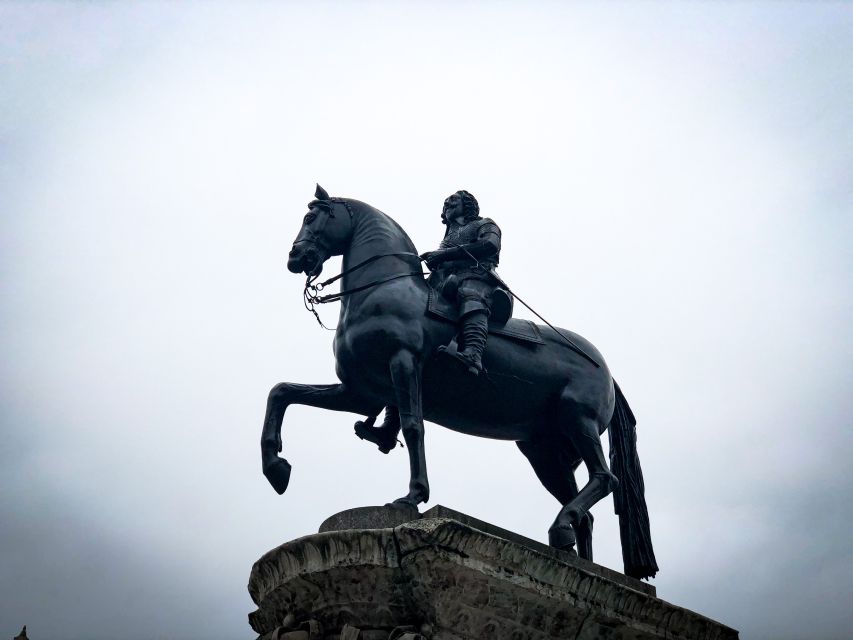
The Stuart portion brings you to the place where Charles I lost his head. This is one of the most powerful moments on the route because it shows how far the idea of royal authority could be challenged.
Charles I was not simply a tragic king in a costume drama. His conflict with Parliament led to civil war, and his execution sent a shock through European monarchy. The site makes the story immediate, even though the execution itself belongs to the past and the surrounding city has changed.
The guide’s job here is to explain the chain of events without turning the stop into a simple good-king versus bad-rebels tale. The story involves competing views of government, religion, taxation, and the limits of a monarch’s power.
You may find this section more demanding than the Tudor material because the names and political positions are less familiar. That is also where a small group helps. You can ask the guide to slow down, clarify who supported whom, or connect the Stuart crisis to the earlier royal story.
The focus on Charles I also gives the tour a useful edge. This is not a walk that treats every monarch as a glamorous celebrity. It shows the danger built into absolute power and the very real consequences of royal decisions.
More royal London walks:
- Highlights of Royal London Bike Tour (3 Hours)
★ 4.8 · 140 reviews - London: Buckingham Palace and Royal London Walking Tour
★ 3.9 · 61 reviews - Early Access:Tower of London Opening Ceremony & Royal London
★ 4.8 · 49 reviews - London: Royal London Tour
★ 3.7 · 46 reviews
A Stuart building and Shakespeare’s court connection
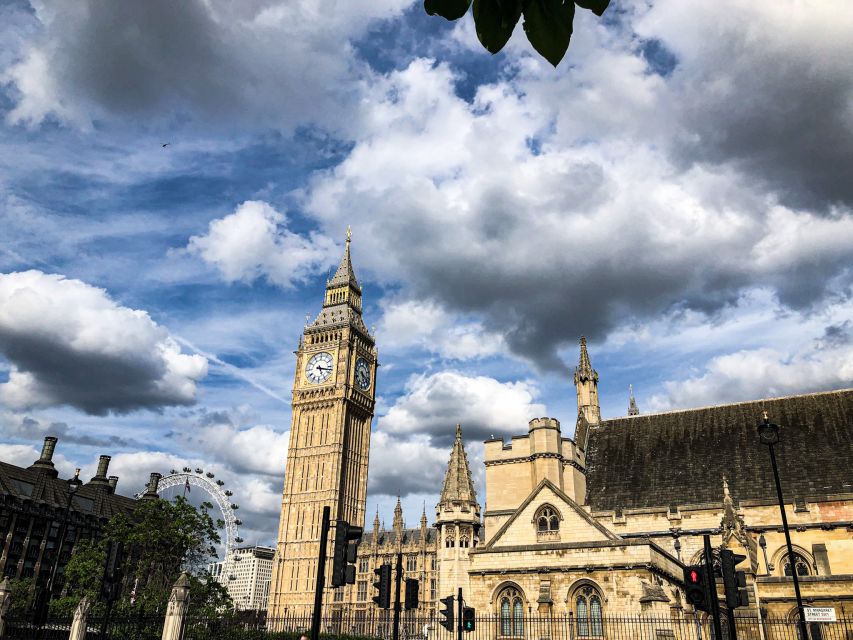
Another highlight is the Stuart building linked with Shakespeare’s first performances. The setting connects theatre with royal life, showing that plays were not separate from politics, status, and court culture.
The stop should appeal even if you are not a Shakespeare specialist. You learn where the plays were premiered and how performance could take place within a world shaped by monarchs and aristocratic patrons. It adds a cultural side to the walk, balancing the executions, marriages, and succession battles.
Because the tour takes place outside, you should not expect to enter the building or see an interior performance space. You are getting context from the pavement, not a theatre visit. That distinction matters when you compare this walk with a ticketed attraction.
Still, the outdoor setting can work well. The guide can point out the location, explain its role, and connect it to the Stuart period without spending your paid time inside a single building. For many people, that makes the tour a good first orientation before choosing which royal or theatrical sites to visit later.
How the two-hour pace feels on foot
The tour lasts two hours and is described as a walk around the home of British monarchy. You remain outside for the full time, so comfortable shoes are essential. Bring water, especially if you are walking in warm weather, and carry an umbrella because the tour runs rain or shine.
The walk is described as manageable rather than strenuous, but that does not mean it is effortless for everyone. London streets can be tiring, and the route may involve standing while listening, crossing roads, and moving between several locations. The activity is not suitable for people with mobility impairments or wheelchair users.
Toilets are available in Trafalgar Square, but opening times can change. Use them before setting off if needed, since the tour itself does not promise regular facilities along the route.
The group limit of six is a real advantage. A guide can respond to questions about Henry VIII, explain a confusing Stuart succession, or pause briefly when a historical point needs more attention. With a larger group, those small exchanges are harder to manage.
The tour is in English only. You will get the most from it if you are comfortable listening to spoken English for two hours, especially when the guide moves quickly through names and political events.
The guides make the difference
The strongest praise centers on the guides rather than on the walking route alone. Natalie is singled out for her wide command of British history and for choosing interesting locations. Her approach appears to include context about kings who are often skipped in popular films and television.
That is a useful distinction. A royal walk can easily become a greatest hits package of Henry VIII, Elizabeth I, and Charles I. A guide who fills in the less famous rulers helps you understand how the monarchy developed over time instead of treating each famous reign as an isolated drama.
Nichole has also been described as friendly, funny, and insightful. Another account praises the guide for combining humor with strong historical explanation, while a separate comment notes that questions were handled with confidence and care.
You should not assume which guide you will receive, but Natalie and Nichole are names connected with the experience. One guide has also been associated with a podcast, which may appeal if you like to continue listening after the tour.
The small format makes personality more important. In a group of six, a stiff or unclear guide would be hard to ignore. Here, the available feedback points to guides who make the history conversational, answer questions, and keep the time moving.
What $29 buys you in practical terms
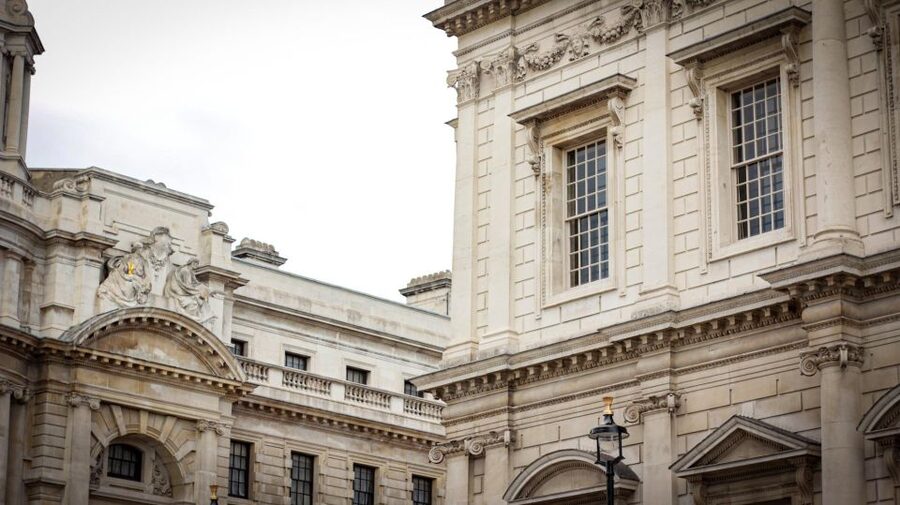
At $29 per person, this is priced as a low-cost introduction to royal London. You are paying for two hours of live explanation and a carefully linked route, not for admission to any palace, church, museum, or historic building.
That distinction helps you judge the value. If you want photographs of grand rooms or access to royal collections, you will need to budget separately for attractions. If you want a guide to connect scattered sites and explain why they matter, $29 is reasonable, especially with the group capped at six.
One dated account describes a private tour costing £15, but the stated price for this activity is $29 per person. Prices can vary by booking conditions and date, so check the current amount before paying.
The ability to reserve and pay later gives you some planning flexibility. You can also cancel up to 24 hours before the start for a full refund. Those terms are useful in London, where weather and packed sightseeing schedules can force changes.
Who will get the most from this walk
I would recommend this tour to you if you enjoy:
- Tudor and Stuart history
- Royal period dramas, with a desire to check the real locations
- Shakespeare and the connection between theatre and court life
- Small-group guiding rather than self-guided sightseeing
- Stories about political conflict, succession, marriage, and execution
- A short introduction before visiting major London attractions on your own
It is especially useful early in a London visit. The walk gives you a map of royal themes and locations, so later visits to historic buildings may make more sense.
I would be more cautious if you need step-free access, dislike walking in poor weather, or want to go inside the places discussed. The tour is also not for children under 13, and the English-only format may not suit every language level.
Should you book Royal London?
Book it if you want a compact royal history lesson on the streets of London, especially one that links Saxons, Normans, Tudors, and Stuarts in a single route. The six-person limit, lively guides, and strong focus on questions make it better suited to curious adults than to people looking only for quick photo stops.
Skip it if indoor access is essential or if two hours outdoors will be uncomfortable. For everyone else, the $29 price gives you a useful base for exploring London’s royal past, with enough drama to entertain and enough political context to keep the stories from becoming empty costume drama.
FAQ
Where does the Royal London walking tour meet?
Meet at the entrance to Waterstones bookshop in Trafalgar Square, London, WC2N 5EJ.
How long does the tour last?
The walking tour lasts two hours.
What language is the tour conducted in?
The live tour is conducted in English.
How large is the group?
Each walk is limited to six attendees.
Does the tour include entry to the historic sites?
No. The tour takes place outside and does not include visits inside the places of interest.
What should I bring?
Wear comfortable shoes and bring a bottle of water. An umbrella is also recommended because the tour runs rain or shine.
Is the tour suitable for wheelchair users?
No. The activity is not suitable for wheelchair users or people with mobility impairments.
Can children join the tour?
Children under 13 are not permitted to join.
Can I cancel the booking?
Yes. You can cancel up to 24 hours in advance for a full refund.
Can I reserve now and pay later?
Yes. The booking option allows you to reserve your place and pay later.
Just added around London
- London: Wimbledon Tennis Club and Westminster Walking Tour★ 4.5 · 86 reviews
- London: Westminster to Richmond River Thames Cruise★ 4.8 · 23 reviews
- Westminster Abbey Skip-the-Line Entry and Private Tour★ 4.6 · 4 reviews
- Best of London by LE GRAND – London’s Luxury Bus Tour★ 4.2 · 23 reviews
- London: Westminster Walking Tour & St Paul’s Cathedral Entry★ 4.7 · 7 reviews
- From London: Oxford, Stratford-upon-Avon & Cotswolds Trip★ 4.5 · 64 reviews
- From London: Warwick, Oxford, Stratford & Cotswolds Day Tour★ 4.0 · 270 reviews
- Warner Bros. Studios and 1-Day London Hop-on Hop-off tour★ 4.7 · 9 reviews
Walking Tours, compared.

Magical London: Harry Potter Guided Walking Tour
Read our review →

University and City Walking Tour with Alumni Guide
Read our review →
Harry Potter Movies Walking Tour (Kids Go Free)
Read our review →
The Great British Rock and Roll Music Walking Tour
Read our review →
Jack the Ripper Walking Tour – Ripper Vision Tours
Read our review →

Browse the lists this tour appears in