
Reviewed · HISTORICAL TOURS
Oxford: History of Medicine Tour – by Uncomfortable Oxford™
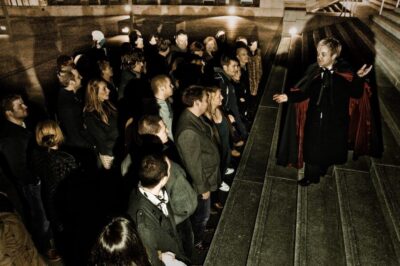
Oxford: History of Medicine Tour is not a parade of famous doctors and preserved medical objects. It is a walking conversation about how Oxford has dealt with disease, bodies, science, and public health over many centuries. You move from medieval epidemics to anatomy studies, the founding of medical education, and early penicillin trials while asking who received care and who paid the price for medical progress.
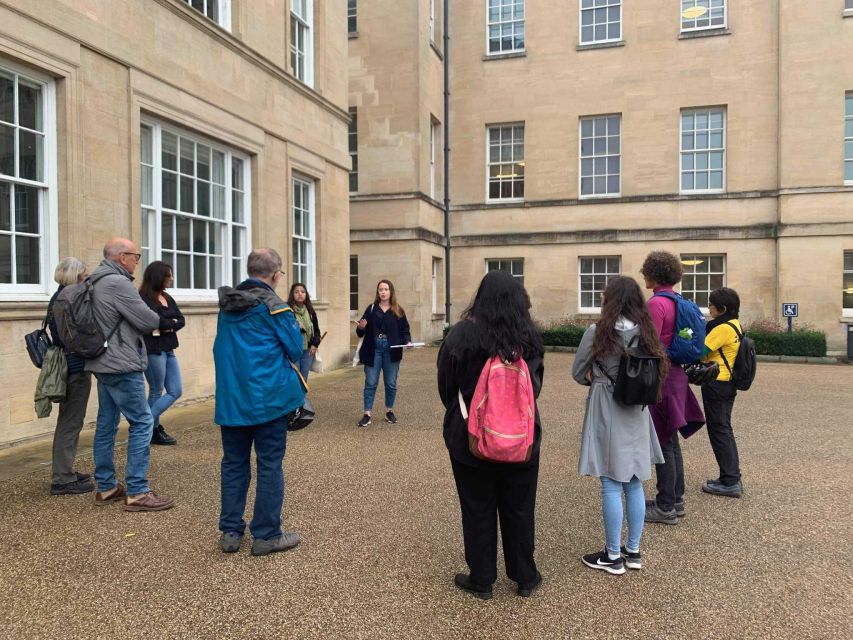
I like the way the tour connects ordinary streets with big medical questions, and I like that your guide is a trained University researcher rather than a general sightseeing guide. The main drawback is simple: you do not go inside Oxford colleges or libraries, and the experience can feel like an outdoor seminar if you were hoping to see medical artifacts or specific places such as William Osler’s house.
I also appreciate the honest tone. The tour does not present medicine as a smooth march toward better health. It looks at class, race, gender, empire, and individual rights. That makes it a good choice for curious adults and teens age 12 and older, but less suitable if you want a light, visual tour with lots of interiors.
Key points to know before booking
- Oxford’s medical story begins with medieval epidemic disease, not only with modern doctors and laboratories.
- The tour is discussion-led, using buildings, streets, and public spaces to explain medical change.
- Jonathan is one named guide, praised for making difficult subjects clear and lively.
- You will not enter colleges, libraries, or medical buildings, so manage your expectations.
- The 2-kilometer route takes 1.5 hours, with places to sit and wheelchair access, though some cobblestones are uneven.
- The $29 price is reasonable for a specialist small-group walk, especially if you value interpretation over admission tickets.
A medical tour that asks uncomfortable questions
The strongest feature here is its subject. Oxford is often sold through grand colleges, scholars, and old stone, but this tour asks what happened behind that polished image when disease spread, bodies were studied, and public health rules affected personal freedom.
You will hear about medieval plagues and the ways epidemic disease shaped Oxford. The point is not simply to memorize dates or names. You will consider how communities reacted to sickness, how health was distributed across social groups, and how fear could produce both useful public action and resistance.
The tour also follows the growth of medical study at the University. Anatomy, dissection, and the creation of a medical school bring up difficult questions about consent and control of the body. That gives the walk a modern edge. You are not only looking backward at old practices. You are being asked to think about present-day debates over public health, access to treatment, and individual rights.
This is why the tour may divide opinion. If you want a conventional sightseeing route with a string of attractive buildings and quick facts, the focus on inequality and medical ethics may seem too much like a lecture. If you enjoy asking how institutions work and who benefits from them, the approach gives Oxford extra weight.
A few more Oxford days worth weighing up
- Oxford: University and City Walking Tour with Alumni Guide
★ 4.7 · 4,429 reviews - Oxford: City and University Tour, including college entry
★ 4.5 · 2,243 reviews - Oxford: Harry Potter Walking Tour Including New College
★ 4.6 · 1,446 reviews
Meeting beneath the Bridge of Sighs
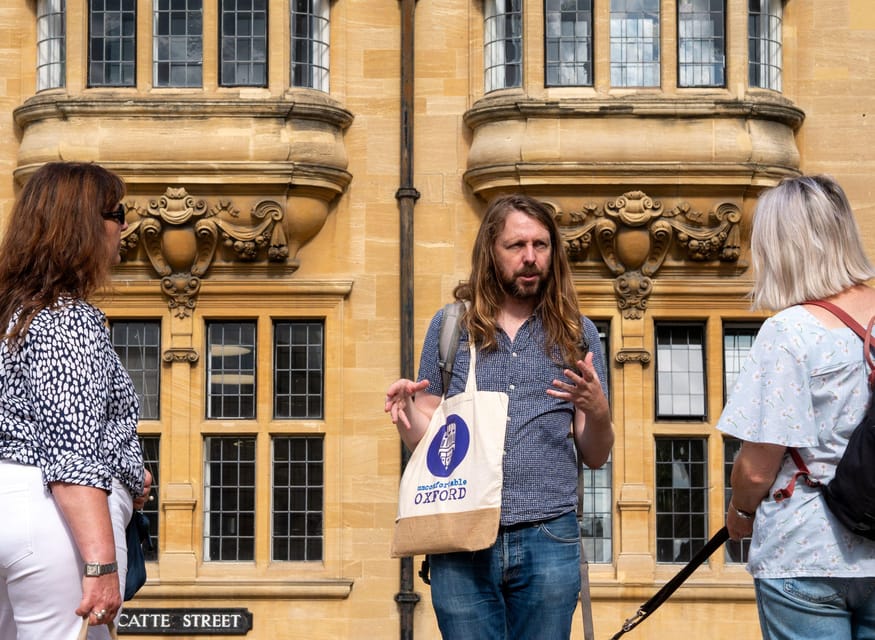
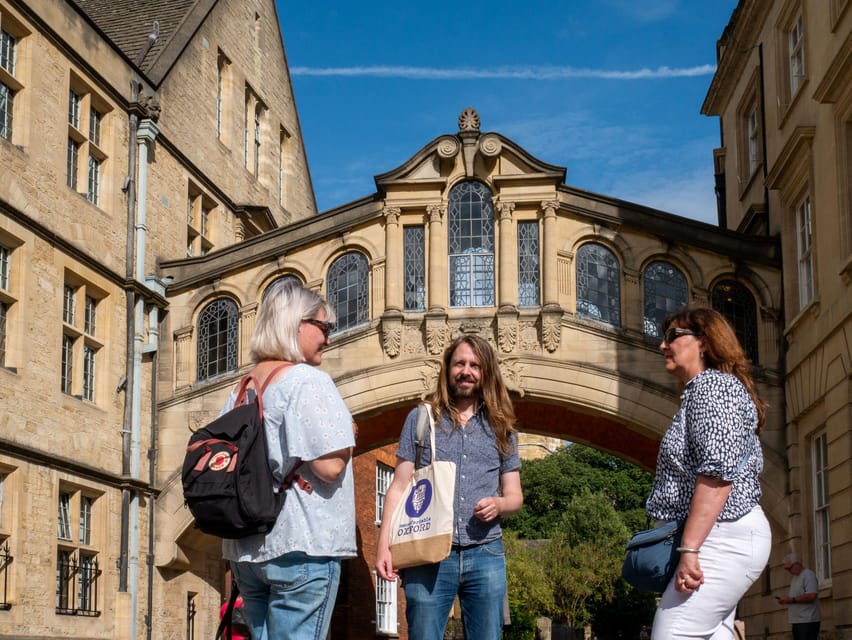
The walk begins under the Bridge of Sighs, officially Hertford Bridge. This is an easy meeting point in central Oxford, but it can be crowded, so look for a guide wearing a bright blue vest and carrying an Uncomfortable Oxford tote bag.
Starting here makes practical sense. You are immediately surrounded by the University setting, yet the tour quickly shifts away from the usual architectural admiration. The bridge becomes a launch point for thinking about Oxford as a place where education, authority, and public life have long overlapped.
The guide is an important part of the experience. All guides complete the company’s official training program, and the walk is led by a University researcher. Jonathan is one guide associated with the experience, and his presentation has been praised for being clear, lively, and interactive. Since guide assignments can vary, you should expect the same subject area but not an identical performance.
The group may be private or small, depending on the booking you choose. That matters here. A discussion about ethics works better when you can ask questions and hear the guide without fighting a large crowd.
New College and the medieval health story
After about 15 minutes of walking, the route reaches New College. You do not go inside, so this is not a substitute for a college admission ticket. Instead, the building and its surroundings help frame Oxford’s older institutions and the social world in which medical ideas developed.
This part of the walk connects the University to medieval epidemic disease. Oxford’s medical past was shaped by outbreaks, crowded urban conditions, religious thinking, and unequal access to protection and care. The guide uses the setting to show that public health has never been only a matter of science. It has also involved money, authority, belief, and trust.
I like this stop because it resists the easy version of medieval medicine. You are not simply told that old medicine was ignorant and modern medicine is correct. The discussion is more useful when it shows how people made decisions with the knowledge and resources available to them, while also examining who was left exposed.
The limitation is visual. You will mostly be looking at the exterior setting while listening. On a wet or cold day, that can test your patience. Wear a waterproof coat and comfortable shoes, and do not assume that an Oxford walking tour means a short stroll between indoor rooms.
The Bodleian area and the study of bodies
The route continues toward the Bodleian Library and its quadrangle, with another roughly 15-minute walk. Again, this is an exterior visit. The library is a powerful symbol of learning, but you will not enter the library or view its collections as part of this tour.
Here the conversation turns toward the University’s role in preserving, teaching, and controlling knowledge. Cases of dissection and the study of anatomy are central. These subjects can sound abstract in a classroom, but the old buildings and enclosed academic spaces help you think about where medical knowledge was produced and who had the right to produce it.
The guide may raise questions about the people whose bodies were used for study and the rules, customs, and power structures surrounding dissection. This is one of the points where the tour’s title earns its place. The history is not presented as clean or comfortable, and the ethical questions do not end in the past.
You should book this walk expecting conversation, not a display of anatomical specimens. If seeing objects is essential to your idea of a medical tour, the Museum of Natural History later in the route may interest you, but the tour itself does not promise a museum visit focused on medical collections.
More history walks around Oxford:
- Oxford: Private City Tour & University Historical Highlights
★ 4.9 · 14 reviews - Oxford: Historic Pubs & Taverns Guided Walking Tour
★ 4.6 · 5 reviews - London: Historic Pubs of Central London Walking Tour
★ 4.9 · 1,065 reviews - Portsmouth: Historic Dockyard Ultimate Explorer Ticket
★ 4.8 · 1,052 reviews
The Clarendon Building and the growth of medical education
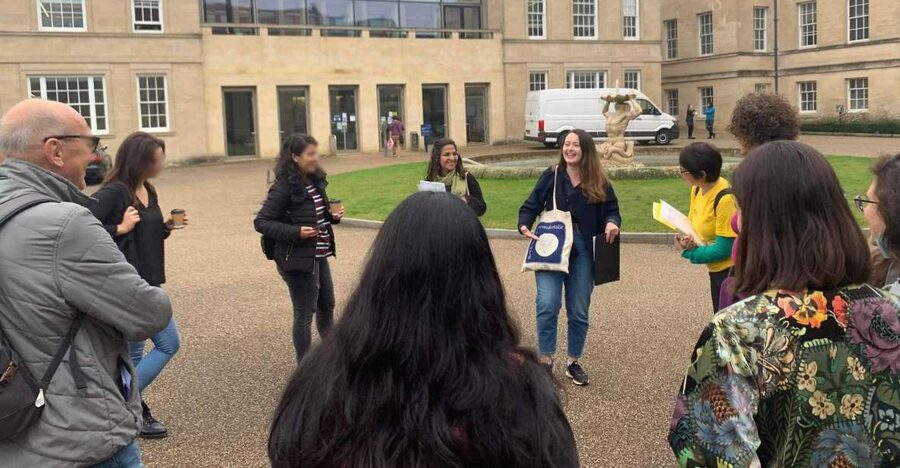
The Clarendon Building is another exterior stop, reached after about 15 minutes of walking. Its setting allows the guide to discuss the University’s changing academic structures and the eventual development of formal medical education.
This is where the tour’s long time span becomes useful. Oxford’s medical story did not begin with one breakthrough. It grew through teaching, institutional support, changing ideas about evidence, and arguments over who could practice and who could be heard.
You will also encounter the tension between progress and exclusion. Medical institutions can improve treatment while reflecting the class, gender, racial, and imperial assumptions of their era. The guide places those issues within Oxford’s story rather than treating them as separate modern concerns.
For me, this is the kind of context that makes a walking tour worthwhile. A building becomes more than an old facade. It becomes a place to ask how authority was built. Still, visitors looking for famous names and personal biographies should know that the emphasis is on systems and social consequences, not just individual achievement.
The Kings Arms Pub and medicine in everyday life
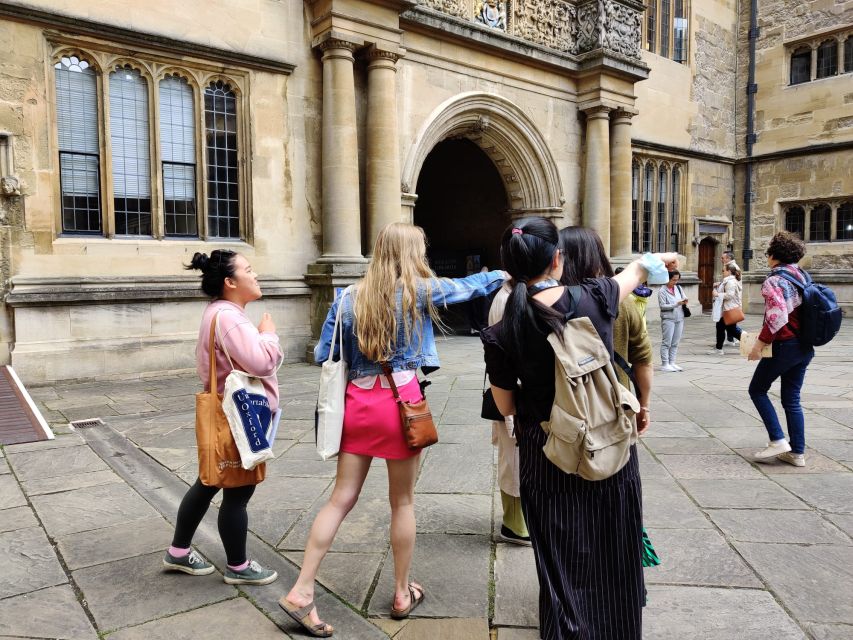
The route includes the Kings Arms Pub, which adds a more ordinary setting to the walk. The pub is not presented as a medical museum. Its value is as part of Oxford’s lived city, where University life and the daily routines of residents have shared the same streets for centuries.
This helps the tour avoid becoming too detached from the people affected by medical decisions. Epidemics, health rules, and access to treatment do not happen only inside laboratories or lecture halls. They reach homes, workplaces, taverns, and public streets.
The stop may also give the group a natural pause in a route that covers about 2 kilometers. There are places to sit throughout the walk, which helps if you prefer a slower pace or need regular breaks.
Do not count on a pub stop in the usual food-and-drink sense. The supplied information identifies the Kings Arms as a route point, not as a scheduled refreshment break. Bring water, especially in warm weather, and dress for the forecast because the tour runs in all weather.
The Museum of Natural History and the promise of penicillin
The Oxford University Museum of Natural History brings the walk into a setting strongly linked with science. The route may pass the museum, but this experience does not include an interior visit. That distinction matters. You can admire the building from outside, but you should not book this tour expecting entry to exhibits.
The medical discussion reaches into the University’s modern period, including the first trials of penicillin. This is one of the most appealing subjects for many people booking the walk. Penicillin offers a familiar story of medical achievement, yet the tour places it alongside the slower and less tidy work of institutions, experiments, access, and public health.
That balance is valuable. You get the excitement of a major medical advance without being asked to view it as an isolated miracle. The broader question is how a discovery becomes useful treatment, who receives it, and how medical systems decide what counts as acceptable evidence.
If your main goal is to see the original penicillin culture or a specific doctor’s home, this tour may disappoint. One person who expected sites such as William Osler’s house and the original penicillin culture found that the walk focused instead on ideas and discussion. That is a fair warning, not a flaw for everyone.
War Memorial Garden and the human cost of medicine
The War Memorial Garden appears later in the route, offering a quieter place for reflection. The tour uses public spaces like this to connect medicine with war, memory, service, and the human cost of disease and injury.
The exact discussion can vary by guide and timing, but the overall theme remains consistent: medical progress takes place within political and social events. Race, empire, gender, and class affect whose suffering is recorded, whose treatment is prioritized, and whose contribution is remembered.
This is also a useful point to consider the difference between a memorial and a medical account. A memorial selects what a community chooses to remember. A critical history asks what may have been overlooked. That approach gives the tour more depth than a simple list of Oxford firsts.
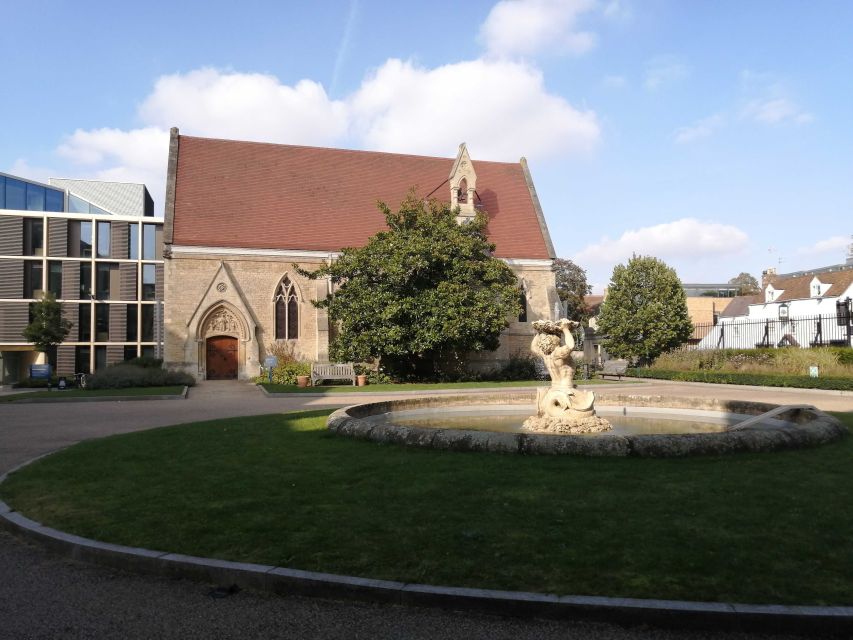
Finishing at St Luke’s Chapel
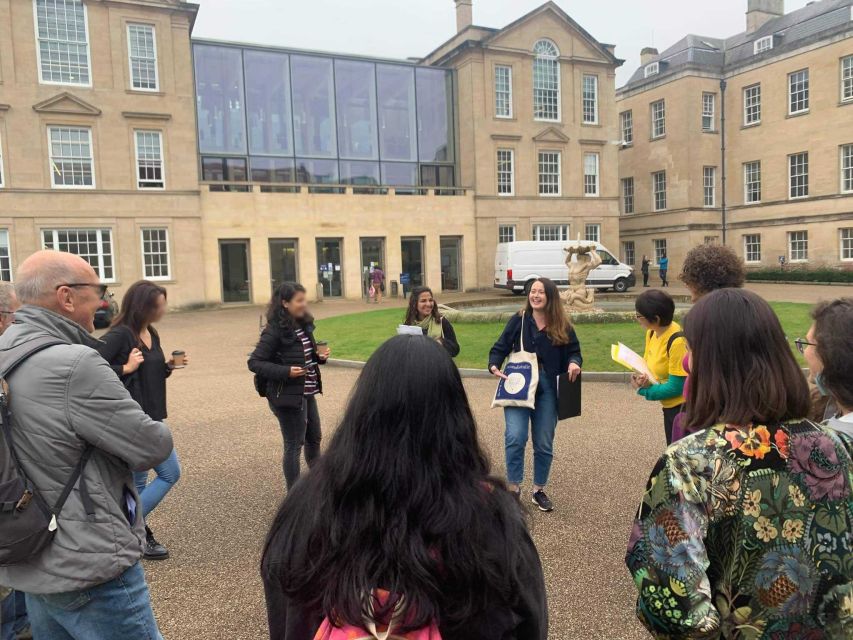
The walk finishes at St Luke’s Chapel, in the Radcliffe Observatory Quarter area. The full experience lasts about 1.5 hours and covers roughly 2 kilometers, with walking intervals of about 15 minutes between several main stops.
The ending gives the tour a clear sense of movement from old University spaces toward later medical and scientific institutions. It is not a grand finale with a collection of objects or an interior demonstration. Instead, you finish with the larger themes still in play: who controls medical knowledge, how public health rules are accepted or resisted, and how older ideas continue to shape modern lives.
Because the route and emphasis can vary slightly with the guide and available time, leave room in your day after the tour rather than scheduling a tight connection. The finish is not necessarily at the original meeting point.
Price, pace, and practical comfort
At $29 per person, this is a fair price for a specialist 1.5-hour walk led by a University researcher. You are paying for interpretation, training, and a focused subject rather than for admission to Oxford colleges, the Bodleian Library, or the Museum of Natural History.
The value is strongest if you like thoughtful walking tours and want a side of Oxford beyond famous architecture. It is weaker if you measure value by the number of interiors visited or physical medical objects seen.
The route is wheelchair accessible, but mild uneven cobblestones and busy weekend streets can affect the pace. There are places to sit, and the distance is moderate, but you should still allow extra time if uneven surfaces are difficult for you.
The tour runs in all weather. A cold rain can change the experience considerably, since much of the content is delivered outdoors while you stand and walk. Bring suitable clothing and a water bottle if needed. Free cancellation is available up to 24 hours before the tour, and you can reserve now and pay later, useful if your Oxford plans are still shifting.
Who will get the most from this walk
I would recommend this tour to you if you:
- Enjoy social history as much as famous buildings
- Want to examine medical ethics and public health in plain language
- Prefer a University researcher as your guide
- Are comfortable with serious subjects involving inequality, empire, race, class, and gender
- Are aged 12 or older and able to follow a sustained discussion
- Have already seen Oxford’s main sights and want a different angle
I would be more cautious if you want a cheerful general tour, a museum-heavy outing, or a hunt for specific medical landmarks. The experience is also less appealing in poor weather if you dislike standing outdoors while listening.
Should you book the Oxford History of Medicine Tour?
Book it if you want Oxford to raise questions, not just provide pretty photographs. The tour’s best moments come from connecting medieval plague, anatomy, medical education, penicillin, and modern public health to the streets around you.
Skip it if your priority is entering colleges, seeing original medical artifacts, or visiting named doctors’ homes. For $29, you receive a focused and well-supported walking discussion, but not a ticketed museum tour. Choose the experience for its ideas, ask questions, and dress for the weather. If that sounds like your kind of Oxford, it is a worthwhile addition to a sightseeing day.
FAQ
How long does the Oxford History of Medicine Tour last?
The tour lasts 1.5 hours.
How far does the tour walk?
The route covers about 2 kilometers.
Where does the tour begin?
Meet your guide under the Bridge of Sighs, also called Hertford Bridge.
How will I recognize the guide?
The guide wears a bright blue vest and carries an Uncomfortable Oxford branded tote bag.
Where does the tour finish?
The tour finishes at St Luke’s Chapel.
Does the tour enter Oxford colleges or libraries?
No. The tour does not go inside colleges or libraries.
Is the tour wheelchair accessible?
Yes. It is wheelchair accessible, though you should expect mild uneven cobblestones and busy streets on weekends.
What language is the tour conducted in?
The tour is conducted in English.
Just added around Oxford
- Undiscovered Cotswolds Private Driving Tour★ 5.0 · 5 reviews
- Oxford: Christ Church Harry Potter Film Locations Tour★ 4.6 · 302 reviews
- Oxford: City and Universities Express Tour & Audio Guide★ 4.5 · 18 reviews
- London: Small Group Oxford, Stratford and Cotswolds Day Tour★ 4.9 · 104 reviews
- Oxford University: Guided Small Group Walking Tour★ 4.8 · 90 reviews
- Oxford: City, Universities and Pubs Walking Tours★ 4.2 · 6 reviews
- Oxford: Alumni-Led Walking Tour w/New College Entry Option★ 4.6 · 124 reviews
- Oxford: Town & Gown Walking Tour★ 4.3 · 12 reviews
Historical Tours, compared.






J&M’s City Sightseeing and History Walking Tour
Read our review →Browse the lists this tour appears in