

Reviewed · OXFORD TOURS
Oxford: The Original Uncomfortable Oxford™ Tour
Oxford’s grand colleges can make the city feel like a polished museum of old stone, but this tour asks who gained power, who was left out, and how the university shaped life far beyond its gates. You’ll see famous landmarks while examining empire, race, class, and gender through a modern historical lens.
I like the way the guide turns a walking tour into a conversation rather than a string of dates. I also like the University researcher guides, who bring academic care without requiring you to know Oxford’s past in advance. The main drawback is that discussion can slow the group, and one past participant found the guide hard to hear without a microphone.
- Oxford’s power examined: Learn how the university grew influential in the city and across the world.
- Landmarks with a wider story: See the Bodleian Library, Sheldonian Theatre, All Souls, Balliol, and more.
- Town versus gown: Understand the long tension between Oxford residents and the university community.
- A questioning format: Guides may ask you to respond and think through historical events, rather than simply listen.
- About 2 kilometers on foot: Expect cobbles, street crossings, and an outdoor route that runs in all weather.
- No college interiors: This is a city-centre history walk, not an admissions-style tour of Oxford’s colleges.
Oxford’s famous stones, seen from another angle
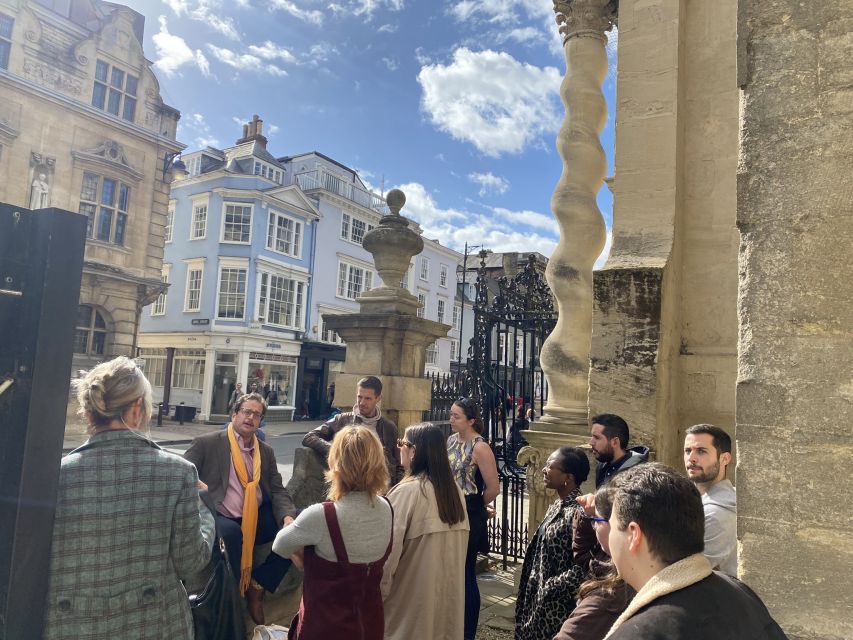
The Original Uncomfortable Oxford Tour is built around a simple idea: you can look at Oxford’s most celebrated buildings and still miss much of the story. The university’s architecture tells of learning and privilege, but it also connects to money, politics, colonial power, social rank, and changing ideas about equality.
That makes this a useful first tour if you want more than a standard roll call of colleges. You will still see the familiar sights, but the guide uses them as evidence in a larger discussion about how institutions are formed and how their old choices continue to matter.
The walk lasts about 90 minutes and covers roughly 2 kilometers. That is manageable for most people, though it is not a completely effortless stroll. You will cross streets, walk over some cobblestones, and remain outdoors in rain or sunshine, so wear shoes with a firm sole and bring clothing suited to the forecast.
The guides are University researchers who have completed specialist Uncomfortable Oxford training. Jonathan, praised for his patience and command of the subject, has led the walk for at least one booking. Another guide used questions and group discussion to help people work through difficult subjects instead of simply speaking at them.
That approach can be excellent for a family with older children or teenagers aged 12 and up. It gives you a way to discuss history together. It also means the experience may feel slower and less predictable than a standard sightseeing walk.
Starting at Carfax Tower or Fantastea
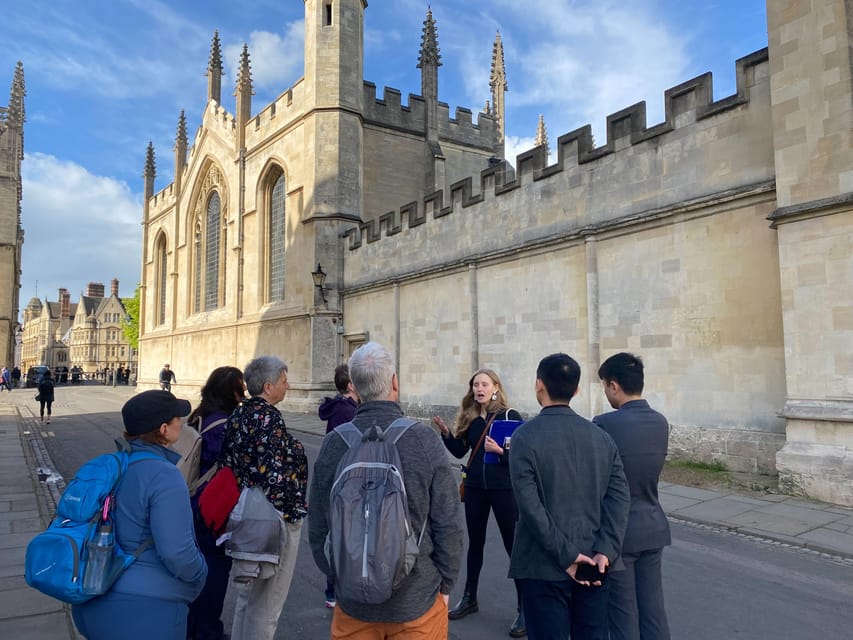
You may begin at Carfax Tower or at Fantastea, a tea shop offering teas from around the world. The exact meeting point depends on the option you book, so check your confirmation carefully before setting off.
Carfax Tower is a practical central starting point. It puts you close to the old heart of Oxford and gives the walk an immediate connection to the city rather than only to the university. If your meeting point is Fantastea, allow enough time to find it and identify the group before the start.
The tour uses central streets, and the guide may adjust the route slightly according to timing and the person leading it. That flexibility is useful, but it means you should not treat every stop as a guaranteed, fixed-length presentation.
A few more Oxford days worth weighing up
- Oxford: University and City Walking Tour with Alumni Guide
★ 4.7 · 4,429 reviews - Oxford: City and University Tour, including college entry
★ 4.5 · 2,243 reviews - Oxford: Harry Potter Walking Tour Including New College
★ 4.6 · 1,446 reviews
Carfax Tower and the shape of the city
The Carfax stop lasts about 10 minutes. It helps set up one of the tour’s key themes: Oxford is both a city and a university town, with the two communities sharing the same streets while often having different interests.
The phrase town and gown refers to this old tension between local residents and university members. At Carfax, the guide can place Oxford’s institutions in an urban setting, rather than letting the colleges appear as isolated monuments.
You will not spend the whole tour inside historic buildings, and that is important to understand from the start. The value here is the interpretation of the public spaces around them. If your main goal is to enter college courtyards, this is not the right product.
University Church and Oriel College
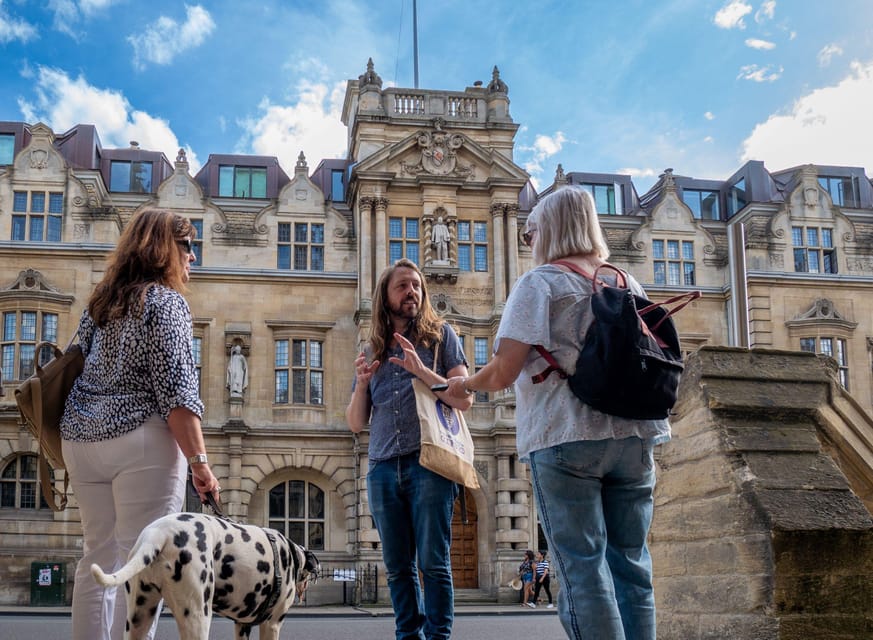
The walk then reaches the University Church of St Mary the Virgin for about five minutes. Its presence helps explain the close ties between religion, education, and authority in Oxford’s development.
From there, the route continues to Oriel College for roughly 10 minutes. Oriel gives the guide another chance to discuss how college institutions gained status and influence. You will be looking at the college from the outside, not touring its rooms or grounds.
These early stops work best as building blocks. The guide is not only telling you when a building was founded. You are being asked to consider who could access education, who held decision-making power, and how social systems shaped the university.
All Souls College and the Rhodes Statue
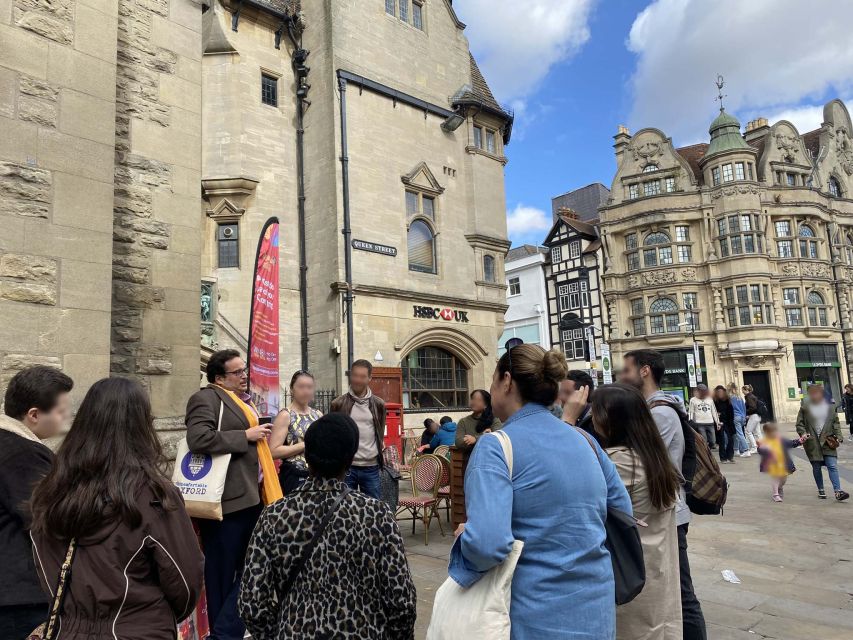
All Souls College receives about 10 minutes. It is one of the sights that makes Oxford feel almost unreal, with formal architecture and a long institutional presence. On this tour, the building is not treated as decoration alone.
The discussion turns toward the systems that allowed elite education to operate and the people whose labor, wealth, or political decisions supported those systems. Topics can include social rank and the way academic institutions reflect the values of their time.
The route also highlights the Rhodes Statue area. This is one of the clearest places to examine Oxford’s connections to empire and the public memory of Cecil Rhodes. The subject is not presented as a simple hero story. You will consider how imperial wealth and influence became tied to a university, and why that legacy remains contested.
For many people, this is the point at which the tour feels most distinct from a classic Oxford walk. The statue is already a well-known image, but the guide gives you tools for thinking about why it is there, what it represents, and how modern institutions respond to difficult legacies.
Same city, a completely different sort of afternoon:
- Oxford: University Walking Tour with Christ Church Visit
★ 4.6 · 820 reviews - Oxford: Harry Potter Insights Divinity School Group Tour
★ 4.6 · 783 reviews - Morse, Lewis and Endeavour Walking Tour of Oxford
★ 4.8 · 710 reviews - Oxford: City Sightseeing Hop-On Hop-Off Bus Tour
★ 4.5 · 706 reviews
The Bodleian Library and the power of knowledge
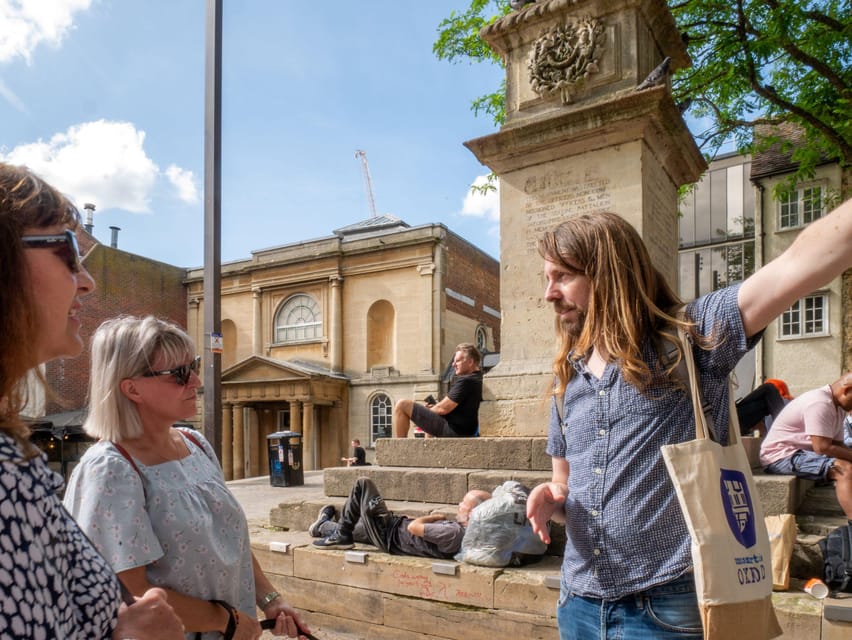
The Bodleian Library is covered for about 15 minutes, the longest stop on the route. You will see one of Oxford’s most recognizable academic landmarks and discuss what libraries and universities mean as centers of knowledge and authority.
This stop is valuable because it links grand architecture to access. Who gets to study, who gets to produce accepted knowledge, and whose experiences have historically been left out are all natural questions here.
Do not expect to enter the Bodleian as part of this experience. The tour remains outside the colleges and university buildings. That can disappoint anyone hoping for interiors, but it also keeps the focus on the city streets and the public face of the institution.
The Bodleian is a good place to listen closely. Some sections of the tour involve group participation, and the guide may invite you to consider an event or issue before explaining the wider context. If the group is large or the street is noisy, hearing every response may be harder.
The Sheldonian Theatre and Balliol College
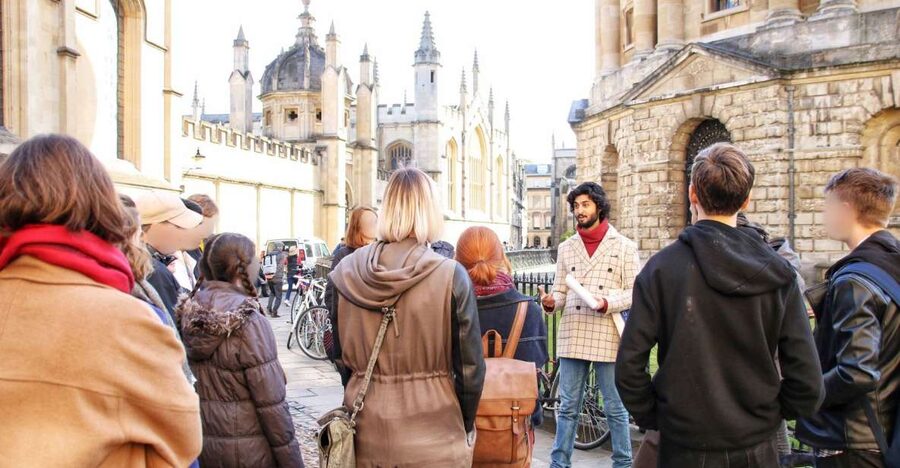
The Sheldonian Theatre is another 10-minute stop. Its ceremonial role makes it a useful setting for discussing university ritual, status, and public display. Oxford’s formal traditions are part of its charm, but they can also show how institutions define belonging.
At Balliol College, the tour spends another 10 minutes. Balliol allows the guide to continue the discussion of education, privilege, and changing social ideas. The key point is not that one college explains all of Oxford. Rather, each building becomes a prompt for asking how the university worked and whom it served.
This is where the group format can help. A strong guide does not simply hand you a finished opinion. Instead, you may be asked to weigh evidence, question familiar assumptions, and connect past policies to present concerns. That method was especially well received by people who wanted an evidence-based conversation about class, race, and gender.
It can also test your patience. One past booking found the tour too scripted and felt that too much time was given to participant comments. If you prefer a brisk walk with constant forward movement, this style may feel slow.
The Faculty of History and Bonn Square
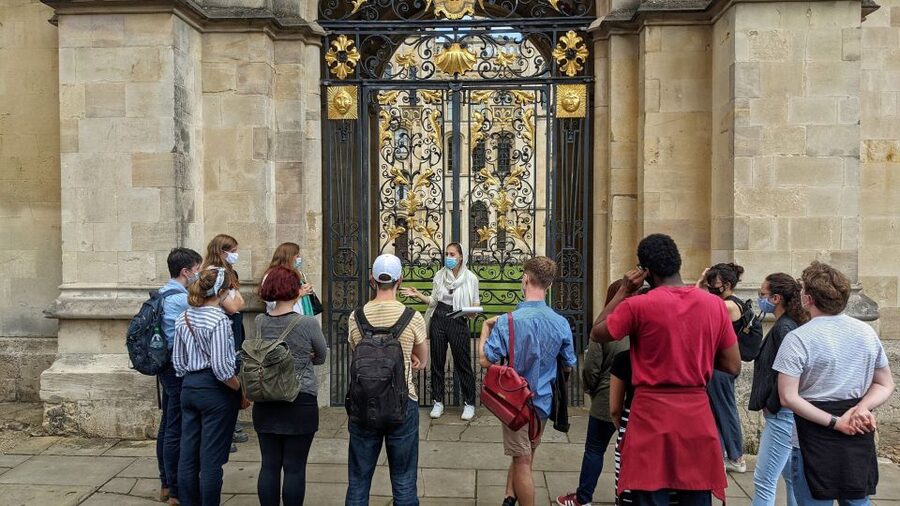
The Faculty of History receives about 10 minutes. The stop brings the subject back to the study of the past itself. Historical writing is shaped by choices about sources, emphasis, and whose voice is treated as authoritative, so this location fits the tour’s purpose.
The walk ends at Bonn Square, after another 10-minute discussion. The square provides a more open public setting than the college fronts and makes a fitting finish for a tour that keeps returning to the relationship between Oxford and the wider city.
Ending in Bonn Square also gives you a useful place to pause and decide what you want to see next. You can continue exploring central Oxford on foot, though the tour itself does not include further college access or an interior visit.
The listed highlights also include the Weston Library and the Rhodes Statue area. Since the route can vary slightly with the guide and time available, the precise order or amount of time at each sight may change.
What the discussion style feels like

This is not a silent procession behind a flag. The guide may ask questions, invite responses, and encourage the group to examine an issue together. That can make the historical material easier to remember because you are working through ideas rather than collecting facts.
The strongest guides keep the discussion focused and make room for different ages and backgrounds. A guide’s patience matters here. Jonathan received particular praise for being patient and clear, while another guide was appreciated for turning difficult topics into thoughtful group discussion.
There are practical limits to an outdoor conversation. Oxford streets can be noisy, and the group may spread out while crossing roads. One participant found it difficult to hear and wished for a microphone, while also noting that the guide was pleasant and well informed.
A visible flag or umbrella would also help you keep track of the guide in a crowded street. The supplied information does not promise one, so stay alert at crossings and make sure you remain with the group.
Price, pace, and what you receive for $29

At $29 per person, the tour costs more than a basic self-guided walk but less than many private sightseeing experiences. The price pays for a trained guide and a focused interpretation of Oxford’s institutional past, not for entry to colleges or attractions.
I think the value is strongest if you want context. You are paying for the questions that connect one building to another, especially the links between the university, empire, social class, and public memory. If you only want photographs and architectural facts, you can see many of these exteriors without booking a tour.
You also receive an Uncomfortable Oxford souvenir sticker and access to a reading list prepared by University experts. The reading list is a real benefit if the tour leaves you wanting more, since 90 minutes can only introduce these subjects.
The overall rating is 4.6 from 21 ratings, but the practical warning is worth noting. One scheduled walk did not take place because the date had been mixed up. The company apologized and tried to make amends, yet the person affected had limited time in Oxford and could not reschedule. Confirm the date and meeting point before you go, especially if Oxford is only one stop on a tight trip.
Who will get the most from this Oxford walk
I would choose this for history lovers, cultural tourists, older children, and anyone who wants to question the polished version of Oxford. It suits you if you enjoy discussion and are comfortable hearing about uncomfortable parts of the past without expecting every subject to be reduced to a quick answer.
It is also a good match for families with children aged 12 or older. The questions about fairness, power, race, and gender can lead to useful conversations after the walk. Younger children may find the pace and abstract subjects less engaging.
You may want another tour if you need step-free certainty at every point, though the company says the guides receive accessibility training and can adapt content and routes for people with different needs. The walk is wheelchair accessible, but cobbles, street crossings, and the changing route are still worth considering when you book.
Choose something else if your priority is entering Oxford’s colleges. This tour does not take you inside them. It is about the stories attached to their public faces and the institution behind the walls.
Rain, shoes, and small ways to enjoy it more
The tour runs rain or shine. Bring a raincoat or other weather-appropriate clothing, and wear comfortable shoes that handle about 2 kilometers of walking and cobbled sections.
Arrive ready to listen outdoors. A busy street can make it harder to catch every sentence, so stay near the guide and avoid drifting to the back of the group. If you have hearing concerns, raise them at the start so the guide can adapt where possible.
Keep the reading list. The tour covers large subjects quickly, and you will not get a full academic treatment in 90 minutes. The follow-up material lets you continue at your own pace and may help you sort out which questions you want to explore.
Should you book the Uncomfortable Oxford Tour?
Book it if you want Oxford’s landmarks paired with a serious look at power, empire, race, class, and gender. The University researcher format, discussion-based teaching, and central route give you more to think about than a standard exterior walk.
Skip it if you want a fast-paced tour, a microphone-led presentation, or access inside college buildings. The $29 price is fair for the guide’s interpretation and the follow-up reading list, but the value depends on your interest in ideas as much as sights.
For the best fit, choose this early in your Oxford visit. It can give familiar buildings a different meaning, then leave you with a clearer sense of what to notice as you continue around the city.
FAQ
How long does the Original Uncomfortable Oxford Tour last?
The tour lasts 1.5 hours.
How far do you walk?
You walk around 2 kilometers through Oxford city centre, including street crossings and some cobblestone sections.
What places are included?
The route includes Carfax Tower, the University Church of St Mary the Virgin, Oriel College, All Souls College, the Bodleian Library, the Sheldonian Theatre, Balliol College, the Faculty of History, and Bonn Square. The highlights also include the Rhodes Statue area and Weston Library.
Do you go inside the colleges?
No. The tour does not take you inside Oxford’s colleges.
Is the tour suitable for children?
It is described as family-friendly and suitable for ages 12 and up.
Is the walk wheelchair accessible?
Yes. The tour is wheelchair accessible, and guides receive accessibility training. The route can be adapted where needed, though it includes cobblestones and street crossings.
What language is the tour in?
The live tour guide speaks English.
What should I bring?
Bring comfortable shoes and clothing suited to the weather. The tour runs in rain or sunshine.
Just added around Oxford
- Undiscovered Cotswolds Private Driving Tour★ 5.0 · 5 reviews
- Oxford: Christ Church Harry Potter Film Locations Tour★ 4.6 · 302 reviews
- Oxford: City and Universities Express Tour & Audio Guide★ 4.5 · 18 reviews
- London: Small Group Oxford, Stratford and Cotswolds Day Tour★ 4.9 · 104 reviews
- Oxford University: Guided Small Group Walking Tour★ 4.8 · 90 reviews
- Oxford: City, Universities and Pubs Walking Tours★ 4.2 · 6 reviews
- Oxford: Alumni-Led Walking Tour w/New College Entry Option★ 4.6 · 124 reviews
- Oxford: Town & Gown Walking Tour★ 4.3 · 12 reviews
Oxford Tours, compared.

University and City Walking Tour with Alumni Guide
Read our review →
City and University Tour, including college entry
Read our review →
Harry Potter Walking Tour Including New College
Read our review →
University Walking Tour with Christ Church Visit
Read our review →
Harry Potter Insights Divinity School Group Tour
Read our review →
Morse, Lewis and Endeavour Walking Tour of Oxford
Read our review →
Browse the lists this tour appears in