Reviewed · TICKETS
Portsmouth: The D-Day Story Entry Ticket
Portsmouth’s D-Day Story does something many military museums struggle to do: it connects the huge scale of the Allied invasion with the ordinary people caught up in it. You move from invasion plans and military equipment to films of veterans, personal possessions, and the human cost of 6 June 1944. The landing craft is the star for me, since seeing tanks packed inside LCT 7074 makes the crossing feel physical rather than just historical.
I also like the museum’s focus on planning and personal stories, not only battle hardware. The Overlord Embroidery gives the visit a striking final chapter, while the free audio guide and helpful staff add useful context. Allow at least two to three hours, and preferably longer. The displays are detailed, and trying to rush through them is the main way to shortchange yourself.
Key points at a glance
- LCT 7074: Board the last surviving landing craft tank and see Sherman and Churchill tanks inside it.
- The invasion plan: Follow the secrecy, deception, timing, and military decisions behind D-Day.
- Personal accounts: Hear veterans and civilians explain what the invasion meant in everyday terms.
- Overlord Embroidery: See 34 hand-stitched panels telling the story of D-Day and the Battle of Normandy.
- Good value: At about $19 per person, the ticket covers a substantial museum visit, usually lasting two to three hours or more.
- Easy Southsea visit: The museum is wheelchair accessible, with a cafe, gift shop, and cheap parking directly outside.
Starting with the landing craft at Southsea
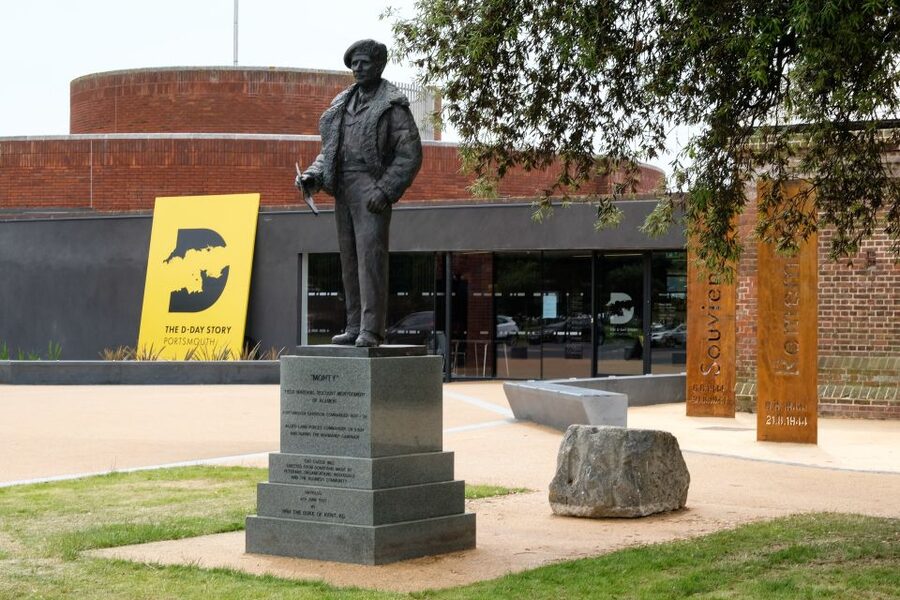
The D-Day Story sits on Clarence Esplanade in Southsea, Portsmouth, PO5 3NT. The setting by the seafront gives you a useful sense of place before you even enter. Portsmouth was a major departure point for the Normandy invasion, so this is not an arbitrary museum location. You are learning about D-Day close to where many troops and vehicles prepared to cross the Channel.
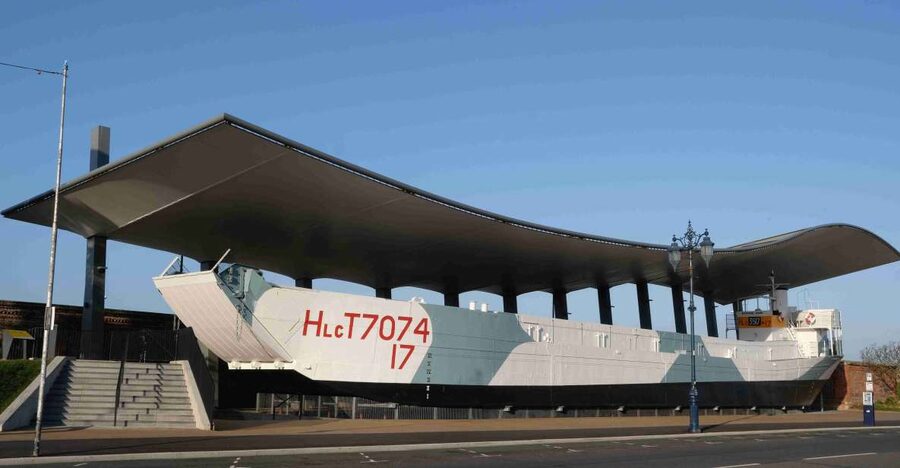
The ticket includes access to LCT 7074, the last surviving landing craft tank. This is more than a quick look at an old boat. You can go aboard and see the cramped interior with a Sherman tank and a Churchill tank in position. Those vehicles show what the craft was built to carry, and they help you picture the noise, weight, and lack of space on the journey to Normandy.
I find this the best place to begin because it gives scale to the rest of the visit. A map can show routes and arrows. A landing craft loaded with tanks shows the practical problem: men, fuel, vehicles, ammunition, and equipment all had to cross the Channel and reach the right stretch of coast at the right time.
Volunteer guides may be available on board, and their explanations add a welcome human touch. Several visitors have found the LCT guides especially useful for understanding what life was like for the sailors inside the craft. You should allow time to look closely at the tanks rather than treating the boat as a photo stop.
The landing craft is also where a small practical issue matters. Access to the LCT closes earlier than the museum galleries. From April through September, the last entry on board is at 4pm. From October through March, it is 3:30pm. If the boat is one of your main reasons for coming, visit it first or arrive well before the afternoon cutoff.
A few more Britain days worth weighing up
- London: The London Eye Entry Ticket
★ 4.6 · 35,875 reviews - London: Tower Bridge Entry Ticket
★ 4.7 · 15,560 reviews - London: Westminster Abbey Entrance Ticket
★ 4.6 · 11,254 reviews
Following the invasion from plan to action
The museum itself is arranged in three main parts. One of the strongest sections explains The Plan, showing how Allied commanders decided when and where to cross the Channel. D-Day was not simply a matter of sending troops toward France. Weather, tides, geography, secrecy, deception, transport, and supply all shaped the decision.
This section is especially useful if you know the broad outline of D-Day but want to understand the machinery behind it. The exhibits explain the preparation required before the first landing craft left England. You get a clearer idea of why the date mattered, why secrecy was so important, and how the Allies tried to mislead German forces about the location and timing of the attack.
I like this part because it avoids presenting history as an inevitable success. The invasion depended on a series of difficult choices and careful preparation. The displays make clear that the operation involved risk at every stage.
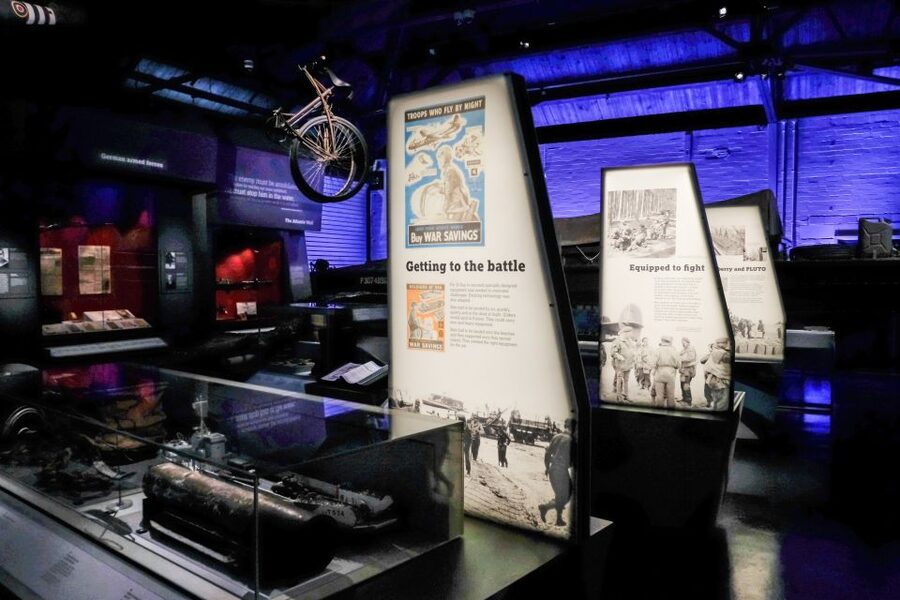
The museum also uses interactive features, objects, and film to keep the story moving. The material is arranged to be accessible rather than purely academic, but there is enough detail for visitors who already know a fair amount about the Second World War. You can skim the main story or stop at numbered objects and read further.
One minor weakness is that a large number of display cases can become tiring if you try to study every item in sequence. The presentation is detailed, and some people may find the repeated pattern of case, label, and object less lively after a while. I suggest choosing a sensible pace. Read the main panels, then spend extra time with the objects and stories that catch your attention.
More than 10,000 objects with a personal focus
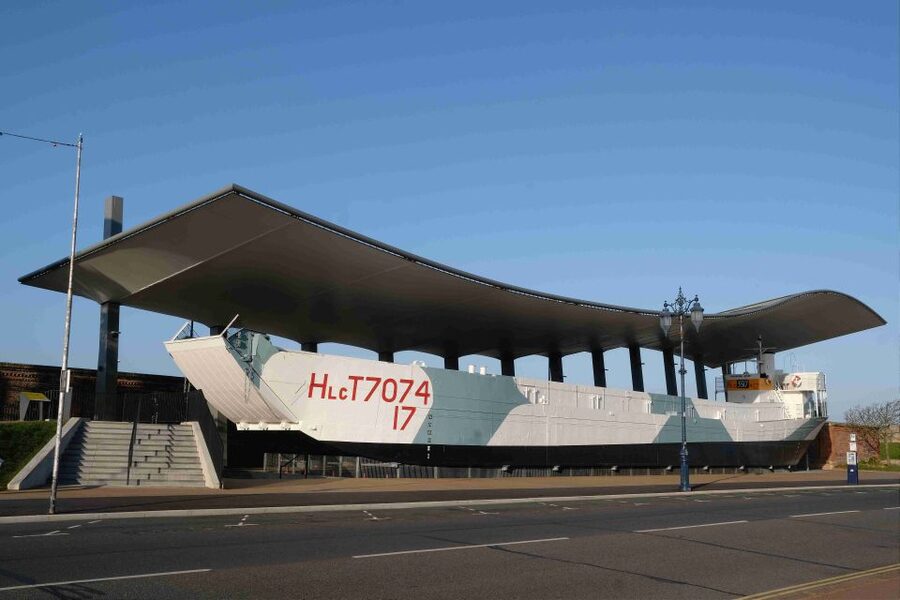
The collection contains more than 10,000 items, artifacts, and personal possessions connected with D-Day. You will not see every object in one visit, of course. The point is the range: military equipment appears alongside the small belongings and records that show how the invasion affected individuals.
The personal material is what keeps the museum from feeling like a display of machines. Films of veterans describe their experiences, while accounts connected with civilians, resistance members, men, women, and children broaden the story beyond the beach landings.
That human focus is one of the most praised parts of the experience. The invasion is often presented through generals, tanks, and troop numbers. Here, you also encounter the fear, confusion, waiting, and uncertainty faced by people who did not know how events would unfold.
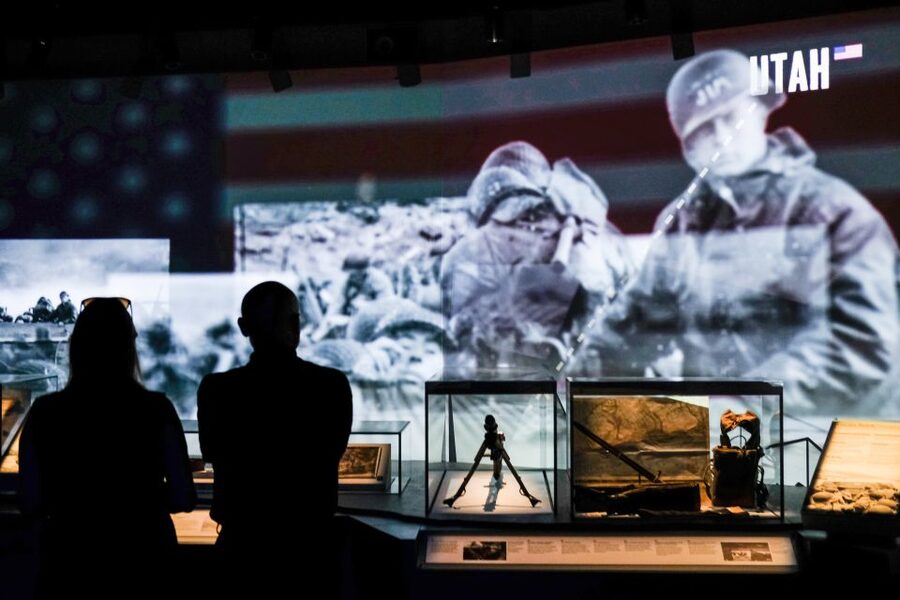
Some film footage shows the Normandy landings directly. It can be difficult viewing, but it helps explain what the soldiers were facing in a way that polished photographs cannot. The museum handles the subject in an informative and respectful manner rather than turning it into spectacle.
Families should use their judgment. Older children and teenagers with an interest in wartime history should find plenty to discuss. Very young children may not have enough background to understand the displays, and the serious film material may not suit them. The museum is not simply an entertainment venue, so plan around the age and attention span of your group.
The Overlord Embroidery deserves time
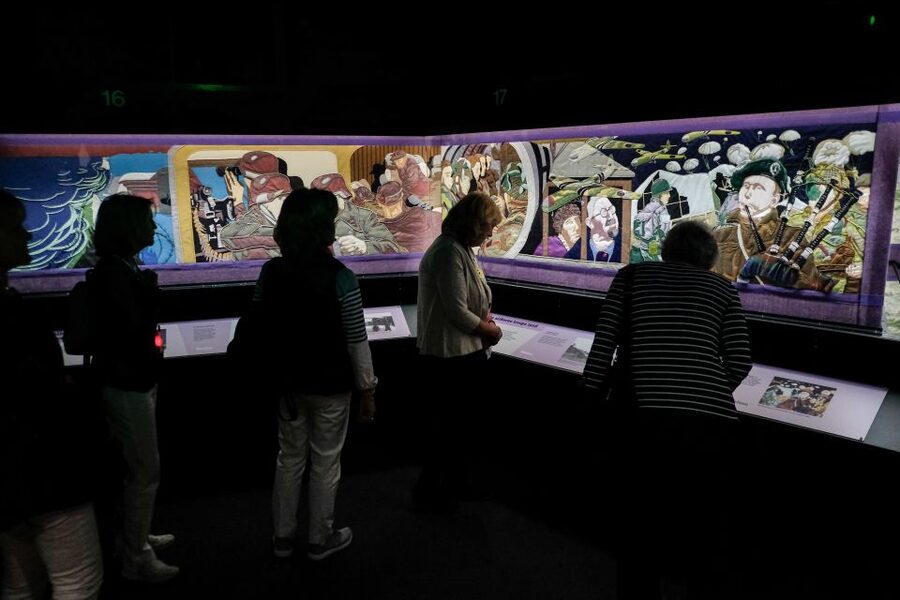
The Overlord Embroidery consists of 34 hand-stitched panels commissioned to remember the people who took part in D-Day and the Battle of Normandy. Although people often call it a tapestry, it is technically an appliqué work. That distinction may matter to textile enthusiasts, but the larger point is that it is an extraordinary visual record.
The panels tell the story in a long sequence, from preparation and embarkation through the invasion and the Battle of Normandy. They offer a change of pace after the military displays. Instead of machinery and maps, you get a carefully made account of people, movement, conflict, and loss.
I recommend saving enough energy for this section. It is easy to reach the embroidery near the end of the museum and give it only a quick glance. That would be a mistake. The panels reward close attention, especially if you have already followed the earlier sections and understand the events being shown.
Lighting is kept low, and one practical consequence is that some details can be harder to see. Give your eyes time to adjust. The subdued setting suits the subject, but it is not ideal for everyone, particularly visitors with poor eyesight.
Many people consider the embroidery the fitting end to the visit. I agree. It gathers the invasion story into one sustained piece of visual storytelling and shifts your attention back to the people who lived through it.
Same city, a completely different sort of afternoon:
- From London: Harry Potter Warner Bros Studio Tour
★ 4.7 · 26,588 reviews - London: Westminster to Greenwich River Thames Cruise
★ 4.5 · 22,836 reviews - Magical London: Harry Potter Guided Walking Tour
★ 4.7 · 22,044 reviews - London: Madame Tussauds London
★ 4.6 · 20,915 reviews
How long you need and how to plan the day
The official ticket is valid for one day, but most people should think in terms of a half-day visit. Two hours is possible if you move briskly. Two to three hours is a more comfortable minimum, and you can spend much longer if you listen to the films, use the audio guide, and read the object labels.
The free audio guide is worth using. It provides extra information and helps connect separate displays. If you are interested in military planning, personal testimony, or the Overlord Embroidery, the guide can add useful layers without requiring you to read every panel.
Opening hours change with the season:
- From 1 April to 30 September, the museum is open from 10am to 5:30pm.
- From 1 October to 31 March, it is open from 10am to 5pm.
- Last entry to the galleries is 4:30pm from April through September and 4pm from October through March.
- Last entry to LCT 7074 is 4pm from April through September and 3:30pm from October through March.
These closing times make a late arrival a poor plan, particularly if you want to see both the boat and the embroidery. I would arrive by early afternoon at the latest, and earlier if you are visiting during a busy period or want a slower, more thoughtful visit.
There is a cafe if you need a break, plus a gift shop with books and other Second World War material. Cheap parking is available directly outside, which makes this easier to visit by car than many major museums in southern England. The museum is wheelchair accessible, though you may want to confirm current access details before setting out if you have specific mobility needs.
Is $19 good value?
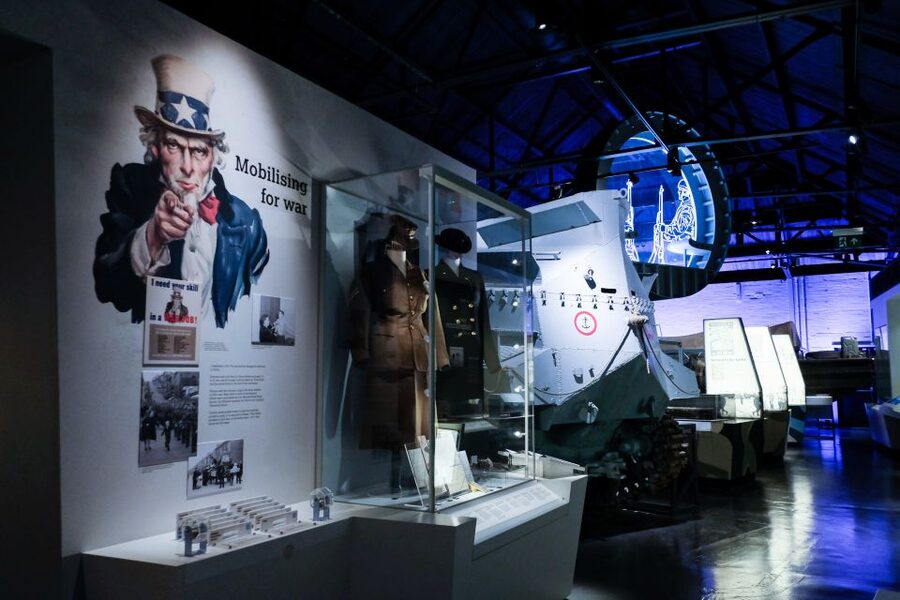
At around $19 per person, this is a solid-value ticket for a specialist museum. You are not paying for a short guided walk or a single exhibit. Admission covers the main museum, LCT 7074, the tanks, film material, interactive displays, and the Overlord Embroidery.
The value improves if you give the visit enough time. A rushed two-hour stop can still work, but it may leave you feeling that you paid for more than you saw. If you can spare three hours or half a day, the price compares well with other major historic attractions.
The ticket also includes flexibility in the booking conditions. You can cancel up to 24 hours in advance for a full refund, and a reserve-now, pay-later option is available. Those terms are useful if your Portsmouth plans depend on weather, transport, or a wider South Coast itinerary.
The museum’s focus is narrow by design. If you want a broad survey of all Second World War campaigns, this is not the right ticket. If you want a focused account of D-Day, the concentration is a strength.
Who will get the most from this visit?
I would recommend The D-Day Story to anyone with an interest in military history, family wartime history, or the planning behind major events. It works particularly well for adults and older children because the museum combines machines, maps, personal accounts, and film rather than relying on one type of display.
It is also a good choice for visitors who want more than a beach or memorial visit. Normandy sites can be moving, but they often require transport and advance planning. Portsmouth gives you a compact way to understand the invasion before visiting France, or to deepen your understanding after a Normandy trip.
The experience may be less suitable if you dislike long museum displays or have only an hour in Portsmouth. The material is serious, and some sections require patience. You will get more from it if you enjoy stopping to read and think rather than simply collecting highlights.
Staff are consistently described as friendly and ready to answer questions. That matters here because the subject can raise practical questions about the craft, tanks, planning, and personal stories. The volunteer presence on LCT 7074 can make that part especially worthwhile.
Final verdict: book it if you want the human story of D-Day
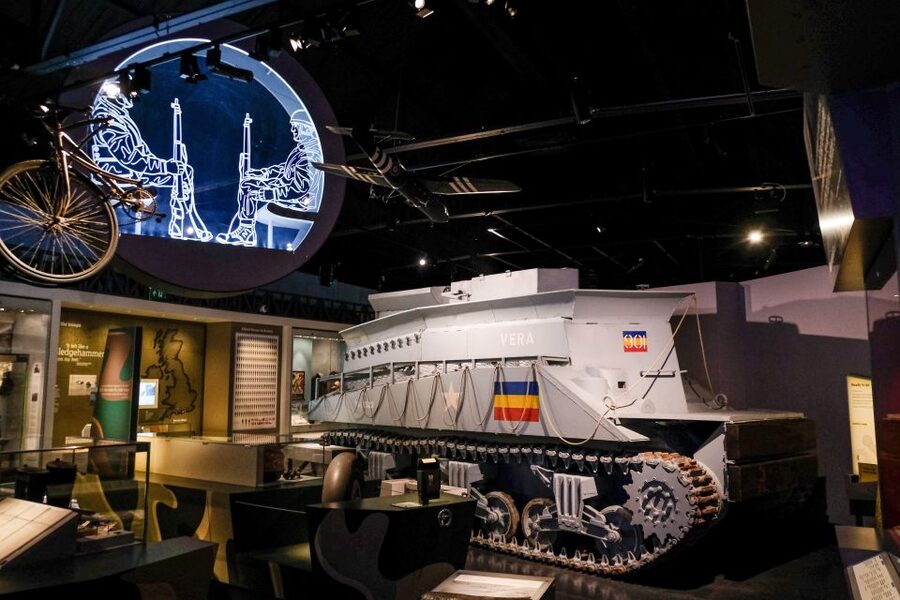
Book The D-Day Story if you want a focused, thoughtful account of the Allied invasion and can give it at least two to three hours. The landing craft and tanks provide the physical impact, the planning displays explain how the operation was organized, and the films and personal possessions show what the event meant to real people.
The main caution is simple: do not arrive near closing time, and do not treat the Overlord Embroidery as a quick add-on. At about $19, this is good value when taken at a steady pace. For a short Portsmouth visit, it is one of the clearest ways to understand why 6 June 1944 mattered and what it demanded from the people involved.
FAQ
Where is The D-Day Story located?
The museum is at Clarence Esplanade, Southsea, Portsmouth, PO5 3NT, in South East England.
What does the admission ticket include?
The ticket includes admission to The D-Day Story, including the museum galleries and access to LCT 7074, the last surviving landing craft tank.
Can I board a real landing craft?
Yes. The ticket includes access on board LCT 7074, which carried ten tanks to Normandy on D-Day.
What tanks can I see inside LCT 7074?
You can see a Sherman tank and a Churchill tank inside the landing craft.
How long should I allow for the museum?
Allow at least two to three hours for a comfortable visit. You can spend longer if you want to study the displays, watch the films, and use the audio guide.
When is the last entry to LCT 7074?
From April through September, the last entry on board is 4pm. From October through March, the last entry is 3:30pm.
What are the museum opening hours?
From 1 April to 30 September, the museum is open from 10am to 5:30pm. From 1 October to 31 March, it is open from 10am to 5pm.
Is The D-Day Story wheelchair accessible?
Yes, the activity information states that the museum is wheelchair accessible.
Can I cancel my booking?
Yes. You can cancel up to 24 hours in advance for a full refund. A reserve-now, pay-later option is also available.
Just added around Britain
- London: Wimbledon Tennis Club and Westminster Walking Tour★ 4.5 · 86 reviews
- London: Westminster to Richmond River Thames Cruise★ 4.8 · 23 reviews
- Winchester: Historic Castles and Cathedrals Walking Tour★ 4.9 · 154 reviews
- Westminster Abbey Skip-the-Line Entry and Private Tour★ 4.6 · 4 reviews
- Best of London by LE GRAND – London’s Luxury Bus Tour★ 4.2 · 23 reviews
- Whitby: Guided Distillery Tour with Gin Tasting★ 5.0 · 28 reviews
- West Berkshire,UK: The Living Rainforest Centre Entry Ticket★ 4.7 · 8 reviews
- London: Westminster Walking Tour & St Paul’s Cathedral Entry★ 4.7 · 7 reviews
Tickets, compared.



Buckingham Palace: The State Rooms Entrance Ticket
Read our review →