Reviewed · TICKETS
Royal Observatory Greenwich & Prime Meridian Entrance Ticket
The best part of this Greenwich visit is wonderfully simple: you can place one foot in the eastern hemisphere and one in the western hemisphere. The Prime Meridian Line turns an abstract idea about longitude into a memorable photo, while the observatory explains how sailors, scientists, and clockmakers made global navigation possible.
I like the preserved Octagon Room, designed by Sir Christopher Wren, and the chance to see the work of John Harrison, whose marine clocks helped solve the problem of finding longitude at sea. I also like the broad view from Greenwich Park across the Thames and London. The main drawback is the steep walk up to the observatory, which can be tiring or awkward if you have mobility limits.
Key points to know before you go
- The Prime Meridian is the star attraction: Stand with one foot in each hemisphere at the historic longitude line.
- The Octagon Room is a highlight: Sir Christopher Wren’s elegant interior remains one of his best-preserved London rooms.
- Timekeeping gets equal billing with astronomy: Learn how Harrison’s marine clocks helped sailors calculate longitude.
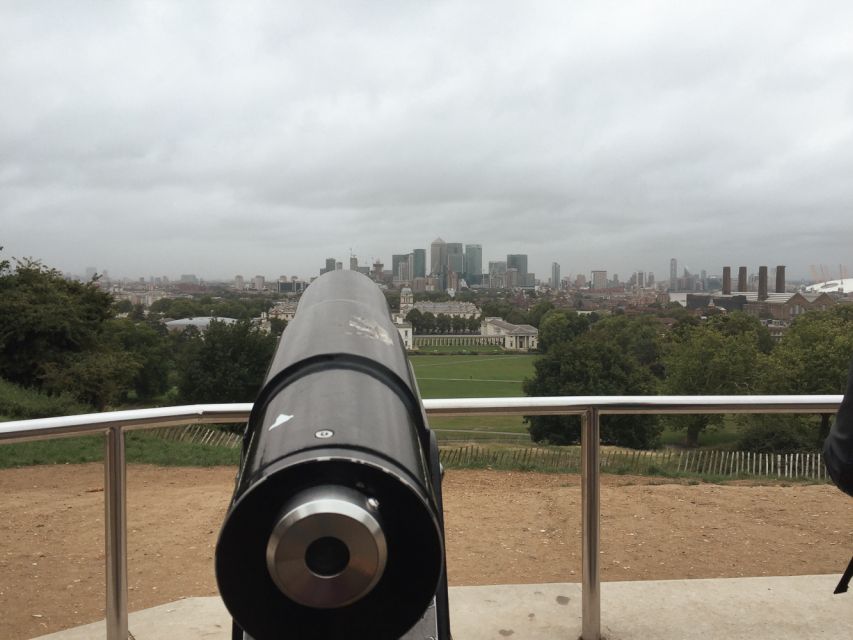
- The hilltop setting adds real value: Greenwich Park, the Thames, Canary Wharf, and the City of London fill the view.
- This is a self-guided visit: Your ticket includes a multilingual downloadable guide, not a personal guide.
- The Planetarium costs extra: You can add a Peter Harrison Planetarium show, but it is not part of this ticket.
Why the Prime Meridian matters
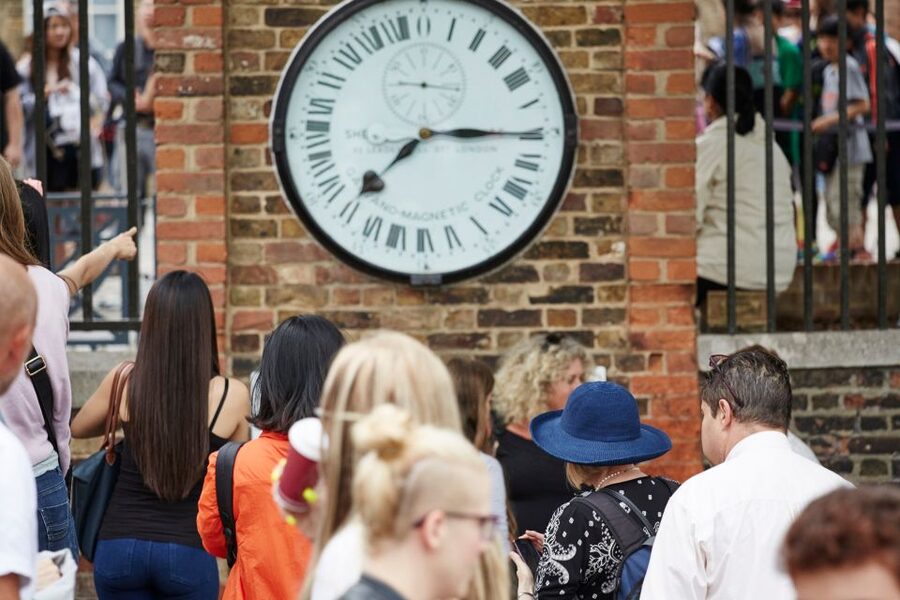
The line on the observatory grounds marks longitude 0 degrees, the starting point for measuring east and west around the globe. It was chosen as the world’s Prime Meridian in 1884, making Greenwich the reference point for international mapping and timekeeping.
The physical line is easy to understand and fun to photograph. I find the experience works best when you treat it as more than a quick photo stop. Look at the displays around it and consider the problem early scientists faced: a ship could measure latitude fairly well by observing the sun and stars, but finding its east-west position at sea was far harder.
That problem had serious consequences. A small error in longitude could send a ship far off course. The observatory’s work helped improve star charts, navigation, and the clocks used at sea. Standing on the line gives you a playful entry into a serious scientific story.
Do not expect the Meridian Line to feel like a huge outdoor monument. It is a marked point within the observatory visit, and you may spend only a few minutes taking photographs there. The real substance comes from the rooms and exhibits that explain why the line matters.
A few more Britain days worth weighing up
- London: The London Eye Entry Ticket
★ 4.6 · 35,875 reviews - London: Tower Bridge Entry Ticket
★ 4.7 · 15,560 reviews - London: Westminster Abbey Entrance Ticket
★ 4.6 · 11,254 reviews
Flamsteed House and the Octagon Room
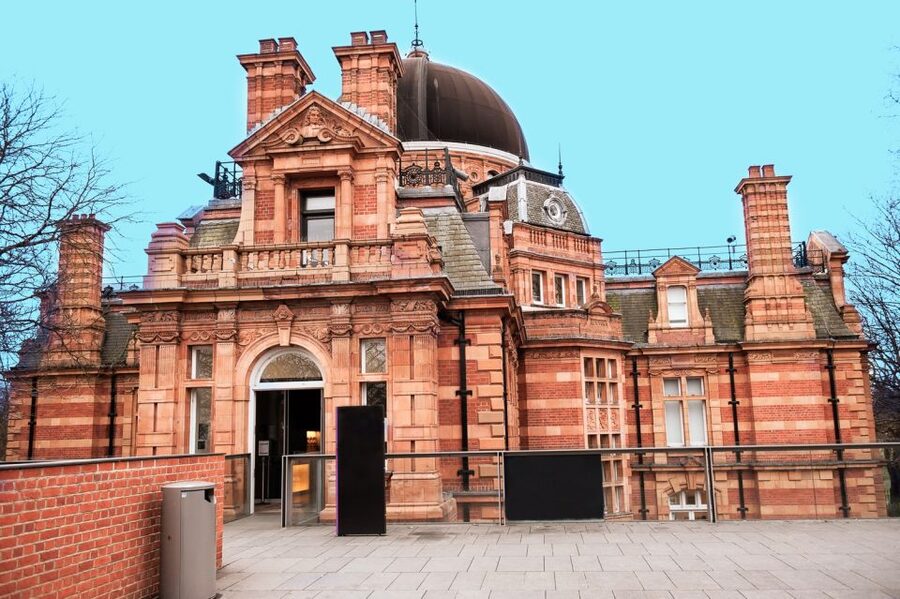
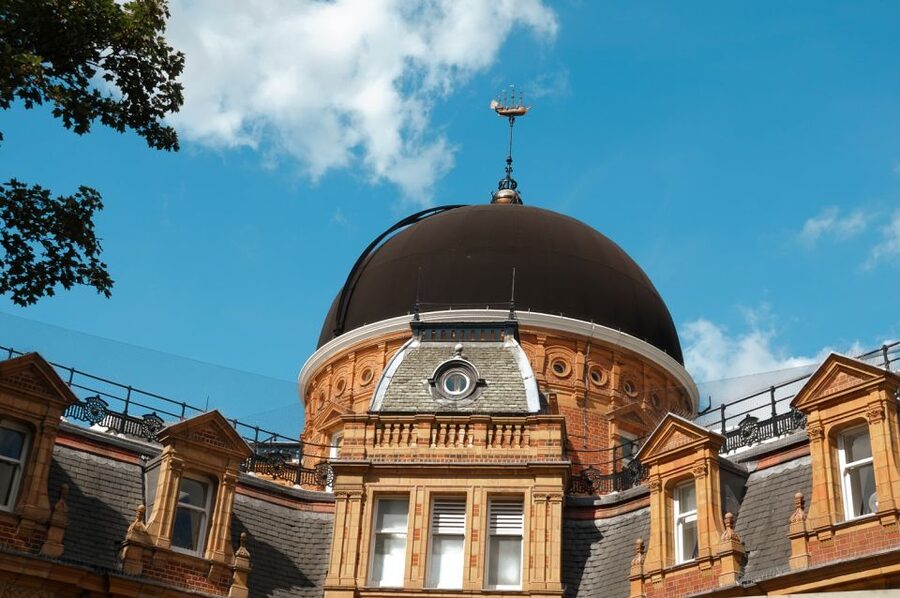
The Royal Observatory was founded in the 17th century as a working center for British astronomy. It was built to help improve observations of the sky and the navigation of ships. Inside, you follow the story through historic rooms, instruments, and explanations of the people connected with the observatory.
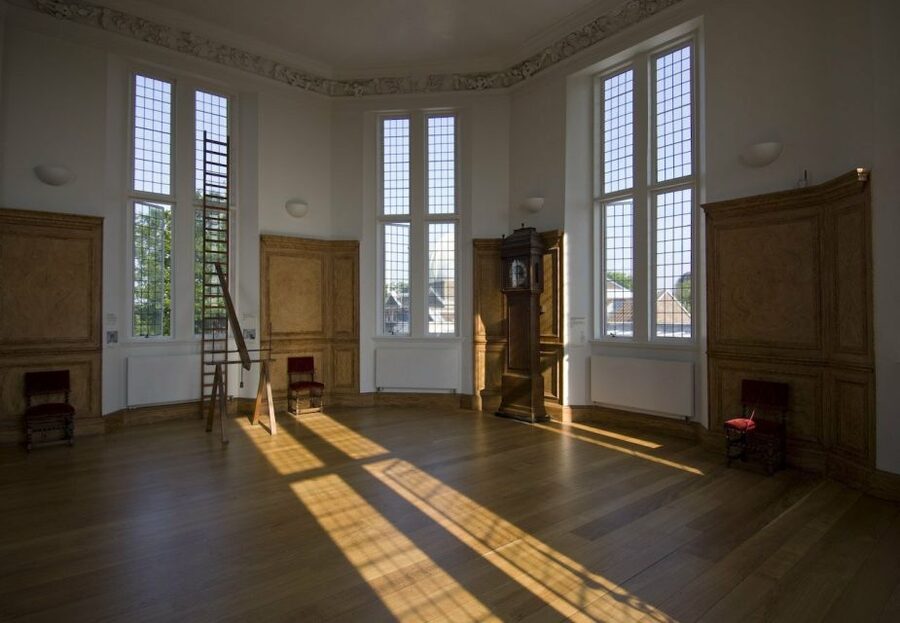
The Octagon Room is the architectural centerpiece. Sir Christopher Wren designed it as part of Flamsteed House, and it remains one of his best-preserved interiors in London. The room gives you a direct sense of the building’s age and purpose without needing an elaborate guided performance.
I would slow down here. The room is not just a pretty historic space. It shows how astronomy once depended on careful observation, patient recording, and purpose-built architecture. This is a place where the building itself helps explain the science.
The observatory is associated with several major figures, including John Flamsteed, Isaac Newton, Edmond Halley, James Bradley, and George Airy. You learn how different generations built on earlier work, improving measurements of stars, time, and position.
The visit is self-guided, so the amount you take from these rooms depends on how closely you read and listen. The downloadable guide is available in Spanish, Chinese, English, French, German, Italian, Korean, and Portuguese. Bring a charged phone and headphones if you want to use it comfortably at your own pace.
John Harrison’s clocks and the search for longitude
For many people, the most satisfying part of the visit is the story of John Harrison. He developed marine clocks designed to keep accurate time aboard ships, even in difficult conditions. Since the difference between local time and a reference time could reveal a ship’s longitude, a reliable clock offered a practical answer to one of navigation’s hardest problems.
The clocks turn a technical subject into a human story. You can see why precision mattered and why the work took years of experimentation. The displays connect time measurement with ocean travel, mapmaking, and Britain’s scientific ambitions.
I especially recommend giving these exhibits time if you arrive mainly for the Meridian Line. The line is memorable, but Harrison’s clocks explain the reason Greenwich became so important to the wider world. This is the part most likely to interest teenagers and adults who enjoy inventions, engineering, or practical science.
The experience does not rely only on astronomy in the narrow sense. You learn about navigation, longitude, time calculation, and the process of solving real problems with instruments. If your expectation is a large collection devoted only to stars and planets, the focus may surprise you. Greenwich is just as much about time and longitude as it is about space.
The hilltop view across London
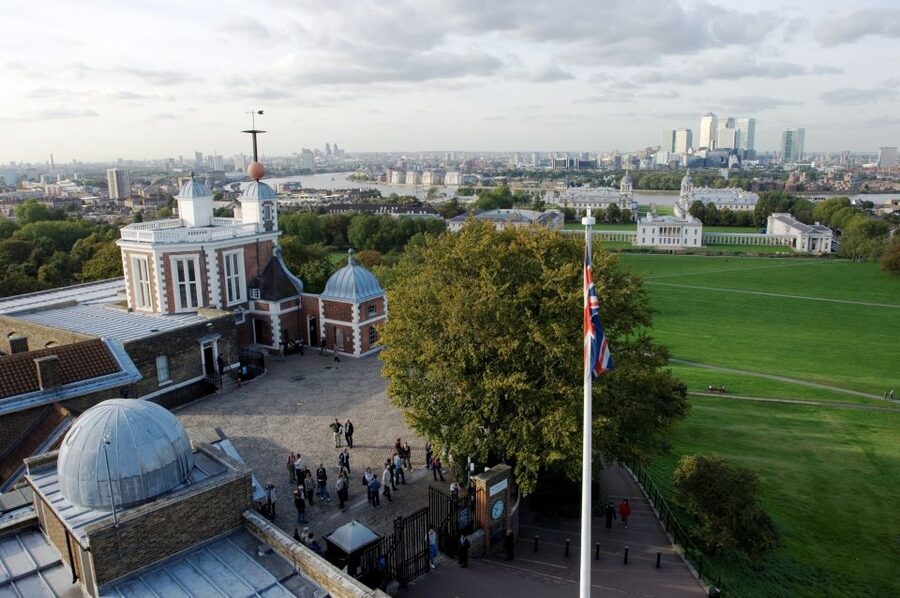
The observatory sits at the top of a hill in Greenwich Park. Reaching it can be part of the fun, especially if you enjoy walking through the park, but the slope is real. A route from the river and the Cutty Sark area involves a steep climb, and signs from Cutty Sark Station can be confusing.
If you have limited mobility, plan this part carefully. The hill was the most common practical concern in the feedback, and the walk may be difficult after a longer journey from Heathrow or central London. The attraction is wheelchair accessible, but the approach to the hilltop still deserves attention.
Once you arrive, the view rewards the effort. You can look over Greenwich Park toward the River Thames, Canary Wharf, the City of London, and the eastern part of the capital. It is one of the best reasons to avoid rushing straight back after seeing the exhibits.
I like the way the view adds context to the visit. From the observatory, Greenwich feels connected to both royal parkland and modern London. You can see the old and new city together, with the Thames tying the scene together.
Allow a little time outside the building, even if astronomy is your main interest. The setting is calm, and the park makes the observatory feel like part of a larger day out rather than an isolated museum stop.
Same city, a completely different sort of afternoon:
- From London: Harry Potter Warner Bros Studio Tour
★ 4.7 · 26,588 reviews - London: Westminster to Greenwich River Thames Cruise
★ 4.5 · 22,836 reviews - Magical London: Harry Potter Guided Walking Tour
★ 4.7 · 22,044 reviews - London: Madame Tussauds London
★ 4.6 · 20,915 reviews
Astronomy exhibits and the modern centre

The modern Astronomy Centre shifts the focus toward space. One of its memorable objects is a meteorite said to be 4.5 billion years old. You can touch it, which gives the age of the solar system a physical quality that a wall label cannot quite match.
The exhibit area also offers an awe-inspiring look at the wider universe. The included ticket gives you entry to the Royal Observatory and Prime Meridian, but a show at the Peter Harrison Planetarium is not included. You need to buy a separate Planetarium ticket if you want that added experience.
This distinction matters when you compare the price. At $32.33 per person, the ticket is reasonable if you plan to explore the historic rooms, Meridian Line, astronomy displays, and Greenwich Park view. It is less of a bargain if you expect a planetarium show to be included and spend only a short time inside.
I would treat the Planetarium as an optional extra, not a reason to skip the observatory. The historic rooms and navigation displays give the visit its identity, while the Planetarium offers a separate, more modern presentation of space.
How to plan the day in Greenwich
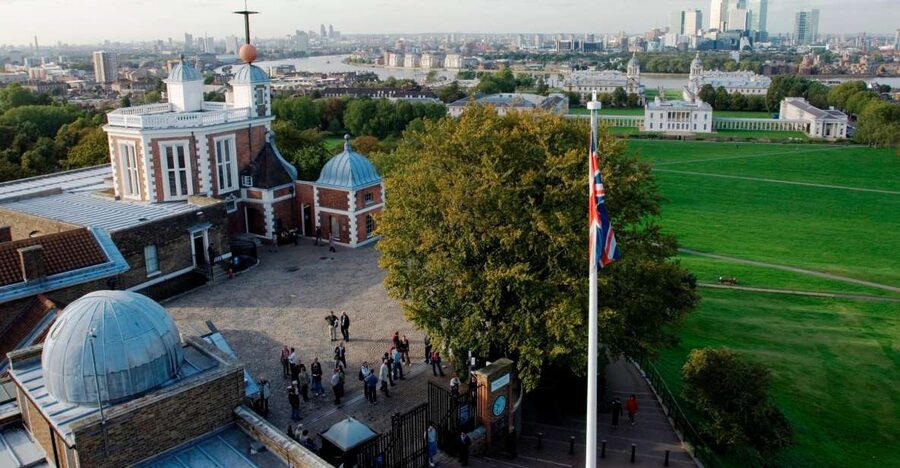
The ticket is valid for one day, and the activity begins and ends at the Royal Observatory Greenwich. There is no fixed guided route, so you can set your own pace. That flexibility is useful if you want to combine the observatory with other Greenwich sights.
The Royal Observatory is inside Greenwich Park and close to the National Maritime Museum, the Greenwich shopping area, and the riverside attractions. You can build a full day around the area instead of making the observatory your only stop.
One useful timing tip is the observatory’s time ball. Try to arrange your visit to catch it dropping at 13:00, signaling the exact hour. It adds a small live demonstration to a place otherwise filled with historic instruments and explanations.
Electronic tickets make entry straightforward, and the available time slot may be flexible enough to let you enter at another point during the day. Still, check the exact conditions when booking, since starting times and availability can vary.
You can also reach Greenwich by river cruise, but remember that the walk from the pier to the observatory climbs steeply. If you prefer to reduce walking, check transport choices before setting out. The mainline station may prove more convenient than arriving at a Tube station and then discovering you still have a long walk.
What the self-guided format is like
This is not a tour led by a named guide. You receive entry and a downloadable audio guide, with language choices including English, Spanish, Chinese, French, German, Italian, Korean, and Portuguese.
That format suits me when I want to linger over one subject and move quickly past another. You can spend extra time with Harrison’s clocks, return to the Meridian Line for photographs, or pause in the Octagon Room without waiting for a group.
The trade-off is that you do not automatically get a live explanation from a guide. Some visitors have enjoyed staff talks and informal explanations on site, but those should not be treated as part of the ticket. If personal guiding is important to you, ask what talks are available when you arrive.
The audio guide works through a smartphone, so download or prepare it before you start if possible. A phone-based guide also lets you move at your own pace, though an uncharged phone or faulty audio equipment could make the visit less smooth.
Who will enjoy this most
I recommend the observatory to adults, older children, and teenagers who like geography, astronomy, inventions, or the practical side of science. The Meridian Line offers an instant hook for younger visitors, while the clocks and navigation story give the visit more depth for older ones.
It also suits anyone who enjoys historic interiors and city views. You do not need a technical background to follow the main idea. The displays explain why accurate time and longitude mattered, and the physical objects make the subject easier to grasp.
You may want to choose another attraction if you are looking only for a large, modern space museum or a full live tour. The observatory gives equal attention to time, navigation, architecture, and astronomy. That mix is its strength, but it may not match every expectation.
The hill is the main issue for anyone with mobility concerns. The site itself is wheelchair accessible, but the approach from the park, river, or station can be demanding. Consider your route before you book, rather than discovering the steep climb at the end of a long day.
Is the $32.33 ticket good value?
At $32.33, the ticket offers a solid half-day or longer visit if you read the displays, use the downloadable guide, see the historic rooms, spend time with the clocks, and enjoy the view. The surrounding park and nearby Greenwich attractions make it easier to turn the admission into part of a full day.
The value drops if you arrive only to take a Meridian Line photograph. That moment is fun, but it is brief. I would book this ticket when you want the story behind the line, not just the line itself.
Remember that the Planetarium show costs extra. Add that cost only if you particularly want a presentation focused on the universe. The observatory admission already provides plenty to see, but the Planetarium can extend the day for serious space enthusiasts.
Free cancellation up to 24 hours before the visit and the reserve-now, pay-later option make the booking less rigid. Those terms are useful in a London schedule, where weather, transport, and competing sights can change your plans.
Should you book the Royal Observatory Greenwich?
Book it if you want a hands-on geography moment, historic astronomy rooms, John Harrison’s navigation story, and a memorable view of London in one stop. I would especially recommend it for first-time visitors to Greenwich and families with older children or teenagers.
Skip it only if the steep hill is likely to cause trouble, or if you want a planetarium-only experience. For everyone else, the combination of Prime Meridian photographs, scientific history, preserved rooms, and Greenwich Park makes this a worthwhile London outing. Take your time, look beyond the line itself, and you will get much more from the ticket.
FAQ
What does the Royal Observatory Greenwich ticket include?
The ticket includes entry to the Royal Observatory Greenwich and the Prime Meridian. It also includes a multilingual downloadable guide.
Is the visit guided?
No. This is a self-guided visit. The downloadable guide is available in Spanish, Chinese, English, French, German, Italian, Korean, and Portuguese.
Is a Planetarium show included?
No. A show at the Peter Harrison Planetarium is not included in this ticket. You need to purchase Planetarium admission separately.
How long is the ticket valid?
The ticket is valid for one day. Check availability for the starting times offered when you book.
Is the Royal Observatory wheelchair accessible?
Yes, the activity is listed as wheelchair accessible. The walk up to the observatory includes a steep hill, so consider your route and mobility needs before visiting.
Can I stand in both hemispheres?
Yes. The Prime Meridian Line allows you to stand with one foot in the eastern hemisphere and one foot in the western hemisphere.
Can I cancel the booking?
Yes. You can cancel up to 24 hours in advance for a full refund. A reserve-now, pay-later option is also available.
Just added around Britain
- London: Wimbledon Tennis Club and Westminster Walking Tour★ 4.5 · 86 reviews
- Winchester: Historic Castles and Cathedrals Walking Tour★ 4.9 · 154 reviews
- London: Westminster to Richmond River Thames Cruise★ 4.8 · 23 reviews
- Westminster Abbey Skip-the-Line Entry and Private Tour★ 4.6 · 4 reviews
- Best of London by LE GRAND – London’s Luxury Bus Tour★ 4.2 · 23 reviews
- Whitby: Guided Distillery Tour with Gin Tasting★ 5.0 · 28 reviews
- London: Westminster Walking Tour & St Paul’s Cathedral Entry★ 4.7 · 7 reviews
- Warwick: Entry Ticket for Warwick Castle★ 4.7 · 215 reviews
Tickets, compared.




Buckingham Palace: The State Rooms Entrance Ticket
Read our review →