Reviewed · TICKETS
Salisbury: Old Sarum Entry Ticket
Old Sarum tells a striking story from the top of a hill: Iron Age defenses became a Roman and Saxon stronghold, then a Norman center of royal power, before the city moved downhill to modern Salisbury. I like the way the ruins let you read that story in the ground itself, and I especially like the views from the ramparts toward Salisbury Cathedral and the Wiltshire plains.
I also like the freedom of a one-day ticket. You can explore at your own pace rather than follow a guide or fixed route, and entry is easy once you reach the entrance. The main caution is value: at $13 per group of up to four, it can be good value for a small party, but some visitors may find the fee high when much of the site survives as foundations and earthworks.
Key points at a glance
- Iron Age ramparts first: Walk the broad defensive banks that began Old Sarum’s long military story.
- Two cathedral sites: See the footprint of Salisbury’s first cathedral and consider why a second one was built before the city moved.
- Medieval royal castle: Explore the remains of the castle built on the central mound, tied to Norman power and William the Conqueror.
- Best views from the ramparts: Look across the Wiltshire plains toward Salisbury Cathedral.
- Self-guided and flexible: Your ticket is valid for one day, with informative signs to help explain the ruins.
- Uneven walking: Wear comfortable shoes and plan for weather exposure, even though the site is listed as wheelchair accessible.
Why Old Sarum is more than a pile of ruins
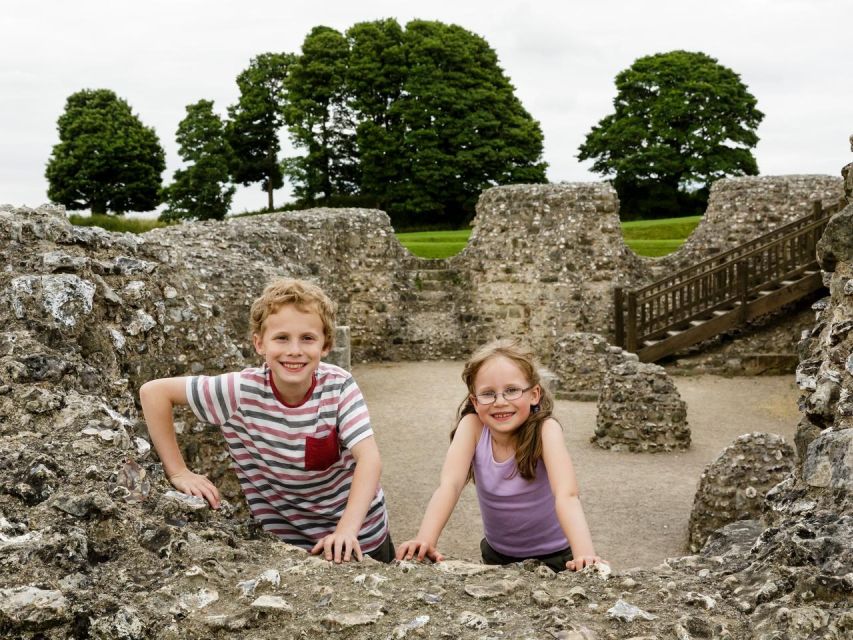
Old Sarum is easy to underestimate from a modern viewpoint. You see grass, banks, stone foundations, and a few broken walls. Yet the site once held military defenses, a royal castle, a cathedral, government offices, and a working medieval town.
That contrast is the reason I find the visit worthwhile. The ruins do not overwhelm you with intact rooms or grand interiors. Instead, they ask you to picture a place that once mattered greatly, then to notice how completely its importance faded.
The hilltop location explains much of the story. From the ramparts, you can see far across the surrounding plains. That wide view helped make Old Sarum useful for defense and government, long before modern roads and towns changed the area.
You should give yourself time to look beyond the surviving masonry. The shape of the fortifications, the cathedral footprint, and the castle mound all show how different parts of the site once worked together.
A few more Britain days worth weighing up
- London: The London Eye Entry Ticket
★ 4.6 · 35,875 reviews - London: Tower Bridge Entry Ticket
★ 4.7 · 15,560 reviews - London: Westminster Abbey Entrance Ticket
★ 4.6 · 11,254 reviews
Starting with the Iron Age defenses
Begin at the entrance, marked by informational signage, and make your way into the old fort. The first feature to notice is the large ring of Iron Age ramparts.
These earthworks are among the most important remains at Old Sarum because they show that the site was already a place of defense long before the medieval castle appeared. The raised banks and ditches make the hill’s military purpose clear, even without tall walls.
I recommend walking slowly along the ramparts before focusing on the later ruins. From here, you can understand the shape of the whole settlement. You also get an early sense of the site’s strongest practical feature: visibility.
The open setting is part of the experience, but it also brings a practical drawback. There is little shelter from wind or rain across the exposed hilltop. Bring weather-appropriate clothing, and do not treat this as a polished indoor attraction.
The ground is uneven, so comfortable shoes matter. The site is wheelchair accessible, but the historic earthworks and uneven surfaces may affect how easily every part can be reached.
Roman, Saxon, and Norman layers on one hill
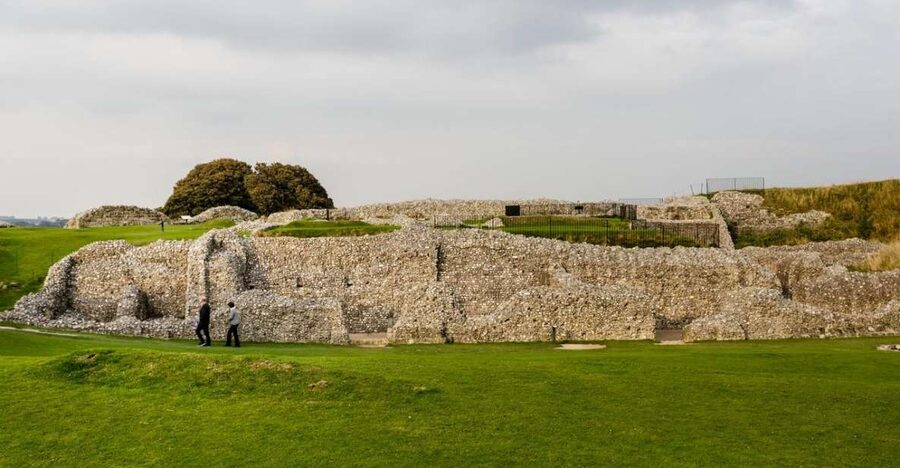
Old Sarum’s story did not begin with one medieval ruler. The site developed through Roman, Saxon, and Norman periods, with each era adding to its military or administrative role.
The remains do not always announce these changes in a dramatic way. You will not find every period represented by a complete building. Instead, the value comes from understanding how one strategic hill continued to attract power over many centuries.
William the Conqueror recognized Old Sarum’s importance after the Norman conquest. The site became a major center of government, and the hill was strengthened with a royal castle. That decision turned an old defensive position into a place closely tied to royal authority.
I like this part of the visit because it links the physical setting with political history. The castle was not placed here by accident. The high ground offered control, visibility, and a strong position for an important administrative center.
The information panels help you follow these changes without needing a guide. One visitor specifically praised the clarity of the signage, and that is useful to know if you prefer to explore independently.
The medieval royal castle on the central mound
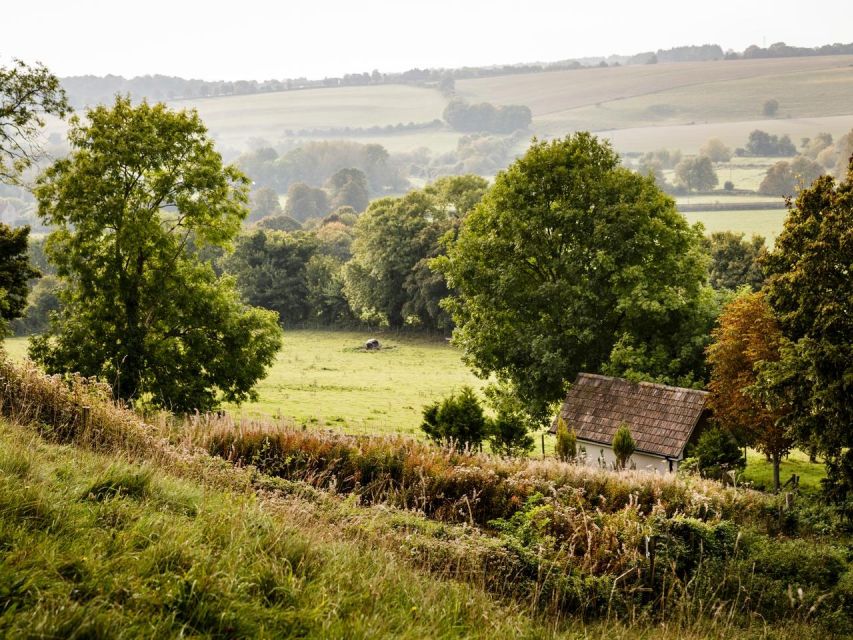
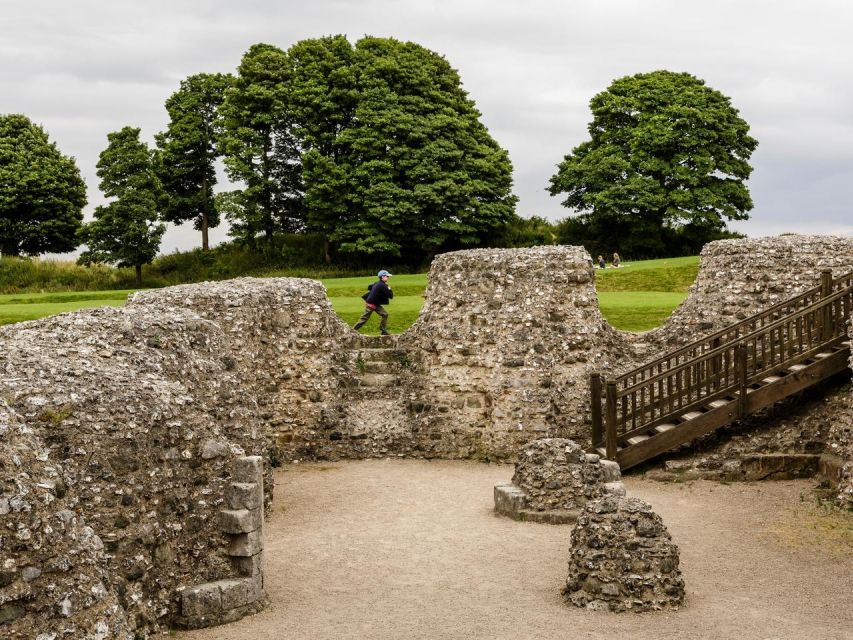
The castle remains occupy the motte, the raised central mound that formed the strongest part of the medieval complex. You will see architectural remnants rather than a complete royal residence, but the surviving foundations reveal the scale and authority of the building.
This is where Old Sarum’s political role becomes easiest to imagine. A royal castle on the highest point gave the site a clear center of power, separate from the surrounding settlement and cathedral.
Look carefully at the ground plan and surviving stonework. The outlines show where substantial structures once stood, even though weather and time have reduced the castle to fragments.
Do not expect furnished chambers or intact towers. If you need complete rooms to make a historic site feel real, Old Sarum may seem sparse. I see that sparseness differently: the lack of modern restoration leaves you to picture how the buildings related to the mound, the cathedral, and the outer settlement.
The castle also makes a useful contrast with the cathedral remains. Royal authority and religious authority shared this hill, sometimes supporting one another and sometimes competing for space and influence.
Same city, a completely different sort of afternoon:
- From London: Harry Potter Warner Bros Studio Tour
★ 4.7 · 26,588 reviews - London: Westminster to Greenwich River Thames Cruise
★ 4.5 · 22,836 reviews - Magical London: Harry Potter Guided Walking Tour
★ 4.7 · 22,044 reviews - London: Madame Tussauds London
★ 4.6 · 20,915 reviews
Finding the footprint of the first cathedral
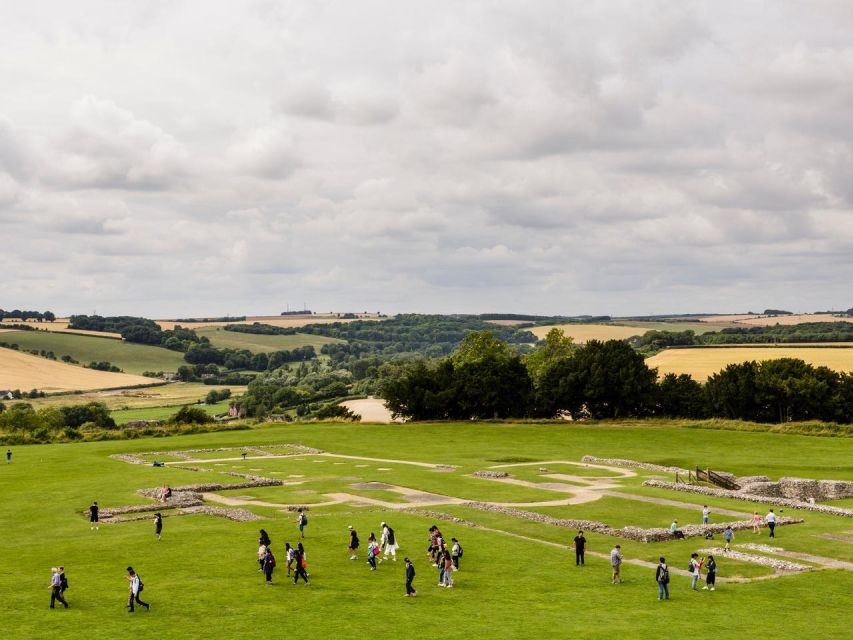
One of Old Sarum’s most important features is the footprint of Salisbury’s original cathedral. The cathedral was not merely a small chapel within the castle. It was a major religious building and a central part of the town’s identity.
The outline in the ground helps you understand its size and position. You can walk through the remains and picture the nave, surrounding spaces, and the relationship between the cathedral and the castle.
The first cathedral’s location also explains why Old Sarum became more than a fortress. Religious institutions brought people, administration, and status. For a time, this hilltop served as a center of both church and government.
I recommend pausing here instead of rushing straight to the best viewpoint. The cathedral footprint is easy to overlook if you are mainly interested in castles, but it is central to the reason the settlement later changed location.
The site also refers to the first and second cathedrals, helping you follow the development of the religious complex. That distinction matters because the move to Salisbury was not simply a change of address. It marked a major shift in how the town functioned.
Why the cathedral moved downhill
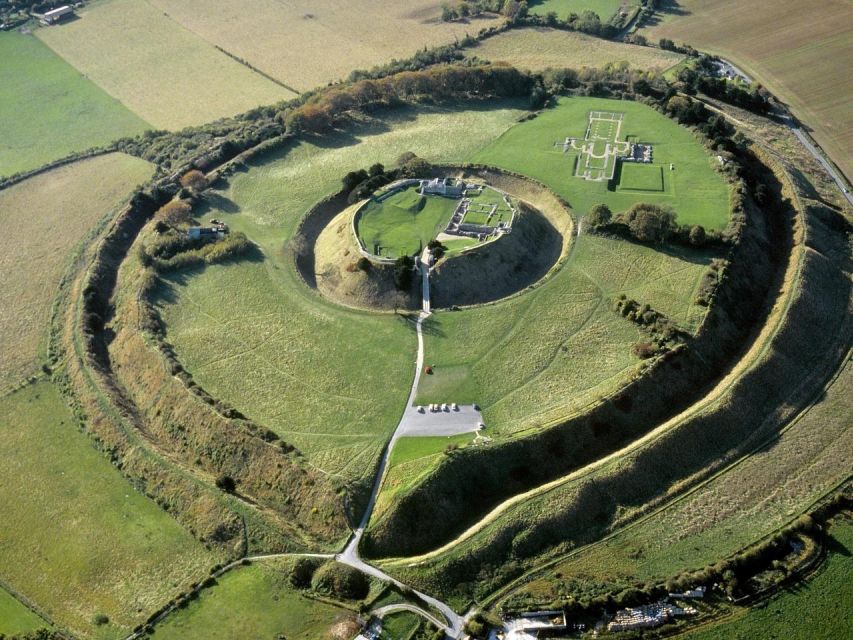
Old Sarum was eventually abandoned in favor of the new cathedral at Salisbury. The move changed the center of power from the exposed hilltop to the settlement below.
The exact appeal of modern Salisbury is easy to grasp when you are standing at Old Sarum. A town downhill could offer more room and a different setting for trade, homes, church life, and administration. Old Sarum’s location was excellent for defense, but it was not necessarily ideal for a growing urban community.
This is one of the most interesting themes of the visit: places built for one purpose may become awkward when that purpose changes. Old Sarum had been shaped by defense and authority. Once the new city became the preferred religious and administrative center, the old hill lost much of its practical value.
From the ramparts, you can look toward Salisbury Cathedral and see the result of that decision. The view links the old site with the city that replaced it, making the transition feel concrete rather than abstract.
The ramparts and the best views toward Salisbury
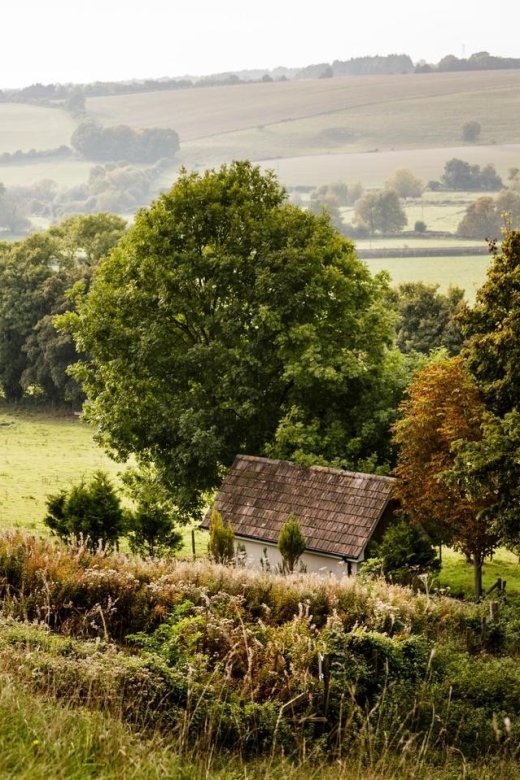
The walk around the ramparts is likely to be the visual high point of your visit. From the top, you can look over the Wiltshire plains and toward Salisbury Cathedral.
The view gives Old Sarum a strong sense of place. You are not looking at an isolated ruin. You are seeing the old center in relation to the city that grew after it.
I suggest taking the rampart walk in good light if you can. The broad views help you understand why this hill was chosen in the first place, and they make the visit feel larger than the surviving stonework alone.
The views also provide a quiet moment for reflection. Old Sarum’s story is about power moving around: from Iron Age defenders to Roman and Saxon occupants, from Norman rulers to medieval church leaders, and finally away from the hill altogether.
The site is described as charming and quiet, which fits the experience. It is not a crowded city attraction packed with rooms and displays. You get space to walk, look, and form your own picture of the past.
A self-guided visit with useful information panels
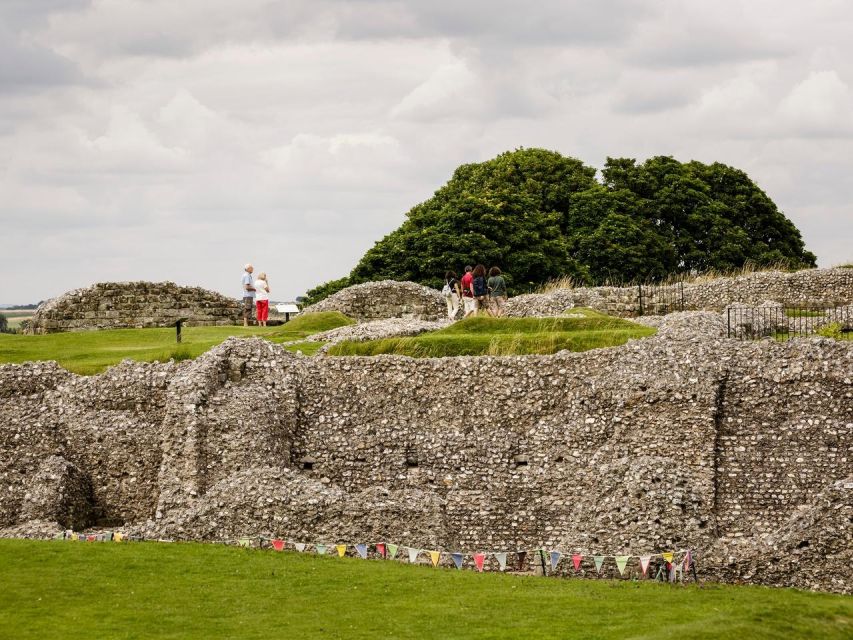
This is an entry ticket, not a guided tour. You will not be assigned a named guide, and the material provided does not identify a guide by name. Instead, you explore on your own with information signage around the site.
That format suits me when the ruins are spread across open ground. You can spend more time at the cathedral footprint, move quickly through a section that interests you less, or pause on the ramparts without keeping up with a group.
The signs explain the castle, the cathedrals, and the site’s changing role. Clear signage was singled out as a strong point, and that matters here because the remains require interpretation. Without context, a foundation can look like an ordinary patch of stone.
The small-group limit of up to four participants is also worth noting. Since this is self-guided, the limit may matter most for the booking arrangement rather than the feel of the visit. A family or small party can enter together under the group price.
The ticket is valid for one day, so you have flexibility around your schedule. Availability should be checked for the relevant starting times, even though the visit itself is not presented as a timed guided walk.
Is $13 good value for up to four people?
The listed price is $13 per group of up to four, which makes the calculation fairly simple. For two, three, or four people, the cost per person can be modest. For a solo visitor, the same price feels less generous.
Value depends on what you want from a historic site. If you enjoy earthworks, ruins, open views, and the chance to reconstruct a place through signs, Old Sarum offers a focused experience. If you expect intact castle rooms, a full cathedral interior, or a long sequence of displays, you may find the admission price harder to justify.
One visitor described the site as worth visiting but felt the price was a little high for the amount of surviving material. That is a fair warning. Old Sarum’s importance is much greater than the amount of standing architecture suggests.
The strongest value comes from combining the history with the setting. You are paying for access to the complete hilltop site, not just a few ruined walls. The ramparts, castle mound, cathedral footprint, and views all work together.
English Heritage operates the site, and the ticket includes entry to Old Sarum only. Souvenirs are not included, so plan to pay separately if you want a keepsake.
How much time should you allow?
The ticket is valid for one day, but no fixed visit length is given. I would treat this as a flexible stop rather than a tightly timed attraction.
You can make a shorter visit by focusing on the castle, cathedral footprint, and ramparts. You can also take longer if you want to read every panel and walk the defensive circuit at an easy pace.
The open layout means your pace matters. A fast walk gives you the main outline, while a slower visit helps you notice how the castle and cathedral shared the hill.
Because the site involves uneven surfaces, allow enough time to walk carefully. Comfortable shoes will make a bigger difference here than fashionable footwear.
Who will enjoy Old Sarum most?
I would recommend this experience to you if you enjoy:
- Ancient defenses and archaeological remains
- Medieval castles and cathedral history
- Open-air sites with broad views
- Self-guided visits supported by information signs
- Quiet places where you can think about how towns change
Families may find the ramparts and castle mound easier to appreciate when the history is explained as a story of kings, bishops, defenses, and a city that moved. Children who need constant indoor exhibits may lose interest, especially in poor weather.
History fans should find plenty to consider, from Iron Age origins through Roman, Saxon, Norman, and medieval periods. Architecture enthusiasts should remember that the site offers remains and ground plans, not complete buildings.
Old Sarum also suits visitors already spending time in Salisbury. The view toward Salisbury Cathedral gives the visit a useful connection to the modern city.
Practical details before you go
Go to the entrance of Old Sarum, which is marked by informational signage. The ticket allows entry for one day, and skip-the-ticket-line access is included.
Wear comfortable shoes. The site involves uneven surfaces, and the ramparts require outdoor walking. Bring clothing suited to the weather because the exposed hilltop offers limited protection.
Wheelchair access is listed, but the uneven historic ground is still worth considering when planning your route. Accessibility on paper does not remove every challenge created by earthworks and old foundations.
Free cancellation is available up to 24 hours before the visit for a full refund. You can also reserve now and pay later, which helps if your Salisbury plans may shift.
Should you book the Old Sarum ticket?
Book it if you want a quiet, open-air look at more than 2,000 years of British history and you are happy to use your imagination. The best parts are the Iron Age ramparts, the cathedral footprint, the medieval castle remains, and the view toward Salisbury Cathedral.
Think twice if your main goal is a fully preserved castle or cathedral. Old Sarum is a site of foundations, earthworks, and context. Its appeal comes from understanding what once occupied the hill, not from walking through complete rooms.
For a group of up to four, $13 is a reasonable way to spend part of a day, especially if you value the views and the clear historical signage. For a solo visitor, compare the price with your interest in archaeological ruins.
The final question is simple: do you enjoy seeing how power shifts over time? If so, Old Sarum gives you that story in a compact and memorable setting.
FAQ
Where is Old Sarum?
Old Sarum is in South West England, in the United Kingdom, near Salisbury.
What does the entry ticket include?
The ticket includes entry to Old Sarum for one day.
How much does the ticket cost?
The listed price is $13 per group of up to four participants.
Is this a guided tour?
No. This is an entry ticket for a self-guided visit. Informational signage explains the site.
What can I see at Old Sarum?
You can see Iron Age ramparts, the remains of a medieval royal castle, the footprint of Salisbury’s original cathedral, and views toward Salisbury and the Wiltshire plains.
Is Old Sarum wheelchair accessible?
The site is listed as wheelchair accessible. It also involves walking on uneven surfaces, so the historic ground may affect how easily you can move around.
Can I cancel my booking?
Yes. You can cancel up to 24 hours in advance for a full refund. You can also reserve now and pay later.
Just added around Britain
- London: Wimbledon Tennis Club and Westminster Walking Tour★ 4.5 · 86 reviews
- London: Westminster to Richmond River Thames Cruise★ 4.8 · 23 reviews
- Winchester: Historic Castles and Cathedrals Walking Tour★ 4.9 · 154 reviews
- Westminster Abbey Skip-the-Line Entry and Private Tour★ 4.6 · 4 reviews
- Best of London by LE GRAND – London’s Luxury Bus Tour★ 4.2 · 23 reviews
- Whitby: Guided Distillery Tour with Gin Tasting★ 5.0 · 28 reviews
- London: Westminster Walking Tour & St Paul’s Cathedral Entry★ 4.7 · 7 reviews
- Warwick: Entry Ticket for Warwick Castle★ 4.7 · 215 reviews
Tickets, compared.



Buckingham Palace: The State Rooms Entrance Ticket
Read our review →