

Reviewed · HISTORICAL TOURS
Stirling: Historical Walking Tour in Spanish
Stirling’s old town makes one fact hard to miss: control this hilltop city and you controlled the road between the Lowlands and the Highlands. In 90 minutes, this Spanish-language walking tour links Stirling’s fortress, royal church, prison, market, and war story in a compact route.
I like the small group limit of 10, which gives a guide room to explain details and answer questions. I also like the lively storytelling. Ara has been praised for mixing local anecdotes with history, while Lorena was noted for her attentive approach. The main drawback is the pace: one Spanish-speaking guest found the guide a little fast, so ask for a slower delivery if needed.
Key points to know before you book

- Stirling’s medieval core: Walk King Street, the old wall, Mercat Cross, and the upper part of town where markets and public executions once took place.
- Spanish-speaking guidance: The live tour is conducted in Spanish, with guides including Ara and Lorena named in guest feedback.
- Three major Scottish strongholds: Learn why Stirling ranked among Scotland’s most important fortified places and why it mattered during the 14th-century wars with England.
- The Old Jail: Hear about the grim 19th-century prison that held men, women, children, debtors, accused criminals, and convicted offenders.
- Holy Rude Church: See the church connected with the coronation of James VI, son of Mary Stuart, and one of the few churches in Britain still in use after such an event.
- Practical format: The tour costs $24 per person, lasts 1.5 hours, welcomes wheelchair users, and runs in most weather conditions.
Why Stirling’s hill explains Scottish power
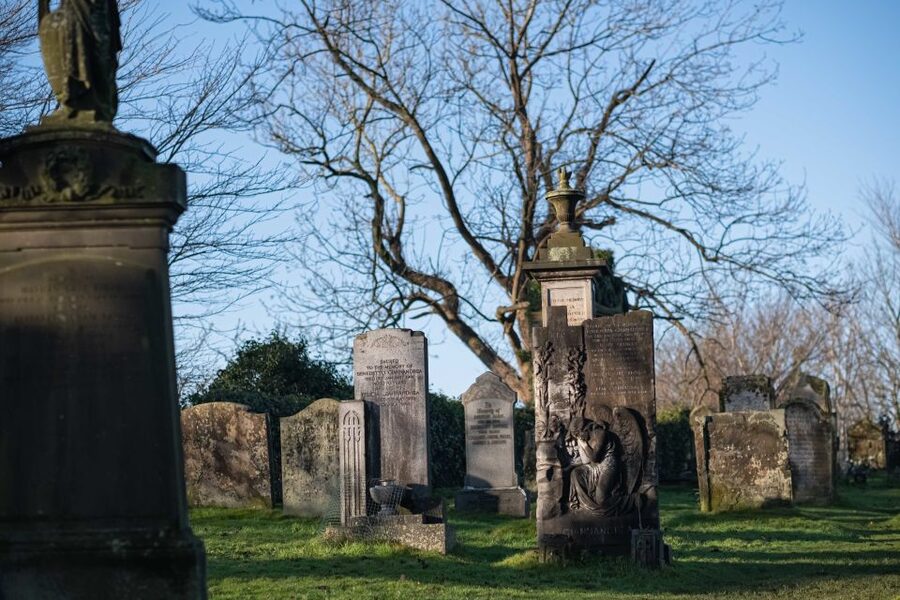
Stirling is often called the Door to the Highlands, and this walk gives that phrase real meaning. The city occupies a key position between Scotland’s lower central area and the routes north. Its high ground offered defense, while its position near important crossings made it useful to kings, armies, traders, and prisoners.
The tour focuses on the historic town rather than treating Stirling as a collection of isolated sights. That matters because the city’s story is about power concentrated in a small area. Royal government, trade, religion, punishment, and military defense all appear within a short walk.
You should expect some uphill streets. The route reaches the highest part of the old city, where the medieval market once operated and public executions were held. That climb is part of the point, but it may feel demanding if you prefer flat walking.
The experience does not include entry to Stirling Castle or other paid attractions. Instead, your guide explains the architecture and historical setting from the streets. For a first look at Stirling, that makes the tour a useful orientation, especially if you plan to visit the castle separately.
A few more Britain days worth weighing up
- Stirling: Daily Guided Walking Tour (11am & 2pm)
★ 4.7 · 66 reviews - Stirling Castle: Skip-the-Line Guided Tour in Spanish
★ 4.8 · 19 reviews - Stirling: Private Old Town & Castle Walking Tour
★ 4.9 · 17 reviews
King Street and the city’s public face
King Street gives the walk an easy starting point. Here, the guide introduces important buildings and the poets linked with Stirling’s cultural life. The street also shows how the old town connected daily business with royal and civic authority.
A Spanish-speaking guide can be especially helpful here. Scottish place names, political names, and royal titles can blur together when you hear them in English. A live guide can explain the people and events in Spanish as they appear, rather than leaving you to piece the story together later.
The tour’s focus is not only on grand rulers. You also hear about the people who lived under those rulers, including market sellers, prisoners, debtors, and churchgoers. That wider view gives the walk more weight than a simple list of monuments.
The exact stories can vary with the guide. Ara was praised for telling anecdotes in an entertaining way, which suggests a tour with plenty of human detail rather than a dry lecture. One practical tip: if your guide speaks quickly, say so early. The tour covers many sites in a short time, and clear Spanish matters more than speed.
Medieval walls and Stirling’s military role
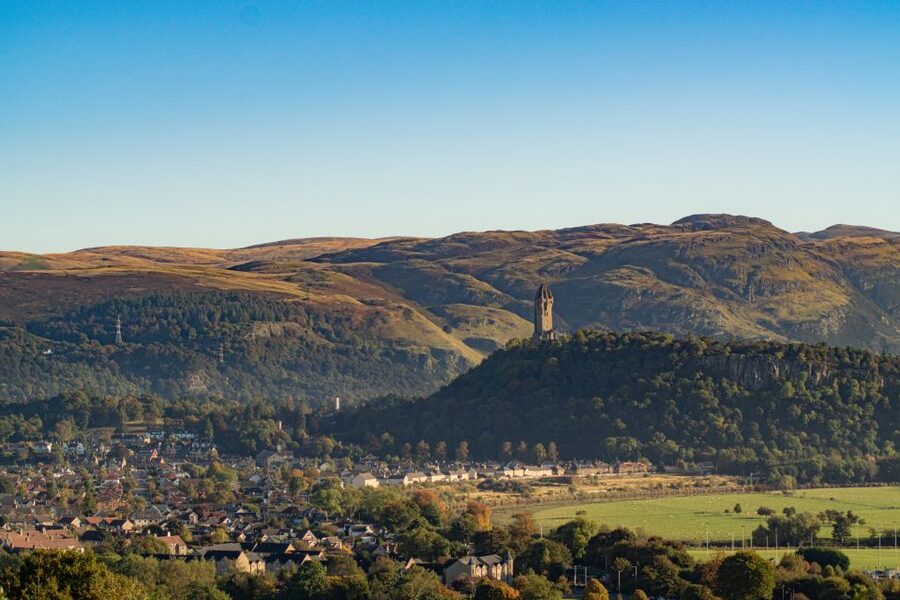
Scotland had 11 fortified cities during its history, and Stirling was one of them. The medieval wall helps you picture how the settlement protected itself and controlled movement through the area.
You will not get a full military tour with battlefield reconstruction. Instead, the guide uses the wall and streets to explain why Stirling mattered during the wars of independence between Scotland and England in the 14th century. This is valuable context because the city’s importance was geographic as much as symbolic.
The tour also places Stirling among Scotland’s three most important strongholds. That claim points to the city’s role as a center of royal and military power. From the upper streets, you can better understand why height, defense, and access mattered so much before modern roads and transport.
This portion suits you if you enjoy history tied to physical places. You are not just hearing that Stirling was strategic. You are walking the fortified city and seeing how its streets rise toward the strongest ground.
Mercat Cross and the upper town

Mercat Cross marks the commercial side of Stirling’s past. A mercat cross was tied to public trade and civic life, so this stop helps balance the stories of kings and battles with the ordinary business of a medieval town.
The walk continues toward the upper part of the city, where the old medieval market was held. This area also served as the setting for public executions. That pairing is stark but useful: medieval towns could place commerce, public announcements, punishment, and authority close together.
You may find this section more atmospheric than polished. The power of the stop comes from understanding what happened there, not from expecting a single grand interior or exhibit. Listen for how your guide connects the market to Stirling’s wider role as a fortified center.
For families, the execution history may be uncomfortable for younger children. The tour presents a serious side of the town, including crime and punishment, so consider your group’s interests before booking.
More history walks around Britain:
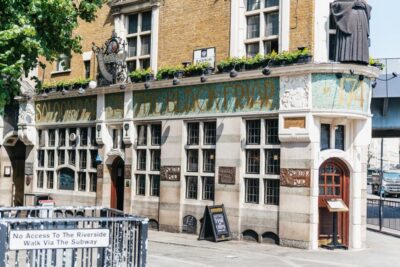
- London: Historic Pubs of Central London Walking Tour
★ 4.9 · 1,065 reviews - Portsmouth: Historic Dockyard Ultimate Explorer Ticket
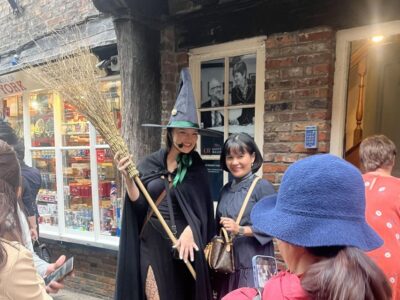
★ 4.8 · 1,052 reviews - York: Witches and History Old Town Walking Tour
★ 4.7 · 928 reviews - London: Soho Music and Historic Pubs Walking Tour
★ 4.9 · 836 reviews
The Old Jail and a harsh 19th-century prison

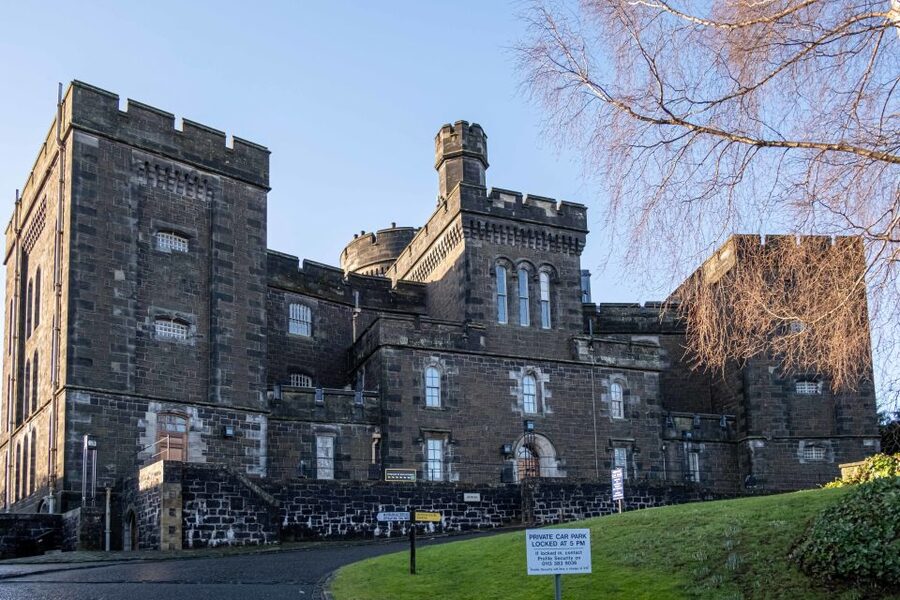
The Old Jail is one of the tour’s most striking stops. In the 19th century, Stirling’s jail was described as the worst in Great Britain, a wet and unpleasant place packed with prisoners.
The population included men, women, and children. Some were minor offenders. Others were murderers, people waiting for trial, or debtors who could not pay what they owed. That mix shows how imprisonment worked before modern ideas of legal rights, separation of prisoners, and prison standards became more established.
The guide’s account turns the jail from an old building into a social record. You hear how poverty, debt, suspicion, and serious crime could bring very different people into the same crowded institution. It is a sobering contrast to the royal stories elsewhere in town.
The stop may appeal to you if you prefer difficult, less polished history. If you want only castles and scenic streets, the jail section could feel grim. Still, it is one of the places where the tour most clearly explains how ordinary people experienced Stirling’s past.
Tollbooth, John Cowane Hospital, and civic duty

The Tollbooth adds another layer to the town’s administration. Historic tollbooths often served several civic purposes, and here the guide places the building within Stirling’s systems of law, local government, and public order.
John Cowane Hospital brings in a different form of civic life. Its name is tied to charitable support, showing that Stirling’s institutions were shaped not only by monarchs and officials but also by money set aside for the town’s people.
You should not expect long indoor visits to every building named along the route. The supplied information describes a street-based walking tour, so the guide’s explanation is the main way you encounter these places. That keeps the tour moving, but it also means anyone wanting detailed interior access will need to plan extra visits.
Together, the Tollbooth and hospital show how the town worked. One points toward regulation and authority. The other points toward charity and community responsibility. Those connections make the old streets easier to read.
Old Cemetery and Pyramid Star

The Old Cemetery shifts the mood again. Cemeteries can reveal social divisions, local beliefs, and attitudes toward death, even when you are only hearing about them from the street or pathway.
Pyramid Star is another named stop on the route. The information provided does not give a detailed explanation of its purpose, so you should treat it as a point your guide will identify and interpret rather than expect a major attraction with a long visit.
That uncertainty is worth noting because the tour packs many landmarks into 90 minutes. Some stops are likely brief markers within a larger story. The value comes from the connections between them: punishment, burial, charity, worship, trade, and government all sit within the same compact historic center.
I like this kind of route because it avoids reducing Stirling to one royal building. You get a broader sense of the town and the people who shaped it.
Holy Rude Church and James VI’s coronation
Holy Rude Church provides the tour’s strongest religious and royal link. The church hosted the coronation of James VI, the son of Mary Stuart. Alongside Westminster Abbey, it is described as one of the only churches in Great Britain still in use to have witnessed such events.
That detail gives the church special weight. It is not simply an old place of worship. It connects Stirling to the Scottish monarchy and to a period when royal ceremonies carried major political meaning.
The guide can explain the coronation in the setting where it took place, which is more useful than hearing the event as a detached date. You see how religion, monarchy, and civic identity met in one building.
The tour does not state that an interior visit is included, so do not book this walk expecting guaranteed entry or a long church inspection. The church is one of the sights you encounter along the route, with the guide providing the historical explanation.
What the Spanish guide adds
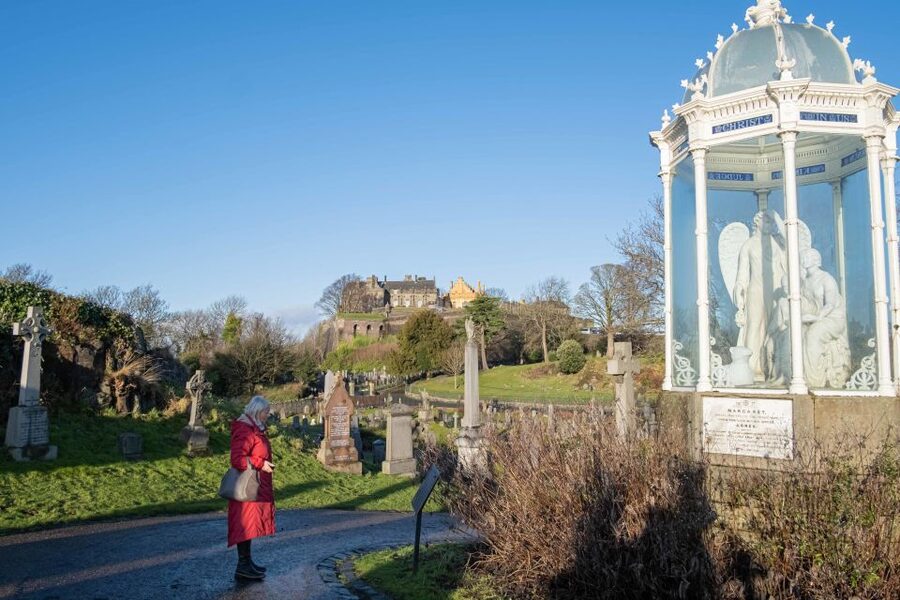
A tour in Spanish is more than a translation choice. Stirling’s story includes several layers of names, rival claims, religious change, prison reform, and Scottish political identity. Hearing those points in your strongest language can make the links easier to follow.
The guides named in guest feedback were Ara and Lorena. Ara was praised for knowing the area well and adding anecdotes in an amusing way. Lorena was described as attentive. Another Spanish-speaking guest liked the guide’s attitude but found the delivery slightly fast.
That gives you a useful expectation: the tone should be personal and conversational, but the pace may vary. The group limit of 10 helps. With fewer people, it is easier to ask for clarification, repeat a name, or request a slower explanation.
The tour has a published rating of 4.4 from four ratings, with three especially strong marks and one note about speed. That is a small sample, so I would not treat it as a guarantee. It does suggest that the human side of the experience matters as much as the route itself.
Is $24 good value for 90 minutes?
At $24 per person, the tour costs about $16 per hour. The price is reasonable if you want a live Spanish-speaking guide and a focused introduction to Stirling’s historic center.
The value depends on what you need. If you only want to stroll and read plaques, you can explore the streets without booking a tour. If you want the wars of independence, prison conditions, royal ceremony, and civic buildings connected in Spanish, the fee pays for interpretation rather than admission tickets.
The small group improves the value. A 10-person limit is more personal than a large walking crowd, and it gives you a better chance to hear clearly on busy streets or in poor weather.
You also receive flexibility at booking. You can reserve now and pay later, and cancellation is free up to 24 hours before the tour. Those terms help if your Scotland itinerary includes changeable plans.
Weather, meeting point, and walking comfort
Meet inside Caffe Nero, where staff will check you in. Arrive at least 15 minutes before the start so you are not trying to find the group after the walk has begun.
The tour runs in all weather except extreme conditions. The route is adapted to limit exposure to rain or snow, but you still need a waterproof layer and shoes suited to steep historic streets.
The activity is wheelchair accessible. Even so, ask about the current route if access is a major concern, since the walk includes the upper part of the city and a medieval street plan. The available information confirms accessibility but does not describe every surface or gradient.
There is no hotel pickup or drop-off, and no audio guide. You travel to the meeting point yourself, then stay on foot for the duration. That is simple for anyone already in central Stirling, but less convenient if you are staying outside the town.
Who should book this Stirling walking tour?
I would choose this tour if you want a short, structured introduction before visiting more sites on your own. It suits Spanish-speaking visitors who want local context without committing to a half-day excursion.
It is also a good match for history fans who prefer a broad story. You get military defense, royal ceremony, religion, trade, imprisonment, charity, and local culture in one route.
You may want something else if you need extensive time inside buildings, a detailed castle visit, or a slow photography walk. Ninety minutes passes quickly, and the route covers many named places.
Families should consider the prison and execution material. It is historically important but not light entertainment. Guests who dislike rain or uphill walking should also plan carefully, even though the route is adjusted in poor weather.
Should you book it?
Book this Stirling Spanish walking tour if you want the city’s major historical themes explained clearly in Spanish, with a small group and a lively local guide. The strongest reasons are the compact route, the human stories connected with the Old Jail, and the unusual link between Holy Rude Church and James VI’s coronation.
Skip it if you want entry-based sightseeing or a slow, highly detailed visit to each landmark. For most Spanish-speaking visitors spending a short time in Stirling, $24 is a fair price for getting your bearings and understanding why this hilltop town mattered so much.
FAQ
How long does the Stirling historical walking tour last?
The tour lasts 1.5 hours.
What language is the tour conducted in?
The live tour guide speaks Spanish.
Where does the tour meet?
The meeting point is inside Caffe Nero. Staff will be there to check you in.
How early should I arrive?
You should arrive at least 15 minutes before the tour begins.
Is the tour wheelchair accessible?
Yes, the activity is listed as wheelchair accessible.
What happens if it rains or snows?
The tour runs in all weather except extreme conditions. The route is adapted to reduce exposure to rain or snow.
More Walking Tours in Britain
- Magical London: Harry Potter Guided Walking Tour
★ 4.7 · 22,044 reviews - London: The Original Jack the Ripper Walking Tour
★ 4.7 · 7,833 reviews - Oxford: University and City Walking Tour with Alumni Guide
★ 4.7 · 4,429 reviews - London: Harry Potter Movies Walking Tour (Kids Go Free)
★ 4.7 · 3,071 reviews
Just added around Britain
- London: Wimbledon Tennis Club and Westminster Walking Tour★ 4.5 · 86 reviews
- London: Westminster to Richmond River Thames Cruise★ 4.8 · 23 reviews
- Winchester: Historic Castles and Cathedrals Walking Tour★ 4.9 · 154 reviews
- Westminster Abbey Skip-the-Line Entry and Private Tour★ 4.6 · 4 reviews
- Best of London by LE GRAND – London’s Luxury Bus Tour★ 4.2 · 23 reviews
- Whitby: Guided Distillery Tour with Gin Tasting★ 5.0 · 28 reviews
- London: Westminster Walking Tour & St Paul’s Cathedral Entry★ 4.7 · 7 reviews
- Warwick: Entry Ticket for Warwick Castle★ 4.7 · 215 reviews
Historical Tours, compared.




J&M’s City Sightseeing and History Walking Tour
Read our review →Browse the lists this tour appears in