
Reviewed · STONEHENGE TOURS
Stonehenge: App Guided Tour + Admission Included
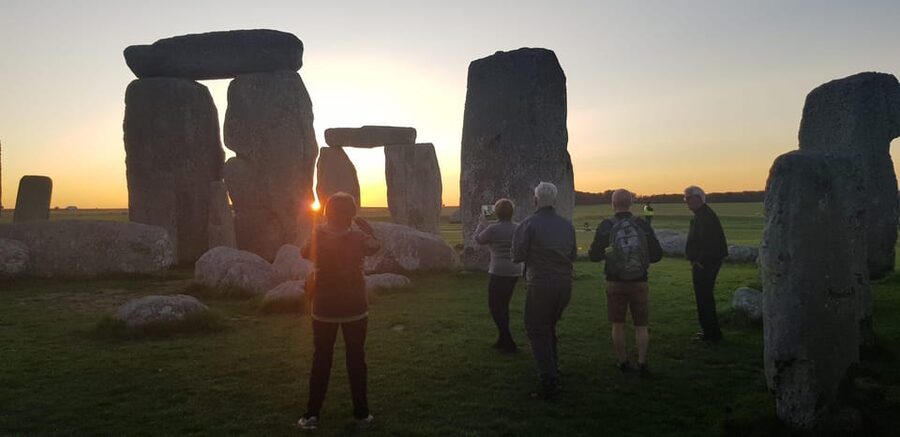
Stonehenge is less about getting close to a pile of old rocks than about seeing how prehistoric people arranged enormous stones with purpose. The solstice alignment gives the site its strongest sense of wonder, while the open setting lets you pause and consider the engineering, ritual, and mystery behind it.
I like the included admission and the freedom of a self-guided visit. You can set your own pace, use the interactive map, and spend more time looking at the stones than listening to a guide. The main caution is the app commentary: its quality may feel basic, and one recent visit had no headsets and no clear alternative. Crowds can also make the closest viewing point feel less special.
Key points to know before you book
- Two hours is enough for a focused visit: Plan on seeing the stone circle, using the app, and allowing time for photographs and pauses.
- The solstice alignment is the main story: The stones are arranged in relation to the sun, giving the monument an astronomical purpose as well as a ceremonial one.
- Admission is included: You do not need to buy a separate Stonehenge entry ticket for this activity.
- The visit is self-paced: An interactive map and app information replace a traditional walking guide.
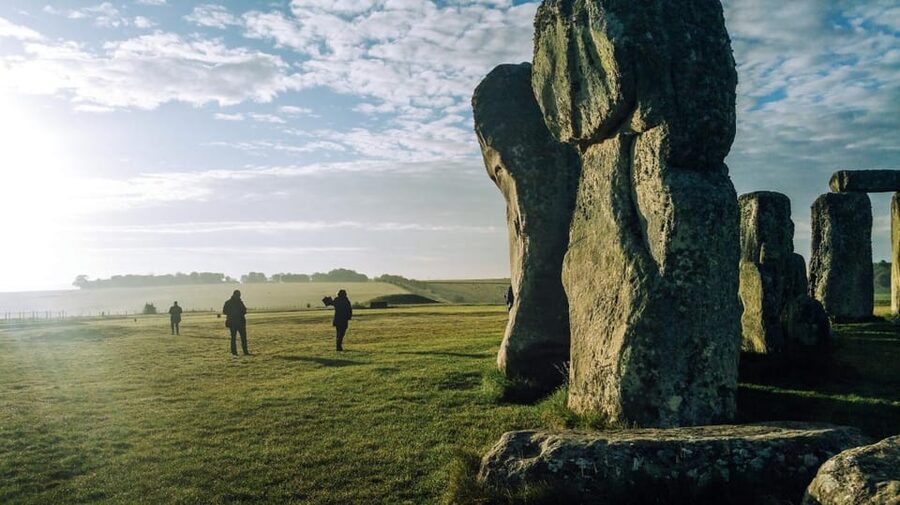
- Crowds affect the closest view: The stones are widely protected, so you see them from a set route rather than wandering among them.
- Wheelchair access is available: The activity is listed as wheelchair accessible, though the app and crowd conditions still matter.
What a two-hour Stonehenge visit feels like
Your visit begins with access to the Stonehenge site and its admission ticket included in the booking. The experience is built around a self-guided app, so you are not tied to a guide’s pace or a fixed group conversation.
I like this format for Stonehenge because the monument rewards quiet attention. You may want to study the way the stones line up, stop for a photograph, or simply look across the grass without hearing a running commentary. A traditional guide can add personality, but an app gives you control.
The planned duration is two hours. That is a sensible amount of time for a first visit, especially if you want a clear introduction rather than an entire day devoted to archaeology. You can use the interactive map to follow the route and read or listen to information as you go.
The app is meant to explain the site’s stories, secrets, and historical importance. It covers the monument as a prehistoric marvel, a place linked to the solstice, and a symbol of Britain’s ancient past. Those themes give the visit shape, but the physical stones remain the main event.
One important detail: the activity information also lists a live tour guide in a long range of languages, including English, Arabic, Chinese, French, German, Hindi, Italian, Spanish, Portuguese, Slovak, Polish, Dutch, Hungarian, Czech, Japanese, and Korean. Yet the experience itself is described as app guided, and no guide’s name is provided. If personal, on-site explanation is essential to you, confirm exactly what language support and format you will receive before booking.
More Stonehenge day trips:
- Stonehenge Admission Ticket
★ 4.6 · 6,388 reviews - London: Full-Day Windsor, Stonehenge, and Oxford Tour
★ 4.4 · 5,368 reviews - London: Windsor, Stonehenge, Bath, and Roman Baths Day Trip
★ 4.5 · 5,131 reviews
Meeting the stones from the protected route
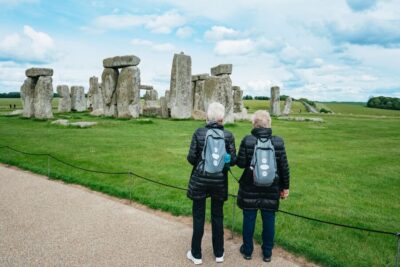
Stonehenge does not work like a city monument where you walk right up and touch the walls. The stones are protected, and the viewing route keeps you at a distance. That can feel limiting if your dream is to stand among the uprights, but it also protects the monument for future visitors.
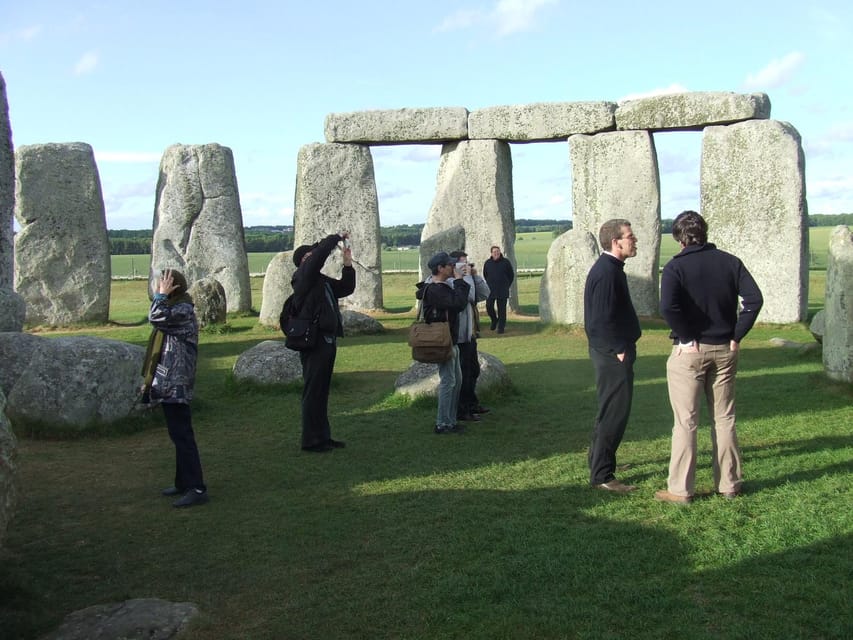
The closest point is likely to be the busiest part of the walk. A recent visit found the site crowded, with many people gathering at the nearest viewing area. Since the stones are widely roped off, the crowd can seem more noticeable there than elsewhere along the circuit.
I would not judge the whole visit by the first few minutes at the crowded viewpoint. Keep moving around the route, use the map, and look at the arrangement from different angles. Stonehenge changes as you walk: individual uprights become part of a larger ring, and the gaps between stones begin to matter as much as the stones themselves.
The setting is open and exposed, which helps you understand the scale of the monument. It also means there is no enclosing building to make the stones feel more dramatic. On a busy day, the experience can be less solitary than the photographs suggest.
You may also notice sheep in the surrounding fields. That sounds like a joke, but it is part of the visual setting. One disappointed visitor felt the sheep were more interesting than the crowded monument. I would take that as a useful warning about expectations: Stonehenge is powerful as an archaeological site, but it is not a private meditation once visitor numbers rise.
Reading the solstice alignment
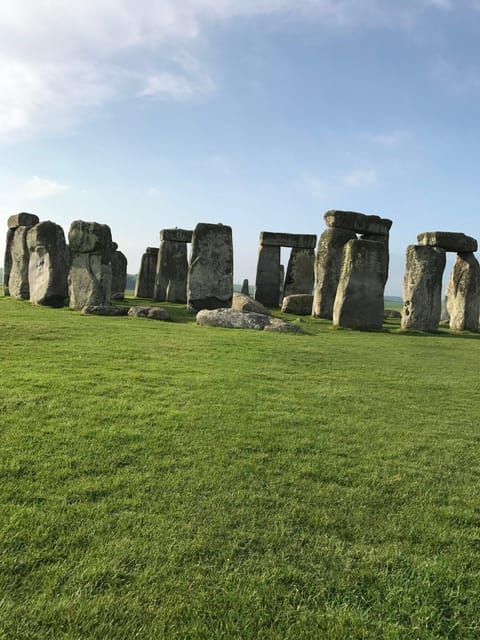
The strongest reason to visit is the connection between the stones and the sun. Stonehenge is presented as a Neolithic monument aligned to the solstice, which gives the site a clear link to prehistoric astronomy.
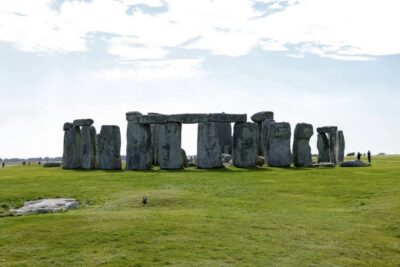
You do not need specialist archaeological knowledge to appreciate this. Look for the logic in the placement. The stones are not simply scattered boulders. Their positions suggest planning, measurement, labor, and a reason for arranging the circle in a particular way.
The solstice story also helps turn the visit from a quick photo stop into a question about how ancient communities understood the year. The monument points toward cycles of light and darkness, and the app can provide the background needed to see those patterns.
Still, the app’s explanation matters. One Italian visitor found the audio guide childish and poorly qualified, and stopped listening. That is a serious limitation for anyone who expects polished interpretation. The monument can carry part of the experience by itself, but the commentary should help you notice details rather than distract you.
I would treat the app as a supplement, not the sole reason to pay for the visit. Read the information that interests you, use the map to orient yourself, and do not feel obliged to listen to every section. If the narration does not suit you, the stones, route, and setting still provide the core experience.
The app guide and its weak spot
A self-guided app sounds simple: open the tour, follow the interactive map, and take in the information when you want it. That is the intended setup here. You do not have to stay beside a guide or wait for a group to gather.
The format suits independent visitors, families with different attention spans, and anyone who wants to stop often. It also helps if you prefer reading to listening. The broad language selection is useful for international visitors, provided the app delivers the promised options clearly.
The trouble is equipment and instructions. One recent visitor reported that no headsets were available and that there were no clear instructions about alternatives. That means you should not assume a headset will be supplied. Bring your own headphones if you prefer private audio, and make sure your phone is ready before you begin.
The listing does not specify whether a separate device is supplied, so you should also check the booking instructions for how the app is accessed. This is especially important if you are booking for someone who is not comfortable using smartphone apps.
At $79 per person, the app needs to work well to justify the price. If you mainly want entry and a look at the stones, the cost may feel high. If you value the flexibility of a private, self-paced route and want the historical material available in your language, the package may make more sense.
More self-guided walks in Britain:
- London: Emirates Stadium Entry Ticket and Audio Guide
★ 4.7 · 5,513 reviews - London: British Museum Audio Tour & Priority Entrance Ticket
★ 4.5 · 631 reviews - Bath: Roman Baths Entry Ticket with Audio Guide
★ 4.7 · 425 reviews - Canterbury Cathedral: Entry Ticket with Audio Guide
★ 4.6 · 266 reviews
Is the $79 price good value?
The price includes access to Stonehenge, the admission ticket, and the self-guided app tour. Meals, drinks, and personal expenses are not included. Since the main attraction is a single archaeological site, the value depends heavily on how much you want from the interpretation.
The advertised price is $79 per person, while one recent booking reference mentioned a £30 per-person cost in connection with the visit. Prices can vary by booking date, currency, and sales channel, so check the final amount before paying. Do not assume that every Stonehenge visit with a similar title costs the same.
I see three ways to judge the price:
- If admission alone is your goal, $79 may be hard to defend.
- If you want a flexible app tour with an interactive map, the package gives you more structure than a basic entry ticket.
- If you expect a high-quality live guide, the price may disappoint because the experience is primarily described as self-guided and the commentary has had mixed results.
The free cancellation window helps reduce the risk. You can cancel up to 24 hours in advance for a full refund, and the reserve-now, pay-later option lets you hold a place without paying immediately. Those policies are useful when your Wiltshire plans are still changing, but they do not fix a poor audio experience or crowded viewing conditions.
Crowds, distance, and realistic expectations
Stonehenge is famous, and fame has practical consequences. You may find the site crowded even when you have booked a time. A timed admission slot controls access, but it does not promise an empty route.
The closest point around the stones is likely to draw the most people. If you want photographs without a wall of visitors, patience matters. Pause when others move on, and use the wider circuit rather than staying at the first popular viewpoint.
The stones are also set back from the walking route. You will see them well, but not in the intimate way some promotional photographs imply. The distance protects the monument and lets you view the full arrangement, yet it can disappoint anyone expecting to walk between the stones.
Facilities can affect your impression, too. One recent visit described the toilets as extremely dirty. That is a narrow complaint, but it matters during a two-hour outing, particularly for families or anyone who needs reliable facilities. Conditions can change, but I would keep expectations modest and plan your comfort around the site rather than assuming a polished visitor experience.
Accessibility and the best type of visitor
The activity is listed as wheelchair accessible. That makes it an option for visitors who need an accessible route, though the information does not give detailed information about gradients, surfaces, transport around the site, or app accessibility features. If you have specific mobility needs, ask for those details before booking.
This tour suits you best if you:
- Want Stonehenge admission bundled with a simple digital guide.
- Prefer to walk and stop at your own speed.
- Are comfortable using a phone app.
- Enjoy archaeological sites even when the full story remains uncertain.
- Can accept a protected viewing route rather than access among the stones.
- Are willing to visit despite possible crowds.
I would be more cautious if you need a live expert guide, expect excellent audio production, or dislike using your phone while sightseeing. The long language list is promising, but the experience gives no named guide and no firm detail about headset provision.
How to make the most of the visit
Before arrival, check the starting time and download or prepare anything the app requires. Since the tour lasts about two hours, a charged phone is important. Your own headphones may also be useful, given the report that headsets were not available.
Give yourself time to look before pressing through every audio section. First notice the overall circle, the size of the stones, and the gaps between them. Then use the app to add context. This order keeps the monument from becoming background scenery for a phone screen.
Pay special attention to the solstice explanation. It is the clearest thread connecting the arrangement of stones to ancient observation of the sun. You do not need to decide exactly how every stone was used to appreciate the planning involved.
Move beyond the closest viewpoint if the crowd is thick. The route is designed for viewing from different positions, and a little distance can help you see the monument as a complete structure rather than a collection of blocked-off stones.
Finally, leave room for uncertainty. Stonehenge is a prehistoric enigma, and the visit cannot provide a neat answer to every question. The best experience comes from combining the facts you can learn with the mysteries that remain.
Should you book this Stonehenge tour?
Book it if you want admission plus a self-paced app tour and you value flexibility more than a personal guide. The two-hour format is easy to fit into a Wiltshire itinerary, the solstice theme gives the visit real substance, and wheelchair access broadens its appeal.
Think twice if $79 feels high for entry to one site, or if you want polished narration and guaranteed headsets. Crowds, protected viewing distances, and uneven app support can reduce the value.
My practical advice is to book when the cancellation and pay-later terms help your plans, but check the final price and app setup carefully. Go for the stones and the questions they raise. Treat the audio as a helpful extra, not the entire reason to visit.
FAQ
Is admission to Stonehenge included?
Yes. The activity includes access to Stonehenge and an admission ticket.
How long does the experience last?
The stated duration is two hours.
Is this a self-guided tour?
Yes. The experience includes a self-guided app tour with interactive maps and information.
Is a live tour guide included?
The activity information lists live tour guide language support, but the experience is described as app guided and no guide’s name is provided. Confirm the exact format before booking if you require a live guide.
What languages are available?
The listed languages are Arabic, Chinese, English, French, German, Hindi, Italian, Spanish, Portuguese, Slovak, Polish, Dutch, Hungarian, Czech, Japanese, and Korean.
Is the activity wheelchair accessible?
Yes. It is listed as wheelchair accessible.
Are meals and drinks included?
No. Meals and drinks are not included.
Are personal expenses included?
No. Personal expenses are not included.
Can I cancel for a full refund?
Yes. You can cancel up to 24 hours in advance for a full refund.
Do I have to pay when I book?
Not necessarily. The reserve-now, pay-later option allows you to book your spot and pay nothing at the time of reservation.
Just added around Britain
- London: Wimbledon Tennis Club and Westminster Walking Tour★ 4.5 · 86 reviews
- London: Westminster to Richmond River Thames Cruise★ 4.8 · 23 reviews
- Winchester: Historic Castles and Cathedrals Walking Tour★ 4.9 · 154 reviews
- Westminster Abbey Skip-the-Line Entry and Private Tour★ 4.6 · 4 reviews
- Best of London by LE GRAND – London’s Luxury Bus Tour★ 4.2 · 23 reviews
- Whitby: Guided Distillery Tour with Gin Tasting★ 5.0 · 28 reviews
- London: Westminster Walking Tour & St Paul’s Cathedral Entry★ 4.7 · 7 reviews
- Warwick: Entry Ticket for Warwick Castle★ 4.7 · 215 reviews
Stonehenge Tours, compared.

Full-Day Windsor, Stonehenge, and Oxford Tour
Read our review →
Windsor, Stonehenge, Bath, and Roman Baths Day Trip
Read our review →
Stonehenge Morning or Afternoon Tour Optional Lunch
Read our review →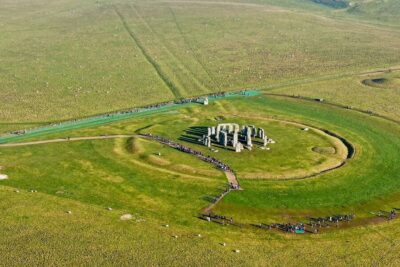

Windsor Castle, Stonehenge & Bath Full-Day Tour
Read our review →
Browse the lists this tour appears in