Reviewed · LONDON TOURS
Turmoil, Templars, Oliver Twist: London’s Squalor & Splendor
London’s grandest streets often hide its grimmest stories. This two-hour Holborn walk connects Saxon turmoil, Oliver Twist’s criminal underworld, the Knights Templar, Freemasons, prisons, and the old Bow Street police force in one compact route.
I like the sharp contrast between splendour and squalor, and I like the small group limit of 15 people. That makes it easier to hear the guide and ask questions, something especially useful on a story-led walk. Guides such as Tom bring an upbeat, well-informed touch, with recent feedback praising the clear explanations and fun delivery.
The main drawback is pace. You cover about 2.5 miles in two hours, with many short stops, so this is not a slow architectural tour or a long interior visit. Children under 13 cannot join, and the tour is offered in English only.
Key points to know before you book
- Fagin’s London: Follow the Oliver Twist connections through places linked with crime, punishment, and Dickens’s fictional world.
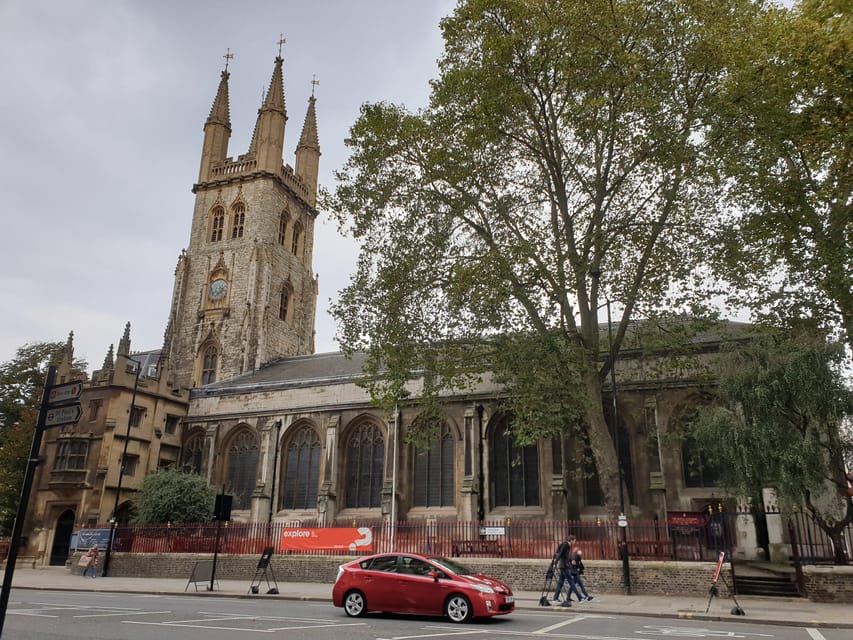
- Thirteen historic stops: The route includes Bow Street, Freemasons’ Hall, Temple Church, Old Bailey, Bridewell, and more.
- A striking change of tone: Move from grand civic buildings and Masonic decoration to prisons, executions, and London’s rougher past.
- A small walking group: Tickets are limited to 15 attendees, which suits anyone who wants room for questions.
- A useful central route: Begin outside Covent Garden Station and finish near Blackfriars Station after roughly 2.5 miles.
- Strong value at $26: You get a live, English-speaking guide and a concentrated history lesson across one of London’s most layered districts.
Why Holborn makes such a good history walk
Holborn is ideal for a tour that wants to show London’s mixed character. It sits between the theatre district, the legal quarter, old religious foundations, and streets once linked with crime and punishment.
I enjoy this kind of route because the city’s past does not arrive in neat chapters. Saxon conflict, medieval religious power, Victorian fiction, policing, retail, and modern transport all appear within a short walk. You are not simply looking at one famous building after another. You are learning how different parts of London occupied the same ground over time.
The tour begins outside Covent Garden Station, where the guide will be holding a Historic London Tours sign. From there, the walk heads through Holborn and continues toward the City side of central London, ending at 36 to 37 New Bridge Street, near Blackfriars Station.
The distance is about 2.5 miles. That is manageable for most people who are comfortable walking, but the schedule is active. Wear shoes you can walk in and expect to remain outdoors for much of the experience.
A few more London days worth weighing up
- From London: Harry Potter Warner Bros Studio Tour
★ 4.7 · 26,588 reviews - London: Westminster to Greenwich River Thames Cruise
★ 4.5 · 22,836 reviews - Magical London: Harry Potter Guided Walking Tour
★ 4.7 · 22,044 reviews
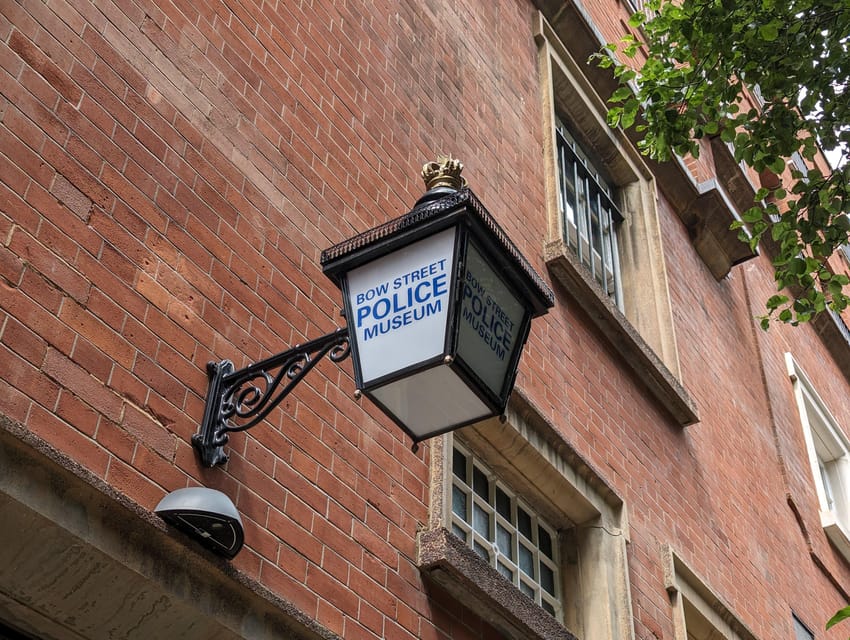
Bow Street and the first taste of London law
One of the early stops is the Bow Street Police Museum, where the guide spends about five minutes explaining the area’s connection with law enforcement. Bow Street is useful context for the tour because it introduces the city’s long struggle with crime, order, and public safety.
You will also hear about the Bow Street Runners, an early detective and policing force. This adds a practical side to the stories of thieves and criminals. London’s notorious figures did not exist in isolation. They lived in a city that was slowly creating new ways to investigate crime and control its streets.
The short stop means you should not expect a full museum visit or time to study displays at length. Instead, treat it as one part of a larger chain. The guide uses each place to move the story forward.
That format works well if you prefer connections over long lectures. If you want to spend an hour inside every museum, this is not the right tour. If you want a clear explanation of how London’s institutions developed, the brisk pace has an advantage.
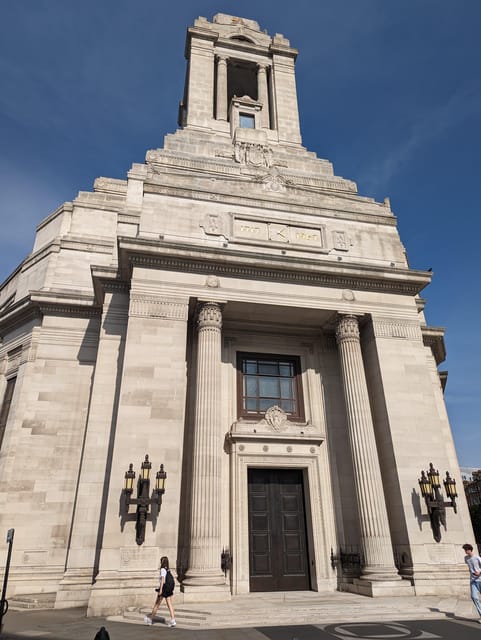
Freemasons’ Hall and London’s grander face
The mood shifts at Freemasons’ Hall, one of the tour’s most visually appealing stops. The experience draws attention to the splendour of the building and to the Freemasons’ role in London’s civic and social story.
I like this part because it gives the walk some visual relief. After hearing about crime and punishment, you encounter an institution associated with ceremony, organization, and impressive design. The contrast is central to the tour’s appeal.
The guided portion here is listed at about five minutes, so you should keep your expectations realistic. You will receive an introduction rather than a full architectural tour. Still, even a short explanation can make the building more meaningful than a quick glance from the pavement.
For first-time visitors, this is also a good reminder that London’s history is not only royal palaces and famous churches. Private societies, professional groups, and civic organizations helped shape the city too.
Aldwych, Dickens, and the darker side of fiction
At Aldwych, the tour returns to the rougher side of London. This is where the Oliver Twist thread becomes especially useful. You will visit locations connected with Fagin’s den and his execution in the novel.
Dickens used real places and recognizable London conditions to make his fiction feel immediate. Seeing the settings connected with Fagin helps you understand how closely his stories were tied to the city around him.
I find this section likely to appeal most to anyone who has read Oliver Twist or seen one of its adaptations. You do not need to be a Dickens expert, though. The guide connects the fictional characters with the wider themes of poverty, crime, justice, and public spectacle.
The tour does not present Dickens as a detached literary figure. Instead, his work becomes a way into the streets themselves. That makes the story easier to remember, especially when the route moves between handsome buildings and reminders of harsh urban life.
Same city, a completely different sort of afternoon:
- London: Madame Tussauds London
★ 4.6 · 20,915 reviews - London: Warner Bros. Studio Tour with Transfers
★ 4.7 · 17,586 reviews - London: Tower Bridge Entry Ticket
★ 4.7 · 15,560 reviews - London: St Paul’s Cathedral Entry Ticket
★ 4.7 · 9,813 reviews
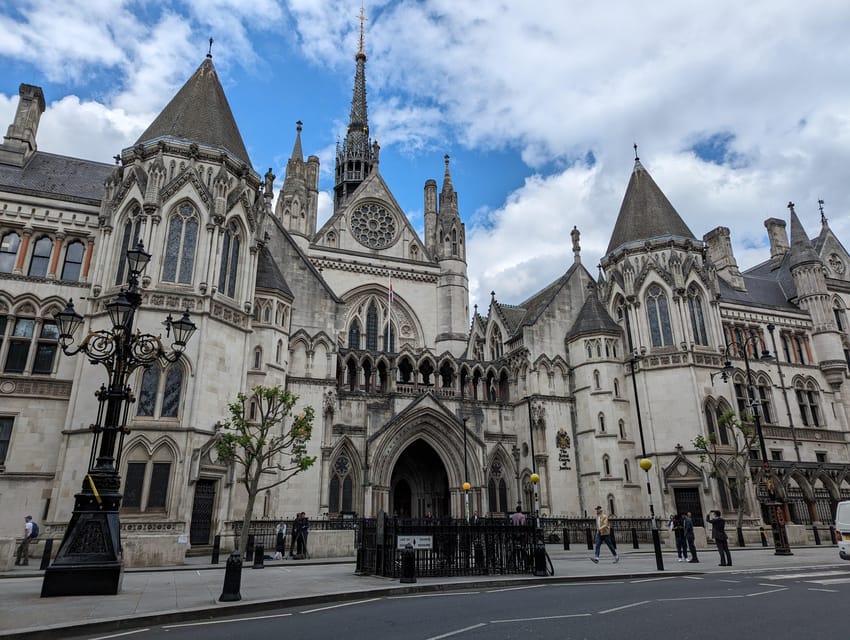
The Royal Courts of Justice and the power of the law
The Royal Courts of Justice adds another major institution to the route. Here, the focus turns from police work and criminal characters to the formal legal system.
The building provides a strong setting for discussion of how justice was organized and displayed. Its presence helps explain why this part of London became associated with courts, lawyers, prisoners, and public ideas about punishment.
The guided stop is short, around five minutes, so the value comes from the guide’s explanation rather than from a detailed inspection. I would listen for the links between this stop and the later visit to the Old Bailey. Together, they show different parts of London’s legal world.
This is one reason the route works as a whole. A stop that might seem ordinary on its own becomes more interesting when you understand how it relates to police, courts, prisons, and executions elsewhere on the walk.
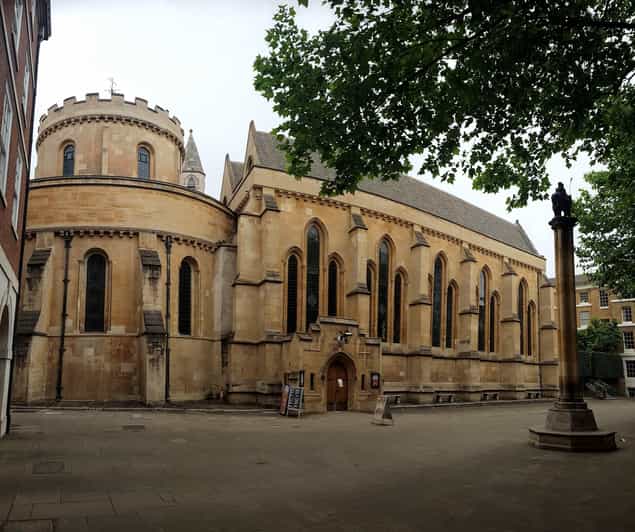
Temple Church and the Knights Templar
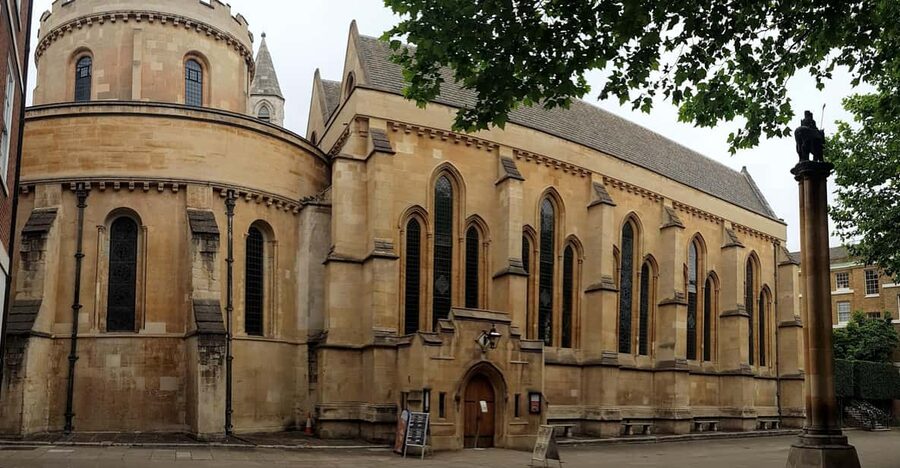
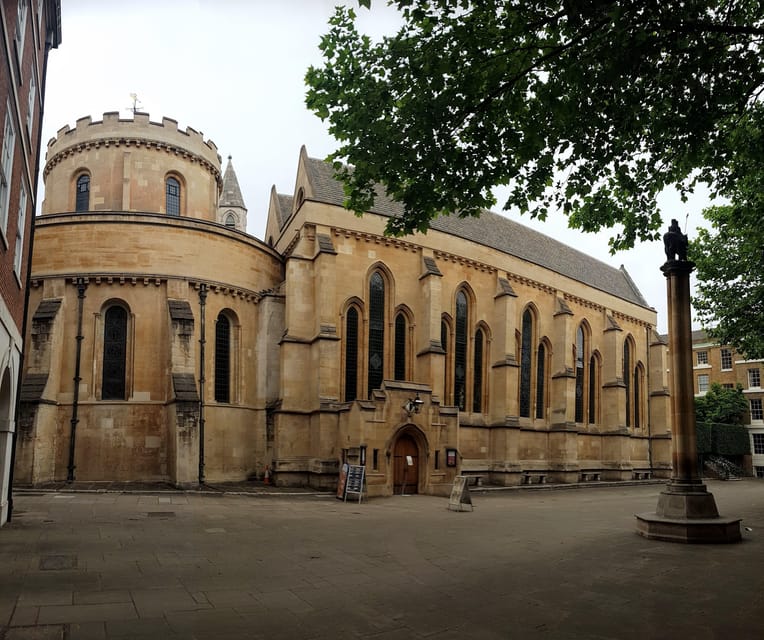
At Temple Church, the tour reaches one of its most distinctive historic subjects: the Knights Templar. The church and surrounding Temple area connect the walk to medieval religious power, finance, and international politics.
The Templars are a natural fit for this route because their story brings a very different kind of turmoil to the tour. Earlier sections deal with street crime and policing. Here, the guide shifts to a medieval order whose influence reached well beyond London.
You will hear about the Knights Templar headquarters and see the setting associated with them. The stop offers a useful change in scale, from individual criminals to powerful organizations that shaped European affairs.
Again, the schedule allows about five minutes. That is enough for a concise introduction, not enough for a detailed church visit. If Temple Church is a personal priority, you may want to return independently at another time. On this walk, its role is to anchor the medieval chapter of the larger story.
London Silver Vaults and a surprising retail story
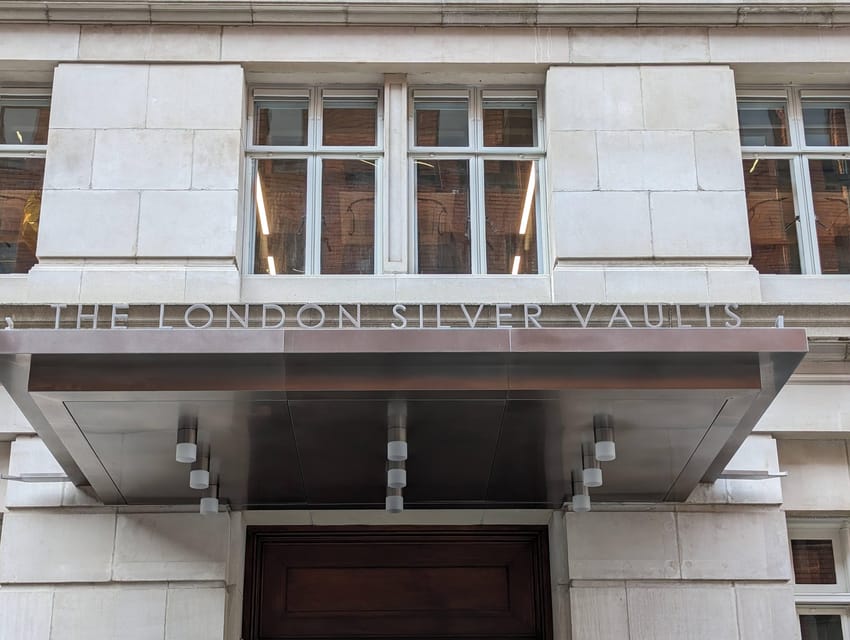
The London Silver Vaults may be the most unexpected stop. The tour introduces what is described as the world’s largest collection of retail silver, bringing commerce and craftsmanship into a route otherwise dominated by law, religion, and crime.
This stop matters because it shows that London’s past is not only found in monuments. It also survives in trades, shops, and specialist markets. Silver connects the city to wealth, status, design, and everyday business.
I like the surprise of this section. You may arrive expecting another story about prisons or courts, then find yourself learning about a major collection of retail silver. That variety keeps the walk from becoming too heavy.
The guide will give you a short introduction rather than time for extended browsing. If you enjoy decorative arts or historic shopping, make a note of the location and consider coming back after the tour. The walk gives you the context; a separate visit would give you more time to look.
Staple Inn, Hatton Garden, and streets with working histories
The route continues through Staple Inn and Hatton Garden, two places that help show how London’s streets changed function over time.
Staple Inn brings another old London setting into view. Its importance on this tour comes from the way it fits into the legal and commercial character of Holborn. The guide can use the site to explain how professions and businesses took root in this part of the city.
At Hatton Garden, the focus shifts toward the area’s commercial identity. Together, these stops broaden the tour beyond famous buildings. They show how work, trade, and specialist industries shaped the streets you are walking through.
The itinerary gives each stop about five minutes, so you should expect a series of focused explanations. I would pay attention to the transitions between sites. The value is not just in memorizing the names of buildings. It is in seeing how the same district supported law, religion, policing, retail, and entertainment.
Holy Sepulchre Church and stories of punishment
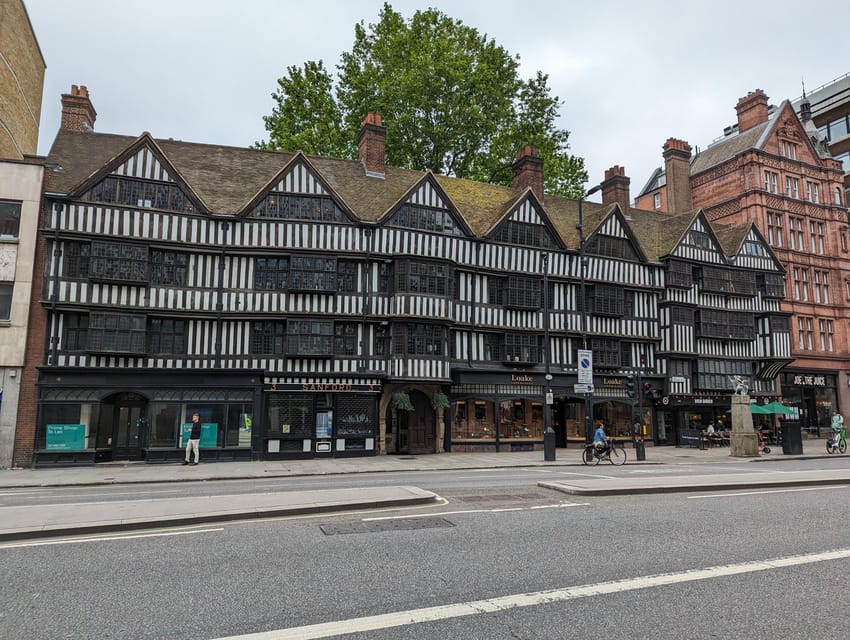
The Holy Sepulchre Church continues the tour’s examination of London’s difficult past. The church is tied to the historical setting around punishment and public life, and it helps prepare the route for the final stops involving the Old Bailey and Bridewell.
This is where the title’s squalor and splendour idea becomes clear. Churches, courts, grand halls, prisons, and markets all existed close together. The city could be solemn, wealthy, violent, theatrical, and practical within a few streets.
The stop is brief, but it adds atmosphere and historical texture. I would not expect a service, extended interior access, or a quiet period of reflection. The tour is moving through a connected urban story, and the guide keeps the pace going.
Old Bailey and Bridewell’s prison history
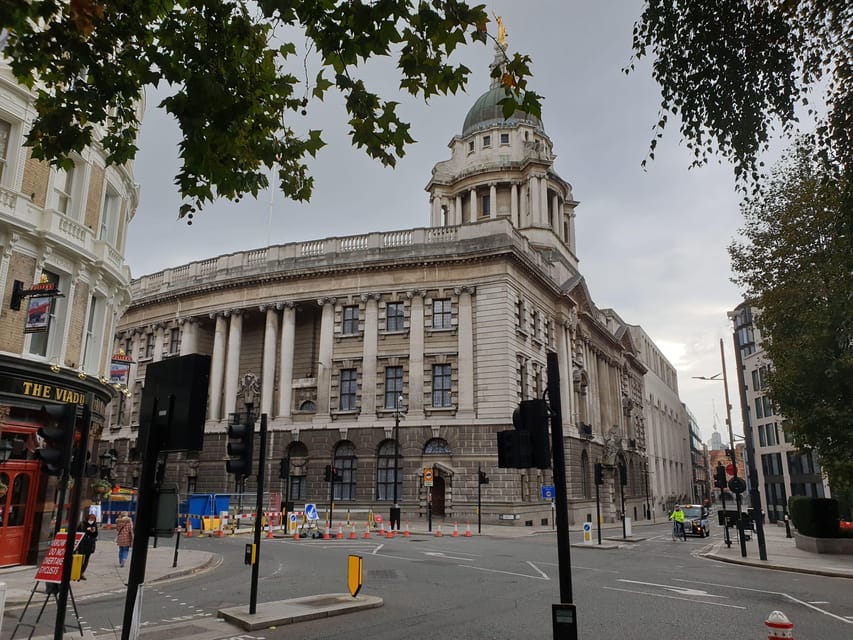
Near the end, the route reaches the Old Bailey, one of London’s best-known criminal courts. This stop brings together many of the themes introduced earlier: policing, trials, criminals, public justice, and the stories that inspired writers such as Dickens.
The guide also discusses a couple of London’s most notorious prisons. At the Bridewell Centre, you will hear more about the city’s prison history and the way punishment operated in earlier periods.
These stops give the walk a strong finish because they return to the central question: how did London respond to crime and disorder? You have already heard about the Bow Street Runners, fictional criminals, courts, and medieval institutions. The final section ties those threads together.
Do not expect to enter a working courtroom or prison as part of the standard two-hour walk. The focus is on locations and explanation. For me, that is still worthwhile because the physical setting gives the stories a clearer shape.
What the two-hour format really delivers
At $26 per person, this tour offers good value if you want a broad introduction to central London’s less obvious stories. You get a live English-speaking guide, a carefully connected route, and access to a small group capped at 15 people.
The price is especially fair for anyone who would otherwise walk through Holborn without knowing what sits behind the façades. A guide can point out links between places that are easy to miss when you explore alone.
The tradeoff is depth. With roughly 13 stops and only about two hours, each location receives a short explanation. You are buying range rather than long interior visits or specialist study of one subject.
That makes the tour a good choice early in a London stay. It can help you identify places to revisit, including Temple Church, Freemasons’ Hall, or the London Silver Vaults. It also gives you a useful mental map between Covent Garden and Blackfriars.
The small group matters here. A large crowd would make a rapid, story-heavy walk harder to follow. With up to 15 people, you should have a better chance of hearing the guide and asking questions. Recent comments describe the explanations as interesting, informative, and easy to follow, while Tom is singled out for making the material fun as well as clear.
Who should book this London walk
I would recommend it to adults and older teenagers who enjoy urban history, Dickens, unusual institutions, and stories about crime and justice. The minimum age is 13, so families with younger children need another plan.
It also suits repeat London visitors. You may already know Covent Garden, the Royal Courts of Justice, or the Old Bailey, but this walk can connect familiar places in a new way.
Book it if you enjoy listening while walking and like a guide who can answer questions. The English-only format is best for people comfortable following a live spoken tour in English.
I would choose another experience if you want a slow architectural study, a long museum visit, or a tour built around one single subject. The route is broad and brisk. Its strength is the range of people, institutions, and stories packed into one central London walk.
Practical planning is simple. Meet outside the Covent Garden Station exit, look for the Historic London Tours sign, and allow enough time to arrive before the group sets off. You can cancel up to 24 hours ahead for a full refund, and the reserve-now, pay-later option keeps your plans flexible.
Should you book Turmoil, Templars, Oliver Twist?
Book this tour if you want London’s contradictions in one sitting: grand halls beside old prisons, medieval power beside Victorian fiction, and retail silver beside the criminal courts.
At $26, it is a sensible buy for a compact introduction to Holborn, especially with a maximum group size of 15. Just remember that the tour moves quickly and gives most places a short explanation rather than a full visit.
If the idea of walking 2.5 miles while hearing lively stories about Saxons, Templars, Dickens, Freemasons, police, and prisons appeals to you, this is a strong choice. It gives you plenty to think about, and perhaps a few places to return to when you have more time.
FAQ
Where does the tour begin?
The tour begins outside the exit of Covent Garden Station. The guide will be holding a Historic London Tours sign.
Where does the tour finish?
The walk finishes near Blackfriars Station at 36 to 37 New Bridge Street, London EC4V 6BJ.
How long is the experience?
The guided walk takes around two hours and covers approximately 2.5 miles.
What language is the tour offered in?
The tour is conducted in English with a live English-speaking guide.
Can children join the tour?
Children under 13 are not permitted to join this experience.
What is included in the price?
The price includes the guided walking tour. It costs $26 per person.
Just added around London
- London: Wimbledon Tennis Club and Westminster Walking Tour★ 4.5 · 86 reviews
- London: Westminster to Richmond River Thames Cruise★ 4.8 · 23 reviews
- Westminster Abbey Skip-the-Line Entry and Private Tour★ 4.6 · 4 reviews
- Best of London by LE GRAND – London’s Luxury Bus Tour★ 4.2 · 23 reviews
- London: Westminster Walking Tour & St Paul’s Cathedral Entry★ 4.7 · 7 reviews
- From London: Oxford, Stratford-upon-Avon & Cotswolds Trip★ 4.5 · 64 reviews
- From London: Warwick, Oxford, Stratford & Cotswolds Day Tour★ 4.0 · 270 reviews
- Warner Bros. Studios and 1-Day London Hop-on Hop-off tour★ 4.7 · 9 reviews
London Tours, compared.

Westminster to Greenwich River Thames Cruise
Read our review →
Magical London: Harry Potter Guided Walking Tour
Read our review →