Reviewed · TICKETS
London: Kew Gardens Admission Ticket
Kew Gardens is not simply a park with a few flower beds. It is a 326-acre botanical world, with tropical glasshouses, royal rooms, unusual art, ancient trees, and a treetop walkway that lifts you 18 meters above the ground. You can spend four hours here, but a full day gives the place room to breathe.
I especially like the way Kew mixes serious plant science with hands-on sights. The Palm House feels like a rainforest, while The Hive turns the life of bees into a powerful sound and light experience. I also like that you can set your own pace, join a free walking tour, or simply follow the map.
The main drawback is size. Kew is wonderfully spacious, but that means plenty of walking, and the $32 admission price can feel steep if you only stay for a few hours. Food inside is also costly, and the Explorer train costs extra.
Key points to know before you go
- 326 acres to explore: Plan on at least half a day, and preferably a full day, if you want more than the headline sights.
- Palm House and conservatories: Tropical plants, giant lily pads, and ten climate zones make this a strong choice in poor weather.
- The Hive: This 17-meter structure uses 170,000 aluminum parts and 1,000 LED lights to recreate the sights and sounds of a bee colony.
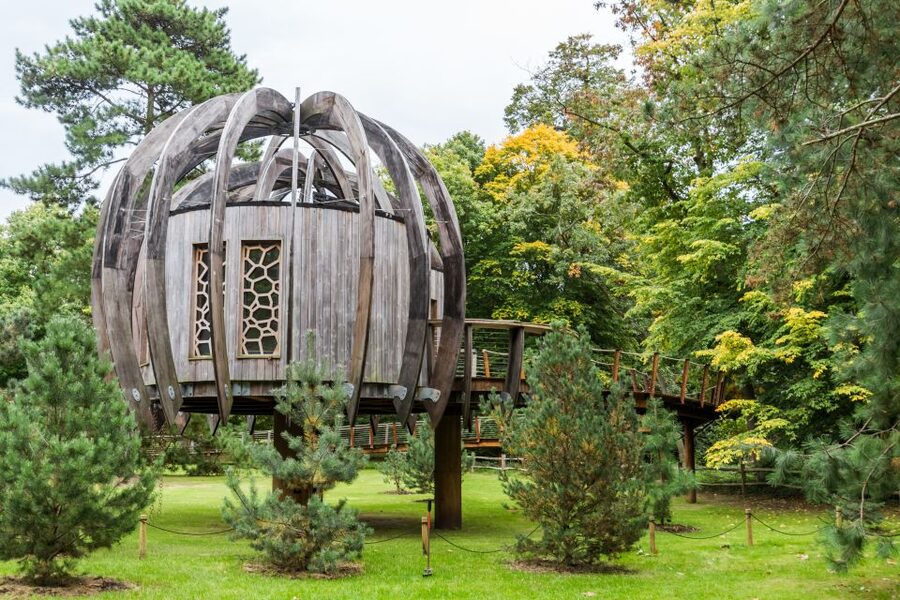
- 18-meter treetop walk: You get a different view over the gardens, though some visitors with limited mobility may find this section less straightforward.
- Kew Palace and galleries: The ticket includes royal rooms, Georgian kitchens, three art galleries, and seasonal displays.
- Bring a food plan: Cafes and restaurants are available, but a meal outside the grounds or a picnic can offer better value.
Getting to Kew from central London
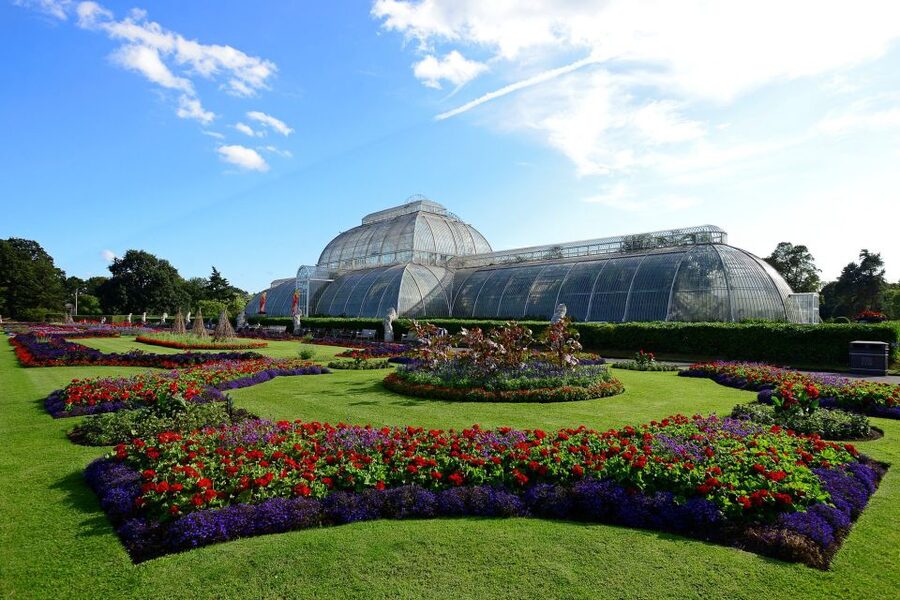
Kew Gardens is in South West London, not in the middle of the city’s main sightseeing zone. That sounds like a nuisance until you see how easy the trip is: the gardens are about 30 minutes from central London by Underground or Overground train.
The most useful arrival point is Victoria Gate, on Kew Road, close to Kew Gardens station. You may enter through any garden entrance, but Victoria Gate is the simplest choice if you arrive by public transport.
Give yourself time to reach the entrance, collect your bearings, and look at the seasonal highlights guide. The gardens are large enough that walking to the far side without a plan can cost you an hour.
The ticket is valid for one day, not a timed visit. Check the current opening hours before setting out, since the last admission is one hour before closing. Kew closes on December 24 and 25, and Kew Palace closes during winter.
A few more Britain days worth weighing up
- London: The London Eye Entry Ticket
★ 4.6 · 35,875 reviews - London: Tower Bridge Entry Ticket
★ 4.7 · 15,560 reviews - London: Westminster Abbey Entrance Ticket
★ 4.6 · 11,254 reviews
How to plan your day across 326 acres
You do not need to follow a fixed route. That freedom is one of the pleasures of Kew, but it can also leave you wondering what you have missed.
I suggest starting with the buildings and glasshouses you most want to see. This is particularly useful if you arrive later in the day, since the gardens can take longer to cross than the map first suggests. After the main interiors, use the outdoor paths, arboretum, lake, Japanese Garden, and art installations as your slower afternoon walk.
Free walking tours take place at least twice daily, subject to availability. They can help you understand the layout and give the visit more context. If Rich is leading a walk during your visit, expect an outgoing guide who is comfortable making people feel welcome.
Kew works well for both serious plant fans and people who simply want a quiet day away from central London. You will see labels and displays throughout the site, but you can also ignore the science for a while and sit beneath an old tree.
Palm House and the Waterlily House
The Palm House is one of the essential stops. Its warm, humid interior is planted to resemble an exotic rainforest, a welcome change from London weather and a vivid lesson in how plants adapt to tropical conditions.
You will find tall palms, thick foliage, and an enclosed atmosphere that feels far removed from the city. The building itself is as important as the plants, with the glass and ironwork creating a dramatic setting for the collection.
The Waterlily House offers a different mood. Its giant lily pads are the main attraction, especially when seen beside the koi in the pool. This is a compact stop, so it is easy to add to your route without giving up too much time.
Both buildings can become crowded, especially on warm days or during popular seasonal displays. If you want a calmer look, visit early or use them as your first stops when arriving later in the afternoon.
The Princess of Wales Conservatory
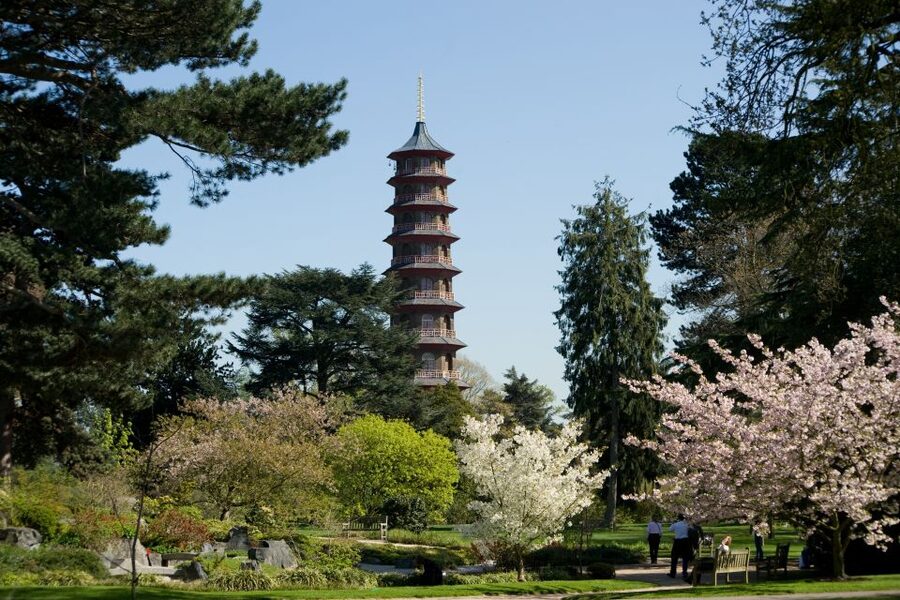
The Princess of Wales Conservatory takes you through ten climate zones under one roof. That variety is what makes it more than another warm glasshouse. You move through different growing conditions and see how plant life changes from one zone to another.
This is a good stop when the weather is wet, cold, or simply unpredictable. Kew’s glasshouses support plant life throughout the year, so the visit does not depend entirely on summer flowers.
Seasonal exhibitions can add another layer to the conservatory experience. Orchid displays, for example, have drawn visitors to Kew in winter and spring. Check what is running during your visit, but do not assume a temporary display will be available every time you go.
The glasshouses are among Kew’s most consistently rewarding sights. If you only have a half day, I would put the Palm House, Waterlily House, and Princess of Wales Conservatory near the top of your list.
Same city, a completely different sort of afternoon:
- From London: Harry Potter Warner Bros Studio Tour
★ 4.7 · 26,588 reviews - London: Westminster to Greenwich River Thames Cruise
★ 4.5 · 22,836 reviews - Magical London: Harry Potter Guided Walking Tour
★ 4.7 · 22,044 reviews - London: Madame Tussauds London
★ 4.6 · 20,915 reviews
The Hive and the work of bees

The Hive is one of Kew’s most memorable structures. It rises 17 meters and is made from 170,000 aluminum parts and 1,000 LED lights. Its design copies the visual and sound effects of an actual beehive.
This is not just a large object placed in a garden for photographs. The lights and sounds give you a sense of a colony working as one system, while the displays explain the role bees play in the health of the planet.
I like The Hive because it gives children and adults a reason to care about pollination without turning the visit into a classroom lecture. It is also a useful contrast to the quieter plant collections and formal paths elsewhere in Kew.
The Hive is often a highlight for families, but you do not need children to appreciate it. The structure is unusual enough to interest anyone who enjoys design, sound, or public art.
Treetop Walkway: 18 meters above the ground
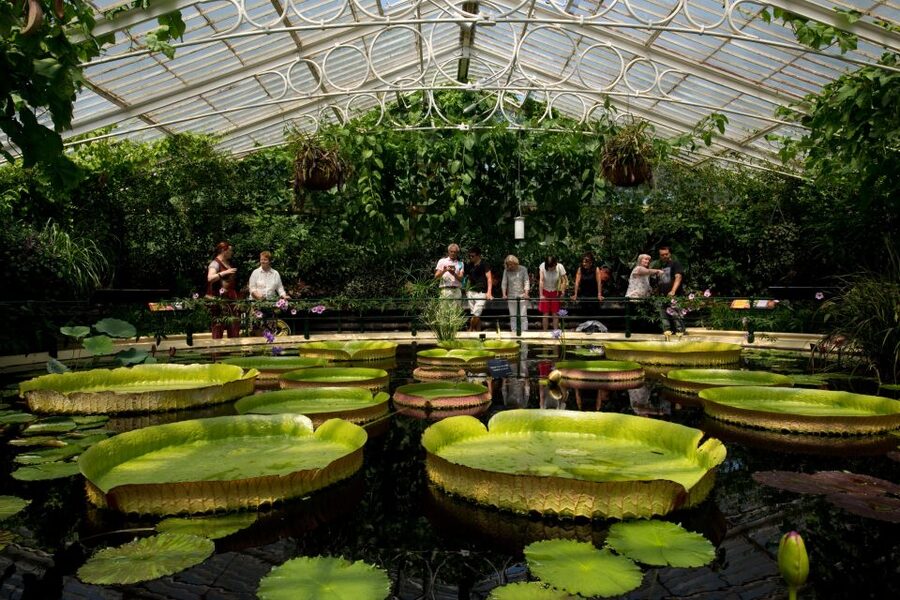
The treetop walkway lifts you 18 meters into the air, giving you a high view across the gardens and into the canopy. It is not a thrill ride. The pace is gentle, and the point is to notice the height, branches, and scale of the grounds from a new angle.
This stop helps you understand just how large Kew is. From ground level, the gardens can feel like a series of separate parks. Up on the walkway, the tree cover and open spaces connect into one broad view.
The high walk is a strong choice for photographers and children who need a change from reading plant labels. It also breaks up a long day of walking.
Kew is wheelchair accessible, and an elevator provides access to the upper floors of Kew Palace. Still, access around the treetop walkway may require extra care for some people with limited movement, so ask staff for current route advice if this matters to you.
The Arboretum and Kew’s older trees
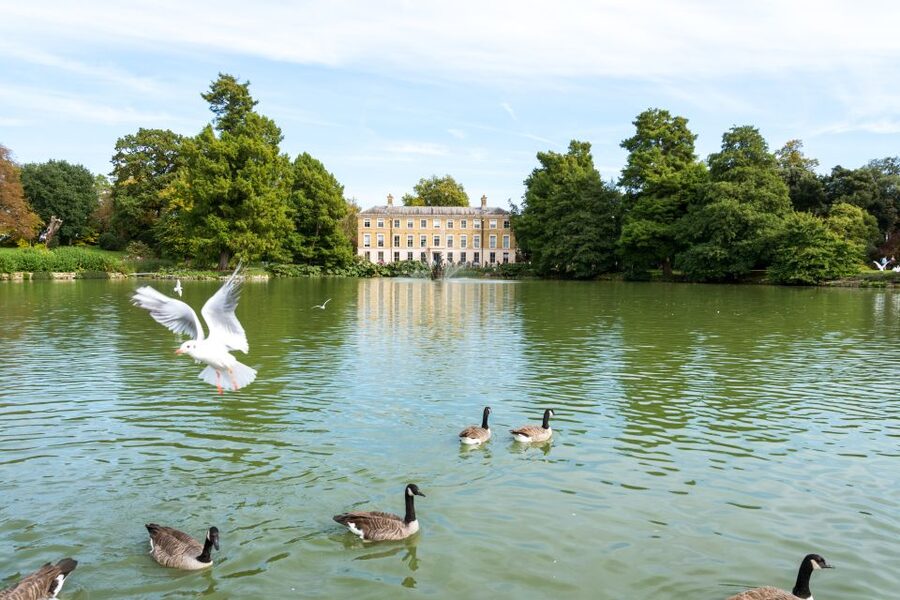
The Arboretum contains more than 14,000 trees, making it one of the places where Kew feels least like a conventional attraction. You can walk among extensive plantings rather than moving from one named building to the next.
This is where I would slow down. The glasshouses deliver immediate drama, but the Arboretum rewards patience. Large, mature trees give the grounds a sense of age and scale, while the paths offer a quieter setting after the busier central sights.
You may not see every section in one visit. That is not a failure of planning. Kew is simply too large to treat like a short museum stop, and the Arboretum is best enjoyed as part of a wider route rather than rushed through.
The Japanese Garden, lake, flowering borders, unusual shrubs, sculptures, and seasonal displays add more variety. The exact look changes sharply by month, which is one reason a second visit can feel different from the first.
Kew Palace, royal rooms, and Georgian kitchens
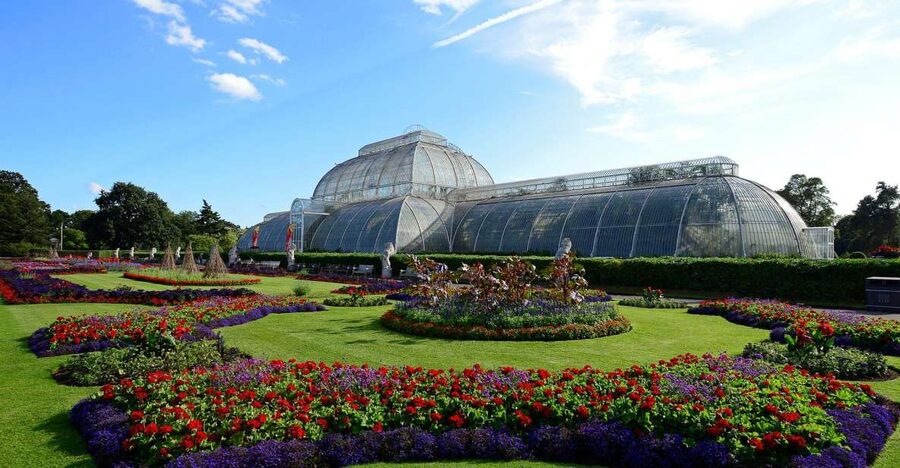
Kew Palace is a smaller and more intimate experience than the gardens around it. Inside, you can see royal bedrooms, an intimate dining room, and the newly restored Georgian Royal Kitchens.
The appeal is its scale. You are not walking through a grand ceremonial palace built to impress a crowd. Instead, the rooms give you a closer look at domestic royal life and the practical side of running a household.
Kew Palace is included in the ticket, but it is closed during winter. If the palace is a priority, check its seasonal opening before you buy or travel.
The palace works particularly well after the glasshouses. You move from living plant collections and humid interiors into rooms shaped by people and daily routines. It gives the day a useful historical counterpoint without taking over the visit.
Art galleries, sculpture, and seasonal exhibitions

Your admission includes three art galleries. Kew also displays sculptures and temporary exhibitions around the grounds, so the visit is not limited to botany.
The setting matters here. A sculpture along a garden path can feel very different from the same work in a white gallery room. Temporary exhibitions have included thoughtful links between art and the plant world, while larger outdoor works can turn a familiar path into a new route.
Do not plan your entire visit around one temporary exhibition unless you have confirmed its dates. Seasonal programs change, and some displays may close before the rest of the gardens.
The galleries are useful on a rainy day, while outdoor sculpture gives you another reason to wander after visiting the main glasshouses.
Food, picnics, and the extra-cost train
Kew has cafes, restaurants, snack stops, ice cream stands, hot meals, and classic afternoon teas. Food and drinks are not included in the admission fee.
Prices inside can be high, especially if you are feeding a family or buying several drinks. The quality can vary by outlet and how busy it is, so I would not make an expensive meal the center of the day.
You can bring a picnic and use one of the garden’s picnic areas. Another practical option is to eat near Kew Gardens station, where pubs and eateries offer more choice, then return to the gardens if your ticket and opening hours allow it.
The Explorer train is not included and costs an additional £6 per person according to one recent visit. It can be useful for understanding the layout and saving energy, particularly if you are visiting with tired children or have limited time. Still, the walking paths are a major part of the experience, so I would treat the train as a convenience, not a must.
Is the $32 ticket good value?
At $32 per person, Kew is not a cheap casual stop. The value improves when you stay for most of the day and use the ticket’s full range of access: 326 acres, the glasshouses, Kew Palace when open, three galleries, The Hive, the treetop walkway, and the Arboretum.
If you only want a pleasant green space for an hour, the price will likely feel too high. If you enjoy gardens, architecture, museums, photography, or quiet walking, the ticket gives you enough variety to justify the cost.
The fact that you can go at your own pace also matters. You are not paying for a short guided circuit that ends after a set time. You can spend an hour in one glasshouse, stop for lunch, join a walking tour, and continue exploring.
That said, the extras add up. The Explorer train costs more, food inside can be overpriced, and seasonal exhibitions may have separate arrangements. I would set a budget before arriving.
Accessibility, families, and practical limits
Kew Gardens is wheelchair accessible, with an elevator serving the upper floors of Kew Palace. All children aged 16 and under must be accompanied by an adult.
The main challenge is distance. Even with good paths and plenty to see, you may walk for several hours. Some areas have fewer benches, so plan pauses rather than waiting until everyone is exhausted.
The gardens can feel exposed on very hot days, and shade is not equal across the whole site. Carry water, take breaks, and use the glasshouses or galleries as planned indoor stops. Rain does not ruin the visit, but it can hide the full beauty of the outdoor grounds.
Pets are not allowed, although assistance dogs are permitted.
Who should book Kew Gardens?
I would book this for anyone spending several days in London who wants a day that feels calmer and more spacious than the city center. It is especially good for plant lovers, families, photographers, people who enjoy historic buildings, and anyone who likes setting their own route.
You should also consider it if you are visiting during a season when London weather is uncertain. The glasshouses provide a worthwhile indoor backbone, while the outdoor gardens give you plenty to do if the sun appears.
I would hesitate if your schedule allows only two or three hours, if walking long distances is difficult without a detailed plan, or if $32 is already stretching your sightseeing budget. In that case, you may not see enough of Kew to feel satisfied.
Should you book the Kew Gardens admission ticket?
Yes, if you can give Kew at least half a day and preferably a full day. Start with the glasshouses and Kew Palace if it is open, then use the Arboretum, treetop walkway, Hive, galleries, and outdoor paths to fill the rest of the visit.
Bring a picnic or plan to eat outside the grounds if you want better control over spending. Book with enough flexibility to choose a pleasant day, and remember that the train is an extra.
Kew is not a quick box to tick. It is a large, varied day out where the best moments may be a giant lily pad, a warm rainforest, an old tree, or the strange hum of The Hive. If that sounds like your kind of London, the ticket is worth it.
FAQ
How long is the Kew Gardens ticket valid?
The admission ticket is valid for one day.
How far is Kew Gardens from central London?
Kew Gardens is about 30 minutes from central London by Underground or Overground trains.
Which entrance is closest to Kew Gardens station?
Victoria Gate on Kew Road is the closest entrance to Kew Gardens station.
Is Kew Palace included in the ticket?
Yes, Kew Palace is included when it is open. The palace is closed during winter.
Is the Explorer train included?
No. The Explorer train is not included in the admission ticket and costs extra.
Are walking tours included?
Yes. Free walking tours take place at least twice daily, subject to availability.
Is Kew Gardens wheelchair accessible?
Yes. Kew Gardens is wheelchair accessible, and an elevator provides access to the upper floors of Kew Palace.
Can children visit Kew Gardens alone?
No. All children aged 16 and under must be accompanied by an adult.
Are food and drinks included?
No. Food and drinks are not included, although cafes, restaurants, snack vans, and afternoon teas are available inside the gardens.
Just added around Britain
- London: Wimbledon Tennis Club and Westminster Walking Tour★ 4.5 · 86 reviews
- London: Westminster to Richmond River Thames Cruise★ 4.8 · 23 reviews
- Winchester: Historic Castles and Cathedrals Walking Tour★ 4.9 · 154 reviews
- Westminster Abbey Skip-the-Line Entry and Private Tour★ 4.6 · 4 reviews
- Best of London by LE GRAND – London’s Luxury Bus Tour★ 4.2 · 23 reviews
- Whitby: Guided Distillery Tour with Gin Tasting★ 5.0 · 28 reviews
- London: Westminster Walking Tour & St Paul’s Cathedral Entry★ 4.7 · 7 reviews
- Warwick: Entry Ticket for Warwick Castle★ 4.7 · 215 reviews
Tickets, compared.

Buckingham Palace: The State Rooms Entrance Ticket
Read our review →