
Reviewed · WALKING TOURS
Churchill’s Wartime London Walking Tour
Churchill’s Wartime London Walking Tour puts you in the middle of Westminster, where wartime decisions were made just steps from the street. You’ll pass Big Ben, Parliament, Downing Street, and the Cenotaph while your guide connects these famous sights to Churchill’s speeches, Allied leaders, and the Blitz. The wartime setting feels immediate, especially when you see bomb damage and the remains of a church destroyed during the war.
I like two things here: the route links major landmarks with less polished wartime evidence, and the personal audio headset should make the guide easier to hear in busy central London. A guide named John Steel earned especially warm praise for mixing useful facts with memorable trivia. The main concern is walking pace. This is not a gentle stroll, and the supplied information gives both 80 and 90 minutes as the tour length.
Key points to know before booking
- Churchill’s Westminster route: Walk from Victoria Embankment past Big Ben, Parliament Square, Downing Street, and Whitehall.
- Wartime evidence in the street: See bomb damage and the remains of a church destroyed during the Blitz.
- Allied leaders in bronze: Look for statues of Churchill, Eisenhower, Franklin D. Roosevelt, and Sir Arthur Harris.
- The Churchill War Rooms finish: The walk ends outside the Churchill War Rooms, but admission is not included.
- Live commentary with headsets: An English-speaking guide leads the walk, with personal audio equipment provided.
- A brisk central London walk: Comfortable shoes matter, and the route is not suitable for people with reduced mobility.
Following Churchill from Victoria Embankment
The meeting point is the Boadicea and Her Daughters statue on Victoria Embankment, near Westminster Tube station’s Exit 2. This is a sensible place to begin. You are already beside the river and close to the political heart of London, so the tour gets moving without a long transfer or a sightseeing bus ride.
Your guide introduces the wartime story through Churchill’s connection with Franklin D. Roosevelt. That relationship is one of the tour’s useful threads. Instead of treating Churchill as a lone wartime hero, the walk places him within the wider Allied effort and the decisions shared between Britain and the United States.
The personal audio headset is worth noting. Westminster can be noisy, and a headset lets you keep looking at the buildings rather than standing shoulder to shoulder around the guide. You still need to stay with the group, but you should have a better chance of hearing the commentary.
Bring an umbrella and wear shoes you can walk in for more than a quick photo stop. The route is short by London sightseeing standards, yet it includes repeated walking between landmarks and is described as unsuitable for people with reduced mobility.
More Walking Tours in London
- Magical London: Harry Potter Guided Walking Tour
★ 4.7 · 22,044 reviews - London: The Original Jack the Ripper Walking Tour
★ 4.7 · 7,833 reviews - London: Harry Potter Movies Walking Tour (Kids Go Free)
★ 4.7 · 3,071 reviews
Big Ben and the wartime seat of power
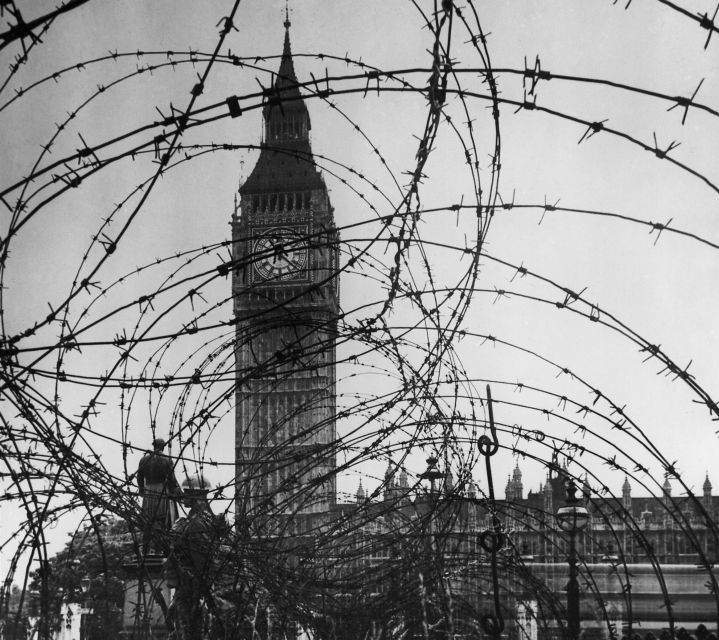
Big Ben is an obvious first landmark, but this tour uses it as more than a photo stop. The clock tower and the Houses of Parliament represent the political center where Churchill delivered speeches and helped direct Britain through the Second World War.
From here, the guide leads you toward Westminster and Parliament Square. The value of this section comes from the contrast between the familiar postcard view and the decisions made inside these buildings. You are not entering the Houses of Parliament on this walk, so the experience is about the exterior setting, the surrounding streets, and the stories attached to them.
If you have already seen Big Ben, the wartime commentary gives the area a fresh purpose. If this is your first London visit, the stop quickly establishes your bearings. You can photograph one of the city’s most recognizable sights while hearing why Westminster mattered so much during the war.
The route does require attention to your footing and the group’s pace. This is a guided walk, not a stop-and-start photo tour. Take your pictures when the guide allows time, then keep close as the group moves toward Parliament Square.
Parliament Square and Churchill’s public voice
Parliament Square brings together statues and political buildings in a compact space. Here, the focus shifts toward Churchill’s public role, including the speeches and wartime choices that shaped his image and Britain’s response to the conflict.
The tour includes a photo opportunity at the statue of Sir Winston Churchill. It is an easy place to pause and connect the person with the surrounding government district. You will not be touring Churchill’s former offices here, but the statue gives you a clear visual marker for the man whose decisions and speeches drive the walk.
This is also a good point to listen closely for the guide’s storytelling. A strong guide can turn a familiar square into a sequence of human decisions rather than a list of dates. John Steel is specifically praised for keeping the information entertaining and for adding facts beyond the narrow wartime subject. That kind of broad knowledge can help the stories stick.
The experience is offered in English only. If you can follow spoken English comfortably, the live narration is central to the tour. There is no printed alternative listed, so this is not the right choice if you need commentary in another language.
Downing Street and the machinery of government
The next major stop is 10 Downing Street, the British prime minister’s official address. You see the location from the public route rather than taking a private tour of the residence. Its importance comes from what it represents: the center of British government during a period of national crisis.
The guide uses Whitehall and Downing Street to explain the wartime headquarters and the decisions made around them. This makes the walk useful for visitors who want political context, not just military sights. Churchill’s wartime story becomes tied to the offices, meeting places, and public spaces around you.
Do not expect a museum visit at this stage. The appeal is the combination of location and commentary. You are looking at government buildings and monuments while the guide explains their wartime meaning. If you prefer indoor displays, artifacts, and long time to read labels, you will find the walk more limited on its own.
The central location also means the route can feel active and crowded. Keep your headset on, stay aware of the guide, and leave your camera ready for quick opportunities rather than assuming every stop will be quiet.
A few more London days worth weighing up
- From London: Harry Potter Warner Bros Studio Tour
★ 4.7 · 26,588 reviews - London: Westminster to Greenwich River Thames Cruise
★ 4.5 · 22,836 reviews - London: Madame Tussauds London
★ 4.6 · 20,915 reviews - London: Warner Bros. Studio Tour with Transfers
★ 4.7 · 17,586 reviews
Whitehall’s Allied statues and wartime memorials
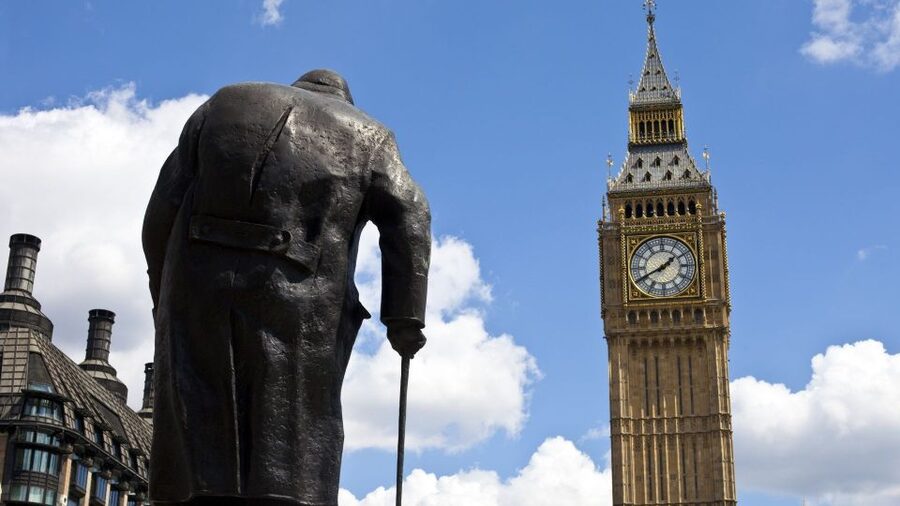
Whitehall provides the tour’s strongest collection of wartime memorials. You see statues dedicated to Churchill, Eisenhower, Roosevelt, and Sir Arthur Harris, giving the Allied story a physical presence along the route.
These monuments help you compare the roles of different leaders. Churchill represents Britain’s wartime government and public resolve. Roosevelt connects the British story to the United States. Eisenhower points to Allied military command, while Sir Arthur Harris recalls the Royal Air Force and Britain’s bombing campaign.
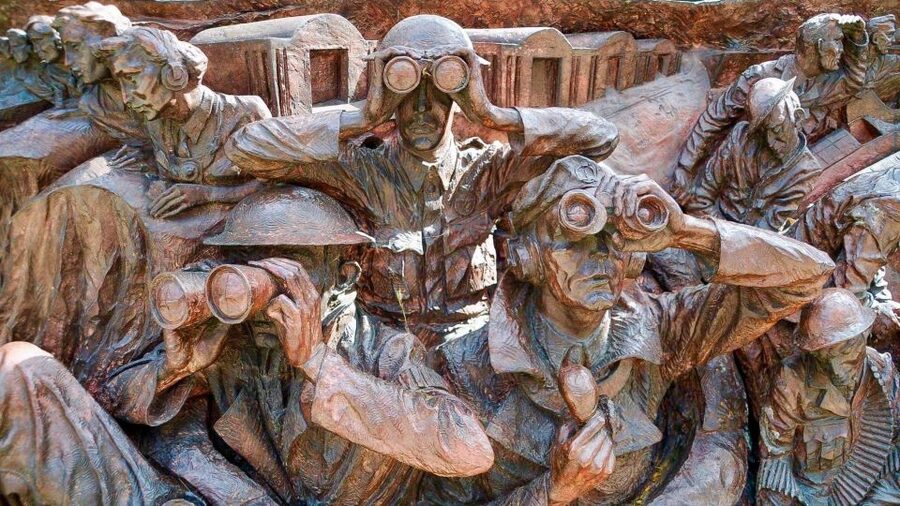
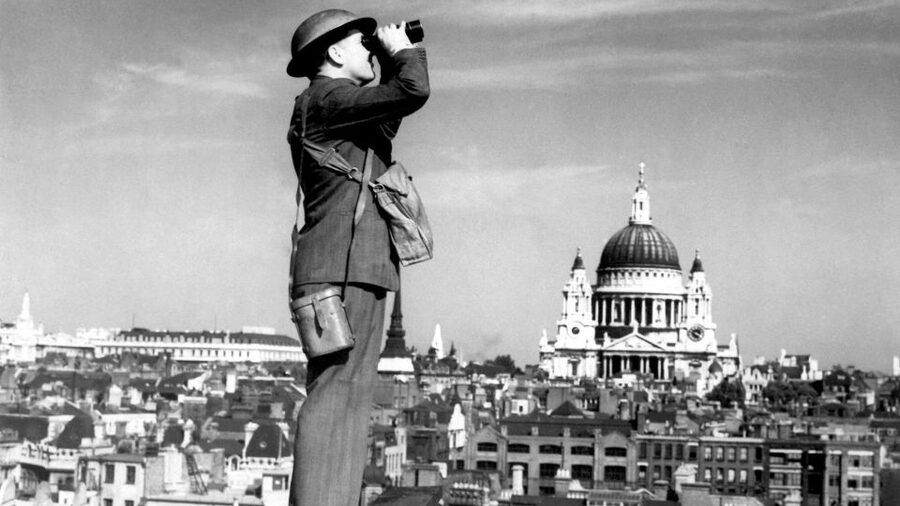
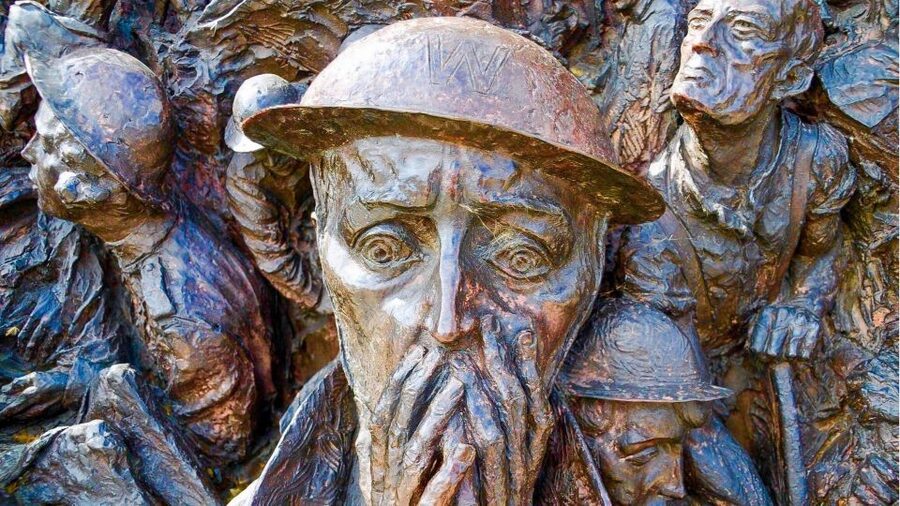
The walk also includes monuments connected with the Battle of Britain and the women of the Second World War. Those stops broaden the story beyond famous male leaders. You get reminders of air defense, service, work, and national effort, all within the same Whitehall district.
The Cenotaph is another major stop. It is Britain’s national war memorial and a place where the public meaning of wartime sacrifice comes into focus. The tour does not treat Westminster as a collection of isolated statues. It links the monuments to the wider story of a country organizing itself for war.
For me, this is where the route earns much of its price. You can see many of these memorials independently, but the guide helps you understand why they are placed where they are and how they fit together.
Bomb damage and the remains of a Blitz church
The most affecting part of the walk may be the visible evidence of wartime destruction. You see signs of bomb damage and the remains of a church destroyed during the Blitz, left in place rather than rebuilt into a clean modern space.
These details matter because they interrupt the polished image of Westminster. Big Ben, Parliament, and Whitehall can feel monumental and permanent. Bomb damage shows that the district was also vulnerable, and that the war reached directly into the capital.
You should expect an outdoor viewing experience, not a large museum display. The remains and damaged areas are part of the route, and the guide supplies the explanation. This makes the stop brief but meaningful, especially if you have already visited formal war museums and want to see how the conflict affected the city itself.
The tour’s focus stays on Churchill and wartime London, but these physical traces give the story more balance. They point away from speeches and statues and toward ordinary buildings, churches, and streets changed by bombing.
Finishing at the Churchill War Rooms
The walk finishes at the Churchill War Rooms. This is a useful ending because the tour leaves you at one of London’s leading Churchill and wartime attractions, rather than returning you to the starting point.
Admission to the Churchill War Rooms is not included in the $40 tour price. You need to buy that separately if you want to continue indoors. Treat the walking tour and the museum as two connected but separate expenses.
That arrangement can work well. The walk gives you the Westminster setting and the guide’s explanation first. You can then decide if you have the time, energy, and budget for the underground rooms. If you already plan to visit the Churchill War Rooms, finishing there makes the day easier to organize.
Do not assume the tour ticket gets you inside. The listed experience ends at the Churchill War Rooms, so check your plans and allow time for a separate visit if that is important to you.
What the $40 price really buys
At $40 per person, this is priced as a focused guided walk rather than a full-day attraction. You are paying for an 80-minute route, a professional English-speaking guide, live commentary, and a headset, not for museum admission, food, drinks, hotel pickup, or transportation.
I think the price makes the most sense if you value interpretation. Big Ben, Parliament Square, Downing Street, and Whitehall are free to see on your own. The added value comes from the wartime links, the statues, the Blitz evidence, and the guide’s ability to connect the stops.
It is less compelling if you only want photographs or if you plan to read about Churchill independently. You can visit the public streets without paying for a tour. You also need to budget separately for the Churchill War Rooms if you want the indoor experience.
The reserve-now, pay-later option gives you some planning flexibility, and cancellation is free up to 24 hours before the start for a full refund. A short-notice illness can be a problem, however. One booking could not be refunded after Covid appeared inside that 24-hour window, so read the cancellation deadline carefully before committing.
Pace, comfort, and who should book
The supplied details conflict slightly on length, listing both 80 minutes and 90 minutes. Either way, plan for roughly an hour and a half of walking, not a quick 45-minute circuit.
The route is not suitable for people with reduced mobility. One account described the walking as more demanding than expected, while also noting that John Steel checked in during the tour. That suggests a considerate guide can help, but it does not change the basic physical requirement: you need to keep moving with the group.
This tour suits you best if you:
- Want Churchill and wartime context alongside London’s major sights.
- Enjoy outdoor history and guided storytelling.
- Are comfortable walking between Westminster landmarks.
- Plan to visit the Churchill War Rooms separately.
- Prefer a short tour that fits around other London plans.
It is a weaker match if you need frequent seating, step-free access, a slow pace, or commentary in a language other than English. Route details and points of interest can change, so keep a little flexibility in your schedule.
Is Churchill’s Wartime London Walking Tour worth booking?
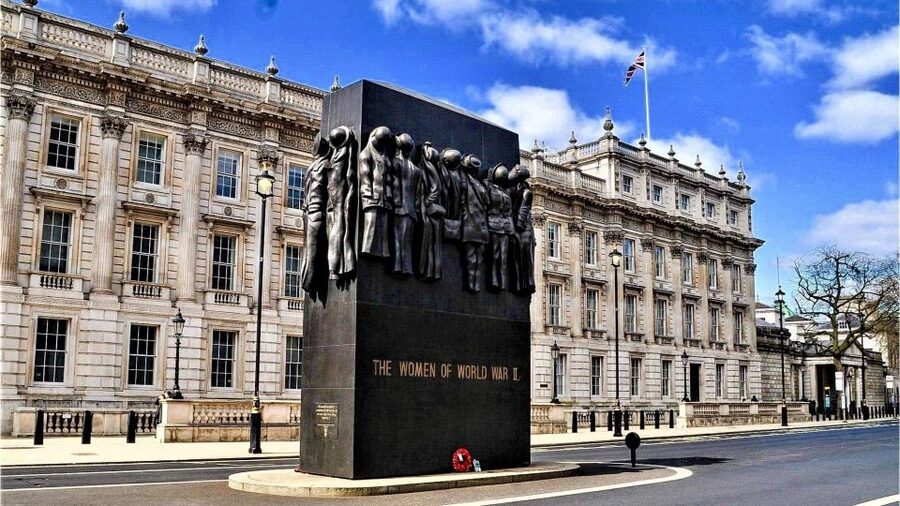
Book it if you want the political and military story of wartime London tied to real places. The best parts are the combination of Churchill’s statue, Allied memorials, the Cenotaph, bomb damage, and the Blitz church remains. You get a useful Westminster orientation at the same time.
Skip it if you only want a relaxed sightseeing stroll or if the walking pace may be difficult. The $40 price is fair for a well-led history walk, but the public sights are free and the Churchill War Rooms cost extra. For a first visit to London, or for anyone especially interested in Churchill and the Second World War, it is a practical way to give Westminster a clear historical focus.
FAQ
Where does the tour start?
The meeting point is by the Boadicea and Her Daughters statue on Victoria Embankment, London SW1A 2JH. The nearest Tube station is Westminster, Exit 2.
Where does the tour finish?
The tour finishes at the Churchill War Rooms.
Is admission to the Churchill War Rooms included?
No. Admission to the Churchill War Rooms is not included in the walking tour price.
How long does the walking tour last?
The activity is listed as 80 minutes. The additional information also describes it as a 90-minute walking tour, so plan for roughly 80 to 90 minutes.
What language is the tour offered in?
The tour is conducted in English with a live English-speaking guide.
Is a headset provided?
Yes. A personal audio headset is included so you can hear the guide’s live commentary.
What sights are included?
The route includes Big Ben, the Houses of Parliament, Parliament Square, Downing Street, Whitehall, wartime memorials, Allied statues, bomb damage, and the remains of a church destroyed during the Blitz.
Is transportation included?
No. Hotel pickup, hotel drop-off, and transportation are not included.
What should I bring?
Bring comfortable shoes and an umbrella.
Can I cancel for a full refund?
Yes. You can cancel up to 24 hours in advance for a full refund. The reserve-now, pay-later option lets you book without paying immediately.
Just added around London
- London: Wimbledon Tennis Club and Westminster Walking Tour★ 4.5 · 86 reviews
- London: Westminster to Richmond River Thames Cruise★ 4.8 · 23 reviews
- Westminster Abbey Skip-the-Line Entry and Private Tour★ 4.6 · 4 reviews
- Best of London by LE GRAND – London’s Luxury Bus Tour★ 4.2 · 23 reviews
- London: Westminster Walking Tour & St Paul’s Cathedral Entry★ 4.7 · 7 reviews
- From London: Oxford, Stratford-upon-Avon & Cotswolds Trip★ 4.5 · 64 reviews
- From London: Warwick, Oxford, Stratford & Cotswolds Day Tour★ 4.0 · 270 reviews
- Warner Bros. Studios and 1-Day London Hop-on Hop-off tour★ 4.7 · 9 reviews
Walking Tours, compared.

Magical London: Harry Potter Guided Walking Tour
Read our review →

University and City Walking Tour with Alumni Guide
Read our review →
Harry Potter Movies Walking Tour (Kids Go Free)
Read our review →
The Great British Rock and Roll Music Walking Tour
Read our review →
Jack the Ripper Walking Tour – Ripper Vision Tours
Read our review →

Browse the lists this tour appears in