
Reviewed · HISTORICAL TOURS
Aberdeen’s Ancient Heritage and Folklore Tour
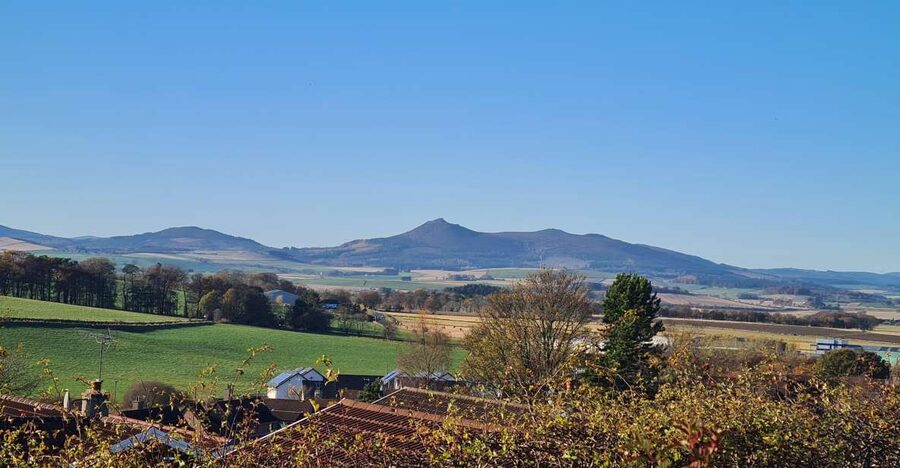
The most striking thing about this day is how much of Aberdeenshire’s early past survives in open fields and quiet churchyards. You will walk around hillfort earthworks, look closely at Pictish symbols, and stand beside stone circles that were built more than 4,000 years ago.
I like the small group of no more than seven people, which gives the day a personal feel and makes it easier to ask about a carved symbol or an old local tale. I also like the way the tour connects several periods, from prehistoric stone circles to Pictish kingdoms and medieval castle building. The main catch is the walking: grassy ground, unpaved paths, and steep hill sections make this a poor fit if you have limited mobility or a low level of fitness.
Key points to know before booking
- Pictish symbols up close: See carved stones linked to the early medieval communities of northeast Scotland.
- A real hillfort walk: Barra Hill gives you a physical sense of how early settlements used high ground for homes, work, and defense.
- A small, personal group: The van carries no more than seven people, with an English-speaking guide.
- Several types of ancient site: The day includes hillforts, a medieval castle ruin, stone circles, a burial-era mound, and symbol stones.
- A full day outdoors: Expect around 7.5 hours, with walking on grass and uneven paths.
- Good value for site access: No extra entry tickets are needed, though lunch and refreshments cost extra.
Start beside the William Wallace statue
The day begins next to the William Wallace statue by Union Terrace Gardens on Rosemount Viaduct. This is a central Aberdeen meeting point, and the small van then carries you into Aberdeenshire.
The driving matters here. The sites are scattered across the northeast, so this is not a tour you can easily reproduce by walking from Aberdeen or by stringing together short city bus trips. You spend part of the day on the road, but the van links a group of places that work well together.
The first drive takes about 35 minutes. With a maximum of seven people, the journey should feel less like a large coach outing and more like a guided day in the countryside. Jacqueline is one of the guides associated with this experience. Her storytelling and ability to explain the meaning of stones are a major part of what makes the day work. She is also praised for adapting the pace to the group, though the terrain still sets a practical limit.
A few more Britain days worth weighing up
- Loch Ness and the Highlands 1-Day Tour from Aberdeen
★ 4.8 · 340 reviews - From Aberdeen: Dunnottar Castle and Cairngorms Day Trip
★ 4.8 · 329 reviews - From Aberdeen: Balmoral Estate & Royal Deeside Tour
★ 4.9 · 243 reviews
Barra Hill puts the ancient settlement on the ground
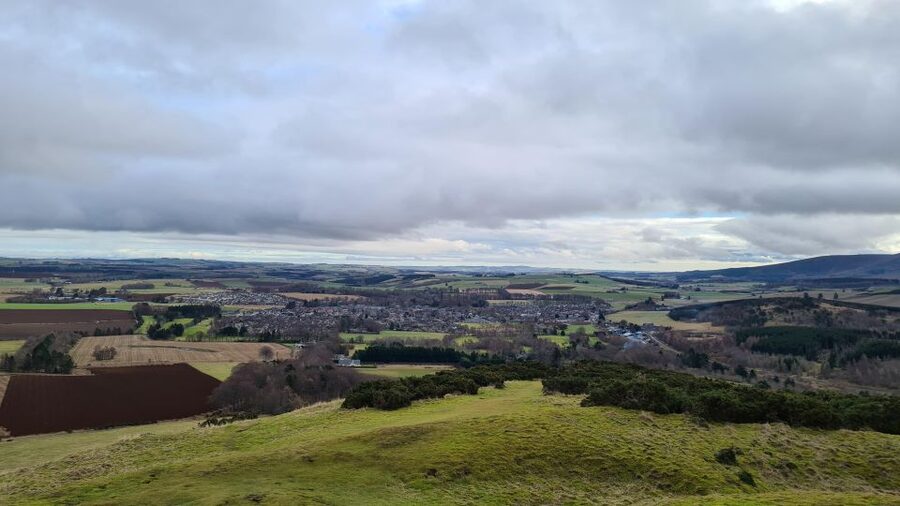
At Barra Hill, you spend about an hour walking among earthworks and foundations. Hillforts were built on raised ground, often with wooden or stone enclosures around communities where people lived and worked.
This stop helps you picture the scale and setting of early Aberdeenshire settlements. The remains are not a restored village with buildings you can enter. Instead, you read the site through banks, dips, foundations, and the shape of the hill. That can be rewarding if you enjoy using your imagination and listening to a guide explain what may once have stood there.
The drawback is the footing. You walk through fields and along off-road paths, so sturdy shoes are not optional if the weather is wet. The hill also gives you an early taste of the physical effort required later in the day. You do not have to take part in every walk, but this experience is best for someone comfortable spending time outdoors.
Dunnideer joins a castle ruin to an older hillfort
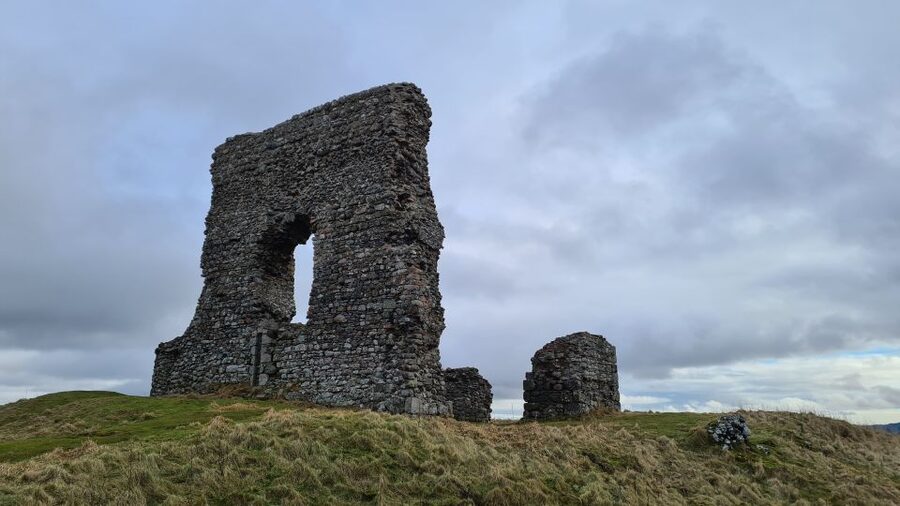
After another 35-minute drive, the group stops near Insch for about 20 minutes at Dunnideer Castle. The visit is mainly a break and photo stop, with a short walk up a low hill to view the remains.
Dunnideer was a tower house built around 1260. What makes it especially interesting is that it used part of an existing vitrified hillfort. In other words, a medieval stronghold was placed on a site that already had a much older purpose. You can see how later rulers reused prominent places rather than treating each period as separate.
A short distance away are the remaining stones of Dunnideer Stone Circle. This pairing gives the stop more depth than a quick castle photograph. The area carries traces of prehistoric activity, early settlement, and medieval power in a compact space.
Do not expect a complete castle interior or a long formal tour of the ruins. This is a brief stop, so the guide’s explanation is important. If you want a major medieval castle visit with rooms and displays, this is not that kind of experience. The appeal is the layered setting and the chance to see it as part of a much older story.
Rhynie reveals the scale of Pictish power
The Rhynie section is one of the strongest parts of the day. You spend about 40 minutes on a visit and walk in an area once linked with a major Pictish stronghold.
The nearby Tap O’Noth is described as Scotland’s largest hillfort. At its height, researchers believe the settlement may have supported more than 5,000 people, a remarkable size for a post-Roman community. Even if you do not climb the full hill, learning about the scale of the settlement changes how you see the scattered stones and open ground around you.
Rhynie also brings Pictish art into focus. You will hear about carved stones and the symbols used by Pictish communities. The Crawstane, a lone standing stone, is tied to the center of a settlement that had trade links reaching across the Mediterranean and signs of considerable wealth.
This is where the folklore side of the tour fits naturally. The guide explains stories and beliefs passed down through generations, while also discussing what historians and researchers can tell us about the people who made these monuments. You get both the tale and the evidence, without needing to treat every old story as proven fact.
The visit also covers the King of the Scots and the political and cultural changes that helped bring about the decline of the Picts. That shift gives the stop a clear purpose. You are not only looking at carved symbols. You are learning how power, identity, and religion changed across Scotland.
More history walks around Britain:
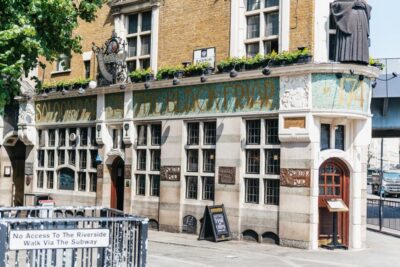
- London: Historic Pubs of Central London Walking Tour
★ 4.9 · 1,065 reviews - Portsmouth: Historic Dockyard Ultimate Explorer Ticket
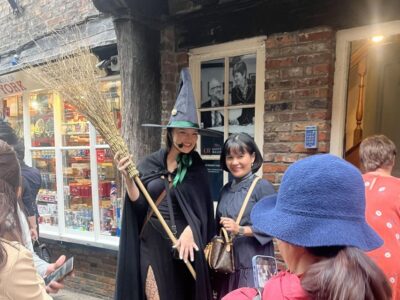
★ 4.8 · 1,052 reviews - York: Witches and History Old Town Walking Tour
★ 4.7 · 928 reviews - London: Soho Music and Historic Pubs Walking Tour
★ 4.9 · 836 reviews
Kildrummy gives you time for lunch
The van then continues for about 30 minutes before a 40-minute lunch break at Kildrummy. Lunch and drinks are not included in the $134 price, so plan ahead and confirm your food options for the day.
This is a useful pause in a long outdoor excursion. By this point, you will have walked over uneven ground and spent time in the open air. A proper break helps keep the second half enjoyable rather than turning the final stops into a test of endurance.
The published details identify Kildrummy as the lunch and rest stop, but do not promise a particular meal or restaurant. If food is important to your plans, ask the operator what is available on your date or bring suitable provisions. The tour is not priced as an all-inclusive food experience.
Tomnaverie Stone Circle brings the best views
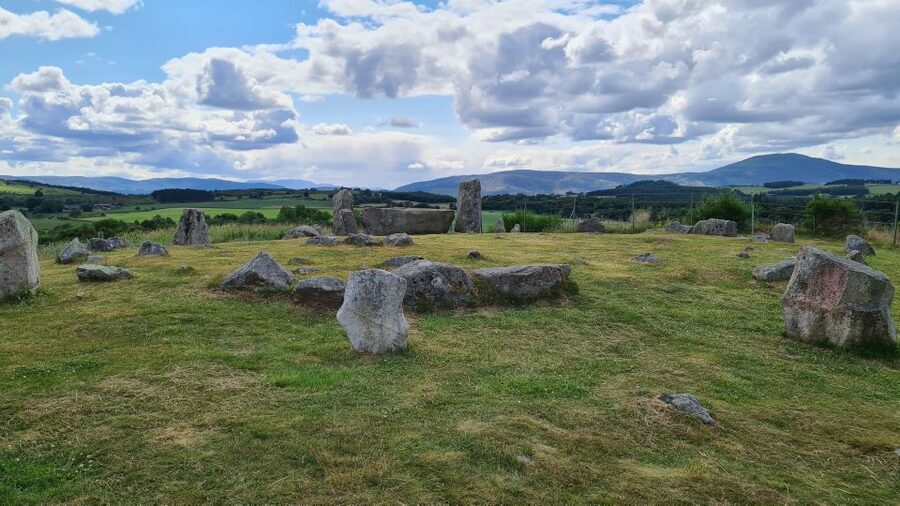
After lunch, a 15-minute drive leads to Tomnaverie Stone Circle. You spend about 35 minutes here on a visit, walk, and photo stop.
Tomnaverie is a recumbent stone circle, a type strongly linked with northeast Scotland. Its layout includes a large stone lying on its side, flanked by two taller upright stones, with smaller stones forming the rest of the ring. These circles date from the late Neolithic or early Bronze Age, more than 4,000 years ago.
The design is easy to understand once you see it in person. The great recumbent stone gives the circle a strong visual anchor, while the surrounding ring shows careful planning and heavy construction work. You can appreciate the skill involved without needing a museum display or reconstruction.
The setting is part of the reward. Tomnaverie offers a wide panoramic view, making it one of the most memorable photography stops of the day. The view also explains why these monuments were placed where they were. You are not looking at an isolated object in a flat exhibit. You are seeing a ceremonial site in relation to the surrounding hills and fields.
The walk is still outdoors and may include uneven or grassy sections. Take your time, wear shoes with a good grip, and bring water. The guide can explain the monument, but you will want a few quiet minutes to look around without rushing.
Carved stones make the past personal
The tour’s stone sites are valuable because they bring ancient people closer through their marks. A hillfort can be hard to read at first. A carved stone gives you a direct piece of human design.
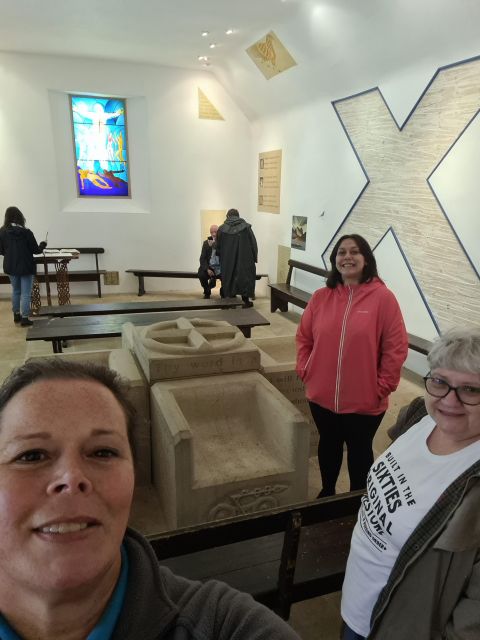
At Rhynie, you hear about Pictish symbols and their possible meanings. The Dyce Symbol Stones, associated with St. Fergus’ Chapel near Aberdeen, add another strong example of Pictish art. These stones date from roughly the sixth to eighth centuries and include symbols such as a mirror and comb, a double disc, a crescent, and animal figures.
The meaning of Pictish symbols is not always certain. That uncertainty is part of the interest. A good guide can explain what is known, what is debated, and how scholars compare the carvings with other examples. Jacqueline’s strength, according to the information available about this tour, is explaining the stones in a way that makes the details easy to notice.
The route also includes Inverurie’s Bass and Symbol Stones in the wider description of the experience. The Bass is a natural mound about 15 metres high that was shaped into a medieval motte in the twelfth century, with the Little Bass forming the bailey. Four Class I Pictish stones are protected in a glass case between the two mounds.
The exact published day plan lists Tomnaverie as the final heritage stop, so you should confirm the precise stops when booking. Tour routes can vary by timing and conditions. The central theme remains the same: prehistoric monuments, Pictish carving, and later medieval use of older places.
Folklore adds meaning without replacing the evidence
This is not only a monument-counting day. The guide tells stories connected to the beliefs and culture of earlier generations. That makes a difference when you are standing beside a stone whose original purpose is not fully known.
Folklore can help you understand how local communities made sense of unusual stones, hills, and ruins. At the same time, you should expect a mix of tradition, interpretation, and established history. The best moments come when those strands are kept clear rather than blended into one dramatic claim.
I like that the experience focuses on the northeast of Scotland rather than treating Scottish heritage as a single story. The Picts, the Kingdom of Alba, medieval lords, and prehistoric monument builders all left different marks. The tour links them while keeping the sites themselves at the center.
Is $134 a fair price?
At $134 per person, this is not a cheap half-day outing. It is a 7.5-hour small-group trip with transport from Aberdeen, a live English-language guide, and no extra admission fees at the listed sites.
The value comes from access and interpretation. You would need your own vehicle, route planning, parking research, and considerable confidence reading unmarked earthworks on your own to duplicate the day. The guide also provides the historical links that turn separate stones and ruins into a connected story.
The price is easier to justify if you care about Pictish history, ancient monuments, and local folklore. It is less attractive if you mainly want scenic driving or a relaxed castle tour. You also need to budget for lunch and refreshments.
The five-star rating from eight verified bookings supports the tour’s strong reputation, with particular praise for Jacqueline’s information, flexibility, driving, and enthusiasm. That is useful because a day built around subtle earthworks and symbols depends heavily on the guide. Without clear explanation, some stops could feel like stones in a field.
Walking, weather, and what to bring
Pack comfortable clothes, water, and sturdy footwear. Hiking shoes are the safest choice, especially for Barra Hill and the grassy sections around the stone circles.
Expect a moderate amount of walking, with unpaved paths, grassy terrain, and steep sections on some hills. The tour has a few walking poles available on the day, though you can bring your own. You are not required to join every walk, but the operator specifically says the experience is not suitable for people with mobility impairments or a low level of fitness.
Weather can shape the day. Outdoor clothing appropriate to the conditions will make the difference between enjoying the sites and spending the whole time worrying about mud, wind, or rain. This is a countryside heritage outing, not a polished indoor attraction.
The final drive back to the William Wallace statue takes about 55 minutes. That gives you time to rest after the last walk, though the full day will feel active rather than leisurely.
Who should book this day?
I would choose this tour if you want to understand Aberdeenshire beyond Aberdeen’s city center. It suits anyone curious about the Picts, prehistoric stone circles, early Christian-era stones, and the way later medieval rulers reused older sites.
It is also a good fit if you prefer a guide who can adjust explanations and pacing to a very small group. The English-language format keeps the storytelling direct, and the limited group size should make it easier to ask questions.
I would hesitate if you dislike uneven ground, need guaranteed step-free access, or want long indoor visits with toilets, cafés, and museum displays at every stop. The tour is built around open sites, short walks, and interpretation from the guide.
You can cancel up to 24 hours in advance for a full refund, and reserve now while paying later. Those terms help if your Aberdeenshire plans are still taking shape, but the main decision is physical: can you comfortably spend most of a day outdoors?
Should you book Aberdeen’s Ancient Heritage and Folklore Tour?
Book it if you want a focused introduction to the ancient northeast, especially the Picts and their carved symbols. The combination of Barra Hill, Dunnideer, Rhynie, and Tomnaverie gives you several different ways to read the past, from settlement banks to royal power and ceremonial stones.
The guide is central to the experience, and Jacqueline’s ability to explain symbols, local stories, and historical change is a strong reason to choose it. At $134, the tour offers solid value for a small group and a full day of transport, though lunch is extra.
Skip it if you need easy paths or prefer a slow, unstructured day. For the right visitor, this is an unusually direct way to meet Aberdeenshire’s oldest surviving places.
FAQ
Where does the tour begin?
It begins next to the William Wallace statue by Union Terrace Gardens on Rosemount Viaduct in Aberdeen.
How long does the tour last?
The experience lasts 7.5 hours, including transport between sites and the return to Aberdeen.
What language is the tour in?
The live tour guide speaks English.
How large is the group?
The tour is limited to seven people, traveling by small van.
Is transportation included?
Yes. The route uses a van from the meeting point in Aberdeen and includes transport between the stops.
Are entry tickets included?
No additional entry tickets are required for the listed sites.
Is lunch included?
No. Food and refreshments are not included, although the tour stops for lunch at Kildrummy for about 40 minutes.
How much walking is involved?
There is a moderate amount of walking on unpaved paths, grassy ground, and some steep hill sections. You do not have to join every walk.
What should I bring?
Bring comfortable or hiking shoes, water, comfortable clothing, and outdoor clothing suited to the weather.
Is the tour suitable for people with mobility impairments?
No. The tour is not suitable for people with mobility impairments or a low level of fitness because of the uneven ground and hill walking.
Can I cancel the booking?
Yes. You can cancel up to 24 hours before the experience for a full refund. You can also reserve now and pay later.
Just added around Britain
- London: Wimbledon Tennis Club and Westminster Walking Tour★ 4.5 · 86 reviews
- London: Westminster to Richmond River Thames Cruise★ 4.8 · 23 reviews
- Winchester: Historic Castles and Cathedrals Walking Tour★ 4.9 · 154 reviews
- Best of London by LE GRAND – London’s Luxury Bus Tour★ 4.2 · 23 reviews
- Whitby: Guided Distillery Tour with Gin Tasting★ 5.0 · 28 reviews
- Westminster Abbey Skip-the-Line Entry and Private Tour★ 4.6 · 4 reviews
- London: Westminster Walking Tour & St Paul’s Cathedral Entry★ 4.7 · 7 reviews
- Warwick: Entry Ticket for Warwick Castle★ 4.7 · 215 reviews
Historical Tours, compared.



J&M’s City Sightseeing and History Walking Tour
Read our review →Browse the lists this tour appears in