
Reviewed · WALKING TOURS
Bath: Guided City Walking Tour with Entry To The Roman Baths
Bath’s Roman story is the key to understanding the city. This tour connects the ancient spa of Aquae Sulis with the grand Georgian streets you see today, then sends you into the Roman Baths, where the surviving site makes that connection real.
I like the route for two reasons: it covers Bath’s major sights without wasting time, and guides such as Jess, Owen, Victoria, Andrew and Fred bring plenty of personality to the history. The main catch is that the walking tour lasts about two hours, while the Roman Baths visit happens later, not as one continuous guided experience.
Key points at a glance
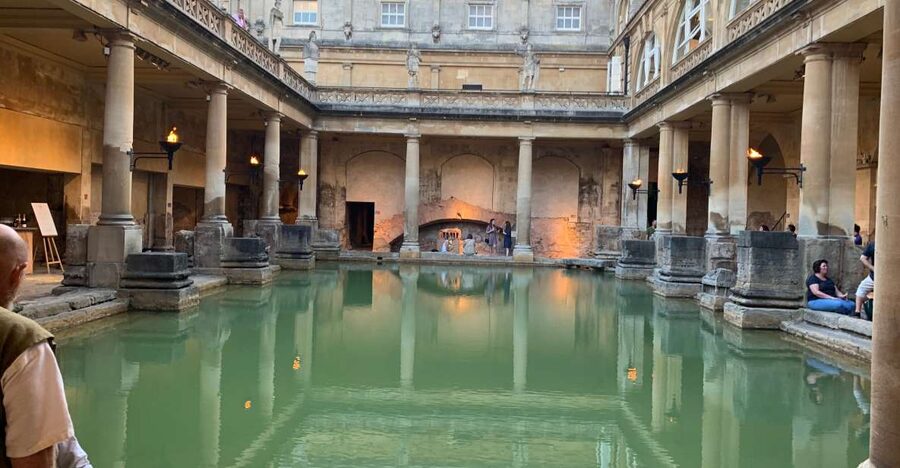
- Roman Bath entry comes after the walk: You explore the city first, then visit Bath’s most popular attraction independently.
- Major sights fit into one compact route: The Royal Crescent, Circus, Queen Square, Pulteney Bridge, Bath Abbey and the Pump Room are all included.
- Guides make the difference: Jess, Owen, Victoria, Andrew, Phil and Fred have all led tours praised for clear explanations, humor and local insight.
- Jane Austen and Bridgerton add a modern angle: You hear how Bath shaped Austen’s work and see places linked with the Netflix series.
- The route works in poor weather: Tours operate in all conditions, so comfortable shoes and proper rain gear matter.
- The timing needs planning: The 11:30 AM walk leads to Roman Baths entry at about 2:30 PM, while the 2:30 PM walk leads to entry at about 4:30 PM.
Why the Roman connection makes this Bath walk worthwhile

Bath can look like a beautiful collection of pale stone buildings until someone explains how the city developed. The Romans came for the hot springs, built a substantial settlement around them and named it Aquae Sulis. Centuries later, Bath’s Georgian planners turned the city into a fashionable spa destination, using grand terraces and public spaces to attract wealthy visitors.
That link is what gives this tour its shape. You do not simply tick off a crescent, a bridge and an abbey. You learn how water, religion, fashion, architecture and famous residents helped shape Bath at different points in its long story.
I particularly like starting with the city streets before entering the Roman Baths. The walk gives you a visual map of Bath, so the indoor visit has more context. When you later see the ancient bathing complex, you already understand why the site matters and how central it was to the city’s identity.
At $93 per person, this is not a bargain-priced orientation walk. The value comes from combining a live two-hour tour with admission to the Roman Baths, Bath’s best-known historic attraction. If you planned to pay for the baths separately and wanted a proper introduction to Bath, the package can make sense.
More Walking Tours in Bath
- Bath: City Walking Tour with Optional Roman Baths Entry
★ 4.7 · 1,401 reviews - Bath: Guided Walking Tour
★ 4.9 · 1,198 reviews - Bath: Bridgerton Filming Locations Walking Tour with Music
★ 4.7 · 416 reviews
Meeting at Bath Abbey and getting your bearings
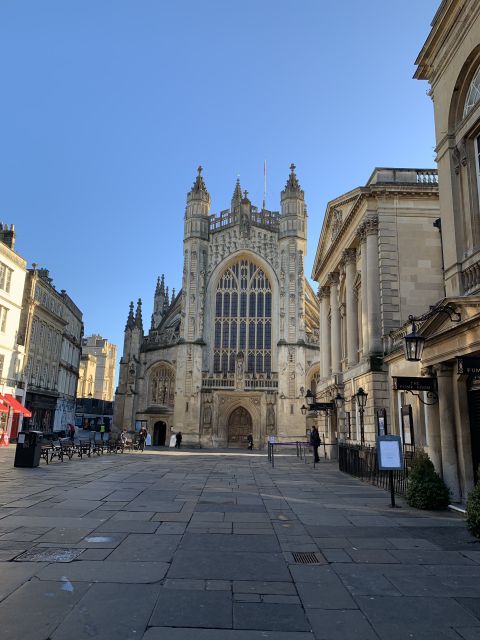
The meeting point is in Abbey Churchyard, in front of Bath Abbey and the entrance to the Roman Baths. Look for the tour flag and board. This is a sensible central location, but it can be confusing because several groups meet in the same area.
Give yourself a few extra minutes. One person specifically found the starting area difficult to navigate, and that is easy to understand with several tours gathering around the abbey. Once you locate the correct flag and board, the tour begins on foot.
The activity is listed as wheelchair accessible, but it is still a walking tour through a historic city with changes in level and some uphill and downhill sections. A past group described the pace as manageable for different ages, with baby buggies also getting around successfully. Your comfort will depend on your own mobility and the weather.
Large bags and luggage are not allowed. Bring comfortable shoes, a coat or waterproof layer, and clothing suited to the forecast. The tour runs in all weather, and Bath’s stone streets are much less forgiving when wet.
The Pump Room and Bath Abbey set the scene
The Pump Room is one of the first major sights on the route. Its name comes from Bath’s spa tradition, when visitors came to drink the mineral-rich thermal water as well as bathe in it. You learn how the building fitted into Bath’s social life, where taking the waters was part health treatment, part public ritual and part fashionable meeting.
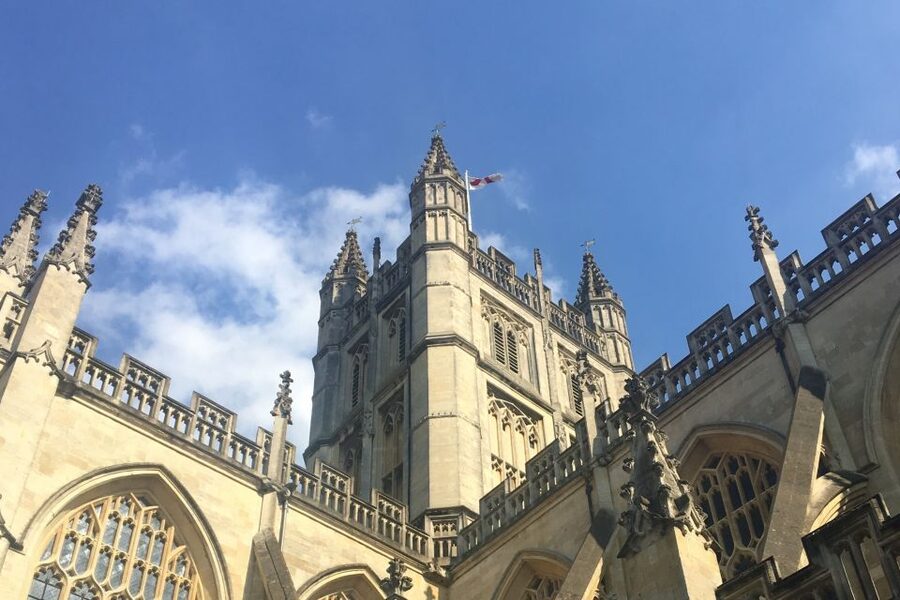
Beside it, Bath Abbey gives the tour a different architectural and religious focus. The abbey is one of the city’s most recognizable landmarks, and its position beside the Roman Baths neatly places Roman and later Bath in the same small area.
I like this opening because it gives you the essential contrast quickly. The Pump Room represents Georgian fashion and social ambition, while the abbey reflects centuries of Christian worship. The Roman complex sits just nearby, tying the three stories together.
The guide does not take you through every building in detail. Instead, you get the background needed to understand the city before moving through its streets. That is the right approach for a short orientation tour, though anyone wanting a slow architectural study will need extra time on their own.
The Royal Crescent and Circus reveal Georgian ambition
The Royal Crescent is Bath’s grandest sweep of residential architecture. Its curved row of honey-colored stone houses is one of the images most associated with the city. From the outside, it looks unified and ceremonial, but the houses were individual residences designed to give wealthy occupants an impressive address.
The Circus, nearby, offers a different shape. Its circular layout and classical details show how Georgian planners used geometry, proportion and symmetry to create a sense of order. Your guide explains the ideas behind the architecture rather than asking you to admire the façades without context.
The climb toward these areas can be one of the more demanding parts of the walk. It is not described as strenuous, and the pace is generally easy, but you should not treat this as a flat stroll. Wear shoes with good grip, especially if the weather is poor.
This section is especially useful for first-time visitors. You can return later for photographs, a closer look at the stonework and more time around the Royal Crescent. One of the practical benefits of having a guide early in your stay is learning when to revisit key sights, which helps you avoid using the tour itself for every photograph.
A few more Bath days worth weighing up
- Bath: Guided Ghost Tour
★ 4.8 · 1,036 reviews - From Bath: Stonehenge & the Cotswolds Day Tour with Entry
★ 4.8 · 543 reviews - Bath: Tootbus Bath Discovery Hop-On Hop-Off Tour
★ 4.5 · 430 reviews - Bath: Roman Baths Entry Ticket with Audio Guide
★ 4.7 · 425 reviews
Queen Square adds a quieter piece of the route
Queen Square is another planned Georgian space, and it helps show how Bath’s grand design extended beyond the most famous crescent and circus. The square provides a pause between larger sights and gives your guide room to explain how public spaces shaped the city’s social life.
This is the sort of stop that can be easy to overlook when exploring alone. You might walk through, admire the buildings and move on without understanding why the square matters. A good guide turns the setting into part of the larger story of Bath’s expansion and fashionable reputation.
Guides vary, of course, but the strongest names in the feedback include Jess, Victoria, Owen, Andrew and Fred. Their approach appears to favor stories, questions and humor over a dry string of dates. That matters on a walking tour, since you are standing outdoors and need the commentary to hold your attention.
Pulteney Bridge gives the walk its most photogenic stop
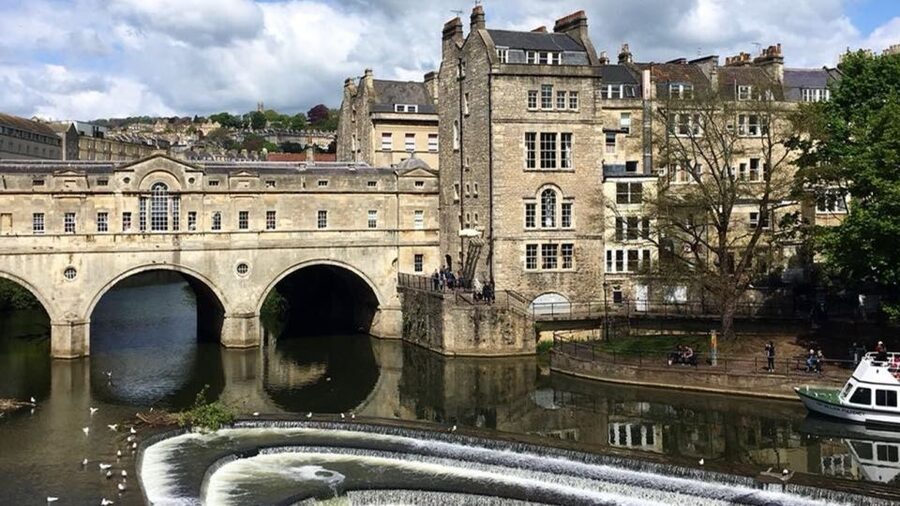
Pulteney Bridge is one of Bath’s signature sights. Shops line the bridge, making it more than a crossing over the River Avon. Its unusual design gives the stop a strong visual payoff, and the surrounding river views add variety after the formal terraces and squares.
This is a good place to listen for the practical details that can be hard to get from a guidebook. Your guide puts the bridge into the story of Bath’s development and points out features you may otherwise miss.
The stop also works well for understanding Bath as a connected city. The route moves between civic spaces, residential architecture, religious buildings and the river, rather than keeping you in one historic pocket. By the end, you have a clearer sense of how the city fits together.
Do not expect a long break here. The experience is designed as a guided walk, not a photography session. If you want time for river pictures or browsing the bridge shops, return later.
Jane Austen and Bridgerton bring Bath into the present
Bath’s connection with Jane Austen is an important part of its appeal, and the tour places you in the settings associated with her time in the city. You hear about her role in Bath and how the city connects with her writing and public image.
The Austen material is useful even if you are not a devoted reader. It shows how Bath functioned as a place of social visits, gossip, courtship and status, themes that make more sense once you see the spaces where fashionable life played out.
The Bridgerton references offer a lighter, modern layer. You see locations used for filming and learn how the city’s Georgian appearance continues to attract productions. This is not a separate film tour, so expect a few stops and stories within the broader city walk rather than a detailed production guide.
I like the balance. Bath is not reduced to Roman ruins or Austen literary tourism. The tour gives you ancient history, Georgian architecture, a famous author and a current television connection. That mix makes it a good fit for families or groups with different interests.
Entering the Roman Baths after the guided walk
The Roman Baths visit is scheduled after the walking tour, and this timing is important. The 11:30 AM tour leads to entry at approximately 2:30 PM. The 2:30 PM tour leads to entry at approximately 4:30 PM.
That gap gives you time to eat, browse, take photographs or revisit a sight. It also means you should not plan a tightly packed afternoon appointment immediately after the walk. Check the timing before booking, particularly if you are visiting Bath as a day trip.
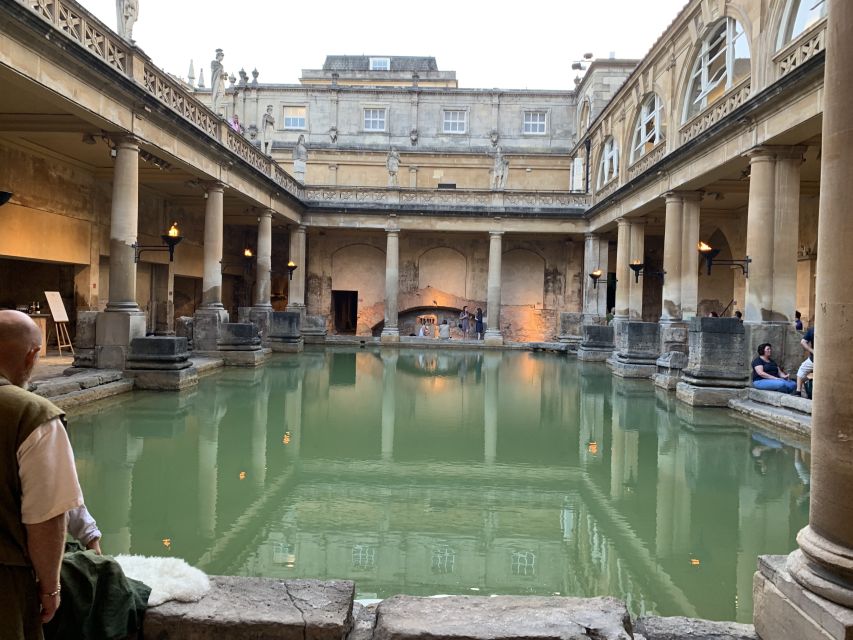
Inside, you see the remains of the ancient bathing complex and learn how complex Roman society was in Aquae Sulis. The visit is not just about a pool of hot water. It reveals the engineering, religion, public life and social organization built around the springs.
The Roman Baths entry is self-guided after the walking tour. That has advantages: you can move at your own pace, pause where you like and spend more time with the displays that interest you. One person spent about an hour and a half inside, while another felt three hours would be easy to fill. Plan at least enough time to avoid rushing.
An audio guide is also available with the Roman Baths visit, according to the practical experience provided. That helps fill the gap left by the walking guide not accompanying you through the attraction. The earlier city commentary should make the exhibits easier to place, but you will need to manage the indoor visit yourself.
The express security check is included, which can save some waiting. It does not turn the attraction into an instant visit, especially at busy times, but it is a useful part of the package.
The guide style is the main strength
The experience depends heavily on who leads your group. Names connected with especially strong tours include Jess, Owen, Victoria, Andrew, Fred, Phil, Andy, Julia, Jim and Tony. The consistent qualities are clear speech, humor, patience and an ability to answer questions.
Jess is repeatedly described as energetic and skilled at turning historical facts into stories. Owen is noted for answering questions and helping people find the Roman Baths afterward. Victoria is praised for speaking clearly and placing the sights into context.
Andrew’s style is described as a good balance of information, charm and humor. Fred is associated with an easy pace and broad historical knowledge, while Phil is remembered for being entertaining and well informed. These details suggest a team with different personalities but a common focus on making the city understandable.
You should still allow for variation. A live walking tour is not a recorded presentation, and the exact experience depends on group size, weather and your guide’s style. The supplied rating is 4.8 from 343 reviews, which points to a strong and consistent result, but no tour can guarantee one particular guide.
Who will get the most from this two-hour format
I would choose this for a first visit to Bath, especially if you want a clear introduction before exploring independently. It covers the essential sights and gives you enough background to decide where to return.
It also suits visitors who enjoy architecture but do not want a specialist lecture. You get the Royal Crescent, Circus, Queen Square and Pulteney Bridge, with stories that make the buildings easier to read.
Families and mixed-age groups should find the format workable. The walk is described as easy paced, and the commentary includes Roman history, famous people, television locations and visual landmarks. That variety helps keep different interests together.
The tour is less suitable if you want a private experience, a slow photography walk or an in-depth Roman Baths lecture led by the same guide. The city walk and attraction visit are separate parts, and the waiting period between them requires some planning.
At $93, I see this as a convenience and orientation package rather than a cheap ticket. You are paying for a live introduction, a route through the main historic areas and Roman Baths admission. If you value clear context and want to cover the city efficiently, it is reasonable value. If you prefer to wander with an audio guide and choose sights yourself, buying individual admission and exploring independently may suit you better.
Practical advice before you book
Book this early in your Bath stay if possible. The guide points out places worth revisiting and can help you decide how to use the rest of your time.
Bring rain protection even when the forecast looks friendly. Past tours have run in gloomy, wet conditions, and the guide still has to deliver the full route outdoors.
Arrive early at Abbey Churchyard and look specifically for the flag and board. Do not assume that standing in front of Bath Abbey means you have automatically found the correct group.
Leave room in your schedule for the Roman Baths. The visit does not follow immediately after the walk, and the later entry times are fixed approximately at 2:30 PM after the 11:30 AM tour and 4:30 PM after the 2:30 PM tour.
Should you book the Bath walking tour?
Book it if you want Bath explained rather than simply photographed. The strongest feature is the way the walk links Roman Aquae Sulis, Georgian design, Jane Austen and modern filming locations in one compact route.
I would especially recommend it for first-time visitors who want the Royal Crescent, Circus, Pulteney Bridge, Bath Abbey and the Roman Baths handled in one plan. The main caution is the price and the split schedule. You need to accept a later, self-guided Roman Baths visit and prepare for outdoor walking in any weather.
If that arrangement suits you, this is a well-rounded introduction to Bath, with guides who bring real warmth, humor and strong local knowledge to the streets.
FAQ
How long does the Bath walking tour last?
The walking tour lasts approximately two hours.
What sights are included on the walking route?
The route includes the Pump Room, Royal Crescent, Circus, Queen Square, Pulteney Bridge and Bath Abbey. It also includes information about Jane Austen and Bridgerton filming locations.
Is entry to the Roman Baths included?
Yes. The experience includes an entry ticket to the Roman Baths after the walking tour.
When do I enter the Roman Baths?
After the 11:30 AM walking tour, entry is approximately 2:30 PM. After the 2:30 PM tour, entry is approximately 4:30 PM.
Is the Roman Baths visit guided?
The walking tour has a live English-speaking guide. The Roman Baths visit takes place afterward, separately from the walking tour.
Where is the meeting point?
Meet in Abbey Churchyard, in front of Bath Abbey and the entrance to the Roman Baths. Look for the tour flag and board.
What should I bring?
Bring comfortable shoes and clothing suitable for the weather. The tour operates in all weather conditions.
Can I bring luggage or a large bag?
No. Luggage and large bags are not allowed on the activity.
Just added around Bath
- Southampton Port to London via Stonehenge,Lacock & Bath★ 5.0 · 5 reviews
- Half-Day tour to Stonehenge from Bath for 2-8 adventurers★ 5.0 · 3 reviews
- Bath: Local Pubs & Historic Sights Walking Tour (3h)★ 4.9 · 29 reviews
- Full-Day Stonehenge and Bath Tour★ 4.4 · 39 reviews
- From London: Stonehenge Summer Solstice Sunset Tour (Jun 20)★ 5.0 · 7 reviews
- From Bath: Salisbury and the Jurassic Coast Small Group Tour★ 5.0 · 4 reviews
- From Bath: Private Stonehenge and Salisbury Tour with Pickup★ 5.0 · 3 reviews
- From Bath: Cotswolds and Oxford Full-Day Tour★ 4.7 · 172 reviews
Walking Tours, compared.

Magical London: Harry Potter Guided Walking Tour
Read our review →

University and City Walking Tour with Alumni Guide
Read our review →
Harry Potter Movies Walking Tour (Kids Go Free)
Read our review →
The Great British Rock and Roll Music Walking Tour
Read our review →
Jack the Ripper Walking Tour – Ripper Vision Tours
Read our review →

Browse the lists this tour appears in