
Reviewed · BRISTOL TOURS
Bristol: Dog Life Drawing led by local Artist Cai Burton
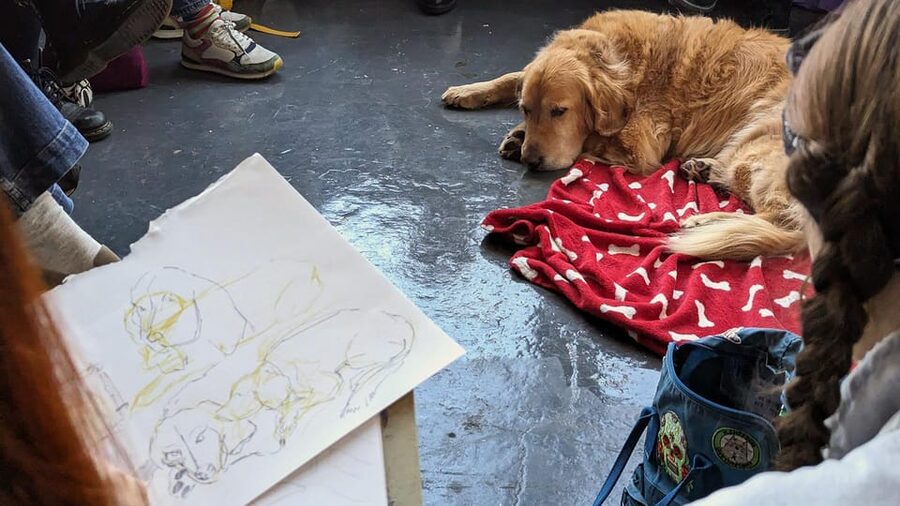
The main attraction is clear: you draw real dogs as they move, from snorting flat-faced breeds to long-legged, curly-coated pups with tails that refuse to stay still. Bristol artist Cai Burton keeps the session light, using warm-ups and timed exercises to help you loosen up rather than fret over perfect lines.
I like the mix of structured guidance and free choice, plus the chance to rotate around the room and see different dogs. I also like that the break is part of the experience, giving you time to pet the dogs, meet their owners, and chat with other dog lovers. The main consideration is that instruction may feel light if you want a formal drawing lesson, and the moving models can test your patience.
Key points to know
- Several dogs, not one stationary model: Expect a mix of sizes, shapes, faces, curls, legs, and wagging tails.
- Cai Burton leads warm-ups and timed exercises: You can try new techniques without being pushed beyond your comfort level.
- The break includes time with the dogs: Petting and playing are part of the social side of the class, but feeding is not allowed.
- KIT FORM is in Jamaica Street Studios: The class takes place in Bristol’s creative Stoke’s Croft area.
- Basic supplies are included: Paper, pens, and pencils are provided, while drinks and advanced materials cost extra.
- The $21 price is reasonable for a social art class: It works best for people who value the unusual dog-filled setting as much as technical tuition.
Drawing dogs at Jamaica Street Studios
Dog Life Drawing takes place at KIT FORM, Jamaica Street Studios, in Bristol’s Stoke’s Croft area. This is a creative part of the city, so the setting fits the activity well. You are not sitting in a quiet, traditional art school with a single still-life object in front of you. You are in a studio space designed for a more informal art session.
That setting matters because the class is social from the start. You can move around the space, see the dogs from different angles, and look at how other people handle the same quick-moving subjects. It feels closer to an art evening with a canine cast than to a strict lesson where everyone works silently at one easel.
The meeting point can vary with the option you book, so check the final details before setting out. The activity is wheelchair accessible, but you should still confirm the exact meeting arrangements if you have specific access needs.
A few more Bristol days worth weighing up
- Bristol: Blackbeard to Banksy Guided Walking Tour
★ 4.9 · 1,422 reviews - From Bristol: Stonehenge and Cotswold Villages Day Tour
★ 4.8 · 717 reviews - Bristol: Air Raid Shelter & St. Nicholas Market Walking Tour
★ 4.8 · 320 reviews
What Cai Burton’s class is really like
Cai Burton guides you through the session in English. The class begins with structured warm-ups, which are useful for getting your hand moving before the dogs start testing your drawing speed. You may be asked to make quick marks, loosen your grip, or respond to the dog’s movement rather than chase a perfect outline.
The aim is not to produce a polished portrait every time. Life drawing is about observing, reacting, and capturing a pose before it changes. Dogs are particularly good at changing poses. One moment you have a clear head shape, and the next you are drawing a tail, a paw, or a blur of curls.
Cai also uses timed exercises. These may encourage you to work quickly for a short period, then spend longer on a pose when the opportunity allows. The supplied information does not promise a formal step-by-step drawing course, so I would book this for a relaxed introduction or creative afternoon rather than advanced technical training.
That distinction is important. One person in the available feedback found the instruction too limited, while another found the warm-ups helpful and Cai’s guidance effective. The safest expectation is moderate tuition with plenty of freedom. Cai provides direction and creative prompts, but you will also spend time working independently.
Four-legged models with very different personalities
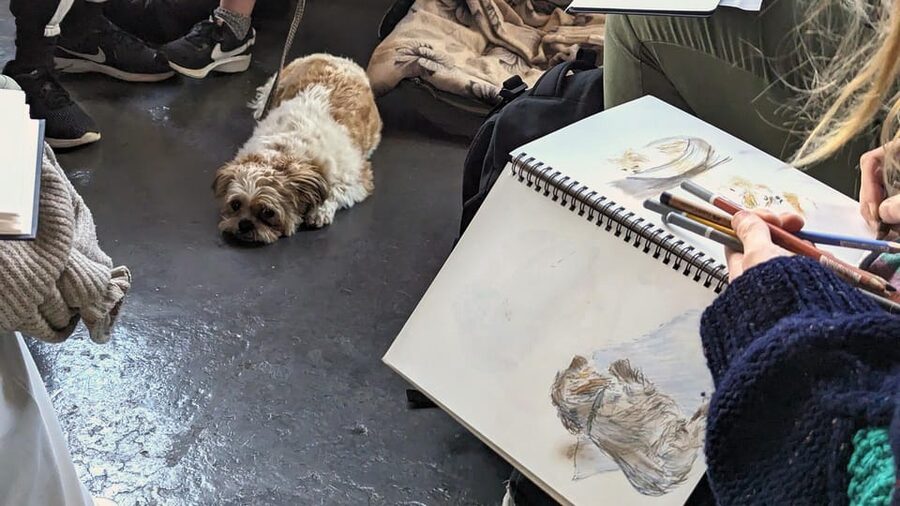
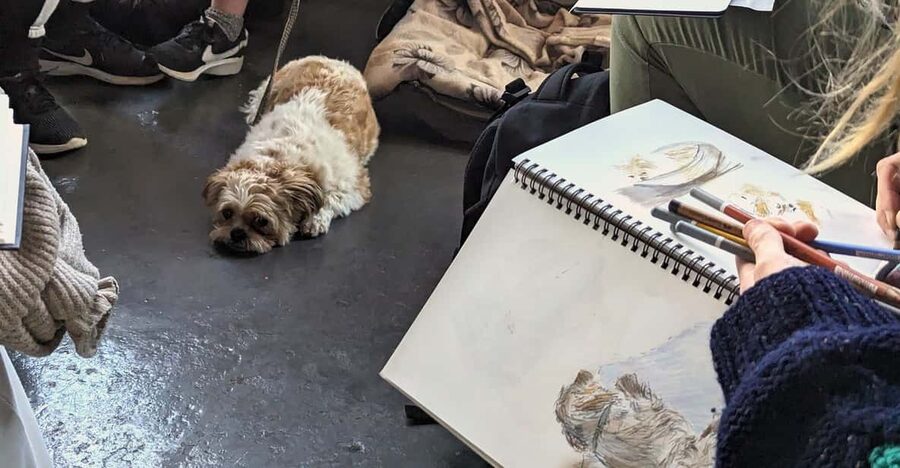
Each class features multiple dogs of different shapes and sizes. You might see flat-faced dogs with expressive features, long-legged breeds that create strong lines, tight curls that challenge your texture work, and wagging tails that refuse to pose for long.
The variety is one of the best reasons to book. With one dog, you might spend the whole class trying to understand a single body shape. With several dogs, you can compare how different forms affect your drawing. A compact dog may call for short, tight marks, while a long-legged dog gives you a chance to practise proportion and sweeping lines.
The dogs are not presented as motionless studio models. They move, shift, sniff, relax, and interact with the room. That can make your sketches rougher than expected, but it is also the point. You learn to capture a gesture rather than wait for a perfect pose.
A previous session included four different dogs, with participants rotating between stations. That gives you a useful sense of how the class works. You are likely to draw each dog from changing viewpoints instead of staying fixed in one place throughout the afternoon.
If you are attached to one particular breed, keep your expectations open. The exact dogs can vary, and the appeal lies in the mix rather than a guaranteed breed list.
The break is part of the event
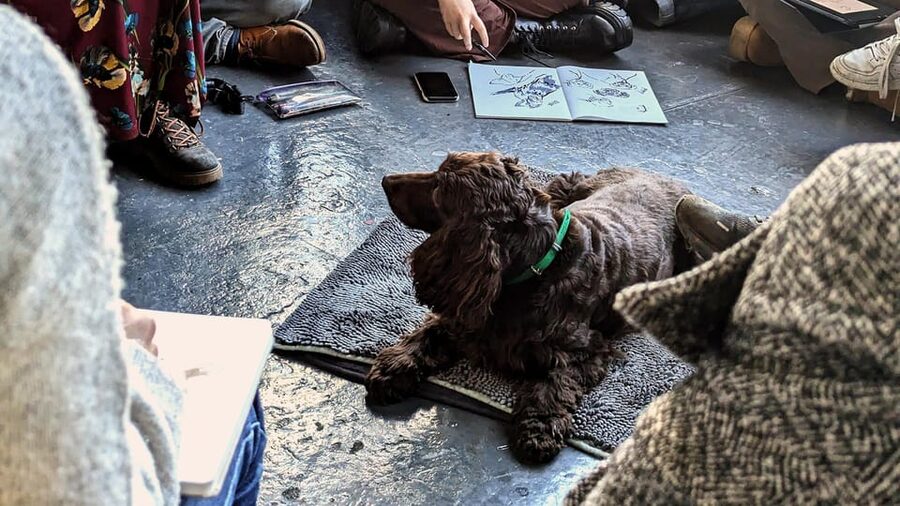
The break is not just a pause to stretch your hand. It gives you time to meet the dogs properly, speak with their owners, and enjoy some relaxed contact with the pups. If you like dogs but cannot have one at home, this is a pleasant extra.
You can pet and play with the dogs during the break, but you cannot feed them. You also cannot bring your own pet, which keeps the session manageable for the dogs and the people in the room.
I like this part because it changes the pace. The drawing exercises ask you to watch carefully and work quickly. The break lets you step away from the page and enjoy the animals without trying to capture every movement in pencil.
Still, remember that this is an art class first. The dogs are there as models, not as a guaranteed petting attraction. The amount of interaction can depend on the dogs’ comfort and the flow of the session.
Same city, a completely different sort of afternoon:
- From Bristol: Oxford and the Cotswolds Full-Day Tour
★ 4.7 · 244 reviews - Bristol: Guided Ghost Tour
★ 4.8 · 193 reviews - Bristol: Wake The Tiger Amazement Park Entry Ticket
★ 4.3 · 156 reviews - Bristol: Self-Guided Sightseeing Audio Tour
★ 4.4 · 151 reviews
Music, drinks, and the Stoke’s Croft mood
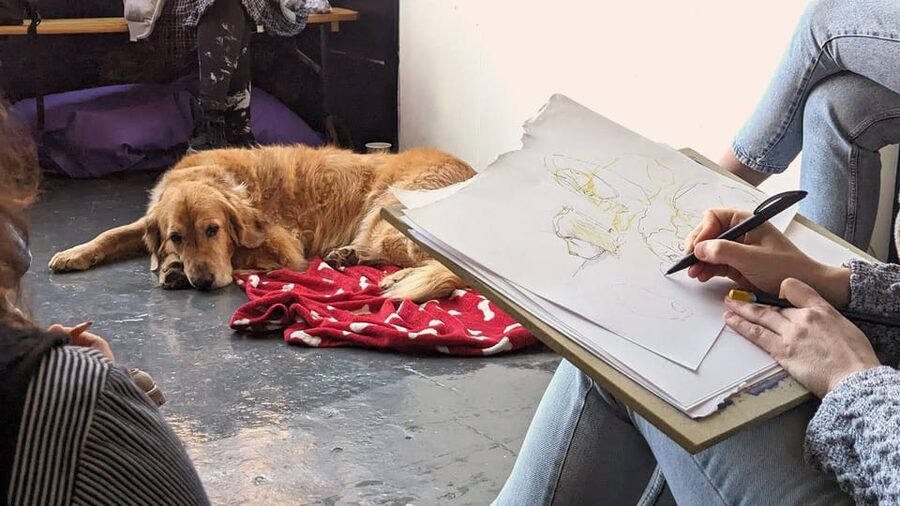
Chilled music plays while you draw, helping create a calm, informal atmosphere. This is a small detail, but it helps explain why the class is described as relaxed rather than academic. You can concentrate without the room feeling overly serious.
Drinks are available from the bar, but they are not included in the price. That makes the $21 charge easier to assess: your ticket covers the workshop, guide, dogs, music, and basic drawing materials, while refreshments are an extra purchase.
Stoke’s Croft adds to the creative feel. You can pair the class with time in this eclectic Bristol area, though the activity itself is the main reason to come. You do not need to be an artist to fit in. The room is designed for people with different levels of experience, and sharing work afterward makes the class more social than a solo sketching session.
What you receive for $21
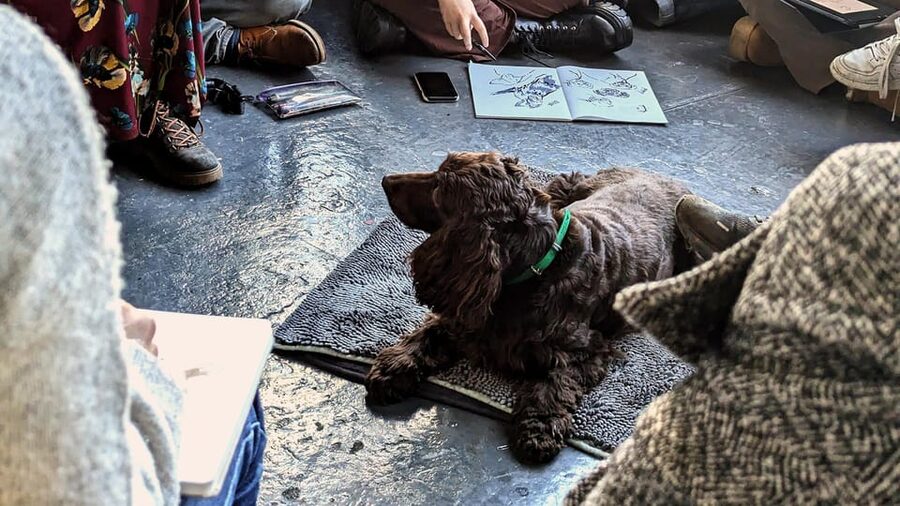
At $21 per person, this is fairly priced if you want a memorable activity that combines art, animals, and meeting people. Basic paper, pens, and pencils are supplied, so you do not need to arrive with a full art kit.
You will need to pay more if you want advanced materials. The included supplies are enough to take part, but experienced artists may prefer to bring or buy their own preferred tools if the booking rules allow it. The available information confirms that advanced art materials are not included, so check before bringing anything unusual.
The value is less about the quantity of instruction and more about the unusual setup. You are paying for access to several live dog models, a guided workshop, a social break, and a creative venue. A standard drawing class might offer more technical depth, but it would not offer this particular mix.
The duration is between one and a half and two hours. That is long enough to try several exercises and draw multiple dogs without taking up an entire day. I would see it as a good afternoon activity, especially if you want something different from Bristol’s usual sightseeing stops.
Who will enjoy this most
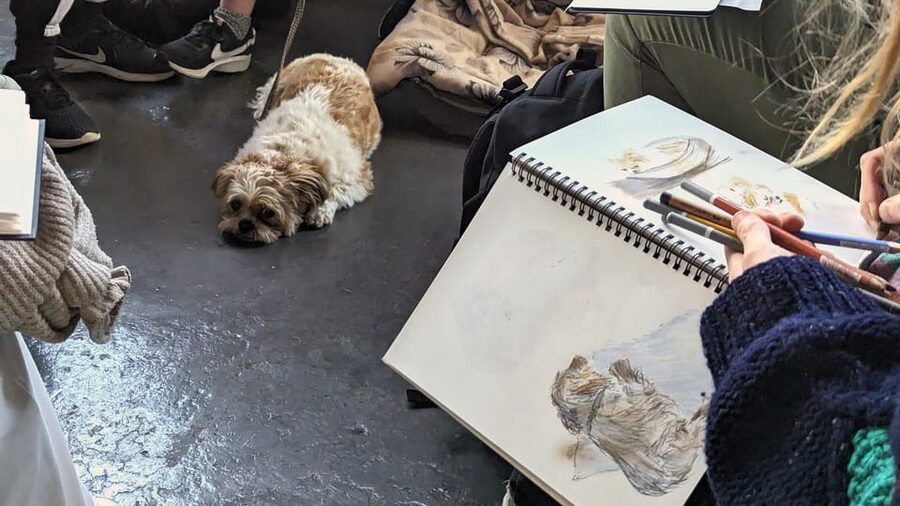
This class suits dog lovers who also want a creative activity. You do not need to consider yourself an artist. The warm-ups and short exercises give beginners a way into the session, while more confident drawers can use the dogs’ movement as a challenge.
It is also a good choice for a small group. One participant attended with a teenage daughter and her friend, and all three enjoyed the class. That suggests it can work for older teenagers and adults with mixed drawing ability.
The age rule is firm: children under 12 are not suitable for the activity. If you are booking for a family, check the ages carefully before paying.
The class also works well for someone visiting Bristol who wants a local activity rather than a standard attraction. You get to spend time in Stoke’s Croft, meet a Bristol-based artist, and take home your own sketches.
You should think twice if you have animal allergies. The class involves several dogs in an indoor setting, so it is not suitable for people with animal allergies. You should also avoid it if you want to bring your own dog, since pets are not allowed.
How to make the most of the drawing time
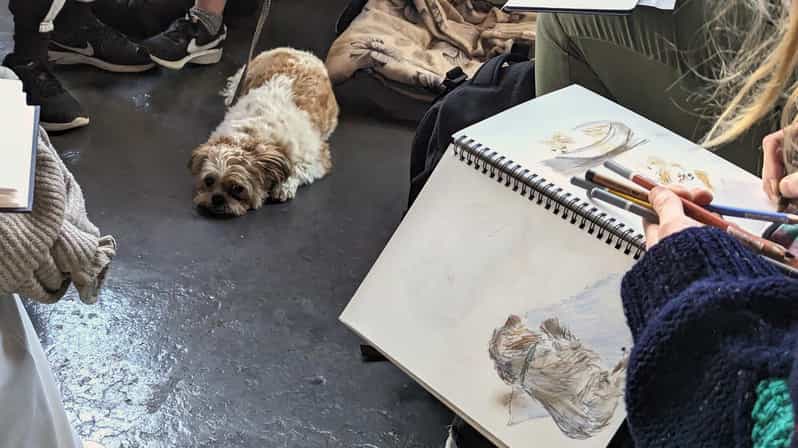
You will get more from the session if you accept that some sketches will be unfinished. A moving dog can change position before you complete the head, legs, or body. Treat those pages as practice rather than failed drawings.
I would start by focusing on the overall gesture. Ask yourself where the dog’s weight sits, which way the body points, and how the spine curves. Details such as eyes, fur, and paws can come later if the pose lasts long enough.
Use the quick exercises to test different marks. A short, energetic line may capture a wagging tail better than a careful outline. If Cai suggests a method that feels outside your comfort zone, you can try it without pressure. The class allows you to work at your own level.
Moving around is another advantage. A dog’s shape can look completely different from the front, side, or behind. Rotating stations also stops you from getting stuck with one difficult angle for the entire class.
During the break, look at the dogs as animals rather than only as subjects. Notice how they stand, rest, or respond to people. That observation can help when you return to the page.
Sharing your sketches at the end
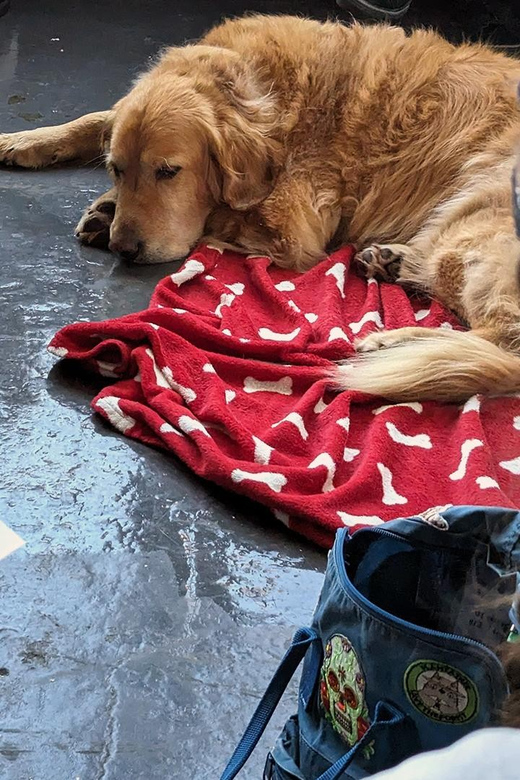
The session finishes with an opportunity to share your work and see how other people captured the same dogs. This can be helpful if you are shy about showing unfinished sketches, because everyone is working under the same moving-model conditions.
You may notice that one person focuses on a dog’s expression, another catches the body in a single line, and someone else works with broad shapes. That comparison is useful without turning the class into a competition.
For me, this is where the social value of the activity becomes clear. You are not simply attending a workshop, collecting a piece of paper, and leaving. You get a chance to talk about the process, meet other dog lovers, and see several ways of responding to the same subject.
The tone is intended to stay relaxed. Cai may encourage you to try something new, but the session does not pressure you to produce a finished artwork.
Practical details before you book
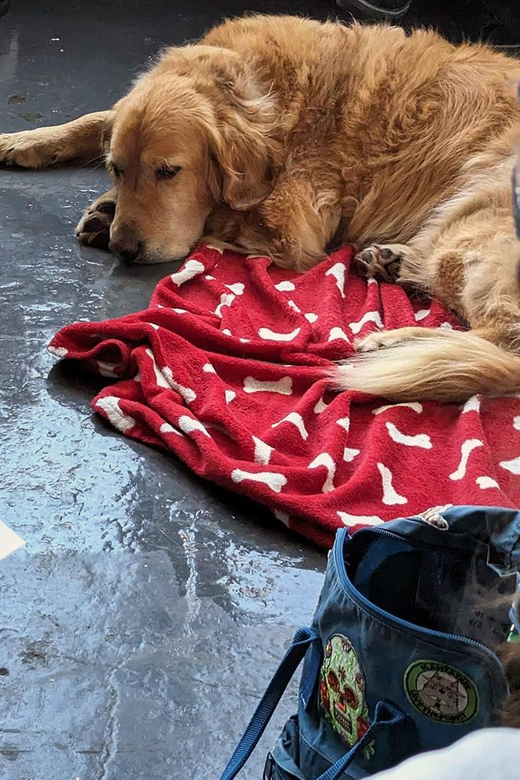
The class is taught in English. Basic art supplies are included, and drinks can be bought at the bar. The exact meeting point may vary depending on the booking option, so read the confirmation carefully rather than assuming every session begins at the same spot.
You can cancel up to 24 hours before the activity for a full refund. A reserve-now-and-pay-later option is also available, which helps if your Bristol plans are not settled yet.
The activity is wheelchair accessible. Since access needs vary, it is sensible to check the final venue information and contact the provider if you need details beyond the general accessibility statement.
The class lasts 1.5 to 2 hours, with starting times depending on availability. Give yourself enough time to find Jamaica Street Studios and settle in, particularly if you are unfamiliar with Stoke’s Croft.
Should you book Bristol Dog Life Drawing?
Book it if you want a friendly, unusual Bristol activity where the dogs matter as much as the drawing. The multiple breeds, relaxed music, warm-ups, break with the pups, and chance to share your work make this more than a basic sketching lesson.
I would not choose it if you want intensive art instruction or a guaranteed breed-specific session. The guidance is present, but the experience leaves room for self-directed work, and one available account found the tuition too limited.
At $21, the class offers good value for beginners, dog lovers, older teenagers, couples, and friends looking for something different. Bring curiosity rather than perfectionism, accept that tails will move at the wrong moment, and you are likely to leave with a set of lively sketches and a pleasant story from your time in Bristol.
FAQ
Where does Bristol Dog Life Drawing take place?
The class takes place at KIT FORM, Jamaica Street Studios, in Bristol’s Stoke’s Croft area. The meeting point may vary depending on the option booked, so check your booking details.
How long does the activity last?
The session lasts between 1.5 and 2 hours. Starting times depend on availability.
Who leads the drawing class?
Bristol artist Cai Burton leads the workshop and provides warm-ups, timed exercises, and drawing guidance in English.
What kinds of dogs will I draw?
Each class features multiple dogs of different shapes and sizes. You might draw flat-faced dogs, long-legged dogs, curly-coated dogs, and dogs with lively wagging tails. The exact dogs can vary.
Are drawing materials included?
Basic art supplies such as paper, pens, and pencils are included. More advanced art materials are not included.
Can I interact with the dogs?
Yes. You can pet and play with the dogs during the break, and you can get to know their owners. Feeding the animals is not allowed.
Can children attend?
Children under 12 are not suitable for this activity. Older teenagers may attend, and the session can work for groups with different drawing abilities.
Is the class suitable for people with allergies or mobility needs?
The activity is wheelchair accessible. It is not suitable for people with animal allergies, since several dogs take part. Pets are not allowed.
Just added around Bristol
- St Mary Redcliffe Church Bristol: Guided Tour★ 4.7 · 67 reviews
- Bristol: Guided Ghost Tour★ 4.8 · 193 reviews
- From Bristol: 4-Day Cornwall, Devon & Stonehenge Tour★ 4.3 · 22 reviews
- Bristol: Wake The Tiger Amazement Park Entry Ticket★ 4.3 · 156 reviews
- Bristol: Bristol Zoo Project Entry Ticket★ 4.3 · 18 reviews
- Bristol: The Best Of Bristol, Guided Bike Tour★ 4.8 · 68 reviews
- Bristol: Self-Guided Sightseeing Audio Tour★ 4.4 · 151 reviews
- Bristol: The House Magicians Comedy and Magic Show★ 4.7 · 37 reviews
Bristol Tours, compared.
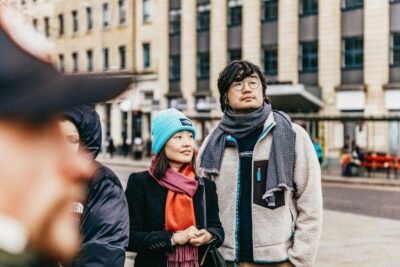
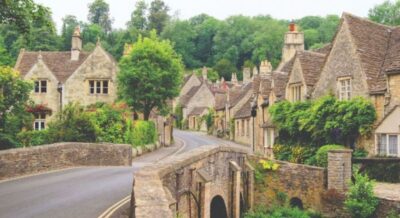

Air Raid Shelter & St. Nicholas Market Walking Tour
Read our review →



Browse the lists this tour appears in