Reviewed · LONDON TOURS
Burnings, Butchery & Black Death: London’s Bloody Past
Smithfield is where London’s past turns especially grim. On this two-hour walk, you’ll follow the story of plague burials, public executions, animal slaughter, body snatching, and the slum Charles Dickens used in Oliver Twist. The William Wallace episode is particularly striking: the man remembered as Braveheart was in no condition to deliver a heroic final speech.
I like the small groups of no more than 15, which give the guide room to answer questions, and I like the route’s mix of famous names and easily missed corners. Guide Tom has been singled out for combining solid facts, myths, and humor, while taking care with older walkers. The main drawback is the subject matter: this is not a gentle sightseeing stroll, and some details are genuinely nasty.
Key points about London’s bloodiest walking tour
- Smithfield tells two brutal stories: the area was used for both animal slaughter and human execution.
- The Black Death is treated as a city problem: you’ll learn how London dealt with tens of thousands of corpses in the 1300s.
- William Wallace appears in a very unromantic chapter: the tour separates the real execution from the later heroic legend.
- Dickens enters through Smithfield’s slum years: the route connects the district with Oliver Twist.
- The walk covers about two miles: it begins outside Barbican Station and finishes at Ely Place near Farringdon Station.
- The $26 price buys a focused small-group experience: at two hours, it is a practical choice for visitors who want history rather than a long general city tour.
Starting at Barbican with a darker view of London
Meet your guide just outside the Barbican Station exit on Aldersgate Street. Look for the Historic London Tours sign, then expect a walking route that quickly leaves modern office buildings behind and starts asking uncomfortable questions about how a medieval city handled death.
This part of London is useful for a history walk because the past is not presented in one sealed-off museum. Instead, the story unfolds across squares, churches, market buildings, hospital grounds, and narrow streets. You keep moving, but the guide gives each location a reason to matter.
The route lasts about two hours and covers roughly two miles. That is a manageable distance for most people who are comfortable walking, though the stops are short and the subject matter comes quickly. You are not getting a long pause at every site. The value comes from the connections between them.
A few more London days worth weighing up
- From London: Harry Potter Warner Bros Studio Tour
★ 4.7 · 26,588 reviews - London: Westminster to Greenwich River Thames Cruise
★ 4.5 · 22,836 reviews - Magical London: Harry Potter Guided Walking Tour
★ 4.7 · 22,044 reviews
Charterhouse Square and the Black Death dead
Charterhouse Square is one of the early stops, and it brings the Black Death into the tour. In the fourteenth century, London had to deal with tens of thousands of dead. This was not only a medical disaster but also a burial and city-planning crisis.
I find this part more useful than a simple plague statistic because it shows the practical horror of the outbreak. The question is not just how people died. It is how a crowded medieval city disposed of so many bodies when normal burial arrangements could not cope.
The guide’s job here is to make the scale understandable without turning the stop into a lecture. You may find this one of the most sobering parts of the walk, especially if you prefer social history to tales of famous criminals. It gives the rest of the tour a clear setting: London was shaped by repeated attempts to manage death, disease, trade, and overcrowding.
Smithfield Market, slaughter, and public punishment
Smithfield has long been associated with both animals and people being killed. That double history is the center of the experience. The market area is not treated as a single landmark to photograph and leave. It becomes the place where food supply, public spectacle, punishment, and urban life meet.
You’ll hear about animal slaughter alongside human executions. That combination sounds shocking, but it is exactly what makes the district worth exploring. Medieval and later London did not keep unpleasant work far from daily life in the way modern cities often try to do.
The route includes Smithfield Market and London Central Markets, listed as separate stops. You should expect the guide to use the market district to explain how the area functioned over time, rather than simply repeat one gruesome anecdote. The market setting also helps you see why the neighborhood became important and why it later developed such a bad reputation.
For some people, the market history will be more interesting than the execution stories. If you are sensitive to descriptions of slaughter, ask yourself before booking if you want two hours centered on London’s most unpleasant work. The tour title is an accurate warning.
St John’s Gate and Cloth Fair’s cramped past
St John’s Gate is another stop on the route, followed by Cloth Fair. These locations help widen the story beyond plague and punishment. You are still in the Smithfield area, but the guide is tracing the people, trades, and institutions that grew around it.
Cloth Fair is especially helpful for understanding how the neighborhood became a slum. The district was not simply dark because of its history. It was also crowded, poor, and shaped by work that many Londoners needed but did not want near their homes.
This is where the Dickens connection begins to feel useful rather than decorative. Smithfield became the sort of place that could represent the rougher side of London, and Dickens used that atmosphere in Oliver Twist. You will hear how the streets and social conditions fed into the image of a city where poverty and crime sat close to wealth and power.
Because the walking stops are brief, you should not expect a long literary discussion of Dickens. Instead, the route gives you a physical sense of the setting behind the book. If you have read Oliver Twist, the connection should add extra color. If you have not, the guide still provides enough context to understand why Smithfield mattered.
Same city, a completely different sort of afternoon:
- London: Madame Tussauds London
★ 4.6 · 20,915 reviews - London: Warner Bros. Studio Tour with Transfers
★ 4.7 · 17,586 reviews - London: Tower Bridge Entry Ticket
★ 4.7 · 15,560 reviews - London: St Paul’s Cathedral Entry Ticket
★ 4.7 · 9,813 reviews
St Bartholomew the Great and the edge of old London
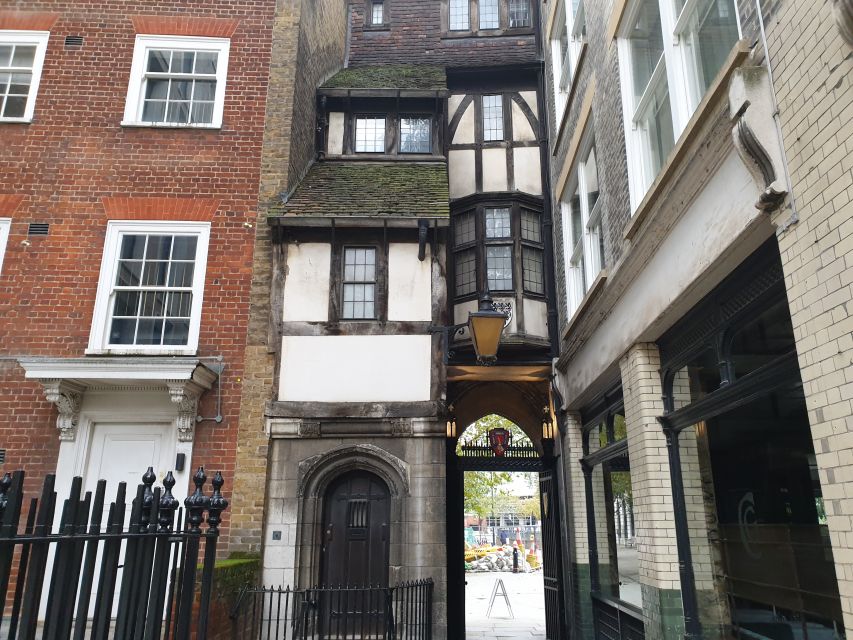
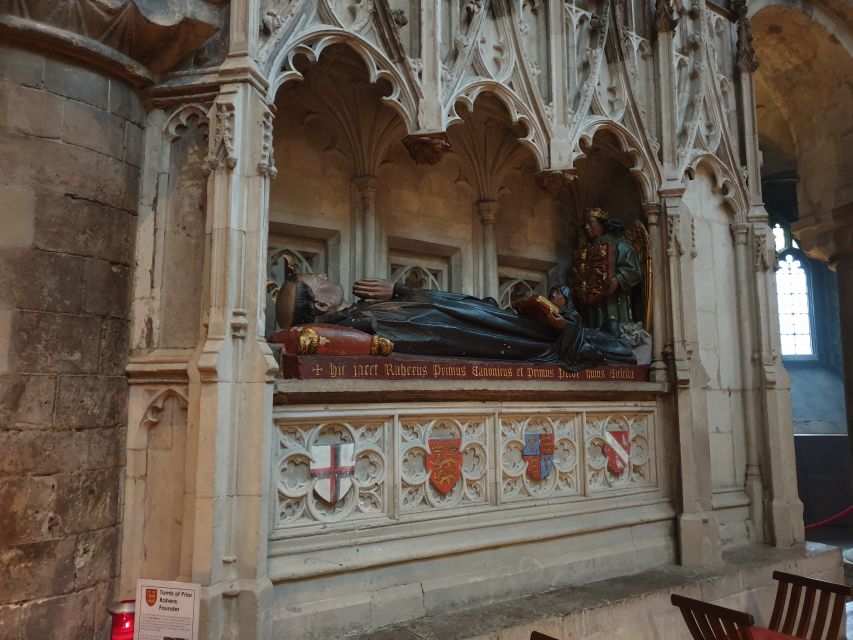
St Bartholomew the Great is one of the churches on the route. Entry is included when no service is taking place, so the interior visit cannot be guaranteed. That qualification matters. You should treat the church as a possible extra, not as the sole reason to book the walk.
The church stop adds a different mood. After hearing about bodies, executions, and slaughter, a church offers a reminder that Smithfield was also a place of worship, care, and continuity. It gives the guide another way to explain how the neighborhood changed while retaining links to earlier London.
You will likely spend only a few minutes here, as the listed stops are short. That suits the tour’s pace, but it may disappoint you if you want a detailed architectural visit. This is a history walk with church access, not a dedicated church tour.
William Wallace without the Hollywood ending
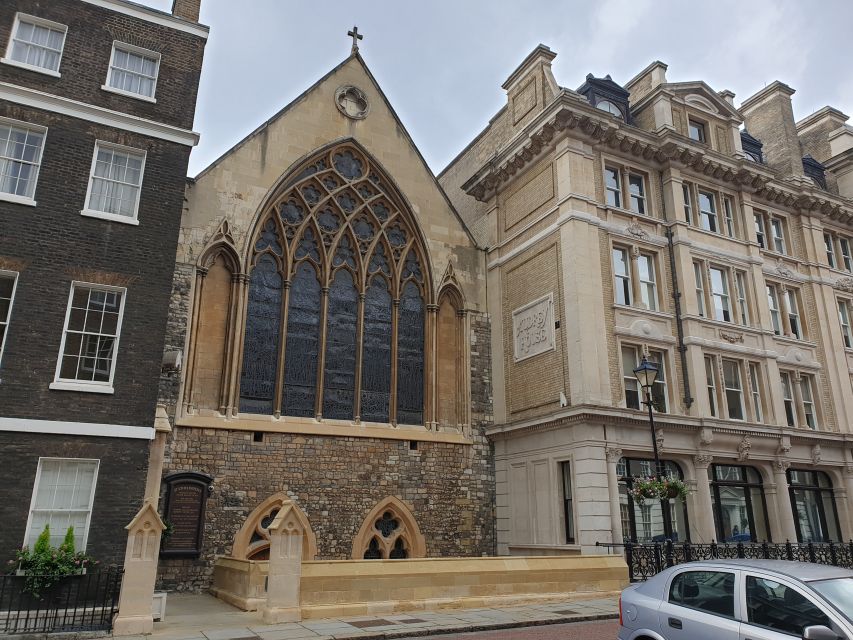
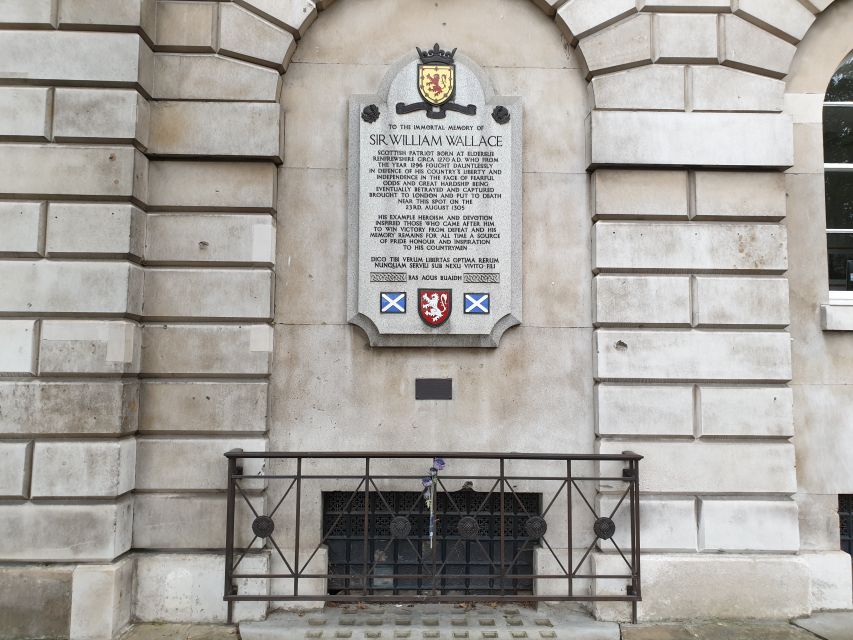
The Sir William Wallace Memorial is one of the most memorable stops because it connects medieval London with a figure often known as Braveheart. The guide explains how Wallace was executed and why he was in no fit state to shout the famous heroic cry associated with his modern image.
That contrast between legend and physical reality is a good example of the tour’s tone. You get serious history, but the delivery is not solemn every minute. Tom has been praised for mixing facts, myths, and humor, and this stop shows why that balance matters. Humor can make a grim subject easier to follow, provided it does not erase the suffering involved.
The memorial also gives the walk a wider reach. Smithfield was not only about local butchery or London poverty. It was a stage for national power, public punishment, and the treatment of high-profile enemies.
If famous figures are what pull you into history, this may be the strongest stop. If you prefer a careful study of Scottish history or Wallace’s life, the stop will be too brief. The tour uses him as one part of a larger London story.
St Bartholomew’s Hospital and London’s human cost
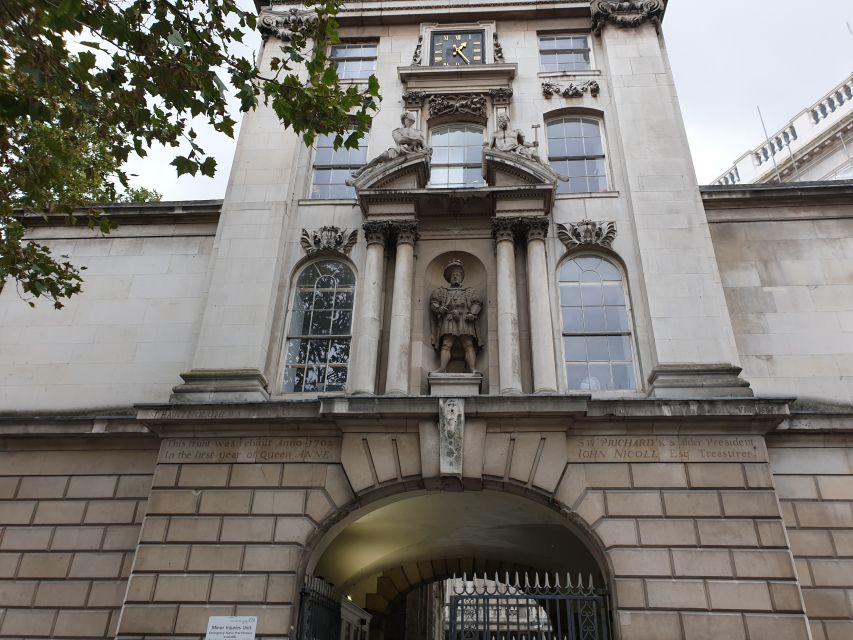
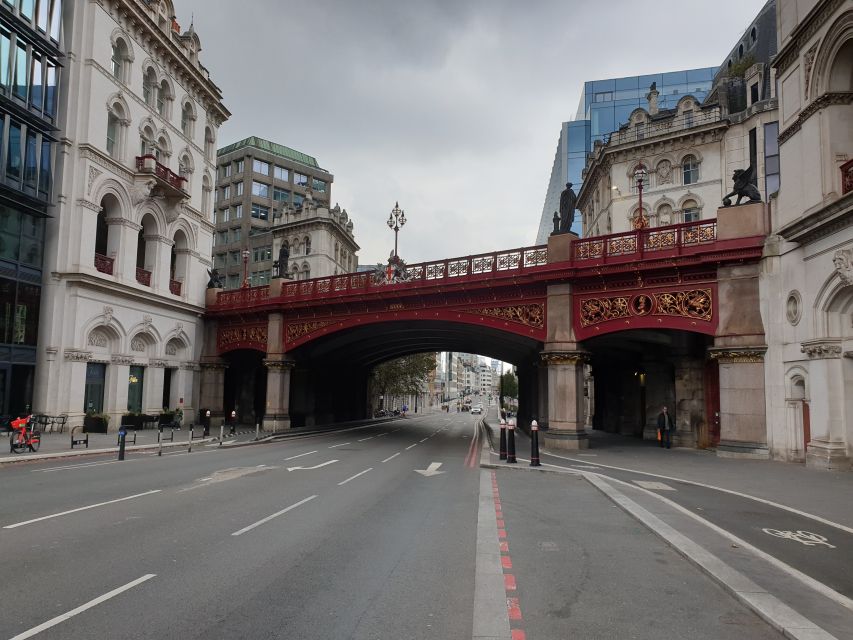
St Bartholomew’s Hospital brings the focus back to illness and care. Set beside the darker history of Smithfield, it helps you see the area as more than a place of death. It was also connected with people trying to treat the sick and support a growing city.
The hospital stop is valuable because it adds balance. A tour built only around executions can become a parade of grisly facts. Here, the story also concerns the institutions that responded to disease, injury, and poverty.
You should expect the guide to keep the history moving rather than pause for a full medical tour. The stop works best as part of the wider pattern: death, disease, punishment, trade, religion, and charity all existed close together.
This is also one of the places where a good guide makes a difference. Several comments about Tom highlight his ability to explain clearly, respond to questions, and involve the group. That is important on a route with many separate names and dates. You want someone who can turn them into a story rather than recite them.
The Golden Boy of Pye Corner and the city’s changing memory
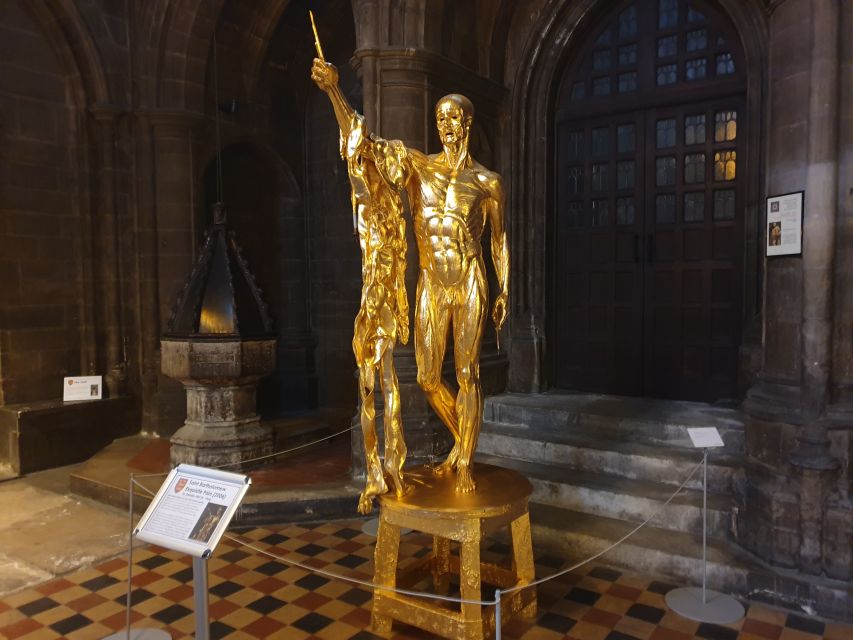
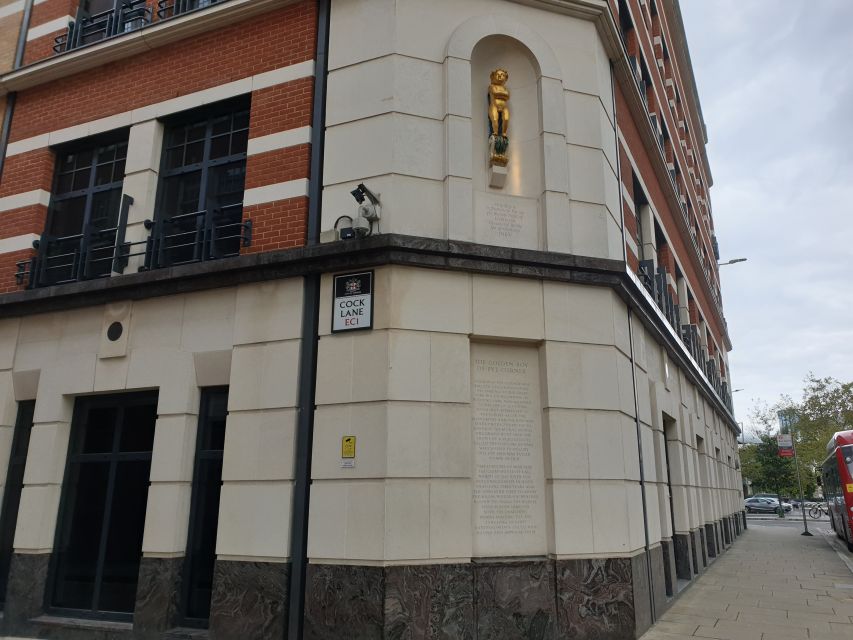
The Golden Boy of Pye Corner is one of the smaller, more unusual stops. It gives the tour a chance to show how London remembers disaster in public signs and local landmarks.
You should not expect a large monument or a long museum-style display. The appeal is the brief encounter with an object that many people could pass without understanding. This is one reason the walking format works: the guide points out the meaning of places that do not announce their own importance.
The stop also fits the larger theme of the walk. London’s past is recorded not only in major palaces and grand churches but also in modest markers, street corners, and fragments of old neighborhoods. You may find this kind of discovery more rewarding than another major attraction with a long queue.
London Central Markets and the afterlife of Smithfield
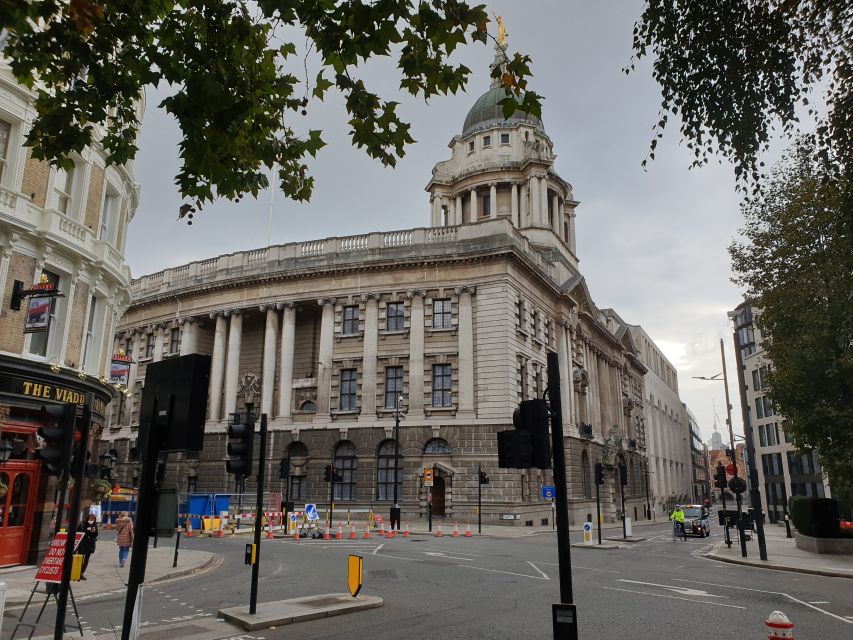
The return to London Central Markets, also known as Smithfield Market, lets the guide revisit the district with its full history in view. By this point, the market is no longer just a working place. You have heard how it relates to slaughter, punishment, plague, poverty, and Dickens.
That layered view is the tour’s main strength. It does not ask you to see Smithfield as either an old market or a grim historical site. It shows how the same area can carry several identities at once.
The route may feel repetitive if you want every stop to be completely different. Smithfield appears more than once because it is the core of the story. I would see that as a useful return rather than a flaw, but it is worth knowing before you book.
Ely Place and a compact finish near Farringdon
The walk ends at Ely Place, with Farringdon Station nearby. This is a practical finish because you can continue your day without retracing the route to Barbican.
Ely Place is also a suitable closing point for a tour about old London. The route has moved through open squares, markets, memorials, churches, and streets tied to poverty and punishment. You finish with a stronger sense of how close the city’s polished present sits to its harsh past.
The ending is not designed as a dramatic final attraction. It is a natural close after two hours of steady walking and short historical stops. Plan your next activity nearby, or use the station connection to reach another part of London.
Why the small group matters at $26
At $26 per person, the tour sits at a reasonable price for a two-hour guided walk. You are paying for a live English-speaking guide, church entry when services permit, and a tightly focused route rather than general sightseeing.
The group limit of 15 is important. A guide can answer questions more easily, keep everyone together, and adjust the pace when needed. One account specifically notes that Tom was helpful and attentive with elderly parents, which suggests the format can work well for mixed-age groups, although the route remains a two-mile walk.
The value depends on your interests. If you want major interiors, panoramic views, or a broad introduction to London, spend your money elsewhere. If you want a specialist walk led by someone who can connect plague, executions, Dickens, and Wallace, the cost is fair.
The tour also offers free cancellation up to 24 hours before the start and a reserve-now, pay-later option. Those terms help if your London schedule is still shifting, but the real decision is the content. Book because you want difficult history told in an accessible way, not simply because the booking terms are flexible.
Who should book, and who should skip it
I would recommend this walk to adults and older teenagers who enjoy social history, true crime, Dickens, medieval London, or the way cities manage crisis. It suits you if you prefer a guide’s explanation to reading plaques and if you like seeing ordinary streets connected to major events.
The stated minimum age is 13. That makes sense given the material. Even older children may find the descriptions too graphic, so use your judgment rather than assuming this is a family sightseeing walk.
You should also be comfortable walking about two miles over two hours. The distance is not extreme, but the tour keeps moving between stops. Wear practical shoes and leave room in your schedule for a pace that includes standing while the guide speaks.
Should you book Burnings, Butchery & Black Death?
Book it if you want a focused, darkly entertaining history walk that makes Smithfield more than a market district. The strongest reasons are the small group, the mix of well-known figures and overlooked places, and the guide style associated with Tom: clear facts, myths, humor, and time for questions.
Skip it if you dislike graphic history, need guaranteed church interiors, or want a relaxed architecture tour. At $26, it is good value for two hours of specialist storytelling, especially for a repeat London visitor who has already seen the usual sights.
For the right audience, this is a sharp way to understand the city’s rougher foundations. You leave with more than a list of executions. You see how plague, trade, poverty, faith, literature, and public punishment helped shape one of London’s oldest districts.
FAQ
Where does the walking tour begin?
Meet just outside the Barbican Station exit on Aldersgate Street. The guide will be holding a Historic London Tours sign.
Where does the tour finish?
The walk finishes at Ely Place, near Farringdon Station.
How long is the tour?
The tour lasts about two hours and covers roughly two miles on foot.
Is the tour suitable for children?
Children under 13 are not suitable for this experience because of the subject matter and graphic historical content.
Can I enter the churches on the route?
Church entry is included when possible, but churches may not be visited if a service is in progress.
What language is the tour conducted in?
The live tour is conducted in English.
Just added around London
- London: Wimbledon Tennis Club and Westminster Walking Tour★ 4.5 · 86 reviews
- London: Westminster to Richmond River Thames Cruise★ 4.8 · 23 reviews
- Westminster Abbey Skip-the-Line Entry and Private Tour★ 4.6 · 4 reviews
- Best of London by LE GRAND – London’s Luxury Bus Tour★ 4.2 · 23 reviews
- London: Westminster Walking Tour & St Paul’s Cathedral Entry★ 4.7 · 7 reviews
- From London: Oxford, Stratford-upon-Avon & Cotswolds Trip★ 4.5 · 64 reviews
- From London: Warwick, Oxford, Stratford & Cotswolds Day Tour★ 4.0 · 270 reviews
- Warner Bros. Studios and 1-Day London Hop-on Hop-off tour★ 4.7 · 9 reviews
London Tours, compared.

Westminster to Greenwich River Thames Cruise
Read our review →
Magical London: Harry Potter Guided Walking Tour
Read our review →