
Reviewed · ISLE OF WIGHT TOURS
Isle of Wight: Carisbrooke Castle Entry Ticket
Carisbrooke Castle gives you an unusually close look at English history: this was a working fortress, a royal prison, and later a home for Queen Victoria’s youngest daughter. I especially like the chance to walk the battlements rather than view the castle from below, and the six-minute donkey demonstration turns an old well house into a memorable bit of living history. The setting also gives you broad views across the Isle of Wight.
The main catch is the steep stone steps. If you have mobility problems, use a wheelchair, or simply dislike uneven climbs, much of the best castle access will be difficult. Wear sturdy trainers or walking boots, and allow enough time to explore at a relaxed pace.
Key points at a glance
- Charles I’s failed escape: See the room and window where the imprisoned king tried to get out but became stuck in the bars.
- A real working water wheel: Watch Carisbrooke’s donkeys tread the wheel for about six minutes as they demonstrate how water was drawn from the well.
- Steep ramparts and Norman views: Climb the castle mound for some of the best views available from the site.
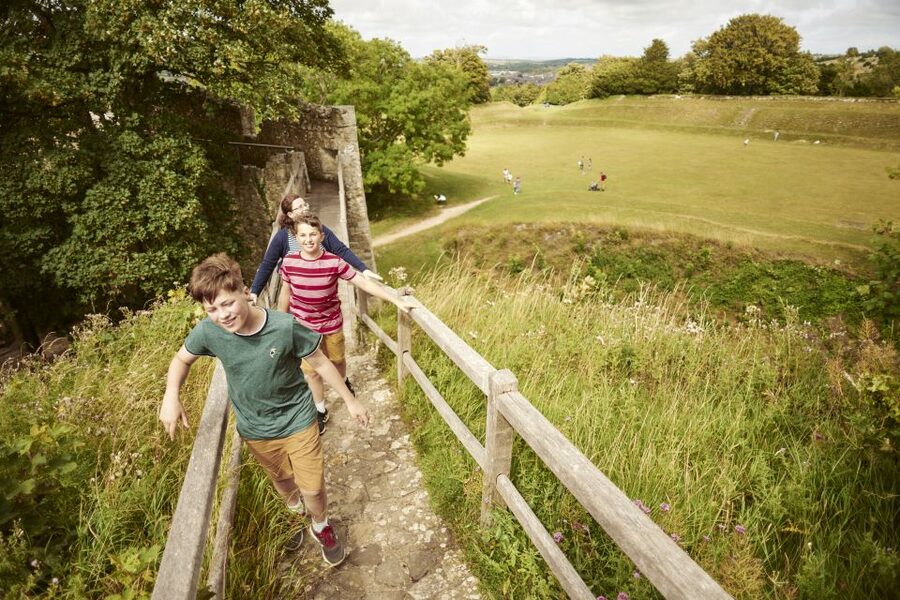
- A calm central lawn: The grass-filled centre gives the fortress a pleasant place to pause between climbs and indoor displays.
- Royal garden and war horse: Visit Princess Beatrice’s Edwardian-style garden and the statue of Warrior, a celebrated First World War horse.
- Good family value: The ticket is priced at $28 per group of up to four, making it more appealing for a small family than for a solo visitor.
Why Carisbrooke Castle feels different from a standard castle visit
Many old fortresses give you a wall, a few broken rooms, and a plaque explaining what used to be there. Carisbrooke offers more variety. You can walk defensive walls, enter a formidable gatehouse, inspect domestic buildings, see a royal prison room, visit a garden, and watch donkeys operate a water wheel.
That mixture matters. You are not only looking at stonework. You can also picture how people lived inside the walls and how the castle kept functioning over centuries. Founded around 1100, Carisbrooke played a key part in defending the Isle of Wight for more than nine centuries.
I would begin with the introductory film. It gives you a quick framework for the people and events connected with the castle, so the later rooms and ruins have more meaning. You do not need to remember every date. Just keep the broad story in mind: military stronghold first, royal prison at a crucial moment, and later a residential place with royal connections.
The site has an open, grassy centre, which softens the fortress atmosphere. It is a good place to stop if your group includes children, or if you want a break after the wall walk. A picnic is also possible, according to the available visitor information, and the grounds invite a slower visit rather than a rushed circuit.
More Isle of Wight crossings:
- Isle of Wight: Osborne Admission Ticket
★ 4.6 · 1,165 reviews - Portsmouth: Hovercraft Flight to the Isle of Wight
★ 4.7 · 170 reviews - From Brighton: Isle of Wight Full-Day Trip via Portsmouth
★ 4.7 · 77 reviews
The gatehouse and the first look inside
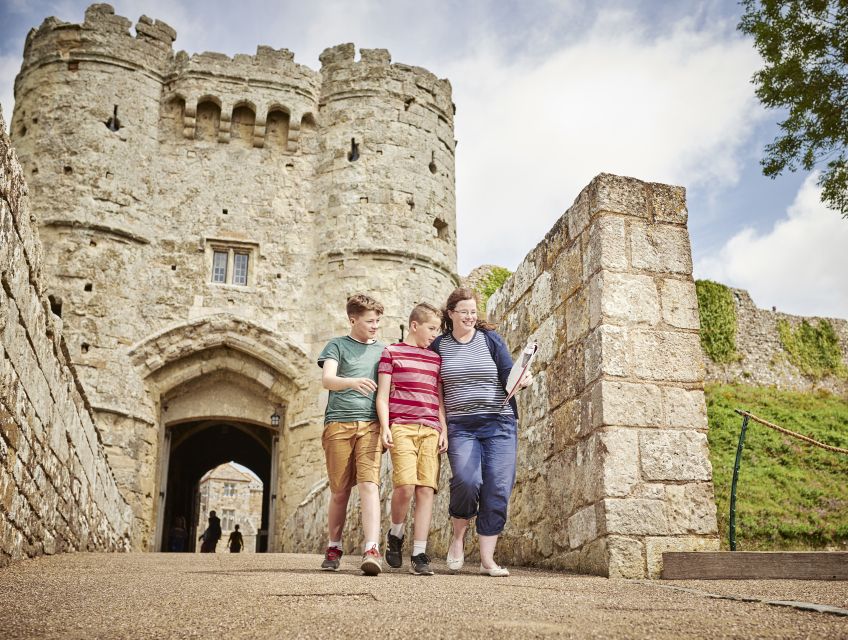
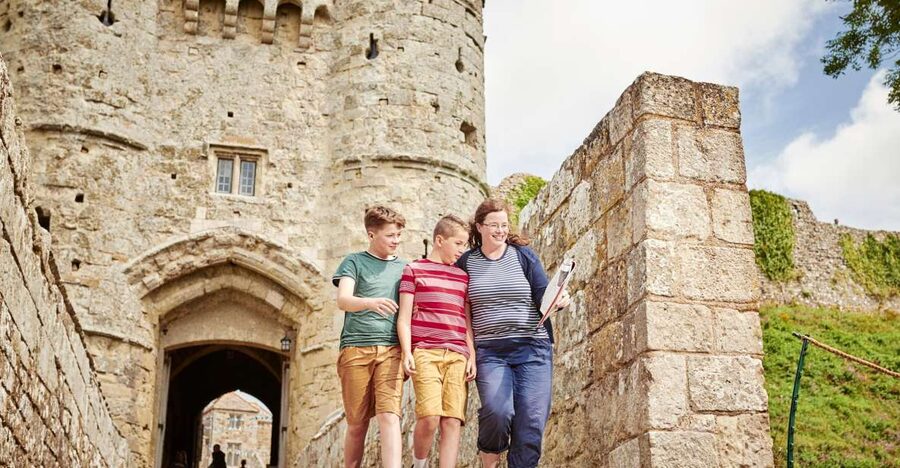
The powerful medieval gatehouse is a natural starting point. It shows how seriously the castle took defense, with thick masonry and a controlled entrance rather than a simple opening in the wall.
As you move on, look for signs of the castle’s later uses. Carisbrooke was adapted repeatedly, and the original domestic buildings were changed by the people who lived there afterward. That layering is part of the appeal. You are seeing a fortification that had to remain useful as needs changed.
The ruins of Carey’s Mansion add another side to the visit. They help shift your attention away from soldiers and sieges and toward household life. The remains are not presented as a complete grand residence, so you need to use the displays and your imagination to fill in some gaps.
This is also where the site rewards a patient pace. It is easy to hurry toward the famous ramparts or the donkeys, but the domestic remains explain why Carisbrooke was more than a military shell. The castle was occupied and adapted, not simply abandoned after its defensive role faded.
Charles I’s room and the castle’s most human story

The room linked with Charles I is one of the most compelling stops. Charles was held at Carisbrooke before his execution, and the castle’s connection with him gives the stone buildings a very personal story.
You can see the room from which he attempted to escape. The plan failed in an almost painfully ordinary way: he became stuck in the window bars. It is a small detail, but it makes the imprisoned king feel less like a distant figure from a textbook and more like a desperate man making a bad calculation.
I like this stop because it needs little decoration. The physical room and the failed escape explain the situation clearly. You can consider the confinement, the narrow opening, and the danger without needing a long theatrical presentation.
The displays also include Charles I’s personal things, giving the royal prison story a more intimate side. If political history usually feels remote to you, this section may be the part that changes your mind. Objects connected with a person often tell more than a list of battles and dates.
Climbing the mound and walking the battlements
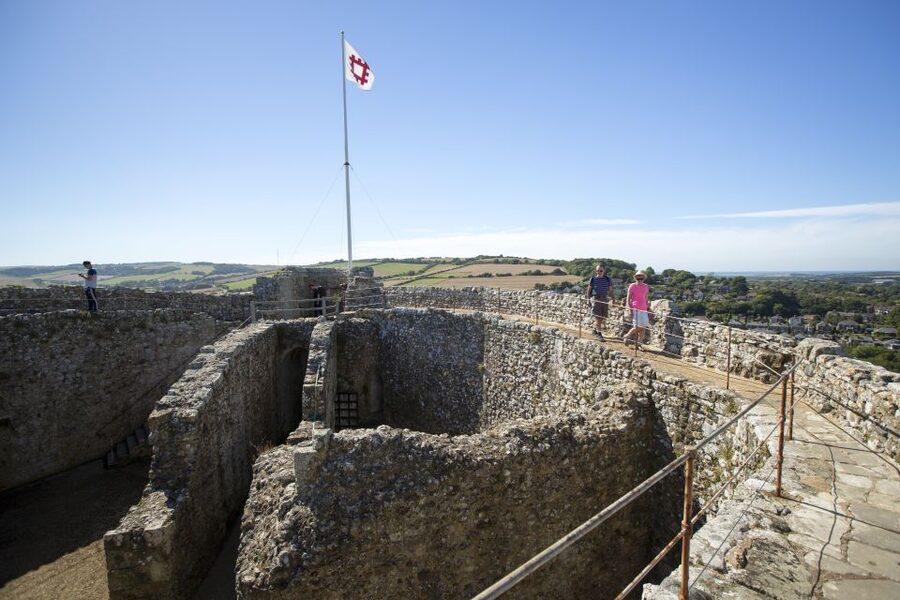
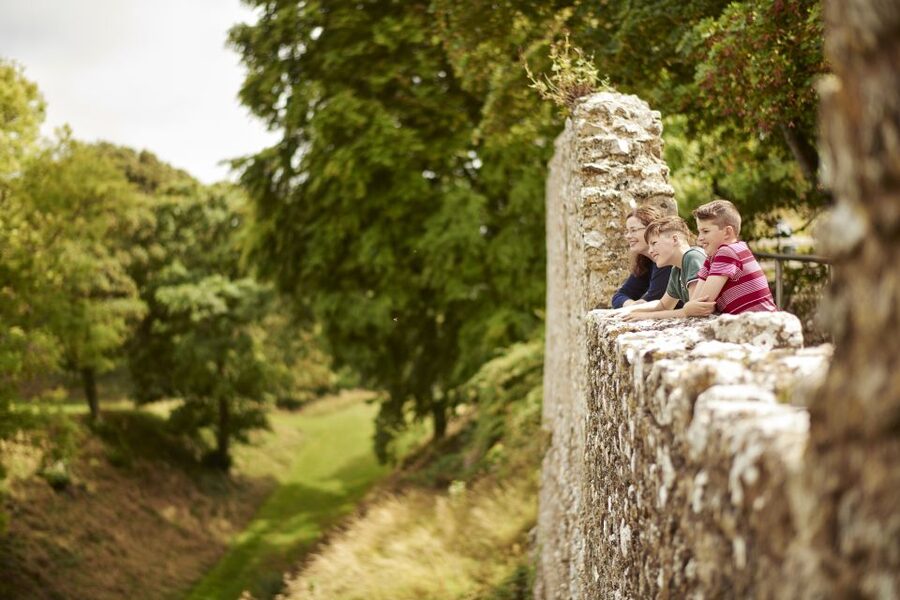
The wall walk is the physical heart of the visit. You patrol the battlements, then tackle the steep steps up the large castle mound toward the Norman keep.
This is not a flat museum stroll. The steps are stone, steep, and demanding in places. The effort is worthwhile if you can manage it, but you should take the warning seriously. One visitor specifically advised older people who have trouble with steps to skip the wall walk, and that is sensible guidance.
Wear comfortable shoes with a firm sole. Trainers may be enough for some people, but walking boots give you more confidence on uneven stone. Take your time on the climbs and descents, especially if children are moving quickly around you.
At the top, the views are the reward. From the Norman keep, you get broad views across the Isle of Wight and the surrounding countryside. The elevated position also helps you understand the castle’s defensive value. From up high, a fortress location makes more practical sense than it does from the courtyard.
The battlements are also a good place for children to burn off energy, though adults should keep an eye on them around steps and walls. The activity is physical rather than passive, so it can work well for families who want a history visit with some exercise built in.
More castles worth a day near Britain:
- Windsor Castle Admission Ticket
★ 4.7 · 7,032 reviews - Inverness: Isle of Skye and Eilean Donan Castle Day Trip
★ 4.8 · 4,136 reviews - London: Windsor Castle, Stonehenge & Bath Full-Day Tour
★ 4.4 · 3,112 reviews - Loch Ness: Urquhart Castle Round-Trip Cruise
★ 4.4 · 3,070 reviews
The donkeys and the old water wheel
The well house is Carisbrooke’s most distinctive stop. The resident donkeys spend about six minutes treading the water wheel, showing how the castle drew water from its well for centuries.
The demonstration is brief, so check the timing when you arrive rather than assuming you can wander in at any moment. If you miss it, the well house is still worth seeing, but the moving wheel and working animals make the old system much easier to understand.
The donkeys are not just a novelty added for children. They explain a practical problem faced by a fortified settlement: water had to be brought up from the well reliably. Watching the animals power the mechanism gives you a clear sense of the labor behind daily life at the castle.
This was one of the most frequently praised parts of the visit, and I can see why. The demonstration is easy to follow, lasts only a few minutes, and adds warmth to what could otherwise be a very stone-heavy experience. It is also one of the rare castle displays that shows a process rather than simply placing an object behind glass.
Princess Beatrice’s Garden and the statue of Warrior
After the hard stone of the walls and gatehouse, Princess Beatrice’s Garden offers a change of mood. It is laid out in an Edwardian style, with a fountain and plantings in the strong colors associated with the royal arms.
The garden is not a major separate attraction, but it gives the visit balance. You can slow down, look at the planting, and think about the castle as a home as well as a fortress. The grounds are well kept, and the garden helps explain the later royal connection to Carisbrooke.
You will also find the statue of Warrior, the war horse loaned to English Heritage to mark the centenary of the First World War. It adds a modern memorial layer to the site’s much older story.
Warrior is a useful reminder that Carisbrooke’s significance is not limited to medieval walls or the imprisonment of Charles I. The castle continues to gather new meanings as later generations remember people, animals, and events connected with Britain’s past.
How long to allow and how to plan the visit
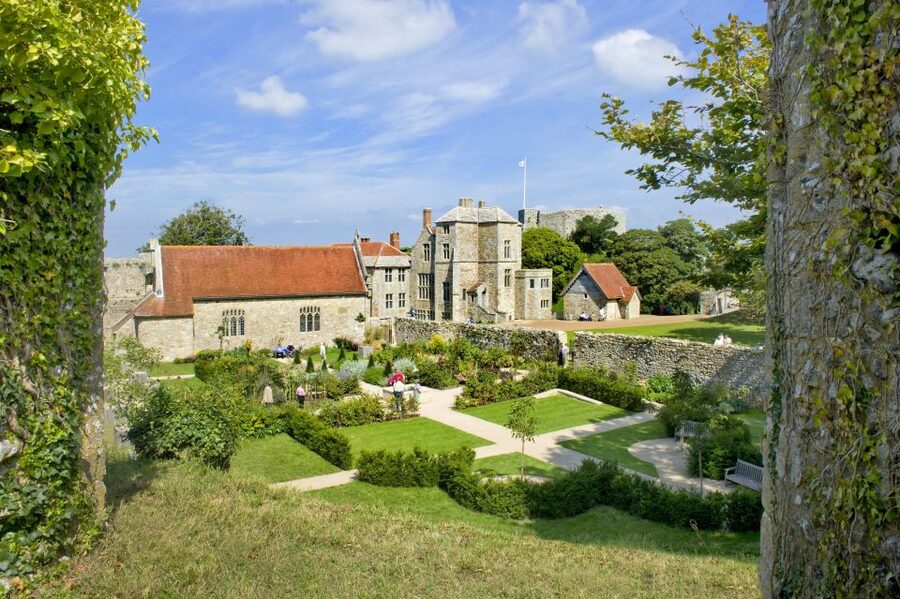
Your ticket is valid for one day, so you do not need to race through the site. The published duration is one day rather than a fixed guided schedule, which gives you room to watch the film, explore the buildings, wait for the donkey demonstration, climb the walls, and take a break.
I would allow at least a couple of unhurried hours if you want to see the main parts properly. A longer visit makes sense if you plan to use the picnic areas, spend time in the garden, or stop at the cafe.
Last admission is two hours before closing. That is an important detail because arriving late may leave you with enough time to enter but not enough time for the ramparts and interior displays.
The site has ample car parking, according to visitor information, and there is a cafe with indoor and outdoor seating. A cheese roll was singled out as a pleasant food stop, so you can make the cafe part of the plan rather than treating it as an emergency snack option.
Staff are described as friendly and willing to share information. That matters at a site with many layers, since a short explanation can help connect the gatehouse, royal rooms, and working well.
Is the $28 group ticket good value?
At $28 for a group of up to four, the price can be strong value if you are visiting with family or friends. Spread across four people, it works out to a modest entry cost for a full-day site with several distinct areas to explore.
The value is less obvious for one person or a couple, since the price is set by group size rather than by the number of people in your party. Still, you are paying for more than a quick look at ruins. The ticket covers access to the castle, battlements, Norman keep, gatehouse, domestic remains, royal displays, garden, well house, and grounds.
Check the ticket type carefully if you are traveling with children. The family ticket allows up to two adults and up to three children aged 5 to 17, while the supplied price refers to a group of up to four. The exact option that suits you may depend on your party.
The one-day validity adds useful flexibility. You can take a break and return within the valid period if the admission terms for your booking allow it, but check the details at purchase. Free cancellation up to 24 hours in advance and reserve now, pay later terms also make it easier to fit the visit into an Isle of Wight plan.
Who will enjoy Carisbrooke Castle most?
I would recommend this for families, history fans, and anyone who likes a site that mixes outdoor movement with indoor interpretation. Children can explore the walls, see the donkeys, and treat the central lawn as a place to reset between exhibits.
Adults who care about Charles I, Queen Victoria’s family, military architecture, or royal domestic life will find several different threads to follow. You do not need to be an expert in English history to enjoy it, since the film, displays, and preserved spaces provide a useful introduction.
The castle also suits mixed-age groups. A family party ranging from a very young child to someone in their seventies enjoyed the site, but the steps remain the deciding factor. Someone can enjoy the grounds and interiors without attempting every wall section, yet wheelchair users and people with mobility impairments should not book this as their main attraction.
The visit is less suitable if you want a fully guided experience with a named guide. No guide is specified, and the admission is for independent exploration. That gives you freedom, but you will need to read the displays and set your own pace.
Practical tips for a smoother visit
- Start with the film: It gives you the basic sequence of events before you encounter the rooms and ruins.
- Ask about the donkey timing: The water wheel demonstration lasts only about six minutes.
- Save energy for the mound: The Norman keep and battlements require steep climbing.
- Wear firm shoes: Stone steps and uneven surfaces call for comfortable trainers or walking boots.
- Plan a pause: The grassy centre, garden, and cafe make it easy to break up the visit.
- Check opening details: Some listed closed dates may not tell the full story, so confirm directly with English Heritage before setting out.
- Do not arrive near closing: Last admission is two hours before the site closes.
- Use the cafe if useful: Indoor and outdoor seating are available, and a cheese roll has earned a place in the practical food notes.
Should you book Carisbrooke Castle?
Yes, if you want an Isle of Wight attraction with real variety and are comfortable with steep stone steps. The strongest reasons to go are the wall walk, the Charles I escape room, the Norman views, and the donkeys working the water wheel.
I would be more cautious if mobility is a concern or if you are looking for a completely accessible site. You can still enjoy parts of the grounds and displays, but the castle’s signature experience depends heavily on climbing.
For a family or small group, the $28 price can represent very good value for a full day. Book it when you want history that feels physical and memorable, not just a sequence of display cases. Skip it only if steep steps are a serious barrier or if your schedule leaves less than two hours before closing.
FAQ
Where is Carisbrooke Castle?
Carisbrooke Castle is on the Isle of Wight in South East England, United Kingdom.
How long is the ticket valid?
The entry ticket is valid for one day.
What does the ticket include?
The ticket includes entry to Carisbrooke Castle and its grounds.
How much does entry cost?
The listed price is $28 per group of up to four people. Ticket options can vary, so check the booking details for your party.
Can children enter on a family ticket?
Yes. The family ticket allows up to two adults and up to three children aged 5 to 17.
Can I watch the Carisbrooke donkeys?
Yes. The donkeys tread the water wheel for about six minutes as a demonstration of how water was drawn from the castle well.
Is the castle suitable for wheelchair users?
No. The experience is not suitable for wheelchair users or people with mobility impairments.
What should I wear?
Bring comfortable shoes. Sturdy trainers or walking boots are sensible because the site has steep stone steps and wall walks.
When is the last admission?
Last admission is two hours before closing.
Can I cancel my booking?
You can cancel up to 24 hours in advance for a full refund. Reserve now and pay later is also available for keeping plans flexible.
Just added around Britain
- London: Wimbledon Tennis Club and Westminster Walking Tour★ 4.5 · 86 reviews
- London: Westminster to Richmond River Thames Cruise★ 4.8 · 23 reviews
- Winchester: Historic Castles and Cathedrals Walking Tour★ 4.9 · 154 reviews
- Westminster Abbey Skip-the-Line Entry and Private Tour★ 4.6 · 4 reviews
- Best of London by LE GRAND – London’s Luxury Bus Tour★ 4.2 · 23 reviews
- Whitby: Guided Distillery Tour with Gin Tasting★ 5.0 · 28 reviews
- London: Westminster Walking Tour & St Paul’s Cathedral Entry★ 4.7 · 7 reviews
- Warwick: Entry Ticket for Warwick Castle★ 4.7 · 215 reviews
Isle of Wight Tours, compared.





Browse the lists this tour appears in