Reviewed · LONDON TOURS
London: Hidden Baker Street Tube Station Tour
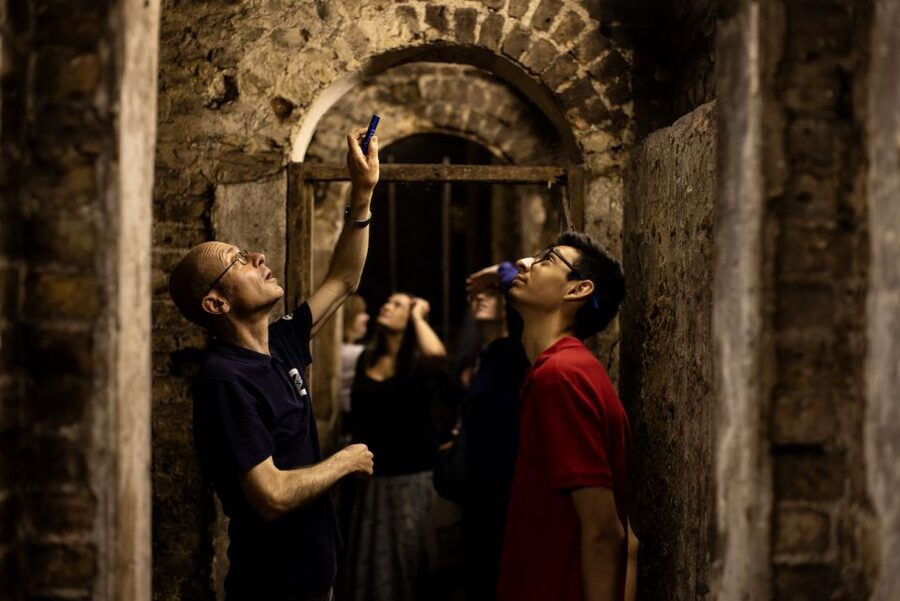
Baker Street Station is more than a stop for Sherlock Holmes fans. Beneath the familiar platforms lies a slice of the original 1863 Metropolitan Railway, with closed corridors, old lift shafts, staff rooms, and areas that have not been open to the public for decades. This is your chance to see where London’s underground railway began taking shape.
I like the tour’s rare access and its focus on ordinary staff as well as grand engineering. I also like that the guides draw on the London Transport Museum’s archive, so the stories cover first passengers, railway workers, and the station’s changing role. Recent tours featured Anthony, Sophie, and Pat, all praised for their friendly, lively delivery.
The main catch is physical. You’ll walk for 85 minutes through uneven, dimly lit spaces, climb stairs, and use no elevators. This is not suitable for children under 10, people with mobility impairments, or anyone uneasy in enclosed places.
Key points about the Baker Street tour
- Original 1863 railway setting: See parts of the station linked to the Metropolitan Railway, the world’s first underground railway.
- Areas closed for about 75 years: Explore old platforms, corridors, and lift shafts last seen by the public as far back as 1945.
- A staff rifle range: The route includes an unusual station space connected with the working life of London Underground employees.
- Former Underground headquarters: Learn how Baker Street served as an operational center, not just a place for boarding trains.
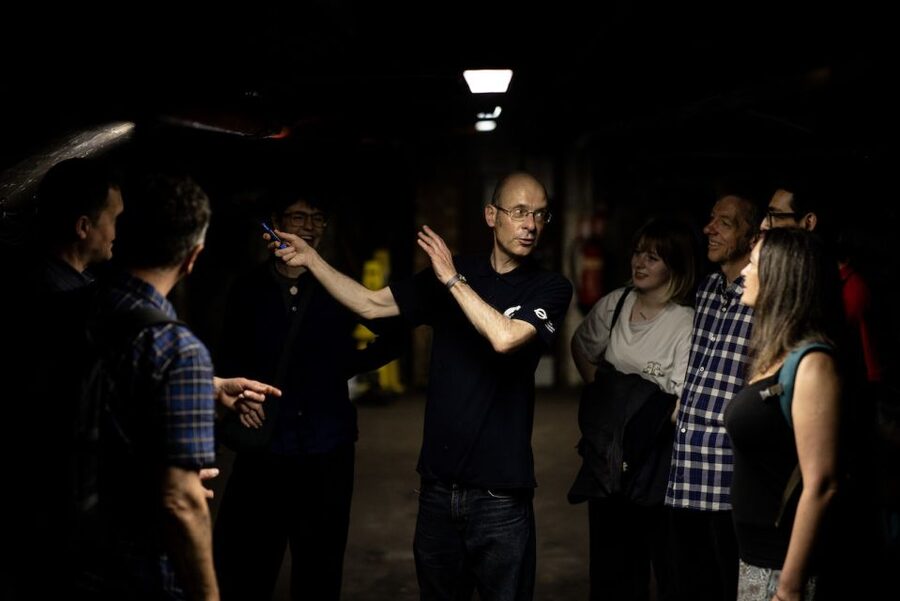
- English-speaking guides with character: Guides such as Anthony, Sophie, and Pat bring archive stories and staff anecdotes to the walk.
- A short but demanding visit: The 85-minute tour costs $60 per person and includes walking on stairs and uneven ground.
Meeting Sherlock Holmes before entering the old station
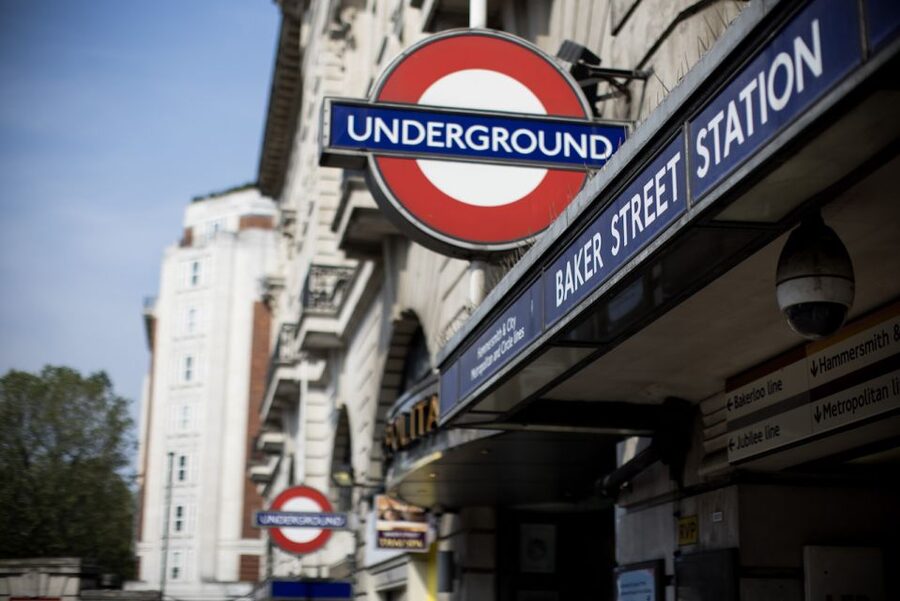
You meet outside Baker Street Underground Station, in front of the Sherlock Holmes statue. It is an easy landmark, but give yourself enough time to find the correct station exit and get your bearings before the start.
The statue makes a fitting meeting point. Baker Street is closely tied to the fictional detective, yet this tour quickly shifts your attention from Holmes to a much older story: the building of the first underground railway in 1863.
There is no hotel pickup or drop-off. You make your own way to the station, which keeps the arrangement simple but means you need to plan your route across London before the tour begins.
The tour is conducted in English. If you follow spoken English comfortably, you’ll get the most from the guide’s stories, especially when the talk turns to old railway procedures, staff life, and the reactions of early passengers.
A few more London days worth weighing up
- From London: Harry Potter Warner Bros Studio Tour
★ 4.7 · 26,588 reviews - London: Westminster to Greenwich River Thames Cruise
★ 4.5 · 22,836 reviews - Magical London: Harry Potter Guided Walking Tour
★ 4.7 · 22,044 reviews
Stepping into London’s first underground railway
Baker Street opened on January 10, 1863, as part of the Metropolitan Railway. That date matters because this was not simply another train station. It formed part of the first underground passenger railway in the world, an idea that later influenced metro systems far beyond London.
The early railway was created to carry people beneath streets that were already crowded and difficult to cross. Victorian London needed a new way to move passengers, and the railway’s underground route offered a bold answer.
On the tour, you hear what the first passengers thought about traveling below the city. Their reactions give the engineering a human side. A modern Tube ride can feel routine, but in 1863 the idea of entering a tunnel beneath London was strange, noisy, and new.
I find this context more useful than a simple list of dates. You begin to see Baker Street as a working experiment in urban transport. The station helped prove that underground rail travel could serve a growing city.
The tour also explains how the Underground changed during the next 160 years. You are not only looking at old brickwork. You are following the growth of a system that expanded from one early line into the network you use across London today.
Closed platforms and corridors last open in 1945
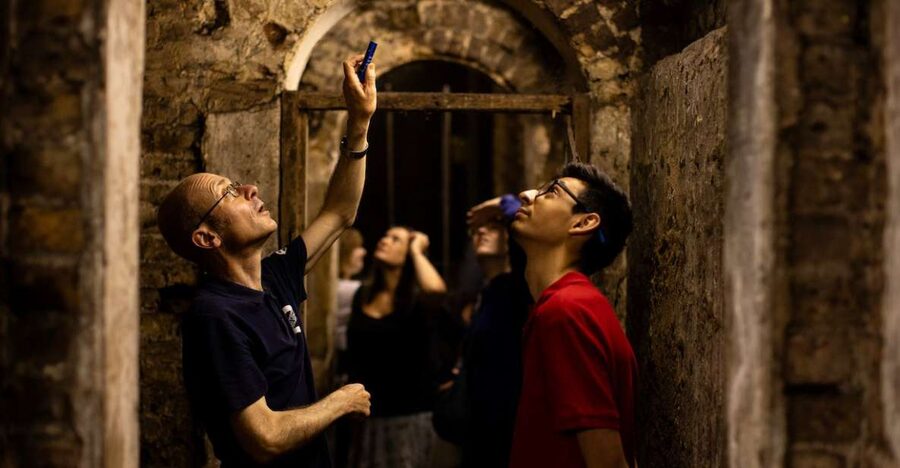
The most appealing part of the visit is access to areas that regular passengers cannot see. The route includes original platforms, old corridors, and parts of the station that were last accessed by the public as far back as 1945.
These spaces are valuable because they show the station before it became only the polished, familiar Tube stop you see today. Some sections remain in the background of daily travel, hidden in plain sight while trains and commuters pass nearby.
You might find the old platforms less dramatic than the idea of them suggests. This is not a large museum floor packed with displays. It is a working station with closed-off sections, dim light, stairs, and worn surfaces. The interest comes from being physically present in places that have been out of public use for so long.
That makes the guide especially important. A bare corridor can look like an unused passageway unless someone explains why it was built, who used it, and how it fitted into the station. The strongest tours turn these plain spaces into evidence of how the Underground operated.
Expect to pause often for explanation. The walk is not a race from one room to the next. You’ll hear about changes in the station, the Underground’s growth, and the people who worked there over the years.
Old lift shafts and the practical side of station design
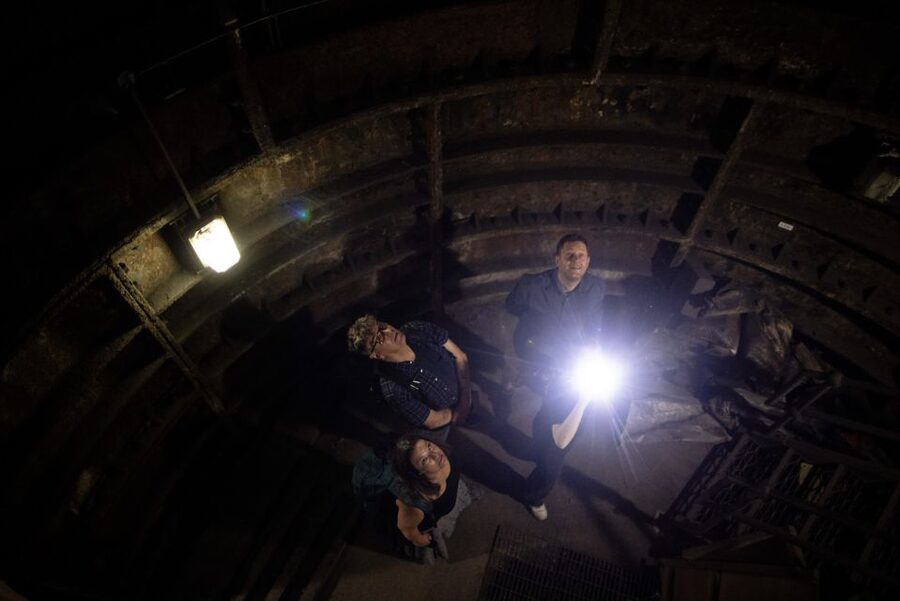
Baker Street’s old lift shafts offer another look at how stations were built and altered. Today, you may think of a Tube station as platforms, escalators, ticket barriers, and signs. Older stations developed in stages, and their unused shafts and corridors reveal that process.
The lift areas are particularly useful for understanding vertical movement underground. They show how station builders dealt with passengers moving between street level and platforms before later upgrades changed the way people entered and left the railway.
The information provided does not promise a ride in an old lift, and you should not expect a display of restored machinery. The value lies in seeing the shafts and hearing how these parts fitted into the station’s past.
Some of the spaces are low-lit and reached by stairs. That adds to the old-station feel, but it also makes sturdy shoes essential. Open-toed shoes are not allowed, and comfortable footwear is a practical requirement rather than a suggestion.
Bring water for the walk, but do not bring food or drinks into the tour areas. Large bags and luggage are not allowed, so plan this visit before you collect your suitcase or shopping bags.
Same city, a completely different sort of afternoon:
- London: Madame Tussauds London
★ 4.6 · 20,915 reviews - London: Warner Bros. Studio Tour with Transfers
★ 4.7 · 17,586 reviews - London: Tower Bridge Entry Ticket
★ 4.7 · 15,560 reviews - London: St Paul’s Cathedral Entry Ticket
★ 4.7 · 9,813 reviews
The staff rifle range and life beyond the platforms
The staff rifle range is one of the tour’s most unexpected details. It shifts the focus from passenger transport to the people who ran the Underground.
A station has always needed more than drivers and ticket staff. It requires offices, training areas, storage, maintenance spaces, and places connected with staff routines. The rifle range is a reminder that Baker Street once served a broader institutional role than most passengers would guess.
You’ll hear stories about staff who worked and played at the station. These accounts help make the building feel occupied again. Instead of seeing only abandoned infrastructure, you can picture the people who spent their working lives in and around the railway.
This human focus is one of the tour’s best features. Engineering facts explain how the station functioned, but staff stories explain what it was like to belong to that world.
The rifle range may not appeal to everyone, especially if you want only grand architecture or train photography. For me, its oddness is the point. It shows that the Underground was a workplace and a large organization, not just a service that moved people from one address to another.
Baker Street as an Underground headquarters
Baker Street also served as the operational headquarters for the London Underground. That gives the tour a wider scope than a visit to a disused platform.
You learn how decisions were made and how the system was managed from behind the scenes. The station’s importance was tied not only to its passengers but also to the staff and operations that kept the railway running.
The word headquarters can sound grand, but the experience remains grounded in rooms, corridors, and working spaces. You are looking at the physical setting behind a transport network that millions of people came to depend on.
The guides use material from the London Transport Museum’s extensive archive and collection. That allows the tour to connect what you see with records, memories, and accounts of the Underground’s past.
Recent guides have included Anthony, Sophie, and Pat. Their approach is described as friendly, enthusiastic, and full of character. That matters here because the route depends on spoken storytelling. You are not simply walking through a self-guided exhibition with labels on every wall.
If you enjoy asking questions, this sort of tour should suit you. The setting gives you plenty to wonder about, from why a corridor was closed to how the station’s role changed over time.
What the 85-minute route feels like
The tour lasts 85 minutes, long enough to build a proper story without taking up your whole day in London. You begin at the street-level meeting point, then move through public and restricted parts of Baker Street Station as the guide explains its early railway role.
The exact balance of walking and stopping depends on the guide and the group, but you should expect a steady route rather than a seated talk. There are stairs, uneven ground, low lighting, and no elevators.
This is important when planning your day. Do not schedule the tour immediately before a formal meal or another activity that requires you to arrive polished and relaxed. Wear shoes you can trust on rough surfaces, and leave large bags elsewhere.
The short duration is a plus for most people. You get a focused look at one station and its story instead of spending half a day on a large museum visit. The limitation is that the tour cannot cover every period of London’s Underground in detail.
Think of it as a tightly focused station experience. You learn why Baker Street matters, see unusual spaces, and leave with a clearer sense of how the Underground developed.
Is $60 good value for this access?
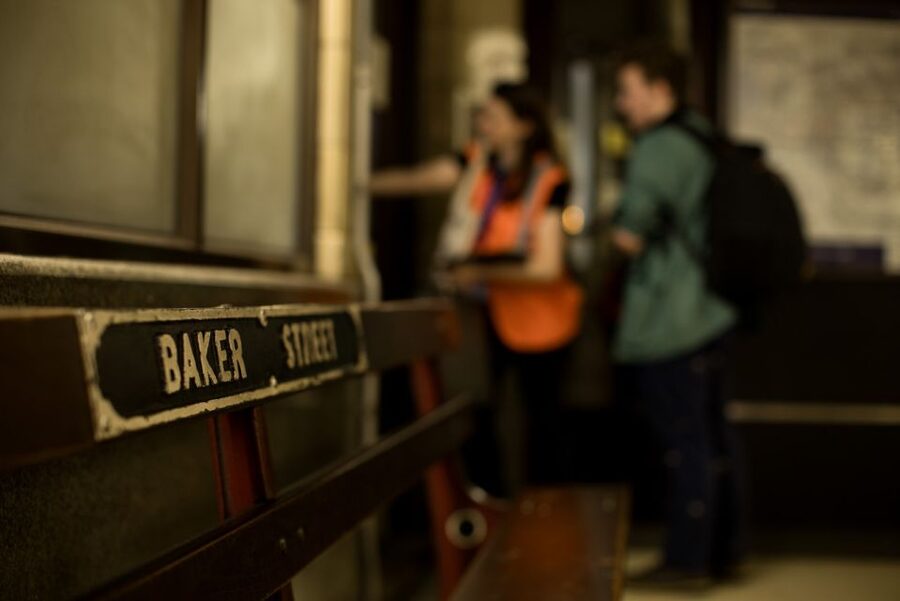
At $60 per person, this is not a cheap way to spend an hour and a quarter in London. You are paying for a specialist guided visit and access to parts of Baker Street Station that ordinary Tube users cannot enter.
The value is strongest if you care about transport history, old infrastructure, or the practical workings of cities. The tour offers something you cannot reproduce by simply entering Baker Street Station with an Oyster card or contactless payment.
It is less convincing value if you want a general London sightseeing tour. You will not get a broad city overview, a ride around London, or hotel transportation. The focus stays firmly on one station and its history.
I also think the guide quality matters more here than on many standard walking tours. Much of the route consists of corridors, platforms, and shafts. A lively guide who can explain the evidence and tell staff stories makes the difference between an intriguing visit and a long walk through dark service areas.
The strong rating of 4.7 from 51 reviews fits the experience’s main strengths: organization, interesting content, and engaging guides. Names such as Anthony, Sophie, and Pat come up as a particularly strong team, so it is worth appreciating the role of the people leading the visit.
Free cancellation up to 24 hours before the start and a reserve-now, pay-later option reduce the risk of booking. Still, the price is easiest to justify when this is a priority experience, not a last-minute filler between major attractions.
Who should book this Baker Street experience?
I would choose this tour for anyone who enjoys old railways, urban history, Victorian engineering, or the less polished side of London. It also suits people who have already seen the major sights and want a more specialized view of the city.
The tour can work well for families with older children. Children under 10 cannot join, and there can be no more than four children aged 10 to 15 per adult. Because the route includes stairs, low light, and uneven ground, you should judge the child’s comfort and stamina carefully.
It is not suitable for people with mobility impairments. There are no elevators, and the route requires a lot of walking. It is also a poor choice if enclosed spaces make you uncomfortable.
History fans should bring curiosity, not a camera checklist. The appeal is the access and the explanation. You may take away more from a staff story or an old corridor than from a dramatic view.
Practical tips for a smoother visit
Meet the guide at the Sherlock Holmes statue outside Baker Street Underground Station. Check the starting time when booking and arrive ready to begin on foot.
Wear closed, comfortable shoes. The route includes uneven ground, stairs, and dim areas, so lightweight trainers or sturdy walking shoes are more useful than smart footwear.
Bring water, but leave food and drinks out of the tour areas. Do not arrive with luggage or a large bag, since these are not allowed.
Carry a passport or ID card. This is listed among the required items, so keep it accessible rather than packed at the bottom of a suitcase.
Allow extra time before the tour if you are coming across London. The meeting point is clear, but Baker Street is a busy part of the city and you do not want to arrive flustered.
Should you book the Hidden Baker Street Tube Station Tour?
Book it if you want access to the working bones of London’s first Underground railway, not just another view of the city from street level. The closed platforms, old lift shafts, staff rifle range, and headquarters stories give Baker Street a much broader identity than its Sherlock Holmes connection.
Skip it if you dislike stairs, low light, uneven surfaces, or enclosed spaces. At $60, it needs to match your interests, but the price is fair for a guided visit into areas you cannot reach on your own.
For transport enthusiasts and curious London regulars, this is one of the more distinctive ways to spend 85 minutes. The setting is unusual, the history reaches back to 1863, and a strong guide such as Anthony, Sophie, or Pat can make the old station feel active again.
FAQ
Where does the Hidden Baker Street Tube Station Tour meet?
Meet your guide outside Baker Street Underground Station, in front of the Sherlock Holmes statue.
How long does the tour last?
The guided walking tour lasts 85 minutes.
What language is the tour conducted in?
The tour is conducted in English with a live guide.
What parts of Baker Street Station can you see?
The tour includes closed-off parts of the station, original platforms, old lift shafts, hidden corridors, the former operational headquarters area, and the staff rifle range.
Is the tour suitable for children?
Children under 10 are not allowed. A maximum of four children aged 10 to 15 is allowed per adult.
Is the tour suitable for someone with limited mobility or claustrophobia?
No. The route includes considerable walking, stairs, uneven ground, low lighting, and no elevators. It is not suitable for people with mobility impairments or claustrophobia.
Just added around London
- London: Wimbledon Tennis Club and Westminster Walking Tour★ 4.5 · 86 reviews
- London: Westminster to Richmond River Thames Cruise★ 4.8 · 23 reviews
- Westminster Abbey Skip-the-Line Entry and Private Tour★ 4.6 · 4 reviews
- Best of London by LE GRAND – London’s Luxury Bus Tour★ 4.2 · 23 reviews
- London: Westminster Walking Tour & St Paul’s Cathedral Entry★ 4.7 · 7 reviews
- From London: Oxford, Stratford-upon-Avon & Cotswolds Trip★ 4.5 · 64 reviews
- From London: Warwick, Oxford, Stratford & Cotswolds Day Tour★ 4.0 · 270 reviews
- Warner Bros. Studios and 1-Day London Hop-on Hop-off tour★ 4.7 · 9 reviews
London Tours, compared.

Westminster to Greenwich River Thames Cruise
Read our review →
Magical London: Harry Potter Guided Walking Tour
Read our review →