Reviewed · LONDON TOURS
London: Hidden Tube Tour of Holborn’s Secret Platforms
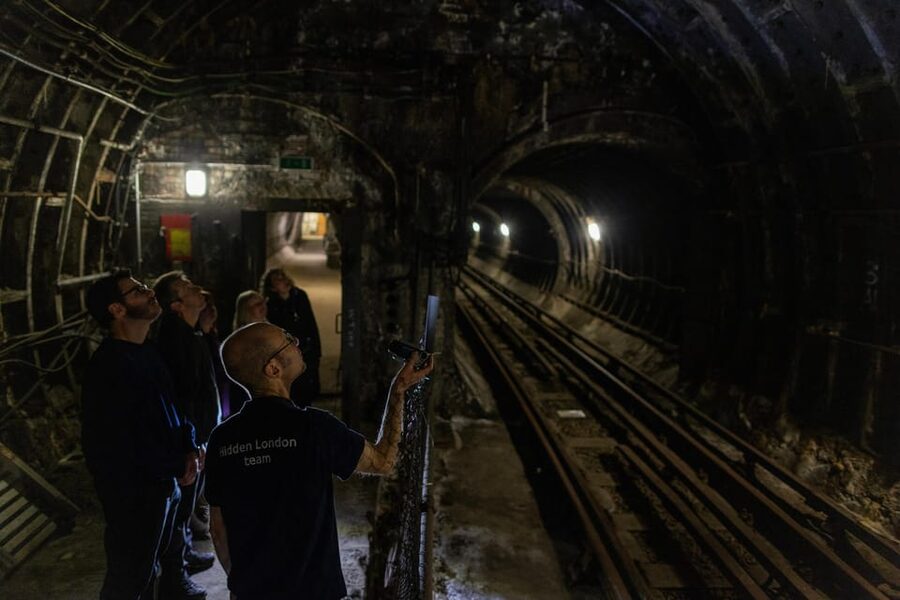
Holborn station still carries the daily rush of London, but behind its public corridors are closed platforms and service areas that most passengers never see. This 85-minute tour takes you into those quiet spaces, including two former Aldwych branch platforms preserved with old posters and Edwardian features.
I like the direct connection to London’s transport story, from the 1930s modernization program to the station’s role during the Blitz. I also like that the tour uses real spaces, not a recreated museum display. The main drawback is physical: expect stairs, uneven ground, low lighting, and no elevators.
Key points about Holborn’s secret platforms
- Two closed Aldwych platforms: Explore parts of the former branch line that have been shut to ordinary passengers for about 30 years.
- A rare Piccadilly line view: See the working railway from an unusual angle inside the station.
- Original Edwardian details: Look for Leslie Green design elements, vintage posters, and an early 20th-century signalling cabin.
- Stories beyond train travel: Learn how the station areas served as laboratories, wartime shelter, and a model rail club.
- Central London setting: Meet at the corner of Gate Street and Kingsway, close to Holborn station and several major sights.
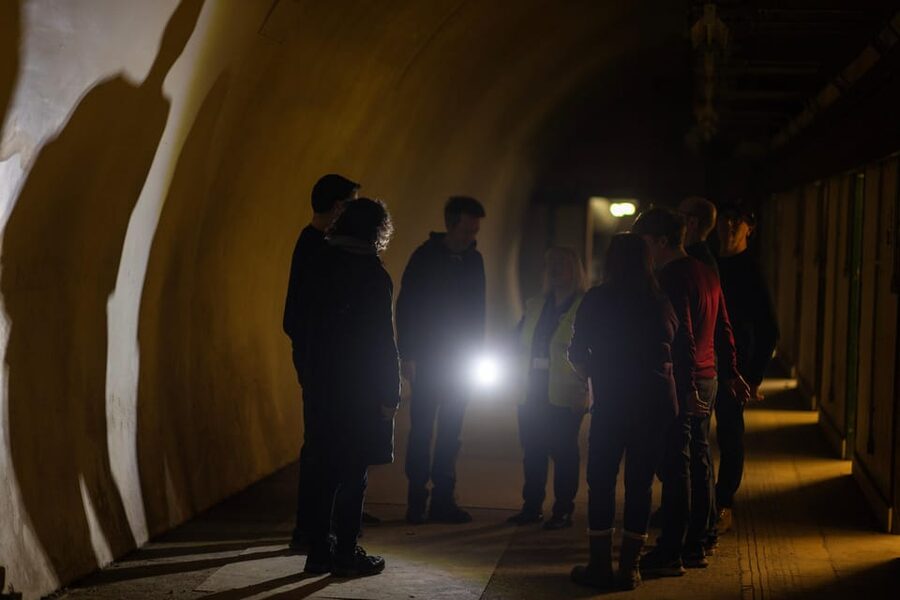
- A demanding 85 minutes: You need comfortable shoes and enough mobility for stairs, uneven surfaces, and dimly lit passageways.
Entering Holborn’s working station from Gate Street
Your tour begins on the corner of Gate Street and Kingsway, postcode WC2B 6AA. The What3Words location is ///towers.rift.forest. You finish at the same meeting point, so there is no transport arrangement to organize at the end.
This is a useful location for a day in central London. Holborn is already a busy interchange, and the tour gives you a different way to understand a station you might otherwise use only as a route between two streets. Allow time to arrive early, since the meeting point is on the street rather than inside a clearly marked museum entrance.
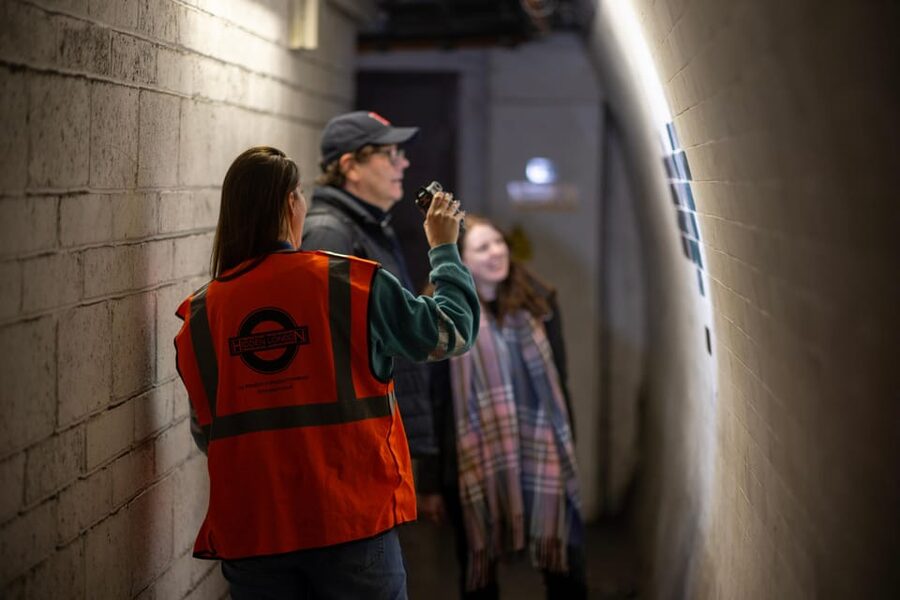
The experience is led in English by an expert guide from the London Transport Museum. A guide is especially important here because the closed areas do not explain themselves. You need someone to point out how the platforms relate to the working station, explain why certain spaces were abandoned, and connect physical details to events in London’s past.
Bring identification, as requested for the tour, along with water and comfortable shoes. Large bags and luggage are not allowed, and food and drinks are not permitted during the experience. Open-toed shoes are also prohibited, which makes sense when you are walking through old railway areas rather than a polished public gallery.
A few more London days worth weighing up
- From London: Harry Potter Warner Bros Studio Tour
★ 4.7 · 26,588 reviews - London: Westminster to Greenwich River Thames Cruise
★ 4.5 · 22,836 reviews - Magical London: Harry Potter Guided Walking Tour
★ 4.7 · 22,044 reviews
Four platforms built for a growing Piccadilly line
Holborn opened in 1906 as a complex of four platforms serving the Piccadilly line. That design tells you something about the ambitions of the early Underground. This was not simply a station added to an existing neighborhood. It was part of a transport system helping reshape central London.
The surrounding area had once had a poor reputation. Better Tube connections helped turn it into a major business district. As you move through the station, the guide uses its layout to show how transport, commerce, and urban change worked together.
I find this opening section valuable because it gives the station a purpose beyond old tiles and closed doors. You are not just looking at obsolete railway equipment. You are seeing how a new Underground station helped alter the kind of place Holborn became.
The station remains an active part of the London Underground, so the tour also gives you an unusual relationship with the present-day railway. You may hear or see the working Piccadilly line while standing in an area removed from the normal passenger route. That contrast is one of the strongest features of the experience.
The Aldwych branch and its two silent platforms
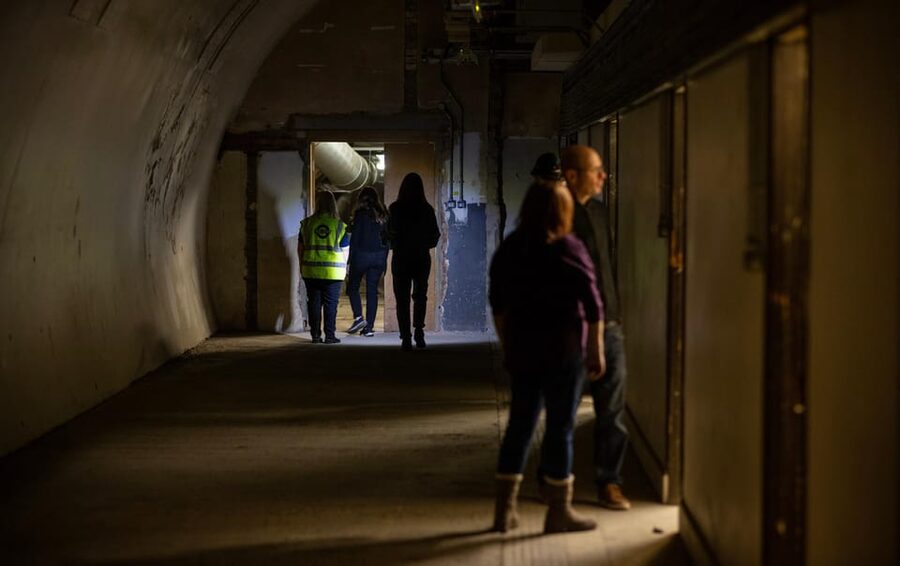
The main attraction is the former Aldwych branch. Two platforms are closed to ordinary use, and parts of this area have not been open to the public for about 30 years. The branch is presented as a real piece of railway infrastructure, not as a theatrical set.
You can expect to see vintage posters and original Leslie Green Edwardian design. These details matter because they retain the visual language of the early Underground. Leslie Green stations are associated with distinctive early 20th-century design, and here the architecture remains tied to the practical spaces around the railway.
The closed platforms also show how a transport system changes over time. A route that once served passengers can become surplus to current needs, yet still preserve evidence of the period when it operated. Your guide explains the branch’s place in the station’s story and helps you read the platform as both a working railway relic and an abandoned public space.
The tour includes an unexpected view of the Piccadilly line. This is not the same as looking at a train from a platform during your commute. You are seeing the active line from a restricted area, which makes the modern Underground feel larger and more layered than its public corridors suggest.
If your interest is mainly in train rides, this section may feel slow. There is no promise of a ride on a historic train or a long list of vehicles. The appeal is the setting, the preserved details, and the explanation of why these platforms closed.
Leslie Green design, posters, and the old signalling cabin
The physical details are a major reason to choose this tour. The early Underground was designed with a strong visual identity, and the Aldwych branch retains original Edwardian features that can be hard to see in the modern network.
Vintage posters add another layer. They show how the Underground once sold destinations, services, and the idea of city travel. Even without a large museum collection around you, a poster left in its station setting has a different effect from one mounted behind glass.
You also visit an original early 20th-century signalling cabin. Signalling is easy to overlook when you travel by Tube, but it is central to making a railway safe and useful. The cabin gives the guide a concrete way to explain the working systems behind the passenger experience.
I like the mix of grand design and plain railway mechanics. One moment you are looking at Edwardian station architecture. The next, you are considering the staff and equipment needed to run trains through it. The tour works best when you pay attention to both.
Same city, a completely different sort of afternoon:
- London: Madame Tussauds London
★ 4.6 · 20,915 reviews - London: Warner Bros. Studio Tour with Transfers
★ 4.7 · 17,586 reviews - London: Tower Bridge Entry Ticket
★ 4.7 · 15,560 reviews - London: St Paul’s Cathedral Entry Ticket
★ 4.7 · 9,813 reviews
Laboratories, wartime shelter, and a model rail club
The closed areas have had several lives. The guide explains how they were used as scientific laboratories, as shelter for London Transport staff during wartime, and even as a home for a model rail club.
These uses make the tour more interesting than a simple walk along an abandoned platform. They show how London adapted existing underground space when the city needed secure, quiet, or protected rooms. The same station area could support railway work, wartime protection, scientific activity, and hobbyists at different points.
The wartime section is likely to be one of the most human parts of the tour. You hear how staff may have felt working there during the height of the Blitz. The focus is not only on large military events. It is on people doing ordinary transport jobs in an extraordinary and dangerous setting.
You should not expect a full wartime museum display or a long dramatic presentation. The value comes from hearing how the spaces were used and imagining the station as a workplace under pressure. The low lighting and enclosed setting may make this part feel particularly immediate, though that same atmosphere can be uncomfortable if you dislike confined areas.
The 1930s modernization program and British Museum station
The tour also explains a major 1930s modernization program. One important result was the closure of nearby British Museum station. That decision helps show how London Underground planning has always involved tradeoffs.
Stations are not permanent simply because they are old. Routes change, platforms become more useful, and interchange points can replace nearby stops. Holborn’s development made the old British Museum station less necessary, and modernization pushed the network toward a different pattern of service.
This is a useful part of the tour for anyone interested in city planning. You learn why a station can disappear while another nearby becomes more important. It also places Holborn in a wider story of technological change rather than treating the closed platforms as an isolated curiosity.
The guide connects the old modernization project with current work on the London Underground’s signalling system. That link brings the story forward to the present. Holborn is not merely a preserved relic. It is still involved in the ongoing effort to update how the network operates.
What the 85-minute format feels like
At 85 minutes, the tour is long enough to develop several themes without taking over an entire day. You get architecture, railway technology, wartime use, and urban change in one compact experience.
The pace includes a lot of walking. You may encounter uneven ground, stairs, and low lighting, and there are no elevators. This is not a suitable choice for people with mobility impairments, and it is not recommended for people with claustrophobia.
Comfortable footwear matters more than stylish footwear. Open-toed shoes are not allowed, and you should bring water, but you cannot bring food or drinks into the tour areas. Leave luggage and large bags elsewhere before meeting the guide.
Children under 10 cannot join. Children aged 10 to 15 are allowed, with a maximum of four children per adult. The subject matter may suit older children who are curious about trains, engineering, or wartime London, but the physical setting is the more important consideration.
There are no stated arrangements for hotel pickup or drop-off. Plan to reach the Gate Street and Kingsway meeting point independently and to return there when the tour ends.
Is $60.61 a fair price?
The price is $60.61 per person, which is high for an 85-minute walking tour if you measure value only by time. It becomes easier to justify when you consider the restricted access. You are paying for entry into closed Underground spaces, a specialist guide, and an experience that cannot be reproduced by simply buying a Tube ticket or visiting a standard museum gallery.
The London Transport Museum connection also matters. This is not a general sightseeing walk that happens to pass Holborn. The tour centers on railway spaces with controlled access and uses the museum’s transport expertise to explain them.
I would compare it with the cost of other paid London attractions you are considering. If you want major views, famous art, or a long museum visit, your money may go further elsewhere. If you specifically want old Tube infrastructure and the stories behind a working station, the price is more reasonable.
The small number of reviews available gives the experience a perfect rating, with particular praise for the guides’ knowledge. That matches the tour’s basic value: the platforms alone are interesting, but the guide turns an empty railway space into a readable historical site.
Free cancellation up to 24 hours before the tour and a reserve-now, pay-later option make the booking less risky. Still, check the available starting times before planning the rest of your day, since the precise departure time depends on availability.
Who will get the most from this Tube tour?
I would recommend it first to people who enjoy London’s transport system, industrial design, old infrastructure, and overlooked corners of the city. It is also a good fit if you have already visited the main landmarks and want an experience focused on how London works behind the scenes.
The tour suits you if you enjoy listening to a guide and examining details. It is less suitable if you want a fast-moving attraction with lots of photo stops, open air, or easy access.
History-minded visitors should appreciate the range of subjects. You move from the 1906 opening to the Aldwych branch, the 1930s modernization, wartime shelter, scientific laboratories, the model rail club, and present-day signalling work. That is a lot of ground for 85 minutes, so listen closely and ask questions when the guide gives you the chance.
I would not book it for a young child who simply likes riding trains. The closed areas require patience, walking, and an interest in explanation. The age limit also rules out children under 10.
My verdict on Holborn’s closed platforms
Book this tour if you want a focused look at London’s Underground from the inside, especially if the Aldwych branch and early Tube design interest you. The preserved posters, old signalling cabin, and closed platforms give you something rare: a chance to see railway history in the place where it operated.
Skip it if stairs, dark spaces, uneven ground, or confined areas will make the 85 minutes unpleasant. At $60.61, this is not a casual add-on for every London itinerary. For the right visitor, though, the access and expert explanation make it a worthwhile use of part of a central London day.
FAQ
Where does the Hidden Tube Tour of Holborn’s Secret Platforms start?
It starts on the corner of Gate Street and Kingsway, WC2B 6AA. The What3Words location is ///towers.rift.forest.
Where does the tour end?
The activity ends back at the same meeting point where it begins.
How long does the tour last?
The tour lasts 85 minutes. Starting times depend on availability.
What language is the tour conducted in?
The tour is conducted in English by a live tour guide.
What does the tour include?
It includes a guided walking tour through Holborn station’s restricted and disused areas.
Does the tour include hotel pickup or drop-off?
No. Pickup and drop-off are not included.
Can children join the tour?
Children under 10 are not permitted. Children aged 10 to 15 can join, with a maximum of four children in that age range per adult.
Is the tour suitable for people with mobility impairments?
No. The tour includes stairs, uneven ground, low lighting, and no elevators, so it is not suitable for people with mobility impairments.
Is the tour suitable for people with claustrophobia?
No. The experience takes place partly in enclosed, restricted Underground areas and is not suitable for people with claustrophobia.
What should I bring and what is not allowed?
Bring a passport or ID card, comfortable shoes, and water. Food, drinks, luggage, large bags, and open-toed shoes are not allowed.
Can I cancel the booking?
You can cancel up to 24 hours in advance for a full refund. A reserve-now, pay-later option is also available.
Just added around London
- London: Wimbledon Tennis Club and Westminster Walking Tour★ 4.5 · 86 reviews
- London: Westminster to Richmond River Thames Cruise★ 4.8 · 23 reviews
- Westminster Abbey Skip-the-Line Entry and Private Tour★ 4.6 · 4 reviews
- Best of London by LE GRAND – London’s Luxury Bus Tour★ 4.2 · 23 reviews
- London: Westminster Walking Tour & St Paul’s Cathedral Entry★ 4.7 · 7 reviews
- From London: Oxford, Stratford-upon-Avon & Cotswolds Trip★ 4.5 · 64 reviews
- From London: Warwick, Oxford, Stratford & Cotswolds Day Tour★ 4.0 · 270 reviews
- Warner Bros. Studios and 1-Day London Hop-on Hop-off tour★ 4.7 · 9 reviews
London Tours, compared.

Westminster to Greenwich River Thames Cruise
Read our review →
Magical London: Harry Potter Guided Walking Tour
Read our review →