
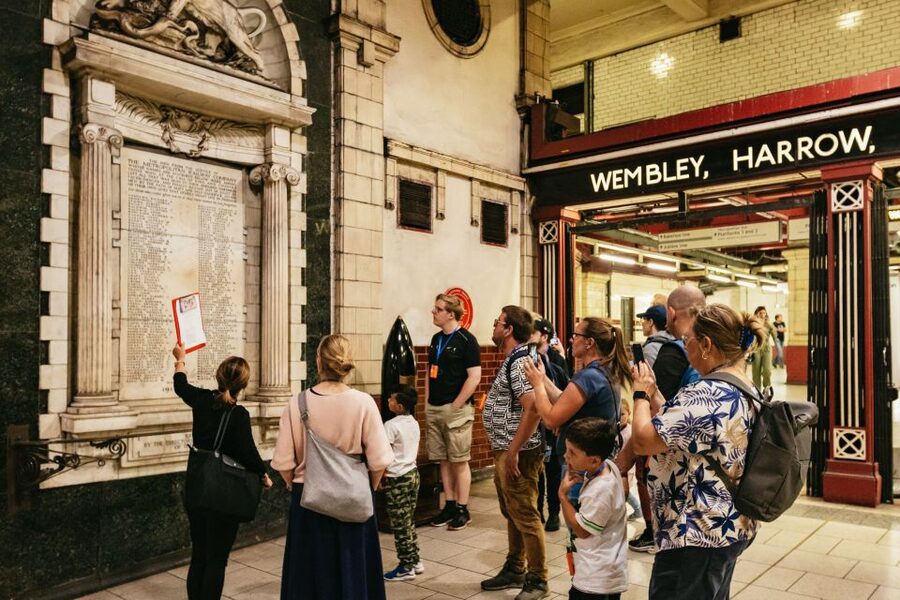
Reviewed · WALKING TOURS
London: Secrets of the London Underground Walking Tour
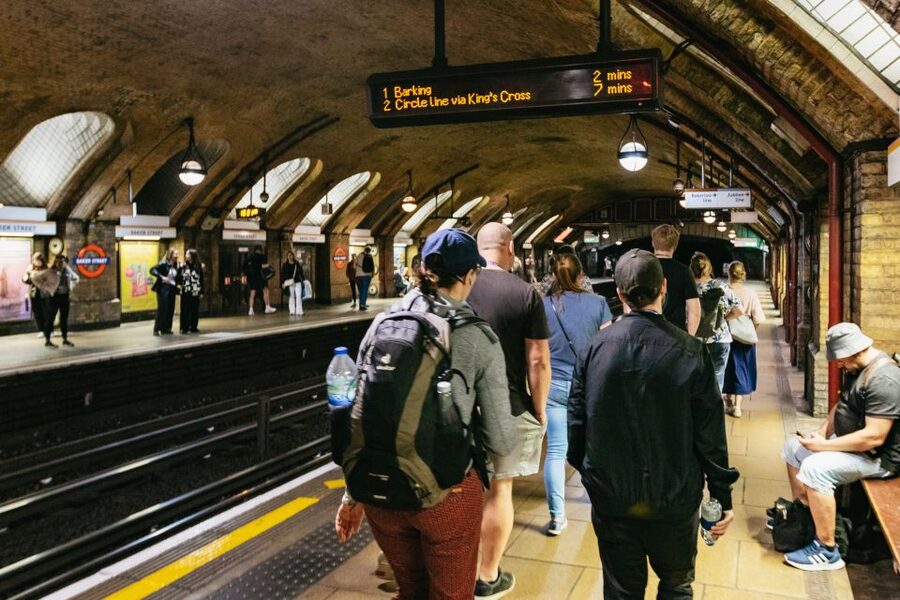
London’s Underground is not just a way to get across town. It is a working museum beneath your feet, with steam-era tunnels, wartime shelters, abandoned platforms, odd architectural details, and enough ghost stories to keep the ride lively. This tour begins at Baker Street Station, one of the first stops on the Metropolitan Railway when the world’s first underground railway opened in 1863.
I like the way the tour links familiar Tube journeys to bigger stories, including the switch from steam trains to electric power and the role of the Underground during the Blitz. I also like the audio headsets, which help you hear guides such as John, Aaron, and Angela over the rumble of trains. The main drawback is that you do not normally enter a disused station, despite the tour’s title, and the many stairs make it unsuitable for wheelchair users or people with reduced mobility.
Key points before you book
- Start at Baker Street’s Sherlock Holmes statue: Meet your guide outside Baker Street Station, beside the famous statue.
- Visit an original 1863 Underground station: Baker Street gives the tour a real sense of place from the first few minutes.
- Trace the Tube’s biggest changes: Learn how engineers built the first tunnels and how trains moved from steam to electricity.
- Hear the stranger side of London: Stories include abandoned stations, haunted platforms, a Pharaoh’s daughter, and a nun.
- See how the Tube served London in wartime: The Underground became a Blitz refuge, an aircraft factory, and storage for British Museum treasures.
- Bring your own transport fare: A Zones 1 to 2 day travel card or Oyster card is required and costs extra.
Why Baker Street is the right place to begin
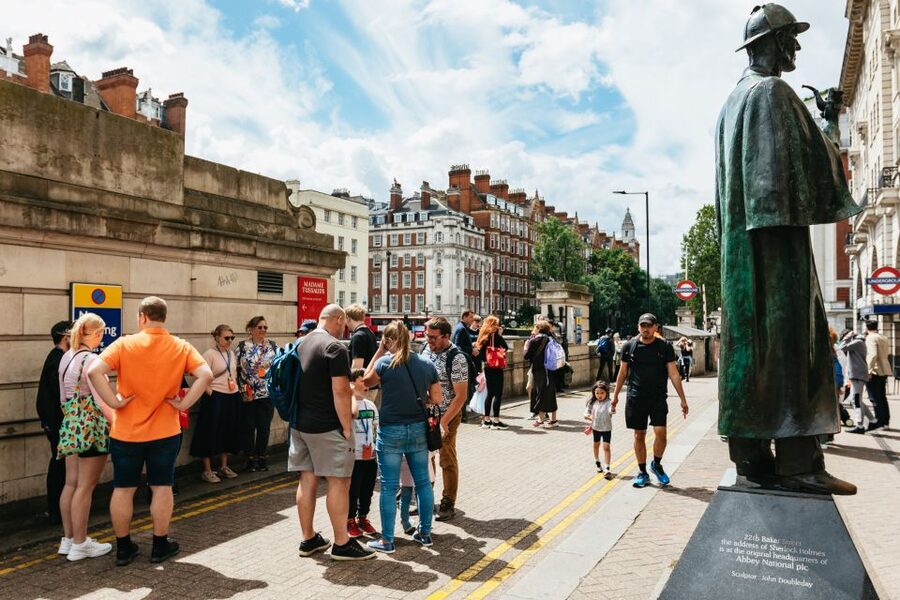
The meeting point is outside Baker Street Station, by the Sherlock Holmes statue. It is an easy landmark, but allow enough time to find the correct station entrance and locate the guide before the tour begins.
Baker Street is more than a convenient starting point. It was one of the original stations on the Metropolitan Railway, opened in 1863. That line helped launch the modern Underground and changed how people moved around London. The first trains were steam-powered, so the earliest underground journeys were not the clean, electric rides you know today.
I like beginning here because the history is not presented as a distant museum display. You are standing at a place where the system began, then moving through a transport network that still carries more than 1.3 billion passenger journeys each year across 270 stations.
Your guide uses an audio headset, which is a real help in busy stations. The equipment lets you listen while the group moves through noisy concourses and beside active platforms. One caution: a headset may be less clear above ground, where some people have found it crackly, but it is especially useful below street level.
More Walking Tours in London
- Magical London: Harry Potter Guided Walking Tour
★ 4.7 · 22,044 reviews - London: The Original Jack the Ripper Walking Tour
★ 4.7 · 7,833 reviews - London: Harry Potter Movies Walking Tour (Kids Go Free)
★ 4.7 · 3,071 reviews
From steam smoke to electric rails
The central story of the tour is how London learned to build and operate an underground railway. The first tunnels were constructed using early engineering methods that shaped the streets above. Your guide explains how the network grew, how lines were connected, and why the Tube looks and operates differently from a normal railway.
The change from steam locomotives to electric trains was not a minor upgrade. It made underground travel more practical and helped the system expand through central London. As you move between stations, the guide points out details that are easy to miss when you are simply trying to catch a train.
This is where the tour works best for regular Tube users. You may have passed through a station for years without noticing its older sections, decorative features, or clues to an earlier layout. The guide’s job is to slow you down and make you look closely, even though the railway itself keeps moving at full speed.
Guides bring different personalities to the subject. John is often praised for a funny, patient presentation style and for answering questions, including questions from children. Aaron is known for linking Underground details to landmarks above street level. Angela has led tours with a clear, engaging approach, while Peter has also been praised for keeping the history lively. The exact guide depends on the date of your booking, but the experience relies heavily on that person’s storytelling.
What you actually see at working stations
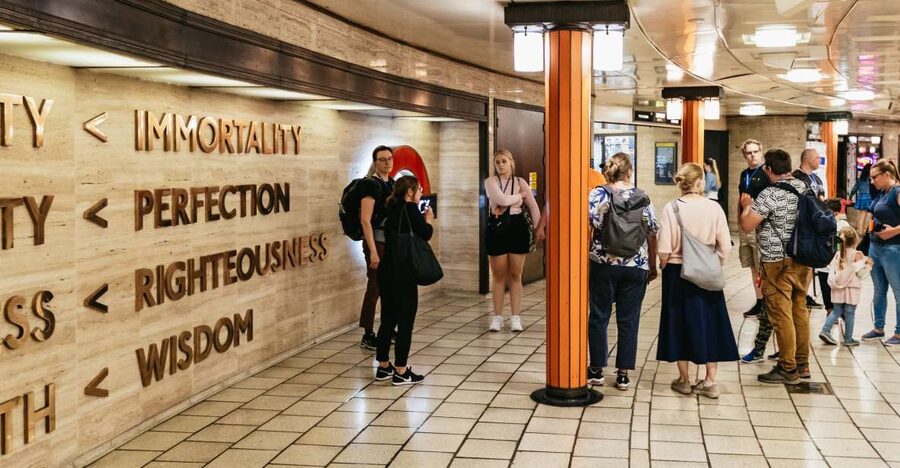
This is a walking tour through active London stations, not a private engineering inspection. You will use public transport during the route, with about 10 minutes set aside for one part of the journey, and you will walk between points of interest.
The appeal is in seeing ordinary stations with fresh eyes. Your guide draws attention to relics and architectural details hiding in plain sight. Some may be easy to overlook if you are concentrating on signs, platforms, and departure boards. The result is less a parade of grand attractions and more a lesson in reading the city.
You should expect stairs, passageways, station entrances, and regular movement through the Underground system. The pace has generally been described as comfortable, but the tour still involves a moderate amount of walking. One person found it longer than expected, while another liked the amount covered in roughly two hours. The advertised duration is 2.5 hours, so wear shoes that can handle a long urban walk.
Delays can affect the route. A guide may need to change the plan if lines are disrupted or strikes close stations. That can mean more walking above ground, but a strong guide can use the detour to point out nearby London landmarks and keep the story going. You should treat the route as a guided exploration rather than a fixed sequence that can never change.
Closed stations, ghost stories, and what you will not enter
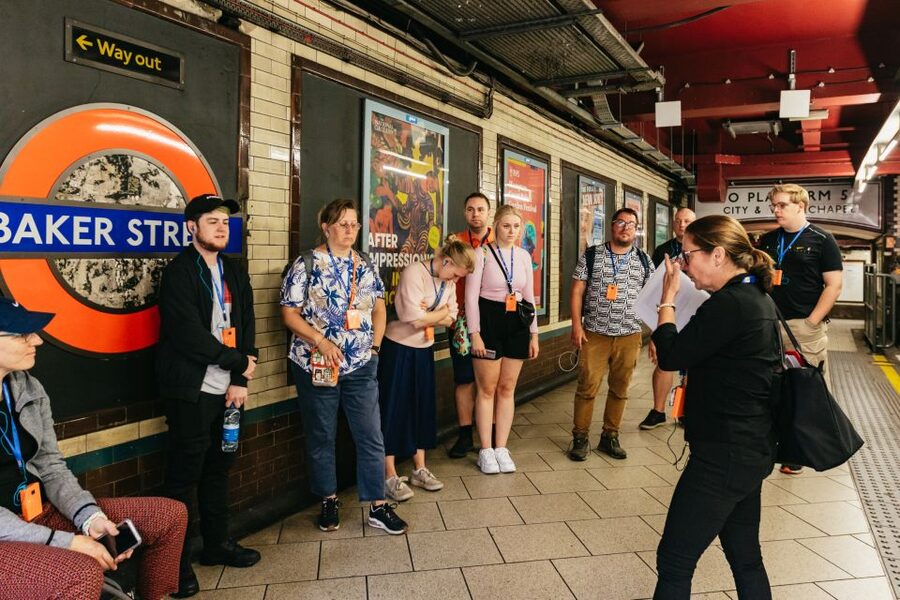
The Underground has more than 40 abandoned or disused stations. Some were made obsolete by line changes, some were closed because they were too close to newer stations, and others no longer made practical sense. The tour explains why these places were left behind and how traces of them can still appear during a journey.
You may get a glimpse of a ghost station or see evidence of a closed platform, but you should not book this expecting to walk inside a sealed station. That is the most important expectation to set. Several people hoped for a behind-the-scenes visit and found the tour more of a history walk than an access tour.
The ghost stories add atmosphere without taking over the whole experience. You hear about stations reputed to be haunted by the ghost of a Pharaoh’s daughter and a nun. The tour also includes the unusual story of a station located above the remains of 1,000 bodies. These tales are best understood as part of London’s folklore and urban history, not as a promise of paranormal activity.
If you enjoy abandoned railway stories, you will find plenty to think about. If your main aim is to enter secret tunnels or explore restricted platforms, this tour may feel too tame. The value is in the guide’s explanation and the locations you can legally see, not in physical access to every hidden place.
A few more London days worth weighing up
- From London: Harry Potter Warner Bros Studio Tour
★ 4.7 · 26,588 reviews - London: Westminster to Greenwich River Thames Cruise
★ 4.5 · 22,836 reviews - London: Madame Tussauds London
★ 4.6 · 20,915 reviews - London: Warner Bros. Studio Tour with Transfers
★ 4.7 · 17,586 reviews
The roundel and the symbol of London travel
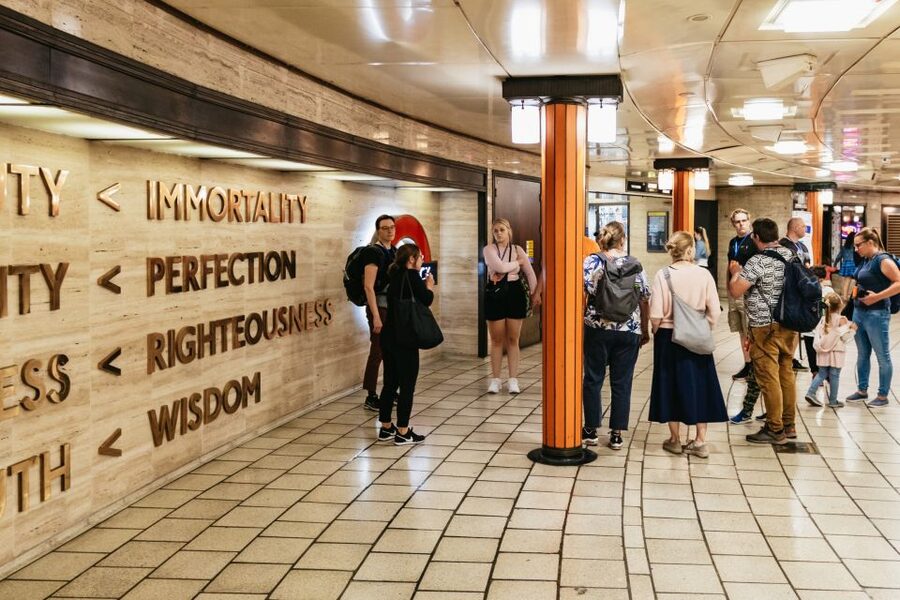
The Underground roundel is one of London’s most recognisable signs. The tour explains where the symbol came from and how it became tied to the city’s transport system.
That detail may sound simple, but it helps show how the Tube became more than a collection of railway lines. Its signs, maps, station names, colours, and design features helped create a shared visual language for the city. You see the roundel every day on travel posters, station entrances, maps, and souvenirs, yet most people rarely stop to consider why it works so well.
The guide places these design choices in the wider story of the network. You learn how a practical transport system gained an identity that became part of London itself. This section should appeal to you if you enjoy architecture, graphic design, city planning, or the small visual details that make a place recognisable.
The Tube during the Blitz
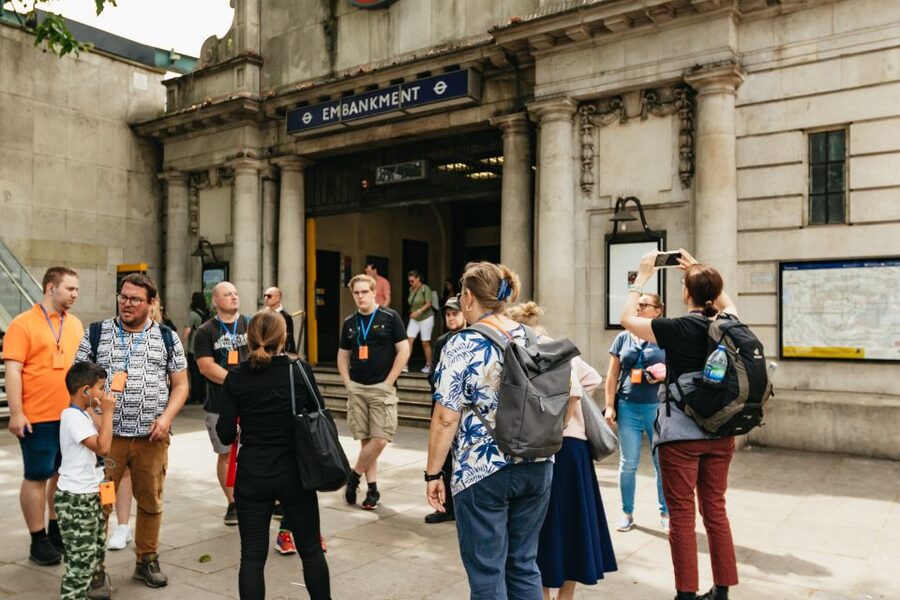
One of the strongest parts of the experience is the account of how the Underground was reused during wartime. During the Blitz, stations served as refuges for people seeking protection from bombing. The railway also took on other roles, including use as an aircraft factory and as storage for treasures from the British Museum.
These details change the way you think about a station. A platform was not always just a place to wait for a train. At different points in London’s history, Underground spaces became shelters, workplaces, and secure storage areas.
I find this part especially valuable because it connects transport history with everyday life. You are not only learning when a line opened. You are hearing how Londoners adapted a huge public system when the city faced an emergency.
The subject can also raise difficult questions about how stations were used and who relied on them. The guide gives you a compact account within a wider tour, so do not expect a full military history of the Blitz. You will, however, leave with a much better sense of why the Underground mattered beyond commuting.
The ten-minute ride and the London Transport Museum
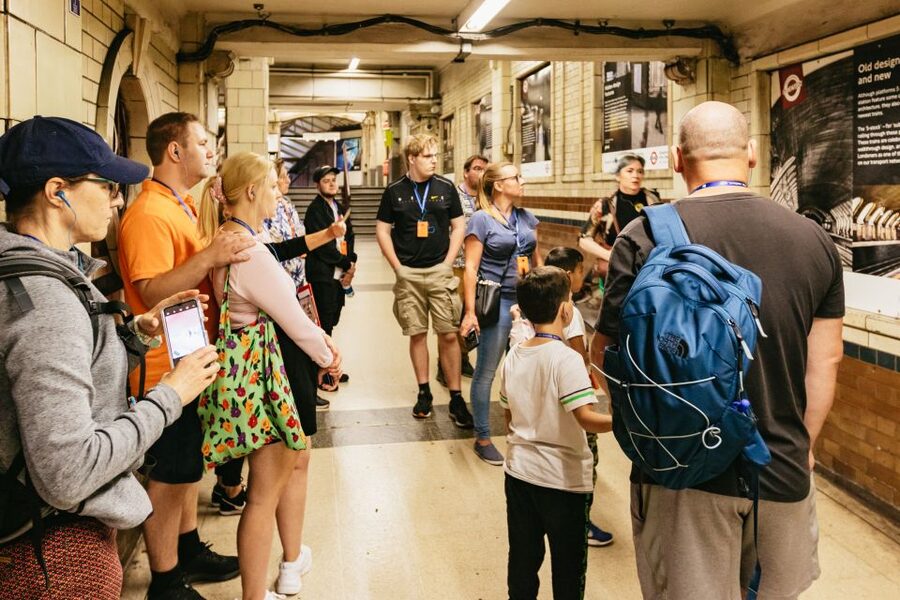
The route includes a short public transport journey of about 10 minutes. Your ticket or Oyster card is not included, so you need a valid transport pass before meeting the guide. A Zones 1 to 2 day travel card is recommended, or you can use an Oyster card.
This extra cost matters when you judge the $40 price. The fare is not a large addition compared with the tour fee, but it is easy to miss when planning your budget. One participant was charged £17 using a bank card during the tour, while a prepaid travel option was cheaper. Check your fare choice before you arrive.
The tour ends at the London Transport Museum, at 10B Bridge Street in Westminster. The museum visit gives the morning or afternoon a useful finish, since you can continue exploring transport history at your own pace after the guided portion.
The museum stop also helps balance the walking. Much of the tour takes place in active stations, where you must keep moving and follow the group. The museum offers a more settled setting for looking at transport objects and displays. The supplied information does not specify how long the guided visit lasts, so plan your schedule around the full 2.5-hour tour rather than assuming you will have a long independent museum visit during that time.
How much walking and stair work should you expect?
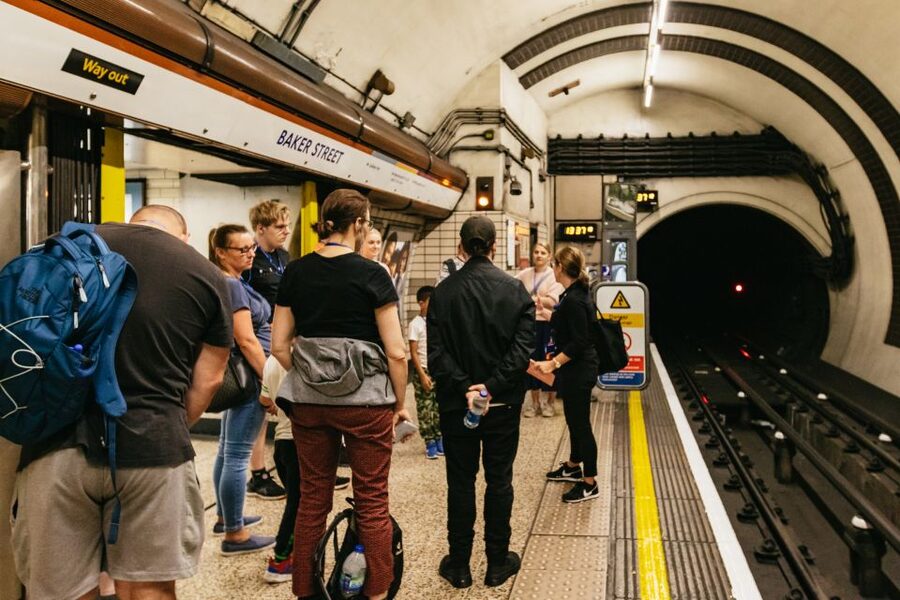
This is not a gentle sightseeing stroll. You will use the Underground and encounter the steps that come with London’s older stations. The route requires a moderate amount of walking, and the tour is not suitable for wheelchair users or people with reduced mobility.
Baby strollers and luggage or large bags are not allowed. That rule makes sense in crowded stations, where bulky items slow the group and can be difficult on stairs. Arrive with a small day bag and keep your hands free when possible.
The audio headsets help if you need to stay a little behind the guide, but you still need to keep up with the group. If you have knee, balance, or breathing problems, think carefully before booking. The tour is more demanding than a museum visit or a bus sightseeing circuit.
Is $40 a fair price?

At $40 per person, the tour is fairly priced if you want interpretation rather than a simple Tube ride. You are paying for 2.5 hours with a live English-speaking guide, route planning, historical context, and the chance to notice things you would probably miss alone.
The audio headset adds practical value, especially when trains are arriving and departing. A good guide also saves you from having to research the Underground’s engineering, wartime uses, symbols, and folklore yourself.
The value is lower if you already know the Tube in great detail or want restricted access to abandoned stations. This is not a secret tunnel expedition. It is a guided public tour that explains why the network developed as it did.
I would also factor in the transport fare. You must bring a Zones 1 to 2 day travel card or Oyster card, and that cost is separate. Food and drinks, hotel pickup, and drop-off are not included either, though the central meeting and finish points make it easy to arrange your own plans around the tour.
Who will enjoy this Underground tour?
I would recommend it to first-time London visitors who want an unusual introduction to the city, especially if you already plan to use the Tube. It also suits people who enjoy engineering, urban history, wartime stories, architecture, transport design, and local folklore.
Families can enjoy it if children are old enough to walk through stations and listen to a sustained explanation. One guide handled a child’s many questions particularly well, but the activity still requires attention and a steady pace.
It can also work for London residents. Several parts of the network are easy to take for granted, and a guide can reveal details you have missed despite years of using the system.
I would skip it if you dislike stairs, struggle in crowded public transport, or want to enter closed stations. For those interests, the tour may promise more mystery than it can physically deliver.
Practical verdict
Book this tour if you want the London Underground explained by someone who can connect platforms, symbols, engineering, wartime survival, and ghost stories into one clear walk. Guides such as John, Aaron, Angela, and Peter have been praised for keeping the talk friendly, clear, and lively, which matters during a 2.5-hour route.
Do not book it expecting a full behind-the-scenes expedition. You will see working stations, historic details, and sometimes traces of closed stations, but you should not count on entering a disused one. Bring your transport pass, wear comfortable shoes, leave the large luggage behind, and arrive ready to look up from the Tube map.
FAQ
Where does the London Underground walking tour begin?
The tour begins at Baker Street Station. Meet the guide by the Sherlock Holmes statue outside the station.
Where does the tour finish?
It finishes at 10B Bridge Street, Westminster, London SW1A 2JR, near the London Transport Museum.
How long does the tour last?
The scheduled duration is 2.5 hours.
Is the London Underground ticket included?
No. You need to bring your own public transport ticket, such as a Zones 1 to 2 day travel card or an Oyster card.
What language is the tour conducted in?
The live tour guide speaks English.
Can wheelchair users join the tour?
No. The tour is not suitable for wheelchair users or people with reduced mobility because it involves many Underground steps.
Are food, drinks, hotel pickup, or luggage storage included?
No. Food and drinks, hotel pickup and drop-off, and luggage storage are not included. Baby strollers, luggage, and large bags are not allowed.
Just added around London
- London: Wimbledon Tennis Club and Westminster Walking Tour★ 4.5 · 86 reviews
- London: Westminster to Richmond River Thames Cruise★ 4.8 · 23 reviews
- Westminster Abbey Skip-the-Line Entry and Private Tour★ 4.6 · 4 reviews
- Best of London by LE GRAND – London’s Luxury Bus Tour★ 4.2 · 23 reviews
- London: Westminster Walking Tour & St Paul’s Cathedral Entry★ 4.7 · 7 reviews
- From London: Oxford, Stratford-upon-Avon & Cotswolds Trip★ 4.5 · 64 reviews
- From London: Warwick, Oxford, Stratford & Cotswolds Day Tour★ 4.0 · 270 reviews
- Warner Bros. Studios and 1-Day London Hop-on Hop-off tour★ 4.7 · 9 reviews
Walking Tours, compared.

Magical London: Harry Potter Guided Walking Tour
Read our review →

University and City Walking Tour with Alumni Guide
Read our review →
Harry Potter Movies Walking Tour (Kids Go Free)
Read our review →
The Great British Rock and Roll Music Walking Tour
Read our review →
Jack the Ripper Walking Tour – Ripper Vision Tours
Read our review →

Browse the lists this tour appears in