Reviewed · GUIDED
London: Wembley Stadium Guided Tour
Wembley Stadium is more than a football ground. It is a 90,000-seat stage for sport and music, and this guided tour takes you into the working spaces most ticket holders never see. You begin beside the Bobby Moore statue, then follow the route through dressing rooms, the press room, players tunnel, pitchside areas, trophy steps, and several seating levels.
I like the way the tour connects famous moments to real places, from England’s 1966 World Cup win to FA Cup finals, Champions League victories, and major concerts. I also like the guides’ energy. Daniel, Jason, Dominic, Richard, Jonathan, and others have been praised for mixing facts with jokes and questions, which helps keep children involved.
The main consideration is that the guided portion lasts about 75 minutes, even though you should allow two hours for the full visit. The route can change or be cancelled at short notice, and an empty stadium cannot reproduce the noise and tension of match day.
Key points to know before booking
- Start beside Bobby Moore’s statue: Exchange your voucher at the ticket desk, then go to level 1 behind the statue for the tour.
- See the 1966 World Cup crossbar: The Crossbar Exhibition gives the stadium’s most famous football story a physical focal point.
- Walk through player-only spaces: The dressing rooms, players tunnel, press room, pitchside area, and trophy winners steps are the heart of the visit.
- Expect an entertaining guide: Guides such as Daniel, Jason, Dominic, and Richard are known for clear facts, good humour, and involving children.
- Allow two hours, not just 75 minutes: The guided part is shorter than the full visit, leaving time for photos, exhibitions, and views.
- Use public transport if possible: Wembley Park, Wembley Stadium, and Wembley Central stations all serve the venue.
Entering Wembley beside Bobby Moore
Your visit begins at the statue of Bobby Moore, England captain during the 1966 World Cup victory. It is a fitting meeting point, since the tour soon moves from Wembley’s present-day scale into the stories that made the stadium famous.
Bring your voucher to the ticket desk at the entrance and exchange it for your admission ticket. The tour meeting point is on level 1, directly behind the statue. You can walk up two flights of stairs or use the external lift on the left side of the Club Wembley entrance.
That detail matters if you are travelling with a pushchair, using a wheelchair, or simply want to avoid stairs. The tour is wheelchair accessible, and the lift provides an alternative route to the meeting point.
You should also bring a passport or identity card. Build in a little spare time before the start, since the venue is large and the meeting point is not at street level.
A few more London days worth weighing up
- From London: Harry Potter Warner Bros Studio Tour
★ 4.7 · 26,588 reviews - London: Westminster to Greenwich River Thames Cruise
★ 4.5 · 22,836 reviews - Magical London: Harry Potter Guided Walking Tour
★ 4.7 · 22,044 reviews
A stadium that tells two stories
Wembley gives you two stadiums to think about. The original venue opened in connection with the British Empire Exhibition of 1924 and became famous for its Twin Towers. The present stadium is the rebuilt version, marked by its huge arch and modern scale.
The Walk of Legends helps link those eras. It is not just a corridor of decoration. It gives you a sense of how Wembley moved from a historic national stadium into a modern sports and entertainment venue.
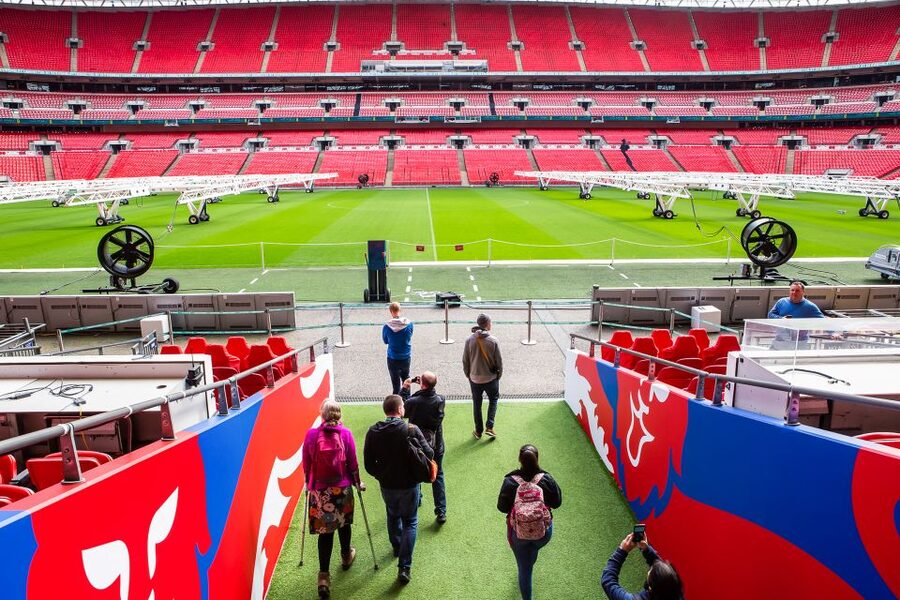
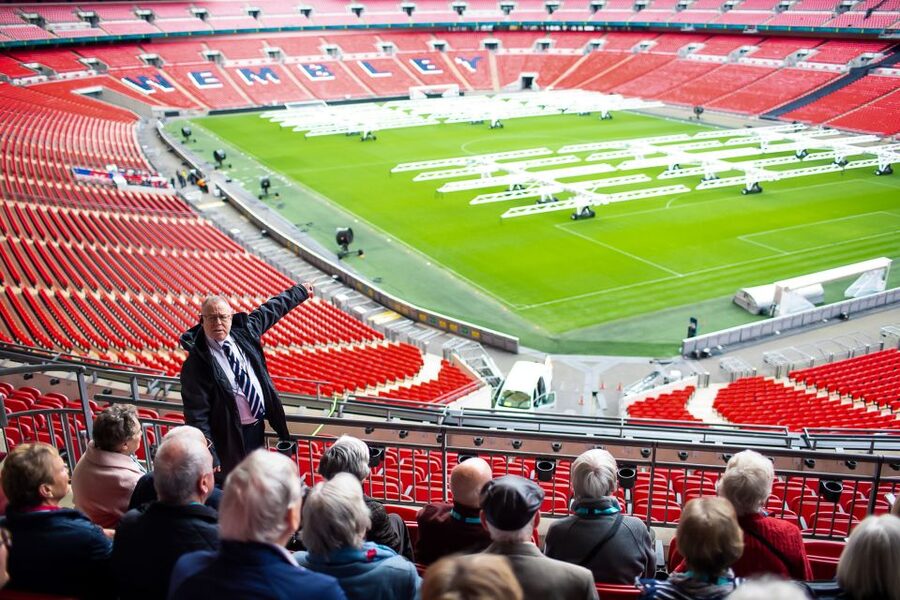
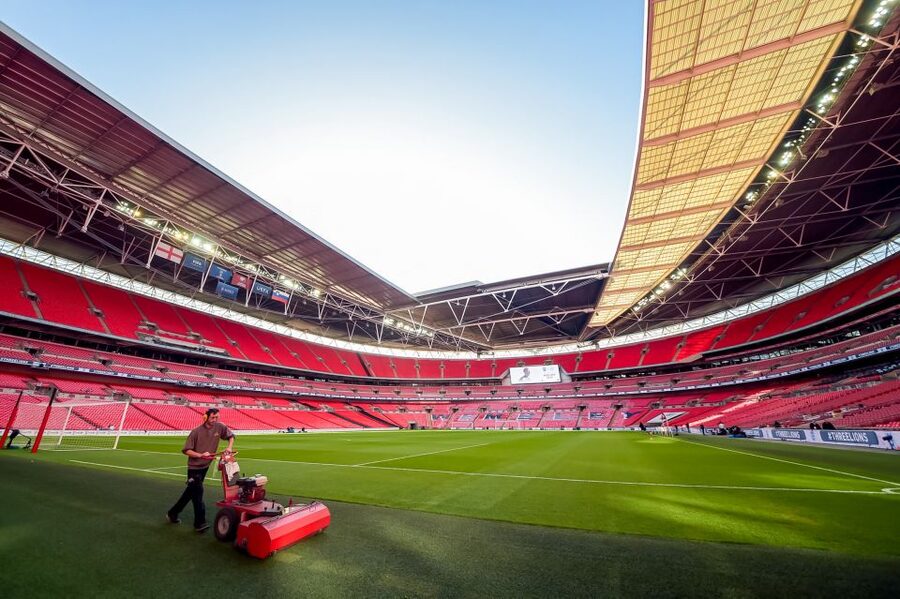
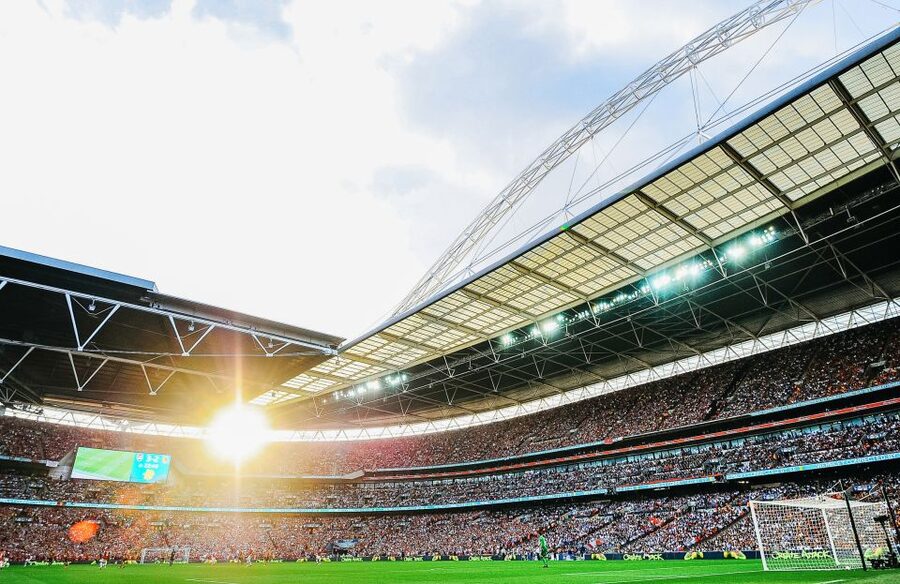
The scale becomes clear when you look across the empty bowl. The stadium holds 90,000 people, and several parts of the tour give you time to sit in the stands and look around. You might first notice the seats, but then the height and width of the structure begin to register.
That empty view is one of the tour’s pleasures. You can take in the design without a match crowd blocking sightlines or pulling your attention toward the pitch. The trade-off is simple: you get space and quiet, but not the roar that makes a football final feel electric.
The dressing rooms and players tunnel

The dressing rooms are among the most anticipated stops, especially for football fans. This is where the professional game shifts from public spectacle to preparation, nerves, and routine.
The exact dressing-room presentation can vary, since the stadium remains an active venue. If team decals or designs are in place after a recent final, they can make the room feel more connected to current football. Otherwise, the value comes from standing in a space normally reserved for players and staff.
From there, the route continues through the players tunnel. Walking toward the pitch gives you one of the clearest emotional moments on the tour. You can imagine the change in atmosphere as teams leave the enclosed corridor and emerge before tens of thousands of people.
The guides are especially useful here. A good guide does more than point out doors. Jason, Dominic, Daniel, and other guides have been praised for adding stories, trivia, and questions, so you are not left simply looking at walls and benches.
For children, this part often works better than a history display. They can picture themselves walking out for a final. For adults who are not devoted football fans, it still offers a useful look at the practical side of a major stadium.
Pitchside views and the empty bowl
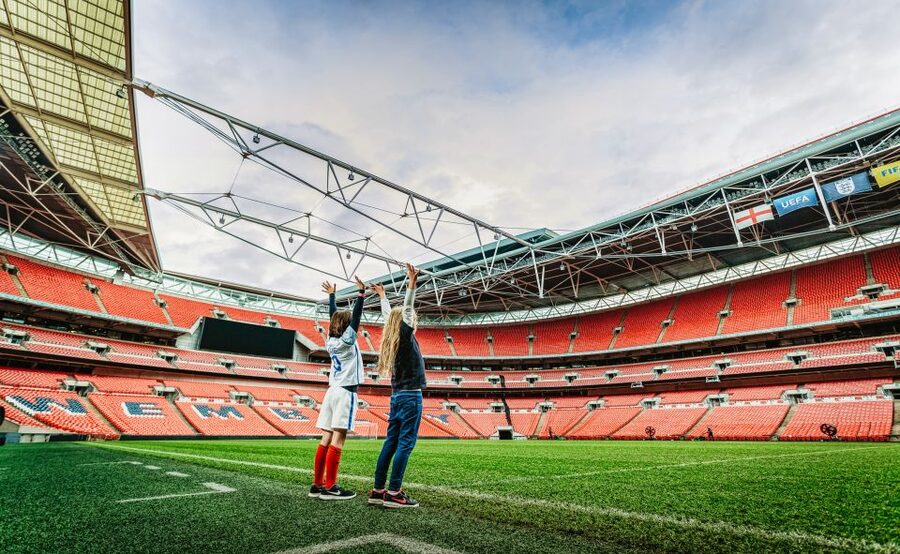
The pitchside stop gives you the classic Wembley photograph, but it also helps explain the building. From the edge of the playing area, you can look up at the seating tiers and appreciate how far the spectators are spread around you.
You may also visit seating areas on more than one level, including views associated with premium and royal sections. These stops show how different seats change your relationship with the pitch. From some levels, you feel close to the action. From others, you get a wider view of the stadium’s full geometry.
I like this part because it is not only about football. Wembley is also a concert venue, and the open floor makes sense when you consider how the same space can serve sport, music, and large public events.
Take photographs, but listen to the guide before wandering too far. This is still a working venue, and the route depends on availability. Areas may be closed, adjusted, or replaced when the stadium is preparing for an event.
Same city, a completely different sort of afternoon:
- London: Madame Tussauds London
★ 4.6 · 20,915 reviews - London: Warner Bros. Studio Tour with Transfers
★ 4.7 · 17,586 reviews - London: Tower Bridge Entry Ticket
★ 4.7 · 15,560 reviews - London: St Paul’s Cathedral Entry Ticket
★ 4.7 · 9,813 reviews
The press conference room and public memory
The press conference room adds another angle. Players and managers appear here after major matches, often tired, relieved, angry, or trying to explain a result. Seeing the room turns those familiar television moments into a physical setting.
The walls and corridors also carry photographs from Wembley’s past. You can expect images and mementos tied to England football, domestic cup finals, European victories, and concerts. The displays work best when paired with the guide’s explanation, since a photograph means more when you know which event it records.
The tour does not treat Wembley as a football-only building. Music is part of its identity too. Countless sold-out concerts have used the venue, and the guide places those events alongside the sporting milestones.
That mix makes the visit a better choice for families and mixed-interest groups. One person can focus on football, another on music and architecture, and both still get something from the route.
The trophy winners steps
One of the most enjoyable stops is the staircase used for trophy presentations. You climb the famous steps to the place where winners receive medals and lift cups.
This is a small action, but it gives the visit a sense of participation. You are not merely looking through glass or reading a panel. You are following the route taken by victorious teams after a major final.
The steps also make a good family moment. Children can picture the ceremony, and adults often recognise the setting from televised celebrations. The guide may add details about particular finals or presentation traditions, although the exact stories depend on who leads your group.
Allow time for photographs here. The tour is generally not rushed, and several people have found they had enough time to take pictures at the main stops. Still, listen for instructions, since the group must keep moving.
The Crossbar Exhibition and Walk of Legends
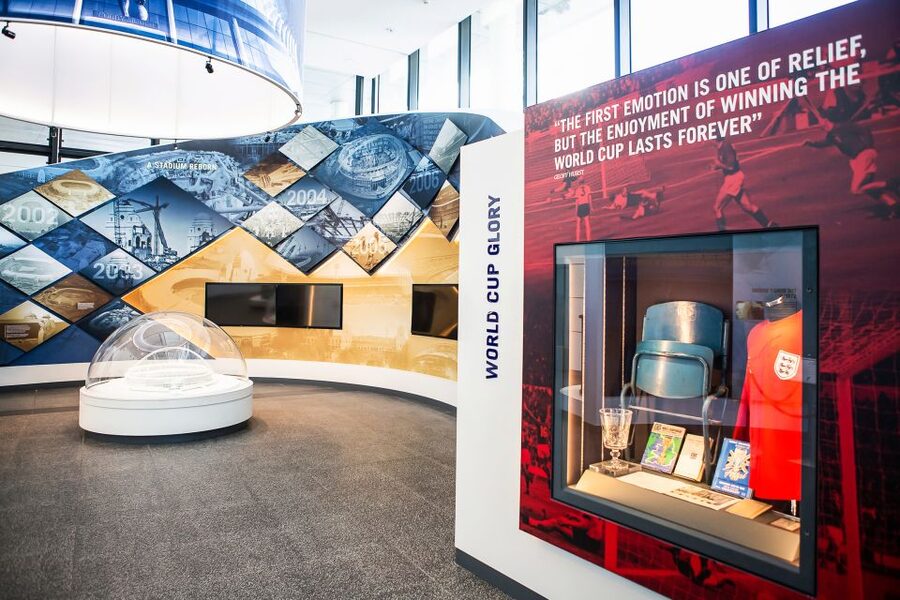
The Crossbar Exhibition contains one of the tour’s most memorable objects: the crossbar connected with England’s 1966 World Cup win. It gives you a tangible link to the most famous match in Wembley’s story.
The moment is still debated, and one visitor jokingly pointed out that the ball did not clearly go in. That is part of the fun. The display lets you consider the incident yourself rather than treating football memory as settled fact.
The Walk of Legends provides a broader look at Wembley’s sporting identity. Here you can connect the original stadium, the Twin Towers, and the present building’s 440-metre arch.
This section is valuable even if you do not know every final or player. The guide fills in the gaps, and the visual displays help you understand why Wembley carries such weight in English football.
An app-based guide is also available in English. Scan the QR code with your own device to access extra facts and trivia. I would treat it as a useful supplement rather than the main attraction. The live guide gives the visit its personality, while the app lets you revisit details at your own pace.
How the guides shape the experience
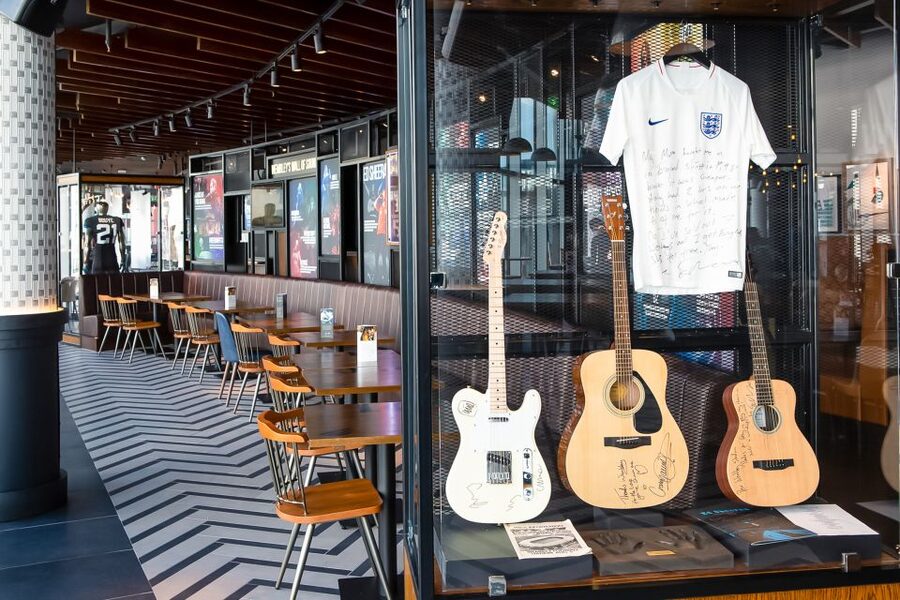
The guide can make or break any stadium tour, and Wembley seems to put real weight on the human part of the visit. The strongest guides combine information with humour instead of delivering a long speech at every stop.
Daniel has been praised for drawing the whole group into the experience. Jason has been noted for vivid stories and passion for the stadium. Dominic, Richard, Paul, Albert, Jonathan, and others have also been singled out for clear explanations and a friendly approach.
You may not receive a particular guide, so do not book on the assumption that one named person will lead your group. The useful pattern is that guides are expected to explain the stadium, answer questions, and involve children when possible.
That last point matters. The tour works especially well for families because children are not expected to know every date or player. A guide can ask them questions, let them add their own football knowledge, and keep the pace lively.
The same approach helps non-fans. You do not need to recognise every team to appreciate the dressing rooms, the stadium views, the royal sections, or the way Wembley handles sport and music.
Timing, transport, and practical details
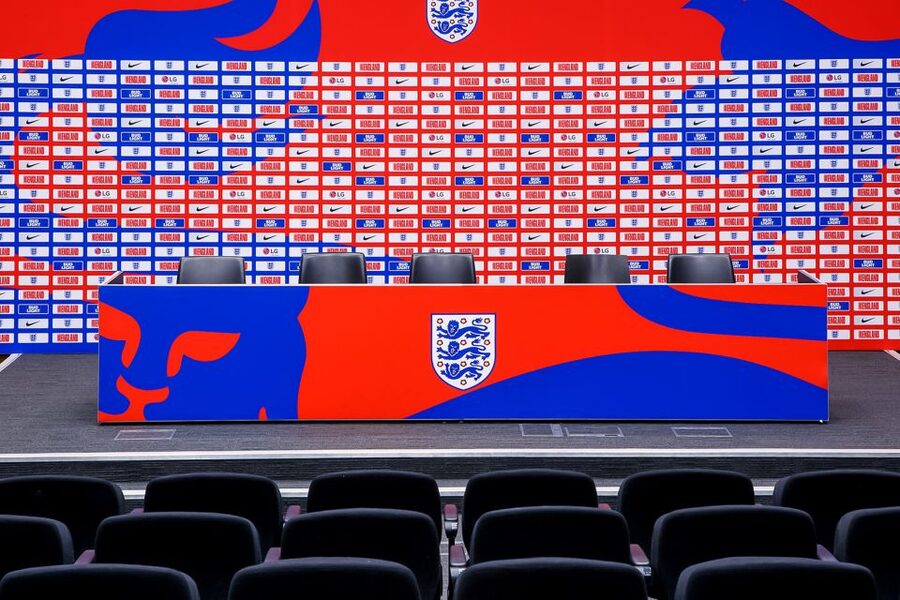
Plan on two hours for the full visit. The guided section takes about 75 minutes, with the remaining time allowing for the exhibitions, digital material, photographs, and movement around the stadium.
Wembley is well served by public transport:
- Wembley Park Station is on the Jubilee and Metropolitan lines.
- Wembley Stadium Station is served by the Chiltern line.
- Wembley Central Station is on the Bakerloo line and London Overground.
If you drive, more than 3,000 spaces are available across several car parks. Even so, public transport is likely to be the simpler choice for a central London day, particularly when an event is taking place.
The tour is in English, both for the live guide and the app content. Food and drink are not included, so plan that separately. Keep your voucher and identification handy at the start.
The route is subject to availability, and tours can be altered or cancelled at short notice. That is worth remembering when planning a tightly timed London itinerary. Free cancellation is available up to 24 hours before the tour, and you can reserve now and pay later if that option is offered at booking.
Is $33 good value for Wembley?
At $33 per person, the tour is not a casual stroll around a public concourse. You are paying for access to working and ceremonial areas, a live guide, exhibitions, and views of one of the world’s best-known stadiums.
I see the strongest value in the combination of spaces. A dressing room alone would be interesting, but the route also includes the tunnel, pitchside, press room, trophy steps, historical displays, and seating views. Together, they give you a fuller picture of how Wembley operates and why it matters.
The price makes most sense if you are already visiting the area or if Wembley is a personal priority. Football fans will get the most emotional value, particularly those interested in England, the FA Cup, Champions League finals, or famous stadium architecture.
It is also a sensible family splurge. Several children have especially enjoyed the interactive tone, and the tour gives them something to do beyond looking at memorabilia. If your child dreams of football, this can be a strong birthday activity.
For non-fans, value depends on your interest in buildings, music venues, and British sporting culture. You will not get the noise of a live match, but you will see the venue from angles a normal ticket does not provide.
Who should book this tour?
I would book it for a football fan who wants more than a seat in the crowd. The dressing rooms, tunnel, trophy steps, and 1966 display give the game a physical setting.
I would also recommend it for families, especially if children respond well to guides who ask questions and keep the mood light. The two-hour format is long enough to feel substantial but short enough to fit into a wider London plan.
Music fans can enjoy the concert stories, though this is still primarily a Wembley football tour. Architecture fans will appreciate the contrast between the old stadium’s Twin Towers and the new building’s massive arch.
I would think twice if you want an entirely self-guided visit, since the central experience is led by a group and a live English-speaking guide. The app adds extra material, but it does not replace the guided route.
Final verdict: a strong choice for Wembley first-timers
You should book the Wembley Stadium Tour if you want access behind the scenes and a clear explanation of the venue’s sporting and cultural importance. The best moments are physical: walking through the tunnel, standing pitchside, climbing the trophy steps, and seeing the crossbar linked to 1966.
The tour’s quality depends partly on the guide and partly on what areas are available that day. Even with those limits, the combination of history, photographs, memorabilia, and empty-stadium views gives you good value for $33.
For a football fan, it is an easy recommendation. For everyone else, it is still worthwhile if you are curious about how a vast national stadium works. Just allow the full two hours, bring identification, and keep your schedule flexible.
FAQ
How long does the Wembley Stadium Tour last?
You should allow two hours for the full visit. The guided section lasts approximately 75 minutes, with additional time for displays, photographs, and other parts of the experience.
What areas can I see on the tour?
The route includes the dressing rooms, press conference room, players tunnel, pitchside, trophy winners steps, seating areas, and historical displays. Access and the exact route are subject to availability.
Is the Wembley Stadium Tour conducted in English?
Yes. The live guide speaks English, and the downloadable app-based guide is also in English.
Where does the tour begin?
The meeting point is on level 1 of the stadium, directly behind the Bobby Moore statue. Exchange your voucher at the ticket desk before going to the meeting point.
How do I reach the meeting point if I cannot use stairs?
You can use the external lift to the left of the Club Wembley entrance. The tour is wheelchair accessible.
Which stations serve Wembley Stadium?
Wembley Park Station is served by the Jubilee and Metropolitan lines. Wembley Stadium Station is on the Chiltern line, and Wembley Central Station is served by the Bakerloo line and London Overground.
Do I need identification?
Yes. You should bring a passport or identity card.
Is food or drink included?
No. Food and drink are not included in the tour price.
Can I cancel the tour?
You can cancel up to 24 hours in advance for a full refund. Reserve now and pay later may also be available, allowing you to keep your plans flexible.
Just added around London
- London: Wimbledon Tennis Club and Westminster Walking Tour★ 4.5 · 86 reviews
- London: Westminster to Richmond River Thames Cruise★ 4.8 · 23 reviews
- Westminster Abbey Skip-the-Line Entry and Private Tour★ 4.6 · 4 reviews
- Best of London by LE GRAND – London’s Luxury Bus Tour★ 4.2 · 23 reviews
- London: Westminster Walking Tour & St Paul’s Cathedral Entry★ 4.7 · 7 reviews
- From London: Oxford, Stratford-upon-Avon & Cotswolds Trip★ 4.5 · 64 reviews
- From London: Warwick, Oxford, Stratford & Cotswolds Day Tour★ 4.0 · 270 reviews
- Warner Bros. Studios and 1-Day London Hop-on Hop-off tour★ 4.7 · 9 reviews
Guided, compared.

Magical London: Harry Potter Guided Walking Tour
Read our review →
Emirates Stadium Entry Ticket and Audio Guide
Read our review →
City & Beatles Tour with Live Guide & Live Music
Read our review →
University and City Walking Tour with Alumni Guide
Read our review →
Christmas Lights Nighttime Bus Tour with Live Guide
Read our review →