
Reviewed · BRITAIN
Maidenhead: Spitfire Simulator Flight Experience
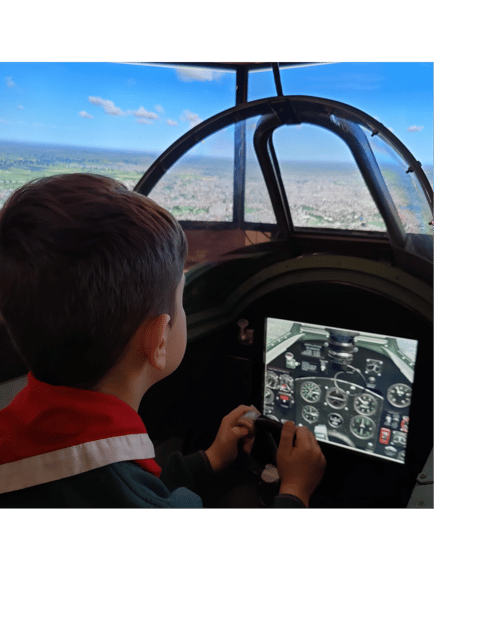
The best part of this Maidenhead experience is the moment you open the throttle and hear the Merlin engine roar. You are not simply watching a wartime film. You are sitting at the controls of a Spitfire simulator, choosing your route and trying to keep the aircraft in the air.
I like the hands-on flying time and the chance to choose anywhere from London to Paris or New York. I also like the connection to the Air Transport Auxiliary, including the women who ferried aircraft to British airfields during World War II. The main drawback is simple: if you book 60 minutes for a young person who mainly wants to fly, the history portion may feel long.
Key points
- Choose 30 or 60 minutes: The shorter session may be enough for a first flight, while families sharing the simulator should consider the longer option.
- Hear the Merlin engine: The sound adds atmosphere as you take the controls of the famous fighter.
- Fly over any destination: London, Paris, New York, and other routes are available.
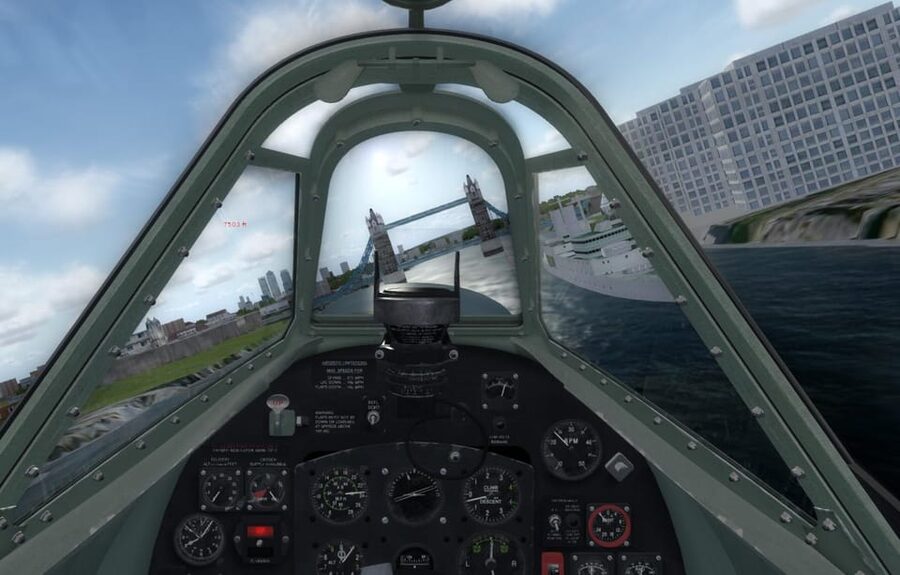
- Race through central London: Groups can fly from London City Airport, pass the O2 and Canary Wharf, pass through Tower Bridge, turn at Big Ben, and race back.
- Learn about wartime pilots: The session includes a film and a history talk, with special attention to the Air Transport Auxiliary.
- Visit the museum galleries: Admission for up to four people includes Maidenhead Heritage Centre and its Air Transport Auxiliary Gallery.
Taking the Controls at Maidenhead Heritage Centre
This is part museum visit, part flight lesson, and part friendly competition. You begin at Maidenhead Heritage Centre, where the focus is not just on the Spitfire as a machine, but also on the people who flew and delivered aircraft during the war.
The session starts with a short period of historical context. You watch a film from the period, then hear about the Spitfire and its pilots before moving to the simulator. That order makes sense. Once you know what the aircraft meant in wartime Britain, the controls feel less like an arcade game and more like a small lesson in aviation history.
An English-speaking volunteer instructor guides you through the basic flying. The staff are described as friendly, and one of the instructors is a former pilot with a strong command of the subject. You should expect guidance rather than a formal commercial airline lesson. The point is to give you enough help to fly, steer, and attempt the challenge without requiring previous experience.
The simulator is the main event. You open the throttle, listen to the Merlin engine, and try to manage the aircraft while viewing a virtual world below. You can fly over London, Paris, New York, or another destination you choose. That freedom matters because it lets you shape the session around your interests rather than follow one fixed route.
Other days out around Britain people book alongside this one:
- London: The London Eye Entry Ticket
★ 4.6 · 35,875 reviews - From London: Harry Potter Warner Bros Studio Tour
★ 4.7 · 26,588 reviews - London: Westminster to Greenwich River Thames Cruise
★ 4.5 · 22,836 reviews
Choosing Between 30 and 60 Minutes
The activity lasts either 30 minutes or 60 minutes. That sounds like a small choice, but it changes the feel of the visit.
The 30-minute option suits a first-time flyer, a short outing, or a young person whose main goal is to sit at the controls. You have time for the introduction, instruction, and simulator session without making the activity consume half a day. A 30-minute booking may also be the better value if only one person plans to fly.
The 60-minute option gives you more room to learn the controls and try several routes. It makes more sense for a family group sharing the experience, especially if several people want a turn. The booking guidance specifically recommends a longer period for family groups.
There is one caution here. More time is not automatically better for everyone. If your companion is interested mainly in aircraft and flying, an hour should work well. If the history talk is not their main interest, 30 minutes may be enough. A teenager who has just finished school examinations, for example, might enjoy the simulator more than the classroom-style introduction.
The museum visit helps fill out the experience, so the longer option can be worthwhile for people who want both the aircraft story and the simulator. I would choose 30 minutes for a casual introduction and 60 minutes for a family sharing turns or a group that wants to compete.
What the History Lesson Adds
The historical section begins with a short film from the wartime era, followed by an explanation of the Spitfire and its pilots. This gives the visit a sense of purpose. You learn why the aircraft became famous before pretending to fly it.
The strongest historical point is the Air Transport Auxiliary. These pilots moved aircraft to British airbases so they could be used by operational squadrons. Their work did not involve the same combat role as fighter pilots, but it was essential to keeping aircraft moving where they were needed.
The gallery also helps bring attention to women who flew aircraft during World War II. Their contribution is easy to miss when the story is told only through famous fighter aces. Here, you get a broader picture of the war effort and the many jobs needed behind the front line.
I appreciate that this is not just a quick photo opportunity beside a cockpit. The history lesson gives you a better sense of the people connected to the aircraft. Still, the balance may not suit every visitor. A serious aircraft fan will likely enjoy the extra context. Someone who wants only fast simulator action may find the introduction slower than expected.
Flying Over London, Paris, or Anywhere Else
After the introduction, you get to choose your virtual route. London is the obvious choice, especially if you want to recognize famous sights from above. Paris and New York offer a change of scenery, while the option to select another destination gives you room to tailor the flight.
The flexibility is useful for repeat visits too. You can use one session to explore London, then return another time and choose a different city. The experience is not limited to one scripted flight path.
Do not expect a quiet sightseeing flight. You are still learning to handle a fighter simulator. The attraction is the combination of recognizable places, aircraft controls, and the pressure of keeping the plane on course.
The London route is the most structured option. You take off from London City Airport, fly past the O2 and Canary Wharf, pass through Tower Bridge, turn around Big Ben, then head back through Tower Bridge and land at London City Airport.
That route is built for a race, not a relaxed tour. You need to keep moving and aim accurately. Crashing into the river or buildings adds penalty time. The penalties make the challenge more entertaining for a group, though they may frustrate you if you are still trying to learn the controls.
Same city, a completely different sort of afternoon:
- Magical London: Harry Potter Guided Walking Tour
★ 4.7 · 22,044 reviews - London: Madame Tussauds London
★ 4.6 · 20,915 reviews - London: Warner Bros. Studio Tour with Transfers
★ 4.7 · 17,586 reviews - Edinburgh: Loch Ness, Glencoe & the Scottish Highlands Tour
★ 4.6 · 17,446 reviews
The Thames Race for Groups
For groups, the London challenge adds a competitive layer. Two teams of up to four people receive a flying lesson, then race against the clock along the Thames.
The course has a clear rhythm:
- Take off from London City Airport.
- Fly past the O2 and Canary Wharf.
- Pass through Tower Bridge.
- Turn around Big Ben.
- Return through Tower Bridge.
- Land back at London City Airport.
Cheering and booing are encouraged. That tells you something about the mood. This is not a solemn museum exercise once the race begins. It is a social activity where friends, relatives, or colleagues can laugh at mistakes and celebrate a clean run.
The penalty system gives the race a little bite. A crash into the river or a building adds time, so careful flying can matter as much as speed. You may find that the most confident pilot is not the fastest one, but the person who avoids a costly mistake.
The group format is also a good reason to bring people who are not all aviation enthusiasts. Someone who does not care much about the technical details may still enjoy the team competition. The cheering and shared mishaps make this part more accessible than a straight history talk.
The supplied booking information describes the activity as a small-group experience and also mentions group races of up to four people per team. If you are booking for a family, check how the session will be shared and select the longer duration if everyone wants a turn.
The Spitfire Atmosphere
The sound of the Merlin engine is one of the small details that helps the simulator work. Opening the throttle while hearing that famous engine gives the aircraft a physical presence, even though you are not in a real plane.
The simulator cannot recreate the full force, danger, or physical strain of wartime flying. It does offer something a cockpit display or museum label cannot: you have to make decisions. You steer, follow the route, and respond when the aircraft goes off course.
That hands-on role is especially useful for younger visitors. You can explain the aircraft controls, then let them try. The experience gives a school-age visitor a reason to think about what flying a fighter required, rather than simply looking at photographs.
Children under nine are not permitted. Older children can take part, but the ideal age depends on their interest in aircraft and history. A 16-year-old who mainly wants the simulator may prefer the shorter booking. An older enthusiast who wants to understand the wartime background may appreciate the full hour.
The Maidenhead Heritage Centre Visit
Your admission includes the Maidenhead Heritage Centre and the Air Transport Auxiliary Gallery for up to four people. This gives you more to see than the simulator alone.
The gallery is particularly useful because it expands the story beyond the best-known fighter pilots. You can learn about the pilots who delivered planes to British airfields and about the women whose wartime flying work is often overlooked.
I would allow time to look around the museum rather than treating the entry as a minor extra. The simulator gives you a taste of flying a Spitfire. The gallery gives you a reason to remember the people and tasks behind the aircraft.
The attraction does not include food or drinks, and transportation to Maidenhead Heritage Centre is not included. Plan your route before you arrive and deal with refreshments separately. The experience itself is fairly short, so you do not need to build an entire day around it unless you want extra museum time.
Is $53 a Fair Price?
At $53 per person, the value depends on how much of the experience you use. You are paying for simulator time, instruction, the film and history presentation, and admission to the Heritage Centre and Air Transport Auxiliary Gallery.
For one person choosing the 30-minute option, the price is reasonable if you care about both aviation history and the chance to fly. It is less compelling if you want only a quick turn at a game-style simulator.
The 60-minute option offers better value for a group sharing time. Several people can take a turn, learn the controls, and compete in the London race. The social element makes the price easier to justify for families, friends, or colleagues.
The experience also has educational value. You are not just renting a simulator seat. You receive instruction and historical context from volunteer staff, and you can continue the visit in the museum galleries. That makes it a stronger choice for someone who wants a small local attraction with substance.
The current rating is 4.6 out of 5 from four ratings. The strongest praise focuses on the instructor’s subject knowledge, the friendly staff, and the way the experience draws attention to the Air Transport Auxiliary and women pilots. One person who booked an hour felt 30 minutes would have been enough, so duration is the key value decision.
Who Should Book This Flight
I would recommend this for:
- Aircraft enthusiasts who want to handle a Spitfire simulator.
- Families with children aged nine and older.
- People interested in World War II aviation beyond the usual fighter-pilot stories.
- Groups of friends who enjoy timed challenges and friendly competition.
- Colleagues looking for a compact team activity.
- Visitors to Maidenhead who want a local museum experience with a practical element.
I would be more cautious if you want a purely fast-paced attraction. The film and history presentation are part of the experience, and the simulator is not the whole visit.
It also suits people who enjoy learning from volunteer guides. The instructor’s role is important because the controls may take a little time to understand. You will get more from the session if you listen to the instructions before rushing into the race.
The attraction is wheelchair accessible, which makes it suitable for a wider range of visitors. The language of instruction is English.
Booking Tips for a Better Session
Choose 30 minutes if one person is flying and wants a compact introduction. Choose 60 minutes if a family or group plans to share the controls.
If you are booking for a group, decide in advance whether you want a relaxed flight or the London race. The race is more fun when everyone understands the route and accepts that crashes add penalty time.
You can cancel up to 24 hours before the activity for a full refund. The reserve-now-and-pay-later option also helps if your plans are not final.
Remember that food, drinks, and transportation are not included. The attraction is in Maidenhead in South East England, so allow time to reach the Heritage Centre before your booked start time.
Should You Book the Maidenhead Spitfire Simulator?
Book it if you want more than a standard museum visit. The aircraft controls, Merlin engine sound, guided instruction, and Thames race give the experience a clear sense of action. The Air Transport Auxiliary Gallery adds a worthwhile human story, especially if you want to learn about the women and ferry pilots who supported the wartime effort.
Choose the 30-minute option for a single flyer or a young person focused on the controls. Pay for 60 minutes when several family members want a turn or when you plan to race as a group.
This is not a full flight lesson and it cannot reproduce real aircraft forces. It is a short, accessible way to connect aviation history with hands-on play. For the right audience, the mix is well judged and the price is fair.
FAQ
Where is the Spitfire simulator experience located?
It is located at Maidenhead Heritage Centre in South East England, United Kingdom.
How long does the experience last?
You can choose a 30-minute or 60-minute session.
How much does the experience cost?
The listed price is $53 per person.
What destinations can I fly over?
You can fly over London, Paris, New York, or anywhere else you would like to select.
What happens during the London race?
You take off from London City Airport, fly past the O2 and Canary Wharf, pass through Tower Bridge, turn around Big Ben, return through Tower Bridge, and land at London City Airport.
Can groups compete against each other?
Yes. Two teams of up to four people can receive a flying lesson and then race against the clock along the Thames route.
Is the experience suitable for children?
Children under nine are not permitted. Family groups should book the longer session if several people want to share the flying time.
Is transportation included?
No. Transportation to and from the attraction is not included. Food and drinks are also not included.
Can I cancel my booking?
Yes. You can cancel up to 24 hours in advance for a full refund. You can also reserve now and pay later.
Just added around Britain
- London: Wimbledon Tennis Club and Westminster Walking Tour★ 4.5 · 86 reviews
- London: Westminster to Richmond River Thames Cruise★ 4.8 · 23 reviews
- Winchester: Historic Castles and Cathedrals Walking Tour★ 4.9 · 154 reviews
- Westminster Abbey Skip-the-Line Entry and Private Tour★ 4.6 · 4 reviews
- Best of London by LE GRAND – London’s Luxury Bus Tour★ 4.2 · 23 reviews
- Whitby: Guided Distillery Tour with Gin Tasting★ 5.0 · 28 reviews
- London: Westminster Walking Tour & St Paul’s Cathedral Entry★ 4.7 · 7 reviews
- Warwick: Entry Ticket for Warwick Castle★ 4.7 · 215 reviews