
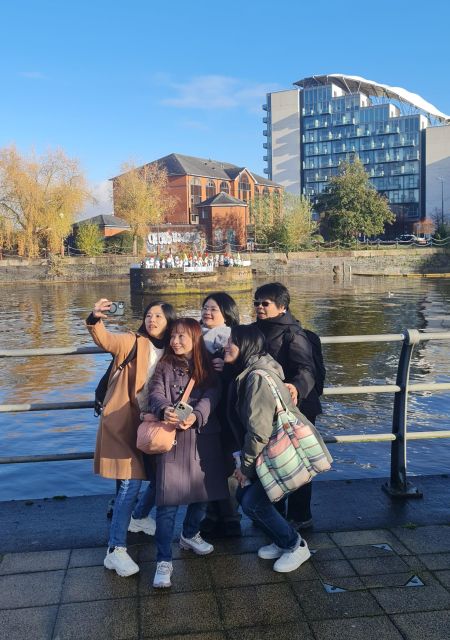
Reviewed · WALKING TOURS
Manchester: Media City & The Quays Guided Walking Tour
Media City and Salford Quays tell one of Manchester’s best modern stories: a working dockland turned into a centre for television, arts, business, and new building. This 5-kilometer walk connects the grand scale of the Manchester Ship Canal with the sharp glass-and-steel world of Media City, so you see both the past and the next chapter.
I like the way the tour uses old photographs to show how much the area has changed, and I like the personal touch of guides such as Frank, whose local stories and folder of images help turn empty water and new buildings into a readable story. The earpieces are another smart touch, especially beside open water or when the group spreads out.
The main consideration is simple: this is an outdoor walk in Manchester, and it runs in rain or shine. Five kilometres in two hours is manageable for most people, but wear sensible shoes, expect some brisk walking, and bring warm or waterproof clothing in cooler months.
Key points to know before you go
- The route begins and ends at Media City Piazza: Meet beneath the large digital screen beside the Media City Metrolink station and opposite BBC Quay House.
- You cover about 5 kilometres in two hours: The pace includes regular stops for stories, photographs, buildings, and views.
- The focus is both past and future: You learn about the Manchester Ship Canal, the old docks, Media City, and planned development.
- The Lowry and Imperial War Museum North are major landmarks: The walk gives you useful outside context for both cultural sites.
- Headsets make a real difference: You can hear the guide clearly while walking, pausing, or standing near the canal.
- It suits a wide range of visitors: The tour is family-friendly, wheelchair accessible, and dogs on leads are welcome.
Starting beneath the big screen at Media City Piazza
Your meeting point is easy to identify. Find the large digital screen in Media City Piazza, next to the Media City Metrolink station and opposite BBC Quay House. This central plaza is a useful place to begin because it shows the area’s current identity straight away: digital media, broadcasting, offices, public art, and modern architecture all gathered around a pedestrian space.
The opening setting can feel more like a business district than a historic port. That contrast is part of the appeal. The tour explains how this new creative centre grew beside what was once a major industrial waterway, giving you a clear reason to pay attention to details you might otherwise pass without a second thought.
The guide introduces the route and sets off around Salford Quays. Frank has led many of the tours and is especially good at connecting dates, buildings, and local anecdotes. Craig has also guided the walk, and the format allows time for questions rather than forcing you through a fixed speech.
You receive an earpiece so you can hear the guide while moving. This matters more than it might sound. The Quays are open and exposed, groups can stretch out along the pavement, and a guide pointing toward a distant building is easy to miss without a clear audio feed.
More Walking Tours in Manchester
- Manchester: Morning or Afternoon City Walking Tour
★ 4.8 · 120 reviews - Manchester: Music-Themed City Walking Tour
★ 4.4 · 109 reviews - Manchester: Food and Drinks Walking Tour
★ 4.9 · 70 reviews
Following the Manchester Ship Canal and the old docklands
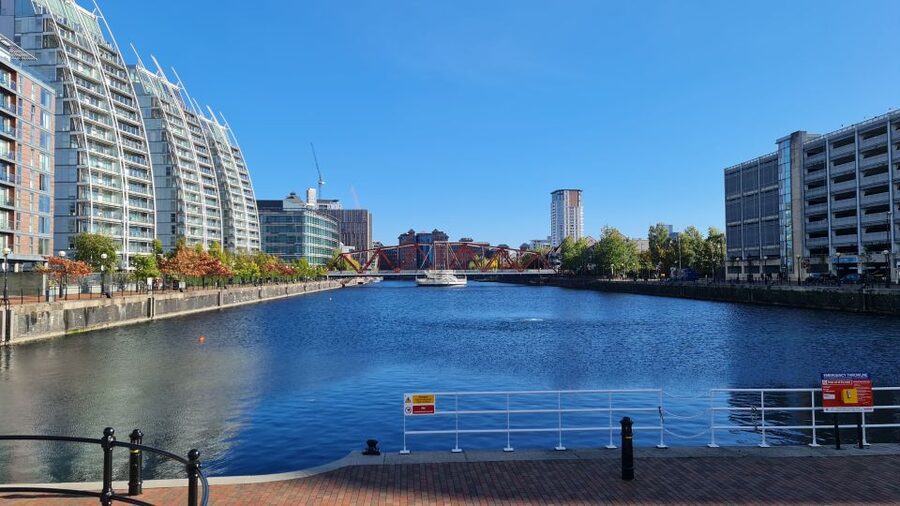
The Manchester Ship Canal is the backbone of the story. As you walk beside it, you get a sense of the scale that made Salford Quays important. The water is not simply a pleasant backdrop. It explains why the site existed, how goods moved, and why Manchester’s connection to the wider world once depended on this route.
Your guide describes the life of the docks and the changes that followed their decline. Old photographs are especially useful here. Instead of hearing only that the area looked different, you can compare the former industrial scene with the modern waterfront in front of you.
This is where the tour offers more than a basic orientation walk. You are not just shown the attractive parts of The Quays. You are given the reason for the empty spaces, the broad stretches of water, the surviving structures, and the newer buildings. The area becomes easier to understand because its present form is linked to its working past.
I also appreciate the attention to small details. A good guide can point out a feature that is easy to ignore and explain why it matters. Frank’s approach, according to the experience of the walk, is conversational and open to questions, which is useful if you want to understand how the regeneration affected Manchester and Salford rather than simply collect a list of landmarks.
The canal-side sections are also the most exposed parts of the route. Wind and rain can make them feel colder than the city centre, so a waterproof outer layer and comfortable footwear are sensible. High heels are not allowed, and that is practical advice rather than a fussy rule.
The Lowry Arts Centre and culture by the water
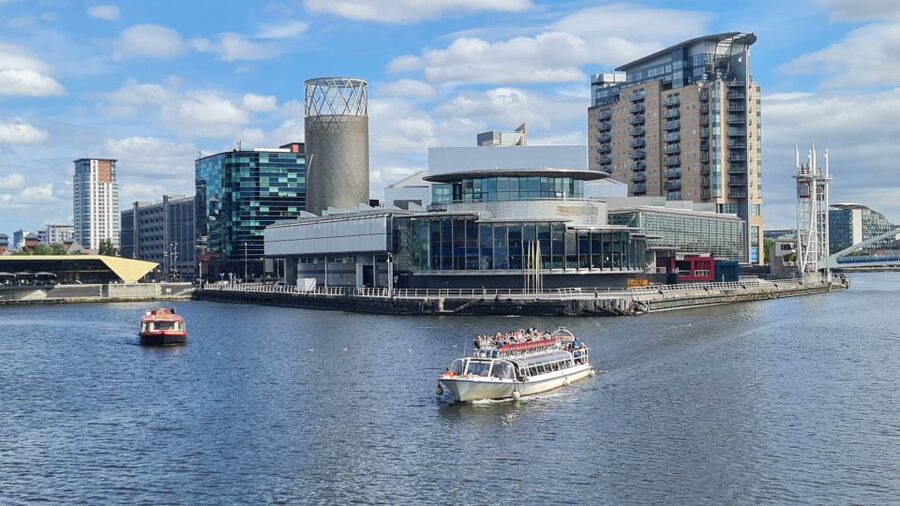
The Lowry Arts Centre is one of the tour’s key stops. Its striking form gives the walk a strong visual marker, but the guide adds the local setting and development story that you will not get from a quick photograph.
You learn how cultural buildings helped change the purpose of Salford Quays. The waterfront is no longer defined only by shipping and industry. It now draws people for theatre, exhibitions, public events, eating, shopping, and a day out beside the canal.
The tour does not replace a visit inside The Lowry. Instead, it gives you a better sense of where the building fits within the wider area. If you plan to attend a performance or visit an exhibition, taking the walking tour first can help you read the surrounding district with more confidence.
The stop also shows the value of having a guide who understands both architecture and local change. The buildings may look impressive on their own, but their placement beside the water and near Media City makes more sense once you hear how the district developed.
Families should find this section approachable. The route is designed for all ages, and the guide can adjust the pace to suit the group. Children who might not want a formal museum visit can still engage with the large spaces, canals, bridges, and visual contrasts between old and new.
Imperial War Museum North and the wider Quays
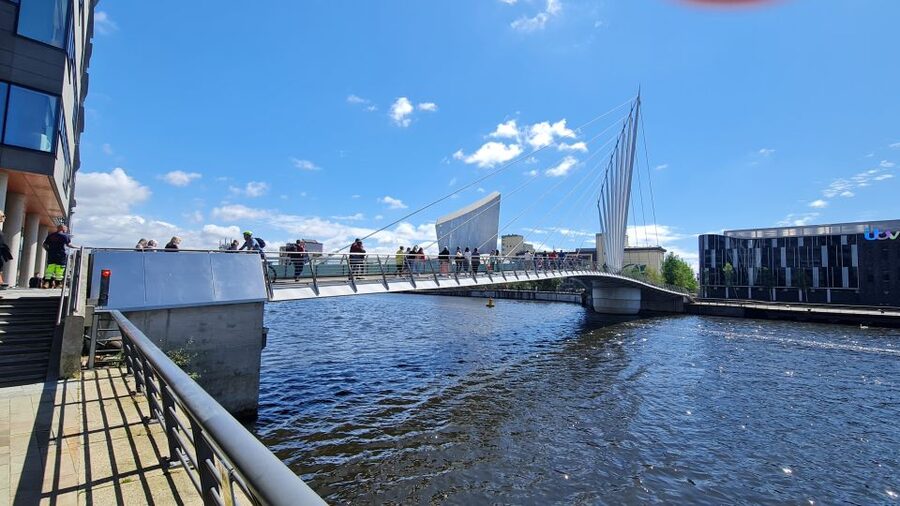
The route continues toward Imperial War Museum North, another major landmark on the Quays. The museum’s angular building is hard to miss, and the outside setting gives you a useful introduction before you decide how to spend more time inside.
The tour includes the museum as part of the walking route, not as a guided interior visit. You hear about its place in the area and see how it relates to the canal, the bridges, and the surrounding regeneration. If the museum interests you, plan a separate visit rather than expecting the two-hour walk to cover its galleries.
This part of the route helps widen the story beyond Media City’s television and office identity. The Quays are home to cultural, historical, and public spaces that serve different purposes. The guide brings those strands together without losing sight of the original dockland setting.
There is also a practical benefit to seeing the museum during a larger circuit. You can judge how it fits into your day and decide whether to return later. The tour begins and ends at Media City Piazza, so you are not left at an unfamiliar point with no clear way back.
A few more Manchester days worth weighing up
- Manchester: Canal & River Cruise
★ 4.4 · 3,761 reviews - Etihad Stadium: The Manchester City Stadium Tour
★ 4.8 · 3,096 reviews - From Manchester: North Wales, Snowdonia, and Chester Tour
★ 4.8 · 1,577 reviews - Manchester: National Football Museum Admission Ticket
★ 4.4 · 1,243 reviews
Bridges, canals, and the value of a walking pace
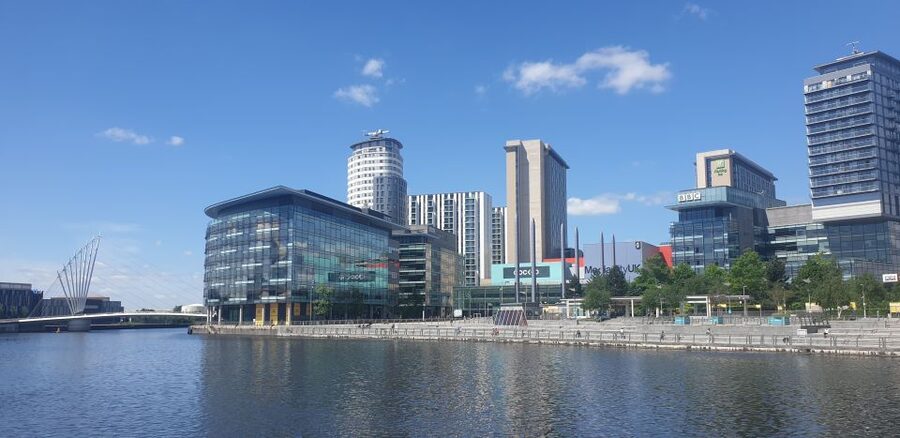
The walk takes you across bridges and along the canal, with pauses to look at landmarks and hear stories. This format works well in The Quays because the area is spread out. A short stop at one building rarely explains the relationship between it and the rest of the district.
Two hours gives the guide enough time to cover the main points without turning the outing into an all-day commitment. You should allow the full two hours, even if the route seems straightforward. The stops, questions, photographs, and occasional adjustments to the pace all form part of the experience.
The stated route is around five kilometres. That is not a difficult hike, but it is a proper walk. If you have limited mobility, the route can be adjusted to avoid steps, and the pace can be adapted to the group. The experience is wheelchair accessible, though it is still wise to mention any needs when booking so the route can be planned sensibly.
Dogs on leads are welcome. That makes the tour more flexible for local residents and visitors travelling with a dog, although an animal still needs to manage a two-hour public walk.
The group size can vary. Some departures may feel almost private, with only a few people, while other groups will be larger. The headset system helps in either case. I would ask the guide to slow down if the pace feels quick. One person found Frank’s long stride a little brisk, although the guide was happy to adapt when needed.
Seeing a district in the middle of change
The most useful part of this tour is its attention to what comes next. Media City is presented not as a finished development but as a continuing project, with new plans and further changes expected.
That future-focused element gives the tour a different feel from a standard history walk. You learn how the Manchester Ship Canal and the old docks shaped the past, then hear how the area is being used for digital and creative businesses today. The guide also explains the direction of future development and why The Quays remains important to Greater Manchester.
This is especially helpful if you have visited before. The buildings may already look familiar, but the tour can show you what has changed and where the next phase may appear. Several people who already knew Manchester or had spent time at Salford Quays still found the walk added useful context.
The guide’s own visual material strengthens this section. Old photographs make the scale of redevelopment plain, while discussion of future projects gives you a reason to look again when you return. You are encouraged to see The Quays as a working part of the city, not simply a polished waterfront for visitors.
There is a balance here worth noting. Regeneration stories can become overly promotional if they focus only on shiny new buildings. This tour is stronger when it places the new district beside the old docks and explains the long process of change. You get an upbeat account of Media City, but the industrial past remains central to the story.
Why the guides make or break this experience
A walking tour rises or falls on its guide, and this one depends heavily on the person leading your group. Frank is repeatedly praised for his warmth, strong command of local history, clear delivery, humour, and willingness to answer questions. Those qualities matter because The Quays do not explain themselves through monuments alone.
Frank also uses a folder of photographs to illustrate the dockland years and the transformation of the waterfront. That gives the tour a personal, visual quality. You can ask about a particular building or development and get an answer connected to the wider story.
The tour is also comfortable for solo visitors. If you arrive alone, the guide welcomes you into the group and keeps the experience relaxed. Small groups can make the walk feel more personal, with more time for questions and a better chance to discuss what you are seeing.
The supplied experience information also names Craig as a guide, and he has been praised for answering questions clearly. Since guide availability can vary, you should book for the route and subject rather than assume a particular person will lead every departure.
The earpieces deserve another mention. They allow you to keep looking at the building or canal instead of crowding around the guide. I find that especially helpful when the guide uses old photographs, since you can listen while comparing the image with the view in front of you.
Is $18 good value for two hours?
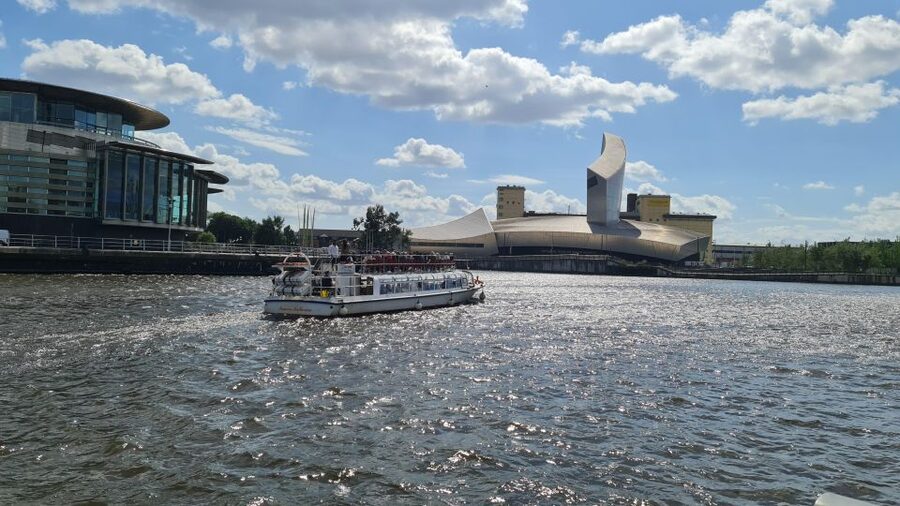
At $18 per person, this is good value if you want an introduction to Salford Quays that goes beyond a self-guided stroll. You receive a live guide, an organised route, and headsets, while the walk covers the district’s main cultural and historical markers.
The value comes from interpretation. You can walk beside the Manchester Ship Canal for free, take photographs of The Lowry, and see Media City without joining a tour. What you cannot easily do on your own is connect those sights to the port’s former role, the dockland decline, the regeneration programme, and the area’s future plans.
The price is also modest compared with a longer attraction visit, and the two-hour length fits neatly into a Manchester itinerary. You can schedule it before or after time at The Lowry or Imperial War Museum North, then return to the Piazza for food, shopping, or the tram.
I would not book it if you want a purely visual walk with lots of free time for photographs. The guide keeps the group moving, and the aim is to explain the area rather than provide an unstructured stroll. For most people, though, the combination of context, landmarks, and local stories makes the fee worthwhile.
Free cancellation up to 24 hours before the start and the option to reserve now and pay later also make the booking less rigid. Starting times vary, so check availability when choosing your date.
Who should book the Media City and The Quays walk?

I recommend this tour to first-time visitors who want to understand Manchester beyond the city centre. It is also a good choice for local people, especially if you know The Quays as a place to eat or attend events but have never learned how the docklands became Media City.
Families can join, and the route works for all ages. History fans will appreciate the Manchester Ship Canal and dock stories, while architecture and media enthusiasts will get more from the discussion of buildings, broadcasting, creative businesses, and future plans.
It suits solo visitors because the guide keeps the atmosphere friendly. Small groups can be particularly rewarding, but the headsets help maintain clarity if your departure is busier.
You should think twice if you dislike outdoor walking, need frequent long rests, or are visiting during cold, wet weather without suitable clothing. The tour operates in all conditions, and the canal-side route offers little shelter compared with an indoor attraction.
Practical tips for a better walk
Wear shoes that can handle five kilometres on pavement and bridges. Leave high heels at home, and choose layers that can cope with wind, rain, or a sudden drop in temperature.
Arrive at the Media City Piazza with enough time to find the large digital screen. The tram station is beside the meeting point, and BBC Quay House is opposite, so those are useful landmarks when you arrive.
Keep your ears open for the visual comparisons. The old photographs are not a side detail. They are one of the best ways to understand the scale of the dockland transformation.
Ask questions. Guides such as Frank are happy to explain details, and the tour becomes more useful when you connect the story to a building, museum, or future project that interests you.
If you want to visit The Lowry or Imperial War Museum North inside, allow extra time before or after the walk. The two-hour route passes these landmarks but is not a substitute for their full programmes.
Should you book it?
Book this walk if you want the story behind Salford Quays and Media City, not just a pleasant waterside outing. At $18, it gives you a clear introduction to the Manchester Ship Canal, the old docks, cultural landmarks, current businesses, and future building plans in a manageable two-hour route.
I would make it an early stop in a Manchester visit. You will leave with a better sense of where to return, what to see indoors, and why this former dockland matters to the city. Bring good shoes, prepare for the weather, and expect the guide to add the detail that the buildings alone cannot provide.
FAQ
Where does the Media City and The Quays walking tour start?
The tour starts beneath the large digital screen in Media City Piazza, next to the Media City Metrolink station and opposite BBC Quay House.
Where does the tour finish?
The route returns to Media City Piazza, where the walk began.
How long is the tour?
The tour lasts two hours and covers approximately five kilometres.
Which language is the tour conducted in?
The live tour guide speaks English, and English audio headsets are included.
What landmarks does the route visit?
The walk passes landmarks including The Lowry Arts Centre and Imperial War Museum North, along with canals, bridges, Media City buildings, and other sites around Salford Quays.
Is the tour wheelchair accessible?
Yes. The route is wheelchair accessible, can be adjusted to avoid steps, and the pace can be adapted to suit the group.
Can I bring a dog?
Yes. Dogs are welcome when kept on leads.
What should I bring?
Bring comfortable shoes and clothing suited to the weather. The walk takes place rain or shine, and high-heeled shoes are not allowed.
Just added around Manchester
- Manchester: Trax Social Racing Simulator Experience★ 3.1 · 13 reviews
- Manchester: Silent Disco Adventure Tour★ 5.0 · 72 reviews
- Manchester: Visit Manchester Pass with Entry Tickets & Tours★ 3.0 · 5 reviews
- Manchester: Sightseeing Walking Custom Tour with a Guide★ 3.6 · 8 reviews
- Manchester: Junkyard Golf Club Tickets for 9 or 18 Holes★ 4.6 · 133 reviews
- Manchester: SEA LIFE Entrance Ticket★ 4.2 · 170 reviews
- Manchester: FunnyBoyz Benidorm Bingo Cabaret Show★ 3.9 · 6 reviews
- Manchester: LEGOLAND Discovery Centre Entrance Ticket★ 4.2 · 99 reviews
Walking Tours, compared.

Magical London: Harry Potter Guided Walking Tour
Read our review →

University and City Walking Tour with Alumni Guide
Read our review →
Harry Potter Movies Walking Tour (Kids Go Free)
Read our review →
The Great British Rock and Roll Music Walking Tour
Read our review →
Jack the Ripper Walking Tour – Ripper Vision Tours
Read our review →

Browse the lists this tour appears in