
Reviewed · BRITAIN
Paddleboard Experience on the beautiful Thames at Richmond
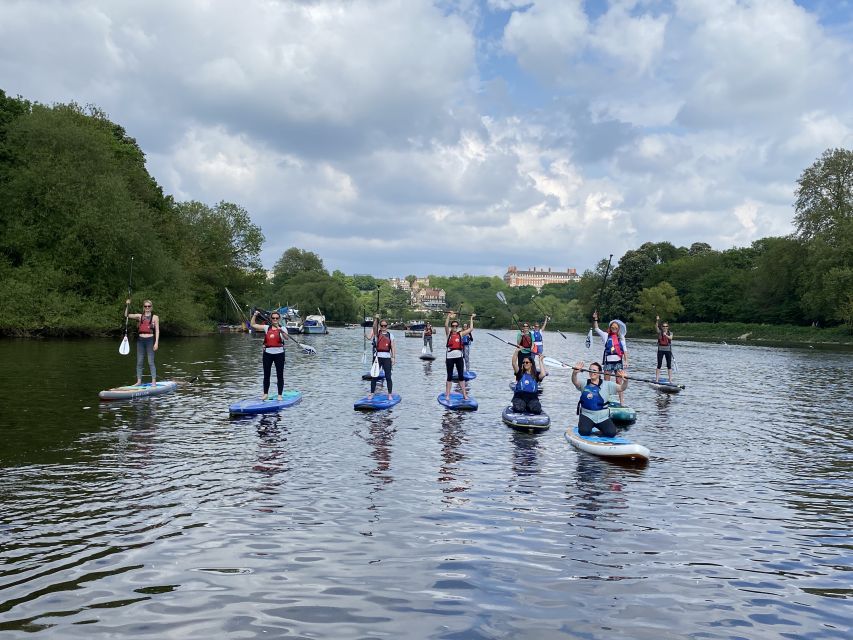
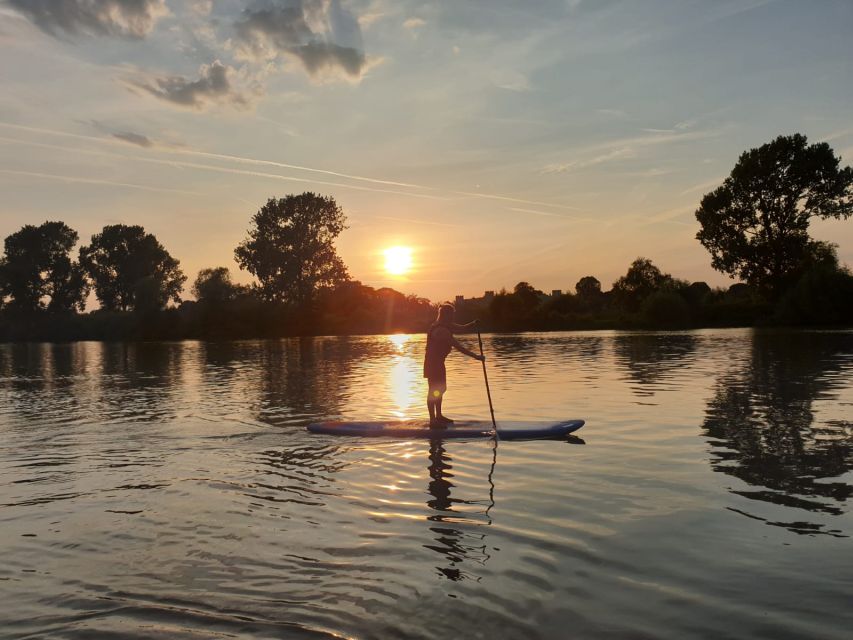
The best thing about this two-hour Thames paddleboard lesson is how quickly London fades away. You start near Richmond Bridge, then move onto a quieter stretch of river where birdlife, gentle water, and old riverside scenery replace traffic and pavement. It feels like a proper outdoor outing, not a quick turn around a city attraction.
I like the small-group teaching and the choice of routes. You also get a real tour of the river, not just a basic lesson in standing up. The main consideration is physical: you need enough flexibility to rise from kneeling, and you must be comfortable falling into the water while wearing a buoyancy aid.
Key points to know before you book
- Begins with 15 to 20 minutes of land training: You learn the basics and safety rules beside Richmond Bridge before getting wet.
- The route follows the tide: You may paddle toward Eel Pie Island and Teddington, or toward Richmond Lock, Isleworth, Kew Gardens, and Chiswick.
- Small groups make learning easier: The coach can watch your technique and help you recover after a wobble.
- Wildlife is part of the outing: The peaceful river section can feel surprisingly remote, with birdlife along the banks.
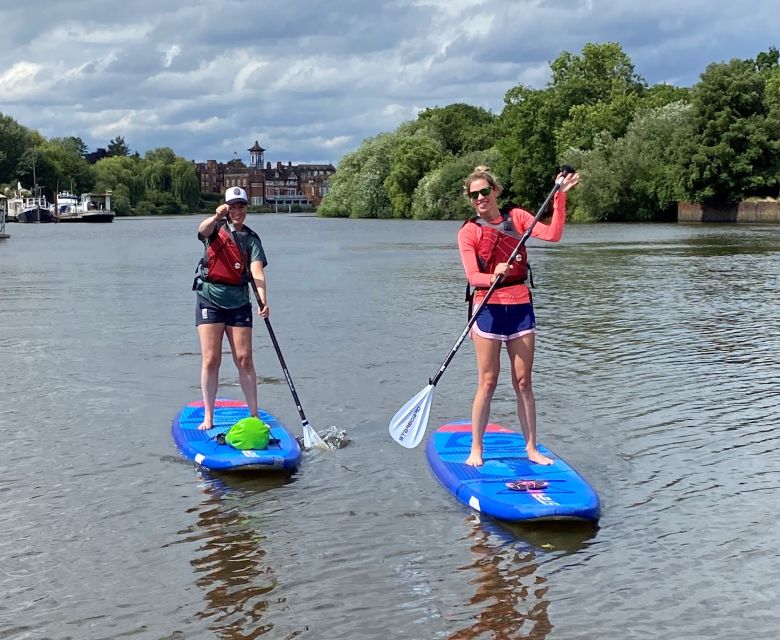
- All main equipment is supplied: You receive a paddleboard, paddle, buoyancy aid, and instruction.
- Bring clothes you can get wet in: Bare feet are usual, though water shoes, sandals, flip-flops, or trainers are allowed.
Starting beside Richmond Bridge
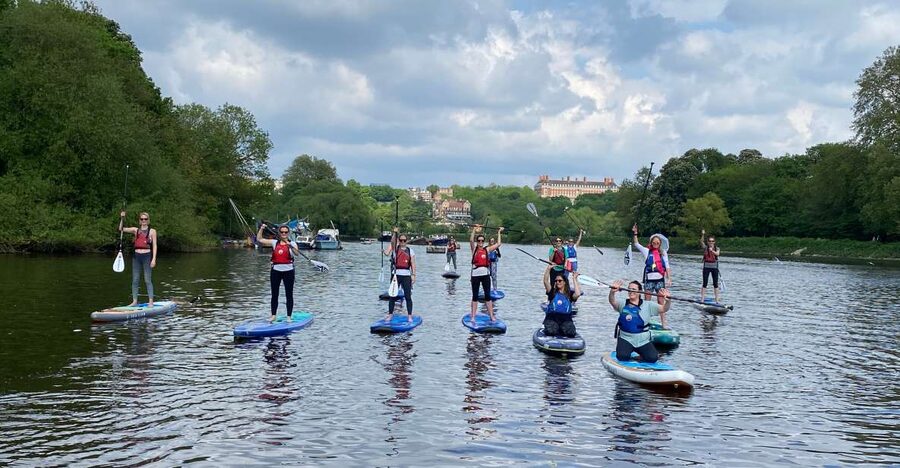
Your session begins on the riverbank close to Richmond Bridge. This is a useful starting point because you can get familiar with the board and paddle before dealing with moving water.
Expect about 15 to 20 minutes of safety advice and land-based practice. The exact length depends on the size of your group, but the coach uses this time to explain the equipment, show you how to hold the paddle, and cover the basics of getting on and off the board.
That opening matters more than it may seem. New paddleboarders often worry about falling, steering, or holding up the rest of the group. Learning the basic movements on land gives you a few simple actions to repeat once you are afloat.
You will also hear how the river session works. The route is not fixed, since the coach chooses the best direction based on the tide and wind. That means you should not book this expecting one exact sightseeing circuit.
The small-group format is a real advantage here. A coach can correct your stance, paddle stroke, and turning technique without making the class feel like a crowded activity session. It also gives nervous beginners a little room to find their balance.
Other days out around Britain people book alongside this one:
- London: The London Eye Entry Ticket
★ 4.6 · 35,875 reviews - From London: Harry Potter Warner Bros Studio Tour
★ 4.7 · 26,588 reviews - London: Westminster to Greenwich River Thames Cruise
★ 4.5 · 22,836 reviews
Learning to stand, paddle, and turn
The first water-based task is getting onto the board and staying low. You begin from a kneeling position, then work toward standing when you feel ready.
You do not need to arrive as an athlete or a confident paddleboarder. The session is designed for complete beginners as well as people who already have some experience. Still, the activity has a clear physical requirement: you need enough flexibility and strength to move from kneeling to standing.
The board can feel unstable at first. That is normal, and the buoyancy aid gives you some reassurance if you lose balance. You should be comfortable with the possibility of falling into the river, though you do not need to be a proficient swimmer.
The coach will also show you how to paddle in different ways. That can include moving forward, slowing down, changing direction, and turning to look behind you. One particularly useful skill is learning to turn back on the board to check what is behind you without feeling that the whole board will tip.
Nigel, a coach who leads these sessions, is noted for helping people relax and for introducing different paddle strokes. His river and wildlife knowledge adds something beyond basic instruction. If he is leading your outing, you can expect stories and observations about the waterway as you go.
Following the tide toward Teddington
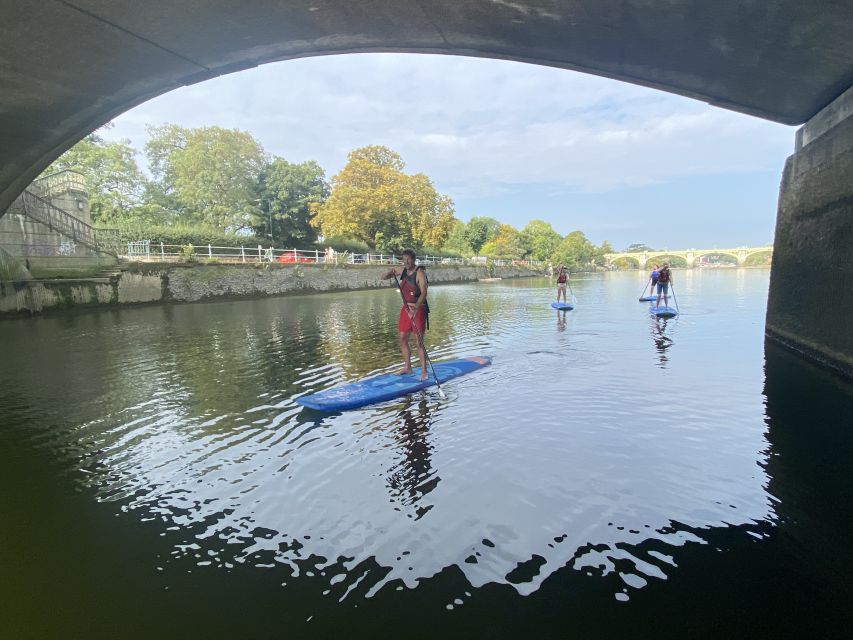
When the conditions suit an upstream route, the group can head toward Eel Pie Island and Teddington. This direction gives you a chance to see a quieter side of the Thames while working with the changing flow.
Eel Pie Island is an unusual riverside landmark, and its name alone hints at the local character of this stretch. Teddington marks the upper end of the tidal Thames, so the direction provides a useful sense of how the river changes as it moves away from central London.
The exact distance depends on wind and tide. You might cover more ground in easy conditions, or stay closer to the starting point when the river or weather makes that sensible. That flexibility is good for safety, though it means the session is not measured by a guaranteed number of miles.
You will likely spend part of this section concentrating on your stroke and balance rather than sightseeing. That is part of the charm. Once you find a steady rhythm, you can look up and notice the riverbanks, bridges, and birds without the constant noise of a road nearby.
The water is not necessarily empty or untouched. This is still Greater London, and the Thames remains an active urban river. Yet the stretch near Richmond can feel calm enough to make the city seem far away, especially when the group pauses or paddles quietly.
Following the tide toward Kew and Chiswick
If the tide takes the group downstream, the route can run toward Richmond Lock, Isleworth, Kew Gardens, and Chiswick. This direction gives you a different view of the river and may suit the conditions on the day.
Richmond Lock is an important point on this part of the Thames, and it helps explain why the route depends on local river conditions. You will not simply be sent in one direction regardless of wind and tide. The coach chooses a practical course for the session.
The route toward Kew Gardens and Chiswick can provide a broader sense of the river corridor. You may pass a mix of greenery, riverside buildings, and London landmarks viewed from the water. The appeal is not a checklist of famous sights. It is the change in perspective that comes from seeing familiar places at water level.
Do keep expectations sensible. The activity lasts two hours, and some of that time is used for instruction, preparation, and returning safely. You are not signing up for a full-day river expedition or a long-distance endurance paddle.
You are getting a lesson combined with a guided outing. That balance works well for visitors who want to learn a skill while seeing a more peaceful side of London.
Same city, a completely different sort of afternoon:
- Magical London: Harry Potter Guided Walking Tour
★ 4.7 · 22,044 reviews - London: Madame Tussauds London
★ 4.6 · 20,915 reviews - London: Warner Bros. Studio Tour with Transfers
★ 4.7 · 17,586 reviews - Edinburgh: Loch Ness, Glencoe & the Scottish Highlands Tour
★ 4.6 · 17,446 reviews
A quiet river with birds along the banks
The most praised feature of this experience is its atmosphere. The river can be quiet and peaceful, with birdlife close to the water. It is a striking contrast to the usual image of London as crowded streets, buses, and queues.
That peace also makes the session good for people who may feel tense about trying SUP. Once you are moving steadily, the water gives you time to focus on the paddle stroke and your breathing. You are not being pushed through a loud or hectic activity.
The wildlife element is not presented as a formal nature tour, so you should not expect a guaranteed list of animals. Conditions, weather, and the pace of the group all affect what you notice. Still, the river setting gives you a better chance to see and hear birds than a typical city walking tour.
The coach’s local knowledge can make this part more meaningful. Nigel is described as sharing information about the river, the environment, and wildlife, along with stories that help participants settle into the experience.
I like that the guide’s role is not limited to shouting instructions from the bank. Good coaching here means helping you feel safe, showing you useful paddle techniques, and pointing out what makes this part of the Thames special.
What to wear for a wet two hours
Wear outdoor sports clothing that you are prepared to get wet. Shorts, leggings, a T-shirt, or a fleece all work, depending on the weather.
The usual choice is to paddle barefoot. You can also wear water shoes, flip-flops, sandals, or trainers. Shoes with a secure fit may feel more reassuring if you dislike standing barefoot on a board, but avoid bringing anything you do not want soaked.
For sunny weather, pack a hat and sun cream. There may be little shade once you are on the water, and the reflection from the river can make the sun feel stronger.
From November through March, a wetsuit is advisable. Wetsuits are available if you request one in advance, or you can bring your own. Add extra warm layers, a towel, and a complete change of clothes for colder sessions.
A small dry bag is useful for spare clothing, money, medication, or a phone in a waterproof pouch. The provider also has a safe, lockable place for bags and valuables, so you do not need to take everything onto the board.
Price, timing, and what the fee covers
The price is $87.55 per person for two hours. That is not the cheapest way to spend a morning in London, but the fee includes the parts that can make paddleboarding expensive or awkward to arrange yourself: tuition, a safety briefing, a guided river outing, a paddleboard, a paddle, and a buoyancy aid.
You are paying for instruction as well as equipment. For a first attempt, that is important. Buying or hiring a board alone would not give you the same help with balance, river conditions, or basic safety.
The price makes the most sense if you want a guided introduction rather than simply standing on a board for a short rental period. It is also better value for people who plan to paddle again and want to learn sound habits from the beginning.
Sessions last two hours, but starting times vary. Check availability before arranging the rest of your day. The tide affects the route, so the time of day is not just a scheduling detail.
Private groups are available. That option may suit families, friends, or a couple who want more direct attention, though the general experience is designed around small-group teaching.
You can cancel up to 24 hours ahead for a full refund, and you can reserve now and pay later. Those policies are useful when your London plans depend on weather and changing schedules.
Who will enjoy this Richmond SUP session
This is a good fit for a first-time paddleboarder who wants coaching without leaving London. You get a gentle introduction, a scenic river trip, and enough time to improve during the same session.
It also suits people who already paddleboard and want a guided trip on a different stretch of water. The coach can show different paddle techniques, and the tide-based route keeps the outing from feeling like a fixed loop.
The experience is especially appealing if you like quiet outdoor activities. The combination of river views, birdlife, and low-key coaching feels very different from a high-energy attraction.
You should think carefully before booking if you have limited mobility. The activity is not suitable for people with mobility impairments, and getting from kneeling to standing requires flexibility and physical control.
You also need to accept the possibility of getting wet. You do not have to be an expert swimmer, but you should be comfortable falling into the river while wearing a buoyancy aid. If that thought makes you panic, a land-based activity may be a better choice.
Small details that improve the experience
Arrive ready to paddle rather than wearing an outfit you hope to keep dry. This saves time and avoids the unpleasant moment of realizing your only spare clothes are back at your accommodation.
Request a wetsuit ahead of time for a cold-weather session. Bring a towel and dry layers even if the forecast looks mild, since a fall into the river can change how warm you feel.
Keep valuables to a minimum. The lockable storage is helpful, but anything you bring to the water should be protected in a dry bag or waterproof phone pouch.
Give the coach honest information about your experience level. Beginners should not feel embarrassed about needing extra help with balance or turning. The whole point of the opening land lesson is to make those first water minutes less intimidating.
Pay attention to the tide and wind briefing. The route and distance are adjusted for the day, and that is a safety feature, not a shortcoming.
Should you book this Thames paddleboard experience?
Book it if you want a genuine outdoor break in London and are willing to get wet while learning something new. The strongest reasons are the peaceful Richmond setting, the small-group instruction, the flexible tide-based route, and the chance to see the river from water level.
It is particularly good for beginners who want a coach nearby rather than a simple board rental. The two-hour length gives you enough time to move beyond the first nervous kneel and begin paddling with purpose.
Skip it if you need a guaranteed sightseeing route, dislike falling in water, or have mobility limitations that make standing from kneeling difficult. For everyone else, this is a practical, refreshing way to trade London pavement for a quiet stretch of the Thames.
FAQ
How long does the paddleboard experience last?
The session lasts two hours. Starting times vary, so check availability when booking.
Where does the session begin?
It begins on the riverbank near Richmond Bridge in Greater London.
Is the session suitable for complete beginners?
Yes. The class is designed for complete beginners through to experienced paddleboarders, with a safety briefing and land-based training before you go onto the river.
What routes might the group take?
Depending on the tide, the group may paddle upstream toward Eel Pie Island and Teddington, or downstream toward Richmond Lock, Isleworth, Kew Gardens, and Chiswick.
Do I need to be a strong swimmer?
You do not need to be a proficient swimmer, but you must be comfortable with falling into the water while wearing a buoyancy aid.
What equipment is included?
The price includes tuition, a safety briefing, a paddleboard, a paddle, and a buoyancy aid.
What should I wear?
Wear weather-appropriate outdoor sports clothing, such as shorts, leggings, a T-shirt, or a fleece. Sessions are usually barefoot, though water shoes, sandals, flip-flops, or trainers are also allowed.
Is a wetsuit available in cold weather?
A wetsuit is advisable from November through March. Wetsuits are available if requested in advance, or you may bring your own. Extra layers, a towel, and a change of clothes are also recommended.
Just added around Britain
- London: Wimbledon Tennis Club and Westminster Walking Tour★ 4.5 · 86 reviews
- London: Westminster to Richmond River Thames Cruise★ 4.8 · 23 reviews
- Winchester: Historic Castles and Cathedrals Walking Tour★ 4.9 · 154 reviews
- Westminster Abbey Skip-the-Line Entry and Private Tour★ 4.6 · 4 reviews
- Best of London by LE GRAND – London’s Luxury Bus Tour★ 4.2 · 23 reviews
- Whitby: Guided Distillery Tour with Gin Tasting★ 5.0 · 28 reviews
- London: Westminster Walking Tour & St Paul’s Cathedral Entry★ 4.7 · 7 reviews
- Warwick: Entry Ticket for Warwick Castle★ 4.7 · 215 reviews