
Reviewed · WALKING TOURS
Stamford: Guided Walking Tour of Stamford
Stamford gives you a rare town-centre history lesson without shutting you inside a museum. In 90 minutes, you walk through a stone-built town shaped by medieval foundations, Georgian elegance, Tudor changes, and Victorian additions, with more than 600 listed buildings and monuments providing the setting.
I like the way the tour connects grand architecture with human stories, from doubtful politics to tragic romance. I also like the price: at $14 per person, a live guide offers a useful first look at Stamford for less than many paid attractions.
The main consideration is pace. You cover a lot in an hour and a half, so this is an introduction rather than a full study of every building or church. The tour is in English, and the stone streets and Town Hall meeting point may still require practical care for some wheelchair users, even though the activity is listed as wheelchair accessible.
Key points to know before you book
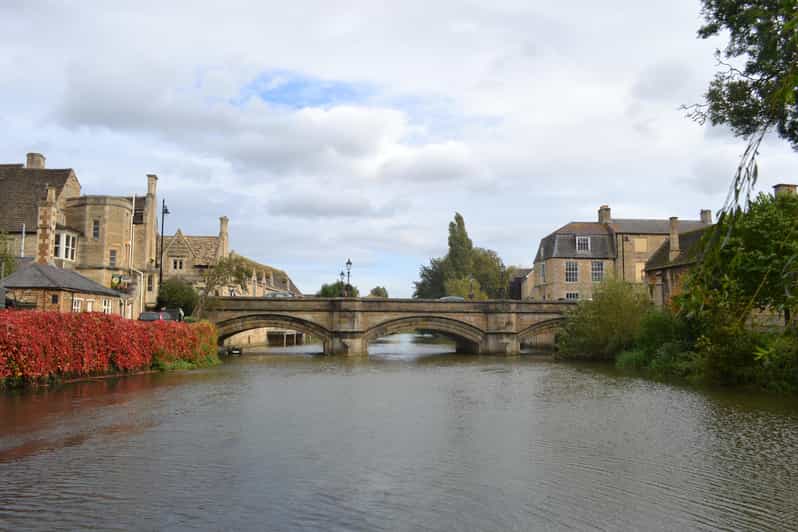
- Six hundred listed buildings and monuments: Stamford gives the tour plenty of real architecture to explain, not just a few isolated sights.
- Seven magnificent churches: The town’s religious buildings help show how its importance changed over more than 1,000 years.
- Local guides with character: Kiffy Mitchell and Bill have led tours praised for warmth, clear explanations, humour, and an easy pace.
- A 90-minute introduction: You get a compact overview of Stamford’s buildings, people, legends, and past.
- Town Hall meeting point: Meet at the Stamford Town Hall steps, where your guide waits at the top.
- Good value at $14: The price works well for first-time visitors who want context before exploring independently.
Why Stamford works so well on foot

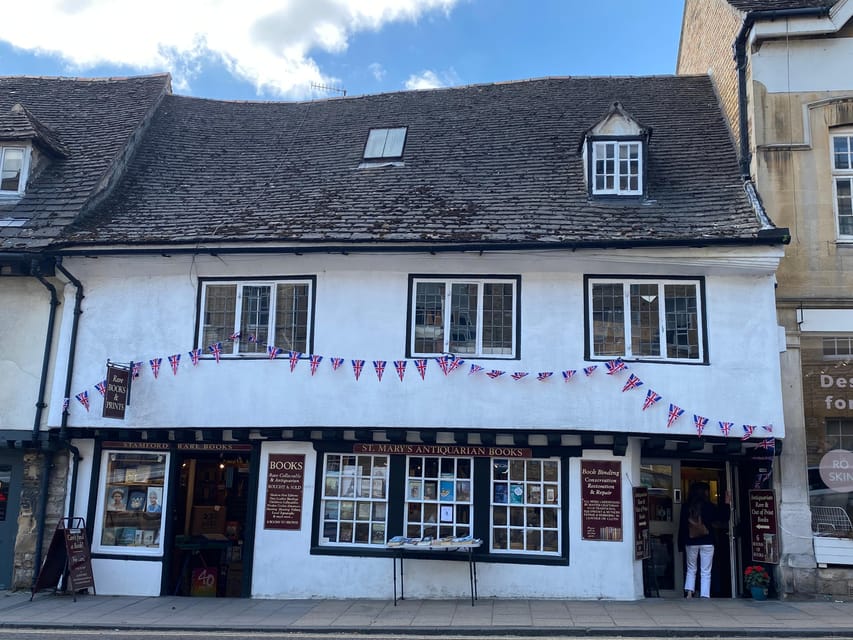
Stamford is the kind of place where the past sits in plain sight. You do not need a large fortress or a famous royal palace to make the town interesting. Its story is written into stone fronts, church towers, old streets, civic buildings, and the way newer buildings were fitted around older ones.
The town has preserved a large collection of Georgian buildings built over a medieval base. Tudor and Victorian periods add further layers, so the walk is not about one tidy architectural style. You see change over time, often within a short distance.
That matters because architecture can otherwise become a parade of dates and names. A good guide gives those buildings a reason to matter. The Mayor’s Guides are trained by Blue Badge Guide Jill Collinge, and the experience is designed to bring the town to life through stories of local characters, political wrangling, romance, and legend.
I would take this tour early in a Stamford visit. Once you understand how the town developed, independent wandering becomes more rewarding. You begin to notice why a building looks Georgian but sits on an older street plan, or why a church matters beyond its stonework.
More walking tours in Britain:
- Magical London: Harry Potter Guided Walking Tour
★ 4.7 · 22,044 reviews - London: The Original Jack the Ripper Walking Tour
★ 4.7 · 7,833 reviews - Oxford: University and City Walking Tour with Alumni Guide
★ 4.7 · 4,429 reviews
Starting at Stamford Town Hall
The meeting point is straightforward: Stamford Town Hall steps, postcode PE9 2DR. Your guide waits at the top of the steps, so arrive with enough time to find the building and gather before the walk begins.
A meeting point in the town centre is useful for two reasons. First, it puts you close to the historic area from the start. Second, it saves you from spending part of the tour on a long transfer from a car park or outlying attraction.
The steps are also worth noting if you have limited mobility. The activity is advertised as wheelchair accessible, but the meeting point itself involves Town Hall steps, and historic town centres can include uneven surfaces. If access is important for your visit, check the practical arrangements when booking.
The tour is delivered in English. Because the guide speaks directly to the group, you can ask questions and follow the story as the walk unfolds. This is more useful than reading a plaque after the fact, especially when several periods of Stamford’s past overlap.
A 90-minute route through layered architecture

The published route gives one main guided walk around Stamford rather than a long list of fixed attraction stops. That is a strength for a town like this. The point is not simply to enter seven churches or inspect every listed building. The point is to understand how the whole town fits together.
Expect the guide to use the streets and buildings as a visual timeline. Georgian architecture provides the clearest thread, with elegant stone buildings showing the town at one of its most prosperous points. Underneath that Georgian appearance is the older medieval town, with Tudor and Victorian touches added later.
The scale works well for a first visit. Ninety minutes is long enough to get beyond a basic orientation, but short enough to fit before lunch, an afternoon of shopping, or a visit to another attraction. The walk also gives you a framework for returning to places that deserve more time.
I would not expect a room-by-room tour of interiors. The information provided focuses on the town’s exterior architecture, stories, characters, and monuments. You are paying for interpretation while walking, not admission to a collection of indoor sights.
Georgian Stamford, with older stones underneath
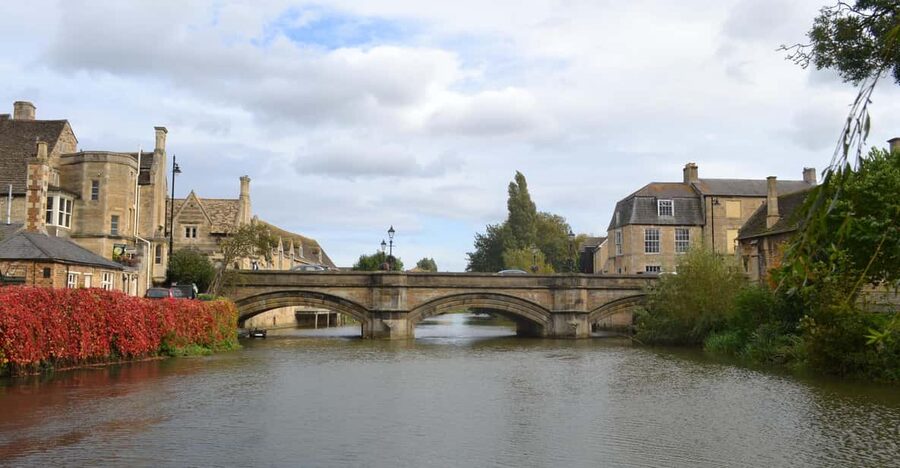
The Georgian buildings are one of the clearest reasons to book. Stamford is known for its fine stone townscape, and the tour explains how that appearance developed rather than treating each handsome frontage as a separate object.
For you, the real value is comparison. A Georgian building can look polished and orderly, while the street beneath it may follow a much older pattern. Tudor and Victorian details then complicate the picture. The town becomes a record of rebuilding, fashion, wealth, and changing needs.
This is where a guide earns the fee. Without context, you may simply think Stamford is attractive. With context, you can read the difference between periods and see how the town kept adapting without losing its older base.
The description refers to 600 listed buildings and monuments. That does not mean you will stop at all 600, of course. It does mean the setting is unusually dense with material worth explaining. Even a short walk can pass enough historic fabric to keep the commentary moving.
I especially like this approach for visitors who are not architecture specialists. You do not need to know the difference between every Georgian detail before arriving. The guide’s job is to point out what matters and explain it in plain terms.
A few more Britain days worth weighing up
- London: Emirates Stadium Entry Ticket and Audio Guide
★ 4.7 · 5,513 reviews - Liverpool: City & Beatles Tour with Live Guide & Live Music
★ 4.8 · 5,249 reviews - London: Christmas Lights Nighttime Bus Tour with Live Guide
★ 4.1 · 3,720 reviews - From London: Cotswolds and Oxford Guided Day-Trip
★ 4.7 · 3,720 reviews
Seven churches and a town shaped by religion
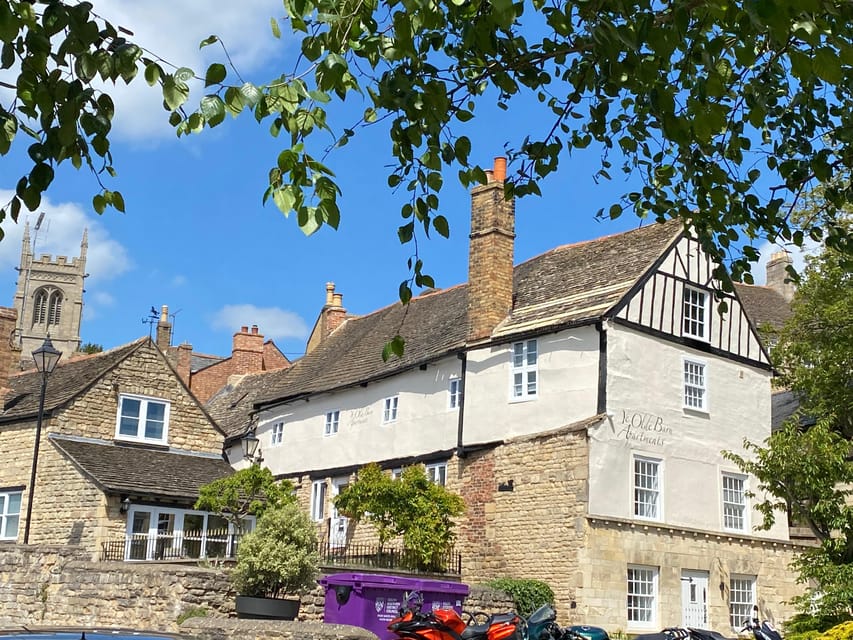
Stamford’s seven magnificent churches give the walk another useful theme. They are not just decorative landmarks. Churches help you understand the town’s age, importance, communities, and changing fortunes across more than 1,000 years.
The information supplied does not promise entry into each church, so I would treat them primarily as part of the town’s visible story. You will hear about the role they play in Stamford’s character, while the exact access and interior visits depend on the tour arrangements and the day.
For a visitor, the number seven is striking. It tells you that Stamford once had a level of religious and civic importance far beyond what a quick modern visit might suggest. A guide can turn separate church buildings into evidence of a larger story.
This is also a good feature for families. One published tour experience found that children could link the information to lessons at school. The guide’s use of buildings, people, and events gives younger visitors something concrete to look at, rather than asking them to remember a string of abstract dates.
Stories of politics, romance, and local characters

The tour is not presented as a dry architectural survey. Its stories include Georgian elegance, dubious politics, tragic romance, legends, and other episodes from Stamford’s past. That mix should appeal to you if you like places explained through people rather than dates alone.
Kiffy Mitchell is one guide associated with the experience. She has been praised for being warm, welcoming, entertaining, and able to connect Stamford’s origins with personal family interests. One particularly useful detail is that she helped a visitor identify places linked to a great-grandfather who had lived in the town.
That sort of local connection is what makes a walking tour feel personal. You may not have family ties to Stamford, but the guide’s attention to individual lives can help you picture the town as a place where people worked, argued, loved, worshipped, and made mistakes.
Bill is another guide named in the tour feedback, described as highly informative. The guide you meet will depend on the date, but the shared training under Jill Collinge gives the team a clear foundation.
The tone also seems important. The walk is meant to entertain as well as inform, and the strongest comments focus on warmth, humour, engagement, and the feeling that the 90 minutes passes quickly. That is useful for anyone who worries that a history walk might become a lecture.
Guide style and pace

A walking tour succeeds or fails on its guide. Here, the strongest pattern is the personal delivery. Kiffy Mitchell is singled out for warmth and an ability to make local history feel relevant. Other comments describe the guiding as enthusiastic, engaging, and easy to follow.
The pace appears adaptable to the group. One tour was praised for moving at a pace that suited everyone, while another remained informative and entertaining even in stifling heat. That does not remove the need for sensible planning, but it suggests the walk is not built around rushing from one point to another.
I would still wear comfortable shoes and bring water in warm weather. The tour lasts 90 minutes, and a hot day can make a stone town feel more tiring than the distance suggests. In colder or wet weather, the walk remains possible, but your enjoyment will depend more on suitable clothing.
The tour is best for people who enjoy listening while looking closely. If you want a fast list of photo stops, you may find the storytelling slower than expected. If you want to understand why Stamford looks the way it does, the pace should suit you.
Is $14 good value?
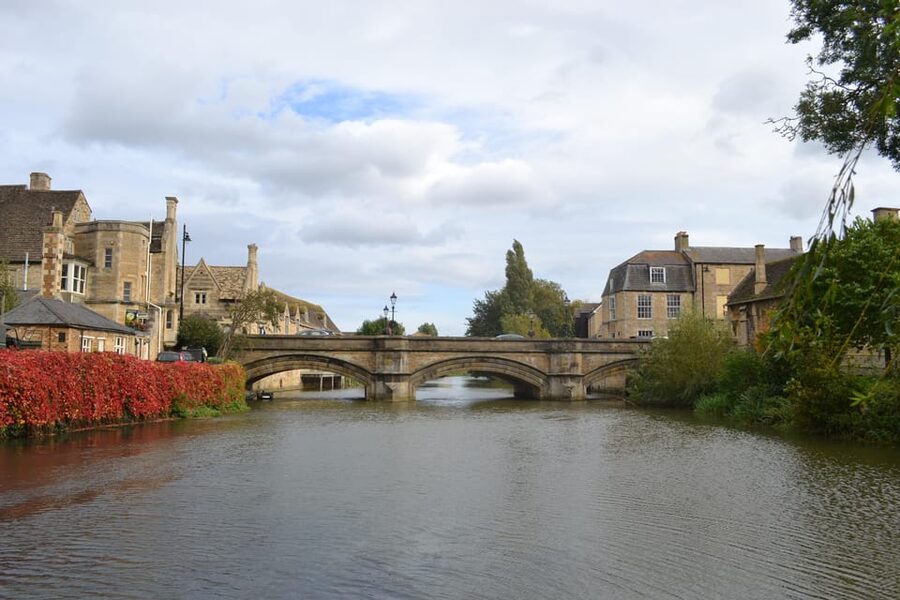
At $14 per person, this is a modest way to add meaning to a Stamford visit. You receive 90 minutes with a live English-speaking guide, plus an overview of architecture, people, legends, churches, and the town’s long development.
The value is strongest if this is your first time in Stamford. A self-guided walk costs nothing, but you must research the town beforehand or miss much of what the buildings reveal. Here, the fee buys structure and local interpretation.
It is also good value for repeat visitors who want a different angle. You may already know the main streets, yet a story about a local character or a political dispute can change how you see familiar buildings.
The price is less compelling if you want extensive access inside churches or a full-day historical study. Nothing in the tour details promises a lengthy interior programme or specialist architectural analysis. Think of it as a lively town introduction with enough substance to guide the rest of your visit.
Afterward, you can continue exploring Stamford’s pubs, restaurants, and independent shops. The tour ends with you already in the town centre, so there is no awkward return transfer or need to reorganize your day.
Who should book this walk?
I would recommend it to first-time visitors, couples, families, history fans, architecture fans, and anyone who prefers a local guide to a phone map. It is especially useful if you have only a few hours in Stamford and want the town’s main story before choosing where to spend more time.
Families may appreciate the clear links between buildings and school history. The stories also give children something to remember, although the tour is still a spoken history walk rather than a dedicated children’s activity.
It suits independent visitors too. You do not surrender your whole day to a group. After 90 minutes, you can follow up with shops, food, churches, or buildings that caught your eye.
You might skip it if you strongly dislike scheduled walking tours, need a very slow route, or want guaranteed entry into specific interiors. The details supplied focus on the town as a whole, not a fixed set of indoor visits.
The free cancellation policy allows you to cancel up to 24 hours before the tour for a full refund. You can also reserve now and pay later, which is handy when your Stamford plans are still shifting.
My verdict on the Stamford walking tour
I would book this as an opening activity, especially at $14. The combination of 600 listed buildings, seven churches, and a medieval town plan covered by Georgian stonework gives the walk plenty to work with, while the stories keep it from feeling like a catalogue of dates.
Look for a tour led by Kiffy Mitchell if her availability matches your plans, though Bill and the wider Mayor’s Guides team also bring strong local delivery. The main thing is to arrive ready to walk, listen, and look up at the buildings around you.
Book it if you want Stamford to become more than a pretty stop. Skip it only if you need a completely self-guided visit or a detailed interior tour. For most visitors, 90 minutes is a sensible investment that leaves the rest of the day free.
FAQ
Where does the Stamford walking tour meet?
The meeting point is the steps of Stamford Town Hall. The guide waits at the top. The listed postcode is PE9 2DR.
How long does the tour last?
The guided walk lasts 90 minutes, or 1.5 hours.
What language is the tour in?
The tour is conducted in English, and the live guide provides the narration.
How much does the tour cost?
The listed price is $14 per person.
What will the tour cover?
The walk covers Stamford’s architecture, characters, legends, and past, including Georgian buildings built on a medieval base, Tudor and Victorian features, listed buildings, monuments, and the town’s seven churches.
Who leads the tour?
The guides are The Mayor’s Guides. They are trained by Blue Badge Guide Jill Collinge. Named guides associated with the experience include Kiffy Mitchell and Bill.
Is the tour wheelchair accessible?
The activity is listed as wheelchair accessible. The meeting point is at the top of the Town Hall steps, so you should confirm the practical access arrangements if needed.
Can I cancel the booking?
Yes. You can cancel up to 24 hours in advance for a full refund.
Can I reserve the tour and pay later?
Yes. The reserve now and pay later option lets you hold a place without paying at the time of booking.
Just added around Britain
- London: Wimbledon Tennis Club and Westminster Walking Tour★ 4.5 · 86 reviews
- London: Westminster to Richmond River Thames Cruise★ 4.8 · 23 reviews
- Winchester: Historic Castles and Cathedrals Walking Tour★ 4.9 · 154 reviews
- Westminster Abbey Skip-the-Line Entry and Private Tour★ 4.6 · 4 reviews
- Best of London by LE GRAND – London’s Luxury Bus Tour★ 4.2 · 23 reviews
- Whitby: Guided Distillery Tour with Gin Tasting★ 5.0 · 28 reviews
- London: Westminster Walking Tour & St Paul’s Cathedral Entry★ 4.7 · 7 reviews
- Warwick: Entry Ticket for Warwick Castle★ 4.7 · 215 reviews
Walking Tours, compared.

Magical London: Harry Potter Guided Walking Tour
Read our review →

University and City Walking Tour with Alumni Guide
Read our review →
Harry Potter Movies Walking Tour (Kids Go Free)
Read our review →
The Great British Rock and Roll Music Walking Tour
Read our review →
Jack the Ripper Walking Tour – Ripper Vision Tours
Read our review →