
Reviewed · WALKING TOURS
Stratford-Upon-Avon: The Famous Walk Talk Show
Stratford-upon-Avon packs 1,400 years of history into a walk of less than 1.4 kilometres. In 90 minutes, you move from the Royal Shakespeare Theatre through medieval streets, Tudor buildings, Shakespeare’s homes, old taverns, and the church where he was buried. Guides such as Kate, Marcus, and Dwayne bring the story to life with clear explanations, jokes, and local detail.
I like the route’s excellent historical variety, and I like that it gives you a useful first look at Stratford before you choose which houses, museums, or performances deserve more of your time. The main drawback is that this is an outdoor walk in all weather, with no food, drinks, or hotel pickup included.
Key points
- A compact 1.4-kilometre route covers 12 stops in central Stratford-upon-Avon.
- Shakespeare’s world comes into focus through his birthplace, New Place, schoolroom, burial church, and familiar taverns.
- The Guild Chapel dates from 1269, giving the walk a medieval anchor before the Tudor and Elizabethan stories begin.
- The guides make the difference, with Kate, Marcus, Dwayne, and Chris praised for storytelling, humour, and thoughtful answers.
- The walk is wheelchair and mobility scooter-friendly, though comfortable shoes and weather protection still matter.
- At $16.16 per person, it is a low-cost way to get oriented before spending more on Shakespeare attractions.
Starting at the Royal Shakespeare Theatre
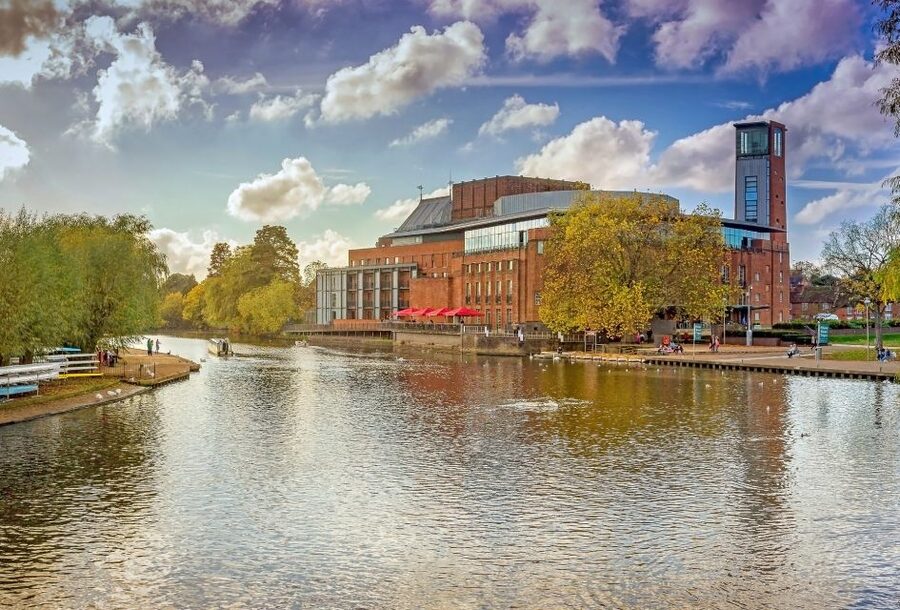
Meet outside the main entrance of the Royal Shakespeare Theatre, beside the base of the large viewing tower. Arrive just before the time on your ticket and look for a guide wearing a laminated WalkTalkShow.co.uk badge. At busy times, the guide may also carry a red umbrella.
Do not go inside the theatre while waiting. The meeting point is outdoors, and entering the building could mean missing the group.
This is a sensible place to begin. The Royal Shakespeare Theatre gives the tour a clear modern reference point, while the story quickly reaches back to Stratford’s earliest settlement. Your guide sets the scene for the town’s long development, from 7th-century settlers through the medieval period and into Tudor England.
The opening is useful because Stratford is not only a Shakespeare town. It is also a place shaped by religious power, royal changes, trade, education, and local families. Shakespeare is the main character, but the town around him explains why his story matters.
A few more Stratford Upon Avon days worth weighing up
- The Sinister Side of Shakespeare’s Stratford Walking Tour
★ 4.8 · 547 reviews - Stratford-upon-Avon: Shakespeare’s Birthplace Ticket
★ 4.6 · 476 reviews - Stratford-upon-Avon:City Sightseeing Hop-On Hop-Off Bus Tour
★ 4.4 · 296 reviews
Market Cross and the town’s working centre
The first route section leads toward the Market Hall at Market Cross. This is where the walk begins to show Stratford as a working town rather than simply a literary shrine.
Markets helped shape daily life, and the central streets still give you a strong sense of how close together the old buildings were. Your guide connects the buildings and street plan to Stratford’s past, helping you notice details that are easy to miss when walking alone.
The advantage here is pace. You are not stopping for a long formal lecture at one site. Instead, you get a series of short explanations while moving through the centre. That keeps the 90-minute format lively and helps you build a mental map of town.
Shakespeare’s birthplace and the Tudor setting
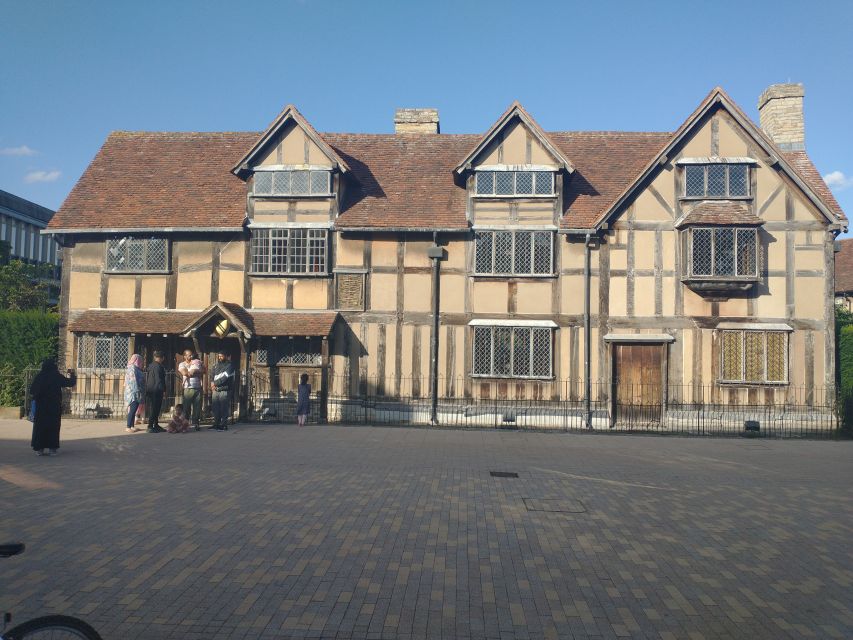
Shakespeare’s birthplace is one of the major points on the route. The walk does not replace a visit inside the house, but it explains how the building fits into the town and the playwright’s life.
This is where the Tudor setting becomes more vivid. Shakespeare lived during the years between Henry VIII and Elizabeth I, a period when religion, government, education, and public life were changing sharply. The tour places Shakespeare within that unsettled age rather than treating him as a figure floating outside history.
I find this approach more helpful than a simple list of dates. You hear about the forces that changed English life and then see the streets and buildings connected with Shakespeare’s family. The result is a clearer picture of the man behind the plays and poems.
The birthplace area can be busy, especially at popular times. Your guide’s commentary is therefore valuable even if you plan to return later for a paid house visit. You can decide what deserves more of your attention without guessing from a map.
Rother Street Market and Bell Court

The walk continues through Rother Street Market and Bell Court. These stops add ordinary town life to the Shakespeare story.
Rother Street Market helps show Stratford as a place of trade and local business. Bell Court then brings you through a more modern part of the central area, making the contrast between old and newer Stratford easy to see.
This section may not carry the same name recognition as Shakespeare’s birthplace or the Guild Chapel, but it gives the route breathing room. The tour is not a march from one famous house to another. You get a broader look at how a living town has changed while keeping important older buildings.
The steady pace suits most people who want an introduction rather than a hard physical workout. The full distance is just under 1.4 kilometres, and the route is described as suitable for wheelchairs and mobility scooters. Even so, wear comfortable shoes. You will be on your feet for about an hour and a half, with stops to listen.
More walking tours in Stratford Upon Avon:
- Stratford-Upon-Avon’s Town Walking Tour (10:30am & 2pm)
★ 4.8 · 143 reviews - Cotswolds: One Day Cotswolds Walking Tour
★ 4.9 · 12 reviews - Stratford-Upon-Avon: Private Walking Tour with Local Guide
★ 4.9 · 11 reviews - Stratford-upon-Avon: City Walking Tour & Exploration Game
★ 4.6 · 3 reviews
History Corner and John Harvard’s birthplace
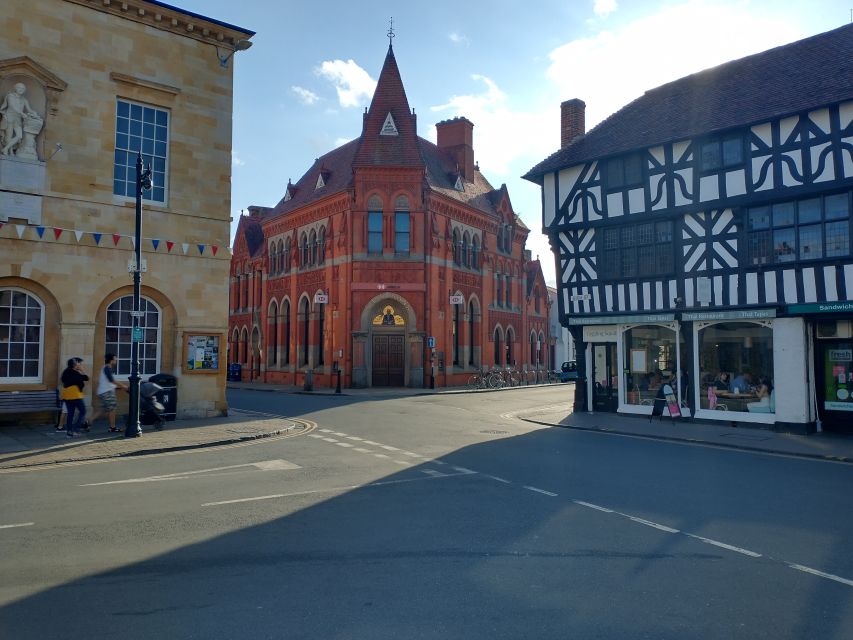
At the Town Hall and History Corner, the guide brings several centuries together in one view. The supplied details point out that buildings spanning five centuries can be seen from a single corner.
That is one of the most useful visual moments on the tour. Instead of hearing that Stratford has a long past, you can look across the street and see different periods gathered close together. The town’s age becomes something you can read from the buildings.
You also see the house associated with John Harvard, the man born in Stratford in 1607 who later became a founding figure connected with Harvard University. This detail broadens the walk beyond Shakespeare. Stratford’s importance is not limited to one famous son.
Small facts like this give the route its character. If you have come mainly for Shakespeare, you still gain a better sense of the town’s wider reach. If you have already visited Shakespeare attractions, these side stories add fresh interest.
New Place and Shakespeare’s later life
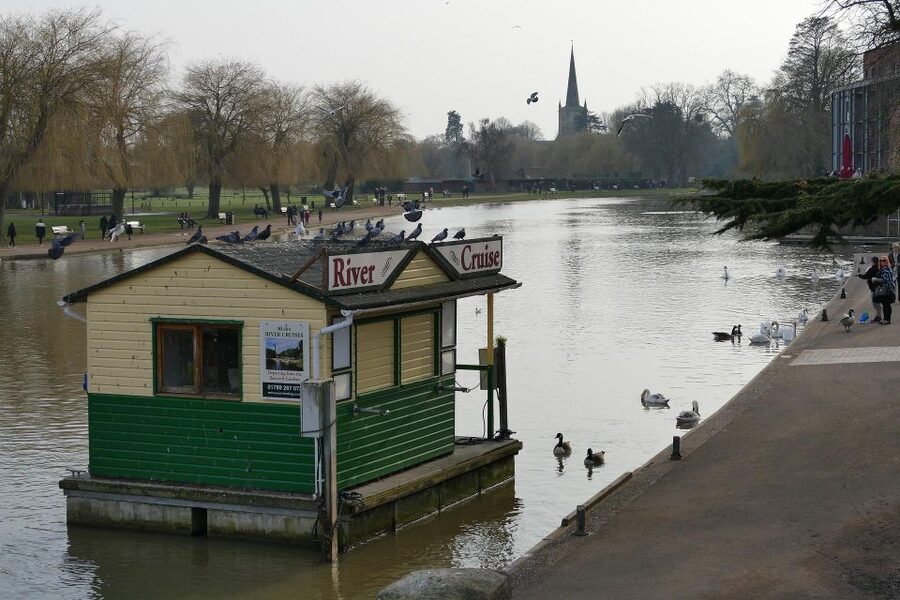
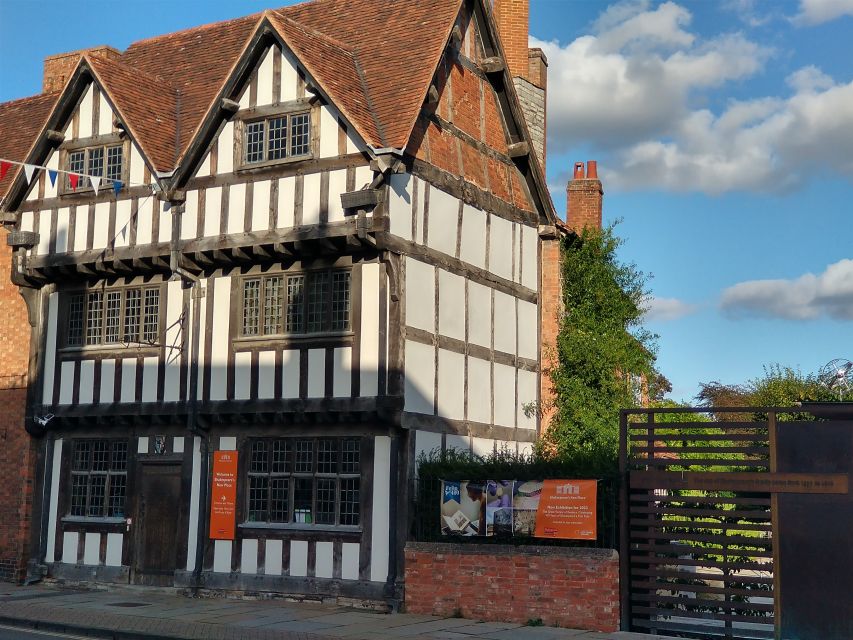
Shakespeare’s New Place marks an important change in the story. His birthplace introduces the family and early years. New Place points toward his later success and his connection with Stratford after he had built his career.
The site helps you think about Shakespeare as a local resident and property owner, not only as a writer whose works are performed around the world. Your guide explains the building’s role and its place in the town’s story.
This is also a good stop for understanding how much of Stratford’s Shakespeare story depends on surviving buildings, altered buildings, and places remembered through history. You should not expect every site to look exactly as it did in Shakespeare’s time. The value is in seeing the locations and learning how they connect.
The Guild Chapel, built in 1269
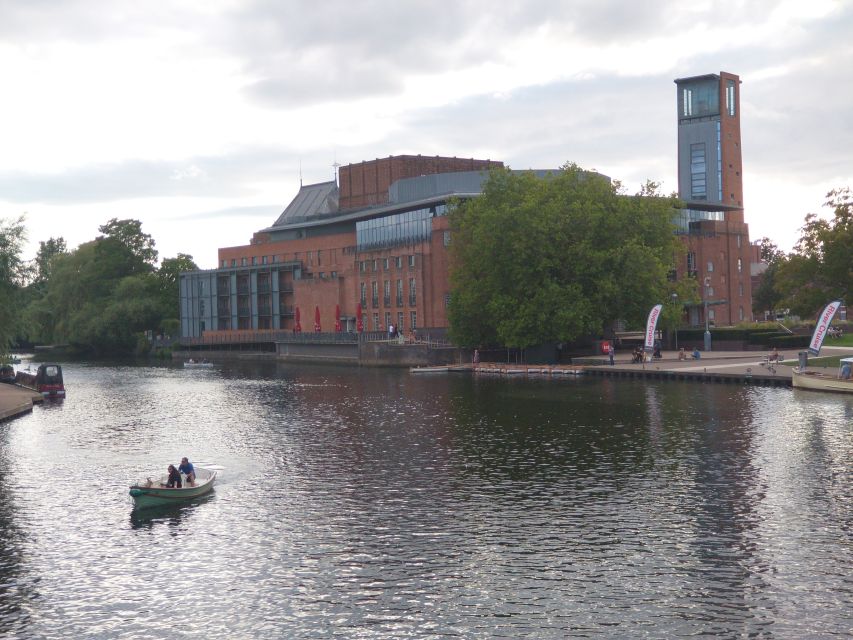
The Guild Chapel is one of the route’s strongest historical stops. Its chapel dates from 1269, and the Guild of the Holy Cross held power in Stratford for centuries.
The building also shows how royal policy could reshape local life. The Guild fell foul of Henry VIII and later rulers, linking Stratford’s story to the religious and political upheavals of the Reformation.
This is where the tour’s wider history pays off. Shakespeare’s world was formed by forces much larger than the town: the Crown, religious change, competing institutions, and shifting ideas about authority. The Guild Chapel gives those changes a physical setting.
You may want extra time to explore the chapel on your own if access allows, but the guided stop still matters even when you are moving on. It explains why this building once carried such weight in local affairs.
Shakespeare’s Schoolroom and KES
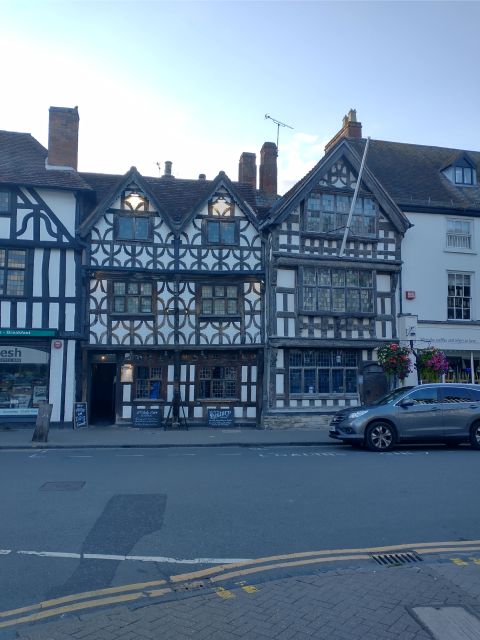
Next door is Shakespeare’s schoolroom, along with early 16th-century almshouses built by the Guild. The schoolroom gives another personal link to Shakespeare, this time through education.
The tour also includes KES as it is now, referring to the school connected with Shakespeare’s education. This part of the route helps replace the image of Shakespeare as a lone genius with a more grounded picture of a boy growing up in a real town, within its schools, churches, markets, and family networks.
The stop is especially useful for families and for anyone who wants to understand the social setting behind Shakespeare’s writing. It also gives you a chance to connect the town’s religious and civic institutions with education.
Old taverns and the Swan Theatre
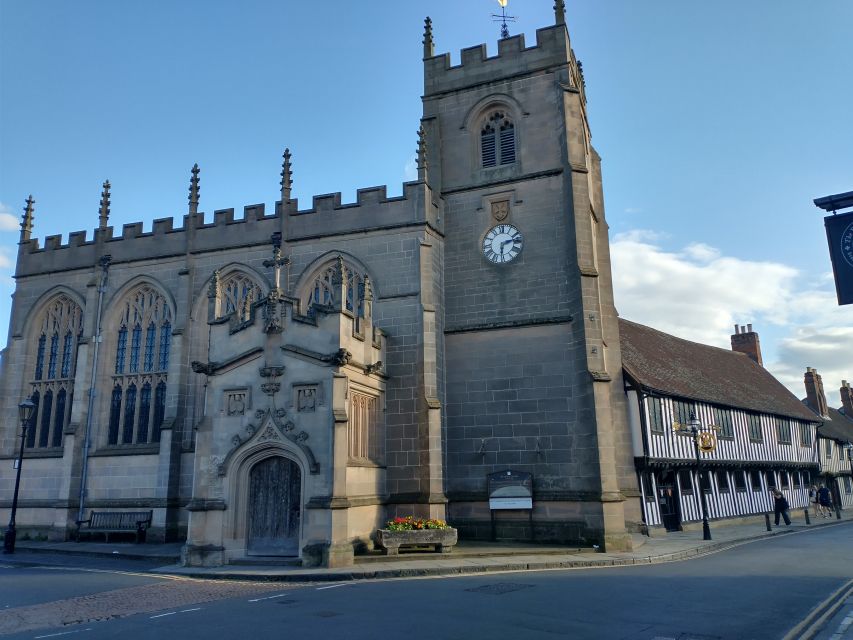
The route includes surviving taverns that served Shakespeare and his friends in the late 16th century. These are not just pretty old buildings. They help you picture the social world around the playwright.
Some taverns continue to serve people today, roughly 450 years after Shakespeare’s time. That continuity gives the walk a welcome everyday feel. You are not only looking at grand memorials. You are also seeing places built for eating, drinking, meeting, and local conversation.
One particularly useful detail is the Swan pub interior, where a mural was found during renovation. Your guide may be able to point out the connection and explain why the building matters.
The Swan Theatre appears later on the circular route, before you return to the Royal Shakespeare Theatre. This brings the story back to Shakespeare in performance. The modern theatres connect the town’s past with its continuing role as a place to watch his work.
If you are attending a performance at the RSC, the walk makes a strong companion activity. It gives the theatre visit more context without taking up a full day.
River Avon views and the feel of the walk
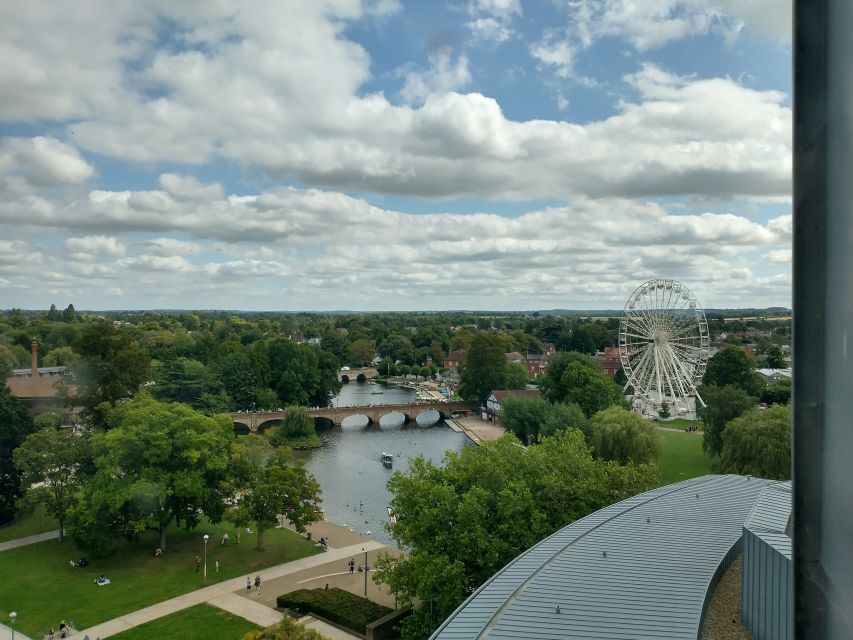
The route includes scenic streets, gardens, and views around the River Avon. These quieter visual moments break up the history and keep the experience from becoming a string of indoor-style facts delivered outdoors.
The walk is relaxed enough for most people, but the guides do not always move slowly. One guide was described as taking the group around at a rapid pace while still giving detailed explanations. Other feedback points to a steady walk that was well planned and not overloaded with information.
That means your experience may depend partly on the guide and group. Kate is praised for enthusiasm and local passion. Marcus is noted for clear history, humour, and a good ability to explain Stratford. Dwayne is described as friendly, entertaining, and willing to answer questions, while Chris is praised for making the story feel immediate and engaging.
The format allows questions, and guides have been able to answer them during the walk. In one case, Dwayne even accompanied a participant to a museum afterward. That is not something you should assume is included, but it shows the personal approach that can make a small walking tour feel more useful.
What the 90-minute format does well
A 90-minute tour cannot cover every detail of Stratford or replace visits inside the main attractions. It can, however, give you a strong first framework.
You move through about a dozen stops on a circular route, ending where you began. That makes the walk easy to fit into a day trip from London or a weekend in Warwickshire. You can take the tour early, then return to the buildings that caught your attention.
The guides generally keep information moving rather than burying you in dates. Several accounts describe the walk as informative without being too much at once. Humour helps, although some jokes are deliberately corny. If you prefer a formal academic lecture, the relaxed tone may feel light. If you want history you can remember, it works well.
The tour can also run longer than the advertised 90 minutes when the guide is answering questions or explaining a site in detail. That can be welcome, but plan a little flexibility if you have a tightly timed lunch, train, or theatre curtain.
Price, weather, and practical value
At $16.16 per person, this is a modest outlay for a live introduction to central Stratford. The value is strongest if you are visiting for the first time, have limited hours, or want help deciding which Shakespeare sites to enter.
The ticket covers the guide only. Hotel pickup, food, drinks, and entry to attractions are not included. Treat it as an orientation walk, not a bundled sightseeing pass.
The tour runs in rain or shine and only cancels for extreme weather that creates a safety risk. Bring weather-appropriate clothing and comfortable shoes. On cold or wet days, the outdoor format can be tiring because there may not always be a sheltered place to pause and warm up.
Wheelchair and mobility scooter access is listed as available. Since this is still a historic town walk, it is sensible to consider your own comfort with outdoor surfaces, stops, and the pace of the group.
You can cancel up to 24 hours before the start for a full refund, and the reserve-now, pay-later option keeps your plans flexible. Those terms are useful when your Stratford visit depends on weather or a wider United Kingdom itinerary.
Who should book this Stratford walking tour?
I would choose this walk for a first visit, especially if you are staying only one day. It gives you the town’s shape, the main Shakespeare connections, and enough background to make later visits more meaningful.
It also suits people who enjoy stories about buildings and local institutions, not only famous names. The Guild Chapel, schoolroom, almshouses, old taverns, markets, and John Harvard’s birthplace give the tour more range than a simple Shakespeare birthplace circuit.
Families may appreciate the short distance and the mix of visual stops, stories, and humour. Literature fans will value the links between Shakespeare’s life, Tudor society, education, religion, and performance. People attending an RSC show can use the tour to connect the modern theatre with the town that shaped the playwright.
I would be less enthusiastic if you dislike outdoor sightseeing in poor weather or want long visits inside each attraction. You will need separate tickets and separate time for the birthplace, New Place, schoolroom, church, theatre, or museums.
Should you book the Famous Walk Talk Show?
Book it if you want a lively introduction to Stratford-upon-Avon, especially at $16.16 and with only 90 minutes to spare. The best parts are the compact circular route, the sharp mix of medieval, Tudor, and Shakespeare sites, and the guides’ ability to make local history easy to follow.
Before booking, check the start time and prepare for outdoor conditions. Arrive at the Royal Shakespeare Theatre, not inside it, and look for the badge or red umbrella. If you want to explore Stratford with a helpful map in your head before choosing your next stop, this walk earns its place in your day.
FAQ
How long is the Stratford Famous Walk Talk Show?
The tour lasts 1.5 hours, or 90 minutes. The route covers just under 1.4 kilometres and includes about a dozen stops.
Where does the walking tour start?
Meet outside the main entrance of the Royal Shakespeare Theatre, at the base of the large viewing tower. Do not enter the building near the start time, or you may miss the guide.
Where does the tour end?
The circular walk ends back at the Royal Shakespeare Theatre meeting point.
What language is the tour in?
The tour is conducted in English with a live English-speaking guide.
Is the walking tour wheelchair accessible?
Yes. The route is listed as wheelchair and mobility scooter-friendly.
What should I bring?
Wear comfortable shoes and clothing suited to the weather. The tour operates in rain or shine and only cancels when extreme weather creates a safety concern.
Are attraction admission, food, or hotel pickup included?
No. The price includes the guide only. Food, drinks, hotel pickup, hotel drop-off, and admission to attractions are not included.
More Show in Stratford Upon Avon
- Comedy Horror Show: York Ghost Bus Tour
★ 4.4 · 2,496 reviews - London Vintage Bus Tour: Live Comedy Sightseeing Show
★ 4.3 · 217 reviews - London: Burlesque Cabaret Show in the West End
★ 4.2 · 127 reviews - London: Royal Observatory Planetarium Show Entry Ticket
★ 3.9 · 89 reviews
Just added around Stratford Upon Avon
- Stratford-upon-Avon: Tudor World Museum Entrance Ticket★ 4.4 · 34 reviews
- Stratford-Upon-Avon’s Town Walking Tour (10:30am & 2pm)★ 4.8 · 143 reviews
- Stratford-upon-Avon: Shakespeare’s New Place Entry Ticket★ 4.0 · 3 reviews
- Shakespeare Distillery Tour & Tasting (Gin & Rum)★ 4.8 · 69 reviews
- Stratford-upon-Avon: City Walking Tour & Exploration Game★ 4.6 · 3 reviews
- Warwickshire: The Explorer Pass by Shakespeare’s England★ 4.6 · 26 reviews
- Shakespeare’s Schoolroom and Guildhall Entrance Tickets★ 4.4 · 70 reviews
- River Avon Gin Tasting Cruise★ 4.8 · 7 reviews
Walking Tours, compared.

Magical London: Harry Potter Guided Walking Tour
Read our review →

University and City Walking Tour with Alumni Guide
Read our review →
Harry Potter Movies Walking Tour (Kids Go Free)
Read our review →
The Great British Rock and Roll Music Walking Tour
Read our review →
Jack the Ripper Walking Tour – Ripper Vision Tours
Read our review →

Browse the lists this tour appears in