
Reviewed · WORKSHOPS
Woolf & Dickens: London Literary Tour & Writing Workshop
London becomes your writing desk on this thoughtful walk from Waterloo Bridge to Doctor Johnson’s House. Virginia Woolf’s view from the bridge leads to a personal writing exercise, while Somerset House, St Mary Le Strand, and Aldwych give you places to write about time, art, politics, and truth.
I like the way Joseph combines short readings with prompts you can shape to your own level. I also like the private-group format and the welcoming tone described by participants, including Darlene, who found the session safe and open to both new and experienced writers. The main catch is the price: at $101 for 90 minutes, this makes the most sense if you want an active workshop, not a standard sightseeing walk.
Key points
- Waterloo Bridge sets the tone: Use the view toward London as a prompt for a biographical sketch inspired by Woolf.
- Somerset House becomes a writing exercise: Practice mindful observation rather than simply hearing facts about the building.
- St Mary Le Strand brings art and time together: Respond to the church interior through ekphrasis, writing shaped by visual art.
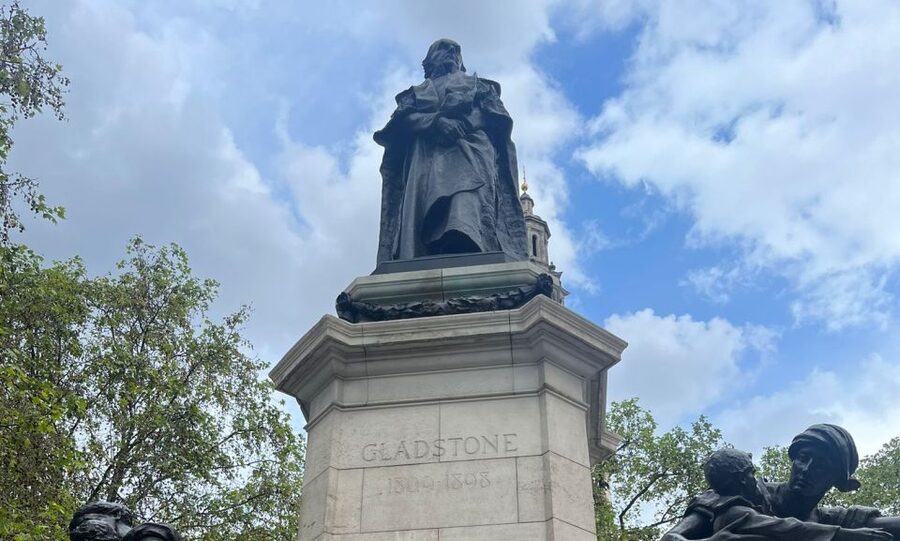
- Politics gets personal: Gladstone, Dickens, and Samuel Johnson help you examine truth, history, and public life.
- Joseph leads an active session: Expect readings, questions, and prompts rather than a lecture.
- Private and accessible format: The 1.5-hour English tour is wheelchair accessible, with no entry tickets required.
A literary walk that asks you to write
This is not a sightseeing tour with a few famous names sprinkled on top. It is a short walking workshop built around the idea that London can give you material, if you slow down enough to notice it.
Joseph, an award-winning novelist with a PhD in Creative Writing, leads the session in English. His method is simple: place a writer, a building, or a public figure in front of you, then ask what that subject brings out in your own mind.
You might write from the view over the Thames. You might build a short biographical sketch from a passing impression. You might list facts about a statue and then mix those facts with your own life. The exercises are designed for beginners, but they also give experienced writers a useful change of setting.
That active approach matters. You are not expected to memorize dates or explain literary theory. You listen to a short reading, look closely at your surroundings, and put words on the page. The result can be rough, personal, playful, or unfinished. That is part of the point.
A few more London days worth weighing up
- From London: Harry Potter Warner Bros Studio Tour
★ 4.7 · 26,588 reviews - London: Westminster to Greenwich River Thames Cruise
★ 4.5 · 22,836 reviews - Magical London: Harry Potter Guided Walking Tour
★ 4.7 · 22,044 reviews
Waterloo Bridge and Virginia Woolf’s shifting London
The meeting point is at the north end of Waterloo Bridge, on a slope to the right that runs behind Somerset House. Arrive with your bearings in order, since a bridge-side slope is less obvious than a museum entrance. The guide meets you there before the walk begins.
The first major idea comes from Virginia Woolf and her reflections on the view from Waterloo Bridge. Woolf often treated London as a place where the present and the past overlap. A street or river view could hold memory, biography, and passing time all at once.
You respond with a biographical sketch inspired by what you can see. This does not mean writing a formal life story. Instead, you might connect a person, a memory, or an imagined life to the view in front of you.
I like this opening because it gives you a clear task without forcing one correct answer. A writer who has never taken a workshop can begin with a simple observation. Someone with more experience can play with voice, point of view, or the movement between past and present.
The bridge is also a useful place to start because the view supplies a shared subject. You do not have to invent a setting from nothing. The exercise begins with the city and asks what the city stirs in you.
Somerset House and the practice of mindful writing
The route continues around Somerset House, where the focus shifts from memory to attention. Here you practice a mindful writing experiment, using the immediate environment as your subject.
The exercise asks you to notice rather than rush. You may pay attention to a detail in the architecture, the way people move through the space, or the small facts that usually disappear when you are hurrying between attractions.
This is a good fit for people who feel they are not creative enough. You do not need a dramatic personal story. A careful look at one place can provide enough material for a short piece.
Somerset House also helps vary the pace of the session. The Waterloo Bridge prompt is broad and reflective. This one is more grounded. You work from what is directly around you, which can make the writing feel less intimidating.
Do not expect a long block of silent writing. The workshop combines explanation, readings, questions, and exercises. The exact amount of time spent writing may vary with the private group and the guide’s flow, but the format is clearly participatory.
Aldwych and T.S. Eliot’s sense of time
At Aldwych, the tour connects T.S. Eliot’s writing about time and history with a timeline on the walls. This gives the walk a more structured intellectual turn.
Eliot’s work often asks how memory, history, and the present affect one another. The timeline provides a physical way to think about that problem. You can look at a sequence of events, then consider how the meaning of those events changes depending on where you stand.
For some people, this will be the most demanding part of the workshop. The ideas are less immediately personal than the Woolf exercise, and you may need to listen closely before the prompt takes shape.
That is also its value. A good writing workshop should not offer only easy observations. This section encourages you to think about how time is arranged, remembered, and interpreted. You are not simply being told about Eliot. You are asked to test his ideas against your own sense of history.
Same city, a completely different sort of afternoon:
- London: Madame Tussauds London
★ 4.6 · 20,915 reviews - London: Warner Bros. Studio Tour with Transfers
★ 4.7 · 17,586 reviews - London: Tower Bridge Entry Ticket
★ 4.7 · 15,560 reviews - London: St Paul’s Cathedral Entry Ticket
★ 4.7 · 9,813 reviews
St Mary Le Strand and ekphrasis
The church of St Mary Le Strand provides one of the walk’s clearest creative tasks. Inside its grand interior, you practice ekphrasis, writing inspired by a work of art or a visual scene.
You do not need to be an art expert. The exercise can begin with color, shape, light, architecture, or atmosphere. From there, you may move into memory, character, emotion, or story.
The church matters because it gives you a focused visual subject. Instead of writing about all of London, you respond to one interior. That narrower frame can help you make stronger choices.
There is a practical point here: the activity states that no entry tickets are needed. You should still bring your notebook and pen, since the writing is central to the visit rather than an optional extra.
The church stop may appeal most to people who like visual art, poetry, or descriptive writing. If your main interest is only literary sightseeing, the need to produce your own work may feel like a change from the usual tourist routine. That is worth knowing before you book.
Gladstone, Dickens, and the problem of truth
The statue of Gladstone leads the group toward politics, truth, and changing views of history. From there, a writing exercise asks you to create a list of facts that blends your personal history with the place around you.
This prompt sounds plain, but it can produce a useful tension. Facts appear objective, yet the way you select and arrange them is shaped by your own experience. The same public figure or political event can look different depending on what you know, remember, or choose to leave out.
Dickens becomes another prompt for considering how people and institutions present truth. His London writing often pays attention to public claims, private motives, and the gap between them. Here, his work is used to open a question rather than provide a fixed answer.
This part should suit anyone interested in political writing, personal essays, or the way public events enter private life. It is not a debate session, and you are not asked to defend a political position. Instead, you use the city as a place to examine how perspective shapes what we call fact.
Doctor Johnson’s House and the structures that shape us
The final stop is Doctor Johnson’s House, where the workshop turns to Samuel Johnson and his dictionary. You read from his work and consider how religion, politics, art, and language help form our understanding of the world.
The dictionary is a fitting final subject. Earlier prompts ask you to look at views, buildings, people, and public events. Johnson’s work brings the attention back to words themselves. How do definitions guide thought? How do the terms available to us affect what we can say?
This closing discussion gives the workshop a satisfying arc. You begin with the broad view from a bridge, move through architecture and public history, and finish with language as a tool for making sense of it all.
The stop is especially useful for writers who enjoy word choice and close reading. It may be less important to you if you want a walk focused only on famous authors and their biographies. This experience is more interested in using literature as a springboard for your own thinking.
Joseph’s teaching style and the private format
The guide is Joseph, and the session is designed around an atmosphere of kindness and inclusion. Darlene from the United States described him as well read and passionate about literature and writing, with a welcoming approach that made room for both beginners and experienced writers.
That detail helps set expectations. Joseph is not simply delivering a prepared talk while you follow behind. He uses relevant readings, asks questions, and offers prompts that leave room for your own response.
The private-group format should make it easier to ask for clarification or discuss an exercise without speaking in front of a large crowd. It also means the experience may feel more personal than a standard group walk.
Still, the format requires some willingness to participate. You do not have to share every piece you write, but you should be ready to pause, think, and put something on paper. If you prefer to listen quietly and take photographs, this may not be the best use of your time.
The session is in English, and the activity is wheelchair accessible. Since the route includes several outdoor locations, bring water and an umbrella in case of rain. You also need a pen, a notebook, and internet access. The instruction to bring internet access is specific, so do not assume your phone can stay switched off for the whole session.
Is $101 a fair price for 90 minutes?
At $101 per person, this is not a cheap way to see central London. The price reflects a private writing workshop led by a published, academically trained novelist, rather than admission to a major attraction or a long city tour.
I would judge the value by the kind of afternoon you want. If you are already paying for writing classes, literary events, or one-to-one feedback, this shorter outdoor session may give you a useful burst of ideas in a memorable setting.
If you want maximum sightseeing for your money, the price is harder to defend. The walk lasts only 1.5 hours, and it does not include entry tickets because none are needed. You are paying mainly for Joseph’s guidance, the selected readings, and the structure of the exercises.
The full refund cancellation window is 24 hours before the activity, and you can reserve now and pay later. Those terms help if your London plans are still shifting, but they do not change the basic value question: book this for the writing, not for the number of sights covered.
Who will get the most from this workshop?
I would recommend it first to people who already enjoy writing, even if they have never taken a formal class. The prompts are open enough for a new writer to begin, while the literary references give experienced writers material to push against.
It also suits readers who want to see London through authors and ideas rather than through a checklist of monuments. Woolf, Eliot, Dickens, and Johnson are not just names along the route. Each one supplies a way to look at memory, time, politics, art, or language.
Couples, friends, and private groups may appreciate the format because you can share the experience without joining a large public group. A solo participant can also fit the activity, but the value will depend on your comfort with writing in front of a guide.
I would be cautious about booking if you want a conventional literary history lecture, a long route, or a tour packed with interiors and formal commentary. This is a workshop with walking between prompts, not a major-author sightseeing circuit.
Practical tips before you set out
Bring a notebook with enough blank pages for several short exercises. A pen is essential, and a spare pen is a sensible small precaution for any writing session.
Wear shoes suitable for a short city walk and check the weather before leaving. An umbrella is specifically recommended, and water will help you stay comfortable.
Meet at the slope behind Somerset House at the north end of Waterloo Bridge. Give yourself time to find it, since the meeting place is described by its position rather than by a prominent landmark or ticket booth.
The tour is offered in English and lasts 90 minutes. No entry tickets are needed, so your main preparation is practical: arrive at the right slope, bring your writing supplies, and come ready to take part.
Should you book Woolf and Dickens in London?
Book it if you want a small, active literary session that turns London places into writing prompts. The strongest reasons are Joseph’s personal teaching approach, the private format, and the variety of exercises, from Woolf-inspired biography to ekphrasis at St Mary Le Strand and fact writing beside Gladstone.
Skip it if you want a low-cost sightseeing walk or a passive talk about famous authors. At $101 for 1.5 hours, the value depends on your interest in writing.
For a new writer, this can provide a friendly first step. For an experienced writer, it can shake loose ideas through place, history, and language. Bring your notebook, leave room for unfinished work, and expect to participate.
FAQ
Where does the Woolf and Dickens literary tour begin?
It begins at the north end of Waterloo Bridge, on a slope on the right that goes behind Somerset House.
How long does the activity last?
The writing workshop and walking tour last 1.5 hours.
What is the price?
The listed price is $101 per person.
Who leads the workshop?
The session is led by Joseph, an award-winning novelist with a PhD in Creative Writing.
Is the tour conducted in English?
Yes. The live tour guide and workshop language are English.
Do I need to buy entry tickets?
No entry tickets are needed for the guided tour and writing workshop.
What should I bring?
Bring a pen, notebook, water, and an umbrella in case of rain. Internet access is also listed as something to bring.
Can I cancel for a full refund?
Yes. You can cancel up to 24 hours in advance for a full refund. You can also reserve now and pay later.
Just added around London
- London: Wimbledon Tennis Club and Westminster Walking Tour★ 4.5 · 86 reviews
- London: Westminster to Richmond River Thames Cruise★ 4.8 · 23 reviews
- Westminster Abbey Skip-the-Line Entry and Private Tour★ 4.6 · 4 reviews
- Best of London by LE GRAND – London’s Luxury Bus Tour★ 4.2 · 23 reviews
- London: Westminster Walking Tour & St Paul’s Cathedral Entry★ 4.7 · 7 reviews
- From London: Oxford, Stratford-upon-Avon & Cotswolds Trip★ 4.5 · 64 reviews
- From London: Warwick, Oxford, Stratford & Cotswolds Day Tour★ 4.0 · 270 reviews
- Churchill’s Wartime London Walking Tour★ 4.3 · 4 reviews
Workshops, compared.

Traditional English Scone Making and Tea Workshop
Read our review →
Chocolate Bar Making Workshop at York Cocoa Works
Read our review →
East End Street Art Tour and Spray Painting Workshop
Read our review →




Browse the lists this tour appears in