
Reviewed · SHAKESPEARE TOURS
Stratford-upon-Avon: Shakespeare’s New Place Entry Ticket
Shakespeare’s New Place is unusual: you visit the site of a famous house that no longer exists. Instead of rooms and furniture, you get the house’s footprint, gardens, artwork, and a nearby exhibition that helps explain Shakespeare as a family man and businessman. I like the honest approach and the chance to picture the second-largest house in Stratford-upon-Avon in its own setting. I also like that the visit includes The Lives of the Women Who Made Shakespeare, a useful counterweight to the usual playwright-centered story.
The main drawback is clear: there is no original New Place building to enter. The house was demolished in 1759, so this works best if you enjoy historical interpretation, gardens, and visual displays rather than a preserved interior with period furniture.
Key points to know before you go
- The house is gone: You see the footprint and grounds of New Place, not the original building.
- Shakespeare lived here for 19 years: New Place was his family home from 1597 until his death in 1616.
- Nash’s House adds context: The exhibition next door examines Shakespeare’s life in Stratford.
- Women receive their own focus: The Lives of the Women Who Made Shakespeare looks at the women connected to his life and work.
- The gardens are part of the visit: Contemporary artwork and planting help mark the importance of the site.
- The ticket costs $20.20: You can use it for one day, with free cancellation up to 24 hours before the visit.
Why the missing house is the point
At first, New Place can sound less substantial than Shakespeare’s Birthplace or another preserved historic home. There are no surviving walls, bedchambers, staircases, or dining rooms to inspect. But the absence of the building is also what gives this visit its character.
New Place was Shakespeare’s home from 1597 until 1616. That period covers the later part of his career and the final years of his life. He was not simply a writer passing through Stratford. He lived here with his family, managed property, and occupied an important place in the town’s civic and commercial life.
The site helps you think about that everyday side of Shakespeare. You are not only asking where he wrote. You are considering where he lived, entertained, made household decisions, and returned after time away. That is valuable because the famous name can otherwise turn him into a distant literary figure.
I find the open setting more thoughtful than a fake reconstruction would be. The site does not pretend that the original rooms survived. Instead, the footprint and artwork give you clues, then leave room for your own imagination.
More Shakespeare days in Stratford:
- The Sinister Side of Shakespeare’s Stratford Walking Tour
★ 4.8 · 547 reviews - Stratford-upon-Avon: Shakespeare’s Birthplace Ticket
★ 4.6 · 476 reviews - Stratford-upon-Avon: Shakespeare’s Story Entry Ticket
★ 4.6 · 208 reviews
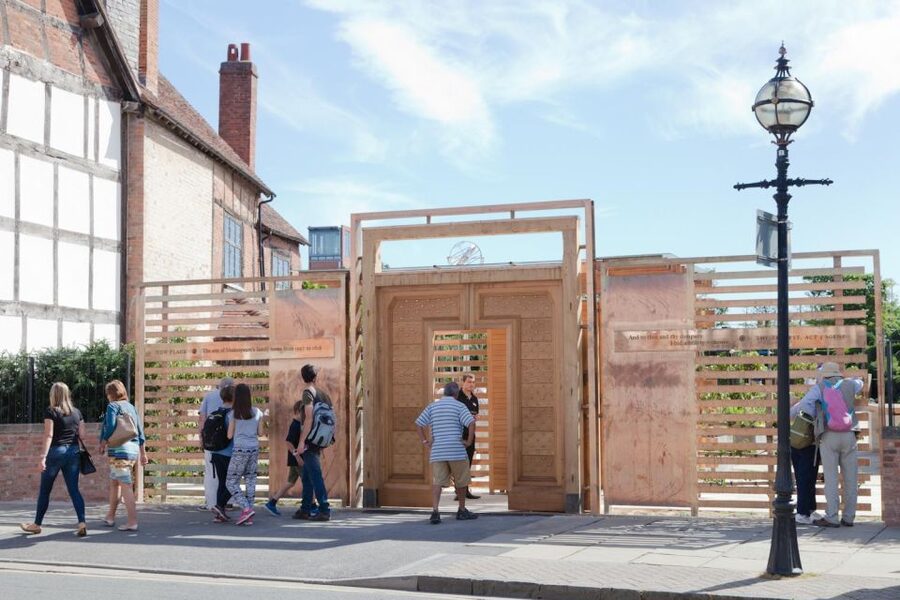
Entering through the gate house
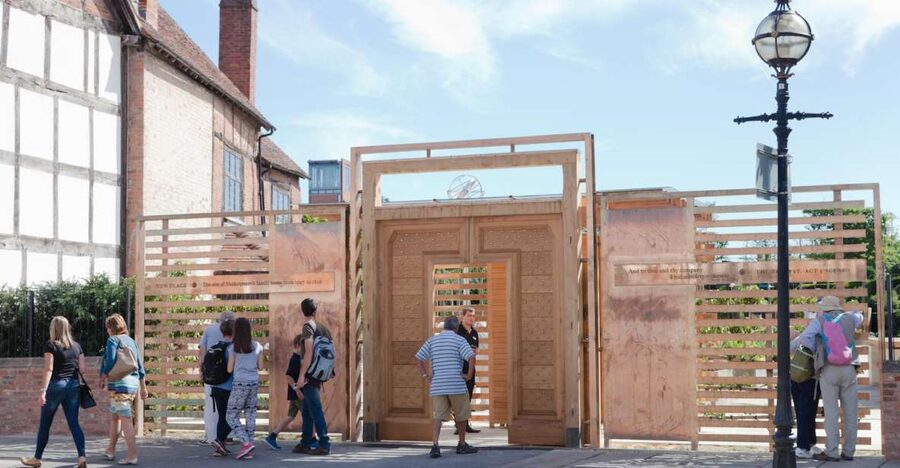
Your visit begins at the gate house. This is the practical starting point, so you should proceed there when you arrive rather than looking for a separate tour meeting place elsewhere in Stratford-upon-Avon.
The activity is self-contained and ends back at the same meeting point. No guide name or guided walking portion is specified, so you should expect to explore at your own pace rather than follow a named guide through town.
That flexibility matters. You can take your time with the footprint, pause at the artwork, and spend longer in the exhibition if Shakespeare’s domestic life interests you most. You can also keep the visit fairly focused if you are fitting it between other Stratford sights.
The ticket is valid for one day, with starting times subject to availability. Check the available time when booking, then allow yourself enough room to see both the outdoor site and Nash’s House without rushing.
Reading the footprint of New Place

The central experience is the site where New Place once stood. In Shakespeare’s day, it was the second-largest house in Stratford-upon-Avon. That single fact changes how you picture him. This was not a modest cottage belonging to an unknown local resident. It was a substantial family home that reflected his growing success.
You can see the footprint of the house and its grounds. This is the key difference between New Place and a preserved house museum. The outline gives you a sense of scale and arrangement, but it does not reproduce the rooms in a way that lets you walk through them.
Take a moment to look at the site as a whole before focusing on individual displays. The footprint works best when you use it to imagine the size and position of the former home. Then the artwork can add a more personal and modern layer to the story.
The setting also helps place Shakespeare in Stratford rather than treating him as a purely London-based playwright. New Place was part of his local identity. He owned a major home here and remained connected to the town until his death.
Contemporary artwork on Shakespeare’s ground
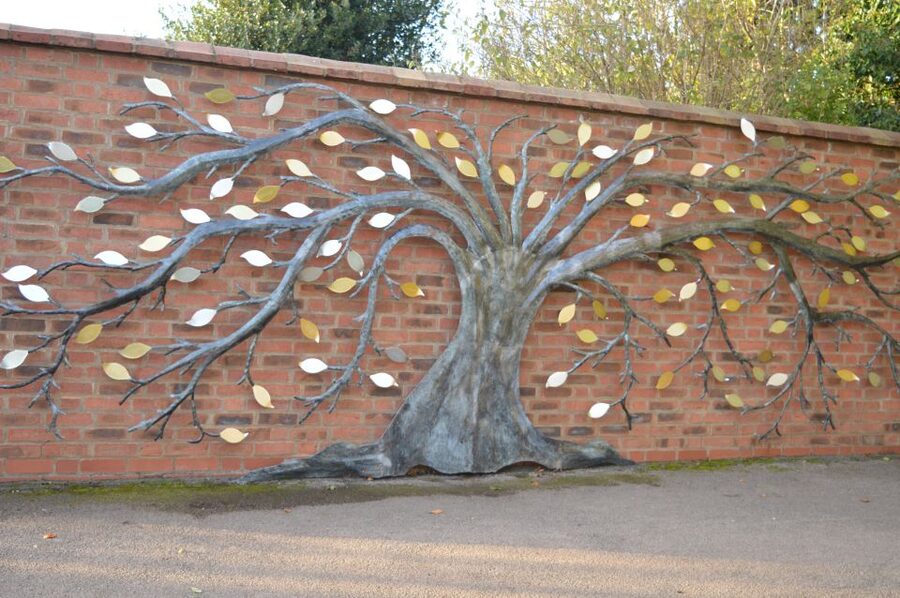
The house footprint and gardens are brought to life with contemporary artwork commemorating Shakespeare’s work. This gives the visit a modern tone, and it will appeal most if you like historical sites that use design and art instead of relying only on labels.
The artwork is not a replacement for the lost house. It acts more like a set of prompts. It can point you toward Shakespeare’s writing, the importance of the site, and the continuing interest in his life. You may find that the art makes the grounds feel more active and easier to read than a bare outline would be.
This approach also keeps the visit from becoming a simple ruin inspection. There is no dramatic stonework to photograph, so the artwork carries part of the visual experience. I would give yourself time to look closely rather than treating it as decoration on the way to the next room.
If you prefer untouched archaeology or fully original interiors, the contemporary treatment may feel less satisfying. If you enjoy seeing an old site interpreted in present-day ways, it is one of New Place’s strongest features.
A few more Stratford Upon Avon days worth weighing up
- Stratford-Upon-Avon: The Famous Walk Talk Show
★ 4.9 · 342 reviews - Stratford-upon-Avon:City Sightseeing Hop-On Hop-Off Bus Tour
★ 4.4 · 296 reviews - Stratford-Upon-Avon’s Town Walking Tour (10:30am & 2pm)
★ 4.8 · 143 reviews - Shakespeare’s Schoolroom and Guildhall Entrance Tickets
★ 4.4 · 70 reviews
The gardens and the shape of the visit
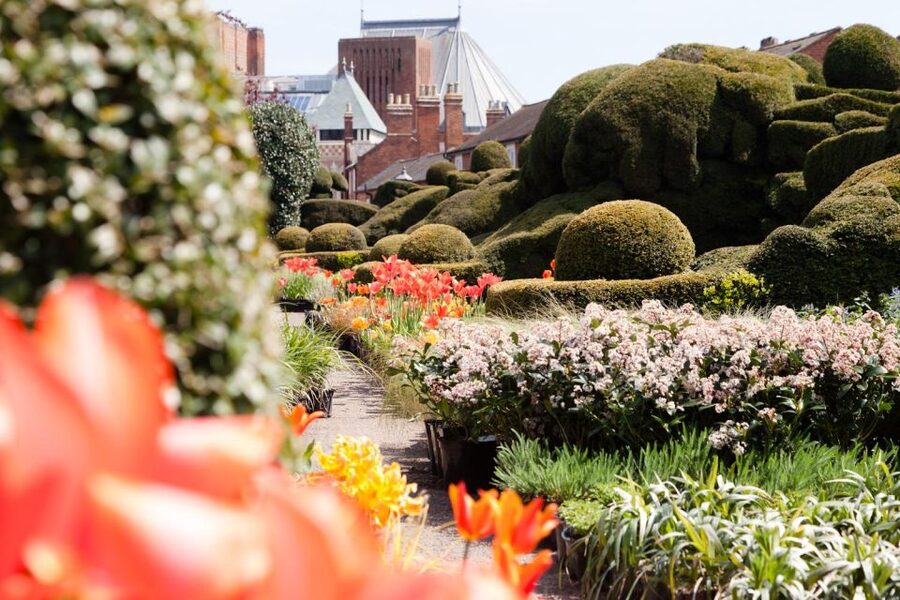
The gardens are not an extra squeezed around the main attraction. They are part of the reason the site works. A registered garden was designed on the former location to mark the importance of New Place and help people make a personal connection with Shakespeare.
You can stroll through the grounds at your own speed. The garden setting gives you a pause between the historical information and the busier streets of Stratford-upon-Avon. It also gives the visit a gentler rhythm than a standard indoor museum.
I would plan to walk the garden before or after the exhibition rather than rushing through it as a path between displays. Look at how the planting, artwork, and house footprint work together. The value is in the combination: the ground tells you where the home was, the garden marks its significance, and the art links the site to Shakespeare’s writing.
Do not expect a reconstructed Elizabethan garden based on a detailed planting plan from Shakespeare’s time, since that is not stated here. Think of it as a commemorative garden on the site, designed to help you connect with a lost place.
Nash’s House and Shakespeare the family man
Next door, Nash’s House contains an exhibition about Shakespeare’s life. This is an important part of the experience because it moves beyond the famous plays and poems.
The exhibition presents Shakespeare as a family man and businessman of Stratford-upon-Avon. That framing gives you a more grounded picture. His name is often tied to the stage, royal performances, and literary fame, but New Place was also connected to money, property, relatives, and local standing.
Nash’s House helps supply the human context that the vanished building cannot provide. After looking at the footprint, you can use the exhibition to think about who lived around Shakespeare and how his public success shaped his private world.
The available information does not specify the size of the exhibition or the exact number of rooms open to you. You should therefore approach it as a focused companion display, not assume that it is a large separate museum.
Still, its position next to New Place is useful. You can move from the physical site to the personal story without making another journey across town.
The women who shaped Shakespeare’s story
The Lives of the Women Who Made Shakespeare gives the visit a welcome change of focus. It explores the women in Shakespeare’s life rather than presenting him as an isolated genius.
That subject matters because the story of Shakespeare can easily become too narrow. A playwright does not exist apart from family, household relationships, and the people who helped make daily life possible. This exhibition asks you to consider those connections directly.
For me, this is one of the more useful parts of the visit for anyone who has already seen the standard Shakespeare attractions. You may know the familiar name and dates, but this exhibition can prompt different questions about family roles and the women connected to his life.
The supplied details do not name the individual women featured or describe the exact exhibits, so I would not promise a particular person or display. What you can expect is a dedicated examination of the women who made Shakespeare’s life and work possible.
How much time should you allow?
The ticket is valid for one day, not for a fixed tour lasting a stated number of hours. That gives you room to set your own pace, but it also means you should decide how much attention you want to give each part.
A quick visit could focus on the footprint, artwork, and garden. A slower visit would add the Nash’s House exhibition and the display about the women in Shakespeare’s life. Since the original New Place building no longer exists, the length of your visit depends largely on how much you read and how carefully you explore the grounds.
I would avoid scheduling this as a rushed stop between tightly timed activities. The experience is about making connections between the site, the garden, the artwork, and the exhibitions. If you give yourself only a few minutes, you may see the main points but miss the reason for visiting.
At the same time, you do not need to reserve an entire day just for New Place. The ticket allows access for one day, but the visit itself is a compact Stratford attraction rather than a full-day excursion.
Is the $20.20 ticket good value?
At $20.20 per person, this is not a bargain if you are paying only for access to a preserved building. There is no original New Place building, and that fact should be part of your value calculation from the start.
The price makes more sense if you see the ticket as access to a complete interpretation of the site. You get the former house grounds, the footprint, the contemporary artwork, the registered garden, and the exhibition in Nash’s House. The visit also adds a side of Shakespeare that a performance-focused attraction may not cover as directly.
I would recommend it more readily to first-time visitors who want to understand Shakespeare’s Stratford life, and to returning visitors who have already seen the main birthplace attractions. It is less compelling for anyone expecting a conventional house museum with original rooms.
The ticket also has practical value because it is flexible. You can reserve now and pay later, and cancellation is free up to 24 hours in advance. Those terms do not change the content of the visit, but they reduce the risk of booking too early in a shifting travel plan.
Who will enjoy New Place most?
This visit suits you if you like literary history, open-air sites, gardens, and modern interpretation. It is also a good choice if you want to understand Shakespeare as a resident of Stratford rather than only as a celebrated writer.
Families may appreciate the freedom to move between the outdoor grounds and indoor exhibition. People interested in social history will find the family and business angle useful, while returning Shakespeare enthusiasts may welcome the dedicated focus on the women in his life.
You should think twice if you want a fully original building or a guided tour packed with spoken stories. No guide is identified, and the original house is gone. The experience asks you to read, look, and imagine.
The site is wheelchair accessible, which makes the outdoor and exhibition-based format practical for more visitors. You should still check the current access arrangements when booking if you have specific mobility needs, since the supplied information confirms accessibility but does not describe every surface or route.
Booking tips for a smoother visit
Check the available starting times before committing to your day. The ticket is valid for one day, but entry still depends on the time options offered when you book.
Arrive at the gate house, which is the stated starting point. Since the visit ends back there and does not include transport, you can treat it as a simple stop within your Stratford-upon-Avon plans.
Allow time for both the outdoor and indoor elements. The footprint and garden give you the sense of place, while Nash’s House supplies more of the personal and social story. Skipping either side makes the experience less complete.
Finally, remember what you are buying. You are not entering Shakespeare’s original home. You are visiting the exact site, its garden, a visual interpretation of the house, and exhibitions designed to help you understand the man behind the plays.
Should you book Shakespeare’s New Place?
Book it if you want a thoughtful look at Shakespeare’s home life, the importance of New Place, and the people connected to him. The combination of house footprint, garden, contemporary art, Nash’s House, and the women-focused exhibition gives the visit more substance than a simple memorial plaque.
Skip it if your main goal is to walk through an original Shakespeare building. New Place cannot provide that, since it was demolished in 1759.
At $20.20, I see the ticket as fair value for a compact cultural visit, especially for first-time visitors and anyone with a strong interest in Shakespeare’s Stratford years. Go with realistic expectations, take time with the grounds, and let the missing house become part of the story rather than a disappointment.
FAQ
What does the New Place entry ticket include?
The ticket includes entry to Shakespeare’s New Place site, including the former house grounds, footprint, gardens, contemporary artwork, and the exhibition in Nash’s House described as part of the visit.
Can I enter the original New Place building?
No. The original building no longer exists. It was demolished in 1759, so the visit focuses on the site, house footprint, garden, artwork, and exhibitions.
How long is the ticket valid?
The ticket is valid for one day. Available starting times should be checked when booking.
Where does the visit begin?
Proceed to the gate house when you arrive. The activity ends back at the meeting point.
Is the site wheelchair accessible?
Yes. The activity is listed as wheelchair accessible.
Can I cancel my booking?
Yes. You can cancel up to 24 hours in advance for a full refund. Reserve now and pay later is also available.
Just added around Stratford Upon Avon
- Stratford-upon-Avon: Tudor World Museum Entrance Ticket★ 4.4 · 34 reviews
- Stratford-Upon-Avon’s Town Walking Tour (10:30am & 2pm)★ 4.8 · 143 reviews
- Shakespeare Distillery Tour & Tasting (Gin & Rum)★ 4.8 · 69 reviews
- Stratford-upon-Avon: City Walking Tour & Exploration Game★ 4.6 · 3 reviews
- Warwickshire: The Explorer Pass by Shakespeare’s England★ 4.6 · 26 reviews
- Shakespeare’s Schoolroom and Guildhall Entrance Tickets★ 4.4 · 70 reviews
- River Avon Gin Tasting Cruise★ 4.8 · 7 reviews
- Stratford-Upon-Avon: Private Walking Tour with Local Guide★ 4.9 · 11 reviews
Shakespeare Tours, compared.

The Sinister Side of Shakespeare’s Stratford Walking Tour
Read our review →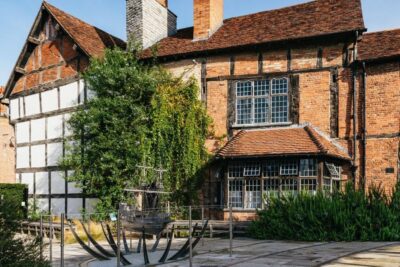


Shakespeare’s Schoolroom and Guildhall Entrance Tickets
Read our review →
Shakespeare Distillery Tour & Tasting (Gin & Rum)
Read our review →Browse the lists this tour appears in