Reviewed · GUIDED
Aldwych: Hidden Tube Station Guided Tour
Aldwych is not just an old Tube station. It is a time capsule beneath central London, with a shuttered ticket hall, original lifts, abandoned platforms, wartime shelter spaces, and tunnels that once served the Piccadilly line. The most striking part is how many lives the station has had: transport hub, air raid shelter, storage vault, and film set.
I like the way the tour connects London Underground design with real wartime stories. I also like the chance to see places rarely open to the public, including the old platforms and interconnecting passageways. The main drawback is physical: this is not a step-free visit, and low lighting, stairs, uneven surfaces, and confined areas make it unsuitable for people with claustrophobia or mobility impairments.
Key Things to Know Before You Go
- A station closed since 1994: Aldwych opened in 1907 and served for almost a century before its final closure.
- Original features remain: You see the ticket hall, lifts, platforms, tunnels, and walkways, with much of the station left in place.
- The Blitz is central to the story: Aldwych gave Londoners shelter, while priceless treasures were stored safely underground.
- A real film location: The station has appeared in Luther: The Fallen Sun, The ABC Murders, Darkest Hour, Sherlock, and Atonement.
- English guided tour: London Transport Museum’s historical experts shape the tour, with guides such as Colin, Cat, Emily, Jas, and Dom leading sessions.
- Expect a physical visit: The 75-minute route includes staircases, low light, uneven ground, and no lift for tour visitors.
Entering Aldwych on Surrey Street
Your meeting point is outside the Aldwych station entrance on Surrey Street. This is important because it is not the entrance facing the Strand. Arrive at the Surrey Street side, and bring your passport or ID card as requested for the visit.
The location puts you in an interesting part of central London. You are entering a station that once served the Strand area, but you are not simply walking into a preserved museum display. Aldwych was used as a working station until 1994, and the closed parts still feel tied to the practical business of moving people underground.
The tour lasts 75 minutes. That is long enough to cover several sections of the station without turning the visit into a half-day commitment. It also works well beside other central London plans, especially a visit to the London Transport Museum afterward. One visitor specifically paired the two, and that makes good sense because the museum gives you wider transport context while Aldwych gives you the physical setting.
A few more London days worth weighing up
- From London: Harry Potter Warner Bros Studio Tour
★ 4.7 · 26,588 reviews - London: Westminster to Greenwich River Thames Cruise
★ 4.5 · 22,836 reviews - Magical London: Harry Potter Guided Walking Tour
★ 4.7 · 22,044 reviews
The 1907 Station That Never Reached Its Full Promise
Aldwych opened in 1907 as part of the Piccadilly line. It was intended to see heavier use than it ultimately received, and that limited footfall helped shape its unusual afterlife.
A busy Tube station is constantly altered. Signs change, walls are repainted, equipment is replaced, and old spaces are swallowed by new construction. Aldwych escaped much of that pressure. Its relatively low use meant that original details and disused areas survived for decades.
I find that this gives the tour its strongest quality. You are not looking at a replica or a polished reconstruction. You are seeing a station that was built for ordinary daily travel, then gradually left behind. That gap between the station’s intended role and its actual use is part of the story.
The route takes you through the former Piccadilly line terminus, including areas that most Tube passengers never saw. The station’s history is not told as a simple rise and fall. It moves between transport, war, architecture, popular culture, and preservation.
The Ticket Hall and Its Original Details
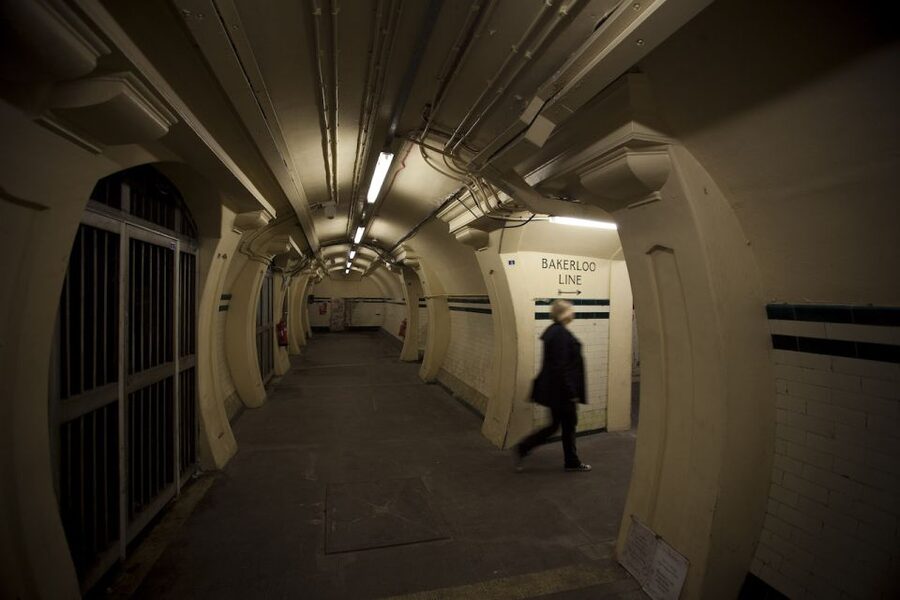
The old ticket hall is one of the clearest starting points. It gives you the public face of Aldwych before the route moves deeper underground.
This space matters because it shows how the station greeted passengers when it was active. Original architectural features help you picture the era in which Aldwych opened, before modern upgrades smoothed away much of the Tube’s early character.
The ticket hall also sets up a useful contrast. Above ground, the station looks like a former public building. Below ground, you find a network of working spaces, platforms, service areas, and connecting routes. The tour lets you see both sides rather than focusing only on a single dramatic tunnel.
Your guide explains what you are looking at as you move through. Guides who have led the experience include Colin, Cat, Emily, Jas, Dom, and Dom. Names and staffing can vary by date, but the guiding style is a major part of the visit. The best guides make the old station easier to read, pointing out what each space did and why it survived.
Original Lifts and the Route Underground
Aldwych’s original lifts are among the most distinctive parts of the visit. They remind you that early Tube stations depended on a different rhythm of movement than modern stations with escalators and broad circulation areas.
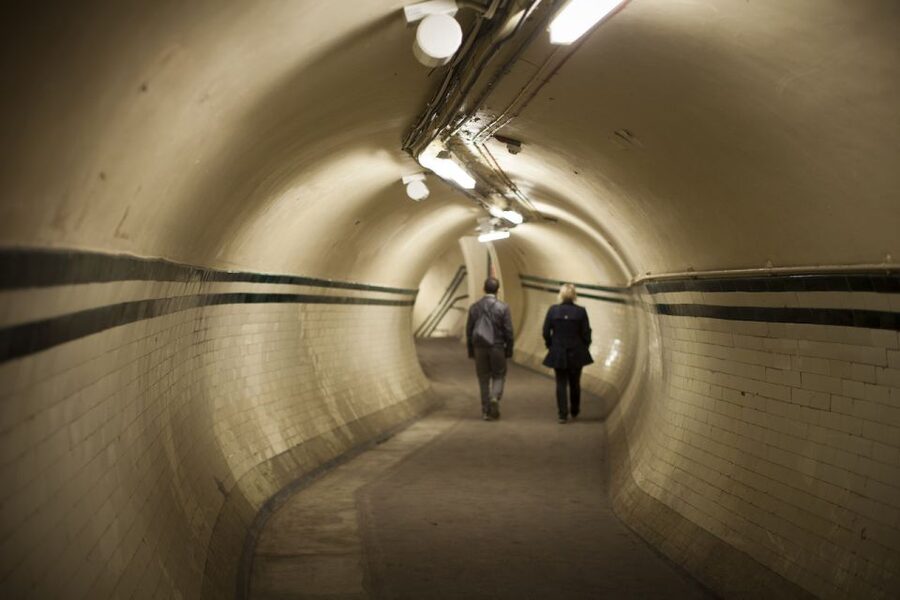
The tour does not simply take you to one photo stop and send you back. You move through the ticket hall, lift areas, abandoned platforms, tunnels, and interconnecting walkways. Some sections are rarely available to the public, so the route feels like a working exploration of the station’s structure.
The physical layout is also the main reason to prepare properly. There is a lot of walking, and the tour includes staircases rather than an elevator. Lighting is low in places, and the ground can be uneven. Sturdy shoes are not just a sensible suggestion here. They will make the visit more comfortable and help you focus on the stories instead of your footing.
Open-toed shoes are not allowed. Food, drinks, luggage, and large bags are also not allowed, and there is no cloakroom. Pack light and wear suitable clothing.
Same city, a completely different sort of afternoon:
- London: Madame Tussauds London
★ 4.6 · 20,915 reviews - London: Warner Bros. Studio Tour with Transfers
★ 4.7 · 17,586 reviews - London: Tower Bridge Entry Ticket
★ 4.7 · 15,560 reviews - London: St Paul’s Cathedral Entry Ticket
★ 4.7 · 9,813 reviews
Platforms, Tunnels, and Walkways
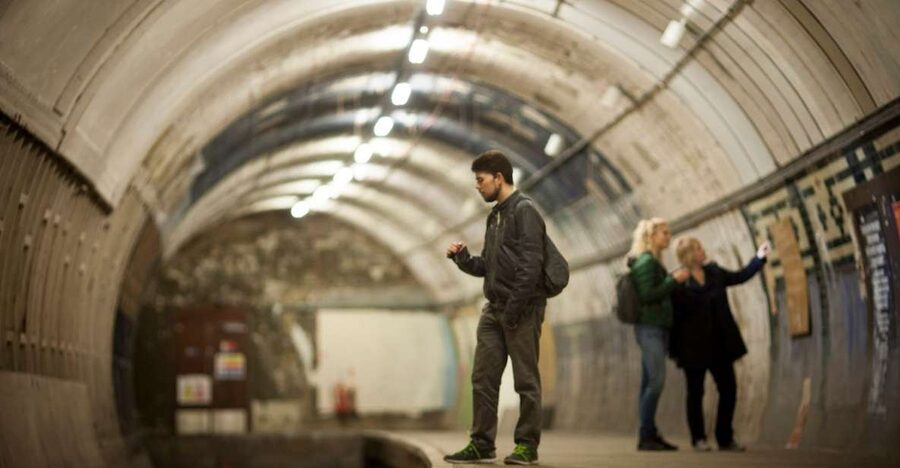
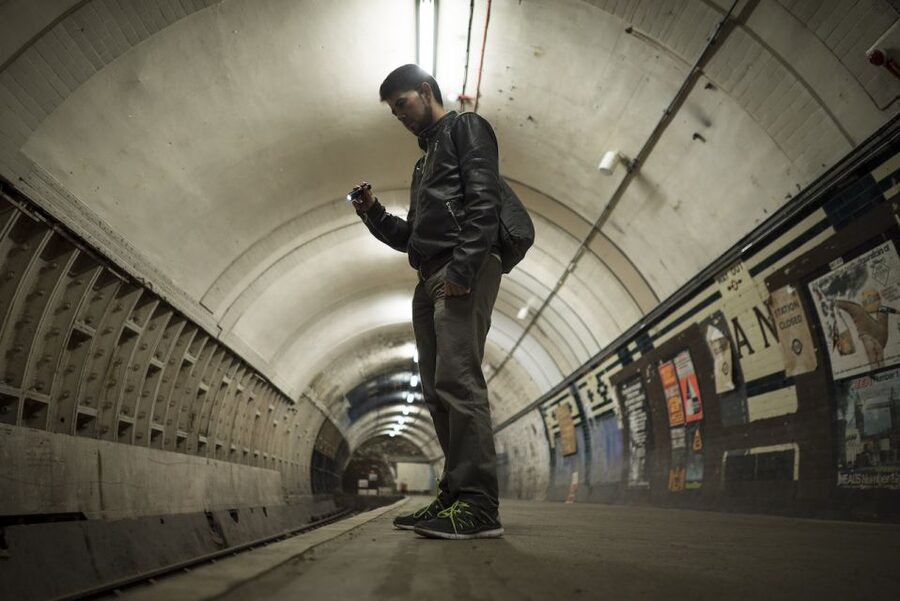
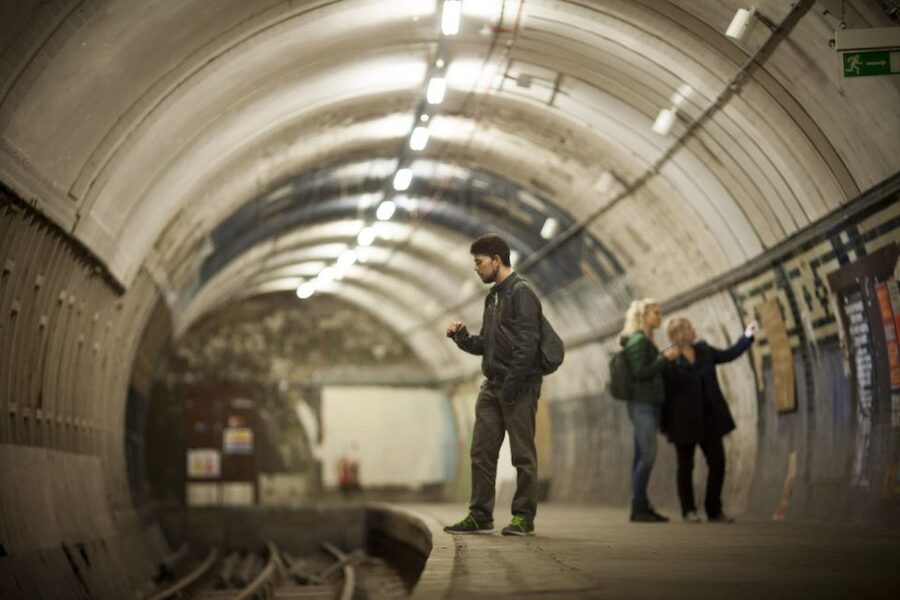
The abandoned platforms give you the strongest sense of Aldwych as a railway station rather than a historic building. Platform spaces show where passengers once waited, while the tunnels and connecting walkways reveal the less visible work behind a Tube journey.
These areas can feel spare. Do not expect a restored station with every surface made tidy for display. The appeal is the opposite: Aldwych retains the marks of a place that was used, modified, and later closed.
The guide’s role is especially important below ground. A plain tunnel can be difficult to interpret on its own. With explanation, it becomes part of the station’s plan and helps you understand how passengers and staff moved through the complex.
Low lighting is part of the setting, but it is also a practical issue. If you dislike enclosed spaces, you should think carefully before booking. The tour is not suitable for people with claustrophobia. It is also not suitable for people with mobility impairments because of the stairs and uneven areas.
Children must be at least 10 years old. For children aged 10 to 15, a maximum of four children is allowed per adult. That rule matters if you are arranging a family visit.
Aldwych During the Blitz
The station’s wartime story gives the visit more weight than a standard transport history tour. During the Blitz, Aldwych became a place of refuge for people seeking shelter underground.
You hear first-hand accounts from people who sheltered there during the Second World War. These accounts help turn the station from an architectural curiosity into a place connected to fear, exhaustion, routine, and survival.
The physical setting makes those stories more powerful. A platform or passageway can look empty today, but the guide’s account shows how its purpose changed during the bombing. It was no longer only part of a transport system. It became a shelter used by Londoners trying to stay safe.
This is one of the tour’s most valuable shifts in focus. Aldwych is often promoted for its film appearances and unusual access, but the wartime material gives you a clearer sense of why preserved underground spaces matter.
Priceless Treasures Stored Underground
Aldwych also played a role in protecting priceless treasures during the Blitz. The station’s underground rooms offered a safer place to store important objects while London was under attack.
The story works well because it links transport infrastructure with national heritage. A station built for commuters became a temporary vault. You see how the same underground spaces could serve ordinary passengers, shelterers, and irreplaceable collections at different points in their life.
The exact details are best heard from the guide on the day. The tour presents the storage story as one of Aldwych’s key surprises, and it is the sort of detail that changes how you view the station’s blank walls and closed rooms.
If you enjoy museums, wartime history, or stories about how cities adapt in a crisis, this section may be the highlight. It also adds value for people who are less interested in trains themselves.
Aldwych as a London Film Set
Aldwych has an instantly useful quality for film and television: it can represent an earlier London Tube station without extensive modern features getting in the way.
The station has appeared in Luther: The Fallen Sun, The ABC Murders from 2018, Darkest Hour from 2017, Sherlock from 2014, and Atonement from 2007. Seeing the actual spaces gives you a better sense of why filmmakers choose it.
The film section is a bonus rather than the whole reason to book. You should not expect a dedicated movie tour or a collection of recreated scenes. Instead, the guide points out locations and explains how the station has been used on screen.
That mix makes the tour work for different interests. A London Underground enthusiast gets station design and operations. A film fan gets familiar locations. A history enthusiast gets the wartime story. You do not need to be deeply interested in all three subjects to find enough material here.
Why the Guides Matter
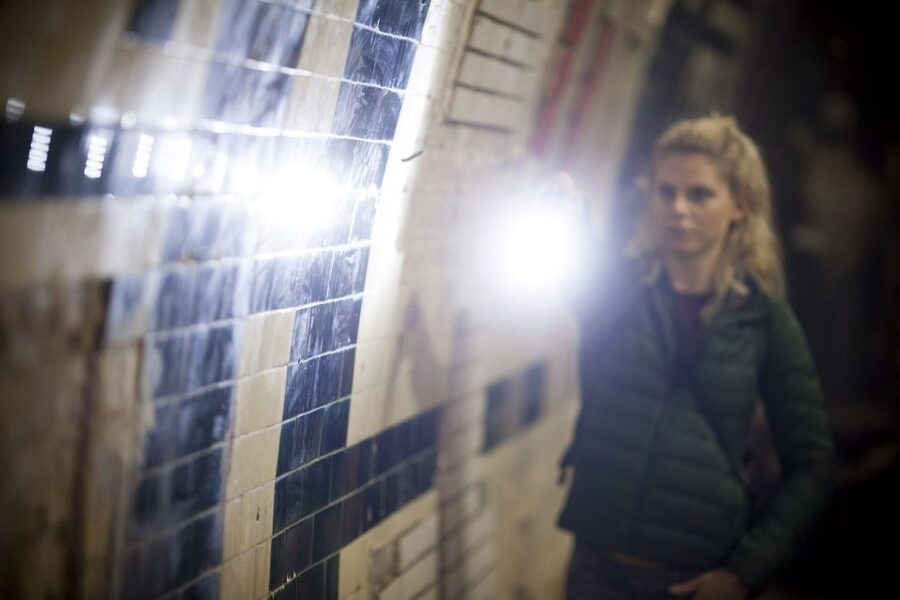
The information is supplied by historical experts from the London Transport Museum, which shapes the experience in a useful way. The station can be confusing without context, especially once you leave the ticket hall and enter the older underground sections.
Guides including Colin, Cat, Emily, Jas, and Dom have been praised for being friendly, enthusiastic, entertaining, and easy to approach. That combination matters. A guide who only lists dates can make an abandoned station feel flat, while a guide who focuses only on jokes can lose the historical point.
The strongest approach is a varied one: explain the architecture, connect the spaces to the Blitz, point out film locations, and add the smaller facts that make Aldwych memorable. The tour is also available in English only, so you need enough English to follow spoken historical explanation.
Is $60 Good Value for 75 Minutes?
At $60 per person, this is not a cheap attraction. You are paying more than you would for a normal Tube journey or a standard museum admission, so the value depends on what you want from the visit.
I think the price is easier to justify if you care about London transport, historic buildings, wartime London, or cinema locations. You are not only looking at displays. You are entering a closed station and walking through areas that are not part of an ordinary London itinerary.
The 75-minute length also helps. The tour is focused, but it still includes several parts of the station and a range of subjects. For an unusual central London experience, it can fit neatly into a morning or afternoon without taking over your day.
The value is weaker if you dislike stairs, confined spaces, or guided visits. You cannot wander at your own pace, and the route has physical limits. If you want a relaxed, step-free museum, spend your money elsewhere.
Free cancellation is available up to 24 hours before the tour for a full refund, and you can reserve now and pay later. Those terms help if your London schedule is still changing, but the physical suitability of the tour is the more important booking decision.
Who Should Book Aldwych?
I would choose this tour for:
- London Underground fans who want more than a ride on the modern network
- People interested in the Blitz and civilian shelter experiences
- Film fans who enjoy seeing real locations
- Visitors who like old buildings in an unpolished state
- Families with children aged 10 and over who can manage the walking and stairs
- Anyone who has already visited the London Transport Museum and wants to see transport history in place
I would skip it if you have mobility limitations, find low-lit enclosed areas uncomfortable, or prefer attractions with lifts and smooth floors. Open-toed shoes, large bags, food, and drinks are not permitted, so plan accordingly.
My Verdict on the 75-Minute Visit
Book Aldwych if you want a London experience that feels specific to the city rather than interchangeable with any major museum. The station’s original features, wartime shelter story, treasure storage, and film connections give the tour several strong angles.
I especially like that the visit does not rely on one big spectacle. The pleasure comes from combining small details: a lift, a platform, a passageway, an old public area, and a story about what happened there during the Blitz.
At $60, it is best treated as a specialist tour, not a casual add-on. If the subject interests you, the unusual access and strong guiding make the cost reasonable. If you are unsure about underground spaces or stair-heavy routes, check the limitations first. For the right visitor, Aldwych offers one of central London’s most memorable history walks.
FAQ
Where does the Aldwych tour meet?
Meet your guide outside the Aldwych station entrance on Surrey Street. This is different from the entrance facing the Strand.
How long does the tour last?
The guided tour lasts 75 minutes.
What language is the tour in?
The tour is conducted in English with a live English-speaking guide.
What does the $60 price include?
The price includes the 75-minute guided tour of Aldwych disused Tube station.
Is travel to Aldwych included?
No. Travel to and from Aldwych station is not included.
What areas of the station will I see?
The route includes the ticket hall, original lifts, abandoned platforms, tunnels, and interconnecting walkways.
Is the tour suitable for children?
Children under 10 are not permitted. Children aged 10 to 15 may attend, with a maximum of four children in that age range per adult.
Is the tour step free?
No. The tour includes staircases, and there is no elevator. It is not suitable for people with mobility impairments.
Can I bring luggage, food, or drinks?
No. Food, drinks, luggage, and large bags are not allowed, and there is no cloakroom.
What should I wear and bring?
Wear sturdy footwear and suitable clothing. Open-toed shoes are not allowed. Bring a passport or ID card as requested for the visit.
Just added around London
- London: Wimbledon Tennis Club and Westminster Walking Tour★ 4.5 · 86 reviews
- London: Westminster to Richmond River Thames Cruise★ 4.8 · 23 reviews
- Westminster Abbey Skip-the-Line Entry and Private Tour★ 4.6 · 4 reviews
- Best of London by LE GRAND – London’s Luxury Bus Tour★ 4.2 · 23 reviews
- London: Westminster Walking Tour & St Paul’s Cathedral Entry★ 4.7 · 7 reviews
- From London: Oxford, Stratford-upon-Avon & Cotswolds Trip★ 4.5 · 64 reviews
- From London: Warwick, Oxford, Stratford & Cotswolds Day Tour★ 4.0 · 270 reviews
- Warner Bros. Studios and 1-Day London Hop-on Hop-off tour★ 4.7 · 9 reviews
Guided, compared.

Magical London: Harry Potter Guided Walking Tour
Read our review →
Emirates Stadium Entry Ticket and Audio Guide
Read our review →
City & Beatles Tour with Live Guide & Live Music
Read our review →
University and City Walking Tour with Alumni Guide
Read our review →
Christmas Lights Nighttime Bus Tour with Live Guide
Read our review →