Reviewed · GUIDED
Clapham South: Subterranean Shelter Guided Tour
Thirty metres below South London, a mile-long maze of tunnels tells two very different stories: wartime families sheltering from bombs and Caribbean newcomers spending their first nights in Britain. The original bunk beds and shelter graffiti make this more than a museum display. You are walking through the actual place.
I like the way the tour joins big events to ordinary lives, and I like the theatrical touch of an ARP Warden guiding you through a family’s first night underground. The main drawback is practical: this is not a step-free outing, and low lighting, uneven ground, narrow passages, and static escalators will rule it out for some people.
Key points to know before you book
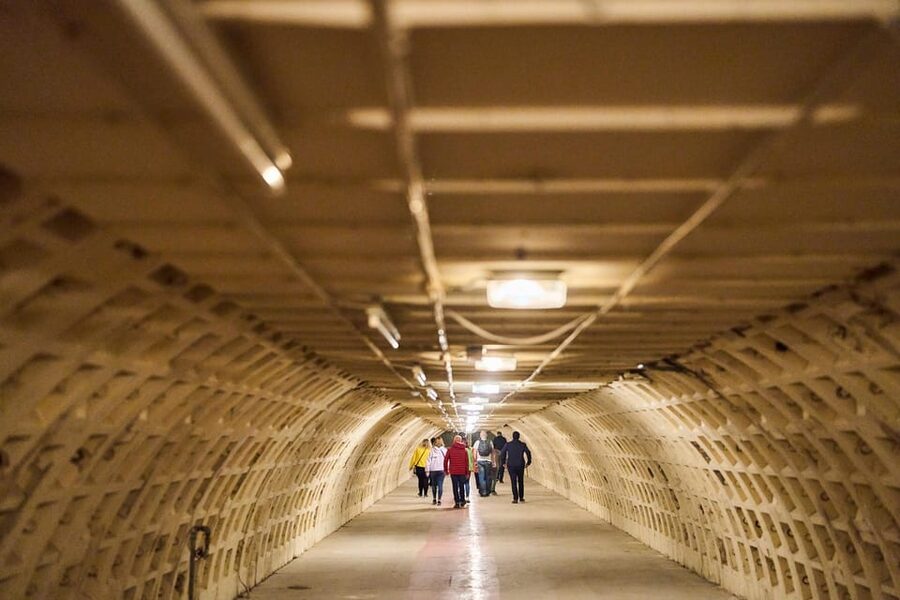
- Eleven stories below Clapham South: Descend beneath a working Tube station and hear Northern line trains passing overhead.
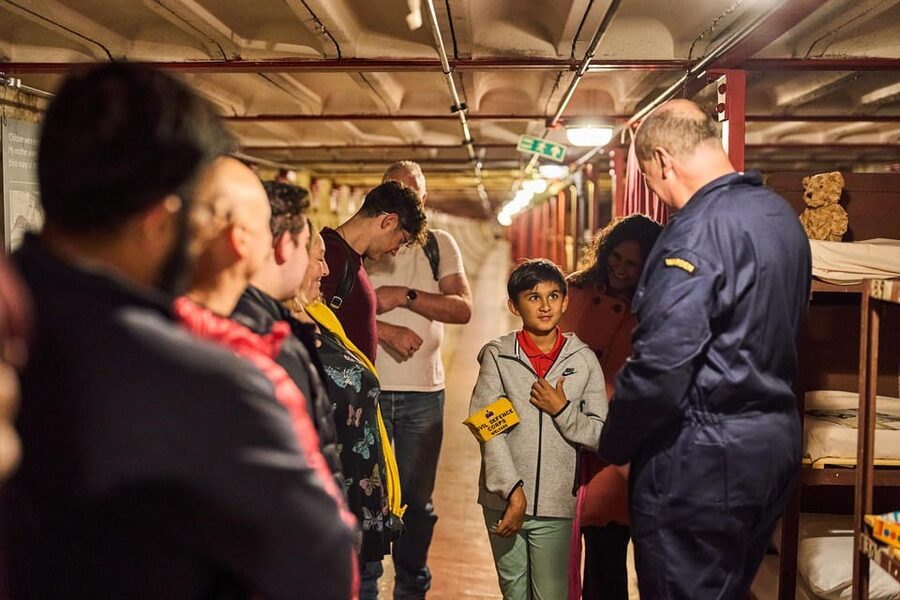
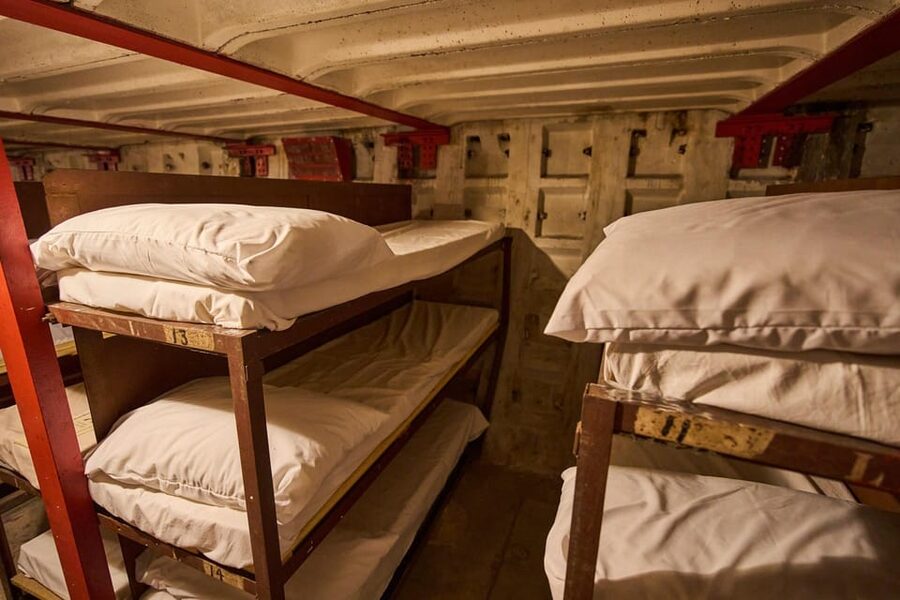
- Original wartime sleeping quarters: See the cramped bunks used by thousands during air raids, with some later turned into benches.
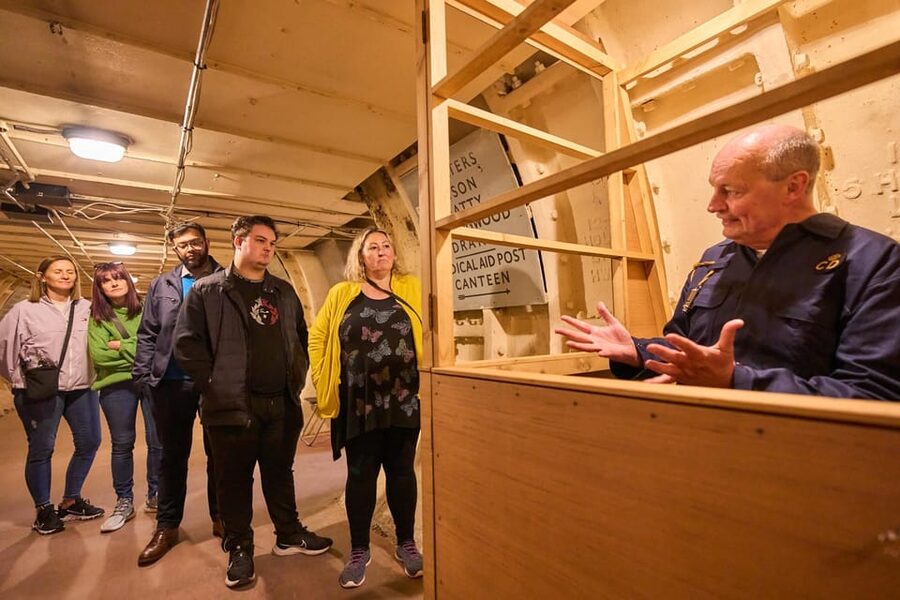
- A recreated 1940s shelter: The warden’s cabin and canteen have been prepared from London Transport Museum archive material.
- Windrush connections: Hear about the first Caribbean migrants to Britain, who lived in the shelter after arriving on HMT Empire Windrush.
- Hands-on wartime objects: Handle genuine Second World War torches and see an Anderson shelter.
- A demanding underground walk: Expect low light, uneven surfaces, lots of stairs, and no cloakroom for large bags.
Entering the secret shelter beneath Clapham South
Your meeting point is in front of the Marks & Spencer Food Hall on Balham Hill, SW12 9EA. It is about a two-minute walk from Clapham South station. Exit the station, turn right, and arrive 15 minutes before your scheduled start.
That early arrival matters. The tour enters a site with controlled access, and you do not want to be searching for the meeting point while the group is assembling. The listed what3words location is really.orbit.beside, which can help if you are using the app.
Clapham South is one of eight deep-level air raid shelters beneath London. It was built in the 1940s and opened in 1944, at a time when London needed places where people could sleep below the reach of ordinary bombing. The site could shelter more than 8,000 people, although the experience today focuses on the spaces, stories, and objects that explain how it worked.
The entrance is not a grand historic doorway. That is part of the appeal. You begin at a working Tube station, then move into a sealed-off world hidden below the street. The change from busy South London to dim underground corridors happens quickly.
A few more London days worth weighing up
- From London: Harry Potter Warner Bros Studio Tour
★ 4.7 · 26,588 reviews - London: Westminster to Greenwich River Thames Cruise
★ 4.5 · 22,836 reviews - Magical London: Harry Potter Guided Walking Tour
★ 4.7 · 22,044 reviews
The descent: 30 metres and 11 stories below street level
The tour takes you roughly 30 metres underground, described as 11 stories below Clapham South. The descent is one of the clearest reminders that this was built for scale, not comfort.
You will walk down static escalators rather than using a step-free route. That makes sturdy footwear essential, and it also means the tour is unsuitable for people with mobility impairments. Comfortable shoes are not just a polite suggestion here. You will be walking for most of the 75 minutes, often in low light and across uneven ground.
Once below the station, listen for the Northern line trains passing overhead. That sound gives the shelter a strange connection to present-day London. Commuters continue to pass above, often unaware of the tunnels beneath them, while you follow a route through a site that has been closed to ordinary Tube passengers.
The long corridors can feel plain at first. Their value becomes clearer as the guide explains why such a shelter was needed, how it was secretly constructed, and how people used it during air raids. This is not a polished attraction built from scratch. It is a working underground structure with the marks and limitations of its original purpose.
How a giant air raid shelter worked
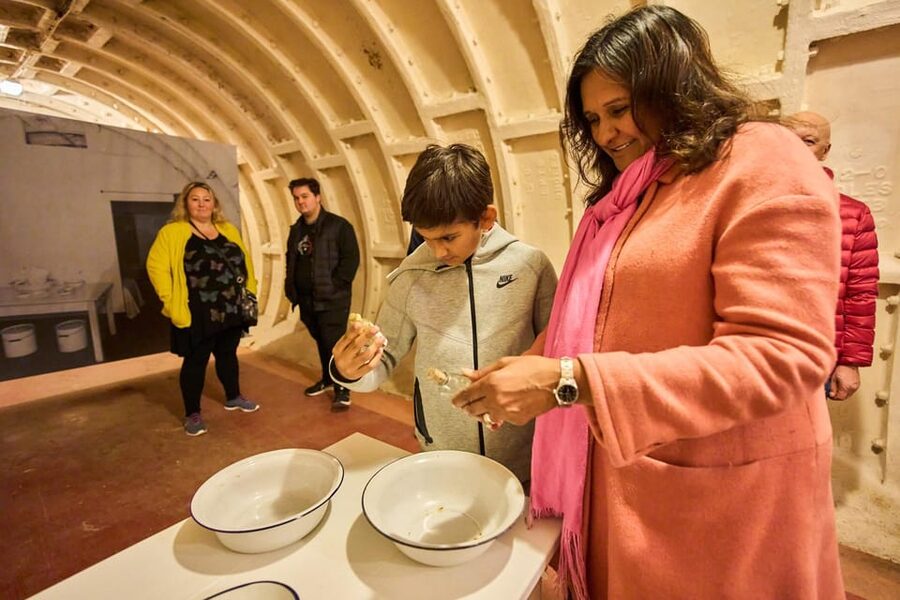
A shelter for more than 8,000 people needed more than rows of beds. The underground complex included sleeping areas, a canteen, and medical stations. The tour uses these parts to show how a single night underground might have been organised.
The ARP Warden character helps set the scene. You follow the footsteps of a South London family spending its first night in the shelter, learning about the instructions, routines, and pressures that came with sheltering below ground. This role-play element gives the tour a human scale without taking away from the physical place.
The best tours of wartime sites avoid turning the past into a costume show. Here, the character has a useful job: to explain what the shelter meant to people who had to use it. The warden’s cabin and canteen have been recreated in their 1940s state, using findings from the museum’s archives and collection.
That means you are not simply told that a canteen existed. You can see the kind of space that supported a large underground population. You are also shown where staff worked and how the shelter operated as a temporary community during air raids.
Original bunks, tight sleeping quarters, and shelter graffiti
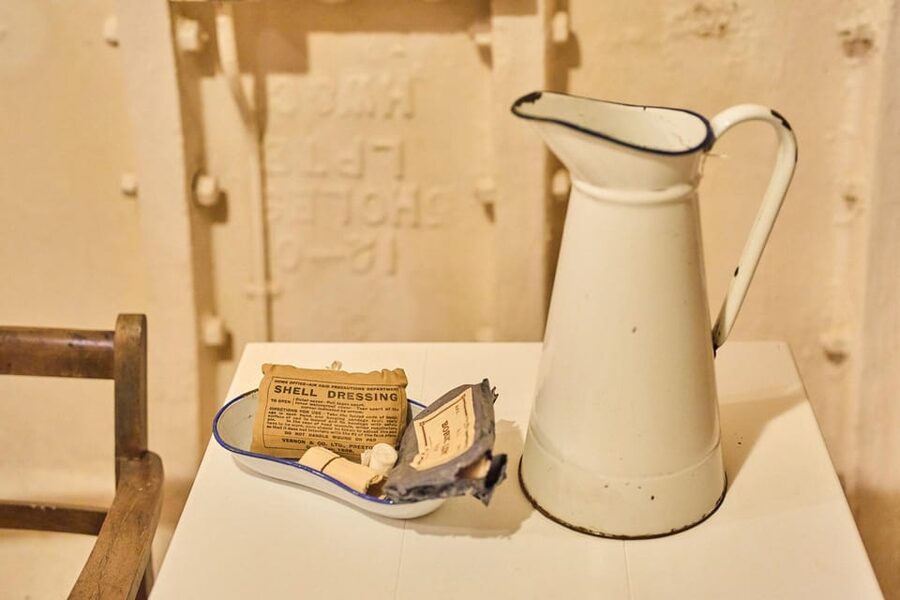
The sleeping areas are likely to be the most memorable part of the walk. The original bunks show just how little personal space people had. Thousands slept overnight in these cramped quarters, often with families and strangers sharing the same underground environment.
Some of the beds have been turned into benches, allowing you to sit where people once spent long evenings waiting for an all-clear. That simple detail helps you picture the shelter as a place of waiting rather than a short museum stop. You were not passing through for ten minutes. You might have been there for the night.
Look closely at the walls and other surfaces for graffiti left by shelter occupants. These marks are small, personal traces, and they change the feel of the tour. Official displays explain the war, but graffiti points to the people who lived through it. Names, messages, or simple signs of boredom can make the underground setting feel less abstract.
Lighting is deliberately limited, so you should not expect every detail to be brightly displayed. That is useful for atmosphere, but it can make the walking more tiring and the surfaces harder to read. Bring no assumption that this will feel like a standard, fully lit museum gallery.
Same city, a completely different sort of afternoon:
- London: Madame Tussauds London
★ 4.6 · 20,915 reviews - London: Warner Bros. Studio Tour with Transfers
★ 4.7 · 17,586 reviews - London: Tower Bridge Entry Ticket
★ 4.7 · 15,560 reviews - London: St Paul’s Cathedral Entry Ticket
★ 4.7 · 9,813 reviews
Recreated wartime rooms and genuine objects
The refurbished warden’s cabin and canteen give the tour its clearest visual staging. Historical experts have used archive findings to recreate these rooms as they might have appeared in the 1940s. The point is not luxury. It is to show the practical systems needed to keep thousands of people fed, supervised, and medically supported underground.
You also get to handle genuine Second World War torches. This is a small but effective part of the experience. A real object has weight and wear in a way that a modern replica does not, and a torch makes sense in a site where darkness was part of everyday life.
An Anderson shelter is also included. Seeing one in relation to a deep-level station shelter helps you understand that air raid protection came in different forms. An Anderson shelter served a household, while Clapham South was designed for a huge population beneath the city.
The tour does not present the shelter as a comfortable refuge. The bunks were tight, the walk is physically demanding, and the low light can be uncomfortable. Those limits are useful. They keep the experience connected to the difficult conditions people actually faced.
From wartime refuge to a new London
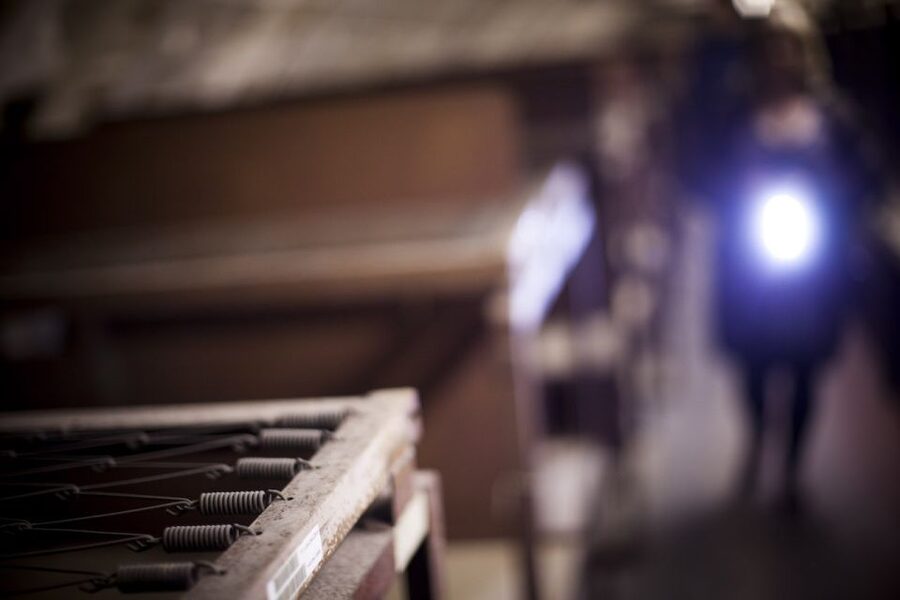
Clapham South’s story did not end when the air raids stopped. In the post-war period, the shelter was used by people arriving in Britain, including the first Caribbean migrants who came on HMT Empire Windrush.
This is one of the most important reasons to choose the tour. It links wartime London with post-war migration, showing how the same underground rooms served different groups at different moments. You hear first-hand testimonials from people connected with the shelter and learn about the arrivals who spent their first nights in London there.
The Windrush story is especially powerful in this setting. A familiar national story can seem distant when told only through dates and public events. Here, the focus returns to beds, corridors, and temporary accommodation. You can see where people slept and imagine the uncertainty of arriving in a new country.
The tour also covers visitors connected with the Festival of Britain. That adds another post-war chapter, showing the shelter as a place that continued to play a role after its original wartime purpose had faded.
The shift from air raid shelter to accommodation for new arrivals is not a minor footnote. It gives the tour a wider view of South London and Britain in the 1940s and 1950s. The same physical site witnessed fear, endurance, arrival, and change.
Two guides and a more personal way to learn
The tour uses two guides, including one portraying a 1940s ARP Warden. The role-play is designed to bring the shelter’s wartime function to life, while the second guide supports the wider historical account.
The guides have been praised for their enthusiasm, clear delivery, and ability to make the setting feel real. That matters underground, where a dry lecture could quickly become hard to follow. The best moments depend on the guides connecting the objects and rooms to people, rather than simply reciting dates.
You should expect an English-language tour. The content is substantial for 75 minutes, but it is not a full survey of London’s wartime history. Instead, it stays focused on this shelter, its construction, its wartime use, and its later connection to Windrush and the Festival of Britain.
The ARP Warden’s role is particularly useful if you are visiting with older children or teenagers who respond better to a person and a situation than to labels on a wall. The minimum age is 10, and the physical conditions mean younger children are not admitted.
Is the $51 price fair?
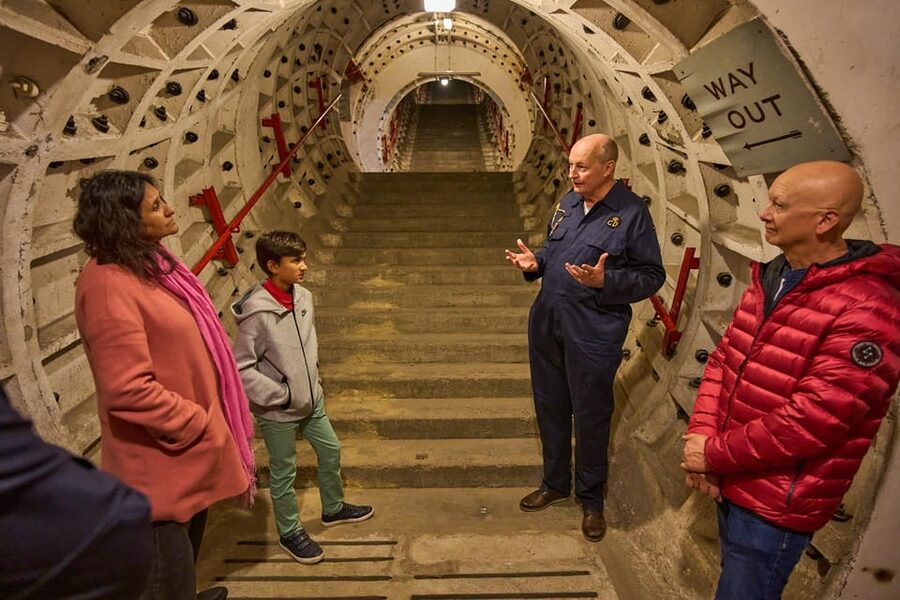
At about $51 per person, this is not a cheap way to fill an hour. The price makes more sense if you value access to a normally closed site, a live guide, original structures, archive-based recreations, and the Windrush material in one visit.
You are paying for a specialised experience rather than a general London attraction. There are no grand views, famous paintings, or large galleries. The reward is a place most people pass without noticing, plus a guided explanation that makes the bare tunnels meaningful.
The 75-minute duration is well judged. A shorter visit would feel rushed because the shelter needs context, while a much longer walk could become tiring in the dim corridors. You get enough time for the descent, bunk areas, recreated rooms, objects, graffiti, and post-war stories without turning the visit into a half-day commitment.
The value is strongest for people who have already seen London’s major sights and want a more local, grounded story. It is also a good choice if you are interested in wartime Britain, public transport, architecture, migration, or the way cities reuse old spaces.
If you mainly want a comfortable museum visit, the price may feel high. You should also factor in the cost of reaching Clapham South, since transport to and from the station is not included.
Who should book, and who should skip it?
I would recommend this tour to adults, history-minded families with children aged 10 or older, and anyone who enjoys places that retain their original function. It suits you if you like hearing personal accounts and examining small physical details rather than rushing from one famous object to another.
It is also a strong choice for anyone interested in Windrush. The post-war use of the shelter gives the tour a direct connection to one of Britain’s most important migration stories, and the original beds make that connection physical.
You should skip it if you have claustrophobia. The site is underground, dimly lit, and made up of long enclosed passages. The tour is also not suitable for people with mobility impairments because it involves static escalators, stairs, uneven ground, and substantial walking.
Wear sturdy, closed-toe shoes and weather-appropriate clothing. Food and drinks are not allowed, and there is no cloakroom, so leave luggage and large bags elsewhere. Bring a passport or ID card, as this is listed among the required items.
Free cancellation is available up to 24 hours before the start time, and you can reserve now and pay later if you want to keep your plans flexible. Check the available start times before booking, since the tour runs at set times rather than as an open-ended museum visit.
Final verdict: a worthwhile look below South London
Book this tour if you want a focused, carefully guided look at a real London shelter, especially if the combination of wartime life and Windrush history appeals to you. The bunks, graffiti, recreated rooms, and personal accounts give the visit more weight than a simple walk through disused tunnels.
Skip it if stairs, darkness, confined spaces, or uneven ground will make the 75 minutes uncomfortable. For everyone else, Clapham South offers an unusual way to understand London: not from a viewpoint or palace, but from a cramped underground place where thousands sought safety and later arrivals began a new chapter.
FAQ
How long is the Clapham South shelter tour?
The guided tour lasts 75 minutes.
How far underground does the tour go?
The shelter is about 30 metres underground, or roughly 11 stories below Clapham South station.
Where is the meeting point?
Meet in front of the Marks & Spencer Food Hall on Balham Hill, SW12 9EA. It is about a two-minute walk from Clapham South station. Turn right after leaving the station.
Is the tour suitable for children?
Children under 10 are not permitted. Children aged 10 or older can attend, subject to the walking, lighting, stairs, and confined underground setting.
Is the tour step free?
No. The tour includes walking up and down static escalators, uneven ground, and areas with low lighting. It is not suitable for people with mobility impairments.
What should I wear and bring?
Wear comfortable, sturdy, closed-toe shoes and weather-appropriate clothing. Bring a passport or ID card. Food, drinks, open-toed shoes, luggage, and large bags are not allowed, and there is no cloakroom.
Just added around London
- London: Wimbledon Tennis Club and Westminster Walking Tour★ 4.5 · 86 reviews
- London: Westminster to Richmond River Thames Cruise★ 4.8 · 23 reviews
- Westminster Abbey Skip-the-Line Entry and Private Tour★ 4.6 · 4 reviews
- Best of London by LE GRAND – London’s Luxury Bus Tour★ 4.2 · 23 reviews
- London: Westminster Walking Tour & St Paul’s Cathedral Entry★ 4.7 · 7 reviews
- From London: Oxford, Stratford-upon-Avon & Cotswolds Trip★ 4.5 · 64 reviews
- From London: Warwick, Oxford, Stratford & Cotswolds Day Tour★ 4.0 · 270 reviews
- Warner Bros. Studios and 1-Day London Hop-on Hop-off tour★ 4.7 · 9 reviews
Guided, compared.

Magical London: Harry Potter Guided Walking Tour
Read our review →
Emirates Stadium Entry Ticket and Audio Guide
Read our review →
City & Beatles Tour with Live Guide & Live Music
Read our review →
University and City Walking Tour with Alumni Guide
Read our review →
Christmas Lights Nighttime Bus Tour with Live Guide
Read our review →