Reviewed · GUIDED
London: Guided Tour of Houses of Parliament & Westminster
The most unusual thing about this London tour is that it takes you inside both Westminster Abbey and Parliament, not just past their famous facades. You begin at the Viscount Palmerston statue in Parliament Square, then enter the Abbey before touring Westminster Hall, the House of Lords, and the House of Commons. I like the Abbey’s early timing and the fact that Parliament is shown by a live guide rather than left to an audio recording.
I also like the headsets, which help you hear the guide while moving through large rooms and busy corridors. The main catch is the length: 225 minutes of walking and standing, with stairs and little built-in time to rest. For many people, the two sites in one day are excellent value. If your feet, knees, or back are troublesome, splitting them across separate visits may be wiser.
Key points to know before booking
- Two landmark interiors in one tour: Visit Westminster Abbey and the Houses of Parliament on the same outing.
- A strong early start: The Abbey is visited at what is described as the best time of day, when it can feel calmer.
- Access to the major political rooms: See Westminster Hall, the House of Lords, and the House of Commons.
- A live English-speaking guide: Past guides have included Simon, Jane, Ben, Holly, Charlotte, and others, with guide assignments varying by date.
- A serious walking commitment: Expect moderate walking, hard floors, standing, and stairs for nearly four hours.
- Good flexibility: You can cancel up to 24 hours before departure for a full refund and reserve now without paying immediately.
Why this pairing works so well
London has no shortage of famous buildings, but Westminster Abbey and the Palace of Westminster explain two sides of the country’s story. The Abbey shows the religious and royal traditions that shaped Britain. Parliament shows how those older traditions developed into a modern democratic system.
That connection gives the outing more purpose than two unrelated sightseeing stops. At the Abbey, you hear about coronations, monarchs, national figures, and the gradual move toward democracy. At Parliament, you see the rooms and rituals where political decisions are made today.
I especially like the way the tour moves from the ceremonial to the practical. You begin among tombs, chapels, memorials, and royal associations. You finish in the working chambers of government, where the old ceremonies remain part of public life.
The schedule is full. Westminster Abbey receives about 90 minutes, followed by roughly two hours inside the Houses of Parliament. There is also a 15-minute guided portion around Parliament Square. That gives you a substantial look at both sites, but not enough time to inspect every corner on your own.
A few more London days worth weighing up
- From London: Harry Potter Warner Bros Studio Tour
★ 4.7 · 26,588 reviews - London: Westminster to Greenwich River Thames Cruise
★ 4.5 · 22,836 reviews - Magical London: Harry Potter Guided Walking Tour
★ 4.7 · 22,044 reviews
Meeting at Parliament Square
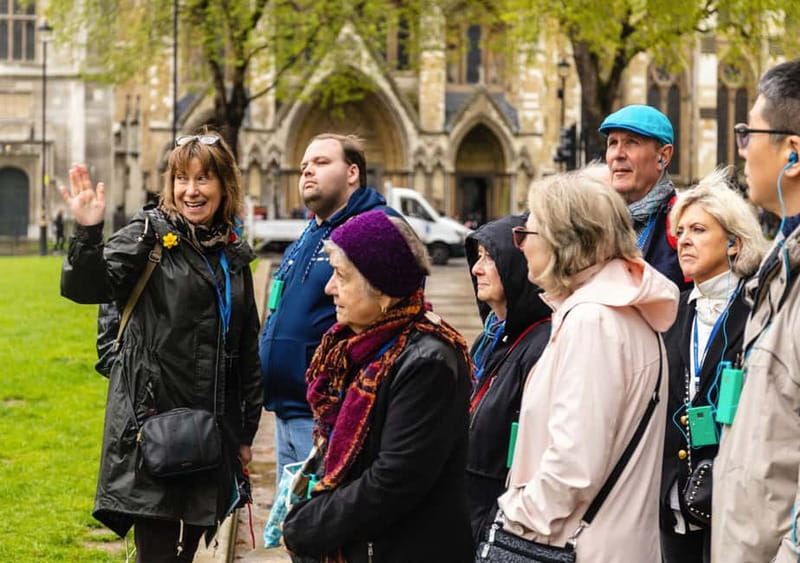
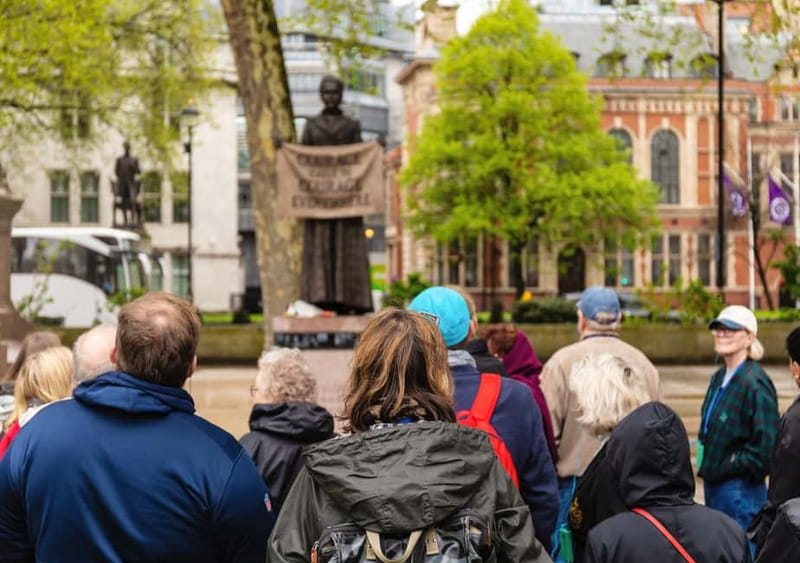
The meeting point is the statue of Viscount Palmerston in Parliament Square, London SW1P 3JX. Arrive 15 minutes early and look for the guide holding a green Walks sign.
Parliament Square is a useful place to begin because the setting immediately puts the tour in context. You are surrounded by major political and religious landmarks before the formal visit even starts. The short introduction here helps you get oriented and understand how the Abbey and Parliament sit side by side.
Do not treat the meeting time casually. This is a timed entry experience, and the group must move together into both sites. The tour ends at the Houses of Parliament, although the supplied information also describes the activity as ending back at the meeting point. In practical terms, you should plan to finish at Parliament rather than expect hotel transport.
There is no pickup or drop-off. You make your own way to Parliament Square and away from Parliament at the end.
Westminster Abbey: coronations, tombs, and national memory
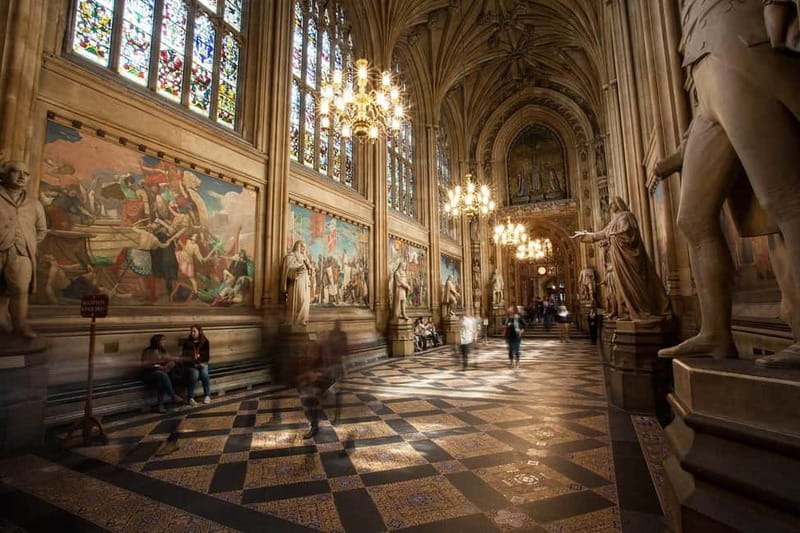
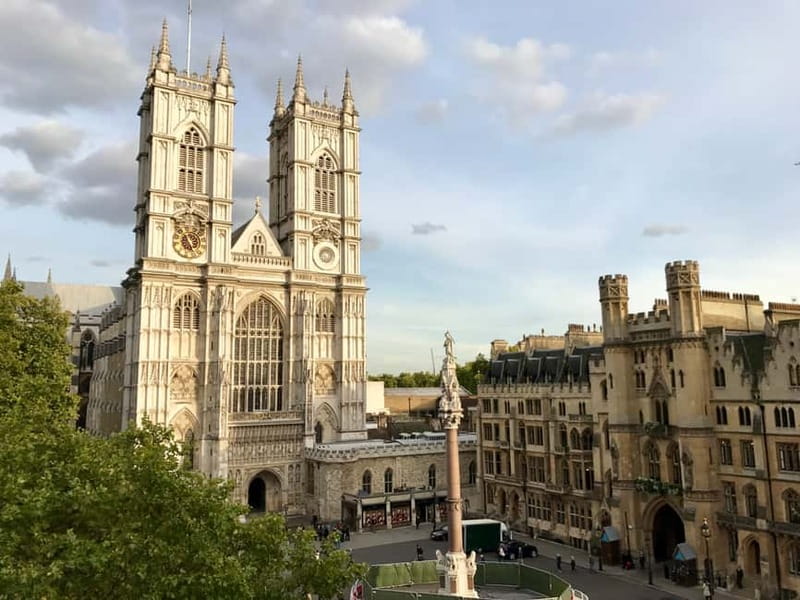
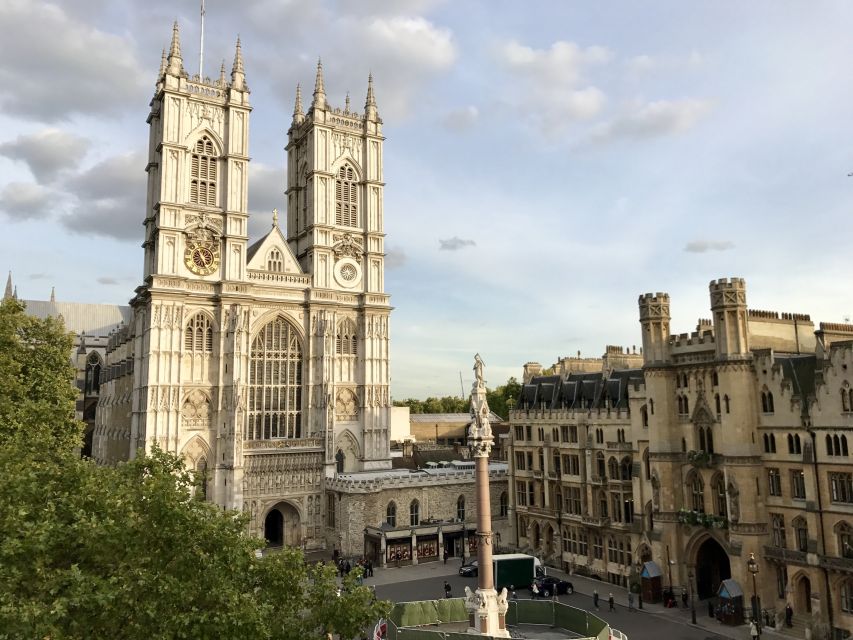
The first major visit is Westminster Abbey, the Gothic church associated with British coronations since 1066. Its roots reach back more than 1,000 years, and it serves as both a place of worship and a national memorial.
The Abbey’s importance can be hard to grasp from the outside. Inside, the building brings together royal ceremony, religious tradition, literature, science, politics, and burial customs. Your guide helps connect those threads instead of leaving you to decode a maze of chapels and monuments by yourself.
You will see the places linked with kings and queens, along with memorials to figures such as Isaac Newton, Charles Darwin, and William Wilberforce. These names show how the Abbey functions as a record of national achievement, not only a royal church.
The guide also explains how the monarchy helped shape Britain’s move toward democracy. That is one of the most useful parts of the visit because it prevents the Abbey from becoming a parade of dates and dead rulers. You get a clearer sense of how ceremony and political power worked together over time.
Winston Churchill receives particular attention. He was one of the few non-royals to lie in state in the Abbey after his death, a detail that helps explain the building’s national role.
The early timing is a real advantage. The Abbey remains a major attraction, so it will not be empty, but beginning there at the quieter point of the day can make it easier to listen and look closely. Several people who enjoyed the tour still wished they had more time inside. That is worth taking seriously: 90 minutes is enough for a guided route, not enough for every chapel, memorial, and corner.
Photography is not allowed inside. If you are used to recording every stop on your phone, this will feel restrictive, but it also keeps your attention on the building and the guide.
The transition from church to government
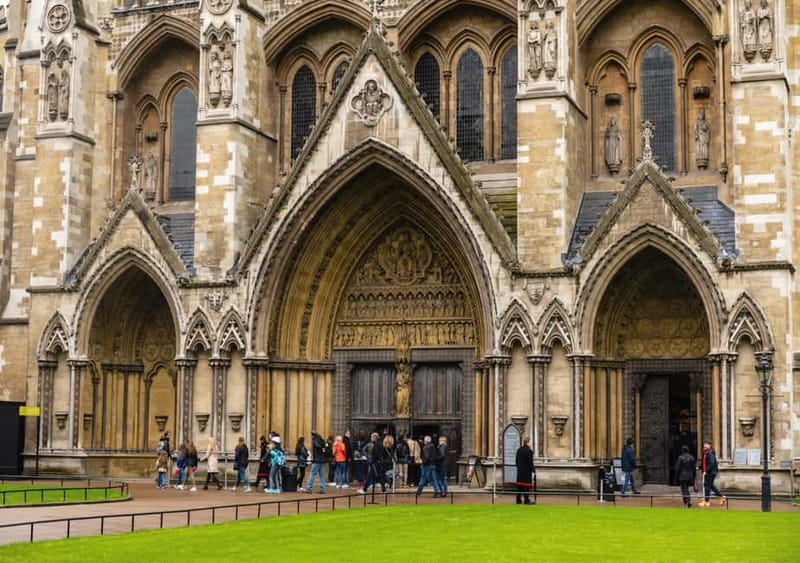
After the Abbey, the tour continues into the Houses of Parliament. This is where the day becomes especially distinctive. Many London sightseeing outings offer a view of the Palace from Westminster Bridge or Parliament Square. This one takes you through the building’s interior.
The Parliament portion is guided rather than handled only through an audio device. That matters because the Palace is full of ceremonial details that are easy to miss. A live guide can point out why a room matters, explain a tradition as you reach it, and answer questions in the moment.
Headsets are included. They are useful in echoing halls and during busy periods when you may not be standing right beside the guide. One past group had an English-language challenge and was able to receive an audio guide at Parliament, but the official tour itself is conducted in English.
Same city, a completely different sort of afternoon:
- London: Madame Tussauds London
★ 4.6 · 20,915 reviews - London: Warner Bros. Studio Tour with Transfers
★ 4.7 · 17,586 reviews - London: Tower Bridge Entry Ticket
★ 4.7 · 15,560 reviews - London: St Paul’s Cathedral Entry Ticket
★ 4.7 · 9,813 reviews
Westminster Hall and the oldest part of the Palace
The Parliament visit begins in Westminster Hall, the oldest part of the Palace. It has hosted state functions for nearly 1,000 years and is known for its medieval timber roof.
This room gives you an immediate sense of how old the institution is. You are not entering a modern office complex with a few historic decorations. You are walking into a surviving medieval space that has continued to serve public and political purposes for centuries.
The guide places Westminster Hall within the wider story of British law and government. You may also hear about the legal proceedings held there over the centuries, including details that can be difficult to understand from a quick self-guided look.
The hall is impressive, but it also sets the physical tone for the rest of the tour. There is a great deal of standing on hard surfaces. If your feet are sensitive, use the first part of the visit to judge your pace and conserve energy.
The room where the monarch prepares for Parliament
The route includes a look at the room where the King puts on the crown and ermine-trimmed robe before formally opening a new session of Parliament. This is a brief but revealing stop because it shows the machinery behind a ceremony most people know only from television.
The British state mixes pageantry with practical government. Here, you see the preparation before the monarch enters the formal spaces. It is a useful reminder that grand ceremonies are carefully staged events, with rooms, clothing, movement, and ritual all assigned a role.
The experience is strongest when your guide explains the meaning behind these actions. Without that context, the room might seem like another ornate interior. With it, the room becomes part of the continuing relationship between crown and Parliament.
The House of Lords and its ceremonial setting
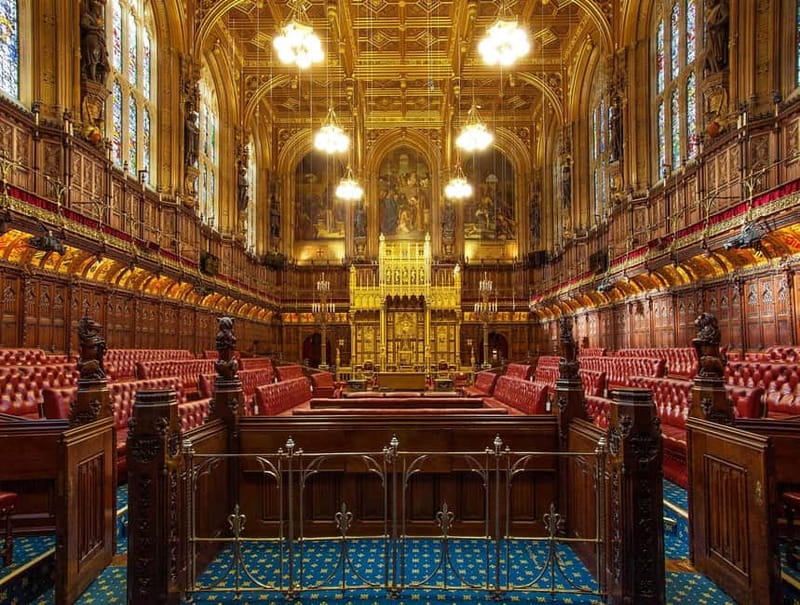
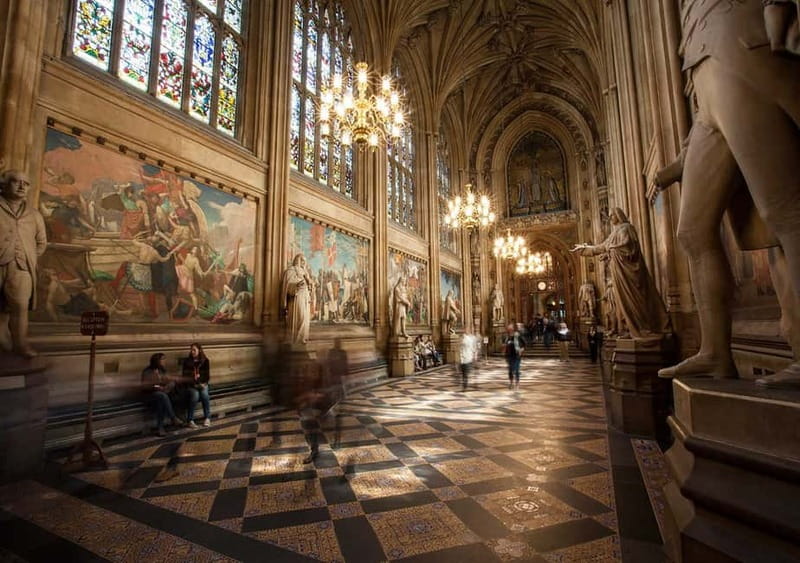
Next comes the Chamber of the House of Lords, one of the most ornate rooms in the Palace. The setting is built for ceremony and reflects the older, more formal side of Britain’s political system.
You will learn how the chamber functions and how its traditions connect to the opening of Parliament. The visit is not simply a chance to peek into a room seen on television. It gives you a clearer idea of how design, rank, and ritual were used to express authority.
Photography is prohibited inside the Parliament rooms, which is frustrating if you want a personal record of the visit. You can, however, focus on the colors, decoration, layout, and stories while you are there. The lack of photos is a practical drawback, especially at this price, so set your expectations before booking.
The House of Commons and the rules of modern democracy
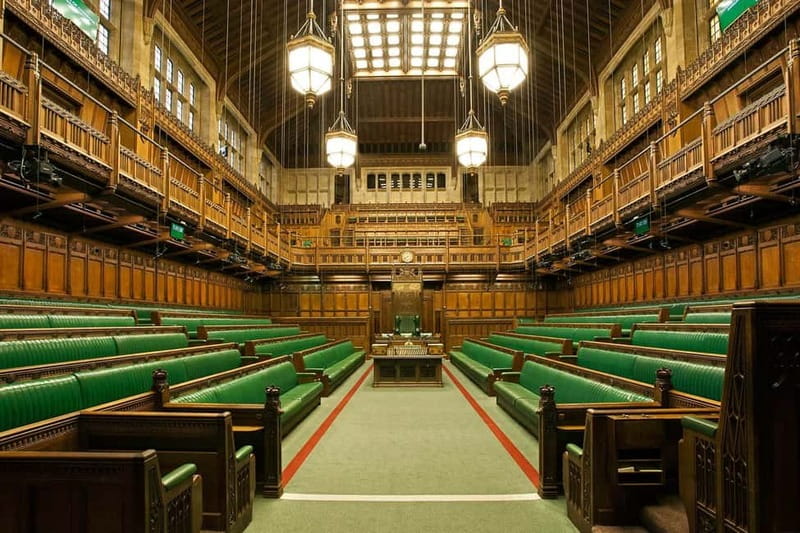
The final major interior is the House of Commons, described as the engine room of British democracy. Compared with the Lords, it represents a more directly political and argumentative side of Parliament.
Your guide explains the ceremonies that connect the Commons to its older past. One memorable rule is that the King is not allowed to enter the Commons chamber. That tradition reflects the long tension between royal authority and elected government.
The guide also helps you recognize the setting from televised political events. Seeing the chamber in person can be surprising because it may feel smaller than it appears on screen. The value is not size but context: you are standing where major debates and decisions take place.
The tour connects this present-day political work with figures from earlier centuries, including Henry VIII and Winston Churchill. That blend of legend, ceremony, law, and current government gives the Parliament visit its strongest moments.
What the walking pace is really like
The activity lasts 225 minutes, or three hours and 45 minutes. The advertised route includes 15 minutes around Parliament Square, 90 minutes at Westminster Abbey, and two hours at Parliament.
Those times are useful because they make the physical demand clear. You are not spending four hours seated in a lecture. You are moving through large historic buildings, standing in rooms, listening through a headset, and handling stairs.
Wear comfortable shoes. This advice is essential, not decorative. Several parts of the route involve hard floors, and there may be limited opportunities to sit. One group found that the guides kindly located places to rest, but you should not depend on frequent seating.
There is no scheduled refreshment break between the Abbey and Parliament. A short pause would improve the day, especially because the tour can run directly from one site to the next. Eat and drink beforehand, and consider arranging a separate break after the tour ends.
This is not suitable for wheelchair users, people with mobility impairments, or strollers. Baby strollers are not allowed. You should be able to walk at a moderate pace without difficulty.
Guide quality and group experience
The guide is a major part of the value here. Past tours have been led by people including Simon, Jane, Ben, Holly, Charlotte, Katharine, Rosie, Steve, Toby, and others. You cannot choose a particular guide from the information provided, but the recurring strength is clear: the best guides add humor, political context, and small stories that bring the rooms to life.
Some groups have had separate guides for the Abbey and Parliament. That arrangement can work well because each guide focuses on one institution. Parliament may also include a guide who works within the building, adding a useful perspective on how the institution functions.
The headsets are a welcome touch. They let you keep moving without losing the explanation, and they reduce the need to crowd around the guide. Group size is not specified, but one past group described the number as manageable.
The main organizational risk is the handoff between the two sites. One outing included a wait of about 20 minutes outside the Abbey while headsets were collected for Parliament, followed by a hurried move toward security. That appears to have been an isolated coordination problem, but it shows why you should keep some flexibility in your day.
Is $187.23 good value?
At $187.23 per person, this is an expensive London sightseeing experience. The price makes more sense if you place a high value on guided interpretation and want to visit both interiors in one booking.
You receive admission to Westminster Abbey, admission to the Houses of Parliament, a live guide, a walking tour, and a headset. Buying access to both sites separately would not automatically give you the same connected explanation or help with timing and navigation.
The strongest value comes from the guide. Westminster Abbey is too full of names, tombs, chapels, and traditions to absorb quickly without direction. Parliament has the same problem, with the added complication of security, formal rooms, and procedures that are not obvious to a first-time visitor.
Still, the price will feel high if you prefer to wander slowly, take photos, or sit and study details. The schedule leaves little spare time, photography is restricted inside, and you may want a separate Abbey visit if you are especially interested in architecture or memorials.
The free cancellation window up to 24 hours before departure and the reserve-now, pay-later option make planning less risky. Those policies do not reduce the price, but they help if your London schedule is still moving around.
Who should book this experience?
I would choose this tour if you want the clearest introduction to Britain’s royal, religious, and political institutions in one concentrated visit. It suits first-time London visitors, history fans, and anyone who wants to understand more than the exterior views.
It is also a good fit if Parliament is high on your list. The Palace is difficult to appreciate fully from the pavement, and the live explanation adds much more than a quick photo stop.
I would hesitate if you have arthritis, knee trouble, back pain, or difficulty standing. One person had to skip Parliament because of knee and back problems, and another found the full four hours tiring despite wearing comfortable shoes.
I would also think twice if you want a relaxed day. The experience is packed and purposeful, not leisurely. If you have several days in London, visiting the Abbey and Parliament separately may give you more time to rest and look around.
Should you book the Westminster Abbey and Parliament tour?
Book it if you want maximum historical context in a single outing and can handle a long stretch of walking and standing. The pairing is unusually strong, the route reaches important interiors, and a good guide can make both institutions far easier to understand.
Skip it if the price feels uncomfortable, you need regular seating, or you want unrestricted photography. For everyone else, this is one of the more useful ways to connect Westminster’s royal past with the working machinery of British democracy.
FAQ
How long does the tour last?
The tour lasts 225 minutes, or three hours and 45 minutes.
Where does the tour begin?
It begins at the Viscount Palmerston statue in Parliament Square, London SW1P 3JX. Look for a guide holding a green Walks sign.
Where does the tour end?
The activity ends at the Houses of Parliament, with the supplied information also describing the end as back at the meeting point.
Is the tour conducted in English?
Yes. The live tour guide and tour language are English.
What is included in the price?
The price includes a guide, walking tour, Westminster Abbey ticket, Houses of Parliament ticket, and headset.
Are hotel pickup and drop-off included?
No. Hotel pickup and drop-off are not included.
Can I take photographs inside?
No. Photography inside is not allowed.
Is the tour suitable for wheelchair users or strollers?
No. The tour is not suitable for wheelchair users, people with mobility impairments, or strollers. Baby strollers are also not allowed.
What should I wear?
Wear comfortable shoes. The tour involves moderate walking, standing on hard surfaces, and some stairs.
Can I cancel the booking?
Yes. You can cancel up to 24 hours in advance for a full refund. You can also reserve now and pay later.
Just added around London
- London: Wimbledon Tennis Club and Westminster Walking Tour★ 4.5 · 86 reviews
- London: Westminster to Richmond River Thames Cruise★ 4.8 · 23 reviews
- Westminster Abbey Skip-the-Line Entry and Private Tour★ 4.6 · 4 reviews
- Best of London by LE GRAND – London’s Luxury Bus Tour★ 4.2 · 23 reviews
- London: Westminster Walking Tour & St Paul’s Cathedral Entry★ 4.7 · 7 reviews
- From London: Oxford, Stratford-upon-Avon & Cotswolds Trip★ 4.5 · 64 reviews
- From London: Warwick, Oxford, Stratford & Cotswolds Day Tour★ 4.0 · 270 reviews
- Warner Bros. Studios and 1-Day London Hop-on Hop-off tour★ 4.7 · 9 reviews
Guided, compared.

Magical London: Harry Potter Guided Walking Tour
Read our review →
Emirates Stadium Entry Ticket and Audio Guide
Read our review →
City & Beatles Tour with Live Guide & Live Music
Read our review →
University and City Walking Tour with Alumni Guide
Read our review →
Christmas Lights Nighttime Bus Tour with Live Guide
Read our review →