
Reviewed · JACK THE RIPPER TOURS
London: Jack the Ripper Museum Tickets
The Jack the Ripper Museum turns a small East End building into a grim walk through the murders of 1888. You’ll move from Mitre Square and the police investigation to a Victorian bedroom and a morgue, with wax figures, sound effects, newspapers, and documents shaping the story.
I like the focus on the victims, not just the killer, and the carefully made recreations of the police station and Mary Jane Kelly’s bedroom. I also like that you can move at your own speed, with audio in several rooms and plenty of text to read.
The main drawback is size. Six floors sounds grand, but the museum is compact, and some people finish in about 45 minutes. If you read every panel and take your time, you might spend closer to 90 minutes. The subject is also grim, so this is not a light London attraction.
Key points to know before you go
- Six floors in a compact East End building: Expect a self-guided visit rather than a long, traditional museum tour.
- Mitre Square brought to life: A waxwork scene shows P. C. Watkins discovering Catherine Eddowes.
- Victorian police evidence: See recreations of crime boards, letters, newspapers, and police equipment.
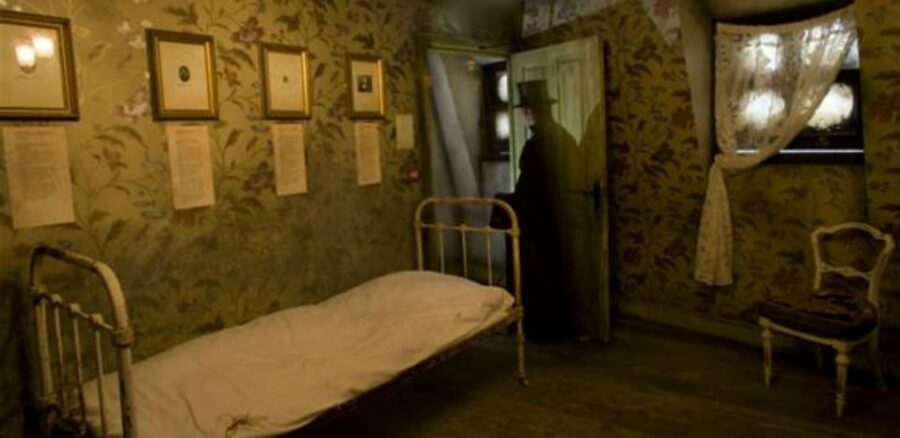
- A room for the victims: Mary Jane Kelly’s bedroom presents the women as people with families, work, and difficult lives.
- A genuinely unsettling morgue: Actual autopsy photographs and reports make the final section especially disturbing.
- Good value for a short visit: At $18.86 per person, the ticket makes sense if you enjoy true crime, Victorian London, or horror history.
At 12 Cable Street, the building is part of the experience
The museum is at 12 Cable Street in London’s East End. From the outside, the building can look more like an ordinary house than a major attraction, so keep the street address handy as you approach.
The nearest Underground and train stations are Tower Gateway, Tower Hill, and Aldgate East. Transportation is not included, but the museum is easy to add to a day around the Tower of London, the City, or the East End.
Once inside, the visit ends where it starts. There is no coach transfer or guided route through the wider neighborhood. You enter, follow the museum’s rooms and floors, and leave on your own schedule.
That setup suits me. You do not have to rush behind a guide or wait for a group. You can stop at each panel, replay or listen to room audio, and spend more time with the subjects that interest you.
More Museum Tours in London
- London: Chelsea Football Club Stadium and Museum Tour
★ 4.8 · 4,576 reviews - London: British Museum Guided Tour
★ 4.3 · 1,182 reviews - London: Tour of the British Museum
★ 4.1 · 678 reviews
Mitre Square and the first shock of the visit
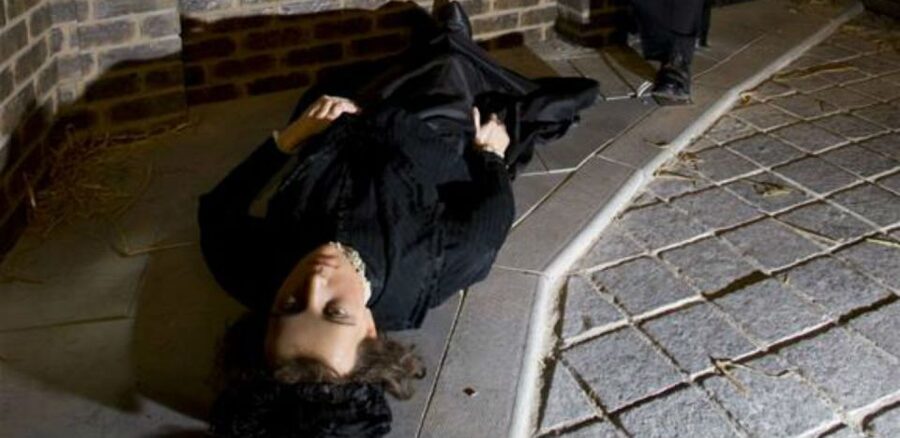
One of the museum’s strongest rooms recreates Mitre Square, where Catherine Eddowes was murdered. A wax figure of P. C. Watkins shows the moment he discovered the body.
The scene is designed to unsettle you. It is not a neutral display of artifacts in glass cases. The lighting, figures, and setting aim to place you near the event, which gives the museum its horror attraction quality.
I found the scene useful because it gives physical shape to a name and a location. Jack the Ripper stories can become a blur of dates, theories, and gruesome details. Seeing the police constable, the square, and the circumstances together makes the investigation easier to follow.
Still, this is not suitable for everyone. The museum uses wax figures and theatrical staging, so you should expect something closer to a crime-history attraction than a quiet academic archive. If you dislike graphic crime displays, take your time and remember that later rooms become more explicit.
Jack the Ripper’s sitting room and the maze of suspects
The next part presents a recreation of Jack the Ripper’s sitting room. It contains medical instruments, books, maps, letters, and Victorian Ripper material.
The room tries to build a picture of the unknown killer without pretending that his identity has been proved. That distinction matters. The murders remain unsolved, and the museum presents suspects and theories rather than a final answer.
A particularly unusual item is a drawing linked to Walter Sickert, one of the better-known suspects in Ripper discussions. The drawing shows a woman’s body on a metal bed and is signed in red ink. It is an arresting display, though you should treat any suspect theory with caution. The mystery has encouraged decades of speculation.
I like this room best when it stays close to evidence and atmosphere. The maps and letters show how people tried to make sense of the crimes at the time. The medical objects also hint at why investigators and the public focused so heavily on the killer’s possible knowledge of anatomy.
You may find the sitting room theatrical rather than conclusive. That is part of the museum’s approach. It creates a setting for the theories, but it cannot solve a case that has never been definitively solved.
Whitechapel Police Station and the evidence wall
The recreated Whitechapel Police Station is the museum’s most informative section. It presents the investigation through crime scene boards, newspapers, letters, and police artifacts.
Look for the From Hell and Dear Boss letters. These are central pieces of the Ripper story, and seeing them within a police-station setting helps explain how public communication, newspapers, and police work became tangled together.
The display also includes a whistle associated with P. C. Watkins, along with his notebook, handcuffs, and truncheon. These objects bring the investigation down to a human scale. Instead of thinking only about a faceless killer, you see the tools carried by the officer who found one of the bodies and called for help.
The museum presents these as important Ripper-related objects outside Scotland Yard’s private Crime Museum. That gives this section extra appeal for visitors who want material connected to the investigation rather than only reproductions and scenic effects.
Allow time here. The wall displays can reward slow reading, especially if you are interested in Victorian newspapers, police procedure, or the way evidence was recorded before modern forensic methods.
The drawback is that the room can feel information-heavy after the waxwork scenes. You will get more from it if you read selectively, focusing on the letters, police equipment, and timeline rather than trying to absorb every panel in one pass.
More Jack the Ripper walks after dark:
- London: The Original Jack the Ripper Walking Tour
★ 4.7 · 7,833 reviews - London: Jack the Ripper Small Group Tour
★ 4.7 · 3,159 reviews - German Language : Original Jack the Ripper Tour
★ 4.6 · 1,805 reviews - London: Jack the Ripper Walking Tour – Ripper Vision Tours
★ 4.5 · 1,752 reviews
Mary Jane Kelly’s bedroom and the lives behind the case
In the attic, you enter a recreation of Mary Jane Kelly’s bedroom. This is the museum’s most human room, and for me, its most important one.
The setting includes a metal-framed bed with a straw mattress, boots, bonnets, photographs, and modest personal belongings. A woman’s voice and music create a haunting soundscape. The room also gives space to the lives of the women murdered by Jack the Ripper, including their families and domestic circumstances.
That change in focus matters. True crime attractions can turn victims into names on a list, while the killer receives all the attention. Here, the photographs and belongings remind you that these were real women living difficult lives in the Victorian East End.
The room is also a useful glimpse into working-class domestic life. The objects are plain and limited, which tells you something about poverty and daily life without needing a long lecture.
Some people will find the attic especially moving. Others may find it emotionally heavy, particularly after the earlier staged murder scene. I would not hurry through it. Even if you are mainly interested in the mystery, this room gives the visit a needed sense of proportion.
The morgue, where the tone turns much darker
The final major section is the morgue. Here you can study the actual autopsy photographs and read reports about the murders of the nine women connected with the Ripper case.
This is the point where you should decide how much you want to see. The photographs are not merely spooky props. They are presented as genuine autopsy images, and the written reports describe severe mutilation.
The morgue works as a blunt reminder of what the case involved. The waxworks and sound effects create fear, but the photographs carry a different weight. They move the visit from Victorian-style horror toward real human suffering.
If you are visiting with children, use your judgment. Some children may enjoy the theatrical rooms, but the morgue is graphic and the subject throughout is disturbing. The museum’s displays include creepy figures and dark sound effects, so this is better for older children who already handle horror and true crime comfortably.
You can also choose to move through this room quickly. The museum does not require you to study every photograph. There is value in knowing what is here before you arrive, so you can make that choice for yourself.
Sound, staging, and how the self-guided route works
The museum uses audio in several rooms. The attic’s singing and sound effects are especially memorable, while the basement figures add a strong horror element.
You are free to walk through the floors at your own pace. Staff at the entrance explain the best route around the museum, which helps in a building that can initially feel more like a private house than a formal attraction.
This is not a scheduled walking tour through Whitechapel. You do not receive transportation, and the ticket covers entry to the museum itself. Some visitors may encounter a guide, including staff members named Jasony and George, but the basic format is a self-guided visit.
That makes the experience flexible. You can spend extra time with the evidence boards or move quickly through the photographs. It also means you should not expect a continuous spoken presentation from a guide at every stop.
The museum’s small size is both a strength and a weakness. You can see the whole place without giving up half a day, and the six-floor route gives the visit a clear progression. On the other hand, narrow rooms and detailed displays can make it feel crowded if many people stop in the same area.
How long should you allow?
Plan on about 45 minutes if you move steadily through the rooms. If you read the material, listen to the audio, and study the objects, allow around 90 minutes.
There is no need to race. The ticket is valid for one day, and the attraction is designed around a single visit rather than a timed multi-stop itinerary. The best approach is to treat it as a focused museum stop between other East London sights.
I would set aside an hour, with extra time if you have a strong interest in the case. That gives you enough room for the police station and victim displays without making the visit feel like a marathon of grim photographs.
Is $18.86 good value?
At $18.86 per person, the ticket is reasonable for a short London attraction, particularly if you are interested in Jack the Ripper, Victorian crime, or horror design.
The value depends on your expectations. If you want a large museum with extensive original collections, this may feel expensive for the building’s size. If you want a compact, atmospheric visit with recreated scenes, sound, police artifacts, photographs, and readable background information, the price is easier to justify.
I would compare it with the cost of a guided walking tour. The museum gives you shelter, a fixed route, and the freedom to linger. It does not give you a long walk through the actual streets or a live guide explaining how modern Whitechapel has changed.
The ticket also includes flexibility through reserve now and pay later booking, and you can cancel up to 24 hours in advance for a full refund. Those terms are helpful when your London plans are still shifting. The museum is closed on Christmas Day.
A companion accompanying a disabled person receives free entry. That is useful practical information to know before booking.
Who will enjoy this museum most?
I would choose this experience if you enjoy:
- True crime and unsolved cases
- Victorian London and East End social history
- Horror attractions with wax figures and sound effects
- Police investigations and old newspapers
- Short indoor activities near Tower Hill and the City
It also works for a visitor who wants something unusual between major London landmarks. The museum is not a full-day attraction, but that can be an advantage on a packed itinerary.
I would skip it if graphic autopsy photographs are likely to upset you, or if you want a strictly factual museum without theatrical staging. The experience uses atmosphere, recreated rooms, and creepy figures as much as it uses documents.
For families, decide based on the age and temperament of your children. Some older children interested in horror or history may find it fascinating. The morgue and murder scenes are not mild.
My practical way to visit
Start by reading the entrance guidance so you understand the suggested route. Then give the police station more time than the first wax scene, since the documents and equipment provide the clearest explanation of the investigation.
Slow down in Mary Jane Kelly’s bedroom. Listen to the audio, look at the domestic objects, and notice how the museum shifts attention from the killer to the women.
Save enough energy for the morgue, but do not feel obliged to inspect every image. The photographs and reports are the most graphic material in the museum, and simply knowing that they are there may be enough for some visitors.
Afterward, you can continue around Tower Hill, Aldgate East, or Cable Street. Since the museum provides no transportation and ends at its entrance, you are free to build the rest of your day around the neighborhood.
Should you book the Jack the Ripper Museum?
Book it if you want a short, highly atmospheric look at the 1888 murders, especially if recreated crime scenes, police evidence, and Victorian social history appeal to you. I particularly value the attention given to the victims and the contrast between the theatrical rooms and the more serious police displays.
Do not book it expecting a large institution or a definitive answer to the Ripper mystery. This is a compact museum with a strong horror edge, and the morgue section is graphic.
At $18.86, it is a fair choice for an hour of dark London history. Go in prepared for wax figures, unsettling audio, and real autopsy photographs, and you will have a much clearer idea of what kind of visit awaits you.
FAQ
Where is the Jack the Ripper Museum?
The museum is at 12 Cable Street, London E1 8JG, in Greater London.
Which stations are closest to the museum?
The nearest Underground and train stations are Tower Gateway, Tower Hill, and Aldgate East.
How long is the museum visit?
The ticket is valid for one day. The museum does not give a fixed visit length, but you might spend about 45 minutes moving steadily or up to 90 minutes reading and taking your time.
Is transportation included?
No. The ticket includes museum admission only.
What can I see inside the museum?
You can see recreated crime scenes, a recreation of Whitechapel Police Station, Jack the Ripper’s sitting room, Mary Jane Kelly’s bedroom, and a morgue with autopsy photographs and reports.
Are there real photographs in the museum?
Yes. The morgue displays actual autopsy photographs connected with the nine women murdered by Jack the Ripper.
Is the museum suitable for children?
The museum contains murder recreations, creepy wax figures, disturbing sound effects, and graphic autopsy photographs. Parents should decide based on their children’s age and tolerance for horror and true crime.
Is the museum open on Christmas Day?
No. The museum is closed on Christmas Day.
Can I cancel my booking?
Yes. You can cancel up to 24 hours in advance for a full refund.
Can I reserve now and pay later?
Yes. The booking option allows you to reserve your place and pay nothing at the time of booking.
More Museums in London
- London: British Museum Audio Tour & Priority Entrance Ticket
★ 4.5 · 631 reviews - Afternoon Tea at the British Museum
★ 4.2 · 511 reviews - London: Paradox Museum Entry Ticket
★ 3.9 · 441 reviews - London: National Gallery Guided Tour with Art Expert Guide
★ 4.7 · 440 reviews
Just added around London
- London: Wimbledon Tennis Club and Westminster Walking Tour★ 4.5 · 86 reviews
- London: Westminster to Richmond River Thames Cruise★ 4.8 · 23 reviews
- Westminster Abbey Skip-the-Line Entry and Private Tour★ 4.6 · 4 reviews
- Best of London by LE GRAND – London’s Luxury Bus Tour★ 4.2 · 23 reviews
- London: Westminster Walking Tour & St Paul’s Cathedral Entry★ 4.7 · 7 reviews
- From London: Oxford, Stratford-upon-Avon & Cotswolds Trip★ 4.5 · 64 reviews
- From London: Warwick, Oxford, Stratford & Cotswolds Day Tour★ 4.0 · 270 reviews
- Warner Bros. Studios and 1-Day London Hop-on Hop-off tour★ 4.7 · 9 reviews
Jack the Ripper Tours, compared.

German Language : Original Jack the Ripper Tour
Read our review →
Jack the Ripper Walking Tour – Ripper Vision Tours
Read our review →
French Language : Original Jack the Ripper Tour
Read our review →
Browse the lists this tour appears in