
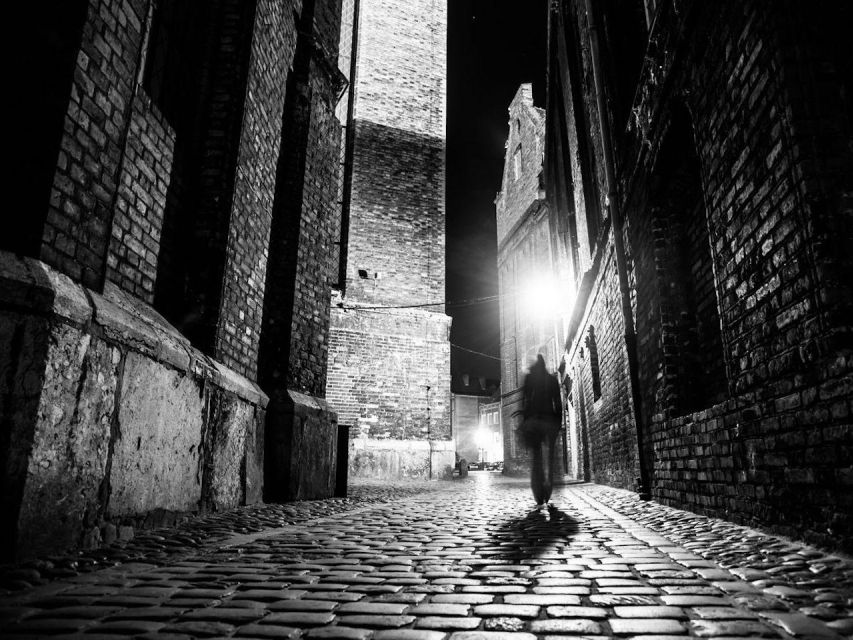
Reviewed · JACK THE RIPPER TOURS
London: Jack the Ripper Small Group Tour
Jack the Ripper’s story becomes more unsettling when you are standing in the actual East End streets connected with it. This two-hour walking tour links Whitechapel, Spitalfields, the Ten Bells pub, Brick Lane, and Aldgate East with photographs, evidence, competing theories, and careful attention to the women who were killed. I like the small groups, and I like that guides such as Becky, Cova, Ollie, Sarah, and Jay bring their own clear explanations and theories to the case.
The main consideration is that this is an outdoor night walk, not a museum visit. Cold, rain, traffic, rubbish trucks, and poor light can all be part of the setting. The subject is also grim, so you should choose it for serious social history and detective work, not simply for a spooky laugh.
Key points at a glance
- Whitechapel on foot: See the streets and districts tied to the 1888 murders rather than hearing the story in a theater or pub.
- Small groups of about 13 to 15: The format gives you a fair chance to ask questions and discuss theories.
- Photographs and evidence: Guides use visual material to make locations and people easier to understand.
- Victims receive attention: The story is presented with sympathy, not only as a murder puzzle.
- Best after sunset: Darkness, winter weather, and the old East End streets add atmosphere, though you should dress for the conditions.
- Two hours for $26: That is a reasonable price for a focused London walk with a live guide, especially if you want a history-led evening activity.
Starting beside Aldgate East station
Your meeting point is beside Aldgate East station, near the Fashion Warehouse. The station has four exits, so allow time to find the correct one. The guide cannot wait for late arrivals, and this is one of those London bookings where giving yourself an extra few minutes pays off.
Aldgate East is a useful starting place because it puts you near the boundary between the City of London and the old East End. The tour uses that transition to frame the case. You are not dropped into a string of murders without context. Instead, the walk introduces the streets, working conditions, poverty, policing, and social divisions that shaped Whitechapel in the late nineteenth century.
The exact opening can vary with the guide, but you should expect a spoken introduction before the group moves through the area. Guides such as Becky and Ollie have been praised for speaking clearly and keeping the story moving. Cova is known for her strong interest in the case, while Sarah has been especially good at explaining both the murders and the surrounding neighborhood.
The small-group format matters here. A large crowd can make a walking lecture hard to follow, especially on narrow streets or beside busy roads. With a group of roughly 13 to 15 people, you can usually hear the guide more easily and ask a question without holding up a long line.
More Jack the Ripper walks after dark:
- London: The Original Jack the Ripper Walking Tour
★ 4.7 · 7,833 reviews - German Language : Original Jack the Ripper Tour
★ 4.6 · 1,805 reviews - London: Jack the Ripper Walking Tour – Ripper Vision Tours
★ 4.5 · 1,752 reviews
Whitechapel and the setting of 1888
Whitechapel is the heart of the walk. The name has become shorthand for the Ripper case, but the place itself is more useful than the legend. You begin to see that the murders took place in a real neighborhood, home to working people, lodging houses, pubs, workshops, markets, and streets where daily life continued alongside fear.
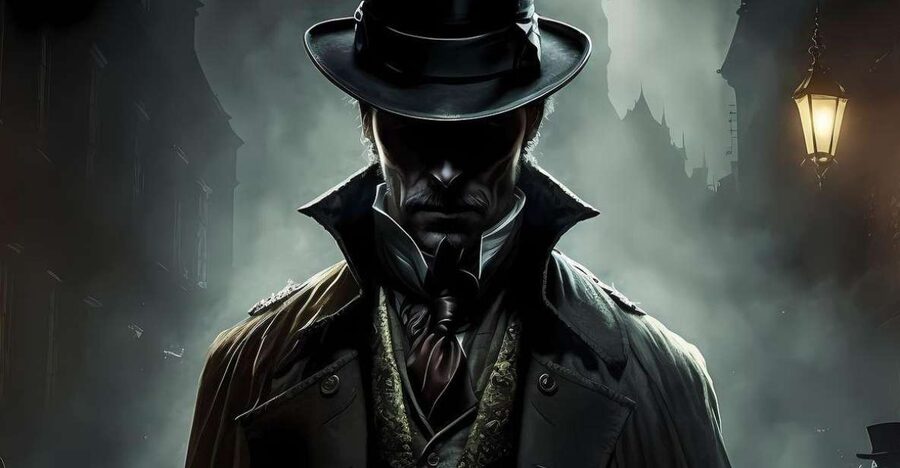
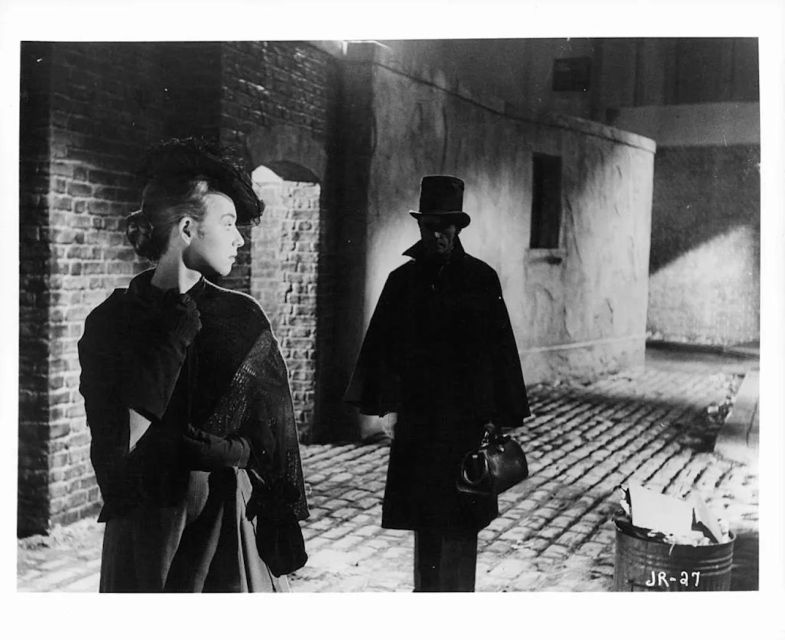
The guide connects the known murder locations with the conditions of the time. You will hear about the victims, the police investigation, the evidence that survived, and the details that later storytellers exaggerated. This balance is important. Jack the Ripper has been turned into a character in books, films, and television, but the tour works best when it separates documented facts from later myths.
I particularly value the attention given to the victims. The murders were violent, and there is no way to tell this story without discussing that violence. Still, a good guide can avoid turning suffering into a sideshow. The strongest presentations use the case to talk about the women as people and to show how poverty and limited choices shaped their lives.
The route also helps you picture the old East End without pretending that every building has survived unchanged. Some areas have retained nineteenth-century character, while others have been rebuilt or altered. The contrast gives you a more honest sense of London: old streets and new businesses sharing the same ground.
This is also where the walking format earns its price. A screen can show you a photograph of a location, but standing nearby helps you understand distance, street width, sight lines, and how quickly the police or witnesses might have reached a scene. The setting becomes evidence in its own right.
Spitalfields, old streets, and modern London
From Whitechapel, the tour moves toward Spitalfields. The area adds architectural and social context, with older buildings and streets that help you picture Victorian London. The modern district has changed greatly, but traces of its earlier identity remain.
You may pass the area around Spitalfields Market, where the tour can connect present-day activity with the district’s older working life. The market itself is not the main attraction of this booking, and you should not expect a long shopping stop. Its value is as a landmark within a neighborhood that has undergone major change.
That contrast is one of the best parts of the route. You are not walking through a preserved historical set. You are moving through a living part of London where restaurants, shops, street art, and commuters occupy places once associated with extreme hardship. Guides who know the local streets can explain that change without losing sight of the 1888 story.
The tour may also include visual aids here. Several guides use photographs or printed images during the walk. These can show how streets, buildings, victims, suspects, and police work were represented at the time. The pictures are useful because the case has so many names and theories. A strong image gives your memory something to hold onto.
The Ten Bells pub and the human side of the story
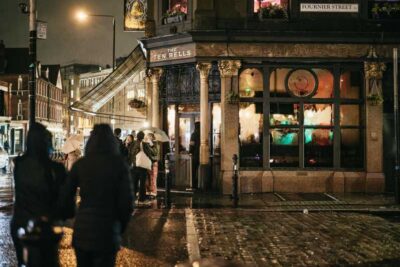
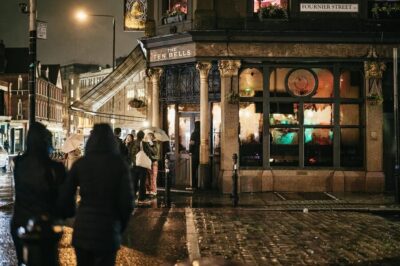
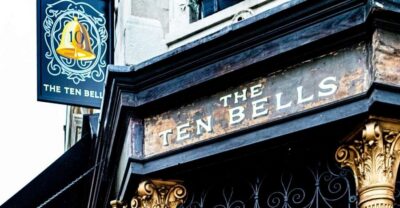
The Ten Bells pub is one of the route’s best-known landmarks. Several of the Ripper’s victims were said to have frequented the pub, making it a powerful place to pause and consider their ordinary routines before the murders became part of London folklore.
Do not expect the pub to function as a formal museum. It is a working pub, and the experience is mainly about seeing the place from the route and hearing how it fits into the story. One practical point: the two-hour tour does not include food or drink, and time for a dedicated photo stop may be limited.
Still, the Ten Bells matters because it shifts the focus away from the killer. A pub, a street corner, or a familiar route to work can remind you that these women had social lives, friendships, jobs, and habits. The location gives the guide a chance to discuss the victims as members of a community rather than names in a crime list.
If you are hoping to go inside for a drink, treat that as a separate plan. The tour is a walking history experience, not a pub crawl. You will get more from it if you listen closely and save any visit to the pub for afterward, if time and opening arrangements allow.
A few more London days worth weighing up
- From London: Harry Potter Warner Bros Studio Tour
★ 4.7 · 26,588 reviews - London: Westminster to Greenwich River Thames Cruise
★ 4.5 · 22,836 reviews - Magical London: Harry Potter Guided Walking Tour
★ 4.7 · 22,044 reviews - London: Madame Tussauds London
★ 4.6 · 20,915 reviews
Brick Lane and the changing East End
Brick Lane brings a different mood. Today it is known for street art, food, and a mixed local identity, while the tour uses it to discuss the area’s older, grittier past. This part of the walk helps show how much the East End has changed while still retaining links to its earlier street plan and social history.
The modern surroundings can be both a strength and a distraction. Street art, traffic, shop signs, and evening crowds may make it harder to create a spooky atmosphere. At the same time, the everyday life around you makes the history more believable. The Ripper story did not happen in an empty film set. It happened in a busy urban district that has continued to evolve.
Guides bring the route together by returning to the evidence. You may hear about the letters, witness accounts, police work, suspects, and later theories associated with the case. The most useful approach is to treat each theory as a question, not a proven answer.
This is where the guide’s personality becomes important. Cova has been praised for presenting her own ideas about the identity of the killer. Other guides, including Ollie and Jay, are good at inviting questions and discussion. That does not mean the tour solves the case. It means you get a clearer sense of why the mystery has lasted so long and why certain suspects continue to attract attention.
Aldgate East and the investigation
Aldgate East provides another link to the case and to the wider investigation. By this stage, the walk has moved beyond individual locations and can show how the police, press, and public responded to the murders.
The investigation is worth hearing about because it explains the gap between fact and legend. The case generated rumors, speculation, sensational reporting, and public fear. The tour examines those layers while returning to what can actually be supported by the surviving record.
You should expect some repetition of names and events. That is not necessarily a flaw. The Ripper case has a complicated timeline, and hearing key facts more than once can help you keep the victims, dates, and locations straight. Guides who use photographs and a clear sequence make this section easier to follow.
The walk usually finishes in or near the broader East End area rather than returning you to the exact starting point. Since the experience lasts two hours, keep your evening plans flexible. The route is not described as wheelchair suitable, and uneven streets, curbs, crowds, and standing may make it unsuitable for wheelchair users.
How the guides shape the experience
The guide is the main reason this tour can feel either gripping or ordinary. The company uses different guides, so the tone will vary. Becky has a lively, humorous style and is particularly strong at explaining the background and using images. Cova brings passion and personal theories. Ollie is clear, friendly, and good at adding local detail. Sarah is warm and engaging, with a strong grasp of both the case and the East End.
Jay has also been praised for taking time with questions and responding to individual thoughts. Angie is another guide associated with an informed, enthusiastic presentation. These differences are useful to keep in mind: you are booking a subject and route, but not necessarily a specific guide unless the booking system says otherwise.
The humor needs a little judgment. Some guides use jokes to keep a cold, serious walk from becoming too heavy. That can help, but the subject still involves real murders and real victims. The strongest balance is humor around the situation and period, not humor at the expense of the women who died.
You should also expect an interactive format rather than a silent march between stops. Ask questions as you go. The smaller group makes it easier to discuss suspects, evidence, and the meaning of individual locations without turning the walk into a lecture.
Is $26 good value for two hours?
At $26 per person, this is a fair price for central London. You are paying for a two-hour guided walk, a specialist subject, a small group, and a route through several connected East End districts. Compared with a short self-guided audio walk, the live guide adds the ability to ask questions and test your own theories.
The value depends on what you want. If you already know the case well and mainly want to photograph famous locations, you may find the material familiar. If you want a clear introduction, local context, and a guide who can sort fact from rumor, the price is easier to justify.
There are no meals or drinks included. You are also paying for an outdoor walk, so the weather is part of the bargain. Winter reports have included cold, damp, gray conditions, and even rubbish collection trucks. That may sound unromantic, but it is practical information: wear warm layers, use shoes suited to two hours on London pavement, and bring weather protection.
Free cancellation is available up to 24 hours before the start time, and you can reserve now and pay later. These terms help if your London schedule is still shifting. Check the booking details carefully for the available language, since the supplied information lists English and Spanish in one place and English and French in another.
Who should book this Whitechapel walk?
I would recommend it to adults and older teenagers interested in crime history, Victorian London, urban change, or unsolved cases. It also works well as a group activity because the small format encourages conversation. A couple or family can compare theories as they walk, while solo visitors can ask questions without needing to arrange a private tour.
You should think twice if you dislike graphic crime stories or prefer a polished indoor attraction. The tour deals with murder scenes and the suffering of the victims. It is not suitable for wheelchair users, and anyone with limited mobility should consider the street conditions before booking.
The experience is especially effective after sunset. Darkness and winter weather can add atmosphere, and evening departures help you picture how threatening the streets may have felt in 1888. On the other hand, daylight gives you better views of buildings and may be more comfortable if atmosphere is less important than orientation.
Practical advice before you go
Arrive early at Aldgate East station and confirm which exit leads toward the Fashion Warehouse. With four exits, a rushed arrival can create needless stress. The guide cannot wait for late arrivals, so allow extra time for trains, stairs, and finding the meeting point.
Dress for standing and walking outdoors. Food and drink are not included, so eat beforehand or plan something afterward. A phone flashlight may help you look at your own footing, but keep your attention on the guide and the group.
Do not expect every location to look exactly as it did in 1888. Some streets and buildings have changed, and modern London continues around you. That is part of the lesson. The route is strongest when it shows both the surviving traces and the changes.
Book this tour if you want a focused, atmospheric walk led by someone who can explain the evidence and treat the victims with care. The mix of Whitechapel streets, photographs, local context, and open discussion gives you more than a list of murder sites. Skip it if you want a gentle sightseeing stroll or a fully accessible attraction. For most people comfortable with the subject and the weather, $26 is a sensible way to spend two hours in an overlooked corner of London.
FAQ
How long is the Jack the Ripper tour?
The guided walking tour lasts two hours. Some tours may finish slightly earlier, so keep your plans flexible afterward.
Where does the tour meet?
The meeting point is beside Aldgate East station. Look for the Fashion Warehouse, where the guide will be waiting.
How do I find the meeting point at Aldgate East?
Aldgate East station has four exits, so allow extra time and check that you are heading toward the Fashion Warehouse.
Is the tour available in English?
Yes. The activity information lists English as an available language.
Is the tour available in Spanish or French?
The supplied booking details are inconsistent. The highlights mention English and Spanish, while the activity information lists English and French. Check the language shown for your chosen departure when booking.
Is food or drink included?
No. Food and drink are not included in the tour price.
Is the tour suitable for wheelchair users?
No. The activity is listed as not suitable for wheelchair users.
Can I cancel and receive a refund?
You can cancel up to 24 hours in advance for a full refund.
Can I reserve the tour without paying immediately?
Yes. The reserve now and pay later option lets you hold a place without paying at the time of booking.
Just added around London
- London: Wimbledon Tennis Club and Westminster Walking Tour★ 4.5 · 86 reviews
- London: Westminster to Richmond River Thames Cruise★ 4.8 · 23 reviews
- Westminster Abbey Skip-the-Line Entry and Private Tour★ 4.6 · 4 reviews
- Best of London by LE GRAND – London’s Luxury Bus Tour★ 4.2 · 23 reviews
- London: Westminster Walking Tour & St Paul’s Cathedral Entry★ 4.7 · 7 reviews
- From London: Oxford, Stratford-upon-Avon & Cotswolds Trip★ 4.5 · 64 reviews
- From London: Warwick, Oxford, Stratford & Cotswolds Day Tour★ 4.0 · 270 reviews
- Churchill’s Wartime London Walking Tour★ 4.3 · 4 reviews
Jack the Ripper Tours, compared.

German Language : Original Jack the Ripper Tour
Read our review →
Jack the Ripper Walking Tour – Ripper Vision Tours
Read our review →

French Language : Original Jack the Ripper Tour
Read our review →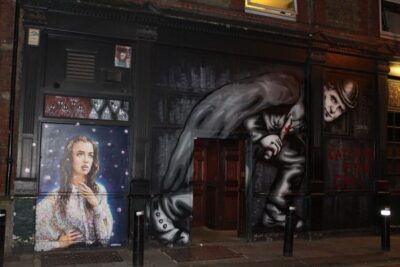
Browse the lists this tour appears in