
Reviewed · NATIONAL GALLERY TOURS
London: National Gallery Private Tour with Fast Track Entry
London’s National Gallery holds centuries of great painting under one roof, but a private guide can help you see more than a parade of famous names. In two hours, you move from Renaissance works to Impressionism and Post-Impressionism, with the guide explaining symbols, methods, and the stories behind the pictures.
I like the private format, especially for a small group of up to three, and I like the pre-booked entry, which cuts down one of London’s less artistic pleasures: waiting in line. Guides such as Damiano and Stefania have made the art lively with clear explanations, amusing details, and links to art history that even a 12-year-old could follow.
The main consideration is time. Two hours is enough for a strong introduction, not enough for every room or every masterpiece. Some important works may also be away from display, so do not book this expecting a guaranteed checklist of specific paintings.
Key points to know before booking
- Two hours with a private guide: The visit is focused and personal, rather than a large group walk.
- Fast-track entry through a separate entrance: Pre-booked tickets help you get inside without using the standard queue.
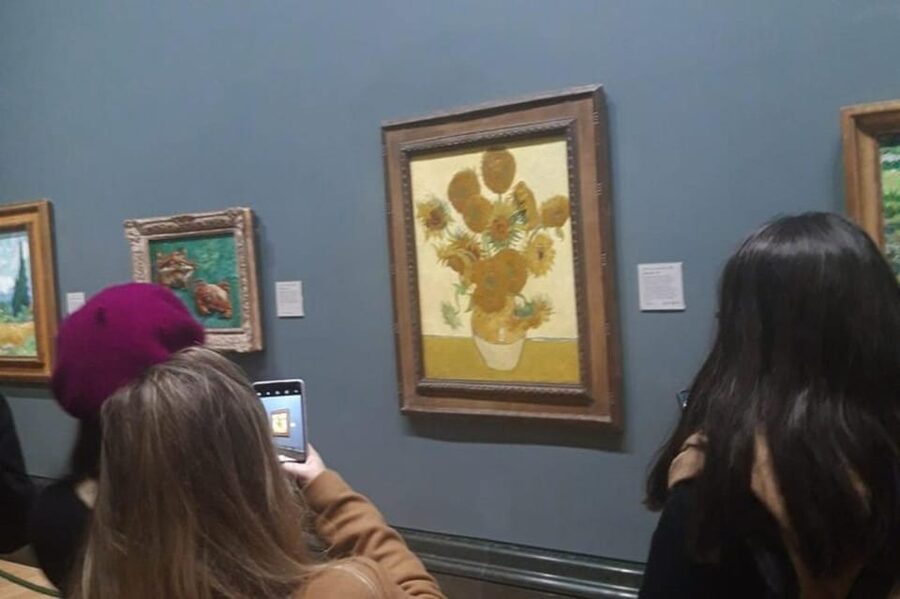
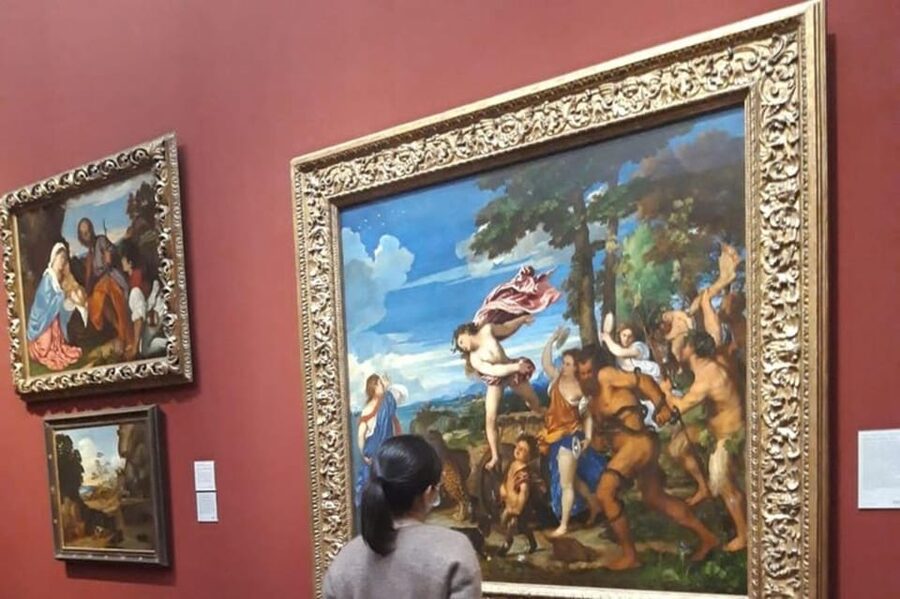
- Major artists across several periods: Expect works connected with Leonardo da Vinci, Van Gogh, Raphael, Botticelli, Turner, Monet, and others.
- Stories beyond the labels: Your guide explains symbols, painting methods, and the way art changed over time.
- English or Italian guiding: The activity is offered in both languages.
- Small-group value: The $168 price covers up to three people, making the cost more reasonable when shared.
Meeting your guide at the National Gallery
The tour begins at the National Gallery in Trafalgar Square. You make your way to the gallery independently, then meet the guide just after the security checks. That meeting point matters: you are not looking for your guide on the pavement or trying to sort out ticket details in the middle of the square.
Because the tickets are pre-booked, you use a separate entrance for advance visitors. This does not mean you skip security. Bags are still checked, and bottles must be emptied before entry. Once inside, you can refill them at the museum’s water fountains.
The National Gallery is a good place for a guided visit because its collection covers a broad sweep of European art. You are not simply seeing one painter or one movement. You can compare how artists handled light, religious subjects, portraiture, landscape, and everyday life across several hundred years.
More Museum Tours in London
- London: Chelsea Football Club Stadium and Museum Tour
★ 4.8 · 4,576 reviews - London: British Museum Guided Tour
★ 4.3 · 1,182 reviews - London: Jack the Ripper Museum Tickets
★ 4.2 · 894 reviews
Two hours across the permanent collection
The only scheduled stop is the National Gallery itself, with a guided visit lasting two hours. That sounds simple, but the collection is large enough that the guide has to make choices. A good visit should give you a clear route through selected highlights rather than rush you past dozens of paintings.
The stated range includes the Italian Renaissance, Northern Renaissance, Vedutisti, Romanticism, Impressionism, and Post-Impressionism. These labels can sound like art-school homework, but they become useful when you see the differences in front of you.
Renaissance painting can open a discussion about balance, religious meaning, perspective, and the growing interest in the human figure. Northern Renaissance works may bring sharper detail and close attention to objects, faces, and surfaces. Later rooms change the conversation toward light, atmosphere, movement, and modern life.
I appreciate this chronological approach because it gives you a way to organize what you see. Instead of asking only Do I like this painting?, you begin to notice what the artist is trying to achieve and what has changed since the previous room.
Leonardo, Raphael, Botticelli, and the Renaissance rooms
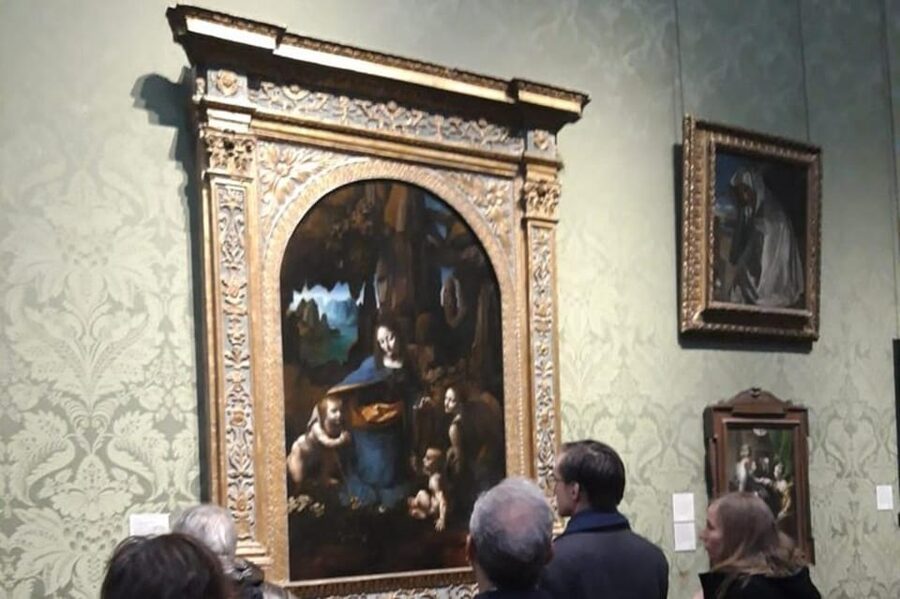
The early part of the collection can include major Italian painters such as Leonardo da Vinci, Raphael, Michelangelo, Botticelli, and Caravaggio. The exact works available on the day can vary, so the guide’s role is important. You get context for the paintings that are actually on view, rather than relying on a fixed list that may be out of date.
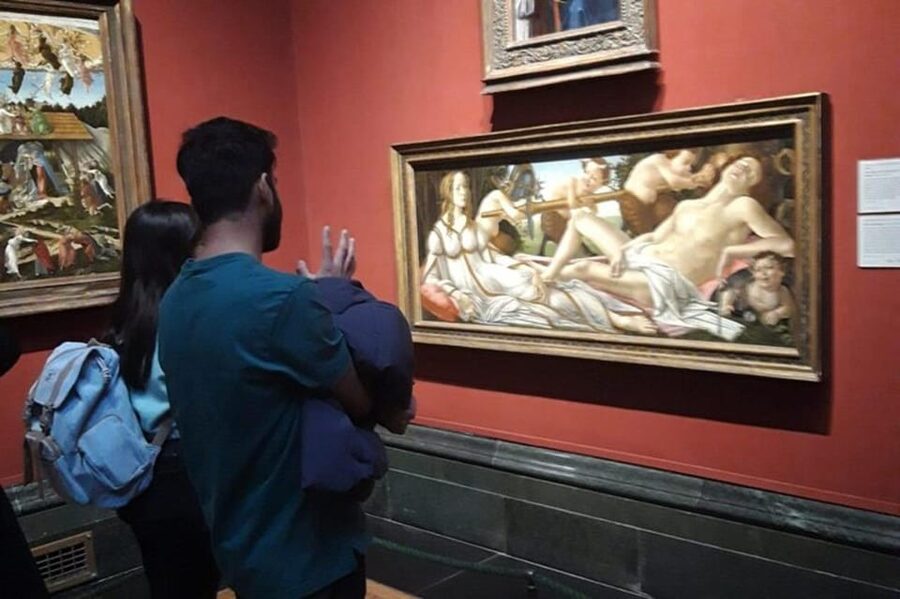
Leonardo gives the guide a chance to explain careful observation, soft transitions, and the way a painting can suggest depth without loud outlines. Raphael opens a different path into harmony, composition, and the idealized human figure. Botticelli can lead you toward mythology, beauty, and the symbols packed into a scene.
Michelangelo and Caravaggio help show that the Renaissance was not one single style. Their work can support a discussion of anatomy, drama, shadow, and the emotional force of a painted scene. You do not need a background in art to follow this. The best explanations begin with what you can see, then add the historical meaning.
This is where the private format earns its keep. If you have a question, you can ask it at once. With a family group, the guide can also adjust the level of detail so a young person is not left behind while the adults discuss technique.
Van Eyck, Holbein, and the Northern Renaissance
The Northern Renaissance section offers a useful contrast with Italian painting. Artists such as Van Eyck and Holbein are associated with close observation, fine detail, and images that reward careful looking.
Your guide may point out the importance of small objects, gestures, clothing, or background details. These are not random decorations. They can signal wealth, status, belief, profession, or a particular event in the subject’s life.
Holbein’s portraits provide a natural chance to talk about power and identity. A face, a pose, or an item held in the hand can tell you how a person wanted to be seen. Van Eyck’s work can prompt discussion of surface, texture, and the illusion of real materials.
I find this kind of explanation more useful than a list of dates. You are learning how to read a painting. Afterward, you can apply the same habit to works the guide does not have time to cover.
More Private Tours in London
- London: Tower of London Entry & Beefeater Private Audience
★ 4.4 · 1,441 reviews - London: Private Photoshoot with Video Clip Option
★ 4.8 · 182 reviews - London: Private Walking Sightseeing Tour
★ 4.2 · 175 reviews - London Private Welcome Tour with a Local Guide
★ 4.6 · 142 reviews
From vedute to Turner and Constable
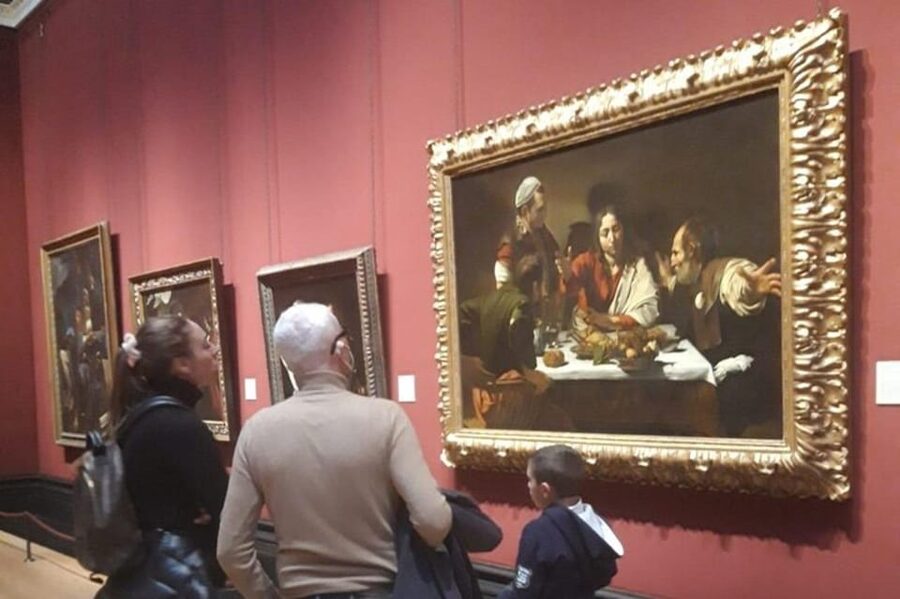
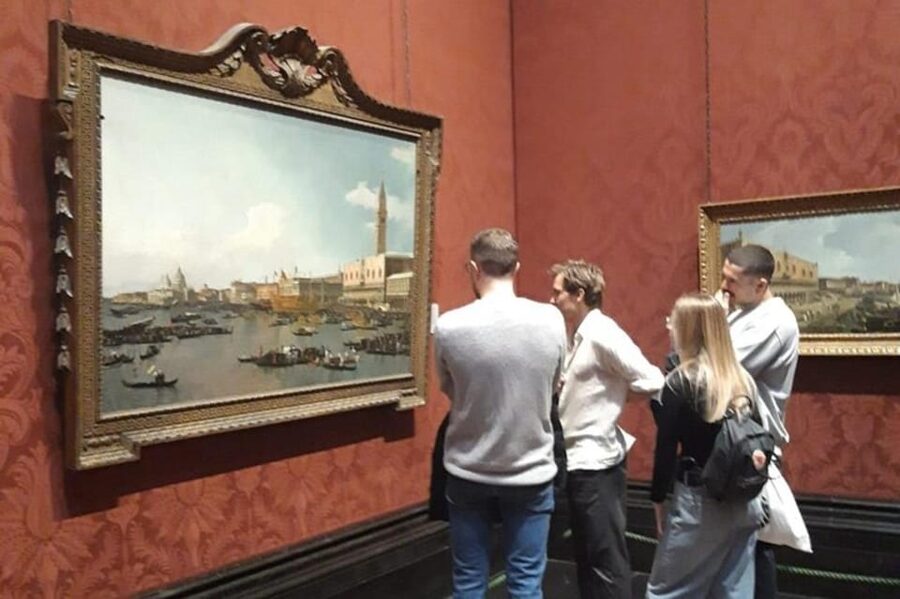
The collection also includes Vedutisti, the painters of detailed city views and scenes designed to record place. This part of the visit can feel especially relevant in London, since it connects painting with travel, urban life, architecture, and the desire to preserve a view.
From there, the tour can move toward British Romanticism, including J. M. W. Turner and John Constable. Their paintings offer a clear change in mood and method. Instead of treating a scene as a precise record, the artist may place greater weight on weather, feeling, light, or the movement of nature.
Turner is a good example of how paint can become less tied to sharp outlines. Constable offers another route into the British countryside and the changing character of a scene. Your guide can help you see how these artists use brushwork and color, not just subject matter.
Do not expect a full lecture on British art in a few minutes. The value here is comparison. You can look at an earlier, more carefully described scene and then notice how later artists let atmosphere take over.
Monet, Van Gogh, and Seurat: seeing modern art differently
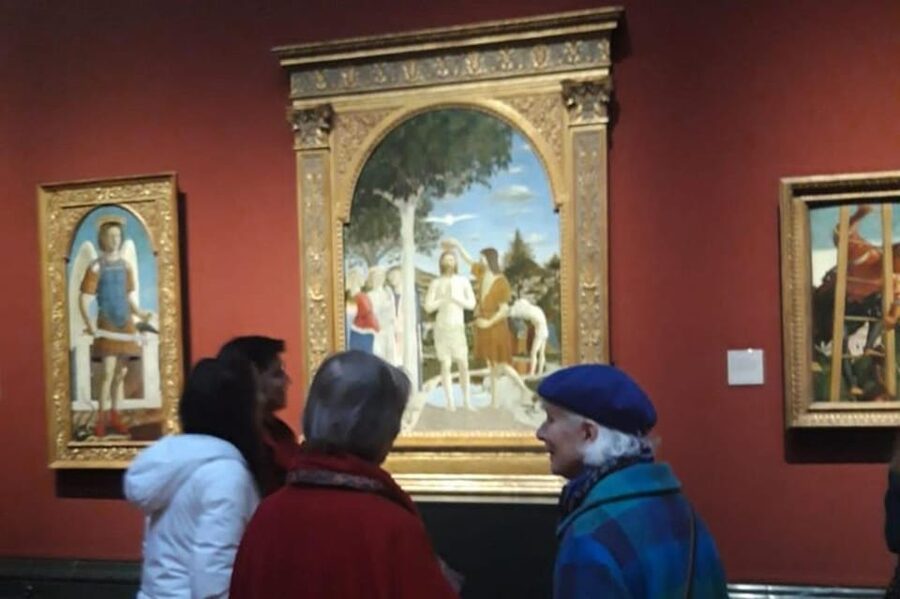
The later part of the collection includes Impressionist and Post-Impressionist artists such as Claude Monet, Vincent van Gogh, and Georges Seurat. These rooms can be easy to enjoy but harder to understand. A guide helps you look past the first reaction of bright color or loose brushwork.
Monet can introduce the changing effects of light and the idea that a scene is never visually fixed. Van Gogh allows discussion of expressive brushwork, strong color, and the physical energy of the painted surface. Seurat gives you a chance to consider the careful placement of separate marks and how color can work through the eye.
These artists are often the names people remember most, but the guide should connect them to the earlier works. The point is not that modern painting suddenly appeared from nowhere. You can trace how artists gradually changed their aims, tools, and ideas about what a painting should do.
That historical thread is one of the strongest reasons to choose a private visit. You are not just being shown the most famous rooms. You are being given a method for understanding the changes between them.
Stories, symbols, and painting techniques
The experience promises more than basic identification. The guide explains the secrets behind the paintings, including symbols, techniques, and small details that are easy to miss when you walk alone.
This can turn a familiar masterpiece into a fresh subject. A religious image may contain signs that explain the story. A portrait may use clothing or objects to establish rank. A landscape may be shaped as much by color and brushwork as by the place it depicts.
Stefania, one of the named guides associated with this experience, has explained works through anecdotes, curiosities, and art-history connections. Damiano has also been described as passionate, well prepared, and clear in his explanations. Those qualities matter more than a theatrical performance. You want someone who can tell a good story, then bring you back to the painting.
A private guide can also respond to your interests. You might want to spend more time with Italian art, portraits, British painters, or Van Gogh. The exact balance depends on the route and what is displayed, but a small group gives you a better chance of asking for emphasis.
What the $168 price means for a small group
The listed price is $168 per group of up to three people, not $168 per person. For three people, that works out to $56 each before any optional gratuity. For two people, the per-person price is higher, but you still receive a private tour rather than joining a large group.
That is a reasonable setup if you care about personal attention and want to make the most of a short visit. The guide’s fee includes the private tour, fast-track entry, and art-history explanations. It does not include food, drinks, hotel pickup, temporary exhibitions, or gratuity.
The value is weaker if you prefer to wander at your own pace for several hours. The permanent collection can occupy much more than two hours, and the tour gives you a selected route. You are paying for focus, interpretation, and time saved at entry, not for unlimited museum access with a personal art historian for the whole day.
Practical details that affect your visit
Wear comfortable shoes. Two hours on museum floors can feel longer than two hours in a café, especially if you are already sightseeing around central London.
Photography without flash is allowed. Flash photography is not. Backpacks must be carried in front rather than behind your back, following museum rules, and drinks are not allowed inside. Security staff will ask you to empty bottles at the entrance, but you can refill them afterward at the water fountains.
The tour is wheelchair accessible. The available guiding languages are English and Italian. Unaccompanied minors are not allowed, so children must attend with an adult.
There is no hotel pickup or drop-off. Plan your route to the National Gallery and allow enough time to reach the meeting point after security. The activity has free cancellation up to 24 hours before the scheduled start, and the reserve-now, pay-later option can help if your London plans are still shifting.
Who will get the most from this private tour
This is a strong choice for first-time National Gallery visitors who want a clear introduction without spending a full day studying wall labels. It also suits couples, families, and small groups who want to ask questions and keep the pace flexible.
Families can benefit from the storytelling approach. A well-told anecdote or symbol gives a child something concrete to look for, while the art-history links add depth for adults. The experience has worked well for a group that included a 12-year-old, which suggests the explanations can reach different ages when the guide handles the pace well.
It is less suitable if your main goal is a particular temporary exhibition. Temporary exhibitions are not included. It is also not ideal if you need a guaranteed list of specific paintings, since major works can be unavailable on a given day.
Should you book this National Gallery tour?
Book it if you want the National Gallery to make sense quickly, prefer a private guide, and are visiting with one or two companions. The fast-track entry is useful, but the real benefit is the explanation of symbols, technique, and artistic change.
Skip it if you want to explore every gallery slowly, dislike guided schedules, or are mainly interested in a temporary exhibition. For everyone else, the combination of a small group, two focused hours, and access to artists from Leonardo to Van Gogh makes this a practical way to begin your National Gallery visit.
FAQ
Where does the National Gallery private tour begin?
The meeting point is at the National Gallery, just after the security checks.
How long does the tour last?
The guided visit lasts two hours.
Is the tour private?
Yes. It is for a private group of up to three people.
What languages are available?
The live guide is available in English or Italian.
Is fast-track entry included?
Yes. Pre-booked tickets provide access through a separate entrance for advance visitors.
Which artists might I see?
The collection includes works by artists such as Leonardo da Vinci, Raphael, Michelangelo, Van Eyck, Holbein, Botticelli, Caravaggio, Turner, Constable, Monet, Van Gogh, and Seurat. Specific works may not always be on display.
Are temporary exhibitions included?
No. Temporary exhibitions are not included in this activity.
Is the tour wheelchair accessible?
Yes, the activity is wheelchair accessible.
What should I bring and what is not allowed?
Wear comfortable shoes. Drinks are not allowed, bottles must be emptied at the entrance, and flash photography is prohibited. Photography without flash is allowed. Backpacks must be carried in front, and unaccompanied minors cannot attend.
More Museums in London
- London: Tour of the British Museum
★ 4.1 · 678 reviews - London: British Museum Audio Tour & Priority Entrance Ticket
★ 4.5 · 631 reviews - Afternoon Tea at the British Museum
★ 4.2 · 511 reviews - London: Paradox Museum Entry Ticket
★ 3.9 · 441 reviews
More National Gallery Tours
- London: National Gallery Guided Tour with Art Expert Guide
★ 4.7 · 440 reviews - London: National Gallery Guided Tour
★ 3.8 · 67 reviews - London: National Gallery Guided Tour and Afternoon Tea
★ 4.5 · 64 reviews - Westminster and National Gallery 3.5-Hour Tour in Italian
★ 4.9 · 28 reviews
Just added around London
- London: Wimbledon Tennis Club and Westminster Walking Tour★ 4.5 · 86 reviews
- London: Westminster to Richmond River Thames Cruise★ 4.8 · 23 reviews
- Westminster Abbey Skip-the-Line Entry and Private Tour★ 4.6 · 4 reviews
- Best of London by LE GRAND – London’s Luxury Bus Tour★ 4.2 · 23 reviews
- London: Westminster Walking Tour & St Paul’s Cathedral Entry★ 4.7 · 7 reviews
- From London: Oxford, Stratford-upon-Avon & Cotswolds Trip★ 4.5 · 64 reviews
- From London: Warwick, Oxford, Stratford & Cotswolds Day Tour★ 4.0 · 270 reviews
- Warner Bros. Studios and 1-Day London Hop-on Hop-off tour★ 4.7 · 9 reviews
National Gallery Tours, compared.
National Gallery Guided Tour with Art Expert Guide
Read our review →
National Gallery of London Masterpieces Guided Tour
Read our review →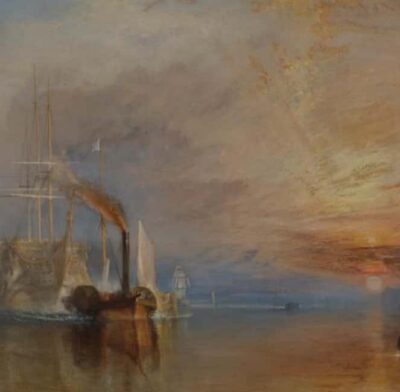

Browse the lists this tour appears in