
Reviewed · MUSEUMS
London Transport Museum Entrance Ticket
London Transport Museum explains something easy to miss while riding the Tube: transport helped create modern London. Inside the old Covent Garden market building, you can trace that change from horse-drawn buses and the first underground steam railway to electric Tube trains, buses, trams, and the Elizabeth line.
I especially like two things here. First, the museum connects machines to everyday city life, so you learn not only what a train looked like, but why London grew around it. Second, the hands-on displays give children something useful to do while adults study the objects, maps, and design work. The main drawback is noise and crowding, particularly on weekends and during school holidays.
Key points to know before you go
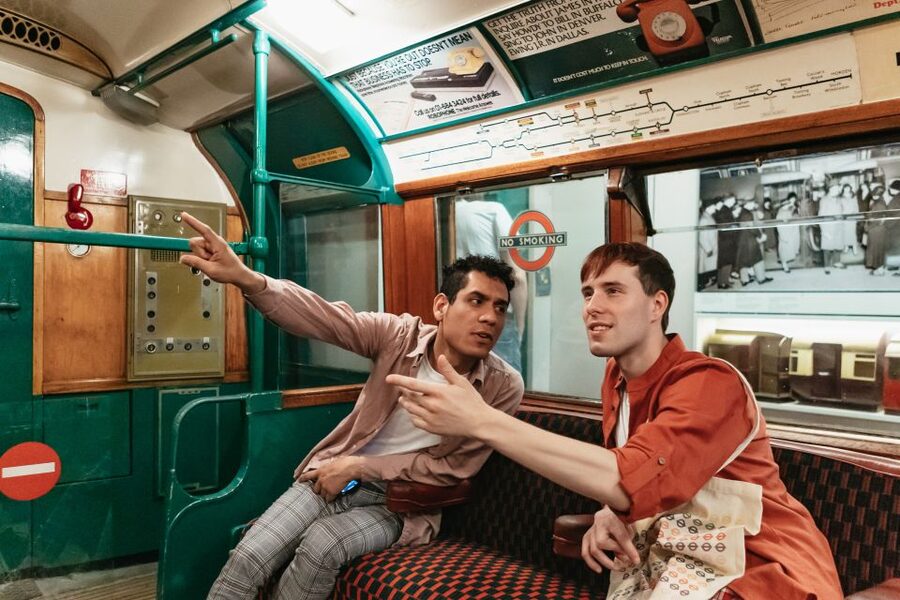
- See the first underground railway technology: Historic steam and electric Tube exhibits show how London changed transport forever.
- Try the Elizabeth line simulator: The Future Engineer display lets you take the controls of a modern train.
- Study more than 100 poster artworks: The Global Poster Gallery explores commercial poster design from 1900 onward.
- Plan for one to three hours: A quick visit works in about 60 to 90 minutes, but careful reading and family activities can fill three or four hours.
- Bring the family, but expect some noise: Play areas, puzzles, and interactive exhibits suit children, while the museum still offers plenty for adults.
- Leave large bags behind: Luggage and large bags are not allowed, and buggy parking is available.
Covent Garden is the right place to begin
The museum sits in the heart of Covent Garden, a useful location for a London sightseeing day. You can combine it with the surrounding market area, theatres, shops, and restaurants without setting aside a separate trip across the city.
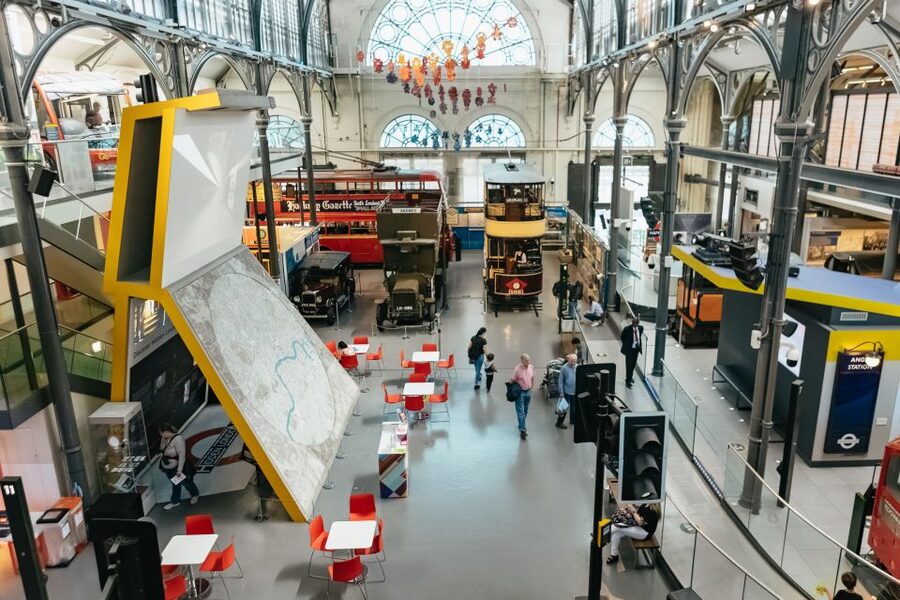
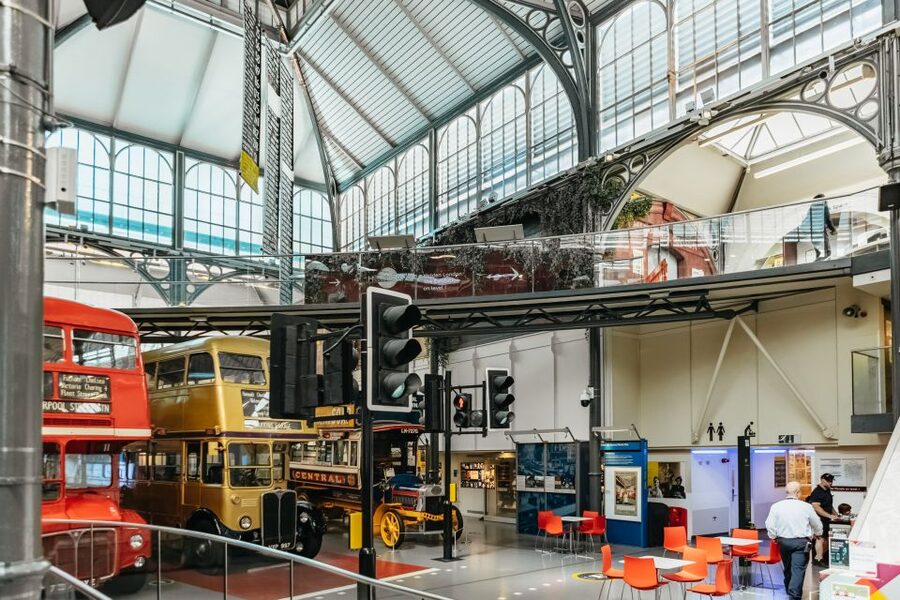
The building itself helps set the mood. You enter a former flower market with a broad interior suited to large vehicles and transport displays. This is not a quiet cabinet of small objects. Buses, trains, signs, posters, and pieces of railway equipment give the museum a physical presence from the start.
Your ticket provides admission for one day, including temporary exhibitions and the Global Poster Gallery. The listed price is $33 per person. That is not a cheap museum ticket, but the value improves if you stay for several hours, use the interactive stations, and take time with the design displays rather than making a quick pass through the vehicles.
The museum is open until 6:00 PM, with last entry at 5:00 PM. I would arrive in the morning if you want a calmer start. Earlier visits have been noted as less crowded, while Saturdays, weekends, and school holidays can bring more children and a livelier atmosphere.
More museums and galleries in Britain:
- Liverpool: Liverpool Football Club Museum and Stadium Tour
★ 4.8 · 10,764 reviews - London: Chelsea Football Club Stadium and Museum Tour
★ 4.8 · 4,576 reviews - Manchester: National Football Museum Admission Ticket
★ 4.4 · 1,243 reviews
Horse buses show how London first spread outward
The early galleries explain transport before the Tube transformed the city. Horse-drawn buses and older forms of street transport show a London that was slower, more compact, and heavily dependent on animals and road traffic.
This section matters because it gives you a baseline. The Underground was not created simply as a clever engineering project. It answered a practical urban problem: too many people and vehicles were trying to move through a growing city.
Historic buses and trams make that story easier to grasp. You can see how vehicle design changed as routes expanded and how public transport became part of ordinary working life. The museum also uses photographs, film, and objects from its collection to connect the vehicles with the people who rode and operated them.
Children usually respond first to the size and shape of the vehicles. Adults may spend longer with the social details, including how transport affected work, housing, commuting, and London’s spread beyond its older central districts.
The first Underground trains make the past feel surprisingly close
One of the museum’s strongest sections focuses on the birth of the Underground. You can see the world’s first underground steam train and an early electric Tube railway, two exhibits that mark a major shift in city travel.
The steam train is especially useful for understanding the early system. Underground railways sound modern to us, but the first trains used steam power below the streets, creating a very different experience from today’s electric network.
The electric Tube railway shows the next step. Electric traction allowed underground travel to become cleaner and more practical, helping the system grow into the network you use today.
You may not need to read every label to appreciate these exhibits, but the written information rewards a slower visit. I recommend pausing here before rushing toward the interactive displays. Once you understand the engineering problem and the city pressure behind it, later exhibits feel connected instead of random.
The Tube map and bullseye explain London’s visual identity
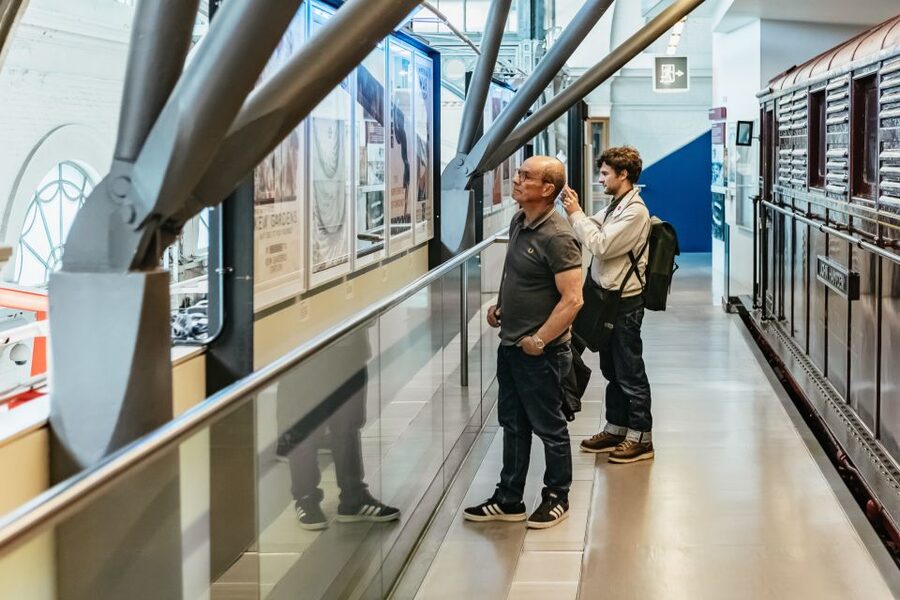
London Transport Museum is also a design museum. Its collection shows how transport authorities turned complicated routes and services into a clear public identity.
The famous bullseye Tube logo is one of the key examples. It is simple, bold, and easy to spot, which is exactly what a passenger needs when navigating an unfamiliar city. The diagrammatic Tube map works in a similar way. It does not reproduce London’s streets exactly. Instead, it gives you the information needed to understand connections and choose a route.
I like this part because it shows that public transport depends on communication as much as it depends on rails and vehicles. A train cannot help much if passengers cannot find the station, understand the route, or identify the right platform.
Look for the posters and graphic material as well as the larger vehicles. They reveal how London’s transport system was sold to the public, from practical directions to invitations to explore different parts of the capital.
A few more Britain days worth weighing up
- London: The London Eye Entry Ticket
★ 4.6 · 35,875 reviews - London: Tower Bridge Entry Ticket
★ 4.7 · 15,560 reviews - London: Westminster Abbey Entrance Ticket
★ 4.6 · 11,254 reviews - London: St Paul’s Cathedral Entry Ticket
★ 4.7 · 9,813 reviews
The Global Poster Gallery turns transport advertising into an art lesson

Opened in October 2023, the permanent Global Poster Gallery is free with museum admission. It contains more than 100 poster artworks and explores commercial poster art and design from 1900 onward.
This gallery widens the museum’s story. Posters were once one of the main ways public institutions and businesses caught people’s attention. Before digital advertising, a strong image and a few well-chosen words had to do nearly all the work.
The exhibition looks at how posters were commissioned and made in the pre-digital age. The section called How to Make a Poster explains the process behind the finished image, from the original idea to the final printed work.
You do not need to be a design specialist to enjoy it. The displays give you a chance to compare typefaces, colours, layouts, and visual ideas. They also explain why London Transport developed such a recognisable look.
This is one of the better stops for adults who might otherwise feel that the museum is aimed only at children. It gives the visit a cultural and creative side, not just an engineering one.
Interactive stations keep children involved
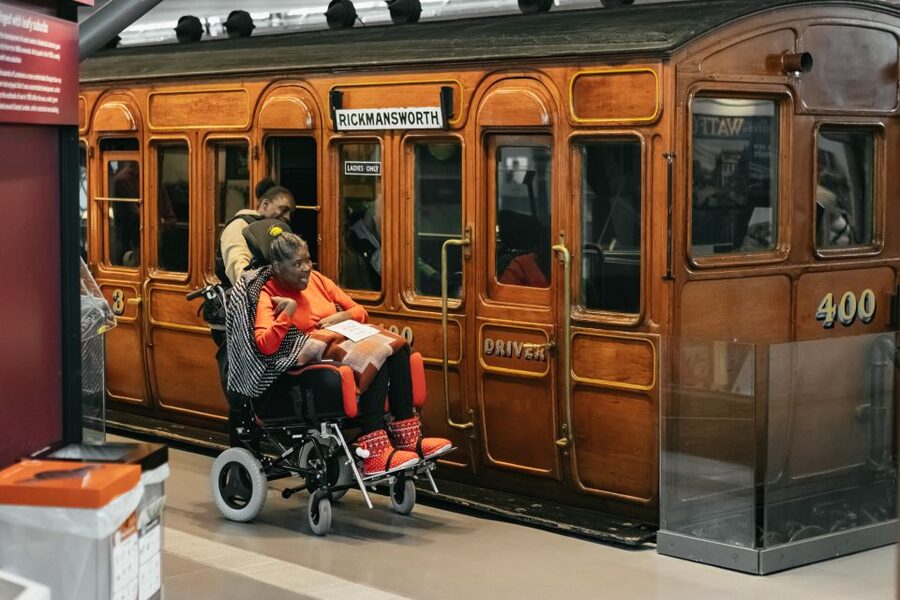
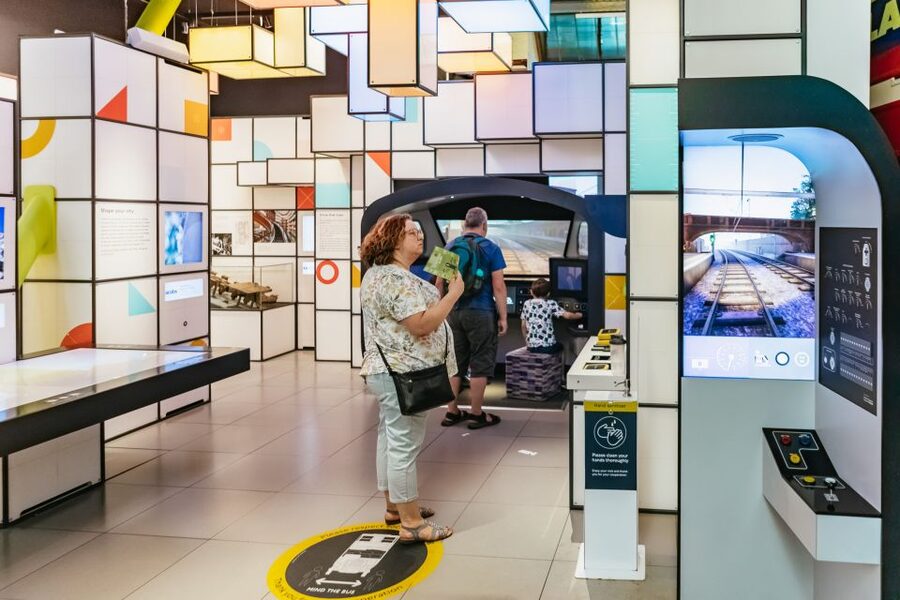
The museum’s family appeal comes from the number of things you can operate, test, or explore. Children can work with transport controls, puzzles, drawing activities, and other interactive displays. A play area gives younger children a place to move around when they have had enough of labels and vehicles.
The Future Engineer’s simulation lets you drive a modern Elizabeth line train. This is a good contrast with the older steam and electric exhibits. You move from the earliest underground technology to a present-day railway, seeing how the basic task of carrying people has stayed the same while the equipment has changed.
Other hands-on activities include train-related controls, rail track switches, and a brake pad change activity. The exact availability of individual stations can change, but the general approach is clear: the museum wants children to understand how transport works by doing, not only by looking.
Families with children from toddler age through the early teen years can usually find different levels of interest. A two-year-old may prefer the play area and vehicle shapes. An eight-year-old may spend time with the simulator. Older children can follow the engineering and city-planning story.
The tradeoff is sound. With several play areas and active displays, the museum can become noisy. If you are visiting as an adult couple or hoping for a peaceful design exhibition, arrive early and spend time in the quieter galleries before the family areas fill up.
A realistic visit lasts 60 minutes to four hours
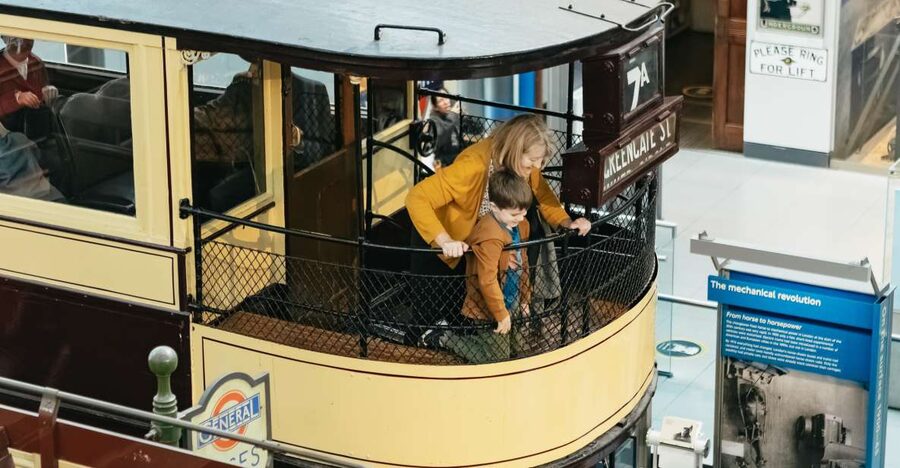
You can see the main vehicles and get the basic story in about an hour to an hour and a half. That makes the museum easy to fit between other Covent Garden plans.
I would allow around two to three hours for a comfortable family visit. This gives you time for the historic vehicles, the Tube displays, the poster gallery, and several interactive stations without forcing everyone to hurry.
A careful reader or transport enthusiast could spend three to four hours. The museum has enough labels, photographs, design material, and technical detail to reward a slower pace.
A useful approach is to begin with the earliest transport, continue through the Underground galleries, then finish with the modern Elizabeth line simulator and the poster collection. Families may prefer to let children choose some stations as they go, but keeping a loose order helps the city’s development make sense.
Do not treat the ticket as a quick photo stop. The large vehicles attract attention, but the museum’s best work is in the connections between transport, design, engineering, and urban life.
How the $33 ticket measures up
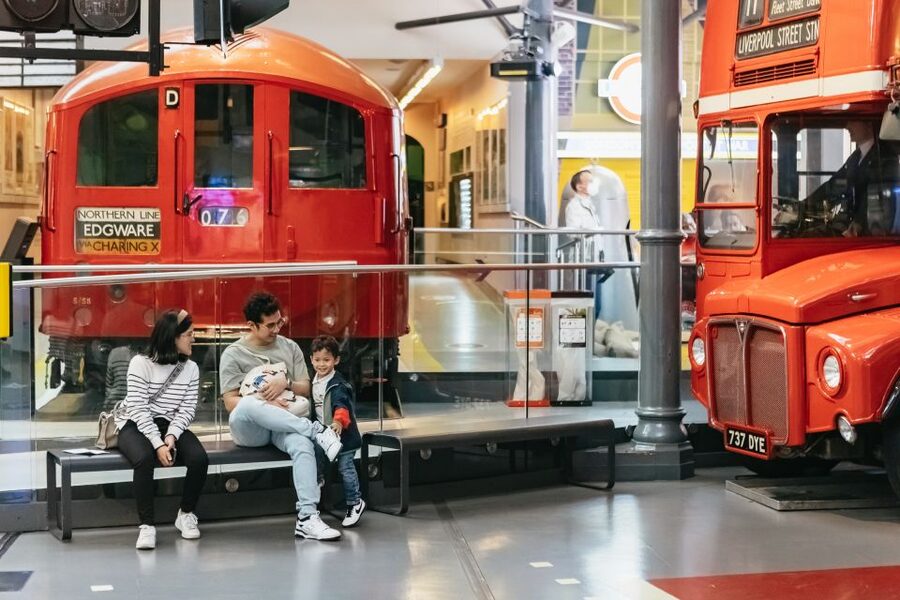
At $33 per person, this is best value when you have time to stay. A short visit of 45 minutes would feel expensive, especially if you are not interested in transport or design.
For a family, the calculation is more favourable because the museum provides several hours of activity in one central location. You are not paying only to look at old buses. You are also getting access to temporary exhibitions, the Global Poster Gallery, interactive displays, and family play areas.
Repeat visitors should ask about annual membership or upgrade options before leaving. Some admission arrangements have allowed visitors to move toward a year-long pass, which can make more sense if you live nearby or expect to return during the same trip.
The museum also has a gift shop with transport-themed items. It is a practical final stop for children who want a souvenir, though check clothing sizes carefully before buying wearable items.
Access, bags, and timing

The museum is wheelchair accessible. Stroller and buggy parking is available, which helps if you are travelling with a very young child, but you should not bring luggage or large bags into the museum.
There is no guided tour or named guide included in the ticket. You explore independently, with the exhibits, films, signs, and interactive stations providing the structure. Staff are available to help, and their friendly approach has been a regular strength of the visit.
The flexible cancellation option allows cancellation up to 24 hours in advance for a full refund. You can also reserve now and pay later, useful if your London schedule is still shifting.
Check the day’s availability and entry details before setting out. The important time to remember is 5:00 PM, when last entry ends. The museum closes at 6:00 PM, so arriving late in the afternoon leaves little room for the larger galleries.
Who will enjoy London Transport Museum most
I would recommend this museum most strongly to families with children, transport enthusiasts, design fans, and anyone who wants more context for London’s Underground.
It is particularly good for children who need to touch, press, steer, draw, and play. The mix of large vehicles and small interactive tasks gives them reasons to keep moving through the building.
Adults without children should not dismiss it. The Tube map, poster art, historic photographs, and engineering exhibits make a worthwhile visit, especially if you enjoy cities, graphic design, or public infrastructure.
It is less suitable if you want a quiet museum with long stretches of silence. The family areas can be loud, and popular simulators may attract queues. A weekday morning is the best choice if you want a calmer look.
Should you book the London Transport Museum ticket?
Book it if you want a central London museum that explains how transport changed the city and gives children plenty to do. The early Underground trains, historic buses, Tube map design, Global Poster Gallery, and Elizabeth line simulator create a good range of subjects.
I would skip it only if your schedule allows less than an hour or if old vehicles and graphic design hold little interest for you. For everyone else, $33 buys more than a display of buses. It gives you a clear account of London’s growth, a look at the ideas behind its famous transport symbols, and a family-friendly indoor break in Covent Garden.
FAQ
Where is London Transport Museum?
It is in the heart of Covent Garden in London, South East England. The museum is close to the area’s market, shops, theatres, and restaurants.
How long should I spend at the museum?
A quick visit can take about one to one and a half hours. Allow two to three hours for a relaxed family visit, or up to three to four hours if you want to read the displays and try many of the interactive activities.
What are the museum’s opening hours?
The museum closes at 6:00 PM each day, and last entry is at 5:00 PM. Check availability for the specific day you plan to visit.
Is the museum wheelchair accessible?
Yes. London Transport Museum is wheelchair accessible.
Can I bring luggage or a large bag?
No. Luggage and large bags are not allowed. Stroller and buggy parking is available.
Is the Global Poster Gallery included with admission?
Yes. Entry to the Global Poster Gallery is free with museum admission. The gallery contains more than 100 poster artworks and explores commercial poster art and design from 1900 onward.
Just added around Britain
- London: Wimbledon Tennis Club and Westminster Walking Tour★ 4.5 · 86 reviews
- London: Westminster to Richmond River Thames Cruise★ 4.8 · 23 reviews
- Winchester: Historic Castles and Cathedrals Walking Tour★ 4.9 · 154 reviews
- Westminster Abbey Skip-the-Line Entry and Private Tour★ 4.6 · 4 reviews
- Best of London by LE GRAND – London’s Luxury Bus Tour★ 4.2 · 23 reviews
- Whitby: Guided Distillery Tour with Gin Tasting★ 5.0 · 28 reviews
- London: Westminster Walking Tour & St Paul’s Cathedral Entry★ 4.7 · 7 reviews
- Warwick: Entry Ticket for Warwick Castle★ 4.7 · 215 reviews
Museums, compared.

Liverpool Football Club Museum and Stadium Tour
Read our review →
Chelsea Football Club Stadium and Museum Tour
Read our review →




British Museum Audio Tour & Priority Entrance Ticket
Read our review →
Browse the lists this tour appears in