Reviewed · GUIDED
Padstow: Guided RIB Sealife Safari
The best part of this Padstow RIB safari is the mix of speed and wildlife watching. You race out of the Camel Estuary toward the Atlantic, then slow near cliffs, islands, and coves where seals, dolphins, porpoises, seabirds, and the occasional whale may appear. It is part boat ride, part nature outing, and part coastal sightseeing trip.
I like the small group of no more than 12 people, which gives you a decent view and lets the guide talk without a loud crowd. I also like the care taken around wildlife, with the skipper slowing down and keeping a sensible distance. The main drawback is clear: this is an open boat, and the ride is often wet, rough, and bouncy. If you get seasick, think twice.
Key points to know
- About 25 miles of coast: The trip covers a broad stretch of North Cornwall rather than staying near Padstow.
- Wildlife is possible, not promised: Dolphins and seals are common highlights, but sightings depend on nature, weather, and sea conditions.
- Puffin Island is seasonal: From April to July, the cliffs may hold nesting guillemots, razorbills, and puffins.
- The RIB is genuinely fast: Expect a thrilling, splashy ride with frequent bumps across the waves.
- Waterproof clothing is available: Borrow jackets and trousers, then bring waterproof shoes and warm layers.
- Two hours is a useful length: You get plenty of time at sea without committing to a full-day boat trip.
Leaving Padstow through the Camel Estuary
You meet at the Padstow Sealife Safaris office and should check in 30 minutes before departure. That early arrival matters because you need time to get fitted with a life jacket, collect waterproof clothing, and listen to the safety briefing before boarding.
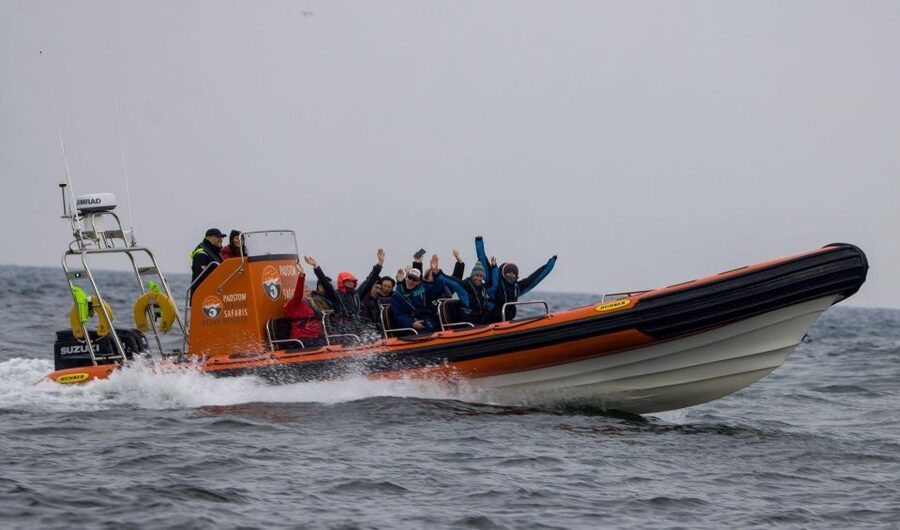
The boat is an open-top RIB, or rigid inflatable boat. It has the strong hull and inflatable sides that make this type of craft stable, but stability does not mean a smooth ride. Once the skipper opens the throttle, the boat can feel like a large jet ski or a small water roller coaster.
The first stretch takes you out through the Camel Estuary. This gives you a gentler introduction before the boat reaches more exposed Atlantic water. Your guide begins pointing out coastal features, local heritage, and birds along the way. Guides have included Harriet, Kelsey, Ian, Anne, Jenny, Emma, and Hope, and the experience depends partly on who is leading your particular trip.
The best guides do more than identify animals. They explain what you are looking at, answer questions, and keep the mood light while making clear that wild creatures do not appear on demand. That message is important. You are not visiting an aquarium with a fixed show time.
A few more Britain days worth weighing up
- Knowsley: Safari Entry Tickets
★ 4.5 · 109 reviews - Cornwall: Guided Seal Safari by Boat
★ 4.7 · 63 reviews - Gin Safari: Boozy London History on Two Wheels
★ 5.0 · 3 reviews
What the fast RIB ride really feels like
The boat travels quickly between wildlife areas. That speed lets the crew cover about 25 miles of coast in two hours, but it also creates the main physical challenge of the outing. The RIB rises and drops over the waves, and spray can reach you even when the weather looks pleasant from shore.
You may get wet. In fact, you should plan on it. Borrow the waterproof jacket and trousers, including the trousers. Several passengers who expected the jacket to be enough found the extra layer useful. Wear warm outdoor clothing underneath, plus waterproof shoes. Sunglasses help with glare and spray, while a sun hat, sunscreen, and a camera are sensible additions.
The ride is part of the appeal. For many people, the bursts of speed are as memorable as the animals. The skipper balances excitement with safety, slowing for wildlife and stopping when there is something worth seeing. Still, the pace may feel repetitive by the end of two hours if you prefer calm sightseeing.
You should not book this as a quiet cruise. It suits you if you enjoy a lively ride and can handle choppy water. It is a poor match for anyone prone to motion sickness, back trouble, or discomfort from repeated jolts.
Slowing down for seals and marine life
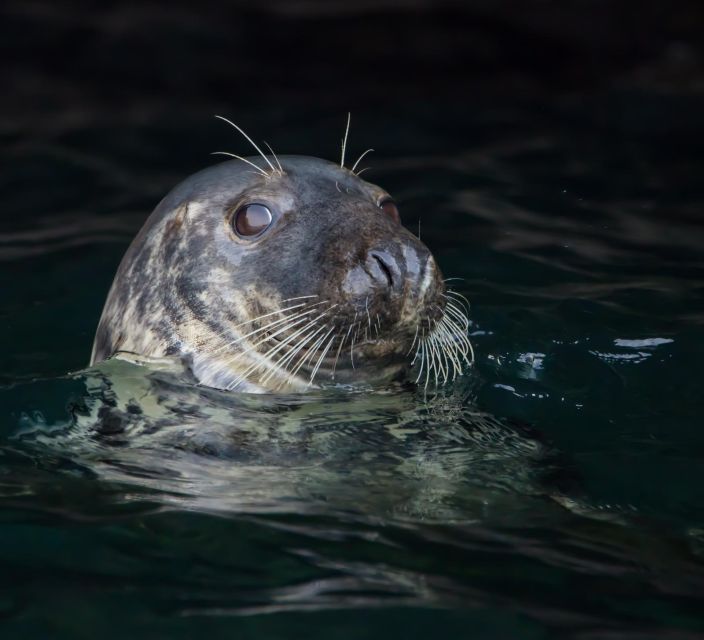
The crew searches likely areas and slows the boat when there is a chance of seeing animals. Seals may be resting on rocks or swimming near the coast. They are often easier to spot than smaller, faster creatures, though binoculars can help you pick them out before the boat gets close.
Dolphins are the headline sighting. When a pod appears, they may travel near the RIB, sometimes surfacing close to the boat or staying alongside for several minutes. The trip has produced sightings of common dolphins, and some outings have included more than one pod. That is never guaranteed, but the crew knows how to search without turning the encounter into a chase.
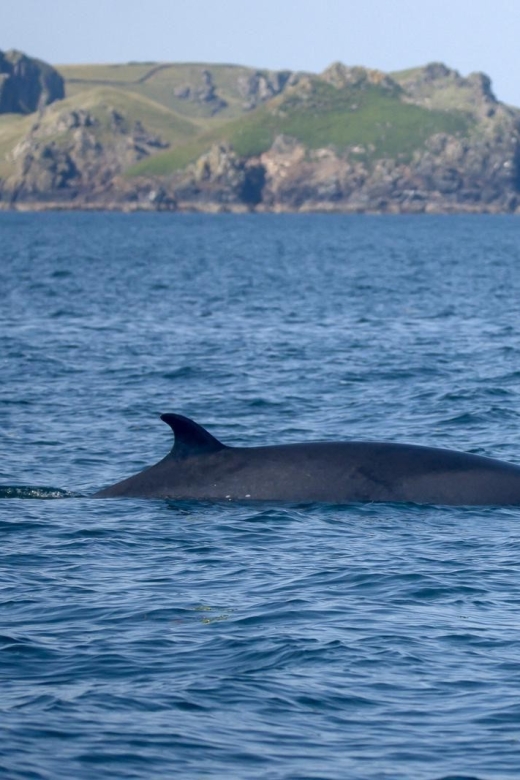
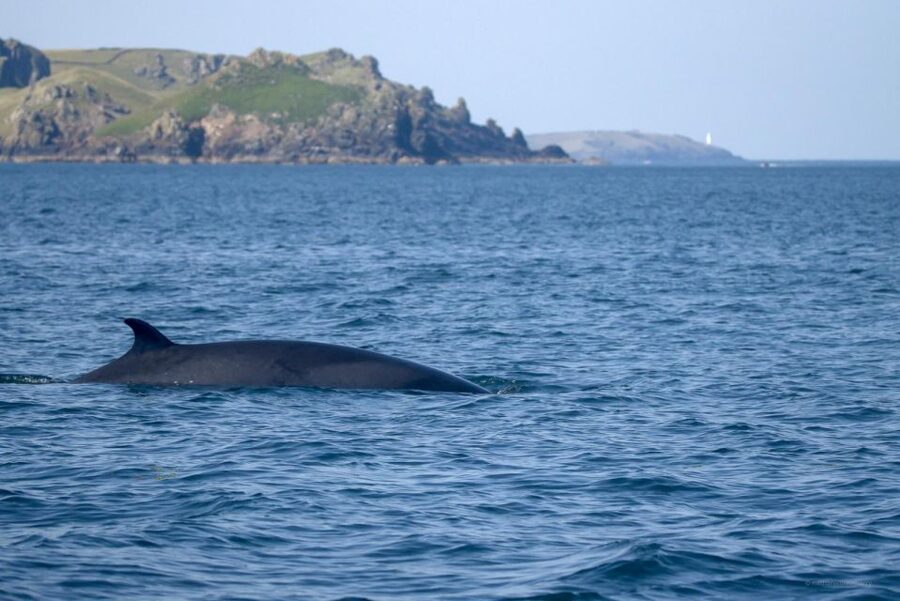
You might also see porpoises, tuna, sunfish, jellyfish, or whales such as a minke whale. These sightings are less predictable, so keep your eyes moving. The guide may call out a fin or splash on one side of the boat, and the animal may disappear before everyone gets a clear look.
That uncertainty is worth understanding before you pay. A trip with seals and seabirds but no dolphins can still be a good coastal outing, but you should not buy the ticket expecting a guaranteed dolphin show. The crew makes a strong effort to find wildlife, yet the final result belongs to the sea.
Seabirds on the North Cornwall cliffs
Birdwatching is a major part of the trip, even if you booked mainly for dolphins. Gannets can be especially striking as they plunge toward the water, and you may see shearwaters, fulmars, oystercatchers, shags, cormorants, and other seabirds.
From April to July, the cliffs can be busy with nesting guillemots and razorbills. This seasonal timing makes spring and early summer particularly appealing if you want more than a quick seal sighting. Bring binoculars if you have them. One pair shared between two people is better than none, but binoculars make distant birds and cliff ledges much easier to read.
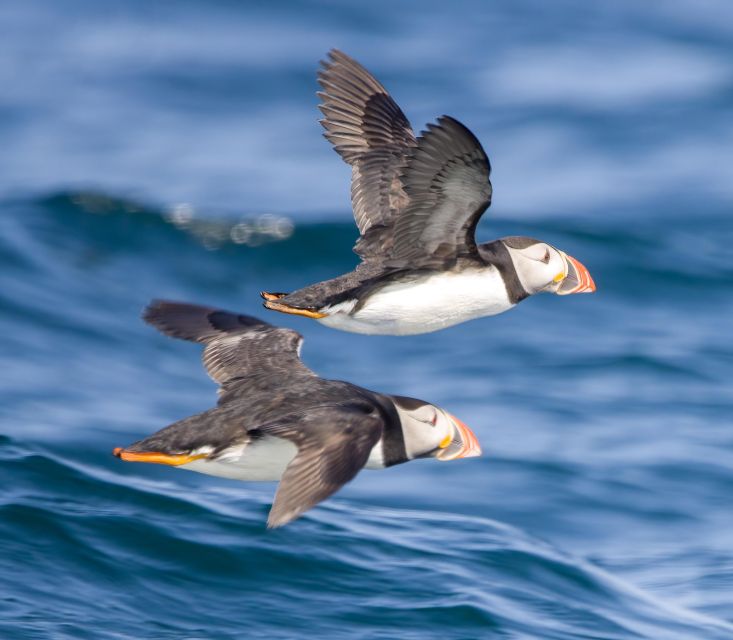
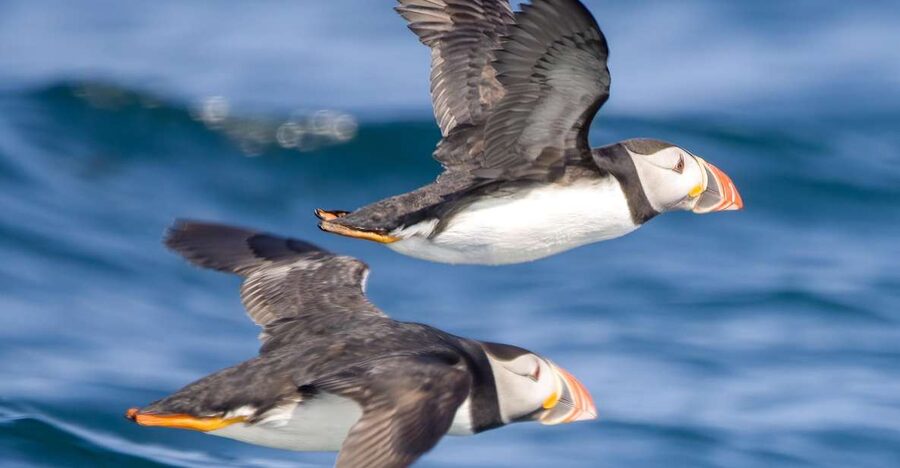
Puffin Island is one of the most unusual parts of the route. It is described as one of the last places in Cornwall where puffins may nest, so a sighting carries a special sense of place. Puffins are not assured, and even when they are present, they may be far from the boat or hidden among the cliffs.
The crew’s approach matters here. A good wildlife trip gives you a chance to observe without crowding the animals. The skipper may hold position or adjust the route, but the boat does not control what the birds do. Pack patience along with your camera.
Same city, a completely different sort of afternoon:
- London: The London Eye Entry Ticket
★ 4.6 · 35,875 reviews - From London: Harry Potter Warner Bros Studio Tour
★ 4.7 · 26,588 reviews - London: Westminster to Greenwich River Thames Cruise
★ 4.5 · 22,836 reviews - Magical London: Harry Potter Guided Walking Tour
★ 4.7 · 22,044 reviews
Port Isaac or Trevose Head
The exact route changes with sea conditions and sightings. When conditions allow, the boat may head toward Port Isaac, the coastal village associated with the television series Doc Martin. This adds a cultural and scenic angle to the trip, especially if you already know the show or want to see the village from the water.
Another possible destination is Trevose Head. From the sea, you can get a distinctive view of the newer Padstow Lifeboat Station. This is a good reminder that the safari is not only about spotting animals. Even a quieter wildlife day still gives you changing views of cliffs, rocks, headlands, and working coastal landmarks.
You should treat these destinations as possibilities rather than fixed stops. The crew needs to respond to wind, swell, visibility, and animal sightings. A route change is not a failure. It is how a responsible boat trip works in exposed coastal waters.
Photo opportunities appear throughout the ride. The rugged cliffs and breaking waves can make excellent pictures, but photography is harder than it looks from a moving RIB. Keep your camera secure, use a wrist strap if available, and expect spray. You may get better results during the planned slowdowns than while crossing open water at speed.
The guides, skipper, and small-group feel
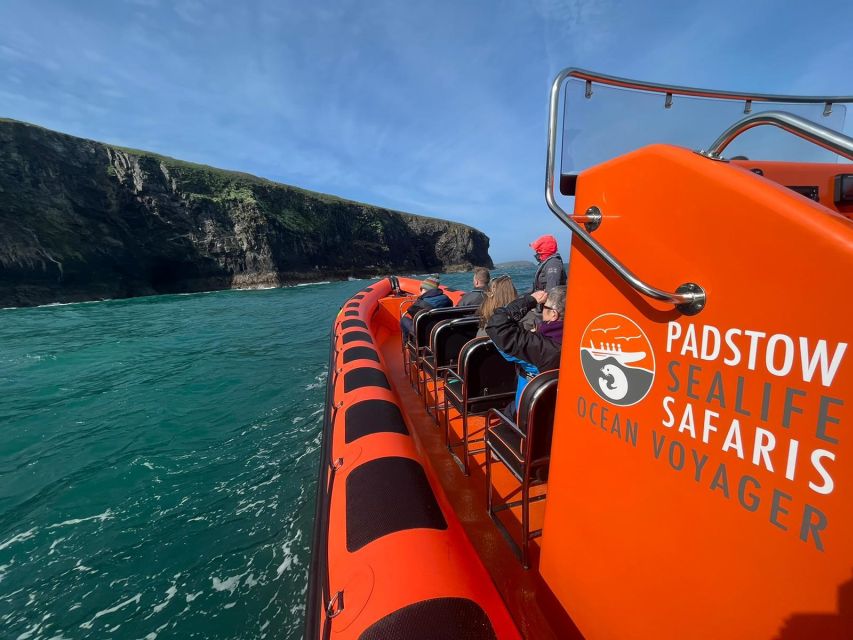
The boat carries up to 12 participants, a useful limit for a wildlife outing. You are not packed into a large sightseeing vessel, and the guide can usually point out sightings to the whole group. Your position still affects your view, so look in every direction and listen for calls from the guide.
The guide handles the interpretation. You learn about the animals, the birds, local landmarks, and the area’s coastal past. The better guides keep the talk clear rather than turning the trip into a long lecture. Harriet, Kelsey, Ian, Anne, Jenny, Emma, and Hope have all led trips at different times, so names and personalities may vary.
The skipper controls the pace and position of the boat. This role is especially important near wildlife and in rough water. You want someone who can make the ride exciting without treating the animals as props. The strongest outings combine quick travel between areas, careful slowing near wildlife, and well-timed pauses for pictures.
The small group also helps families. A five-year-old who is nervous at first may settle once the boat gets moving, especially with a friendly guide and proper waterproof clothing. However, young children still need to cope with noise, spray, speed, and bouncing water. Children under two cannot join, and the activity is not suitable for wheelchair users or people with mobility impairments.
Is $60 good value for two hours?
At $60 per person, this is not a cheap way to spend an hour on the water. It is fair value if you want three things at once: a fast boat ride, a guided wildlife search, and views of about 25 miles of North Cornwall coast.
The price feels strongest when dolphins stay near the boat, or when you see several types of wildlife in one outing. Past trips have included dolphins, seals, puffins, porpoises, minke whales, tuna, jellyfish, and many seabirds. You could have a remarkable two hours.
The value is less certain if your priority is a guaranteed sighting. On some days, the boat may find only a seal or a few birds. That does not mean the crew has failed. It means the experience is built around wild animals and changing conditions. Still, families booking several seats should consider the total cost, especially for teenagers.
For a birthday, a special family outing, or a trip built around the sea, the price can make sense. If you simply want a low-cost view of Padstow from the water, a slower boat trip may be a better fit, though this experience offers more speed and a wider search area.
Who should book this Padstow safari?
I would choose this trip if you like active sightseeing and want a real chance of seeing marine life in its natural setting. It works well for families with older children, couples, wildlife fans, photographers, and anyone who enjoys a splashy ride.
You should be comfortable with:
- An open boat and exposure to wind, sun, and spray
- Fast travel over choppy water
- Standing or bracing as the boat moves
- Wildlife sightings that cannot be predicted
- A two-hour outing with no indoor shelter
The activity is not suitable for pregnant women, people with back problems, recent surgery, mobility impairments, wheelchair users, people prone to seasickness or motion sickness, or anyone over 80. Children under two cannot join. If you are unsure about your physical comfort, the rough ride is the key issue to consider.
There are also a few simple rules. Drones, fishing, and feeding animals are not allowed. Those restrictions protect the wildlife and keep the outing focused on observation.
Practical tips for a better outing
Arrive early, not at the last minute. Check-in starts 30 minutes before departure, and you need time to collect safety gear and waterproofs.
Wear layers under the borrowed clothing. The boat may feel warm in the harbor and cold once it reaches exposed water. Waterproof shoes are more useful than ordinary trainers, and a spare layer in your day bag is sensible.
Bring binoculars if seabirds interest you. Pack a camera, but do not spend the entire trip looking at a screen. Dolphins can appear and vanish in seconds, so watch the water first and photograph second.
Sit or brace yourself as instructed. The RIB is designed for this kind of travel, but it is still fast and bouncy. If you are nervous, tell the crew before departure. The safety briefing is part of the experience, not a formality to ignore.
Keep expectations flexible. One trip may bring a pod of dolphins that stays with the boat. Another may bring seals, birds, and a beautiful run along the cliffs. Both are genuine versions of a wild-coast safari.
Should you book it?
Book this Padstow Sealife Safari if you want an energetic sea outing with a real chance of dolphins, seals, puffins, and seabirds. The small group, useful waterproof clothing, skilled boat handling, and strong guiding make the $60 fare reasonable for an active two-hour experience.
Skip it if you need a calm, dry boat ride or if motion sickness is a serious concern. The honest choice is to book for the ride, the coast, and the chance of wildlife, not for a guaranteed animal encounter. That mindset lets you enjoy the trip even when the sea keeps some of its secrets.
FAQ
How long is the Padstow RIB safari?
The experience lasts two hours, including the journey from Padstow into the Atlantic and the return to the Padstow Sealife Safaris office.
Where does the tour begin?
Meet at the Padstow Sealife Safaris office. Check-in begins 30 minutes before your scheduled departure.
How many people can join the boat?
The tour is limited to 12 participants, making it a small-group experience.
What animals might I see?
You might see seals, dolphins, porpoises, whales, sunfish, tuna, or jellyfish. The trip also searches for seabirds such as gannets, shearwaters, fulmars, oystercatchers, shags, and cormorants.
Can I see puffins?
Puffins may be seen near Puffin Island, particularly from April to July. Sightings are not guaranteed because they are wild birds.
Is wildlife guaranteed?
No. The crew tries to find as much wildlife as possible, but the route and sightings depend on weather, sea conditions, and animal behavior.
Will I get wet?
The boats are open-top RIBs and travel quickly through often choppy water. Waterproof jackets and trousers are available to borrow, but you should also bring waterproof shoes and weather-appropriate clothing.
Is the boat ride suitable for people with motion sickness?
No. The activity is not suitable for people prone to seasickness or motion sickness. The ride can be fast, bouncy, and rough.
Can I cancel the booking?
You can cancel up to 24 hours in advance for a full refund. You can also reserve your place and pay later, subject to availability.
Just added around Britain
- London: Wimbledon Tennis Club and Westminster Walking Tour★ 4.5 · 86 reviews
- Winchester: Historic Castles and Cathedrals Walking Tour★ 4.9 · 154 reviews
- London: Westminster to Richmond River Thames Cruise★ 4.8 · 23 reviews
- Westminster Abbey Skip-the-Line Entry and Private Tour★ 4.6 · 4 reviews
- Best of London by LE GRAND – London’s Luxury Bus Tour★ 4.2 · 23 reviews
- Whitby: Guided Distillery Tour with Gin Tasting★ 5.0 · 28 reviews
- London: Westminster Walking Tour & St Paul’s Cathedral Entry★ 4.7 · 7 reviews
- Warwick: Entry Ticket for Warwick Castle★ 4.7 · 215 reviews
Guided, compared.

Magical London: Harry Potter Guided Walking Tour
Read our review →
Emirates Stadium Entry Ticket and Audio Guide
Read our review →
City & Beatles Tour with Live Guide & Live Music
Read our review →
University and City Walking Tour with Alumni Guide
Read our review →
Christmas Lights Nighttime Bus Tour with Live Guide
Read our review →