
Reviewed · HISTORICAL TOURS
St Andrews: Golf Origins and Old Course History Tour
The most memorable part of this St Andrews walk is not simply seeing the Old Course. It is learning how ordinary-looking features, including the fairways, bridge, greens, and famous adjoining buildings, grew into the modern game of golf. A former caddie and golf historian such as Richard can turn a short walk into a lively lesson in sport, town history, and local legend.
I especially like the chance to walk across parts of the 1st and 18th fairways, and the planned photo stop on Swilcan Bridge. I also like the way the guide uses old photographs, including one showing how short the bridge once was, to challenge familiar stories about the course. The main caution is that the English commentary can be fast, and the walk is not suitable for anyone with walking difficulties.
Key points to know before you book
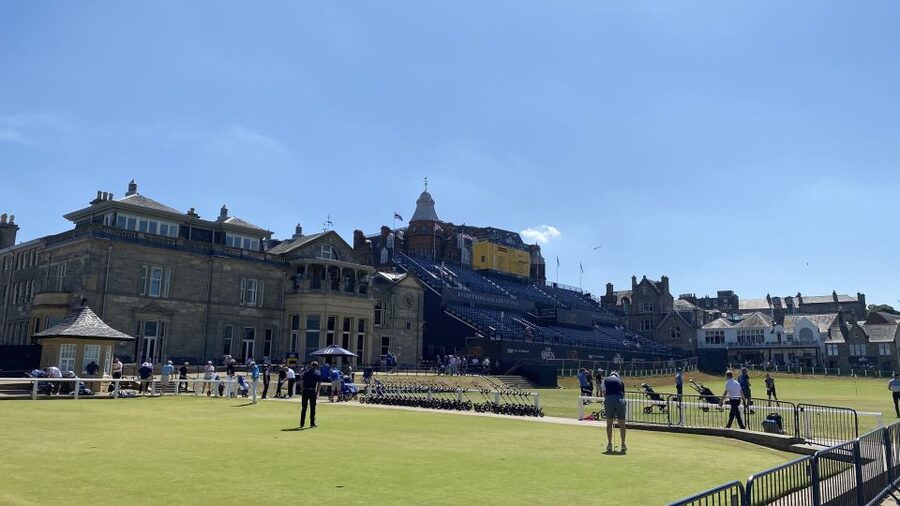
- The 75-minute route reaches the 18th green, 1st tee, and both famous fairways, with the Royal and Ancient clubhouse behind the opening tee.
- Swilcan Bridge is the big photo moment, except on tournament days when access or the photo stop may not be possible.
- Richard is frequently the guide, and his background as a former caddie adds practical course insight to the historical stories.
- The talk covers more than golf, including St Andrews history, religious connections, the Open, and nearby landmark buildings.
- The tour costs $20 per person, a fair price for a focused introduction to the Home of Golf, though refreshments at the Jigger Inn cost extra.
- You need fluent English and steady walking ability, and you must watch for golf balls when play is under way.
Why this short Old Course walk works
St Andrews is packed with golf mythology. Some stories are true, some are simplified, and some have been repeated so often that they sound like fact. This tour begins by sorting through that mix, then connects the town’s past with the physical shape of the Old Course.
That approach gives the walk more purpose than a quick round of famous photo stops. You are not just shown a bridge and a clubhouse. You learn why the course developed as it did, how key parts of the game changed, and how St Andrews helped shape the sport now played around the world.
The tour is led in English, and the guide speaks while walking around an open, active golf setting. You need to follow spoken English comfortably. Slowing the presentation or translating during the tour is not considered workable, so this is not a good choice if you need interpretation.
The tone is friendly and informal. Richard receives repeated praise for his humor, storytelling, and ability to involve the whole group. His past work as a caddie, or looper, helps him explain the course from a player’s point of view rather than treating it as a collection of historic names.
A few more Britain days worth weighing up
- St Andrews: Top Sights Guided Walking Tour
★ 4.7 · 223 reviews - St Andrews: Town, Golf, and Old Course History Tour
★ 4.7 · 162 reviews - Private St Andrews: Home of Golf Old Course Tour
★ 4.9 · 113 reviews
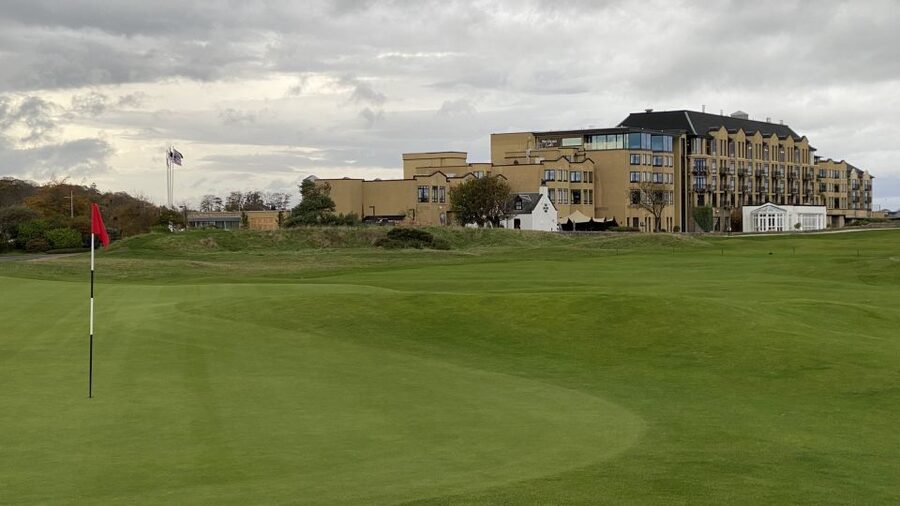
Starting at Hotel du Vin and looking across the links
Meet outside Hotel du Vin at 40 The Scores, St Andrews, KY16 9AS. The group leaves promptly, so arrive early enough to find the meeting point without rushing. There is no luggage drop-off, and large items would make the walk awkward.
The opening view takes in the Links land and its six golf courses, four of them on links ground. This is a useful beginning because it puts the Old Course in its proper setting. St Andrews is not just one famous course beside a town. It is a whole stretch of golfing ground with a long sporting life.
The guide also uses this first part to introduce important St Andrews history before getting into the familiar golf tales. That wider frame matters. You hear about the town, its religious significance, and the people who helped shape both the place and the game.
The first few minutes may feel slower than the rest of the tour. One participant found the opening section a little quiet before the pace picked up. That is a small point, but useful to know if you expect instant action. The introduction lays groundwork for the stories that follow.
Seeing the Old Course from the 18th green
The route takes you to the 18th green, one of the most recognizable finishing points in golf. You can look across the closing stretch and consider how unusual it is for a major sporting venue to sit so close to the public life of a town.
The guide explains how the Old Course developed significant parts of the game. The talk may include details about the changing shape of the holes, the relationship between the fairways, and the features that became standard in golf. One especially useful observation from the tour is the contrast between the uneven 18th fairway and the flatter 1st fairway.
That detail helps you read the ground instead of simply admiring it. A golf fan will understand why the contours matter, while a non-player can still appreciate how the land affected the sport’s development.
The tour does not take you onto every part of the course, and it is not a playing experience. You are seeing and walking beside selected areas, with access across parts of the 1st and 18th fairways. The exact feel of the route depends on current course activity.
The 1st tee, clubhouse, and opening drama
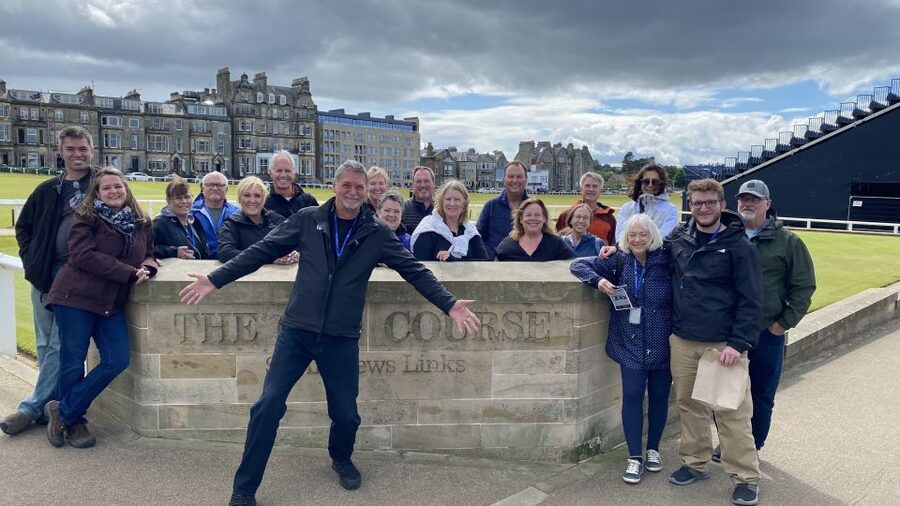
At the 1st tee, the Royal and Ancient clubhouse provides the classic backdrop. This is one of the strongest visual stops because it joins the ceremonial side of golf with the practical start of a round.
The guide explains the role of the Old Course in the Open and the figures who helped define the sport. Old photographs bring those stories to life, especially for anyone who wants more than a modern view of the course.
The setting can be active, and that is part of the appeal. You are close to a working golf course, not inside a museum display. It also means you have responsibilities. If golfers are playing, keep watch for golf balls and follow the guide’s directions. Walking across or near the fairways is at your own risk.
This is one reason comfortable shoes matter. The route lasts about 75 minutes and involves steady walking. The experience is not suitable for wheelchair users, people using crutches, walking frames, mobility scooters, or other walking aids. Baby strollers and carriages are also not allowed.
More history walks around Britain:
- London: Historic Pubs of Central London Walking Tour
★ 4.9 · 1,065 reviews - Portsmouth: Historic Dockyard Ultimate Explorer Ticket
★ 4.8 · 1,052 reviews - York: Witches and History Old Town Walking Tour
★ 4.7 · 928 reviews - London: Soho Music and Historic Pubs Walking Tour
★ 4.9 · 836 reviews
Walking the 1st and 18th fairways
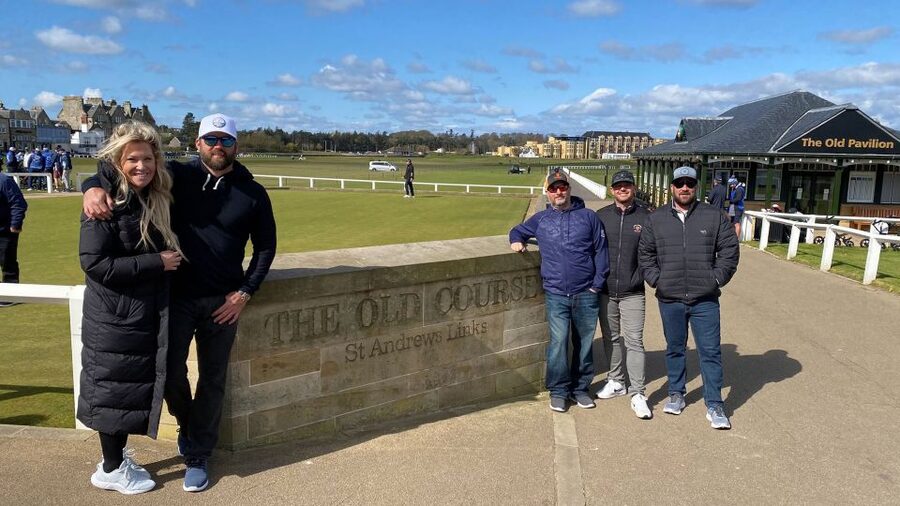
The chance to cross sections of the 1st and 18th fairways is the part that gives this experience more substance than a roadside viewing stop. You get a closer sense of the course’s scale, surface, and famous sight lines.
For a golf fan, these fairways carry a long list of memories. The guide links them to major events, famous players, and the Open. For someone who knows little about golf, the explanation helps you understand why this particular place carries such weight.
I would not expect a quiet country walk. The course is active, and the group must stay alert. Weather can also change the mood. One participant enjoyed the tour despite a passing shower, while another completed it in bitter cold. St Andrews is exposed coastal ground, so bring a weatherproof layer even on a bright morning.
The walk is compact rather than strenuous for a fit person, but the stated restrictions are important. If you have trouble walking, this is the wrong way to see the course. A slow pace or walking aid is not easily accommodated.
The Swilcan Bridge photo stop
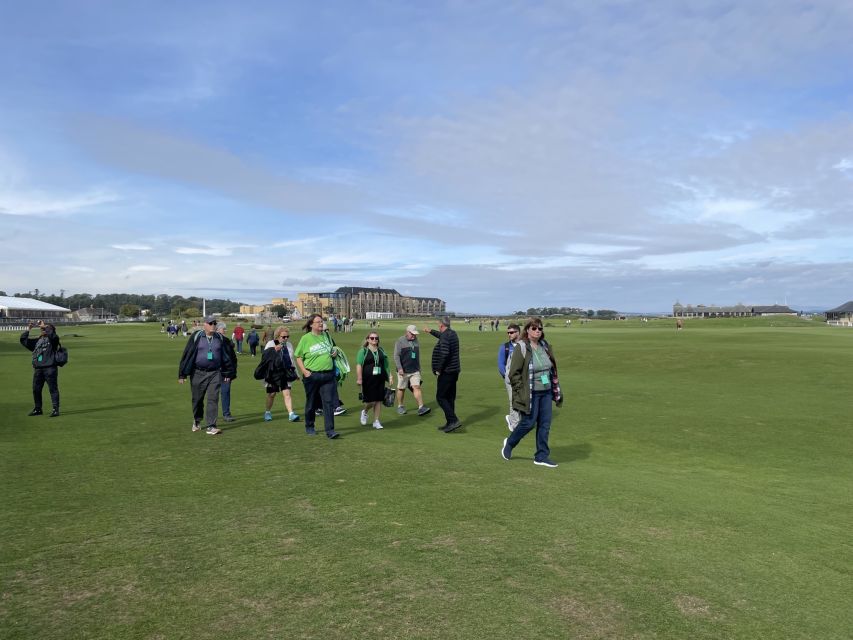
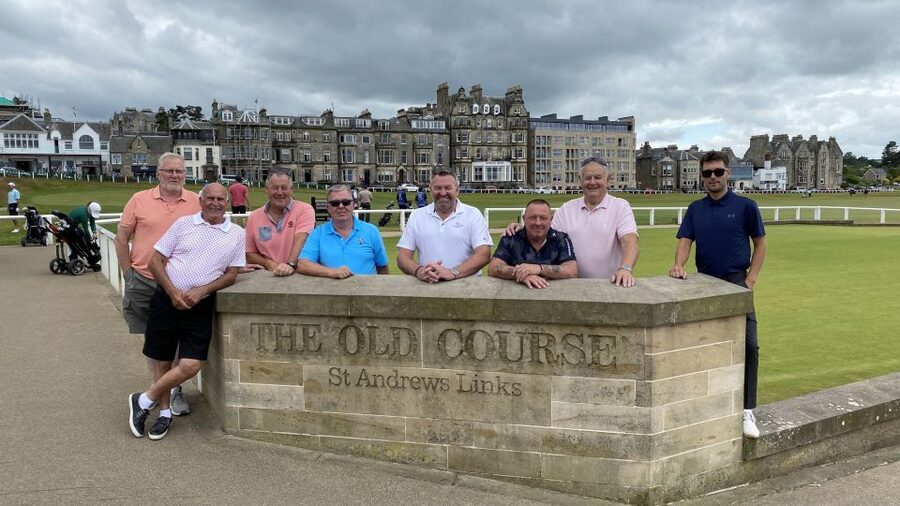
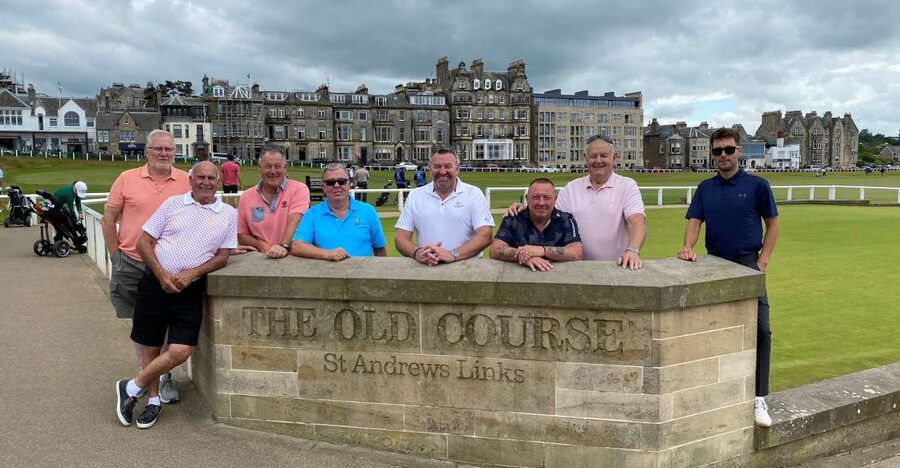
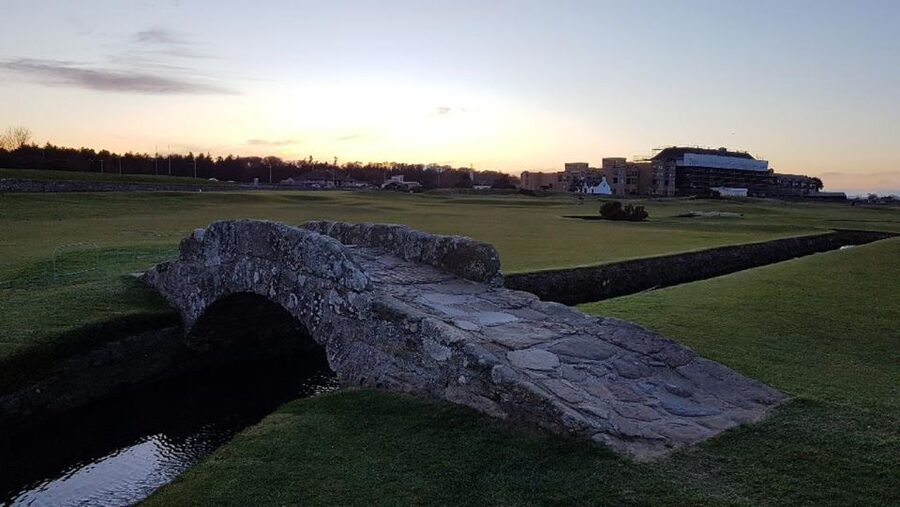
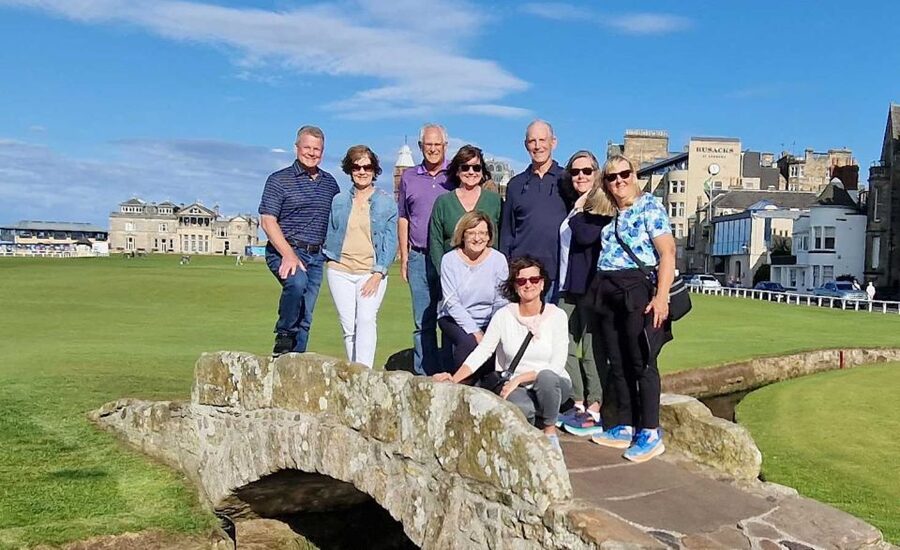
Swilcan Bridge is the closing photo stop and the image most people will want to take home. The guide generally helps photograph each person or group, which is a valuable touch when you are traveling without someone to take the picture.
The bridge itself is small, but its fame is enormous. The presentation includes rare golfing images, including one showing the bridge’s original height. That visual comparison helps strip away some of the polished mythology and shows how a practical course feature became a global symbol.
The stop is not available on tournament days. Check the date carefully if the bridge photo is the main reason you are booking. The rest of the walk still offers course views and historical material, but the signature pose may not be possible during major events.
The photo stop also gives the tour a relaxed finish. You have time to ask questions, take pictures, and enjoy the setting rather than being rushed straight to the end.
Finishing at the Jigger Inn
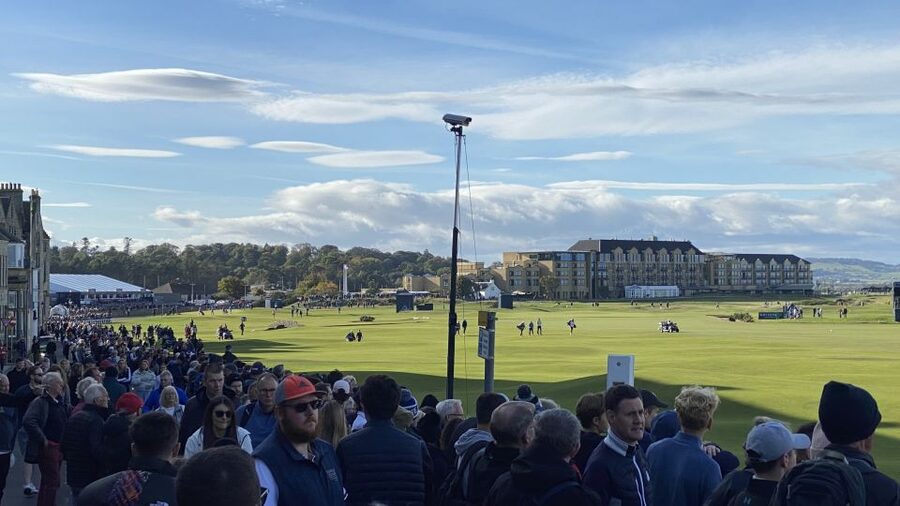
The official walk finishes at the Jigger Inn, beside the Old Course and overlooking the 17th fairway. Refreshments are not included, but this is a convenient place to continue the visit with a drink or meal at your own cost.
I like this ending because it leaves you near one of the course’s most talked-about holes and gives you a natural place to pause. It also lets you decide how much time and money to spend after the tour. You can stop for refreshments, or simply continue exploring St Andrews.
Do not confuse the finish with included hospitality. The guide is included, but food and drinks at the Jigger Inn are extra. If you have another booking after the walk, allow time for the tour to finish at the stated endpoint rather than assuming it will return to Hotel du Vin.
The guide makes the difference
The strongest part of this experience is the guide’s delivery. Richard is repeatedly singled out for humor, warmth, and a strong command of both golf and St Andrews history. His former caddie background gives him stories about the course that a general sightseeing guide might not have.
He also appears willing to take photos, answer questions, and connect the tour to places where people are staying or eating. That local knowledge can be handy after the walk. You may leave with suggestions for lunch or with a better sense of how the town fits around the course.
The commentary is information-packed, but not dry. Good delivery matters here because the route itself is short and the views are open. Without stories, you would mainly be looking at fairways. With the right guide, you hear why the ground looks the way it does and why certain spots matter.
There is one language-related weakness. One participant found Richard spoke quickly and was hard to hear at times. If English is your second language, you should be confident with spoken English in an outdoor group setting and position yourself close to the guide.
Guide assignments can vary. Richard is the name most often associated with the experience, while another booking refers to Alan. The exact guide may not be guaranteed, but the stated service is a professional local English-speaking guide.
What the $20 price buys you
At $20 per person, this is a low-cost way to add meaning to a visit to St Andrews. You are paying for a 75-minute guided walk, access to selected course areas, historical explanation, and help with photographs at iconic locations.
The value is strongest for first-time visitors. You could see the clubhouse, fairways, and bridge on your own, but you would miss the sequence of stories linking golf’s origins, the Old Course, the Open, and St Andrews itself.
The tour is less useful if you already know the course in detail or are looking for a full behind-the-scenes course visit. It does not include a round of golf, a caddie experience, refreshments, or luggage storage. Still, at this price, it works well as an introduction rather than an all-day golf program.
Free cancellation up to 24 hours before the start and the option to reserve now and pay later make it easier to fit into a changing Scotland itinerary. The practical rule is simple: arrive on time, wear comfortable shoes, and check tournament dates if Swilcan Bridge access matters to you.
Who will enjoy this tour most
Golf fans are the obvious audience. You will hear about the Old Course, famous tournaments, course development, and the people who shaped the sport. The chance to walk across the 1st and 18th fairways makes the history feel physical.
Non-golfers can also enjoy it if they like local history and good storytelling. One person with no real interest in golf found the guide engaging throughout, which suggests the town history and human stories are not just filler for players.
Families need to read the age rules carefully. The tour is not suitable for children under five, and anyone under 16 must be with an adult. It is also not suitable for children under two, people with mobility impairments, wheelchair users, people using walking aids, or people with hearing impairments.
The English requirement excludes some visitors who might otherwise enjoy the subject. This is a spoken-history walk, not a visual tour with translation support.
Should you book the Old Course history walk?
Book it if you want a clear, entertaining introduction to St Andrews and care about the story behind the famous views. The strongest reasons are the course access, the Swilcan Bridge photograph, the old images, and guides such as Richard who can connect golf history with the town.
Skip it if you need an accessible route, cannot follow fast English conversation, or mainly want to play golf. Also think twice if you are visiting on a tournament day and the bridge photo is your top priority.
For most first-time visitors with steady walking ability, $20 is a sensible spend. Start at Hotel du Vin, stay alert near live play, listen for the details about the 1st and 18th fairways, and finish with a look toward the 17th from the Jigger Inn. That combination gives you a useful feel for why St Andrews is called the Home of Golf.
FAQ
How long does the St Andrews Old Course history tour last?
The tour lasts 75 minutes.
How much does the tour cost?
The listed price is $20 per person.
Where does the tour meet?
Meet outside Hotel du Vin at 40 The Scores, St Andrews, KY16 9AS, United Kingdom.
Where does the tour finish?
The walk finishes at the Jigger Inn.
Is the Swilcan Bridge photo stop included?
Yes, a photo stop at Swilcan Bridge is part of the experience when tournament play is not taking place.
Is the tour available in languages other than English?
No. The tour is conducted in English, and participants need a fluent command of English.
Can children join the tour?
Children under five cannot join. Children under 16 must be accompanied by an adult, and the experience is not suitable for children under two.
Is the tour suitable for wheelchair users or people with walking aids?
No. It is not suitable for wheelchair users or people with mobility impairments, crutches, walking frames, mobility scooters, or similar walking aids.
Are food and drinks at the Jigger Inn included?
No. You may enjoy refreshments at the Jigger Inn after the walk, but they are not included in the tour price.
What should I bring?
Bring comfortable shoes. You should also be prepared for outdoor weather and remain alert for golf balls when play is under way.
Just added around Britain
- London: Wimbledon Tennis Club and Westminster Walking Tour★ 4.5 · 86 reviews
- London: Westminster to Richmond River Thames Cruise★ 4.8 · 23 reviews
- Winchester: Historic Castles and Cathedrals Walking Tour★ 4.9 · 154 reviews
- Best of London by LE GRAND – London’s Luxury Bus Tour★ 4.2 · 23 reviews
- Whitby: Guided Distillery Tour with Gin Tasting★ 5.0 · 28 reviews
- Westminster Abbey Skip-the-Line Entry and Private Tour★ 4.6 · 4 reviews
- London: Westminster Walking Tour & St Paul’s Cathedral Entry★ 4.7 · 7 reviews
- Warwick: Entry Ticket for Warwick Castle★ 4.7 · 215 reviews
Historical Tours, compared.



J&M’s City Sightseeing and History Walking Tour
Read our review →Browse the lists this tour appears in