
Reviewed · JACK THE RIPPER TOURS
German Language : Original Jack the Ripper Tour
Jack the Ripper’s murders still cling to the streets of Whitechapel because the setting has not vanished beneath a museum roof. You walk through working East End streets, past old churches, markets, pubs, and narrow lanes, while your guide reconstructs the grim autumn of 1888. The case remains unsolved, so the tour is part crime story, part historical puzzle.
I like the use of old photographs beside today’s streets, which helps you see how much Whitechapel has changed. I also like the focus on the victims and on ordinary life in the district, rather than treating the murders as a parade of suspects. The main drawback is the graphic material, which may not suit children or anyone sensitive to violent crime.
Key points to know
- Real Whitechapel locations: Visit Mitre Square, Brick Lane, Petticoat Lane, Christ Church, and the Ten Bells Pub.
- Evidence-based storytelling: Examine photographic material and hear how investigators assessed suspects and clues.
- Victims are part of the story: Learn about the women involved and the poverty and daily pressures of Victorian Whitechapel.
- Guides vary by departure: German-speaking guides have included Bettina and Sara, both praised for clear explanations and use of historic images.
- Outdoor and practical: The walk lasts two hours, has few inclines, and runs in changing London weather.
- Good value at $24: You get a focused local walk with a specialist guide, though food, drinks, and indoor entry are not included.
Why Whitechapel makes a strong crime walk
The appeal of this tour is not simply the identity of Jack the Ripper. Nobody can provide a final answer, and any walk that pretends otherwise is selling fiction. The better question is how the killings unfolded, why Whitechapel became the center of attention, and what the police and press knew at the time.
In 1888, Whitechapel was an impoverished part of London. Its streets held overcrowded housing, lodging houses, workshops, markets, pubs, and people living with very little security. Your guide places the crimes in that setting, helping you understand why the victims were vulnerable and why the investigation became so difficult.
I appreciate that the tour includes everyday Victorian life instead of only grisly details. You hear about the victims, the investigation, and the suspects, but also about the social conditions that shaped the neighborhood. That gives the walk more weight than a simple list of murders.
The subject is still disturbing. The experience contains graphic details and visual content, and anyone under 18 must attend with an adult. I would not choose this as a casual family activity, even though the route itself is manageable.
More Jack the Ripper walks after dark:
- London: The Original Jack the Ripper Walking Tour
★ 4.7 · 7,833 reviews - London: Jack the Ripper Small Group Tour
★ 4.7 · 3,159 reviews - London: Jack the Ripper Walking Tour – Ripper Vision Tours
★ 4.5 · 1,752 reviews
Starting at Altab Ali Park
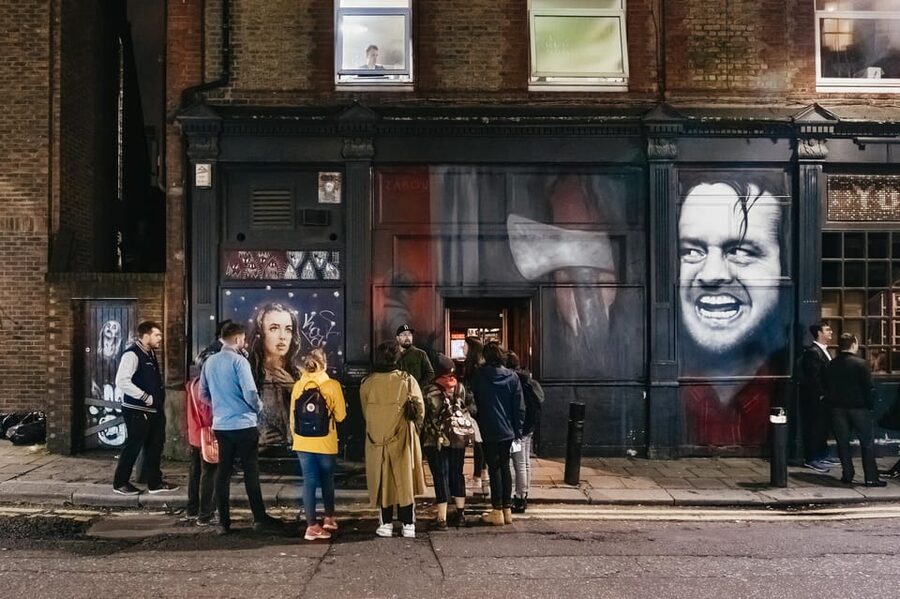
Meet your guide at the west entrance to Altab Ali Park, beside the large iron arch on the corner of White Church Lane and Whitechapel High Street. Look for the blue flag, which is the easiest way to spot the group.
Aldgate East is the nearest Underground station. Give yourself enough time to find the park entrance, since a small city park and a busy street corner can be easy to confuse when you are arriving in a new part of London.
The meeting point suits the subject. You are already in Whitechapel before the story begins, rather than starting in a generic transport hub and spending the first part of the walk getting into place. From here, the guide can establish the neighborhood and the changes that separate modern London from the district of 1888.
The walk is entirely outdoors. Wear shoes suited to public paths and bring clothing for rain, wind, or cold. There are no stairs and few inclines, but path surfaces can vary, so people with limited mobility should still consider their comfort over two hours.
Following the case through Whitechapel
The guide presents the murder investigation as a puzzle, using photographs and case details to make you assess the evidence. You hear about alleged perpetrators, police efforts, and theories about who may have committed some of the crimes.
That format works best when you treat the tour as an examination of uncertainty. The guide can explain where evidence was found and how close the police may have come to identifying the killer, but no conclusion can be proved. I find that unresolved quality more interesting than a forced answer.
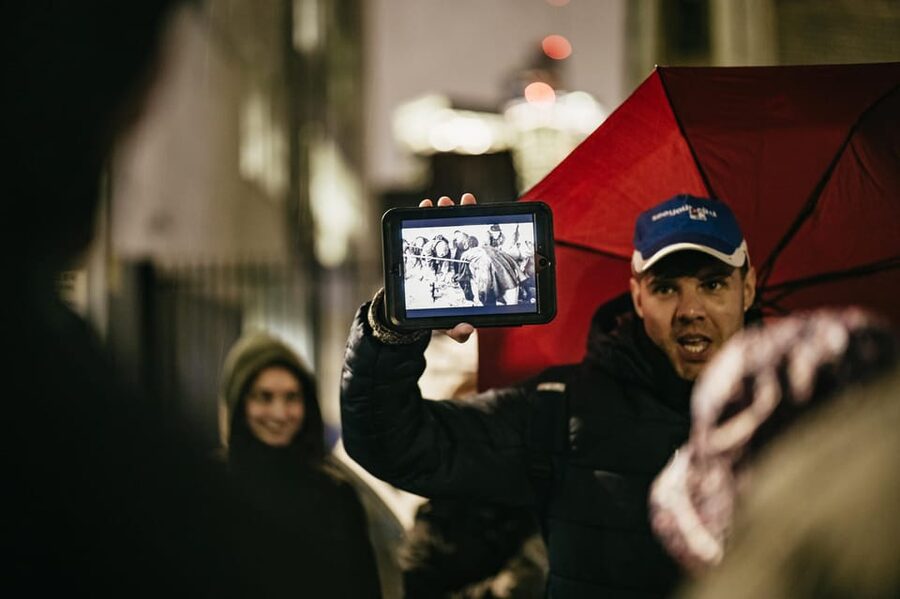
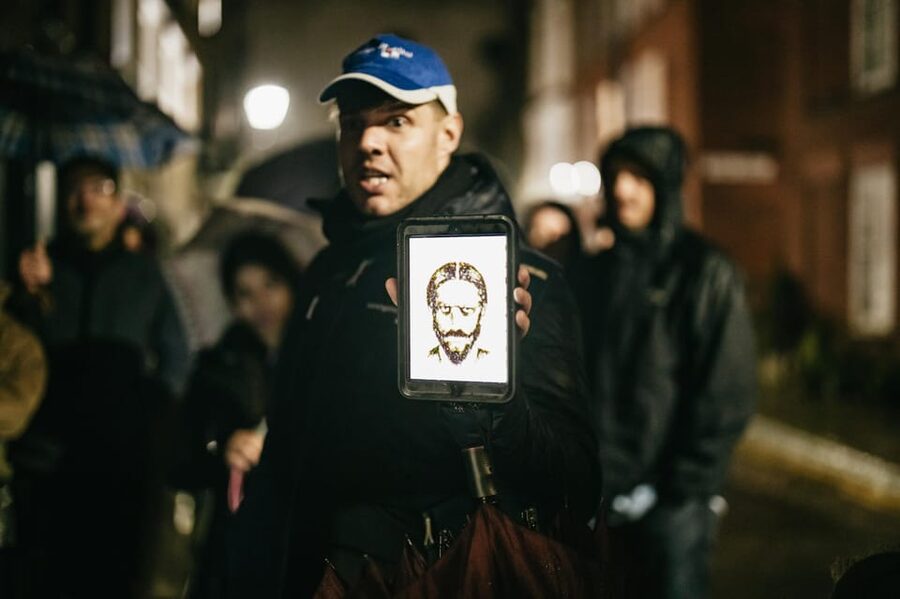
The photographic material is one of the useful features. Historic images show the old streets and buildings, while the guide connects them to what you see around you now. Bettina has been praised for bringing old photographs, and Sara for explaining the material clearly. Your guide may be different, but the use of visual comparison is an important part of the walk.
One limitation is that the exact balance between explanation and participation can vary. If you prefer a structured mystery with maps, questions, or a staged storyline, you might find the experience more like a guided history walk than an interactive investigation. The guide asks you to think about the evidence, but the supplied details do not promise a formal game.
Christ Church and the Victorian East End

Christ Church is one of the notable architectural markers along the route. Its presence helps set the scale of the old neighborhood and gives the guide a fixed point from which to discuss Victorian London.
The church is not presented as a separate indoor visit. You pass by it, so you should not expect an entry ticket, a long architectural talk, or time to explore the interior. Its value comes from seeing how a major public building fitted into the streets around it.
This is also where the broader cultural background can add interest. The guide discusses Victorian London and the setting that later fed popular ideas about crime, deduction, and urban mystery. The tour connects that atmosphere to Sherlock Holmes, explaining the cultural context behind the enduring detective figure.
That connection should appeal to you if you enjoy literary history as much as true crime. Sherlock Holmes was fictional, while the Whitechapel murders were real, but both belong to the late Victorian fascination with clues, shadowy streets, forensic thinking, and clever investigators.
A few more London days worth weighing up
- From London: Harry Potter Warner Bros Studio Tour
★ 4.7 · 26,588 reviews - London: Westminster to Greenwich River Thames Cruise
★ 4.5 · 22,836 reviews - Magical London: Harry Potter Guided Walking Tour
★ 4.7 · 22,044 reviews - London: Madame Tussauds London
★ 4.6 · 20,915 reviews
Mitre Square and the hard evidence

Mitre Square is one of the most important stops because it is tied directly to the case. Here, the guide can focus on the location, the evidence discovered, and the questions that still trouble the investigation.
A real crime scene is not a preserved set. Modern London surrounds it, and the place may feel ordinary. That contrast is part of the point. You stand in a present-day public space while hearing how investigators once tried to make sense of a shocking event there.
I like this kind of stop because it keeps the story grounded. Instead of imagining a theatrical Victorian street, you see how history sits inside a living city. The guide’s old photographs help bridge the gap between the current view and the setting described in the case.
The subject matter is serious, and the guide may show graphic material connected with the investigation. You should be prepared for a factual but unsettling account, not a light ghost walk.
Brick Lane and Petticoat Lane
Brick Lane brings a different side of the East End into view. Today, it is one of the area’s best-known streets, but on this walk it also helps you picture the dense, changing neighborhood through which the investigation unfolded.
The stop is useful because it widens the tour beyond individual crime scenes. You learn how streets, markets, work, housing, and movement shaped the area. The tour does not just ask who the killer was. It asks why this district mattered and why the people living there received such uneven protection and attention.
Petticoat Lane adds another market setting to the route. Like Brick Lane, it is not a museum exhibit or an untouched Victorian street. You are seeing a modern public area while listening to the guide connect it with the East End’s commercial and social life.
I would not book this walk expecting long stops at every location. A two-hour route has to keep moving, and several places are passed rather than entered. The reward is breadth: you cover a number of meaningful sites without spending your whole day on one case.
Spitalfields Market and the Ten Bells Pub
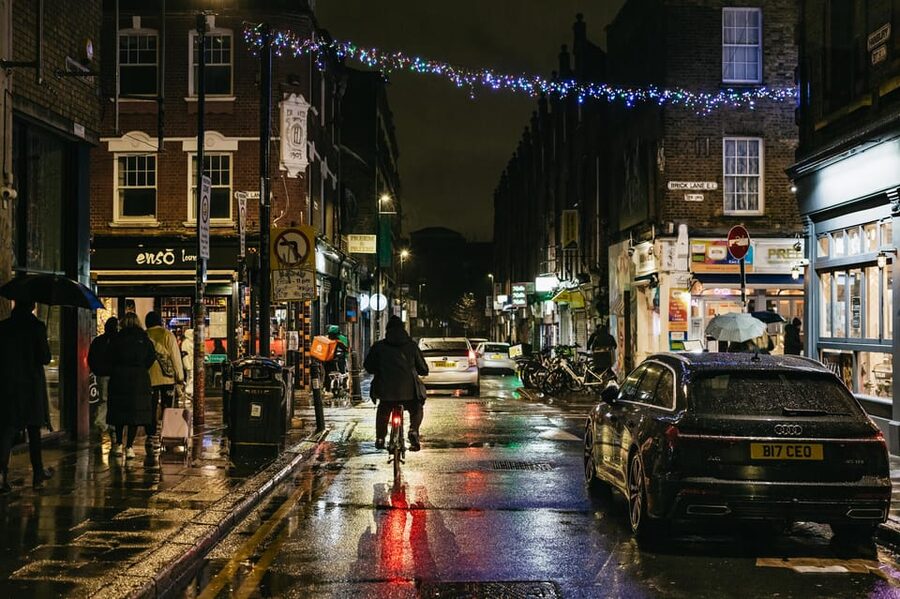
Spitalfields Market is one of the most notable places on the route. It gives you a chance to see how the East End combines older structures, public markets, and modern city life.
The market also makes a sensible pause in the story. Crime cases can become abstract when they are reduced to names and dates. A market helps you picture the people, trade, noise, and movement that formed the neighborhood around the murders.
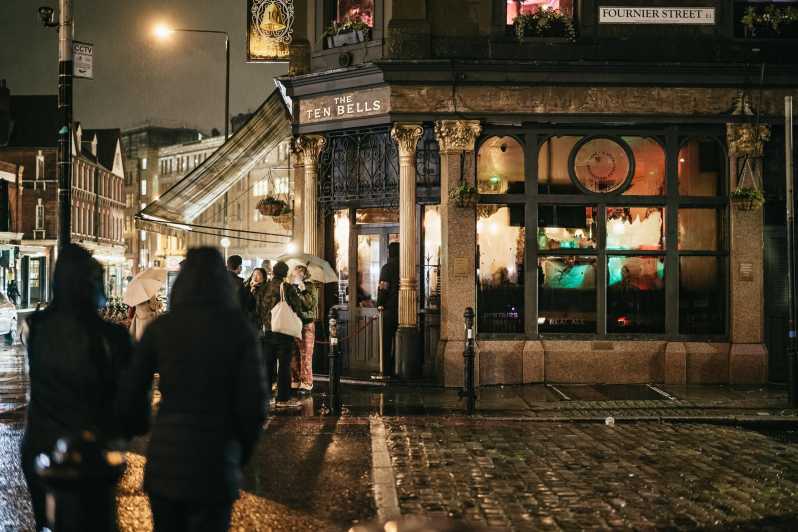
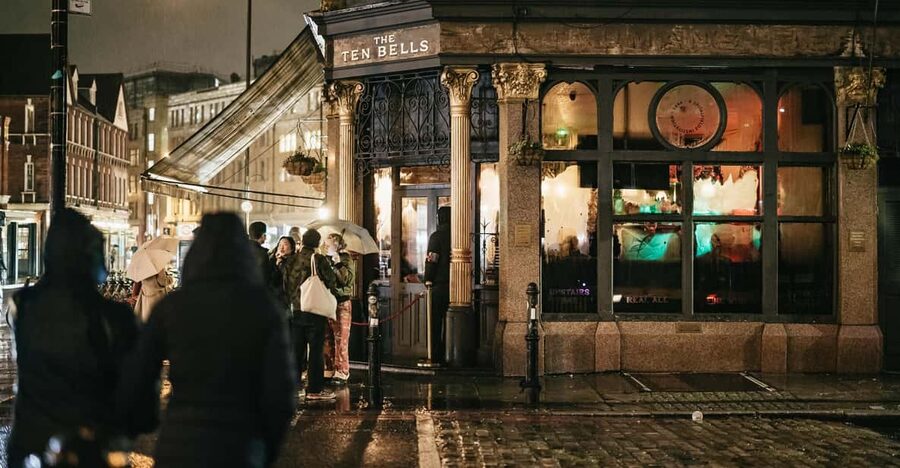
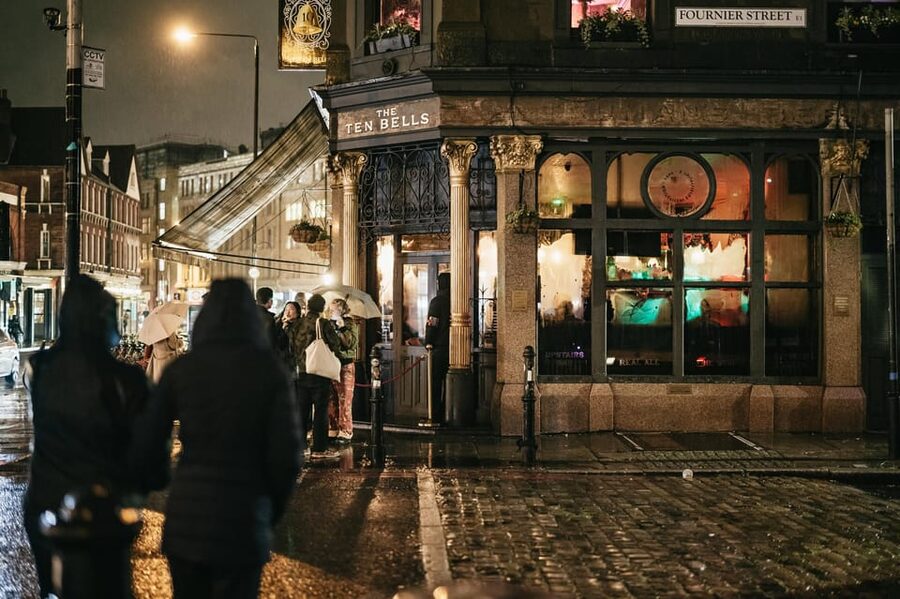
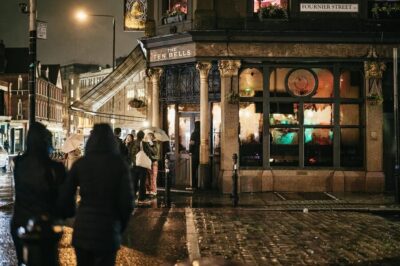
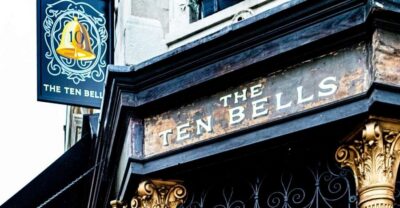
The Ten Bells Pub is both a stop along the way and the finishing point. Its association with the Whitechapel story makes it a fitting place to end the walk, though the tour does not include food or drinks. You can decide for yourself if you want to stay afterward, but that would be separate from the booked activity.
Ending at the Ten Bells Pub is practical for sightseeing. You finish in Spitalfields rather than being returned to the starting point, so plan the rest of your evening from there. The route begins at Altab Ali Park and ends at the Ten Bells, which makes the walk useful as a way to connect several East End areas.
How the guide shapes the experience
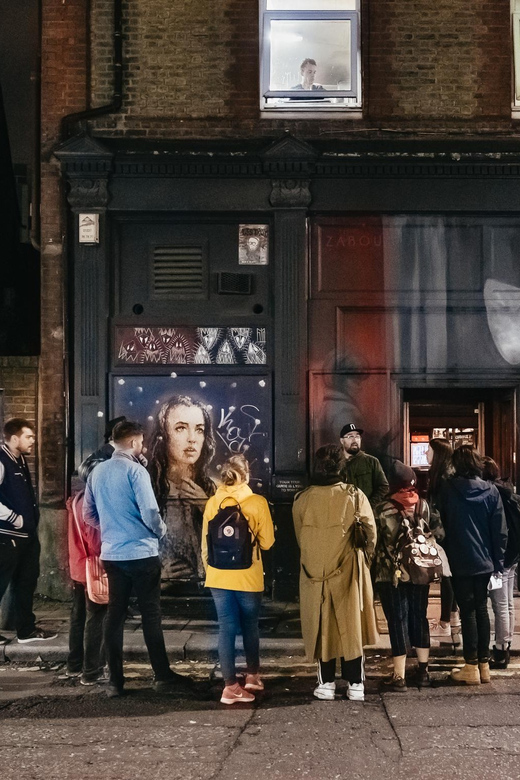
This is a guide-led walk, and the quality of the experience depends heavily on how clearly the story is told. The available rating is 4.6 from 1,805 ratings, and recent German-language feedback gives particular credit to Bettina and Sara for clear explanations and historic photographs.
Bettina has been noted for bringing images of the former streets and comparing them with the present view. That is exactly the sort of detail I want on a city walk because it gives you something concrete to look at while the guide speaks.
Sara has been praised for explaining the material well. If you book a German departure, guide assignments can vary, so you should not assume that either name will lead your particular walk. The stated languages are German, English, Spanish, Italian, and French.
One useful point of balance: an earlier German-language comment wished for more audience involvement, perhaps through maps or a stronger frame story. If you like asking questions and forming your own theory, speak up during the walk. The tour offers evidence and theories, but the information provided does not promise a map-based game or formal role-play.
Is two hours enough for the route?
Two hours is a good length for this subject. You have enough time to hear the main case details and visit several locations, but the walk does not consume an entire day of sightseeing.
You should expect a steady outdoor walk rather than long periods seated in one place. The route includes Whitechapel, Christ Church, Mitre Square, Brick Lane, Petticoat Lane, Spitalfields Market, and the Ten Bells Pub. Some stops are pass-by points, so the experience is about the connected route as much as any single address.
The fixed length also helps with planning. You can place it between other East End activities, but allow extra time before the start to find the blue flag and after the finish if you want a drink or meal near Spitalfields. Food and drinks are not included.
At $24 per person, I consider the value solid if you want a specialist walking tour rather than a self-guided phone route. You are paying for two hours of interpretation, visual material, and local routing through several historic locations. It is less useful if you only want to see the Ten Bells or take quick photographs, since the main value is the guide’s explanation.
Who should book this Whitechapel walk?
I would recommend it to you if you enjoy true crime, Victorian London, urban history, or Sherlock Holmes. It also suits visitors who want to see East End streets while learning why the area became linked with one of Britain’s most famous unsolved cases.
The tour works especially well for German-speaking visitors who want the story explained in their first language. English, Spanish, Italian, and French are also available, so you have several language choices when checking times.
I would think twice if you dislike graphic crime material, want a family-friendly activity for young children, or prefer indoor sightseeing. The walk is accessible in broad terms, but uneven public paths and two hours outside still matter for anyone with limited mobility.
The experience also suits a first visit to the East End because it links several places that you might otherwise see separately. You should not expect every building to survive from 1888, but the route shows how the old story sits within modern London.
Practical details before you go
Book only if you are comfortable with the outdoor format. The activity runs in rain or cold unless conditions affect the schedule, so a weatherproof layer and comfortable shoes are sensible choices.
Participants under 18 must attend with an adult. Because the tour includes graphic details and visual content, I would preview the subject with younger teenagers rather than assuming the title alone tells you what to expect.
The walk is wheelchair accessible, and it has no stairs or many inclines. Still, varying public path conditions mean that accessibility is not the same as a perfectly smooth route. If that distinction matters to you, plan carefully and contact the provider before booking.
You can cancel up to 24 hours before the start for a full refund, and the reserve-now, pay-later option keeps payment flexible. Check the available start times before building the walk into a tight London schedule.
Should you book the Original Jack the Ripper Tour?
Book this tour if you want a focused, affordable introduction to Whitechapel that treats the case as history and investigation, not just horror. The old photographs, real locations, multilingual guiding, and attention to Victorian daily life give the two-hour route more substance than a simple list of suspects.
Skip it if graphic crime stories are not for you, or if you need a fully interactive mystery with maps and role-play. At $24, the value is best for someone who wants a guided East End walk, clear case background, and a practical look at places such as Mitre Square, Brick Lane, Spitalfields Market, and the Ten Bells Pub.
FAQ
How long does the Jack the Ripper walking tour last?
The tour lasts two hours and takes place entirely outdoors.
Where does the tour meet?
Meet at the west entrance to Altab Ali Park, beside the large iron arch on the corner of White Church Lane and Whitechapel High Street. The guide will hold a blue flag.
Which Underground station is closest?
Aldgate East Station is the nearest Underground station to the meeting point.
Where does the tour finish?
The walk finishes at the Ten Bells Pub in Spitalfields.
Which languages are available?
The tour is available in German, English, Spanish, Italian, and French.
Is the tour suitable for children?
Participants under 18 must be accompanied by an adult. The activity includes graphic details and visual content.
Is the walking route wheelchair accessible?
The activity is wheelchair accessible and has no stairs or many inclines. Public paths can have varying conditions, so people with limited mobility should take that into account.
Just added around London
- London: Wimbledon Tennis Club and Westminster Walking Tour★ 4.5 · 86 reviews
- London: Westminster to Richmond River Thames Cruise★ 4.8 · 23 reviews
- Best of London by LE GRAND – London’s Luxury Bus Tour★ 4.2 · 23 reviews
- Westminster Abbey Skip-the-Line Entry and Private Tour★ 4.6 · 4 reviews
- London: Westminster Walking Tour & St Paul’s Cathedral Entry★ 4.7 · 7 reviews
- From London: Oxford, Stratford-upon-Avon & Cotswolds Trip★ 4.5 · 64 reviews
- From London: Warwick, Oxford, Stratford & Cotswolds Day Tour★ 4.0 · 270 reviews
- Warner Bros. Studios and 1-Day London Hop-on Hop-off tour★ 4.7 · 9 reviews
Jack the Ripper Tours, compared.

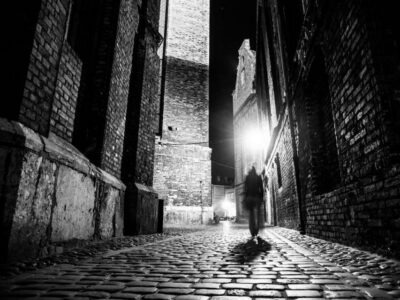

Jack the Ripper Walking Tour – Ripper Vision Tours
Read our review →

French Language : Original Jack the Ripper Tour
Read our review →
Browse the lists this tour appears in