

Reviewed · JACK THE RIPPER TOURS
Las noches de Jack the Ripper in Spanish
Jack the Ripper guides this Spanish-language walk through Whitechapel in character, leading you from Tower Hill to the streets tied to the 1888 murders. The unusual approach is theatrical, but the tour promises facts rather than invented scenes. You get the famous mystery through the spirit of the killer himself, with plenty of dark humor and a deliberately unsettling tone.
I like two things right away: the route connects real locations, including Mitre Square and The Ten Bells, and the low price makes a two-hour London walk easy to fit into a busy schedule. I also like that the guide named in the available information is Javier, who is described as strongly committed to the Jack character. The main drawback is the subject matter. This is a murder tour about five women, and the mask, sarcasm, and horror-style presentation will not suit everyone.
Key points to know before you book
- Spanish throughout: The live guide presents the story in Spanish, making this a useful choice if you prefer to explore London’s darker past in that language.
- A real Whitechapel route: You visit Goulston Street, Mitre Square, Artillery Passage, Old Spitalfields Market, and The Ten Bells.
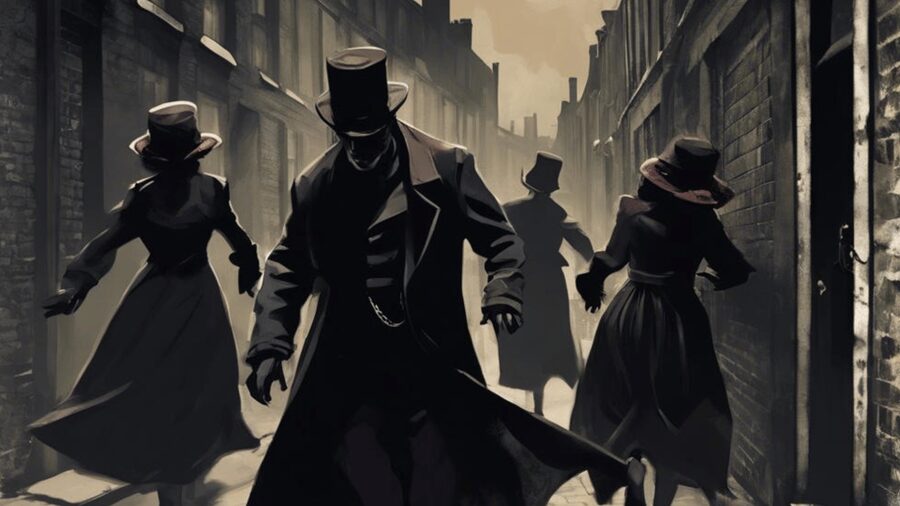
- The guide plays Jack: Expect a red mask, umbrella, dramatization, sarcasm, and a sinister point of view.
- Two hours on foot: The walk begins at Tower Hill Station and moves through several East London locations before finishing around The Ten Bells.
- A very low price: At $5.39 per person, the tour offers strong value if you enjoy true crime and theatrical storytelling.
- Not for young children: The activity is not suitable for children under 14.
Meeting Jack beside Tower Hill Station
Your starting point is the sundial outside Tower Hill Station, a few meters from the station exit. Look on the right side as you come out. The guide should be easy to identify, wearing a red mask and carrying an umbrella.
That meeting point gives you a useful bit of London context before the dark story begins. From the sundial, you can see the medieval Tower of London, a reminder that this part of the city has long carried stories of imprisonment, violence, power, and death. The tour then shifts from royal London toward the narrower streets and former working districts of Whitechapel.
I recommend arriving with enough time to find the sundial without rushing. Tower Hill is a practical transport point, but the station area can be busy, and the guide’s umbrella is the key landmark. If you arrive late, finding a moving walking group in East London may be difficult.
The role-play is central to the experience. You are not simply listening to a guide recite dates and locations. You are hearing the case through the spirit of Jack the Ripper, with the guide using a red mask and a theatrical manner to create an uneasy mood. The presentation includes sarcasm and terror, so you should expect a performance rather than a quiet historical lecture.
More Jack the Ripper walks after dark:
- London: The Original Jack the Ripper Walking Tour
★ 4.7 · 7,833 reviews - London: Jack the Ripper Small Group Tour
★ 4.7 · 3,159 reviews - German Language : Original Jack the Ripper Tour
★ 4.6 · 1,805 reviews
Why the Spanish format changes the experience
A live tour in Spanish is more than a translation choice. It lets the guide control the mood, timing, and humor in one language from start to finish. That matters here because the experience depends heavily on tone. Sarcasm can lose its effect when translated awkwardly, while a confident Spanish performance can make the dramatic format easier to follow.
The guide presents Jack the Ripper as the first serial killer of the 19th century and focuses on the mystery surrounding five femicides in Whitechapel in 1888. The stated aim is to separate fact from fiction. You should still expect a theatrical viewpoint, but the tour is not advertised as a made-up ghost story.
Javier is the guide name connected with this experience. The available comments describe him as very good in character and clear in his explanations. That combination matters. A guide can wear a costume and still give a flat talk, or perform well while losing the historical thread. Here, the appeal is the mix of explanation and character work.
The language choice also helps you decide who should book. If you are comfortable in Spanish, this can be a more natural way to follow the details than joining an English-language crime walk. If you do not speak Spanish, this is not the right tour for you, since Spanish is the stated tour language.
Goulston Street and the Whitechapel trail
Goulston Street is one of the early major stops. The tour calls it the entrails of Whitechapel, a phrase that signals the grim tone of the presentation. Here, the guide begins connecting the individual locations into a wider picture of the 1888 case.
The value of this stop is its place in the investigation. Rather than treating Jack the Ripper as an abstract name, the walk places the story in actual streets. You can see how the route moves from one part of the district to another and why modern interest remains fixed on small details, uncertain evidence, and unanswered questions.
This is also where the role-play may feel strongest. Hearing the story from Jack’s supposed spirit is not a neutral historical method. It is designed to unsettle you and to give the walk a distinctive voice. If you prefer a measured account of crime history, the presentation could feel too showy. If you enjoy a theatrical mystery, the format gives the stop extra force.
Mitre Square and the famous double event
Mitre Square is one of the most important places on the route. It is identified as the site of the double event, making it a key stop for anyone interested in the case.
The guide uses the square to explain how the crimes fit together and why the location matters to Ripperologists, the people who study the case in detail. You get a sense of how one physical place can carry several layers of meaning: the setting itself, the evidence associated with it, and the long-running arguments over what happened.
I find stops like this more useful than a general talk about the killer because the location gives the story boundaries. You are not just hearing a sequence of shocking events. You are moving through the places linked to them. That said, the emotional weight is serious. The subject is the murder of women, not a harmless puzzle, and the presentation’s dark humor may feel uncomfortable at this point.
A few more London days worth weighing up
- From London: Harry Potter Warner Bros Studio Tour
★ 4.7 · 26,588 reviews - London: Westminster to Greenwich River Thames Cruise
★ 4.5 · 22,836 reviews - Magical London: Harry Potter Guided Walking Tour
★ 4.7 · 22,044 reviews - London: Madame Tussauds London
★ 4.6 · 20,915 reviews
The Roman wall and traces of Londinium
The route also includes part of the Roman wall of Londinium. This is a welcome change of pace. The tour is built around a Victorian murder case, but the wall reminds you that East London’s story reaches much further back.
The stop gives the walk a wider setting without turning it into a general Roman tour. You are still following the Jack the Ripper story, but the old masonry helps show how London’s streets have been reused and rebuilt over centuries. The same broad part of the city has carried Roman, medieval, industrial, and modern lives.
This location may be especially useful if you are looking for more than a crime story. The experience remains firmly focused on Jack the Ripper, but the Roman wall adds a small piece of London history that you would not get from a purely indoor talk or a short presentation. Do not book it expecting a full explanation of Roman London. It is one stop within a murder walk, not the main subject.
Artillery Passage and the darker corners of the city
Artillery Passage is described as a street full of life with a dark corner. That contrast fits the tone of the tour. You move through an area with an ordinary public face while the guide points to the darker associations beneath it.
The stop works best as atmosphere. The guide can use the setting to explain how Jack the Ripper has become attached to a wider image of Victorian London, especially its nightlife, poverty, lodging houses, and narrow passages. The available information does not give a detailed account of every building or event here, so you should expect the guide to connect the street to the broader story rather than present a long standalone history.
For you, the practical point is simple: wear comfortable shoes. This is a walking experience with several stops, and the value comes from moving between them. The tour is listed as wheelchair accessible, but historic streets and passages can still affect the ease of movement. If you use a wheelchair, it is sensible to confirm the exact route and conditions before booking.
Old Spitalfields Market and the changing district
Old Spitalfields Market is another important setting. The market began as a silk market in the 17th century, giving the tour another chance to show how old East London has changed over time.
That historical layer makes the stop more interesting than a simple photo break. You are visiting a place that had a commercial role long before the 1888 murders, then hearing how the surrounding district became linked with the Jack the Ripper story. The market also helps you picture Whitechapel as a working part of London rather than a stage set created only for modern true crime tours.
I like this part of the route because it balances the grim material with a sense of place. You see that London’s past is not one single story. Trade, religion, nightlife, poverty, architecture, and crime all overlap. The guide’s dramatic style may keep the mood dark, but the market itself gives you a broader view of the area.
Chamberlain, Algate Church, and the places between stops
The route description also identifies Chamberlain as a favorite place for Ripperologists. It mentions Algate Church as a place favored by prostitutes in the 19th century. These locations help the guide explain how researchers study the case and how the district functioned at the time.
The wording of the route includes a few naming variations, including Algate rather than the more familiar spelling Aldgate. If you want to follow the walk on a map, use the meeting point and the major stops as your anchors rather than relying on every short place label. The guide’s route is easier to understand once you are on the ground.
These smaller points are useful because they connect the central murders to the daily life of the district. You hear about the places where people worked, waited, worshipped, and sought shelter. That context does not excuse the theatrical treatment of the murders, but it can help you understand why Whitechapel became such a powerful part of the case’s public image.
Lilian’s Building and the old night shelter
Lilian’s Building is included as the site of an old night shelter. This stop points toward the social conditions surrounding Whitechapel in the late 19th century.
The experience does not promise a separate social history lecture, so you should not expect a long discussion of housing or poverty. Still, the building gives the guide a chance to show the difference between the famous killer narrative and the lives of the people who lived in the district. The tour says it will tell the real-life stories of the victims through Jack’s spirit, which makes this stop especially important.
That viewpoint is also the tour’s biggest ethical challenge. Presenting the story through Jack may create suspense, but it places the murderer at center stage. You should book only if you are comfortable with that choice and are prepared for a darker, possibly sensational style.
The Ten Bells and the end of the walk
The route ends at The Ten Bells, described as the pub of the last night. This is one of the most recognizable stops for people interested in the Jack the Ripper case, and it gives the walk a strong final location.
Ending at a pub makes practical sense. It gives you a fixed point in Spitalfields after two hours of walking and leaves you near a place associated with the story. The activity information also says the experience ends back at the meeting point, while the route gives The Ten Bells as the finish. Because those details do not match perfectly, confirm the final location when you meet the guide.
The ending should feel more like a final chapter than a formal return to Tower Hill. If you have plans immediately afterward, allow extra time until the guide confirms where the group will finish. You can also use the location to continue exploring Spitalfields on your own, but no additional pub visit is included in the price.
Price, timing, and what you actually receive
At $5.39 per person, this is one of the cheaper guided activities you can add to a London schedule. The price guarantees your place on the two-hour tour, but it does not include a tip.
The value is strongest if you already enjoy true crime, city walks, or theatrical storytelling. You receive a live Spanish guide, a route through several significant locations, and a performance built around one of London’s most enduring mysteries. At this price, the experience can work well as a low-cost evening activity.
The value is weaker if you want a neutral academic lecture, extensive museum access, or a long look inside historic buildings. The tour is outdoors and location-based. Much of the experience comes from the guide’s delivery and the atmosphere of the streets, not from exhibits or interiors.
You can reserve now and pay later, which helps if your London schedule is still changing. Free cancellation is available up to 24 hours before the activity for a full refund. The tour lasts two hours, but starting times depend on availability, so check the time before you commit it to your day.
Who should book this Spanish Jack the Ripper walk?
I would recommend it to adults and older teenagers who enjoy mystery, crime history, and character-led tours. The minimum age is 14, and that limit feels appropriate given the subject, the murders, and the horror-style presentation.
It is particularly well suited to you if:
- You want a Spanish-speaking guide in London.
- You prefer a walking tour over a museum visit.
- You enjoy sarcasm and dramatic role-play.
- You want to see the actual Whitechapel locations tied to the case.
- You are looking for an inexpensive activity with a clear two-hour time frame.
I would choose another experience if you are sensitive to graphic crime stories, dislike performers staying in character, or want the victims presented without a theatrical Jack-centered viewpoint. The promise of true facts helps, but the delivery remains deliberately dramatic.
Should you book it?
Book this tour if you want a short, inexpensive Spanish walk that combines real Whitechapel locations with a strong performance. Javier’s reported commitment to the character is a useful sign for anyone who wants more than a standard guide reading from notes, and the route includes several places that give the mystery a physical setting.
Skip it if you want a gentle London history walk or a carefully detached account of the murders. The red mask, sarcasm, and spirit-of-Jack format are not small details. They are the heart of the experience. For the right audience, the $5.39 price makes this an easy addition to a London itinerary, especially if you arrive ready for a dark story rather than a conventional sightseeing tour.
FAQ
Where does the Spanish Jack the Ripper tour start?
The tour starts outside Tower Hill Station at the sundial, a few meters from the station exit. Look on the right side when leaving the station.
How will I recognize the guide?
The guide will be carrying an umbrella and wearing a red mask. The meeting instructions identify the umbrella as the main landmark.
What language is the tour conducted in?
The live tour guide speaks Spanish.
How long does the tour last?
The walking tour lasts two hours. Starting times depend on availability.
Is the tour suitable for children?
The activity is not suitable for children under 14 years old.
Is the tour wheelchair accessible?
The activity is listed as wheelchair accessible. The route includes outdoor streets and historic passages, so you may want to confirm the exact route if you need specific accessibility arrangements.
Just added around London
- London: Wimbledon Tennis Club and Westminster Walking Tour★ 4.5 · 86 reviews
- London: Westminster to Richmond River Thames Cruise★ 4.8 · 23 reviews
- Westminster Abbey Skip-the-Line Entry and Private Tour★ 4.6 · 4 reviews
- Best of London by LE GRAND – London’s Luxury Bus Tour★ 4.2 · 23 reviews
- London: Westminster Walking Tour & St Paul’s Cathedral Entry★ 4.7 · 7 reviews
- From London: Oxford, Stratford-upon-Avon & Cotswolds Trip★ 4.5 · 64 reviews
- From London: Warwick, Oxford, Stratford & Cotswolds Day Tour★ 4.0 · 270 reviews
- Warner Bros. Studios and 1-Day London Hop-on Hop-off tour★ 4.7 · 9 reviews
Jack the Ripper Tours, compared.

German Language : Original Jack the Ripper Tour
Read our review →
Jack the Ripper Walking Tour – Ripper Vision Tours
Read our review →

French Language : Original Jack the Ripper Tour
Read our review →
Browse the lists this tour appears in