
Reviewed · HISTORICAL TOURS
Liverpool: A Walk Through Time: Full History Walking Tour
Liverpool’s story is written across its streets, docks, churches, and grand civic buildings. This two-hour walk from the Royal Liver Building to Castle Street gives you a useful timeline, from the town’s medieval beginnings in 1207 to its rise as a major port and the changes that shaped modern Liverpool.
I like two things here: first, the route links famous sights to the forces behind them, especially trade, shipping, railways, empire, and technology. Second, guides such as John bring real academic study to the walk while keeping the talk friendly and easy to follow. The main consideration is pace. You cover a lot in two hours, so this is a broad introduction rather than a close look inside every building.
Key points at a glance
- 1207 to the present in two hours: Get a clear timeline for Liverpool’s growth from a small trading town to a major British port.
- John’s academic approach: John has a PhD in imperial and maritime history, and guides such as Dave also bring strong storytelling and clear explanations.
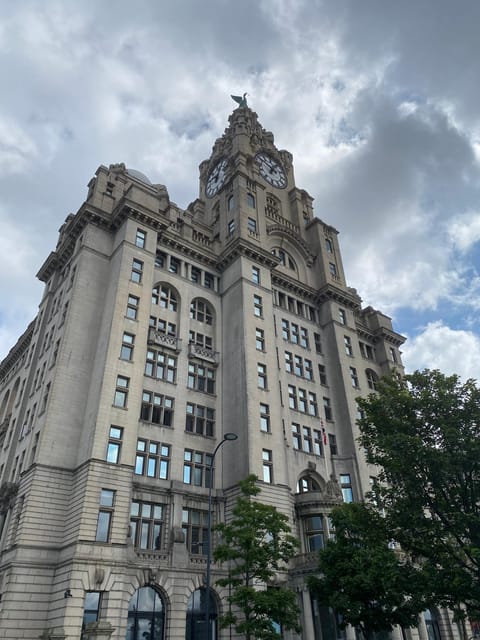
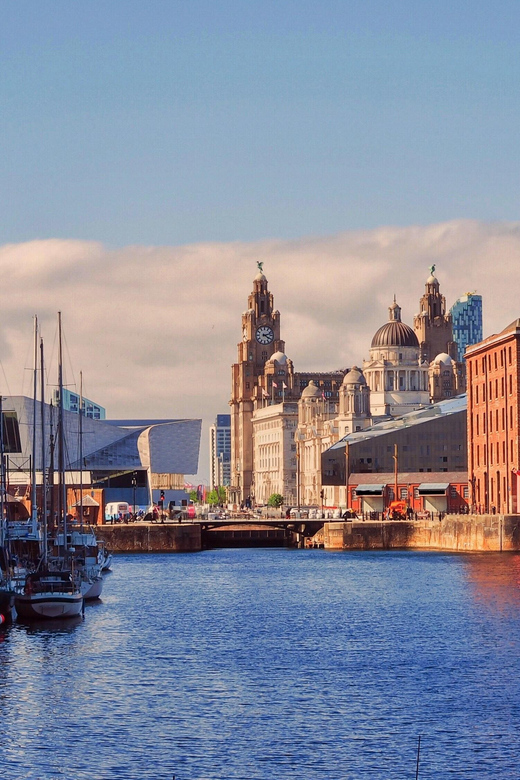
- The Three Graces up close: Learn why the Royal Liver Building and its waterfront neighbours became symbols of Liverpool.
- A route through old and new Liverpool: See the Old Dock, Royal Albert Dock, Liverpool ONE, Castle Street, and the Town Hall area in one walk.
- Plenty of questions and local tips: Guides make room for interaction and can suggest places to try local food such as scouse.
- Good value at $22: For a live, English-language overview with a guide, the price is modest, especially on a first visit.
Why this walk helps you understand Liverpool
Liverpool can look like a collection of handsome buildings, shopping streets, docks, and Beatles references until someone explains how the pieces fit. This tour gives you that connecting thread.
You begin with the city’s founding date, 1207, then follow its growth as geography and technology worked together. The Mersey gave Liverpool access to the sea, while docks, roads, canals, and rail links helped move goods and people inland. That story explains why Liverpool became so important not just to the northwest, but to Britain and its wider imperial economy.
The strongest part of the experience is the scale of the story. You are not hearing isolated facts about a church or a dock. You are shown how one change led to another, and how commerce affected architecture, work, migration, wealth, and the shape of the city.
Guides are expected to speak in English, and the best reported experiences with John describe a clear voice, dry humour, and a willingness to answer detailed questions. That matters outdoors, where traffic, wind, and city noise can make a talk hard to follow. The guide also checks that the group is keeping up, which is useful on a cold or wet day.
More History Tours in Liverpool
- Liverpool: Haunted History Guided City Tour
★ 4.9 · 404 reviews - Liverpool: St James’ Cemetery Historical Ghost Tour
★ 4.9 · 169 reviews - Liverpool: Heritage, History & Culture Guided Walking Tour
★ 4.9 · 52 reviews
Starting beside the Royal Liver Building
Meet outside the river-facing entrance of the Royal Liver Building, by the black gate. This is an easy landmark to identify on Liverpool’s waterfront, but pay attention to the exact side of the building. The meeting point is not simply any entrance to the Liver Building.
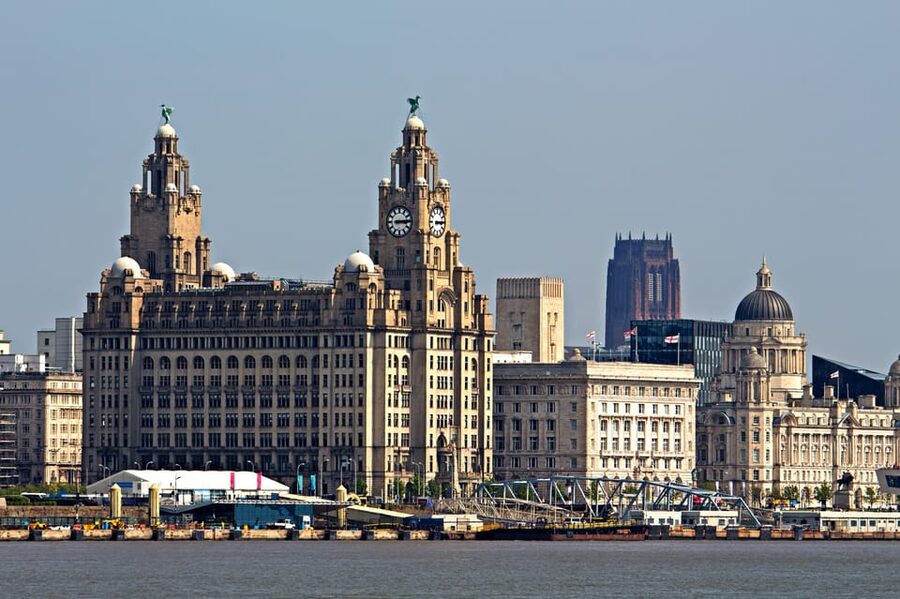
The Royal Liver Building is a fitting starting point because it introduces Liverpool at its most recognisable. You begin among the famous waterfront buildings and hear how the city’s commercial strength produced large offices, grand public spaces, and a new civic identity.
The building is part of the waterfront group often called the Three Graces. From here, your guide sets the scene for Liverpool as a port city rather than treating the waterfront as a simple photo stop.
This opening also gives you a useful orientation. You can see the river, the city centre, and the dock area, then understand how closely the city’s wealth was tied to its position beside the Mersey.
Following Liverpool from 1207 to its port-city peak
The central guided walk lasts about 110 minutes, with shorter explanations at key places along the route. The guide builds a timeline as you move, rather than keeping you in one spot for a long lecture.
That approach suits Liverpool. The city’s development is easier to grasp when you physically move between the old commercial streets, religious buildings, civic spaces, retail district, and docks. You get a sense of distance and layout, not just dates.
The story moves from the medieval town to the period when Liverpool became the second city of the British Empire. Guides connect the port to the wider economy of northern England and explain how Liverpool shaped the region.
You should expect references to maritime trade, imperial connections, rail history, and the economic changes that transformed the city. This is one of the more useful features for anyone who knows Liverpool mainly through music. The Beatles may be part of the city’s modern identity, but this walk makes clear that Liverpool’s story began many centuries earlier.
The route covers a broad time span, so some subjects receive only a short explanation. If you want detailed coverage of one theme, such as slavery, the docks, religion, architecture, or twentieth-century decline, ask questions as you go. The guides are used to handling them and can add context when time allows.
The Royal Liver Building and Liverpool Waterfront
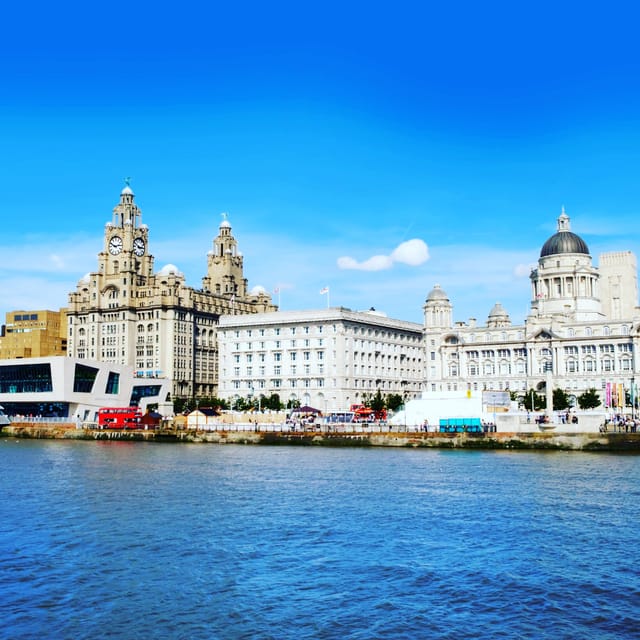
The waterfront section focuses on the Royal Liver Building and the setting around it. Your guide explains why the building matters and how the waterfront became such a powerful image of Liverpool.
This is a good place to look up. Architectural details can be easy to miss when you are focused on taking photographs or finding your way around. The tour encourages you to notice the design choices and the clues they offer about the city’s confidence during its commercial peak.
The waterfront also helps explain the relationship between city and river. Liverpool’s fortunes rose through movement: ships arrived, goods passed through, and people travelled in and out. The buildings here represent the money and institutions created by that activity.
You will spend about 20 minutes in the wider waterfront area, including the Royal Liver Building portion. The exposed setting can feel chilly, especially in winter, so wear a coat suited to standing outdoors. The walk is wheelchair accessible, but conditions on city pavements can still vary, so practical footwear is sensible.
More Walking Tours in Liverpool
- Liverpool: Beatles Highlights Walking Tour
★ 4.8 · 274 reviews - Liverpool: The Beatles and Cavern Quarter Walking Tour
★ 4.7 · 133 reviews - Liverpool: Guided City Walking Tour
★ 4.9 · 119 reviews - Liverpool: The Beatles and Waterfront Guided Walking Tour
★ 4.7 · 51 reviews
Liverpool Parish Church Gardens and Chapel Street
The route continues toward Liverpool Parish Church, also known as Our Lady and Saint Nicholas, with time in the church gardens and along Chapel Street. This section gives the tour a different mood from the commercial waterfront.
The church’s position matters because it reflects Liverpool before the modern dock frontage and office blocks took over the public image. Here, the guide places the city’s religious and civic life within its wider development.
The gardens offer a pause from the larger streets, while Chapel Street helps show how the old town connected to the river and the growing port. You are likely to hear about the city’s early foundations and the people and institutions that shaped its first centuries.
This is also a useful reminder that Liverpool was not created all at once in the age of ocean liners. Its story reaches back to a much smaller medieval settlement. The guide’s job here is to make that early period understandable without turning it into a list of dates.
Old Hall Chambers, the Town Hall, and Castle Street
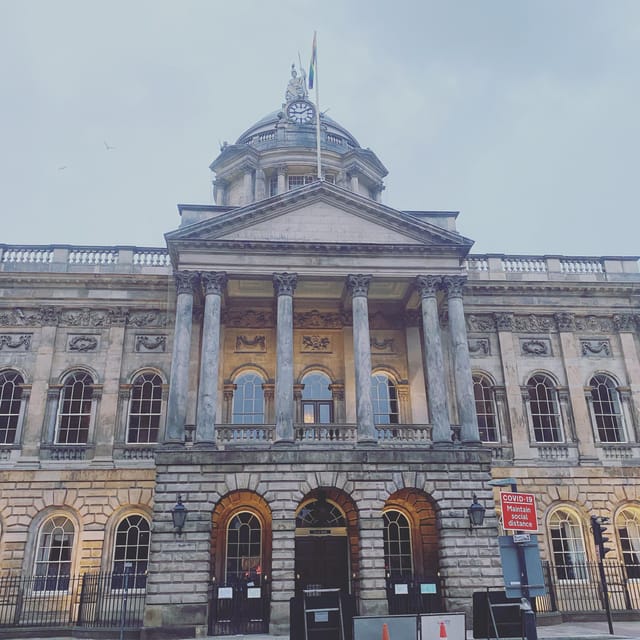
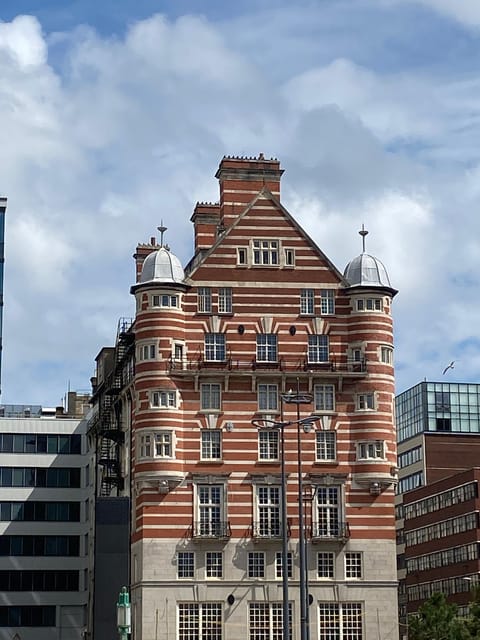
Castle Street is one of the richest parts of the route for architecture and civic history. The walk passes the Town Hall area, Old Hall Chambers, and the grand buildings that frame the street.
I especially like this section for the way it makes you look above eye level. Facades often carry the marks of a city’s ambitions, and your guide points out details you could easily walk past alone.
The Town Hall area shows Liverpool presenting itself as a powerful commercial city. The buildings here were not designed merely for practical use. Their scale and decoration reflect civic pride, wealth, and the importance of business.
Old Hall Chambers adds another layer. Instead of seeing only large landmarks, you get smaller pieces of the city’s built story. These details help make the past feel connected to ordinary streets rather than locked inside museums.
Castle Street is also the finishing point. That is practical if you want to continue into the city centre for lunch, shopping, or another attraction. One guide has suggested local places to try scouse, the traditional Liverpool stew, so it is worth asking for a recommendation at the end.
The Old Dock and Royal Albert Dock
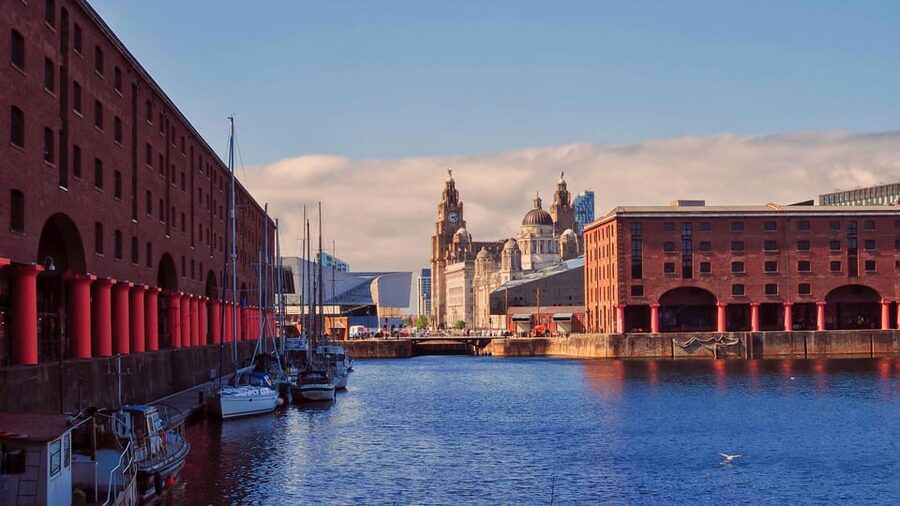
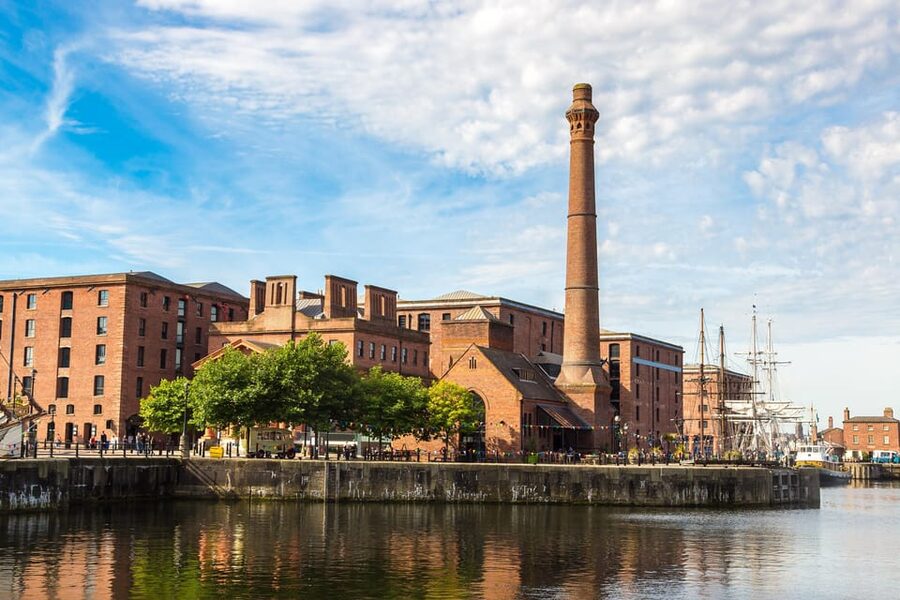
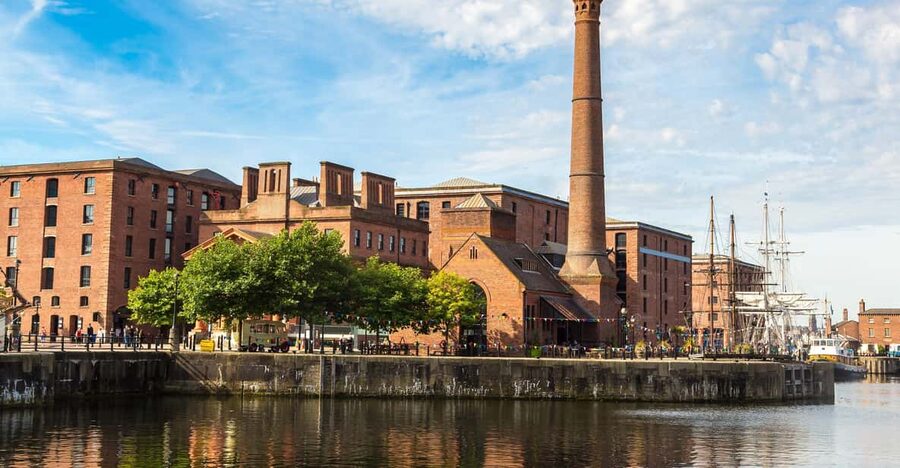
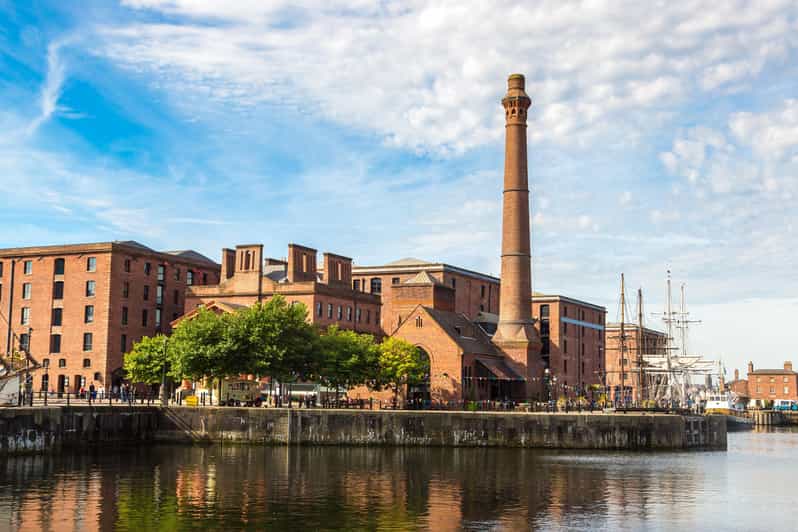
The route then reaches the Old Dock and Royal Albert Dock, two places that show different stages of Liverpool’s dock development.
The Old Dock is important because it represents an early attempt to give ships a protected place to load and unload. It helps you picture the practical problems of a growing port and the engineering changes needed to handle more trade.
Royal Albert Dock presents a later, larger vision. Its brick warehouses and dockside spaces are now part of one of Liverpool’s best-known areas, but the guide explains their original purpose before you see them simply as places for museums, restaurants, and waterfront views.
You spend about 20 minutes at the Royal Albert Dock, enough to understand its role and see the main setting without turning the tour into an inside visit. The experience is a walking tour, so entrance to museums or other buildings is not part of the price.
The dock section works particularly well for visitors who want context for Liverpool’s maritime identity. Instead of just photographing the water and warehouses, you learn how these places served the city and why their survival matters.
Liverpool ONE and the city’s modern chapter
Liverpool ONE provides a sharp contrast with the older waterfront and civic streets. This modern shopping and leisure district shows how the centre has been adapted for a new economy.
The time here is short, about 10 minutes, but the stop is useful because it keeps the story moving into the present day. Liverpool did not stop changing when its maritime power declined. The city has had to reshape former commercial areas and find new uses for central land.
The contrast between Liverpool ONE and the Old Dock is the point. Within a short walk, you see old port infrastructure, preserved warehouse architecture, and a modern retail district. The guide uses these places to show that urban history is not only about what survives. It is also about what gets replaced.
What the guides do best
The clearest strength of this experience is the guide. John is repeatedly described as warm, energetic, and able to answer questions in detail. His PhD in imperial and maritime history gives him a strong base for explaining Liverpool’s place in national and global events.
That academic background does not mean the tour feels like a university seminar. The most effective delivery combines dates with stories, connections, humour, and observations about the buildings around you. A teenager who began sceptically has been reported to become engaged, which suggests the material is presented in an approachable way.
Other guides may lead the walk, including Dave. The style can vary from person to person, but the experience is designed around a live English-speaking guide rather than an audio recording or printed route.
The guide also adds value beyond the official stopping points. You can ask about food, pubs, other places of interest, and what to see next. If this is your first time in Liverpool, those practical suggestions can be as useful as the formal history.
Is $22 good value?
At $22 per person, this is a fair price for a two-hour guided introduction. You are paying for a live guide who explains the city while you walk between major landmarks, not for entry to attractions.
The value is strongest if you are new to Liverpool or want a framework for exploring independently afterward. A good guide can save you hours of scattered reading and help you notice architectural details that would otherwise pass unnoticed.
It is less suitable if you want private attention, extensive time inside buildings, or a specialist tour focused on one subject. The route moves across several parts of the city, so the reward is breadth and connection rather than exhaustive detail.
The booking terms also reduce the risk. You can cancel up to 24 hours before the start for a full refund, and you can reserve now and pay later. Starting times vary, so check availability before planning the rest of your day.
Who should book this Liverpool history walk?
I would choose this tour for a first visit, a weekend break, or the opening morning of a longer stay. It gives you a map in your head and helps you decide which waterfront, museum, food, and music sites deserve more time.
It also suits local residents who know the city by habit but want to understand how it developed. The architecture-focused observations can change the way you see streets you have walked many times.
Families and mixed-age groups should find the format manageable, especially if children or teenagers respond well to stories and questions. The route is wheelchair accessible, and the guide can adjust the pace to suit the group, according to the information provided.
You should be comfortable walking and standing outdoors for about two hours. Bring weather protection, and remember that the tour does not include food, transport, or admission to attractions.
The bottom line: a strong first introduction
Book this walk if you want Liverpool explained as a city shaped by trade, shipping, empire, engineering, religion, civic pride, and modern redevelopment. The route gives you the waterfront icons, but it also takes you through less obvious links between old streets and new districts.
I would not choose it as your only activity if you want to explore interiors or spend a full day on one historical subject. For $22, though, it offers a well-organised foundation, a useful route, and the chance to ask a well-prepared local guide what the buildings and streets really mean.
For most first-time visitors, that is money well spent. Start at the Liver Building, listen closely around Castle Street, and ask where to find a good bowl of scouse when the walk ends.
FAQ
How much does the Liverpool history walking tour cost?
The tour costs $22 per person.
How long does the tour last?
The walking tour lasts two hours.
Where does the tour start?
Meet outside the entrance of the Royal Liver Building, at the black gate on the side facing the river.
Where does the tour finish?
The tour finishes on Castle Street.
What language is the tour conducted in?
The live tour is conducted in English.
Who leads the walking tour?
The tour is led by an academically trained local guide. John is one of the guides and holds a PhD in imperial and maritime history. Dave has also led this experience.
What is included in the price?
The price includes the guide and the walking tour.
Is the tour wheelchair accessible?
Yes, the activity is listed as wheelchair accessible.
Can I cancel for a refund?
Yes. You can cancel up to 24 hours in advance for a full refund.
Can I reserve the tour and pay later?
Yes. You can reserve your place and pay nothing at the time of booking.
More History Walks around Liverpool
- Liverpool: Theatrical History Tour and The Dead House
★ 4.9 · 37 reviews - History Guided Tour of Liverpool and the Beatles
★ 4.9 · 14 reviews - Liverpool Heritage,History & Culture Walking Shore Excursion
★ 5.0 · 3 reviews - Inspirational Women: Liverpool Past/Present History Tour
★ 5.0 · 3 reviews
Just added around Liverpool
- Ultimate Beatles Ticket to Ride Half Day -Small Groups★ 4.9 · 37 reviews
- THE HANGOVER BRUNCH | Benidorm Bingo & Drag Queens★ 4.5 · 15 reviews
- Soulful Sunday Roast Dinner with Drag Queens★ 4.6 · 3 reviews
- Liverpool: Private City Highlights Walking Tour★ 5.0 · 4 reviews
- From Liverpool: North Wales Sightseeing Tour Shore Excursion★ 4.3 · 34 reviews
- Liverpool: 1980s Music Walking Tour with Guitarist “Nasher”★ 5.0 · 6 reviews
- Liverpool: The Beatles Tour on Electric Pedal-Assist Ebikes★ 5.0 · 17 reviews
- Liverpool: Total Beatles Car Tour Casbah & Cavern Clubs★ 5.0 · 3 reviews
Historical Tours, compared.


J&M’s City Sightseeing and History Walking Tour
Read our review →Browse the lists this tour appears in