
Reviewed · HISTORICAL TOURS
Liverpool: Theatrical History Tour and The Dead House
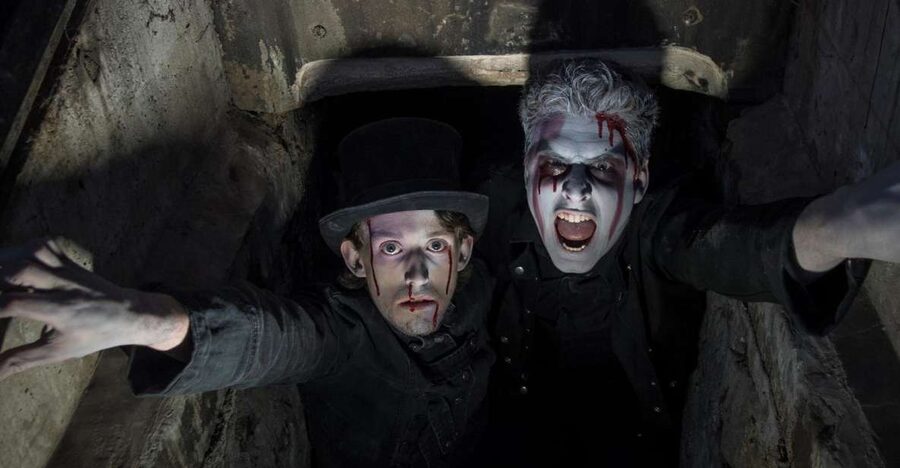
Liverpool’s most unusual history lesson ends underground, in the old Dead House beneath the Church of Our Lady and St. Nicholas. After walking through the city’s first seven streets, you descend through a trapdoor into a former morgue where, in past centuries, people peered through iron grates at the faces of the dead.
I like two things right away. The guides use theatre, not just facts, so the walk has jokes, character work, audience participation, and a few well-timed frights. I also like the route itself, which reaches crooked lanes, old civic buildings, and parts of the historic centre that are easy to miss on a standard city walk. The main drawback is practical: the underground finish is dark, uneven, and not suitable for wheelchair users or anyone with limited mobility.
Key things to know before booking
- The Dead House is the finale: You enter a subterranean morgue that has been closed to the public for more than a century.
- The walk covers Liverpool’s original seven streets: The route links major landmarks with old lanes and less familiar corners.
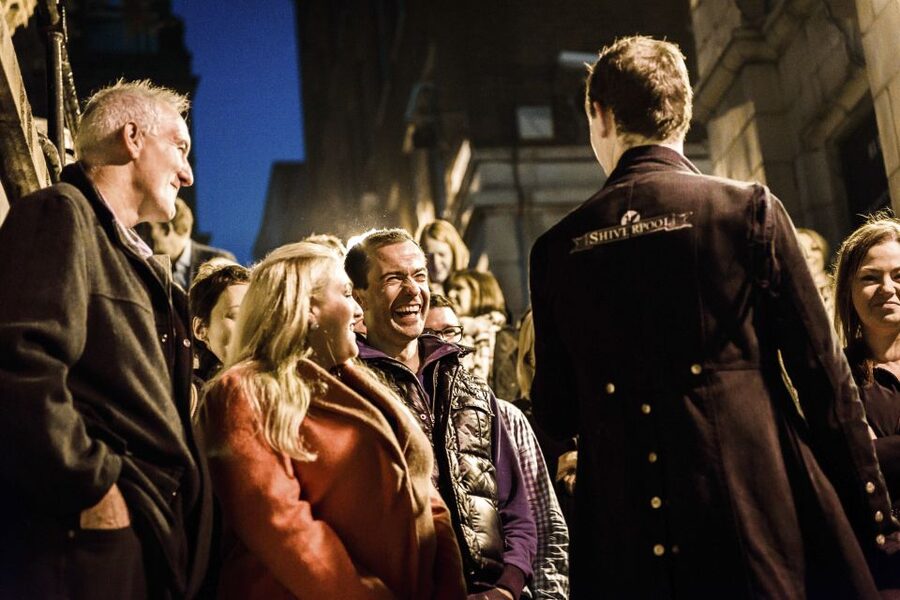
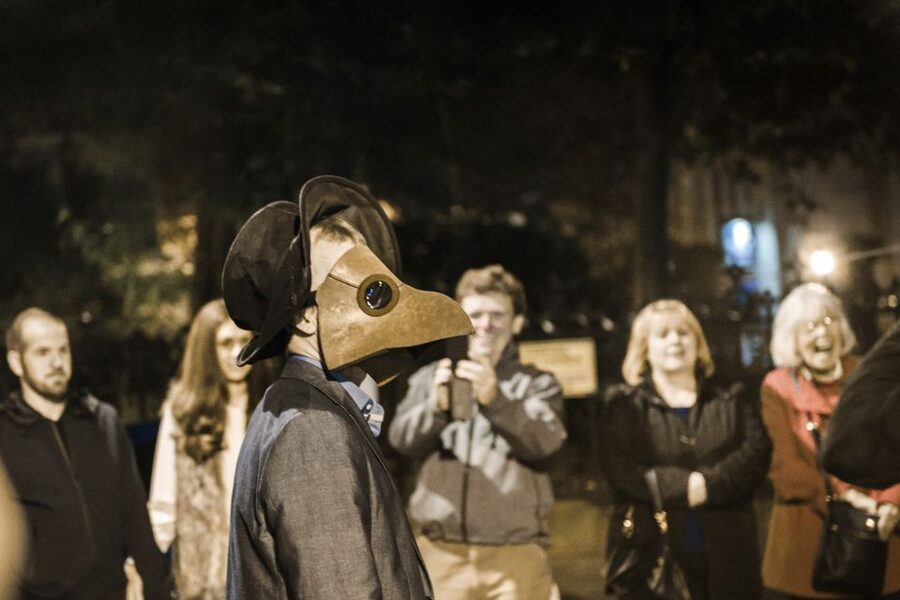
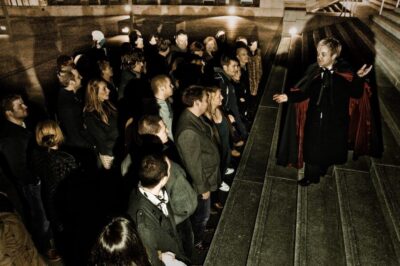
- Expect theatre rather than a quiet lecture: The guides perform stories, involve the group, and use humour alongside darker material.
- Bring your own torch: Torches are not supplied, and you need one for the underground section.
- The tour lasts 90 minutes: It begins at the Queen Victoria Monument in Derby Square and finishes at 5 Old Churchyard.
- The price is $26 per person: For a short guided walk with access to a normally closed site, that is a fair price if you enjoy live performance and unusual history.
Why the Dead House makes this tour different
Liverpool has no shortage of walking tours, but few finish in a place as grimly specific as this one. The Dead House was used as a temporary police station during World War II, yet its earlier purpose was far more unsettling. In the 18th and 19th centuries, local people could look through iron grates and see the faces of bodies held there.
The American author Hermann Melville gave the place its memorable name, Liverpool Dead House, because of its gruesome character. That detail adds a literary thread to the visit, but the real appeal is physical. You are not simply hearing that Liverpool once had harsh conditions and difficult customs. You are standing in the setting itself.
The location sits within the quiet grounds of Our Lady and St. Nicholas Church, under a Gothic spire. The contrast matters. Above ground, you are near the city centre and its traffic, offices, and shops. Below ground, the mood changes quickly. The final descent is designed as a theatrical reveal, so the guides build anticipation before you reach the morgue.
This is not presented as a polished museum display. It is a historic underground place entered at your own risk, with limited light and an intentionally eerie atmosphere. That makes it memorable, but it also means you should take the safety information seriously.
More History Tours in Liverpool
- Liverpool: Haunted History Guided City Tour
★ 4.9 · 404 reviews - Liverpool: A Walk Through Time: Full History Walking Tour
★ 4.8 · 184 reviews - Liverpool: St James’ Cemetery Historical Ghost Tour
★ 4.9 · 169 reviews
Starting at Queen Victoria Monument in Derby Square
The meeting point is the Queen Victoria Monument in Derby Square. This is a useful central starting place, and the tour then moves on foot through Liverpool’s old core.
You will want comfortable shoes. The walk is only 90 minutes, but the route includes back lanes, lamp-lit passages, and the final underground section. The supplied information does not give a group size, so I would not book this expecting an intimate private walk. The experience depends on a guide performing to a group, and audience participation is part of the fun.
The opening section sets up the city’s early street plan. Liverpool’s original seven streets are the backbone of the walk, giving the tour a clear sense of place rather than sending you randomly from one spooky tale to another. I like that approach because it ties the strange stories to the shape of the city.
You are not only hearing about old Liverpool. You are seeing how the original centre developed around its streets, civic buildings, commercial spaces, and churchyard. The guides use street theatre to make the past feel close at hand, so expect them to address the group directly and play up the darker details.
Castle Street and the city’s grand public face
One stop brings you to Castle Street, known for its lofty banking halls. This part of the route shows a different Liverpool from the narrow lanes and death stories.
The tall banking buildings suggest money, trade, and civic confidence. Their grand scale helps explain the contrast running through the tour: Liverpool’s centre could look prosperous and imposing, while life in the same city could be cramped, dangerous, and grim.
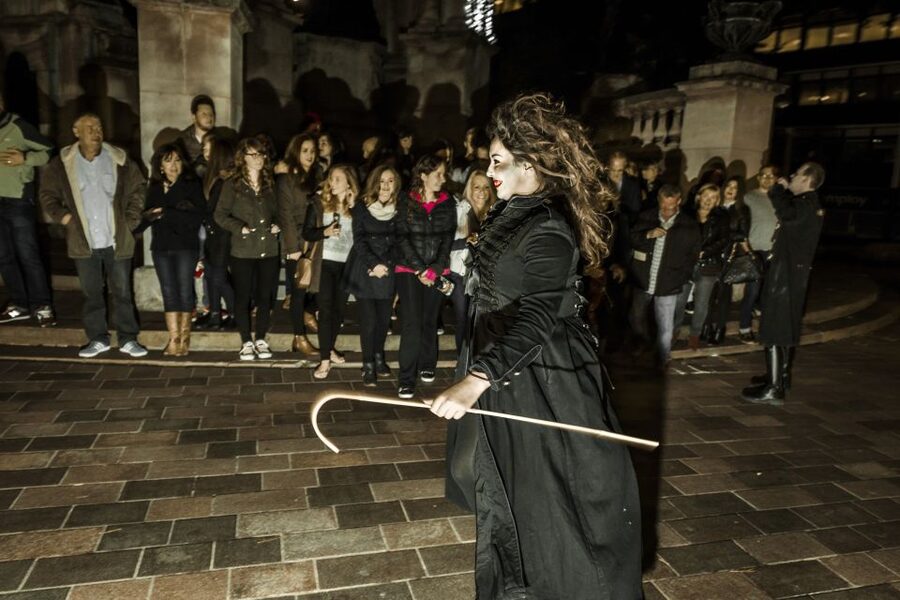
The guides’ theatrical style works well here. A conventional guide might point out a façade and give you a date. A performer can use the setting as part of a scene, then shift the mood as the group heads toward darker stories. The reviews consistently praise the guides’ humour, timing, and ability to keep people involved, and this is the sort of route where that energy helps.
You should not expect a detailed architectural tour of every banking hall. The focus is the story of the street and the people connected with it. If your main interest is interiors, art, or financial history, the stop may feel brief. If you enjoy seeing how grand buildings fit into a more complicated city story, it adds useful context.
Liverpool Town Hall and the city’s grandest contrast
Liverpool Town Hall is one of the route’s main landmarks. Its regal opulence gives the walk a civic centrepiece before the route turns back toward alleys and less formal spaces.
The Town Hall helps you read the city in layers. Public buildings project order and authority. The Dead House, back lanes, and old stories reveal what happened away from the official façade. I find that contrast more effective than a tour made up only of ghost tales because it gives the spooky material a real setting.
The stop is described as a guided visit from outside rather than an interior tour, so plan on seeing the building as part of the street route. The guide’s performance remains the focus. You might hear a factual account, then see it reshaped through comic delivery, dramatic voices, or a moment aimed directly at the audience.
That mix explains the high rating of 4.9 from 37 reviews. The strongest praise is not simply for the subject matter. It is for the two guides’ delivery, their friendly manner, and their ability to make the group laugh while still telling a coherent story. If you prefer a silent, academic walk, this may feel too showy. If you like history with a live performance attached, the Town Hall section should suit you.
A few more Liverpool days worth weighing up
- Liverpool: Liverpool Football Club Museum and Stadium Tour
★ 4.8 · 10,764 reviews - Liverpool: City & Beatles Tour with Live Guide & Live Music
★ 4.8 · 5,249 reviews - Liverpool: The Beatles Story Ticket
★ 4.7 · 4,197 reviews - Liverpool: Sightseeing River Cruise on the Mersey River
★ 4.4 · 3,427 reviews
Nelson Monument and the turn into older Liverpool
The route also reaches the Nelson Monument. From there, the walk continues through more of the historic centre, with short sections of five, ten, fifteen, and twenty-five minutes between stops.
Those timings suggest a compact route with frequent changes of scene. That is helpful if you lose interest on long lectures. You keep moving, and each location gives the performers a new backdrop.
The less familiar corners are a major part of the appeal. One review described the tour as a good way to find unknown places in Liverpool, while another noted that even someone who thought they knew the city learned new facts. That is useful advice for local residents as well as first-time visitors. You do not need to be a ghost-tour regular to get something from the route.
The guides also interact with people passing by, according to one account. That can make the walk feel lively and spontaneous, though it means the experience is not entirely controlled. Street theatre works best when you enjoy a little public attention and do not mind the occasional pause or distraction.
Crooked lanes, lamp-lit passages, and theatrical humour
The tour’s middle section leads through crooked back alleys and lamp-lit lanes in the modern commercial centre. This is where the route’s mood shifts from grand civic Liverpool to the cramped, uncertain city suggested by the stories.
The humour is important. The tour has grisly material, but it is not described as relentlessly frightening. The guides use wit, audience participation, and comic exchanges to keep the mood from becoming too heavy. Several reviews praise the double act and the way the actors bring the stories to life, while one person wished there had been more ghost stories.
That criticism gives you a fair picture. The experience is best understood as theatrical local history with spooky touches, not as a pure paranormal investigation. You will hear strange and unsettling stories, but the emphasis is on characters, performance, and the city’s past.
The format also suits groups celebrating together. One review came from a hen party that found the guides gripping and entertaining, and other comments describe the event as a memorable night out. Families can attend, but all children must be accompanied by an adult, and unaccompanied minors are not allowed.
The final approach to Our Lady and St. Nicholas Church
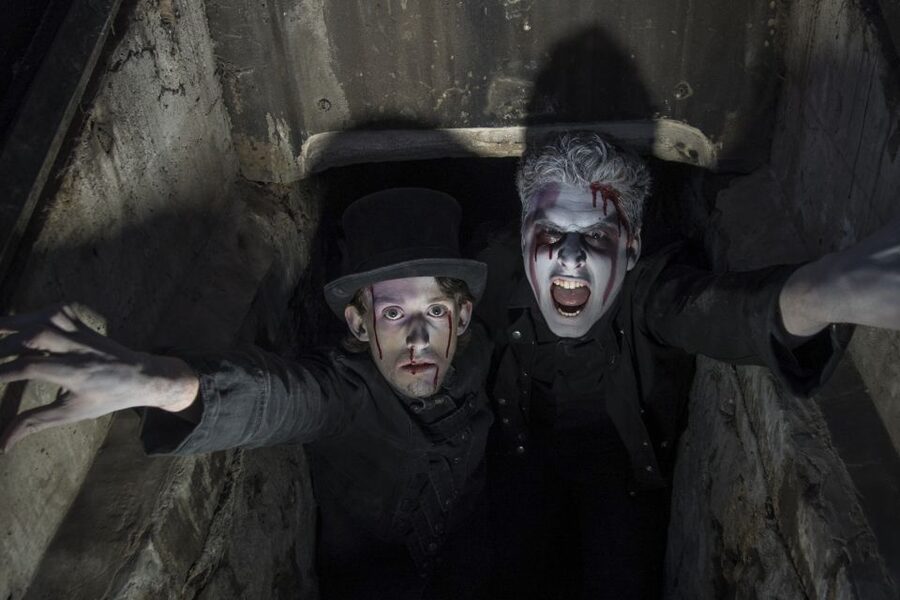
The final walk ends within the boundary of a medieval garden, beneath the Gothic spire of Our Lady and St. Nicholas Church. This setting provides a strong change from the central streets.
You should pay attention as the group approaches the finish. The guides build the story toward the underground entrance, and the atmosphere depends on that gradual change. The churchyard is quiet compared with the main streets, and the trapdoor entrance gives the finale a physical sense of occasion.
This is also where the tour becomes less forgiving. You need your own torch, and the underground site is not open to the public in the usual way. Participants enter at their own risk. The experience is not wheelchair accessible and is not recommended for people with limited mobility, visual impairments, or a delicate disposition.
Guide dogs only are permitted, and smoking, vaping, and electronic cigarettes are forbidden. Those rules are easy to follow, but the torch requirement is worth highlighting. Do not assume your phone light will be enough. Bring a proper small torch so you can see the steps and footing.
Inside the Liverpool Dead House
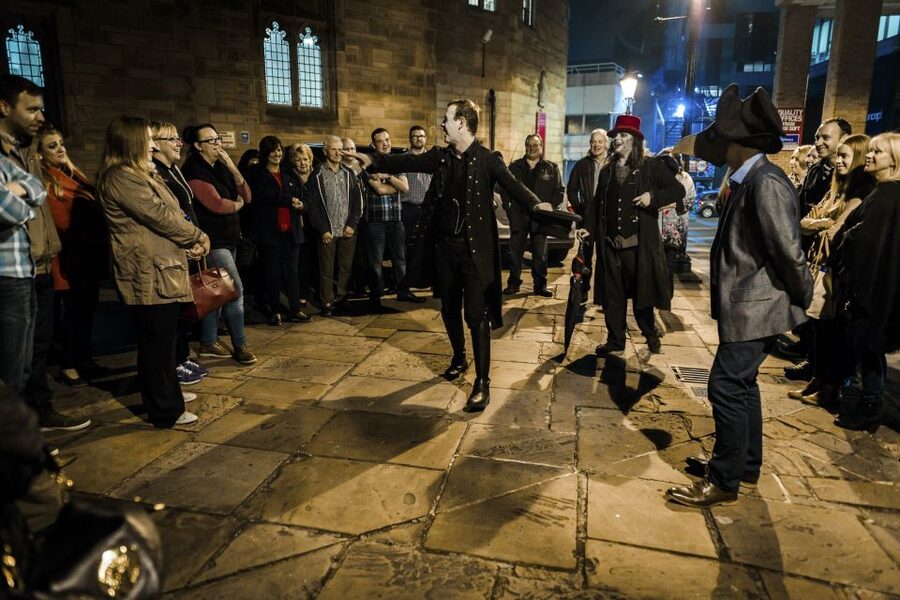
The Dead House is the reason to choose this tour over a standard historic walk. Its use as a temporary police station during World War II is an unexpected detail, but the earlier practice of displaying bodies makes the place truly unsettling.
The iron grates are central to the story. In the 18th and 19th centuries, locals came to look through them at the faces of the deceased. That custom gives the location a disturbing public history. Death was not kept behind the polished doors of a modern facility. It was placed close to daily life, where curiosity, grief, and spectacle could meet.
The guides turn the visit into a performance. Reviews describe a sombre mood, dramatic build-up, audience involvement, and a frightening ending. One person particularly praised the view of the Mersey and the Liver Building during the experience, an unusual detail that links the old underground space with Liverpool’s modern skyline.
Do not expect a long museum-style visit with cases and labels. The Dead House is the setting for the finale, and the actors create the mood through storytelling and staging. The visit is likely to appeal most to you if you enjoy atmosphere and live performance more than a large collection of objects.
The experience can also be physically awkward. The supplied details warn about darkness, mobility limits, and personal risk. I would avoid this booking if stairs, uneven ground, or low light are difficult for you. The warning about delicate dispositions is not just playful wording. The subject is death, and the finale aims to unsettle you.
What $26 buys you
At $26 per person, the tour offers two elements that are not always combined: a 90-minute theatrical city walk and access to a normally closed underground site.
The value is strongest if you would otherwise pay for a conventional walking tour and separately seek out an evening entertainment option. You get a route through the original seven streets, major landmarks such as Town Hall and the Nelson Monument, live performance, and the Dead House entrance.
It is less good value if you want a long, detailed architectural lecture or a quiet historical survey. The route is short, and the theatrical style means some information is delivered for effect rather than in a formal sequence. Refreshments are not included, and you must supply your own torch.
The tour’s strongest feature is access. The Dead House has remained closed to the public for more than a century, so this is not a sight you can simply add to a normal Liverpool itinerary. I would consider the price reasonable for that unusual finish, especially for couples, friends, and families with older children who enjoy a little drama.
Free cancellation up to 24 hours before the start and the option to reserve now and pay later make the booking less risky. Starting times vary, so check availability for the date you want.
Who will enjoy this Liverpool tour most
I would book this for:
- First-time visitors who want a short introduction to Liverpool’s old centre
- Local people who want unfamiliar stories and streets close to home
- Fans of ghost walks, live theatre, and audience participation
- Groups looking for a funny, slightly macabre evening activity
- Families with children who can manage the walk and underground setting
- Visitors who prefer stories and character work to a formal museum talk
I would think twice if you use a wheelchair, have limited mobility, are visually impaired, or dislike confined and dark spaces. The tour is also conducted in English, so you need enough English to follow the guide’s stories and jokes.
The no-smoking rule includes vapes and electronic cigarettes. That is worth knowing if you are planning this as part of a longer evening out.
Should you book The Dead House tour?
Book it if you want Liverpool history delivered with theatrical humour and a memorable final location. The guides are praised for being funny, friendly, professional, and effective at getting the group involved. The route offers civic buildings, old streets, odd stories, and a rare look below a Gothic church.
Do not book it expecting a pure ghost hunt, a long academic lecture, or easy access for everyone. The tour is theatrical, not subdued. The Dead House is dark and potentially unsettling, and you must bring a torch.
For $26, I think it is a strong choice for an evening in Liverpool, especially if you have already seen the main waterfront sights and want something stranger. Wear sensible shoes, arrive ready to participate, and treat the underground warnings seriously. That combination will give you the best chance of enjoying the city’s grisly side without unpleasant surprises.
FAQ
Where does the tour begin?
The tour begins at the Queen Victoria Monument in Derby Square, Liverpool.
Where does the tour finish?
It finishes at 5 Old Churchyard, Liverpool L2 8GW, within the grounds of the Church of Our Lady and St. Nicholas.
How long does the tour last?
The tour lasts approximately 1.5 hours, or 90 minutes.
What language is the tour conducted in?
The live tour guide speaks English.
Is access to The Dead House included?
Yes. Exclusive access to The Dead House is included in the tour price.
Do I need to bring a torch?
Yes. You must bring your own torch because torches are not provided.
Is the tour wheelchair accessible?
No. The tour is not wheelchair accessible, and it is not suitable for wheelchair users.
Can children attend?
Yes, the activity is family-friendly, but every child must be accompanied by an adult. Unaccompanied minors are not allowed.
Is smoking allowed?
No. Smoking, vaping, and the use of electronic cigarettes are strictly prohibited.
Can I cancel for a refund?
Yes. You can cancel up to 24 hours in advance for a full refund. You can also reserve now and pay later.
More History Walks around Liverpool
- Liverpool: Heritage, History & Culture Guided Walking Tour
★ 4.9 · 52 reviews - History Guided Tour of Liverpool and the Beatles
★ 4.9 · 14 reviews - Liverpool Heritage,History & Culture Walking Shore Excursion
★ 5.0 · 3 reviews - Inspirational Women: Liverpool Past/Present History Tour
★ 5.0 · 3 reviews
Just added around Liverpool
- Ultimate Beatles Ticket to Ride Half Day -Small Groups★ 4.9 · 37 reviews
- THE HANGOVER BRUNCH | Benidorm Bingo & Drag Queens★ 4.5 · 15 reviews
- Soulful Sunday Roast Dinner with Drag Queens★ 4.6 · 3 reviews
- Liverpool: Private City Highlights Walking Tour★ 5.0 · 4 reviews
- From Liverpool: North Wales Sightseeing Tour Shore Excursion★ 4.3 · 34 reviews
- Liverpool: 1980s Music Walking Tour with Guitarist “Nasher”★ 5.0 · 6 reviews
- Liverpool: The Beatles Tour on Electric Pedal-Assist Ebikes★ 5.0 · 17 reviews
- Liverpool: Total Beatles Car Tour Casbah & Cavern Clubs★ 5.0 · 3 reviews
Historical Tours, compared.

J&M’s City Sightseeing and History Walking Tour
Read our review →Browse the lists this tour appears in