
Reviewed · JACK THE RIPPER TOURS
London: The Original Jack the Ripper Walking Tour
Jack the Ripper’s crimes still draw people into Whitechapel, but the best part of this walk is not simply guessing the killer’s name. It is seeing how poverty, crowded streets, poor policing, sensational newspapers, and Victorian social rules shaped the case. You follow real crime scenes while an expert guide sorts fact from later legend.
I like the focus on the victims and their lives, rather than treating the murders as a cheap horror show. I also like the use of photographs, suspect theories, and local history, which gives the walk more substance than a string of grisly stories. The main drawback is the subject itself: graphic details and visual material make this unsuitable for children under 12 and uncomfortable for some adults.
Key points at a glance
- Two hours through historic Whitechapel: Walk from Altab Ali Park to the Ten Bells Pub, with stops around Mitre Square, Brick Lane, and Spitalfields.
- Victorian context matters: Learn how poverty and daily life in 1880s Whitechapel shaped the investigation and public reaction.
- Guides make the difference: Martin Cheng, Nic, Ivan, Bettina, Gabby, Anna, Marisol, and others have been praised for clear storytelling and lively group interaction.
- Evidence, not just theory: Examine photographs and hear why suspects have been proposed, while separating what is known from what remains uncertain.
- Expect graphic content: The tour discusses murder scenes in detail and may show disturbing images.
- Good value at $25: For two hours of guided history in central London, the price is fair, especially if you want a focused evening activity.
Starting beside Altab Ali Park

Meet at the west entrance to Altab Ali Park, beside the large iron arch on the corner of White Church Lane and Whitechapel High Street. The guide carries a blue flag, and Aldgate East is the nearest Underground station.
This meeting point puts you directly in the old Whitechapel district. You are not beginning with a long transfer or a theatrical indoor presentation. From the first minute, you are on public streets where modern London sits over the lanes, shops, churches, markets, and lodging houses of the late 19th century.
The park is small, so arriving a little early will help you spot the group. Check the exact start time when booking, since the tour runs at different times depending on availability. Wear shoes suited to two hours on pavement and bring clothing for the forecast. The walk takes place outdoors from beginning to end.
The route is generally manageable. There are no stairs or many steep inclines, but public paths can have uneven or variable surfaces. If you have limited mobility, consider that the group will be standing and walking through active East End streets.
More Walking Tours in London
- Magical London: Harry Potter Guided Walking Tour
★ 4.7 · 22,044 reviews - London: Harry Potter Movies Walking Tour (Kids Go Free)
★ 4.7 · 3,071 reviews - London: The Great British Rock and Roll Music Walking Tour
★ 4.9 · 1,783 reviews
Christ Church and the world of 1888
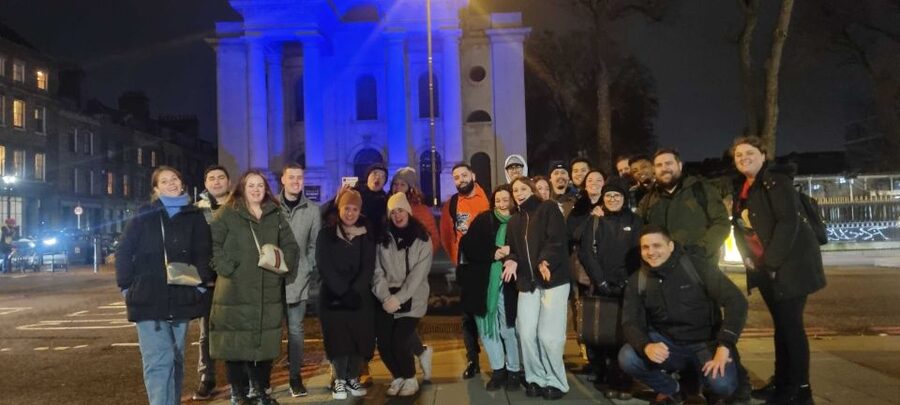
Christ Church Spitalfields is passed during the walk rather than entered. Even so, it helps frame the social divide of Victorian London. The church is a powerful landmark beside streets that once held some of the area’s worst poverty.
Your guide uses places like this to explain more than the murders. You hear about everyday Whitechapel, the pressures faced by poor women, the lack of reliable police methods, and the way newspapers turned an unsolved case into a national obsession.
This broader setting is one reason I would choose the tour even if I already knew the basic Jack the Ripper story. The guide is not only asking who committed the crimes. You are also asked why Whitechapel was chosen, what life was like there, and how the case exposed serious problems in London society.
The strongest guides keep the emphasis on real people. Anna, for example, was praised for keeping the mood light without losing respect for the murdered women. Marisol was noted for giving attention to the victims’ lives and the conditions around them. That balance matters. A walking tour about murder can easily become tasteless, but this experience aims to place the women back into the story as people rather than just names in a case file.
Spitalfields Market and Brick Lane
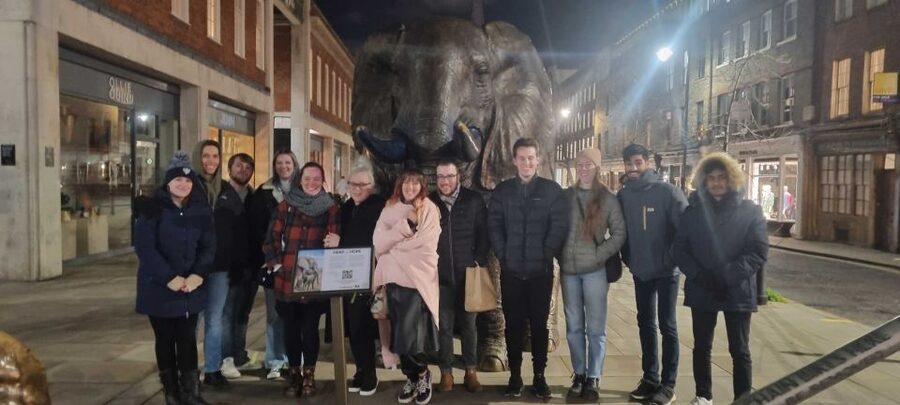
The route passes Old Spitalfields Market and continues toward Brick Lane. These are now well-known East End sights, with food, shops, street art, and a very different social character from the district of 1888.
That contrast is useful. You can look at the present-day streets while hearing how the area once worked. The guide may point out how streets and landmarks relate to the old investigation, but do not expect every Victorian building to survive unchanged. Modern London has replaced much of the physical setting.
Brick Lane adds local character to the route. It is also a reminder that Whitechapel and Spitalfields have never been frozen in one period. The neighborhood has changed through migration, trade, religion, and redevelopment. The walk uses the Jack the Ripper case as an entry point, then widens the view to London’s changing East End.
Guides often use photographs to show what the area looked like in the past. That visual comparison can be more helpful than a lecture alone. It lets you picture cramped streets and the scale of the old neighborhood while standing in places that may now look entirely ordinary.
The modern streets can be noisy. One visitor specifically praised guide Andrew for making himself heard above East End traffic, and that is a practical point worth considering. Stay close enough to the guide to hear the evidence and explanations. The group may pause in busy public areas, so the back of the crowd may miss a detail if you drift too far behind.
Mitre Square and the case evidence
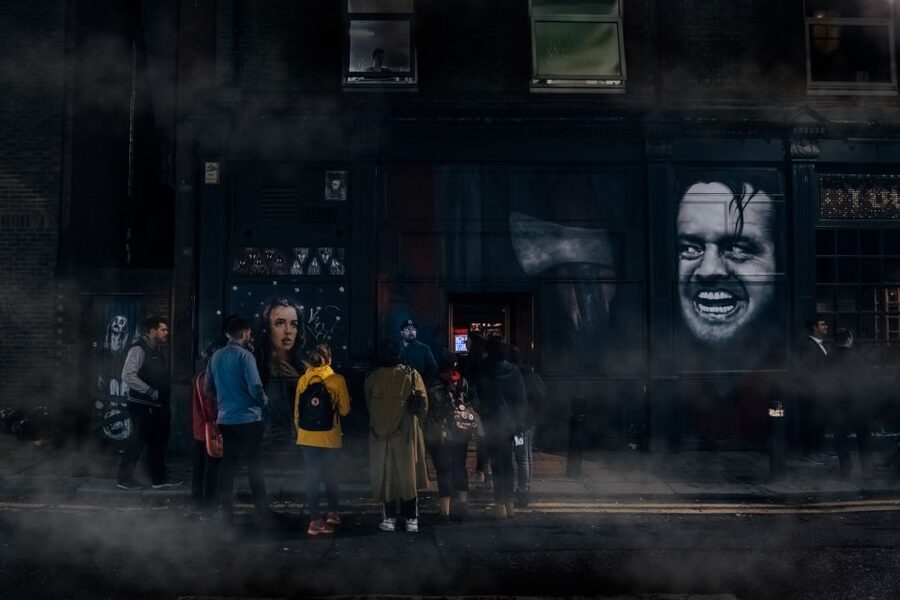
Mitre Square is one of the most important stops. Here, the guide connects the physical location with the investigation and explains where evidence was found or discussed.
This is where the walk becomes part history lesson, part case analysis. You hear about alleged perpetrators, the clues linked to them, and the theories that still circulate. The guide also explains how close police may have come to identifying or catching the killer.
Do not expect a final answer. The crimes remain unsolved, and a good guide makes that uncertainty part of the point. Matthew praised Bettina for stressing what is known rather than what is not. That is the approach I would want: clear evidence first, theory second.
The photographic material can be graphic. The supplied information warns that the tour contains disturbing visual content, and one group specifically noted that some images were gruesome. If you are interested in criminal investigation but dislike crime-scene imagery, you may want to ask the guide in advance how much of the visual material is shown.
Mitre Square also shows why a walking format works. A book can describe a location, but standing in the space gives you a better sense of distance, access, and visibility. You can think about how investigators, witnesses, and newspaper reporters might have experienced the place in 1888, without pretending that the modern surroundings are unchanged.
More Jack the Ripper walks after dark:
- London: Jack the Ripper Small Group Tour
★ 4.7 · 3,159 reviews - German Language : Original Jack the Ripper Tour
★ 4.6 · 1,805 reviews - London: Jack the Ripper Walking Tour – Ripper Vision Tours
★ 4.5 · 1,752 reviews - London: Jack the Ripper Evening Walking Tour
★ 4.9 · 1,449 reviews
Petticoat Lane and the everyday East End
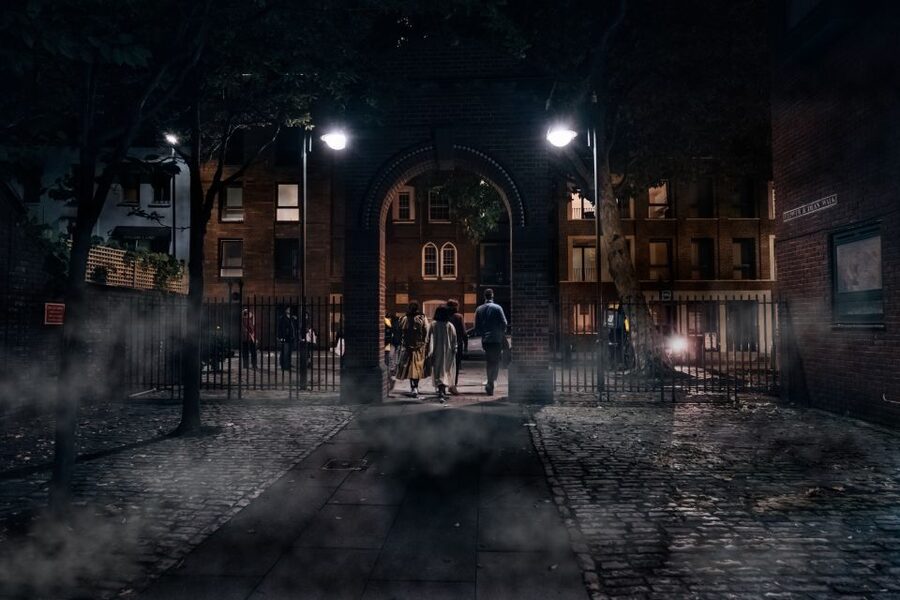
Petticoat Lane is another stop on the route. Like Brick Lane and Spitalfields Market, it connects the murder case with the East End as a living part of London.
The guide explains the district’s working life and poverty, giving you a picture of how ordinary people moved through the area. This context is important because the murders did not happen in a remote or sealed setting. They occurred in a crowded urban neighborhood where many people lived close together, yet where poor lighting, limited policing, and social vulnerability made investigations difficult.
The exact balance between crime details and local history depends on your guide. Guides such as Ivan, Gabby, Nic, and Martin Cheng have been praised for combining facts about suspects with wider information about 19th-century London. Nic was also singled out for drawing in people who knew little about the case as well as those who arrived with strong prior interest.
The tour includes questions and group discussion. That can make the walk more engaging, but it may slow the pace if many people want to debate the suspects. One participant felt some questions were too difficult for the group and that answers could sometimes have been given more quickly. If you prefer a tightly scripted presentation, keep this in mind. If you enjoy testing theories aloud, you will probably appreciate the interaction.
The Ten Bells and the final discussion

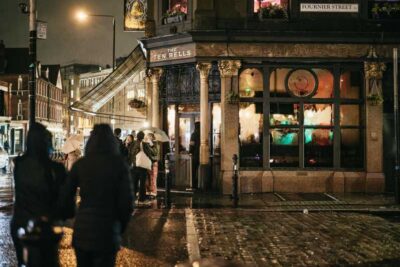
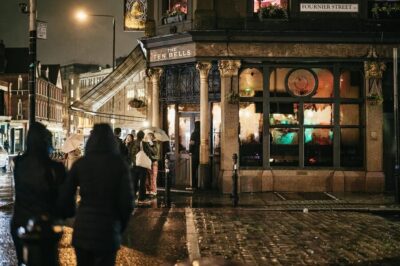
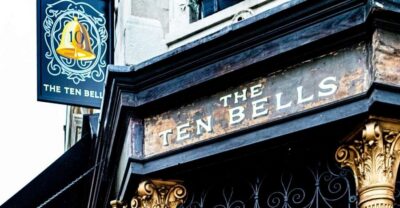
The walk finishes at the Ten Bells Pub in Spitalfields. The pub is closely linked with the Jack the Ripper story and makes a fitting final point, though food and drinks are not included.
The ending is more than a sign-off. The guide brings together the evidence, suspects, police work, newspaper coverage, and competing explanations. Several people have praised the final talk, including one person who found the historical learning especially strong.
You may finish with a favorite suspect, but you should also leave knowing why the case cannot be settled easily. That is the value of a skilled Ripperologist guide. Martin Cheng has been praised for covering victims, suspects, and key figures without becoming overly theatrical. Gabby has been praised for explaining suspects clearly and keeping the group engaged. Other guides, including Christophe, Jack, and Marisol, have been noted for adding humor and extra stories without losing the subject’s seriousness.
The pub itself is a natural endpoint, but do not confuse the finish with an included pub visit. Your ticket covers the two-hour walk and guide only. If you want a drink afterward, plan to pay separately and check the pub’s current arrangements.
The guides are the real variable
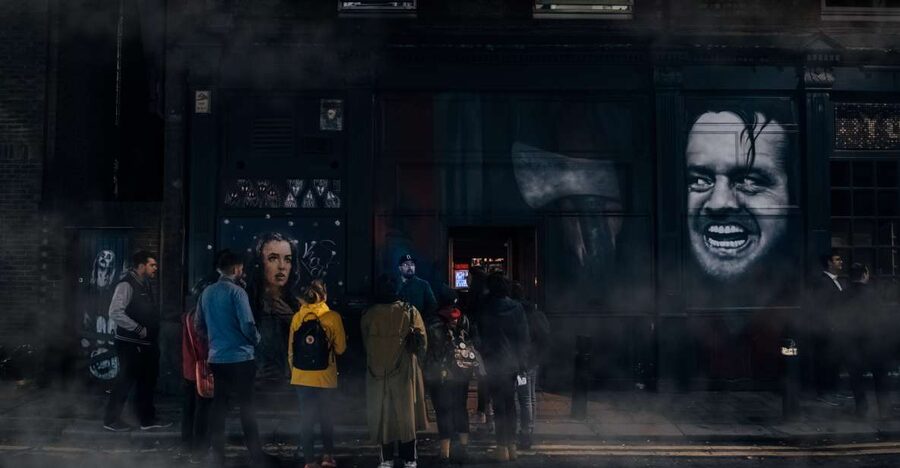
The route is fixed, but the guide shapes the experience. The strongest feedback consistently centers on clear speaking, strong facts, good pacing, and the ability to answer questions.
Martin Cheng has been praised for his detailed delivery and atmospheric presentation. Nic is often described as an excellent storyteller who makes the two hours pass quickly. Ivan has been praised for friendly, accurate explanations and a focus on correcting old myths. Bettina is noted for answering questions and keeping the material lively.
Gabby, Anna, Marisol, Gemma, Christophe, Jack, and Andrew have also received strong praise for their own styles. Some guides use a little costume or humor. Others take a more direct, evidence-led approach. You cannot usually choose your guide, so book this as a well-established experience rather than a particular individual performance.
The activity is offered in English, Spanish, Italian, French, and German. A multilingual option is useful, but confirm the language available for your chosen departure. The guide leads the group outdoors, so you should be able to hear clearly and stay reasonably close.
The overall rating is 4.7 from 7,833 reviews, which points to a dependable product, though it does not remove the usual variation between guides and group sizes. A busy group may feel less personal, while a smaller group may allow more questions. The supplied information does not promise a specific group size, so do not book expecting a private walk.
What the $25 price buys you
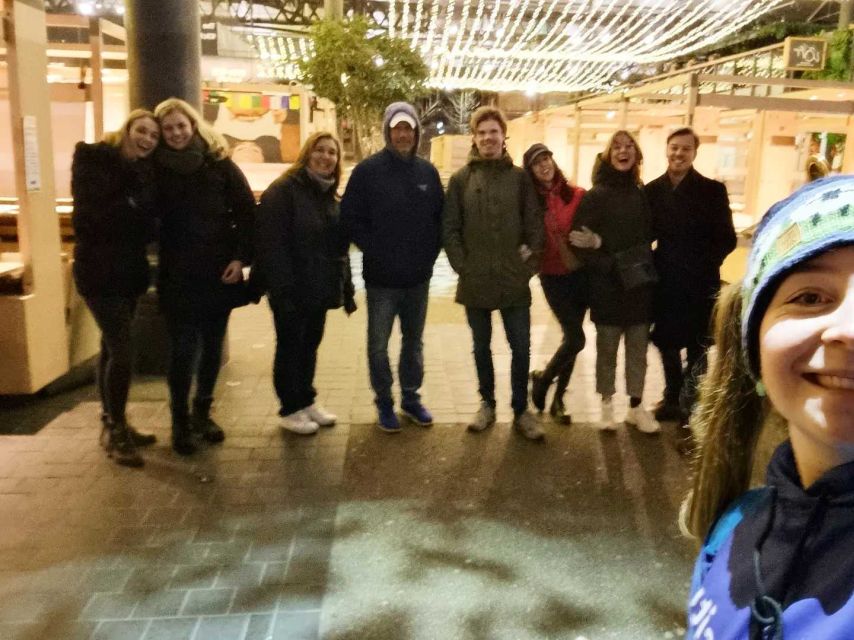
At $25 per person, this is fairly priced for a two-hour guided walk in London. You are paying for a specialist subject, a planned route, visual material, and someone who can connect the murder case to Whitechapel’s social history.
The value is strongest if you want structure. You could walk Brick Lane, Spitalfields, and Mitre Square alone, but you would not automatically know which places matter, how the evidence fits together, or which popular stories are doubtful. A guide saves you research time and gives the neighborhood a clear thread.
The price is less attractive if you want a quiet architectural walk or a general tour of East London. This is a focused true-crime experience. Much of the time goes to murder details, suspects, police work, and theories. It includes several local landmarks, but it is not designed as a broad sightseeing tour.
There is no food or drink included. That keeps the base price simple, and the finish at the Ten Bells gives you a chance to continue the evening on your own if you wish.
Who should book this Whitechapel walk?
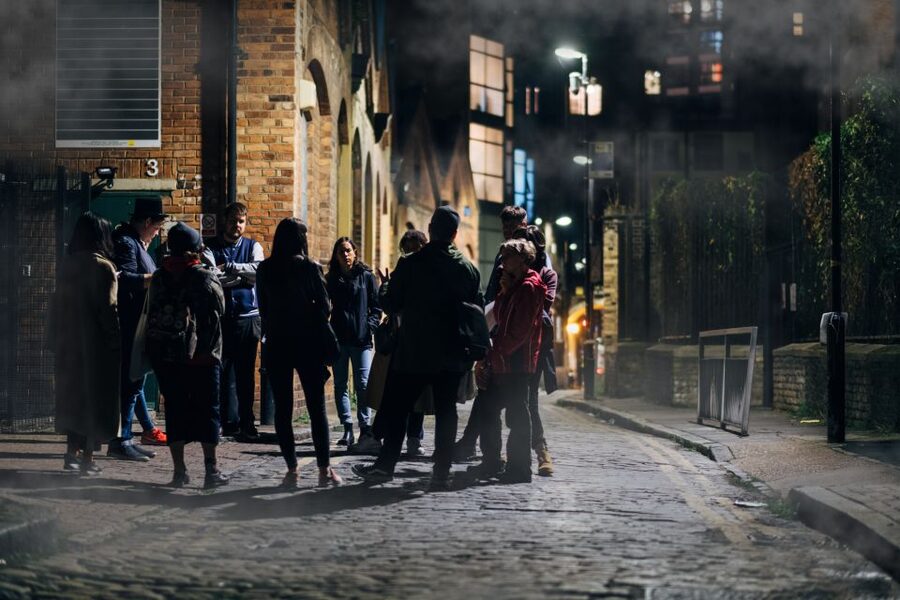
I would recommend it to adults interested in true crime, Victorian society, London history, or the development of detective fiction. It also suits mixed-interest groups because the guide discusses Sherlock Holmes and the cultural setting that helped shape enduring Victorian detective stories.
You do not need prior knowledge. One person who knew almost nothing about Jack the Ripper enjoyed the tour, while another arrived as an expert and still found new details. That range is a good sign. The guide builds the case step by step rather than assuming you already know every suspect and date.
The tour can also work for families with older teenagers. Participants under 18 must be accompanied by an adult, and the activity is not suitable for children under 12. Since the material includes graphic descriptions and images, parents should decide based on the individual child, not simply the stated age.
You may want to skip it if you dislike graphic crime stories, prefer indoor activities in bad weather, or want a tour with guaranteed access to historic interiors. You may also find the group discussion frustrating if you prefer no audience participation.
Practical ways to enjoy the two hours
Arrive at the Altab Ali Park entrance with enough time to find the large iron arch and blue flag. Aldgate East is the nearest Underground station, and the meeting point is on White Church Lane and Whitechapel High Street.
Wear comfortable shoes. The route has no stairs or many inclines, but it uses public paths with varying conditions. The activity is wheelchair accessible, though people with limited mobility should be prepared for outdoor surfaces and a continuous walking format.
Dress for the weather. Cold, rain, and wind can make a two-hour outdoor talk feel much longer, even when the guide is excellent. There is no indoor shelter built into the experience.
Keep your phone and camera use discreet during the explanations, especially when the guide is discussing victims or displaying sensitive material. The subject is historical, but the human cost should not get lost beneath the mystery.
The cancellation policy is flexible: you can cancel up to 24 hours before the tour for a full refund. You can also reserve now and pay later, which helps if your London schedule is still shifting.
Should you book it?
Book this walk if you want a well-organized, fact-led look at Jack the Ripper and the East End, and if you can handle graphic material. The victim-centered approach, strong guide feedback, and mix of crime evidence with Victorian social history make it more worthwhile than a simple hunt for spooky photo spots.
Skip it if you want a general tour of London, dislike gruesome images, or need an indoor activity. At $25, the value is good for two hours, but the experience depends heavily on enjoying the subject and getting a guide whose style suits you. For true-crime fans and curious visitors who want to see Whitechapel through its most troubling chapter, it is a solid evening choice.
FAQ
How long is the Jack the Ripper walking tour?
The tour lasts two hours.
Where does the tour start?
It starts at the west entrance to Altab Ali Park, beside the large iron arch on the corner of White Church Lane and Whitechapel High Street.
How do I identify the guide?
The guide will be holding a blue flag.
Which Underground station is closest?
Aldgate East Station is the nearest Underground station.
Where does the tour finish?
The walk finishes at the Ten Bells Pub in Spitalfields.
Which places are included on the route?
The route includes or passes Christ Church Spitalfields, Old Spitalfields Market, Mitre Square, Brick Lane, Petticoat Lane, and the Ten Bells Pub.
What languages are available?
The tour is offered in English, Spanish, Italian, French, and German. Check the available language for your selected start time.
Is the tour suitable for children?
Children under 12 are not permitted. Anyone under 18 must be accompanied by an adult, and the tour includes graphic details and visual content.
Is the tour wheelchair accessible?
Yes, the activity is wheelchair accessible. It takes place outdoors on public paths with varying conditions, so people with limited mobility should take that into account.
What should I bring?
Bring comfortable shoes and clothing suited to the weather. Food and drinks are not included.
Just added around London
- London: Wimbledon Tennis Club and Westminster Walking Tour★ 4.5 · 86 reviews
- London: Westminster to Richmond River Thames Cruise★ 4.8 · 23 reviews
- Westminster Abbey Skip-the-Line Entry and Private Tour★ 4.6 · 4 reviews
- Best of London by LE GRAND – London’s Luxury Bus Tour★ 4.2 · 23 reviews
- London: Westminster Walking Tour & St Paul’s Cathedral Entry★ 4.7 · 7 reviews
- From London: Oxford, Stratford-upon-Avon & Cotswolds Trip★ 4.5 · 64 reviews
- From London: Warwick, Oxford, Stratford & Cotswolds Day Tour★ 4.0 · 270 reviews
- Churchill’s Wartime London Walking Tour★ 4.3 · 4 reviews
Jack the Ripper Tours, compared.
German Language : Original Jack the Ripper Tour
Read our review →
Jack the Ripper Walking Tour – Ripper Vision Tours
Read our review →

French Language : Original Jack the Ripper Tour
Read our review →
Browse the lists this tour appears in