
Reviewed · BIRMINGHAM TOURS
Birmingham: Victorian Canals and Modern-Day Birmingham Tour
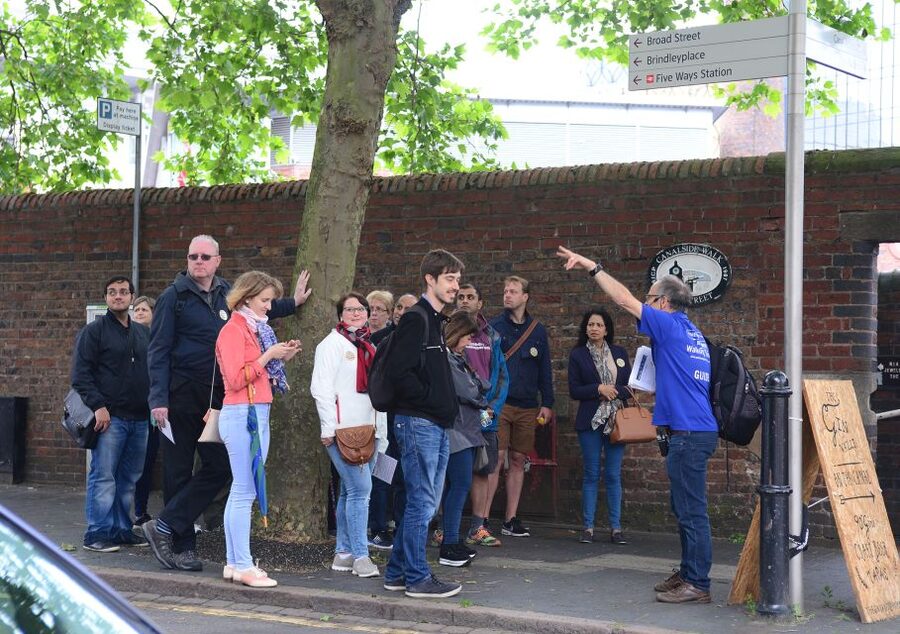
Birmingham’s canals are the key to understanding the city. This two-hour walk links the rejuvenated waterways with grand civic squares, modern concert halls, public art, and the industrial story that helped shape Britain. I especially like the way the route connects the canal opening in the 1770s with Birmingham’s later Victorian improvements. The city becomes more than a collection of buildings.
I also like the loaned audio receiver, which helps you hear the guide above traffic and city noise, and the way the walk treats modern Birmingham as seriously as its Victorian past. Guides such as Jonathan and Michael Harrison bring plenty of energy and specialist knowledge. The main drawback is simple: this is an outdoor walk of about 3 kilometers, and cold wind or rain can make the two hours feel longer.
Key points to know before you book
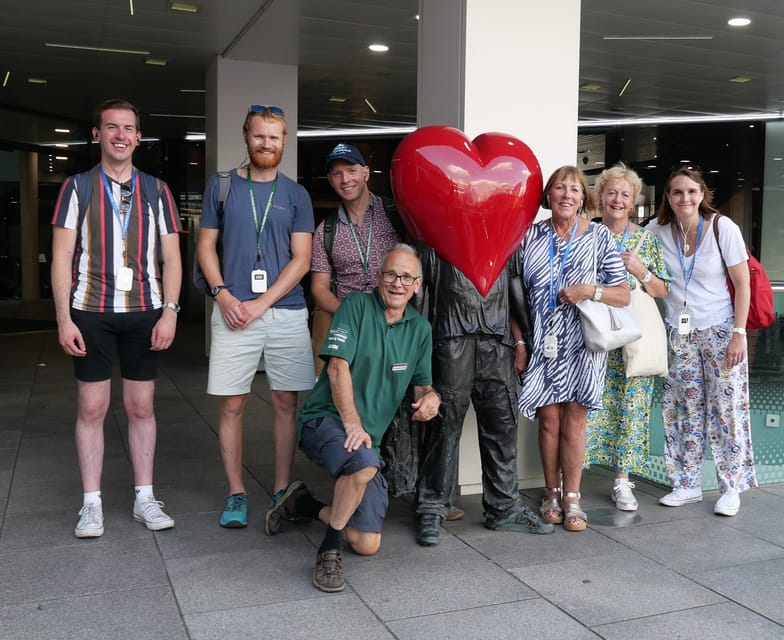
- The canal story anchors the tour: Learn why James Brindley’s canal connection in the 1770s mattered to Birmingham’s growth.
- Four central squares shape the route: Stop at Centenary, Oozells, Victoria, and Chamberlain Squares.
- Modern and Victorian Birmingham share equal billing: Expect public art, contemporary buildings, civic projects, and industrial-era architecture.
- Live commentary is easier to follow: A loaned audio receiver helps you hear the guide while walking in a spread-out group.
- The walk covers 3 kilometers in two hours: It is manageable for most walkers, but weather matters.
- You get more than a city introduction: The discussion includes the Civic Gospel, clean water, education, housing reform, and Birmingham’s role in the Industrial Revolution.
Starting at the Library of Birmingham
The meeting point is the front entrance of the Library of Birmingham in Centenary Square. Look for the small pop-up stand that usually marks the spot. This is a sensible starting place because the library, the square, and the surrounding buildings immediately show how Birmingham mixes old ambition with new design.
Centenary Square provides the first lesson. Public art here hints at the city’s past, while the buildings around it point to Birmingham’s present-day strength in arts, culture, business, and public life. You are not simply walking from one historic building to another. The guide uses the square to explain how the city has repeatedly rebuilt and redefined itself.
The Library of Birmingham also sets the tone for the tour’s architectural theme. The route asks you to compare periods rather than admire one era in isolation. If you usually find city architecture hard to read, this opening helps because the guide explains what the buildings are trying to say about Birmingham.
A few more Birmingham days worth weighing up
- Birmingham: Cadbury World Entry Ticket
★ 4.4 · 230 reviews - Birmingham: Slogging Gangs Guided Walking Tour
★ 4.2 · 216 reviews - From Birmingham: Cotswolds Full-Day Tour
★ 4.7 · 215 reviews
Symphony Hall and the International Convention Centre
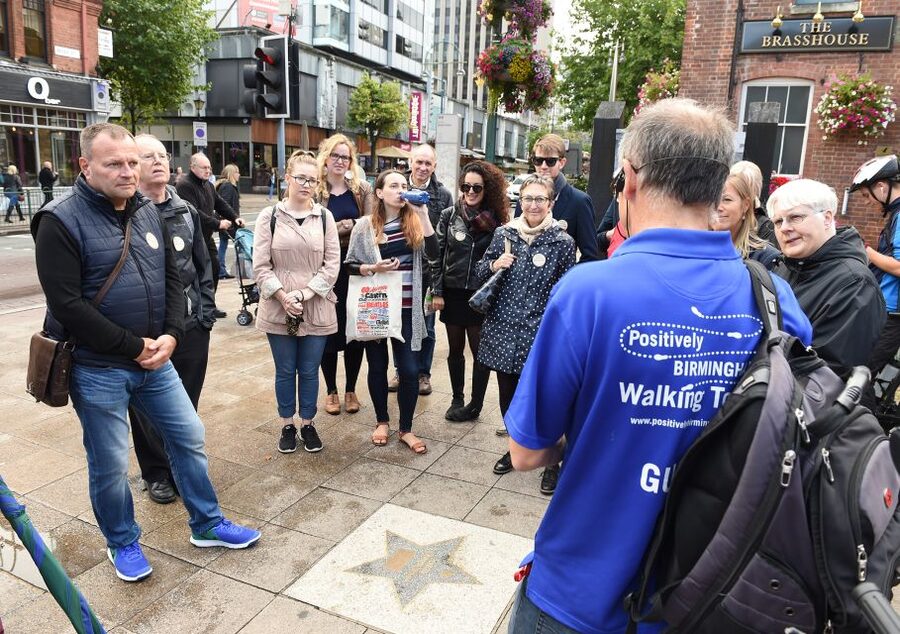
From Centenary Square, the walk passes through the International Convention Centre toward Symphony Hall. This section brings Birmingham’s modern cultural role into focus.
Symphony Hall is known for its fine concert-hall acoustics, and the guide explains why the building matters rather than treating it as a quick photo stop. The International Convention Centre adds another layer, showing how this part of the city has been shaped for conferences, performance, and public events.
I like this early shift from civic square to cultural complex. It prevents the walk from becoming a narrow industrial history lesson. You see a city that once grew through manufacturing and trade, then made room for music, education, conferences, and public gathering.
The guide also helps tie these uses together. Birmingham’s story is not only about what happened two or three centuries ago. It is also about how the city uses its central spaces now. That balance is one reason the tour works well as a first look at Birmingham.
Following James Brindley’s canal into Birmingham
The most important historical turn comes with the canals. James Brindley’s canal connection into Birmingham in the 1770s was a major event for the town. The waterways provided a practical route for moving goods and helped fuel the city’s growth during the Industrial Revolution.
You will see sections of these canals in their renewed form, with older industrial infrastructure given new uses. The water is not presented as a decorative feature added for visitors. It is treated as part of the machinery that helped Birmingham become an important commercial and manufacturing center.
This is where the tour gives you a useful sense of cause and effect. Instead of hearing that Birmingham became an industrial powerhouse and then moving on, you learn how transport links supported that rise. The canal helps explain why the city grew and why its central areas developed as they did.
The modern canal setting also gives the walk a welcome change of pace. After busy squares and major public buildings, the water provides a calmer route through the center. Still, do not expect a long canal cruise or a countryside walk. This is a city tour, and the canal appears as one important thread in a wider story.
Brindleyplace and the Victorian city
The route continues through Brindleyplace, where the old canal setting meets newer development. This is one of the clearest places to see how Birmingham has reused and reshaped its central spaces.
Here the guide turns toward the Victorian effort to make the growing town cleaner, healthier, and better organized. The discussion includes the Civic Gospel and the Municipal Revolution, with attention to education, clean water, and the removal of poor-quality housing.
That subject matter gives the tour more substance than a list of dates and famous buildings. You hear about the practical problems created by rapid urban growth and the civic response to them. Birmingham’s development was not only about factories and canals. It also involved arguments over public health, housing, learning, and the responsibilities of local government.
I find this section especially useful if you want to understand Victorian cities as working communities rather than postcard scenes. The walk shows both ambition and difficulty. The Victorians wanted Birmingham to become a model for others, but that goal grew from real problems that needed urgent attention.
Same city, a completely different sort of afternoon:
- Birmingham: Winterbourne House and Garden Admission Ticket
★ 4.7 · 199 reviews - From Birmingham: Stonehenge & Bath Day Tour
★ 4.6 · 158 reviews - Birmingham: Guided City Center Walking Tour (10:30am & 2pm)
★ 4.8 · 147 reviews - Alton Towers Resort: Entrance Ticket
★ 4.2 · 96 reviews
Oozells Square and the changing canal district
Oozells Square is one of the named stops along the route. It helps show how canal-side areas can change function over time. Industrial waterways that once supported trade now sit beside public spaces, restaurants, offices, and cultural sites.
The tour does not reduce this change to a simple story of old versus new. Instead, you look at how different architectural styles and public uses sit together. The canal remains part of the city’s identity, but the surrounding district has been adapted for modern life.
This is a good place to pay attention to the guide’s commentary rather than rushing ahead for photographs. The audio receiver lets you keep moving while still hearing the explanation, which is useful when the group spreads out along the path.
The equipment is a small but important practical advantage. City streets can be noisy, and one person’s voice can disappear quickly in traffic or wind. The receiver makes it easier to follow the live talk without standing shoulder to shoulder with the guide.
Victoria Square and Birmingham’s civic face
Victoria Square brings the focus back to Birmingham’s civic center. Along with Chamberlain Square, it shows how the city presents its public identity through open spaces, monuments, architecture, and institutions.
The guide uses these squares to explain the relationship between municipal pride and practical reform. The Victorian city wanted grand public buildings, but it also needed clean water, better housing, and a stronger education system. The square becomes a place where those aims meet.
You will also look at the way newer buildings have been fitted into the center. The walk encourages you to compare materials, shapes, and purposes across several periods. It is a useful approach because Birmingham can sometimes appear visually uneven if you look at each building alone. With context, the mix becomes easier to understand.
Victoria Square is likely to appeal to anyone interested in public art and architecture. The tour does not focus only on famous monuments. It considers how art and design influence the way people experience a city center.
Chamberlain Square and modern Birmingham
Chamberlain Square completes the sequence of major public spaces. It reinforces the tour’s central idea: Birmingham is a city that keeps changing while carrying visible traces of its earlier ambitions.
The walk returns to the Library of Birmingham, making the route circular and convenient. You finish where you began, with a better sense of how the canals, cultural buildings, civic squares, and public art fit into one urban story.
This final section is also useful for planning the rest of your time in Birmingham. One guide pointed out places to eat and other landmarks worth visiting, and the tour’s broad coverage gives you several ideas for follow-up exploring. Since the route stays within the central city, you can use it to get your bearings quickly without committing half a day.
The guides make the history accessible
The guide is the heart of this experience. Jonathan is repeatedly praised for his humor, warmth, energy, and ability to answer questions during the walk. That matters because the route covers serious subjects, including industrial growth, municipal reform, architecture, and public health.
A guide like Jonathan can also adjust the pace and presentation to the group. One particularly useful feature is the way he connects Birmingham’s story to the places people come from. That can make the city feel less remote, especially if you are new to the West Midlands.
Michael Harrison brings a different strength. He is described as a former history of architecture lecturer, which suits a walk built around changing styles and city development. If your main interest is buildings, public spaces, and the ideas behind urban design, his background adds real value.
The provider is Positively Birmingham, and the walk is charity-based rather than a standard profit-focused tour. The price is $20 per person, which I consider fair for two hours of live guidance, the audio equipment, and a tourist guide book. It is especially good value if you use the walk to choose where to spend the rest of your day.
Weather, walking, and practical comfort
The route covers 3 kilometers over two hours. That is not a hard distance, but the pace includes regular stops for explanations, so you should wear comfortable shoes and be ready to stand outdoors.
Weather is the main factor to consider. Cold wind has made the walk uncomfortable for some people, even when the guide kept the group engaged. A participant in February noted that Jonathan adapted effectively to changeable weather, which is reassuring, but no guide can make an exposed square or canal path feel warm.
Bring headphones for the audio receiver. The equipment is loaned to you, and it helps separate the commentary from city noise. Check the starting time when booking, since availability varies.
The activity is in English only. Free cancellation is available until 24 hours before the start for a full refund, and you can reserve now and pay later. Those policies are useful if your Birmingham plans are still shifting, but the key decision is still the walking format. This is not a bus tour or a museum visit. You spend two hours outside, moving between stops.
Who will get the most from this walk?
I would recommend this tour to first-time visitors who want a clear introduction to central Birmingham without spending a full day indoors. It also suits people who enjoy architecture, public art, industrial history, or the story of how cities manage rapid growth.
It can work surprisingly well for local residents, too. The route includes details that are easy to miss when you pass through the center for shopping, work, conferences, or train connections. One local participant had lived in Birmingham for years and still found the walk worthwhile.
Families with older children may enjoy the mix of canals, public spaces, and large modern buildings, though the tour’s historical discussion will suit children who can stay focused for two hours. It is also a good choice for solo visitors because the guide provides structure and context while you walk.
I would think twice if you dislike outdoor walking, want a small specialist architecture seminar, or have very limited tolerance for poor weather. The tour covers a lot, so some stops receive an introduction rather than a long study. Its strength is breadth and connection.
Is $20 good value?
At $20, the tour sits in an appealing price range for a two-hour city walk. You receive a live English-speaking guide, a loaned audio receiver, and a tourist guide book. The route also covers several distinct parts of Birmingham, from the library and Symphony Hall to canals, Brindleyplace, and four major squares.
The value improves if you are new to the city. A good introduction can save you time by showing which buildings, canals, and public spaces deserve a closer look later. The guide may also point out places to eat and other landmarks, adding practical use beyond the scheduled walk.
The price will feel less attractive if you already know central Birmingham very well and only want a narrow topic. Even then, the architecture and civic reform sections may reveal details you have missed. The strong overall rating of 4.7 from 92 reviews supports the idea that the experience delivers consistently, but the weather remains a real part of the calculation.
Should you book Victorian Canals and Modern-Day Birmingham?
Book it if you want Birmingham explained through its canals, civic squares, public art, and changing architecture. The route is compact, the cost is reasonable, and guides such as Jonathan and Michael Harrison give the city a human voice.
I would choose a dry or mild day if possible, bring headphones and comfortable shoes, and keep the rest of your day flexible so you can revisit the places that catch your interest. If you want a practical first look at Birmingham with enough history to make the buildings meaningful, this tour is an easy choice. If you need indoor shelter or a very slow, single-subject tour, choose something else.
FAQ
Where does the Birmingham walking tour start?
The tour starts at the front entrance of the Library of Birmingham in Centenary Square. A pop-up stand usually marks the meeting point.
Where does the tour finish?
The walk returns to the Library of Birmingham.
How long is the tour?
The guided tour lasts two hours.
How far do you walk?
The total distance is approximately 3 kilometers.
What language is the tour conducted in?
The live tour guide commentary is in English.
Is an audio device provided?
Yes. An audio receiver is loaned to help you hear the live guide commentary above city noise. You should bring headphones.
Which Birmingham places are included?
The route includes Centenary Square, Oozells Square, Victoria Square, Chamberlain Square, the canals, the International Convention Centre, Symphony Hall, and Brindleyplace.
How much does the tour cost?
The listed price is $20 per person.
Can I cancel or pay later?
You can cancel up to 24 hours in advance for a full refund. You can also reserve now and pay later.
Just added around Birmingham
- Birmingham: City Center Highlights Private Guided Tour★ 5.0 · 4 reviews
- MATRIX VR – Virtual Reality Gaming Experience Session – 1hr★ 4.9 · 7 reviews
- From Birmingham: Stonehenge & Bath Day Tour★ 4.6 · 158 reviews
- Digbeth, Public art and Peaky Film Guided Walking Tour★ 4.7 · 11 reviews
- Birmingham : Must-see Attractions Private Walking Tour★ 5.0 · 3 reviews
- Birmingham: Guided City Center Walking Tour (10:30am & 2pm)★ 4.8 · 147 reviews
- Birmingham: Legoland Discovery Centre Entry Ticket★ 4.1 · 74 reviews
- Birmingham: Cadbury World + SEA LIFE + LEGOLAND Discovery★ 5.0 · 5 reviews
Birmingham Tours, compared.

Guided City Center Walking Tour (10:30am & 2pm)
Read our review →

Browse the lists this tour appears in