
Reviewed · MUSEUMS
London: Natural History Museum Guided Tour
The biggest thrill here is the chance to meet Sophie the Stegosaurus, one of the most complete stegosaurus skeletons ever found, then move on to fossils, gemstones, space rock, and plaster casts from Pompeii. In a museum holding about 80 million specimens, a guide helps you find the pieces that matter most.
I like the tour’s tight two-and-a-half-hour format, which gives you a focused introduction rather than an exhausting museum marathon. I also like the mix of subjects: dinosaurs and volcanoes for the big visual punch, then Darwin, a 1,300-year-old Giant Sequoia, and rocks from the Moon and Mars for a wider view of science.
The main drawback is value. At $93 per person, this is a serious spend for a museum visit, and the experience may feel basic if you already know a lot about dinosaurs, volcanoes, gems, or earthquakes. One booking also had a major problem when the guide did not appear, so I would keep your confirmation details handy.
Key points at a glance
- Sophie the Stegosaurus: See one of the world’s most complete stegosaurus skeletons, a strong centerpiece for dinosaur fans.
- A 1,300-year-old Giant Sequoia: Study a huge cross-section of a tree that was already ancient when it was cut down.
- Pompeii’s plaster casts: Encounter casts of people killed by the eruption of Mount Vesuvius.
- Darwin and Archaeopteryx: Connect a first edition of On the Origin of Species with the famous fossil often linked to the bird-dinosaur story.
- Moon and Mars rock: Pair earthly geology with samples from beyond Earth, along with fine gemstones.
- Private or small-group format: Ask for a guide such as Sasha or Wesley if available, both of whom have earned especially strong praise for engaging families and keeping the pace lively.
Why a guided visit helps in an 80-million-specimen museum
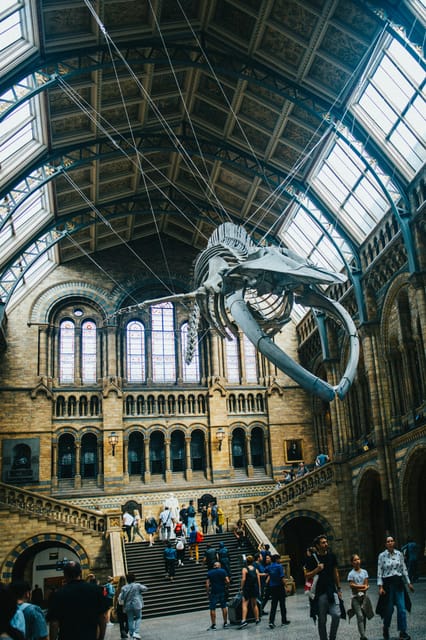
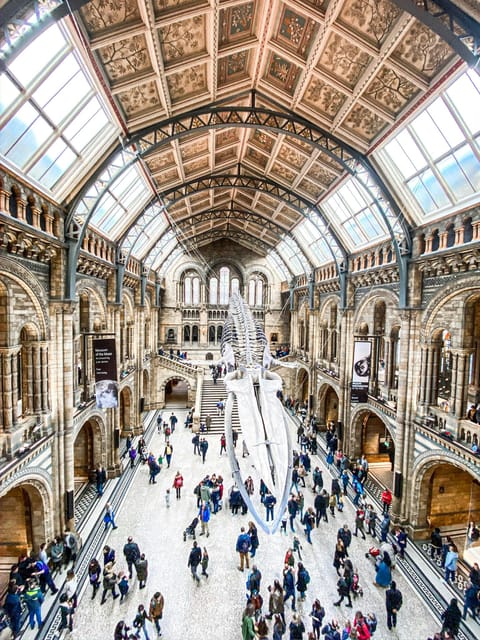
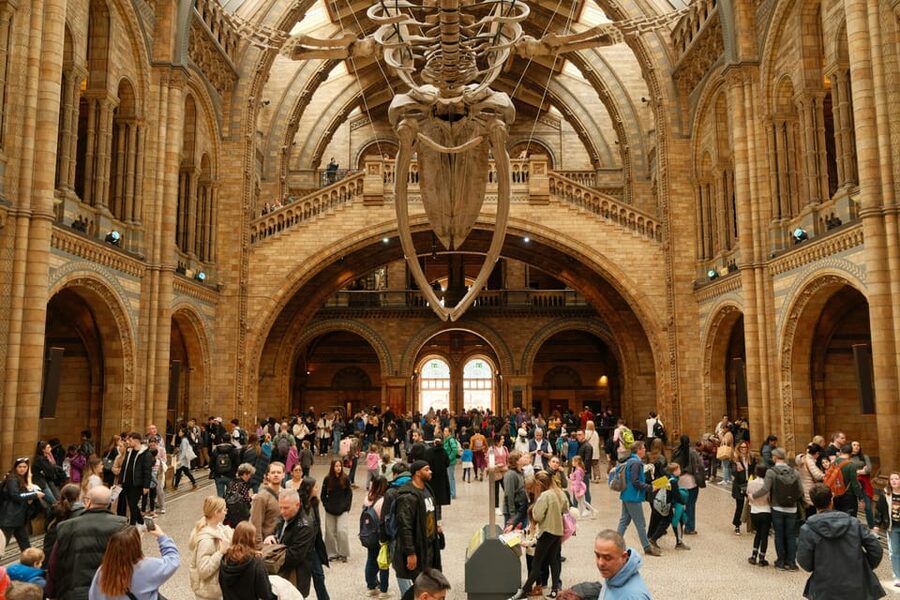
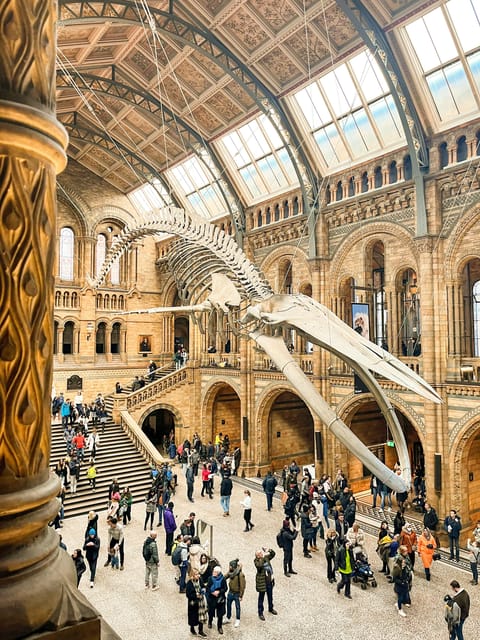
London’s Natural History Museum can overwhelm you before you even reach the first major exhibit. The collection contains around 80 million specimens, and the building offers far more than any short visit can cover.
That is where this tour earns its place. Rather than leaving you to choose between dinosaurs, geology, human evolution, and natural history, the guide takes you through a set of headline exhibits. You get a clear route and a basic scientific story to connect the stops.
I would think of this as an introduction, not a specialist lecture. The guide’s job is to point out the important objects, explain why they matter, and keep the visit moving. If you have little background in science, that structure can make the museum far easier to understand.
The experience is available as a private or small-group tour, which should appeal to families and couples who prefer to ask questions without being lost in a large crowd. English is the stated tour language. The listed duration is 2.5 hours, while the included museum tour is described as two hours, so check the exact schedule when booking and allow a little flexibility around the meeting and security process.
More History Tours in London
- London: Historic Pubs of Central London Walking Tour
★ 4.9 · 1,065 reviews - London: Soho Music and Historic Pubs Walking Tour
★ 4.9 · 836 reviews - London: Rock ‘n’ Roll History Tour
★ 4.6 · 645 reviews
Finding the guide outside Exhibition Road
The meeting point is outside the red telephone box opposite the Exhibition Road entrance to the museum. This is a useful landmark, but you should still arrive with the meeting instructions open on your phone.
The tour includes an express security check. That saves time, especially at a major London museum where entry procedures can slow down a tightly planned day. The tour does not include a separate transport service, so you make your own way to the meeting point.
I would not arrive at the last second. The museum is large, and a missed meeting can spoil an otherwise worthwhile booking. One customer reported that the guide was not present and requested a refund. That appears to be an isolated but important warning: confirm the meeting point, keep the provider’s contact information available, and arrive early enough to sort out any confusion.
Sophie the Stegosaurus and the pull of the dinosaurs
Sophie is likely to be the first major highlight for many people. The skeleton is described as the world’s most complete stegosaurus skeleton, giving you a much better sense of the animal’s actual shape than a few isolated bones ever could.
A stegosaurus is easy to recognize from its back plates and tail spikes, but a full skeleton gives those features context. You can see how the animal’s body was put together and appreciate the scale of a creature that is often reduced to a cartoon image.
This is an especially good stop for families. Children can begin with the obvious question, What did this animal look like? The guide can then build toward larger ideas about fossils, extinction, and how scientists reconstruct a species from physical evidence.
The long-extinct Dodo is also included among the key sights. It offers a useful contrast with Sophie. The stegosaurus takes you millions of years into the past, while the Dodo connects natural history with a much more recent extinction. I like having both in the same visit because the museum becomes less about dinosaurs alone and more about change across the natural world.
If you already have strong knowledge of dinosaurs, the basic explanations may not satisfy you. A museum guide can show you the important objects, but this is not advertised as an advanced paleontology course. Families and first-time visitors will probably gain more from this section than dedicated fossil experts.
Archaeopteryx and Darwin’s first edition
The Archaeopteryx fossil is one of the tour’s most interesting scientific objects. It is often described as a missing link between birds and dinosaurs, though that simple phrase can hide a complicated scientific story.
For you, the value is in seeing the fossil itself and hearing how scientists use physical evidence to think about evolution. Archaeopteryx is memorable because it sits at the meeting point of two familiar categories. It helps explain why the boundary between dinosaur and bird is not as simple as a children’s museum label might suggest.
Nearby, or within the guided route, you will also see the first edition of Charles Darwin’s On the Origin of Species. That adds an important historical layer to the fossil displays. You are not just looking at bones and stones. You are also seeing a key scientific book that changed how people thought about life and its development.
I like this pairing because it gives the tour some intellectual weight. Sophie provides the visual impact, while Darwin and Archaeopteryx give you a reason to think about how natural history is interpreted. If your interest is limited to large animals, this may be the point where the visit becomes less immediately exciting. Stay with it, though. These exhibits explain why the museum matters beyond its biggest skeletons.
More Museum Tours in London
- London: Chelsea Football Club Stadium and Museum Tour
★ 4.8 · 4,576 reviews - London: British Museum Guided Tour
★ 4.3 · 1,182 reviews - London: Jack the Ripper Museum Tickets
★ 4.2 · 894 reviews - London: Tour of the British Museum
★ 4.1 · 678 reviews
The Giant Sequoia cross-section puts time into perspective
The cross-section of a Giant Sequoia is one of the tour’s best reminders that natural history is not only about extinct animals. The tree was already 1,300 years old when it was felled in the 19th century.
A cross-section lets you see the tree’s growth rings, turning time into something you can observe rather than simply imagine. You can look at the width and pattern of the rings and consider how long the tree lived before modern people encountered it.
This stop also changes the pace. After bones and fossils, the tree offers a massive, quiet piece of plant history. I find that useful on a short museum tour because it broadens your idea of what belongs in a natural history collection.
The display may not create the same instant reaction as a dinosaur skeleton, but it rewards a slower look. Ask your guide to explain what the rings reveal if that information is part of the tour’s discussion. The supplied details do not promise a specialist tree-science talk, so expect a clear overview rather than a long botanical lesson.
Pompeii’s plaster casts and the human cost of Vesuvius
The plaster casts connected with Pompeii bring a difficult human element to the tour. They were made from voids left by victims of the eruption of Mount Vesuvius, preserving the shapes of people caught in the disaster.
This section can be upsetting. The casts are not simply archaeological curiosities. They show the physical impact of a volcanic eruption on ordinary human beings, and they deserve a quiet, respectful look.
I appreciate the contrast with the dinosaur exhibits. Fossils can make extinction feel distant and abstract. The Pompeii casts bring catastrophe much closer to human scale. You are reminded that natural events affect real communities, not just geological records.
The guide can help place the casts within the broader story of the eruption, but the available information does not promise a detailed Pompeii tour or a specialist volcanology presentation. If you already know the basic facts about Vesuvius, you may find this portion familiar. The power comes more from seeing the casts than from discovering a completely new explanation.
Gemstones, Moon rock, and material from Mars
The geology section adds sparkle and scale. You will see fine gemstones alongside rock from the Moon and Mars, a combination that moves from the beauty of earthly minerals to the rarity of material from other worlds.
Gemstones are an easy crowd-pleaser because they catch the eye immediately. Moon and Mars rock offers a different kind of excitement. These pieces are valuable not because they are polished, but because they connect the museum to places few people can ever visit.
This is a good place to consider what a museum specimen represents. A gemstone can show the forces that shape minerals beneath Earth’s surface. A lunar or Martian sample gives you a physical link to another world. The two displays work well together because one highlights beauty and the other scientific rarity.
The section may feel less personal than the Pompeii casts and less dramatic than Sophie. It is also where the tour could seem too general for someone who already knows a lot about geology. If you are visiting with children, though, Moon and Mars rock can reset their attention after the more familiar dinosaur material.
How the two-and-a-half-hour pace feels
A 2.5-hour experience is long enough to see the major points without asking you to spend an entire day inside the museum. That matters in London, where you may have theater plans, another museum, or a long list of neighborhoods to explore.
The route appears designed around highlights rather than complete coverage. You will not see every gallery in a museum of this size, and you should not expect to. The benefit is that you finish with a manageable set of memorable objects instead of a blur of displays.
I would choose this format if you want orientation and context on a first visit. It is also useful if you are traveling with family members who lose patience in large museums. A guide can keep the group moving and decide what deserves time.
The tradeoff is depth. One United States customer found the information too basic and felt the price was high for what was offered. That criticism is fair for visitors who already have a solid grasp of earthquakes, volcanoes, gemstones, and dinosaurs. You are paying for guidance, route planning, and access to the main sights, not for an expert course in every subject the museum covers.
Guide quality can shape the whole experience
The strongest part of a guided museum visit is often the person leading it. Sasha received especially warm praise for engaging an entire family, while Wesley was described as keeping the group interested throughout the tour with strong subject knowledge and a lively pace.
Those details matter because the exhibits themselves do not change, but the explanation can. A good guide can turn a skeleton into a story, explain why Archaeopteryx matters, and help children look beyond the glass.
The experience is offered privately or in small groups, but the exact guide may depend on availability. If you are able to request Sasha or Wesley, it would be sensible to do so, though no specific guide is guaranteed in the supplied information.
I would also keep expectations realistic. The tour has received a mix of reactions, including one complaint that the information was too basic and one serious report of a missing guide. The overall rating is 4.3 from nine reviews, with several very positive comments, but that is still a small sample. The safest choice is to book when the cancellation terms suit you and to save all confirmation details.
Is $93 per person a fair price?
At $93 per person, the tour is not a bargain museum entrance with a little commentary added. It is best understood as a paid guiding service built around the museum’s main highlights.
I think the price can make sense for a first-time visitor who values a planned route, an English-speaking guide, and a small or private group. It may also work for a family that wants someone else to keep the visit moving and explain the displays in plain language.
The value drops if you are happy to explore independently. The museum has enough major objects to fill your visit without a guide, and experienced museumgoers may find the explanations too introductory. The price is also harder to justify if you are booking for a large family group and only some people care about science.
The included express security check helps reduce friction, but the important question is whether you want interpretation. If your answer is yes, the tour offers a compact way to see Sophie, the Dodo, Archaeopteryx, Darwin’s book, Pompeii’s casts, the Giant Sequoia, gemstones, and space rock in one organized visit.
Who should book this Natural History Museum tour?
I would recommend it most strongly to first-time visitors, families, and anyone who wants a clear introduction to the museum without planning a route through its huge collection.
It is also a good fit if you enjoy seeing famous objects but want enough explanation to remember why they matter. The mix of dinosaurs, extinction, evolution, plants, volcanoes, minerals, and space gives you a broad taste of natural history in one sitting.
I would hesitate if you already have advanced knowledge of the subjects covered. You may want a more specialized experience, or you may get better value by exploring at your own pace. I would also think twice if you need wheelchair access, since the activity is listed as unsuitable for wheelchair users.
Flash photography is not allowed. Cancellation is free up to 24 hours in advance, and you can reserve now and pay later, which gives you some useful flexibility while arranging a London itinerary.
Final call: a useful introduction, but not for everyone
Book this tour if you want the museum’s essential sights organized by a guide, especially Sophie the Stegosaurus, Archaeopteryx, Darwin’s first edition, Pompeii’s casts, and the Moon and Mars rock. The compact length and private or small-group choices make it easier to fit into a busy London day.
Skip it if $93 feels high for a guided overview or if you already know the basics of dinosaurs, volcanoes, earthquakes, and gemstones. If you do book, arrive early at the red telephone box, confirm the guide’s meeting details, and ask for Sasha or Wesley if guide requests are possible.
FAQ
How long does the Natural History Museum guided tour last?
The activity duration is listed as 2.5 hours. The included museum tour is described as two hours, so check the starting time and schedule details when booking.
What language is the tour offered in?
The live tour guide speaks English, and English is the stated activity language.
Is this a private tour or a group tour?
Private and small-group options are available. The exact group arrangement depends on the option selected when booking.
Where do I meet the guide?
Meet outside the red telephone box opposite the Exhibition Road entrance to the Natural History Museum.
What does the tour include?
It includes a guided visit of the Natural History Museum, access to its main highlights, and entry accompanied by a tour guide.
Which museum exhibits are included?
The highlighted sights include Sophie the Stegosaurus, the Dodo, Archaeopteryx, Darwin’s first edition of On the Origin of Species, the Giant Sequoia cross-section, Pompeii victim casts, gemstones, and rock from the Moon and Mars.
Is the tour suitable for wheelchair users?
The activity is listed as not suitable for wheelchair users.
Can I cancel the booking?
Yes. You can cancel up to 24 hours in advance for a full refund. Reserve now and pay later is also available.
More History Walks around London
- London: Royal Historic Pubs Walking Tour
★ 5.0 · 536 reviews - London: Medieval History Walking Tour from The Tower
★ 4.9 · 318 reviews - London: Witches and History Bankside Walking Tour
★ 4.8 · 223 reviews - London: Natural History Museum Entry Ticket and Guided Tour
★ 3.8 · 212 reviews
More Museums in London
- London: British Museum Audio Tour & Priority Entrance Ticket
★ 4.5 · 631 reviews - Afternoon Tea at the British Museum
★ 4.2 · 511 reviews - London: Paradox Museum Entry Ticket
★ 3.9 · 441 reviews - London: National Gallery Guided Tour with Art Expert Guide
★ 4.7 · 440 reviews
Just added around London
- London: Wimbledon Tennis Club and Westminster Walking Tour★ 4.5 · 86 reviews
- London: Westminster to Richmond River Thames Cruise★ 4.8 · 23 reviews
- Westminster Abbey Skip-the-Line Entry and Private Tour★ 4.6 · 4 reviews
- Best of London by LE GRAND – London’s Luxury Bus Tour★ 4.2 · 23 reviews
- London: Westminster Walking Tour & St Paul’s Cathedral Entry★ 4.7 · 7 reviews
- From London: Oxford, Stratford-upon-Avon & Cotswolds Trip★ 4.5 · 64 reviews
- From London: Warwick, Oxford, Stratford & Cotswolds Day Tour★ 4.0 · 270 reviews
- Churchill’s Wartime London Walking Tour★ 4.3 · 4 reviews
Museums, compared.

Liverpool Football Club Museum and Stadium Tour
Read our review →
Chelsea Football Club Stadium and Museum Tour
Read our review →




British Museum Audio Tour & Priority Entrance Ticket
Read our review →Browse the lists this tour appears in