
Reviewed · MUSEUMS
London: Royal Museums Greenwich Day Pass
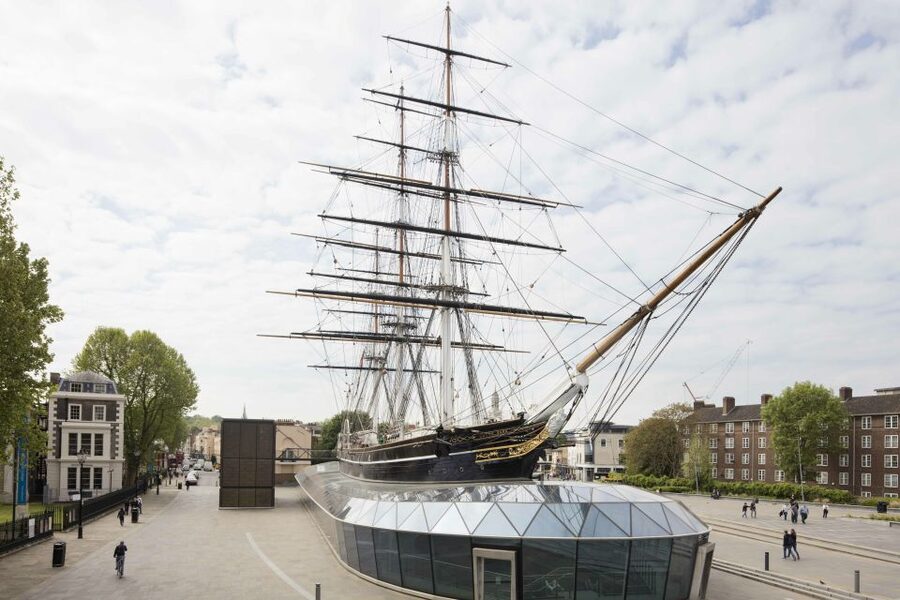
The Prime Meridian is the star of this Greenwich day pass. You can put one foot in the eastern hemisphere and one in the western hemisphere, then follow the story of how astronomers and clockmakers helped the world agree on time. Later, aboard Cutty Sark, you can take the ship’s wheel and walk beneath its enormous hull.
I like the mix of science and seafaring, and I like that the four sites sit within an easy walking area rather than being scattered across London. The main caution is timing: six hours sounds generous, but the Observatory, Cutty Sark, and the two free museums can easily fill the day. The walk up to the Observatory also includes a fairly demanding hill.
Key points to know before you go
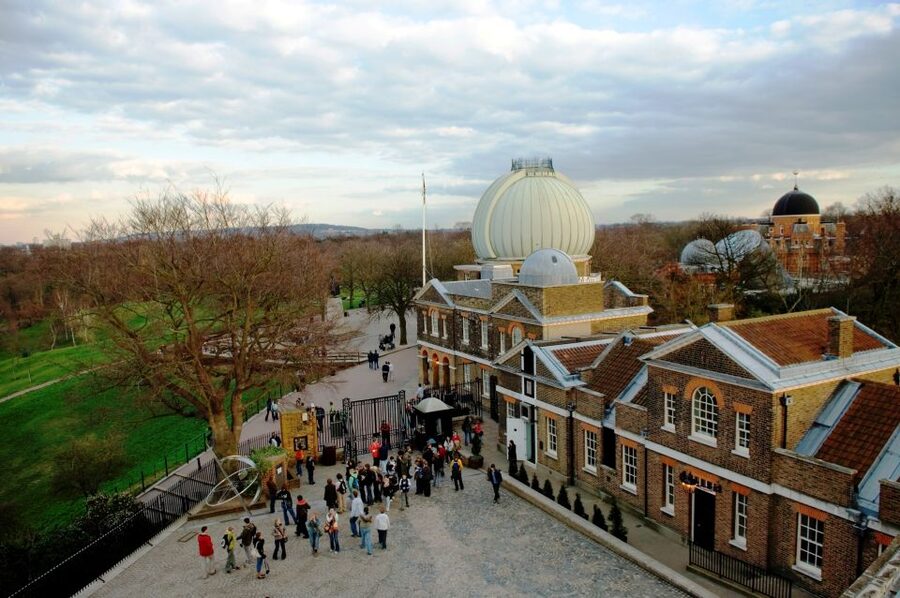
- The Prime Meridian photo is the essential Greenwich souvenir: Stand with one foot east and one west at the line marking 0 degrees longitude.
- Cutty Sark is the pass’s most hands-on stop: Explore the sailors’ quarters, take the helm, and walk on the main deck beneath 11 miles of rigging.
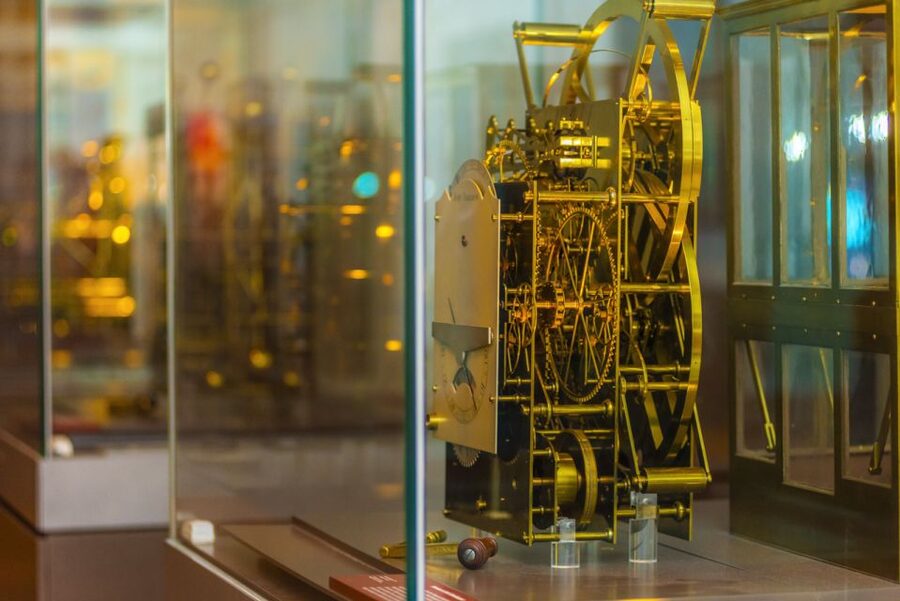
- The Observatory rewards careful viewing: John Harrison’s clocks, the Octagon Room, the Shepherd Gate Clock, and the Great Equatorial Telescope all tell different parts of the timekeeping story.
- The Queen’s House and National Maritime Museum are included: Both are free to enter normally, but special exhibitions and guided tours cost extra.
- Plan for a full day on your feet: The Observatory is uphill from the river, and the sites are larger than they first appear.
- The $40 price is strongest if you visit all the main paid areas: It is less useful if you spend most of your time in the free museums.
Why Greenwich makes such a good day out

Greenwich gives you several versions of London in one compact district. The Royal Observatory explains time and astronomy. Cutty Sark brings Britain’s maritime past down to deck level. The Queen’s House adds art and royal architecture, while the National Maritime Museum widens the story to exploration, trade, naval power, and life at sea.
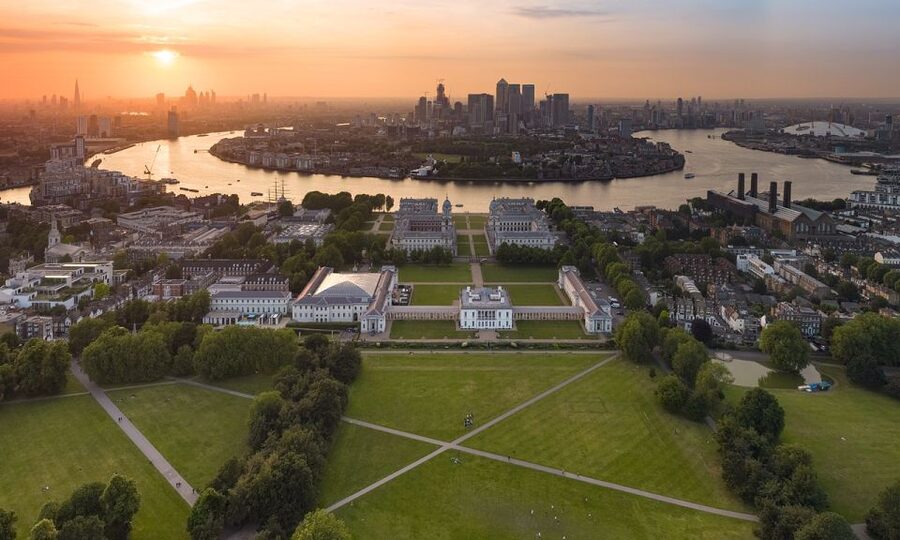
The setting helps. From Greenwich Royal Park, you get broad views across the River Thames toward the City of London. The park also gives you a pleasant route between the hilltop Observatory and the riverfront ship, though the slope is more serious than a quick glance at a map might suggest.
You should allow around six hours, but treat that as a useful framework rather than a strict guided schedule. This is a self-directed pass. You choose how long to spend in each place, and that flexibility is valuable if one subject grabs you more than another.
All four main sites open at 10 AM and close at 5 PM, with last entry at 4 PM. Starting early matters, especially if you want more than a quick look at each museum.
More Museum Tours in London
- London: Chelsea Football Club Stadium and Museum Tour
★ 4.8 · 4,576 reviews - London: British Museum Guided Tour
★ 4.3 · 1,182 reviews - London: Jack the Ripper Museum Tickets
★ 4.2 · 894 reviews
Standing on the Prime Meridian at the Royal Observatory
Begin at the Royal Observatory on Blackheath Avenue. The climb through Greenwich Royal Park is part of the experience because the view opens as you rise, with London’s skyline and the River Thames spread out below.
The first obvious stop is the Meridian Courtyard. Here, the Prime Meridian Line marks 0 degrees longitude. Put one foot on each side for the classic photograph, but take a moment to understand what you are seeing. This line helped give the world a common reference for mapping and time zones. Greenwich Mean Time grew from the work carried out at this hilltop observatory.
The downloadable interactive guide is available in English, Spanish, Chinese, French, German, Italian, Portuguese, and Korean. It can help you make sense of displays that might otherwise seem technical. One practical point: phone reception and Wi-Fi can be weak at the site, so download or prepare the guide before you begin if possible.
Flamsteed House and the Astronomers Royal
Flamsteed House is where the Observatory story becomes personal. You walk through rooms linked with the Astronomers Royal and see the working setting behind the calculations that shaped navigation and timekeeping.
The Octagon Room deserves special attention. Designed by Sir Christopher Wren, it is one of the best-preserved Wren interiors in London. Its proportions and woodwork make it more than a passage between exhibits. It gives you a clear sense of how astronomy was practiced before modern observatories and digital instruments.
The displays also introduce figures associated with Greenwich, including John Harrison, Isaac Newton, Edmond Halley, James Bradley, William Henry Maunder, George Airy, and Albert Einstein. The focus is not only on famous names. You also see how observation, mathematics, instruments, and patient testing worked together.
John Harrison’s clocks are among the most important objects here. Harrison developed accurate marine timekeepers that helped ships work out their position at sea. That may sound like a narrow technical problem, but it affected navigation, trade, naval travel, and the mapping of the world.
The Shepherd Gate Clock outside the building is another small but telling sight. It was the first clock to show Greenwich Mean Time to the public. Look for it as you move around the Observatory rather than treating it as just another clock face.
Above Flamsteed House, the bright red Time Ball still drops as a public time signal. It was first used in 1833. The device is simple, visible, and wonderfully old-fashioned, yet it connects directly with the modern habit of checking the exact time.
The Great Equatorial Telescope under the onion dome
Do not rush past the Great Equatorial Telescope. It sits inside the large onion-shaped dome that has become one of Greenwich’s most recognizable features.
The telescope gave astronomers new views of the universe more than a century ago. Even if you are not an astronomy enthusiast, the scale of the instrument makes the visit worthwhile. It shows how much physical equipment once stood between an observer and a distant star.
The Observatory is strongest when you give each object time. A quick circuit will get you the Meridian Line photograph, but it will not give you much of the story behind the clocks, telescopes, and public time signals. If you want to see Harrison’s clocks and the displays around them properly, plan on spending several hours here.
Families should know that the Observatory leans more toward objects, explanations, and history than hands-on play. Children who enjoy ships, space, or old machines may be fully engaged, but the site does not offer a large dedicated children’s activity area.
A few more London days worth weighing up
- From London: Harry Potter Warner Bros Studio Tour
★ 4.7 · 26,588 reviews - London: Westminster to Greenwich River Thames Cruise
★ 4.5 · 22,836 reviews - Magical London: Harry Potter Guided Walking Tour
★ 4.7 · 22,044 reviews - London: Madame Tussauds London
★ 4.6 · 20,915 reviews
Walking downhill through the park to Cutty Sark
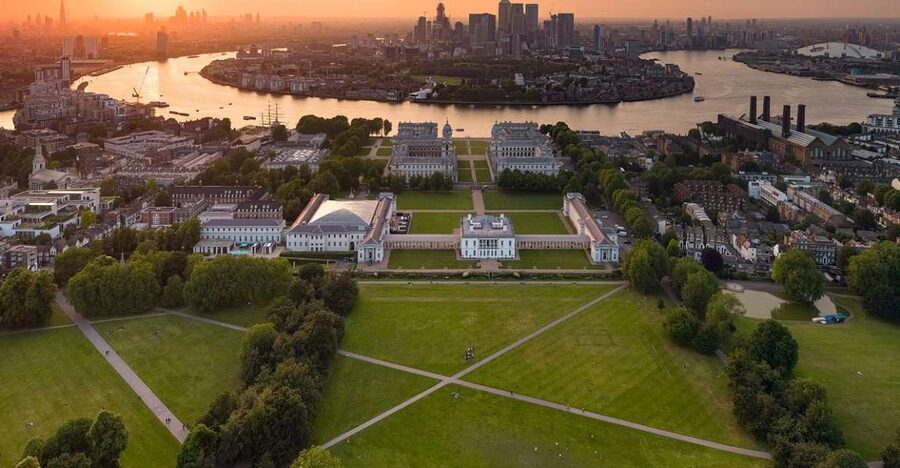
From the Observatory, head downhill toward King William Walk and Cutty Sark. The route through the park is attractive, but allow time for the walk. The distance can feel longer than expected, particularly after several hours inside the Observatory.
Cutty Sark is the world’s sole surviving tea clipper. Built for the China tea trade and launched in 1869, the ship was designed for speed on long passages around the globe. Its original wooden planks and iron frames have been carefully conserved, so you are seeing a real working vessel rather than a modern replica.
The ship was raised more than three metres during a six-year conservation project. That work created one of the most unusual parts of the visit: you can stand directly underneath the hull and study its elegant shape from below.
I find this view especially useful because it explains the ship’s design better than a model or diagram can. You see the long, narrow form built for speed, the structure that supported the decks, and the engineering choices that helped Cutty Sark make fast passages.
Life aboard Cutty Sark

Your ticket allows you to explore the ship in full. Go below to see the sailors’ quarters and get a sense of the cramped working conditions aboard a long-distance sailing vessel.
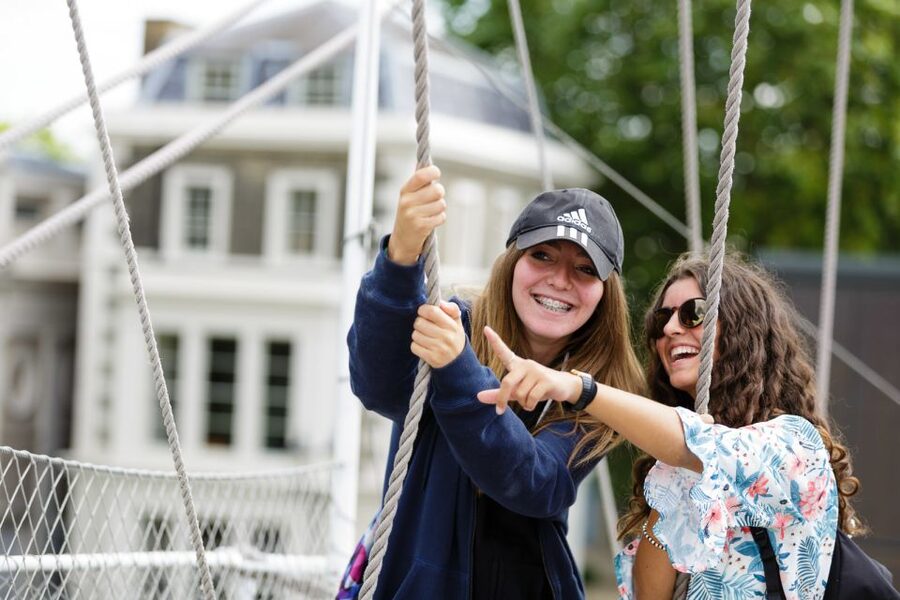
The main deck is the visual highlight. Look up at the towering masts and the 11 miles of rigging. Then look outward for views of the Thames. The setting connects the ship’s global voyages with the river that made London a major port.
You can also take the helm at the ship’s wheel. It is a simple activity, but it helps turn the vessel from an exhibit into a place with human scale. You start thinking about the crew, the weather, the long passages, and the skill needed to handle a ship of this size.
Cutty Sark is usually the easier site to fit into a tight schedule because its route is more focused than the Observatory’s collection. If you want to guarantee time aboard the ship, visit it before spending hours on the hill. One well-planned day can easily get swallowed by the Observatory, a café stop, The Queen’s House, and the National Maritime Museum.
The Queen’s House, art, and a striking interior
The Queen’s House sits between the Observatory and Cutty Sark area, making it a natural stop during the day. Entry is included in the wider Greenwich visit, though special exhibitions and guided tours may require an additional charge.
Designed by Inigo Jones, the building is a pioneering piece of 17th-century architecture. The house itself is an important part of the visit, so do not treat it only as a container for paintings.
Inside, you will find art, royal connections, and historic rooms. The focus differs sharply from the clocks and ships. If you prefer engineering or practical history, you may spend less time here. If you enjoy architecture and paintings, it can become one of the day’s best surprises.
The Queen’s House is also where your schedule can get into trouble. It is easy to think you will spend 20 minutes, then remain much longer because of the building and the art. Keep an eye on the clock if Cutty Sark is a priority.
The National Maritime Museum and the bigger story
The National Maritime Museum is the largest museum of its type in the world. It places Cutty Sark within a much wider story of exploration and endeavour.
Here, you can broaden your understanding of Britain’s relationship with the sea. The museum looks beyond one ship and one trade route to the people, voyages, discoveries, and decisions that helped shape the modern world.
Admission to the National Maritime Museum is free except for special exhibitions and guided tours. That makes it a particularly good use of extra time if you have already paid for the Observatory and Cutty Sark. You can visit without feeling that every minute needs to justify another ticket.
The museum is large enough that you should not try to see everything in a single hurried sweep. Choose the sections that fit your interests, then leave room for Cutty Sark or the Observatory rather than exhausting yourself here.
Is the $40 day pass good value?
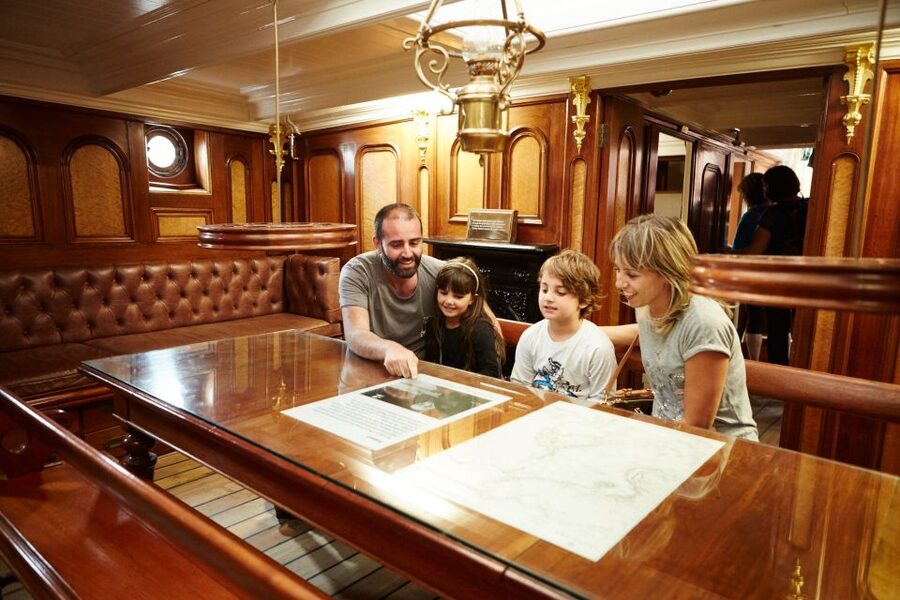
At $40 per person, the pass makes the most sense when you visit the Royal Observatory and Cutty Sark, then add time at The Queen’s House and the National Maritime Museum. The two latter sites are normally free, so the paid value comes mainly from the Observatory and ship.
The pass also saves you from arranging separate admission for the two principal attractions. That matters if you want a simple Greenwich day without stopping to compare several ticket choices.
The value is weaker if you only want to stand at the Meridian Line and make a fast visit. It is also weaker if The Queen’s House and the National Maritime Museum take up most of your day, since normal entry there costs nothing.
I would think of the pass as a time-and-planning purchase as much as an admission deal. It gives you a clear route through Greenwich and encourages you to combine science, art, and maritime history in one outing.
Timing, walking, and practical planning
Start at 10 AM if you want a relaxed day. The Observatory deserves at least two or three hours if you plan to read the displays, see the clocks, visit the Octagon Room, and look inside the telescope dome.
After that, walk downhill through the park. The views are part of the reward, but the route is not flat. If hills or long periods on your feet are difficult, plan your pace carefully. The attractions are wheelchair accessible, though the hill remains an important practical consideration.
A sensible order is:
- Royal Observatory first, while you have the most energy
- Cutty Sark next, especially if the ship is your main priority
- The Queen’s House for art and architecture
- National Maritime Museum for a broader maritime story
A second approach is to visit Cutty Sark first because it can take less time, then spend the rest of the day at the Observatory and free museums. This is useful if missing the ship would disappoint you more than shortening your Observatory visit.
Food and drink are not included. Greenwich has cafés and restaurants, and you can also use one of the cafés in the area for a quick break. Build in time for lunch rather than trying to race between all four sites.
The pass includes downloadable guides rather than a live guide. You get flexibility and several language choices, but no personal guide to answer questions as you go. Guided tours and special exhibitions at The Queen’s House and the National Maritime Museum are not included.
You can cancel up to 24 hours in advance for a full refund, and the reserve-now, pay-later option keeps your plans flexible.
Who should book this Greenwich experience?
I recommend it most strongly for first-time visitors who want a full Greenwich day and enjoy variety. It works well for couples, families with older children, museum fans, and anyone interested in clocks, astronomy, ships, or London’s connection with the sea.
It is also a good fit if you dislike rigid group tours. You move at your own speed and decide whether Harrison’s clocks, the telescope, Cutty Sark’s deck, or the paintings at The Queen’s House deserve the most attention.
You may want a different plan if you have limited mobility, only a few hours, or little interest in museums. The sites are close in local terms, but the hill and the amount of walking make this more demanding than a simple two-attraction ticket.
Should you book the Royal Museums Greenwich Day Pass?
Book it if you want the full Greenwich experience: the Prime Meridian, the Observatory’s timekeeping displays, Cutty Sark’s decks and rigging, The Queen’s House, and the National Maritime Museum. The blend of science, art, architecture, and maritime history gives the day real variety.
My best advice is to protect time for Cutty Sark and the Observatory first. The free museums are excellent additions, but they can quietly take over your schedule. If you begin early and accept that Greenwich is a walking day, the $40 pass offers a practical way to see one of London’s most distinctive districts.
FAQ
What does the Royal Museums Greenwich Day Pass include?
It includes admission to the Royal Observatory and Cutty Sark, plus access to The National Maritime Museum and The Queen’s House. Downloadable multilingual interactive guides are included at both main attractions.
How long does the experience take?
The suggested duration is six hours. Since the attractions are self-guided, you decide how long to spend at each site.
What languages are available for the audio guide?
The guide is available in English, Spanish, Chinese, French, German, Italian, Portuguese, and Korean.
Are The Queen’s House and National Maritime Museum included for free?
Entry to both is free except for special exhibitions and guided tours. The day pass gives you access, but those additional paid events are not included.
What are the opening hours?
All sites open at 10 AM and close at 5 PM. The last entry is at 4 PM.
Is the experience wheelchair accessible?
Yes, the experience is listed as wheelchair accessible. Keep in mind that the walk between the riverside attractions and the hilltop Observatory includes an incline.
More Museums in London
- London: Tour of the British Museum
★ 4.1 · 678 reviews - London: British Museum Audio Tour & Priority Entrance Ticket
★ 4.5 · 631 reviews - Afternoon Tea at the British Museum
★ 4.2 · 511 reviews - London: Paradox Museum Entry Ticket
★ 3.9 · 441 reviews
Just added around London
- London: Wimbledon Tennis Club and Westminster Walking Tour★ 4.5 · 86 reviews
- London: Westminster to Richmond River Thames Cruise★ 4.8 · 23 reviews
- Westminster Abbey Skip-the-Line Entry and Private Tour★ 4.6 · 4 reviews
- Best of London by LE GRAND – London’s Luxury Bus Tour★ 4.2 · 23 reviews
- London: Westminster Walking Tour & St Paul’s Cathedral Entry★ 4.7 · 7 reviews
- From London: Oxford, Stratford-upon-Avon & Cotswolds Trip★ 4.5 · 64 reviews
- From London: Warwick, Oxford, Stratford & Cotswolds Day Tour★ 4.0 · 270 reviews
- Warner Bros. Studios and 1-Day London Hop-on Hop-off tour★ 4.7 · 9 reviews
Museums, compared.

Liverpool Football Club Museum and Stadium Tour
Read our review →
Chelsea Football Club Stadium and Museum Tour
Read our review →




British Museum Audio Tour & Priority Entrance Ticket
Read our review →Browse the lists this tour appears in